
Process for Establishing a Muscular Electrostimulation Protocol, and Respective Portable Muscular Electrostimulation Equipment Using Said Protocol
a technology of electrostimulation protocol and portable equipment, which is applied in the field of process for establishing a muscular electrostimulation protocol and a portable muscular electrostimulation equipment using said protocol, can solve the problems of inability to move to outdoor environments where sports practice is not possible, complex operation of existing bench equipment, and inability to program portable equipment available in the market, etc., to achieve the effect of improving performance, low cost and high degree of robustness
Patent Information
- Authority / Receiving Office
- US · United States
- Patent Type
- Applications(United States)
- Current Assignee / Owner
- Publication Date
- 2017-10-05
- Estimated Expiration
- Not applicable · inactive patent
Smart Images
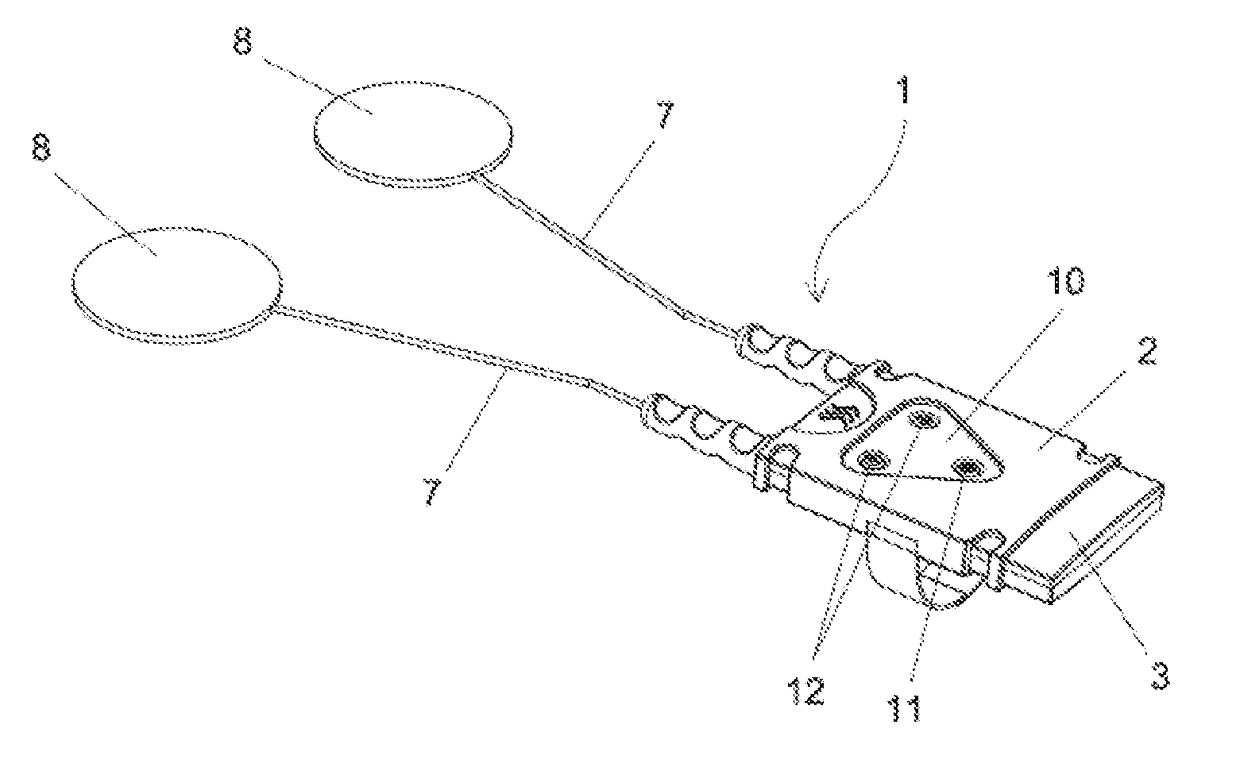
Figure 1 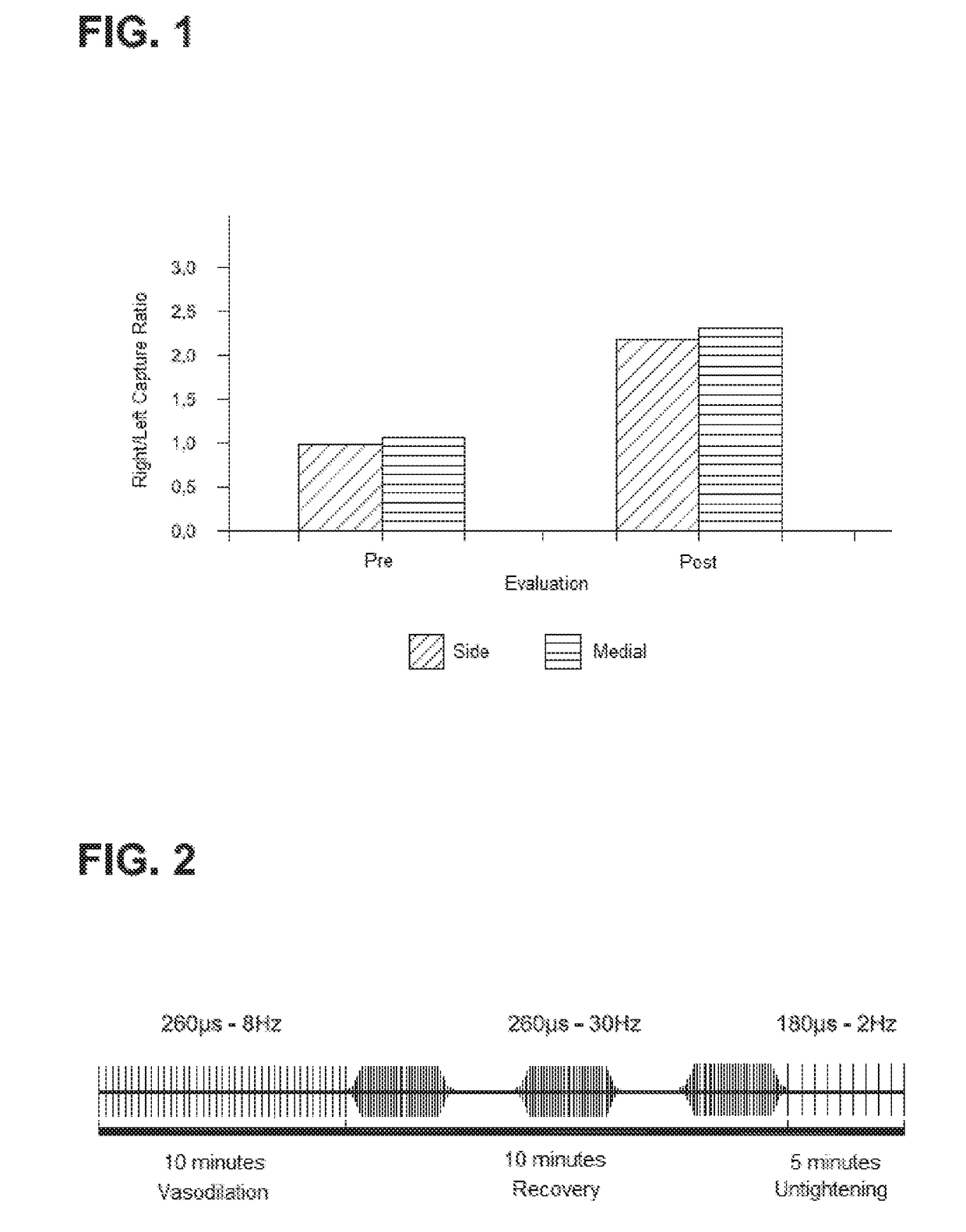
Figure 2 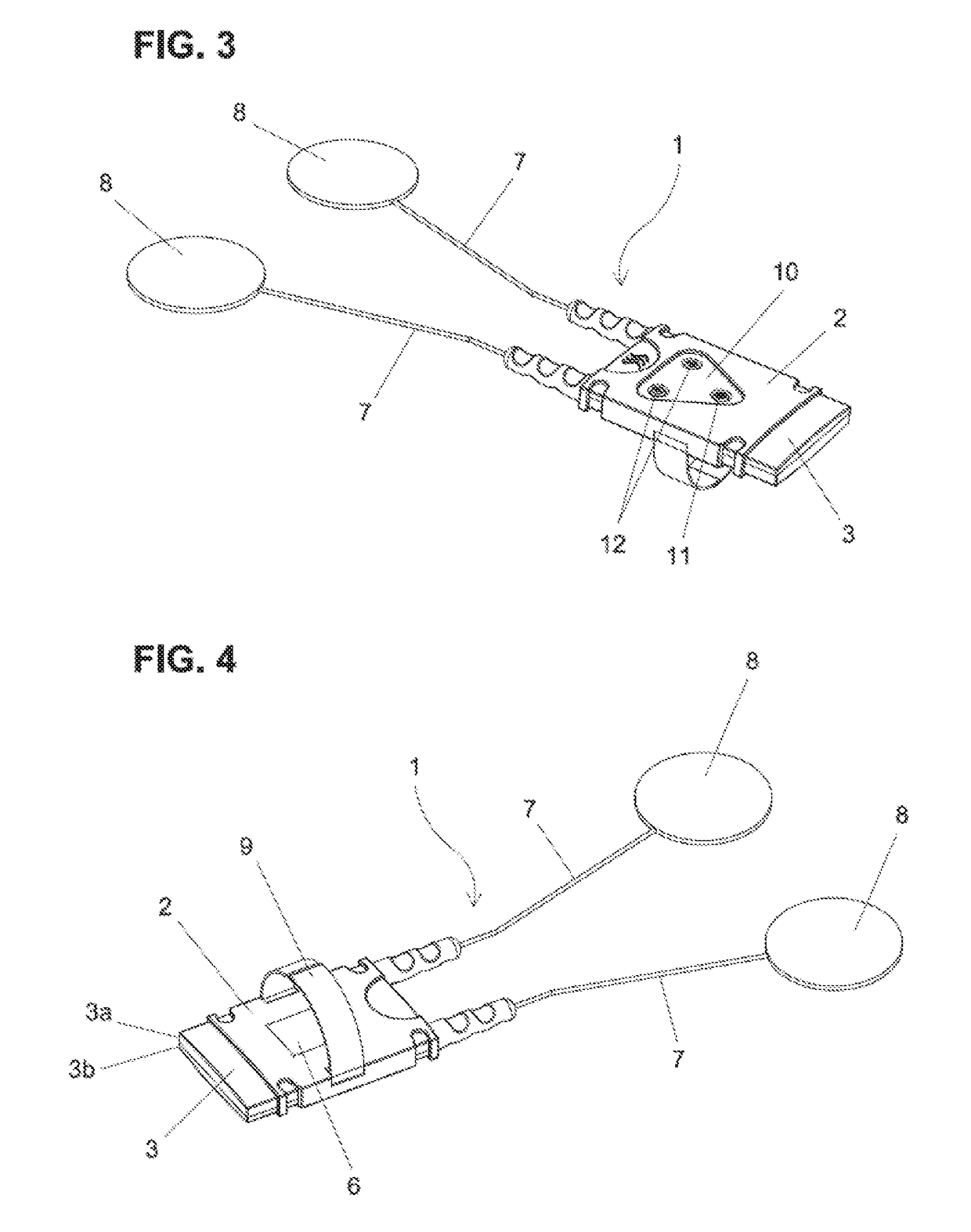
Figure 3
Abstract
Description
CROSS-REFERENCE TO RELATED APPLICATIONS
[0001] This patent application claims priority to Brazilian application BR 10 2016 007240 9 filed Mar. 31, 2016, which is incorporated herein by reference for all purposes.TECHNICAL FIELD
[0002] The present patent relates to a process for establishing a muscular electrostimulation protocol and a portable muscular electrostimulation equipment using said protocol, said process and equipment being used to recover the user's muscular performance in general, and more specifically, of practitioners of physical activity and athletes.
[0003] This innovative process and equipment makes possible its use in muscular recovery of users in the field, in the physical or sports practice sites, with a friendly and intuitive interface, and an innovative electro-stimulation protocol that accelerates the muscle recovery of physical activity practitioners.DESCRIPTION OF THE STATE OF THE ART
[0004] The use of electrical stimulation is well-established in the medical and sp...
Examples
Embodiment Construction
[0030]The present patent relates to a “PROCESS FOR ESTABLISIHING A MUSCULAR ELECTROSTIMULATION PROTOCOL, AND THE RESPECTIVE PORTABLE MUSCULAR ELECTROSTIMULATION EQUIPMENT USING SAID PROTOCOL”, said process and equipment being used to recover the user's muscular performance in general, and more specifically, of practitioners of physical activity and athletes.
[0031]Initially, as for the “PROCESS FOR ESTABLISHING A MUSCULAR ELECTROSTIMULATION PROTOCOL”, said process provides the serial application of electrical stimuli (or pulses), with specific parameters to obtain an increase in muscular blood flow, the active recovery of the myocytes and the untightening of the stimulated musculature.
[0032]To achieve this novel muscular electrostimulation protocol, quantitative kinetics studies, using digital motion capture equipment, were carried out in athletes with and without electrostimulation. Athletes undergoing electrostimulation showed a substantial improvement of the performance of differe...