
Dataflow execution graph modification using intermediate graph
a dataflow and execution graph technology, applied in the field of dataflow execution graph modification using intermediate graph, can solve the problems of limiting the frequency and granularity of dataflow execution graph reconfigurations, affecting the speed of dataflow execution graph reconfiguration, and reducing the latency associated with reconfiguration, so as to avoid overprovisioning of resources to support dataflow execution graphs. , the effect of reducing the latency of reconfiguration
Patent Information
- Authority / Receiving Office
- US · United States
- Current Assignee / Owner
- Publication Date
- 2019-12-05
Smart Images
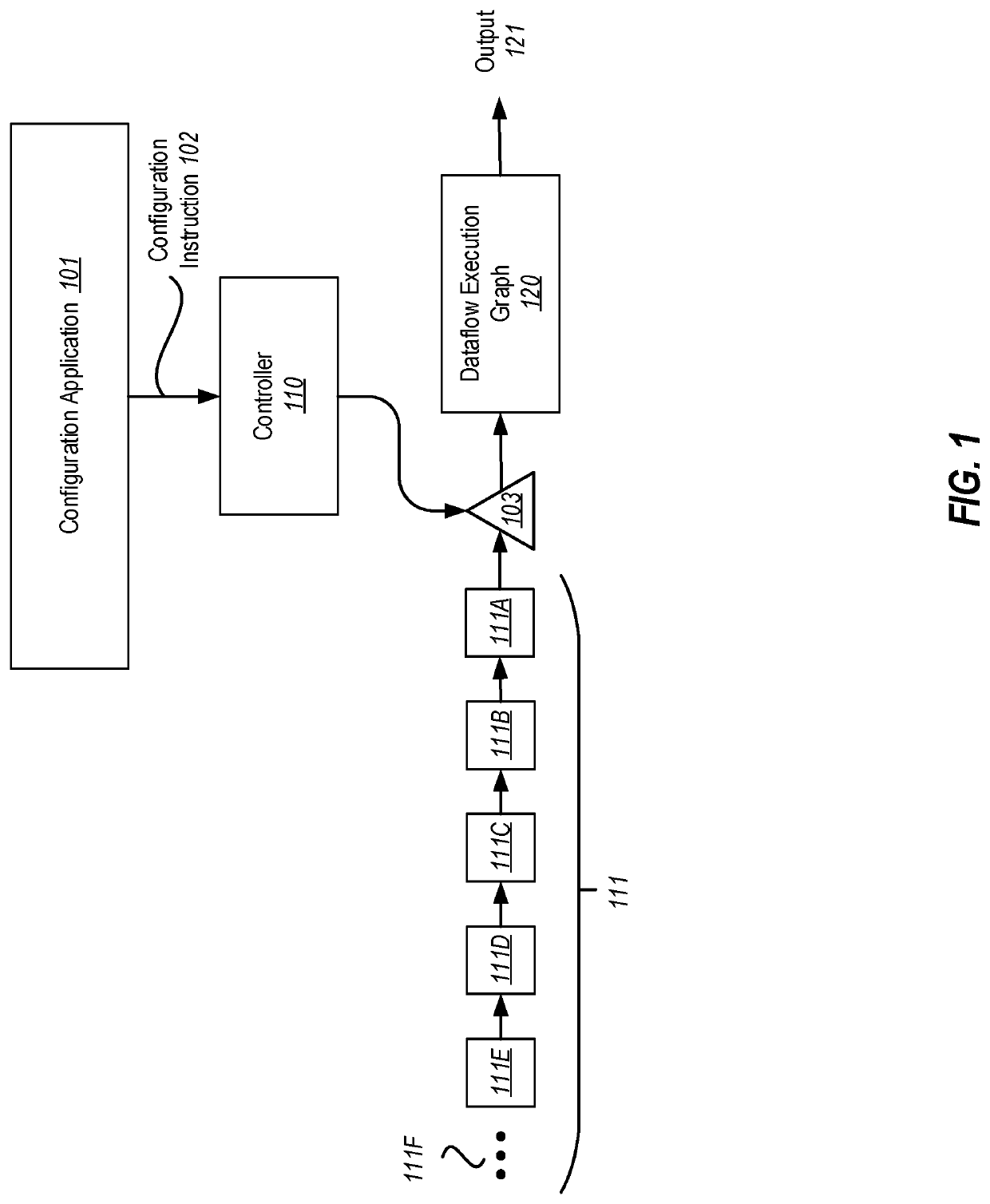
Figure 1 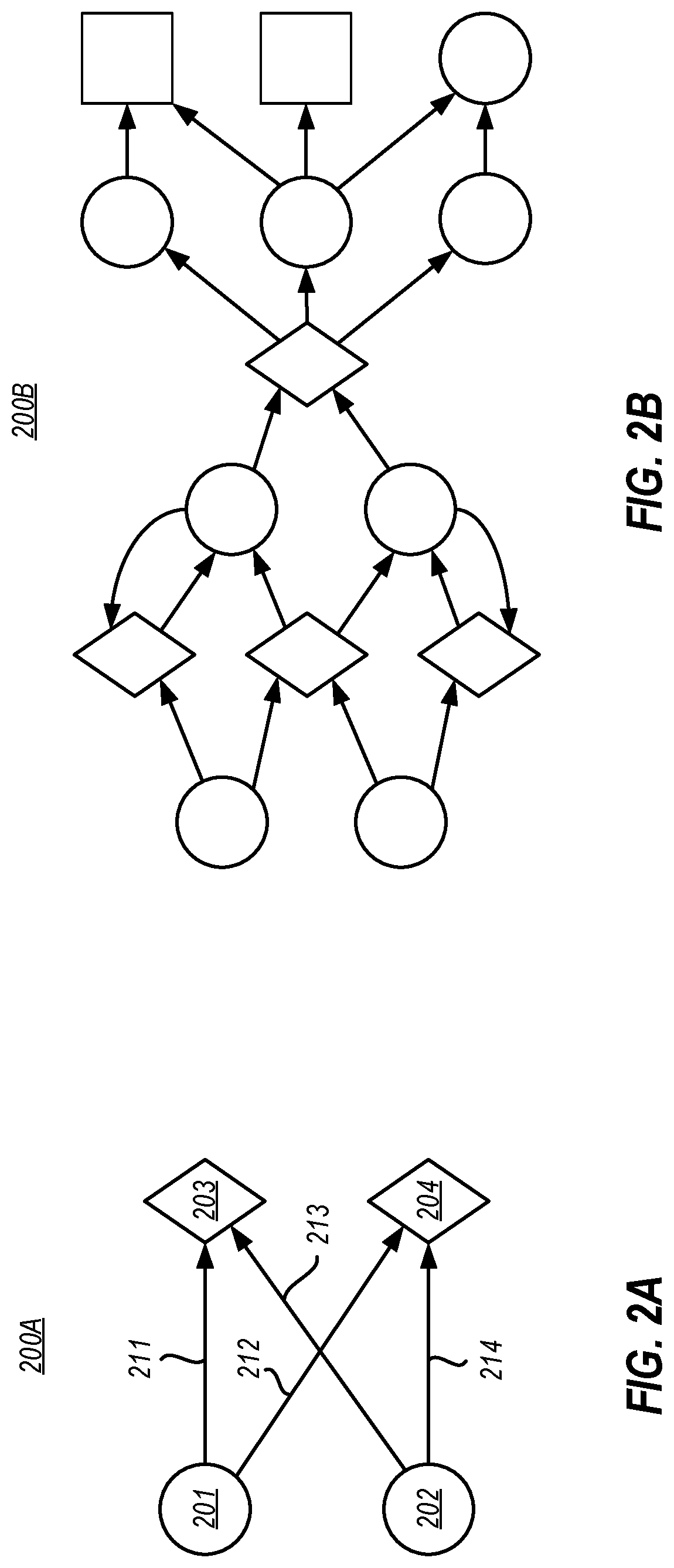
Figure 2 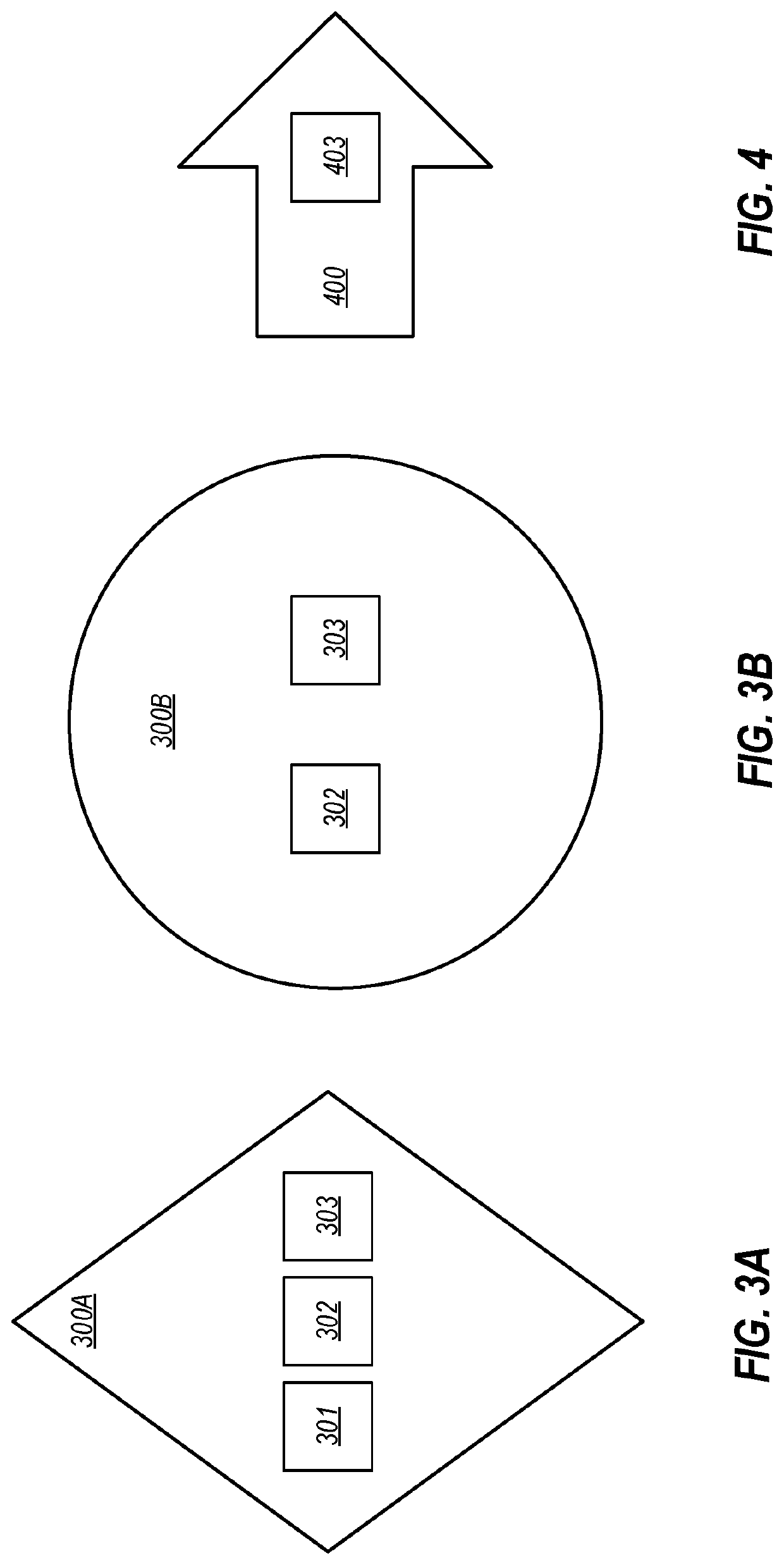
Figure 3
Abstract
Description
BACKGROUND
[0001] Large scale cloud and Internet service providers typically generate millions of events per second. To handle such high event throughput, events are often accumulated, prior to being processed as a batch. More recently, to reduce latency and to ensure timely event processing, stream processing systems avoid batching by processing the events as a stream.
[0002] There can be high variability (called herein “temporal variability”) in the volume of events that are being streamed with each event stream. For instance, an event stream can include a mix of expected events (e.g., processing needs during the day can be typically higher than at night, and so forth), and unexpected events (e.g., dramatic stock market changes, and so forth). Furthermore, each event stream has different resource requirements due to there being different workload characteristics (called herein “spatial variability”) across event streams. Furthermore, in large-scale systems, there are inevitable failur...
Examples
Embodiment Construction
[0025]At least some embodiments described herein relate to mechanisms to modify or reconfigure a dataflow execution graph that processes one or more data streams. In accordance with the principles described herein, an intermediate dataflow execution graph is used during modification of the dataflow execution graph from one configuration (i.e., the “old dataflow execution graph”) to the next (i.e., the “new dataflow execution graph”). During reconfiguration, data messages of the data stream(s) may continue to feed into the intermediate dataflow execution graph, thereby reducing latency and maintaining throughput during reconfiguration of the dataflow execution graph. Control messages that are structured to accomplish the reconfiguration are also passed into the intermediate dataflow execution graph. As the control message(s) are processed by various operators within the dataflow execution graph, the intermediate dataflow execution gracefully takes the shape of the new dataflow execut...