
Steerable Biopsy Needle with Fiber-Activated Shape Memory Alloy
a fiber-activated shape memory alloy and biopsy needle technology, applied in the field of biopsy needles, can solve the problems of limiting the accuracy of such guided biopsy techniques, needle deflection, and limiting the steering strategy, so as to improve the coupling efficiency of optical energy, eliminate the risk of fiber failure, and improve the effect of actuation efficiency
Patent Information
- Authority / Receiving Office
- US · United States
- Patent Type
- Applications(United States)
- Current Assignee / Owner
- Publication Date
- 2021-07-22
Smart Images
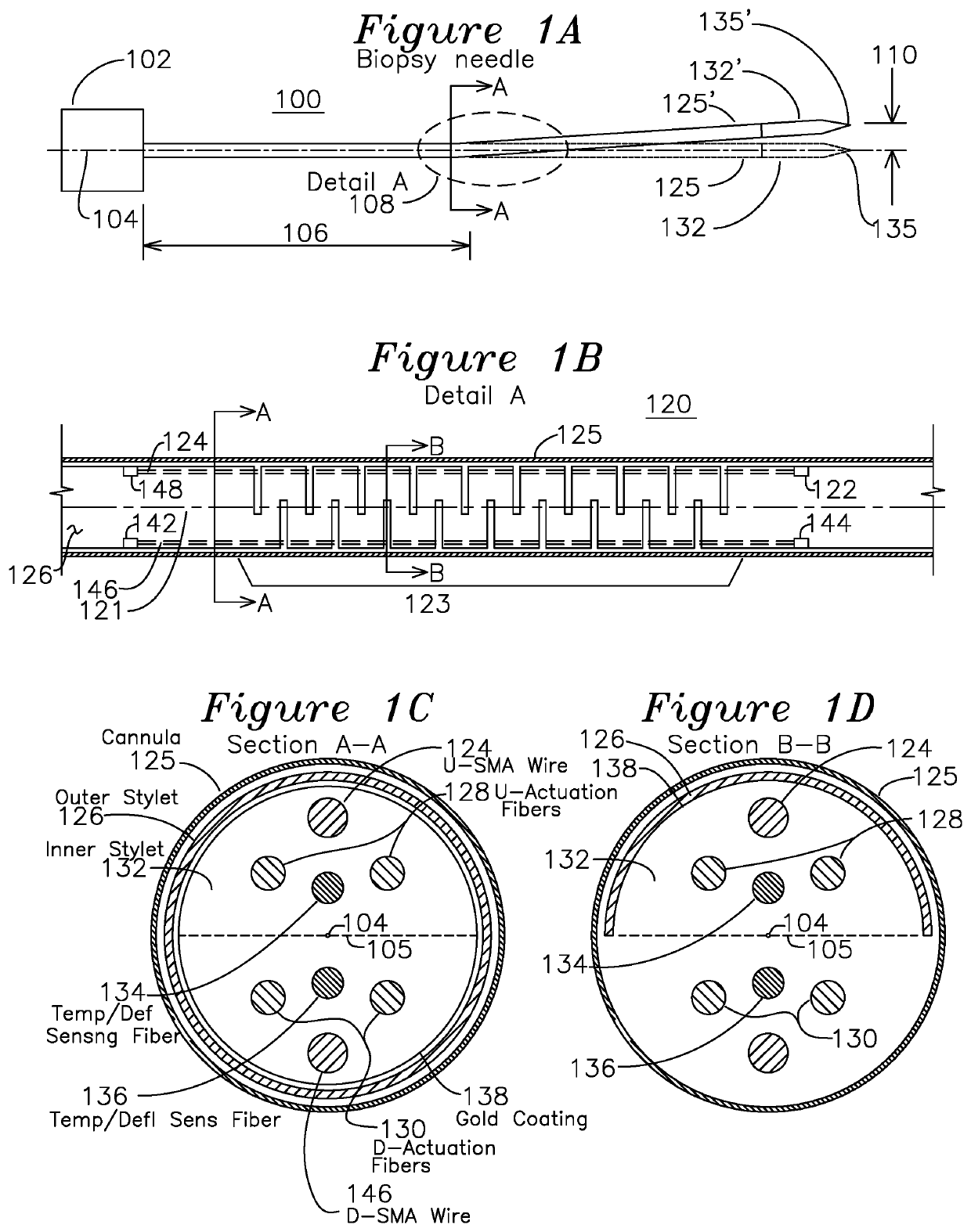
Figure 1 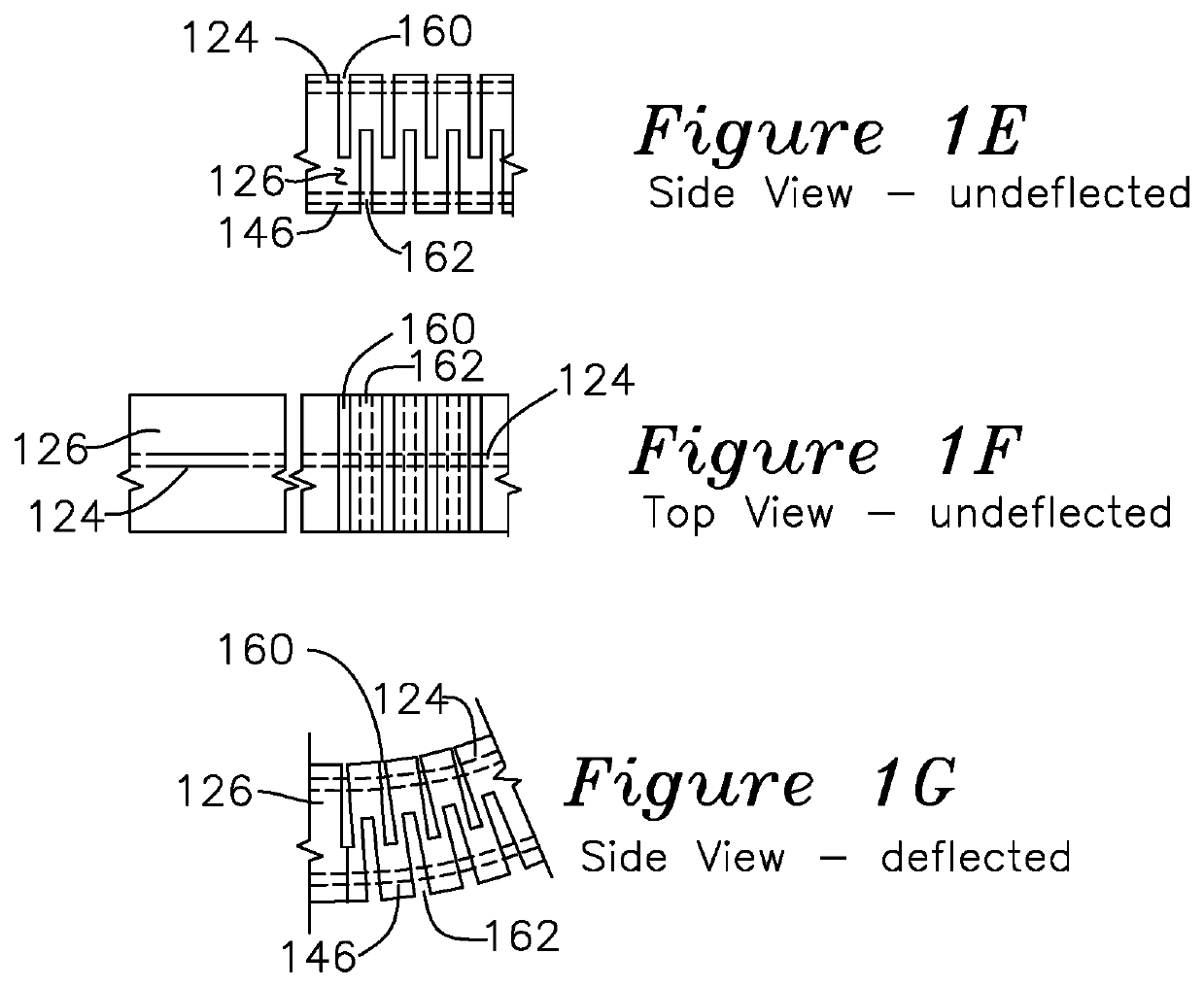
Figure 2 
Figure 3
Abstract
Description
FIELD OF THE INVENTION
[0001] The present patent application claims priority to provisional application Ser. No. 62 / 352,447 filed Jun. 20, 2016.
[0002] The present invention relates to a biopsy needle. In particular, the invention relates to a biopsy needle which is steerable through symmetric deflection in a plane common to the central axis of the needle, and which provides for measurement of deflection angle using optical fiber sensing.BACKGROUND OF THE INVENTION
[0003] In the field of interventional radiology, procedures such as biopsies or punctures are performed in combination with an imaging device which provides guidance during the biopsy procedure to a region of interest for the tissue sample. Magnetic Resonance (MR) scanners are useful imaging devices in this context: the radiologist and the patient are not exposed to any ionizing radiation, and the images provided by MR scanners provide a high level of contrast and sufficient resolution to identify small structures such as early...
Examples
Embodiment Construction
[0032]FIG. 1A shows the active elements of a steerable biopsy needle 100, including a cannula 125 which is optionally covered with a Teflon sheath or tube (not shown) to provide thermal isolation between the surrounding tissues and the thermally activated elements of the needle. FIG. 1A is best understood in combination with detail A FIG. 1B, and section views 1C and 1D. According to a general object of the invention, the needle is steered using an axial asymmetry of internal force which is coupled to the outer stylet 126 of the needle to create forces on the needle during its insertion. In this embodiment, the primary degrees of freedom to control needle direction are the insertion geometry and the axial rotation of the needle. Needles with asymmetric bevels at the tip are submitted to an unbalanced field of forces during the insertion. This phenomenon can be used to steer thin needles. Various complex insertion trajectory curves may be obtained by combining the needle insertion an...