
Adhesive film for polarizing plate, polarizing plate comprising the same and optical display apparatus comprising the same
a technology of adhesive film and polarizing plate, which is applied in the direction of film/foil adhesives without carriers, film/foil adhesives, polarising elements, etc., can solve the problems of deterioration of touch panel sensitivity, and liquid crystal display malfunction, etc., to achieve good peel strength and substrate adhesion, good surface resistance, good peel strength
Patent Information
- Authority / Receiving Office
- US · United States
- Patent Type
- Applications(United States)
- Current Assignee / Owner
- Publication Date
- 2022-02-17
Smart Images
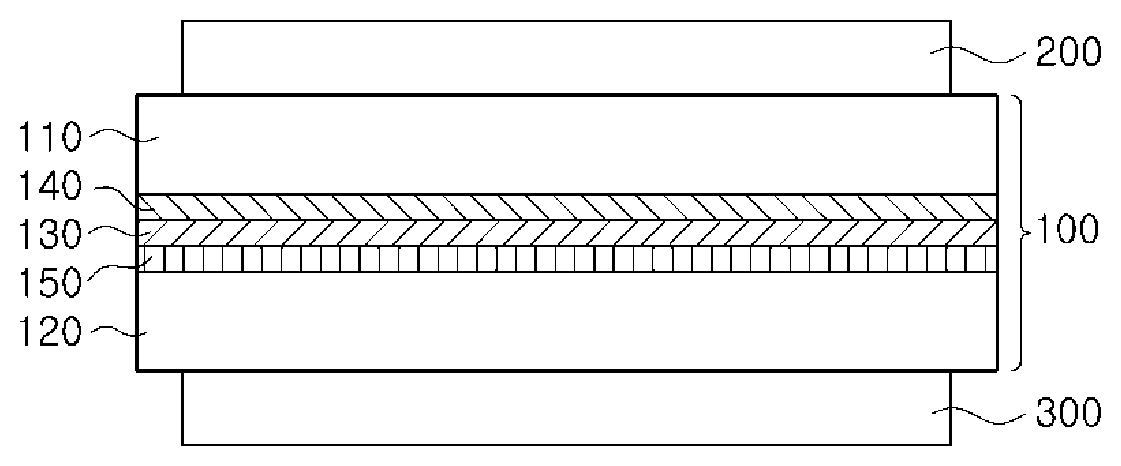
Figure 1 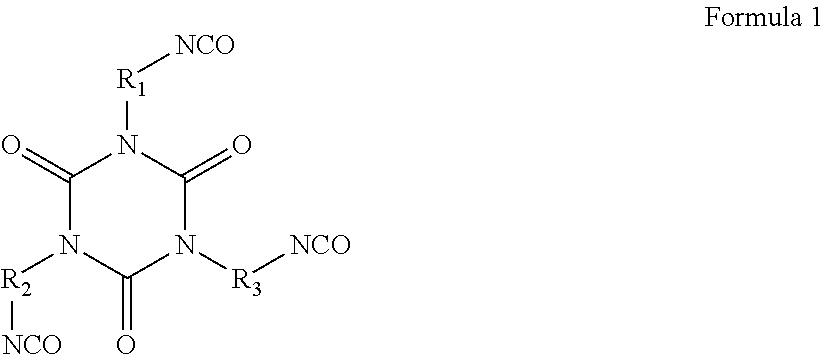
Figure 2
Abstract
Description
CROSS-REFERENCE TO RELATED APPLICATION
[0001] This application claims priority to and the benefit of Korean Patent Application No. 10-2020-0100665, filed on Aug. 11, 2020 in the Korean Intellectual Property Office, the entire disclosure of which is incorporated herein by reference.BACKGROUND1. Field
[0002] Aspects of embodiments of the present invention relate to an adhesive film for polarizing plates, a polarizing plate including the same, and an optical display apparatus including the same.2. Description of the Related Art
[0003] A liquid crystal display includes a polarizing plate bonded to both sides of a liquid crystal cell via adhesive films. In addition, a touch panel is mounted on a display screen of the liquid crystal display. Among various kinds of touch panels including a capacitive touch panel, a resistive touch panel, an optical touch panel, an ultrasound touch panel, and an electromagnetic touch panel, the capacitive touch panel is generally used in the art. In recent years,...
Examples
example 2
Preparative Example 2 to Preparative Example 7
[0114]Acrylic copolymers were prepared by the same method as in Preparative Example 1 except that the components of the monomer mixture were changed together with the content of AIBN and / or reaction time as listed in Table 1.
[0115]Details of components used in preparation of the acrylic copolymers of Preparative Examples 1 to 7 are shown in Table 1.
TABLE 1WeightaveragemolecularBAMAt-BAIBOA4-HBAPEAweightPreparative6910 0 0120169 × 104Example 1Preparative5920 0 0120162 × 104Example 2Preparative4930 0 0120158 × 104Example 3Preparative59 020 0120172 × 104Example 4Preparative64 0 015120164 × 104Example 5Preparative6930 0 01 0165 × 104Example 6Preparative79 0 0 0120168 × 104Example 7*In Table 1, t-BA is t-butyl acrylate (Tg in homopolymer phase: 43° C.) and IBOA is isobornyl acrylate (Tg in homopolymer phase: 94° C.).
[0116]Details of components used in Examples and Comparative Examples are as follows:
example 1
[0122]A composition for adhesive films was prepared by mixing 100 parts by weight of the (meth)acrylic copolymer (A) of Preparative Example 1, 0.5 parts by weight of the isocyanate curing agent (B), 0.1 parts by weight of the metal chelate curing agent (C), 20 parts by weight of the antistatic agent (D), and 0.1 parts by weight of the silane coupling agent (E) in terms of solid content, followed by dilution to a suitable concentration with ethyl acetate.
[0123]The prepared composition was coated to a thickness of 15 μm on a PET (polyethylene terephthalate) release film and dried at 110° C. for 4 minutes, thereby preparing a coating for adhesive films.
[0124]The coating for adhesive films was attached to one surface of a triacetylcellulose film of a polarizing plate (stack of triacetylcellulose film / polarizer / triacetylcellulose film bonded to each other via a bonding agent and not containing an antistatic agent, thickness: 65 μm), followed by aging at 35° C. and 45% RH for 4 days, ther...
examples 2 to 8
[0125]Polarizing plates were manufactured in the same manner as in Example 1 except that the components of the adhesive composition and / or the contents thereof were changed as listed in Table 2 (unit: parts by weight).