
Television advertising automated billing system
a technology of automatic billing and television advertising, applied in the field of television advertising automatic billing system, can solve the problems of difficult to ascertain the accuracy of the commercials, the station engineers are often simply too busy to keep accurate reports of the commercials,
Patent Information
- Authority / Receiving Office
- US · United States
- Current Assignee / Owner
- Publication Date
- 2006-05-02
- Estimated Expiration
- Not applicable · inactive patent
Smart Images
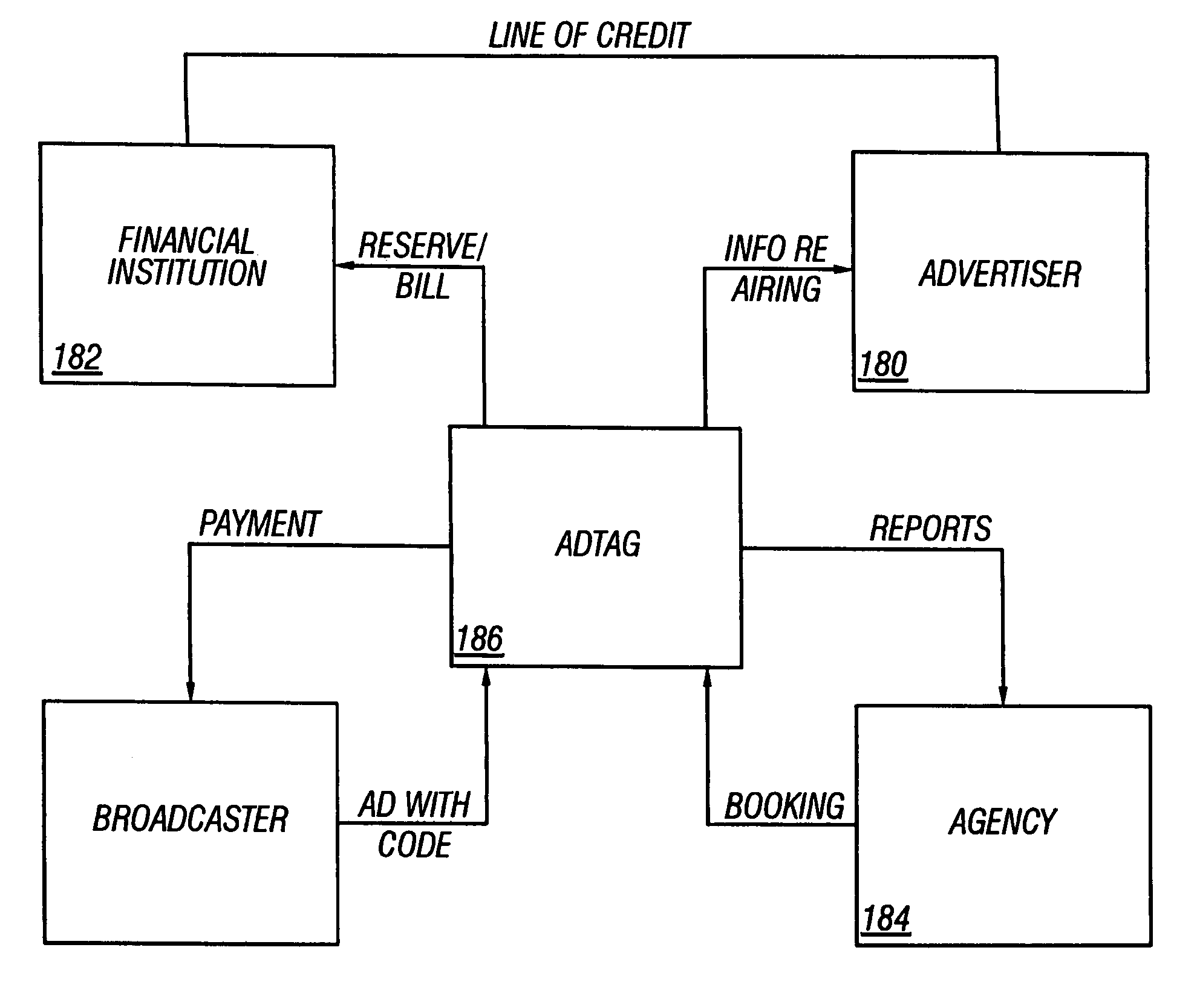
Figure 1 
Figure 2 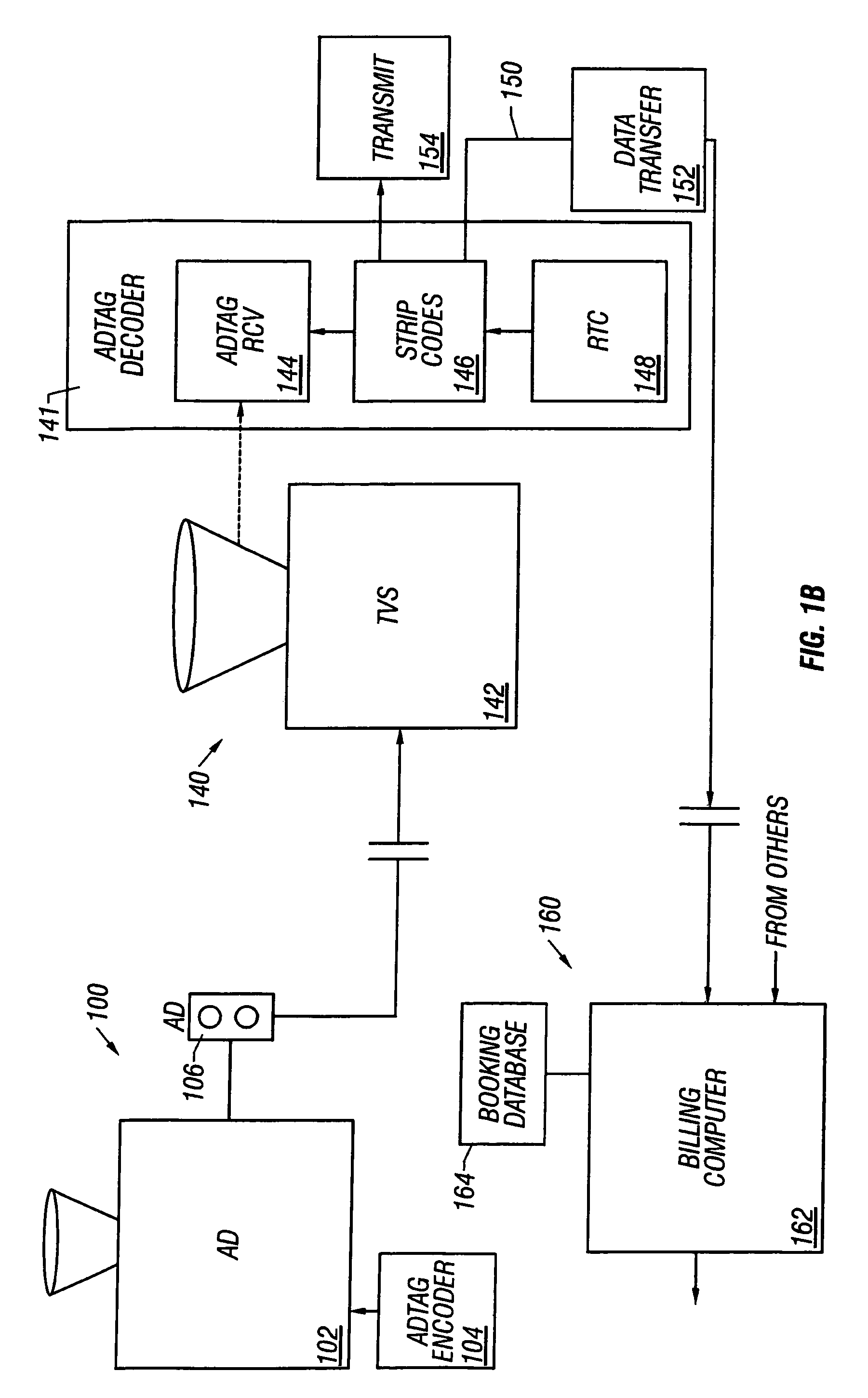
Figure 3
Abstract
Description
[0001] This application is a division and claims the benefit of priority under 35 U.S.C. §120 of U.S. patent application Ser. No. 08 / 979,838, filed on Nov. 26, 1997, now U.S. Pat. No. 6,173,271 which is incorporated herein by reference.FIELD OF THE INVENTION
[0002] The present invention relates to a media advertising automatic billing system which automatically and securely maintains an exact tracking of advertisements which are played and produces billing information for those advertisements.BACKGROUND OF THE INVENTION
[0003] Commercial advertising (“commercials”) create the revenues that sustain the content provider's operation. Commercials provide a host of special problems based on the nature of the media.
[0004] Specifically, media such as television and radio sell specific time slots for playing of the advertisement. The content provider, e.g., the television station, sells a time slot in which a commercial will be played.
[0005] This arrangement creates special considerations. The sta...
Examples
Embodiment Construction
[0048]The present specification describes billing for an advertisement which is broadcast over a medium. The medium could be of any type. Television is described as the preferred embodiment of the medium.
[0049]Video sent over a channel is often transmitted using the teletext standard, which is a packet transmission method for transmitting video. The video is formed of a number of pixels arranged in lines. The lines are used to transmit the digital information.
[0050]Each line is transmitted from the left side of the screen to the right side of the screen. The cursor that writes the information thereafter needs to move from the right side of the screen back to the left side of the screen. The display is blanked during this time of retrace. This time is referred to as the vertical blanking interval or “VBI”. Information can be stored in these times of retrace.
[0051]The NTSC video standard uses 525 lines with VBI lines in lines 6 through 21 and lines 258 through 273. Some of these lines...