
Method and system for processing overloaded keys of a mobile device
a mobile device and key technology, applied in static indicating devices, instruments, substation equipment, etc., can solve the problems of lack of pointing devices to provide cursor movement, limited keypad size,
Patent Information
- Authority / Receiving Office
- US · United States
- Patent Type
- Patents(United States)
- Current Assignee / Owner
- Publication Date
- 2006-06-20
- Estimated Expiration
- Not applicable · inactive patent
Smart Images
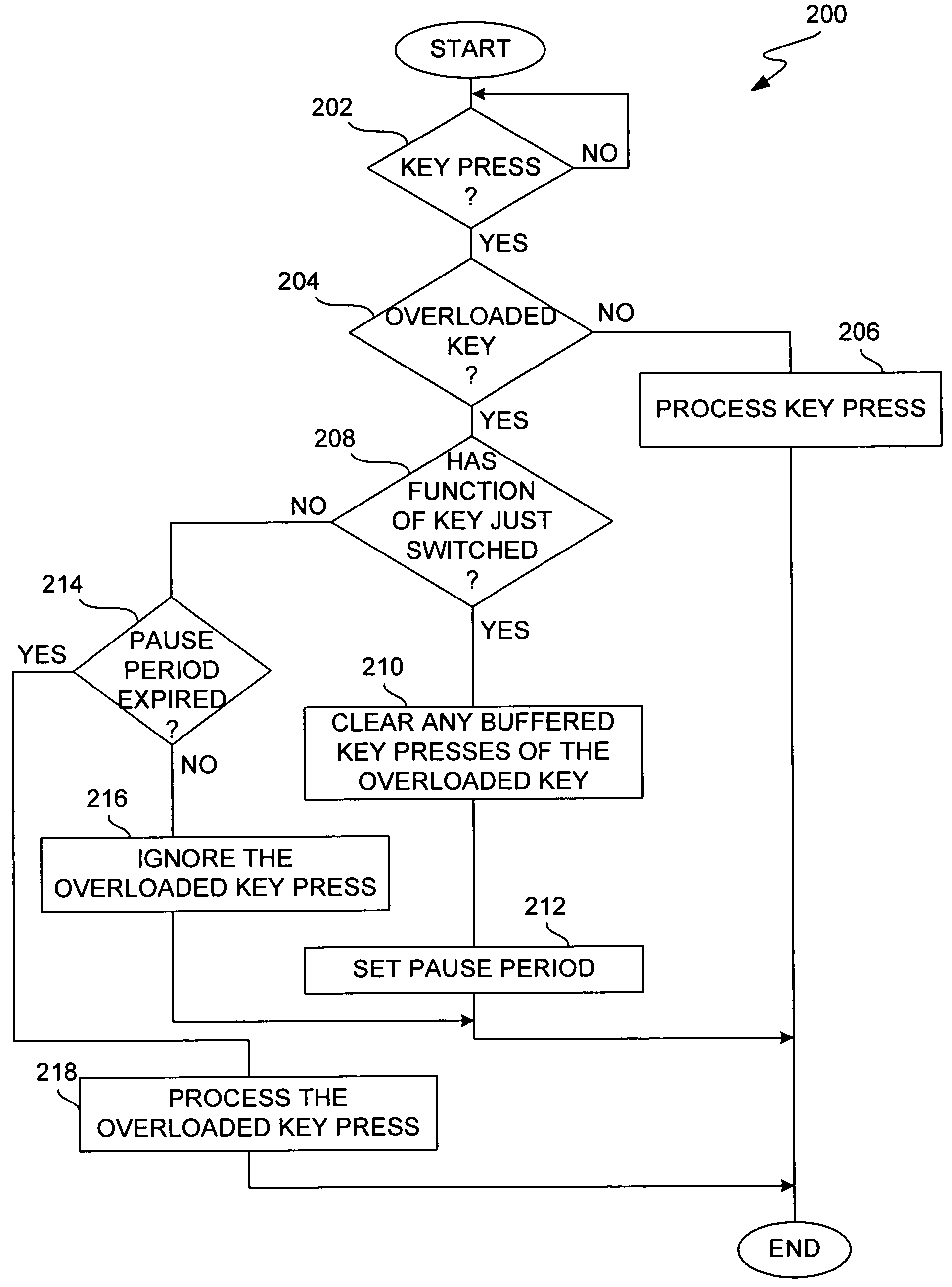
Figure 1 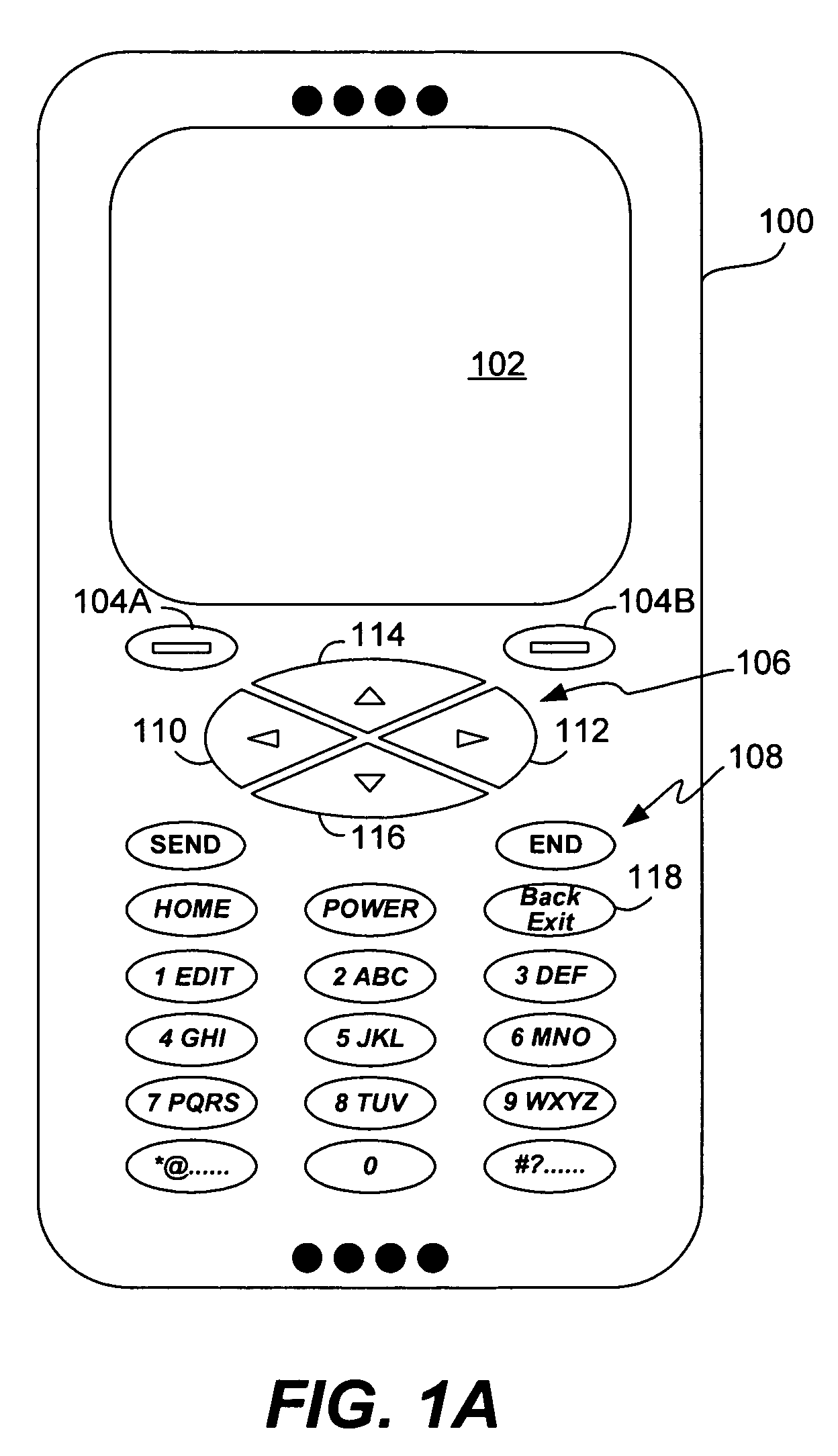
Figure 2 
Figure 3
Abstract
Description
CROSS REFERENCE TO RELATED APPLICATIONS
[0001] This application is a continuation of application Ser. No. 09 / 611,474, filed Jul. 7, 2000, now U.S. Pat. No. 6,907,273 from which priority under 35 U.S.C. §120 is claimed, and which is incorporated herein by reference.BACKGROUND OF THE INVENTION
[0002] 1. Field of the Invention
[0003] The present invention relates to mobile devices and, more particularly, to processing overloaded keys on mobile devices.
[0004] 2. Description of the Related Art
[0005] Computing devices normally provide text entry capabilities for users. With desktop and laptop computers, text entry is facilitated by a full-size (or nearly full-size) keyboard and a pointing device. The pointing device can be a mouse, a trackball, etc. which serves to move a cursor. Unfortunately, small-scale computing devices (e.g., cellular phones, two-way pagers, etc.) tend to have limited size keypads and lack any pointing device to provide cursor movement. As a result, it is often tedious and t...
Examples
Embodiment Construction
[0026]The invention relates to improved approaches for processing overloaded keys substantially more in accordance with user's expected behavior. With the improved approaches, users are less likely to undergo unexpected processing in response to overloaded key presses. An overload key is a key (e.g., multi-function key) that performs two or more functions depending on context of use. In one embodiment, the processing ignores certain overloaded key presses and / or imposes delays to ensure that users have an opportunity to appreciate when an overloaded key has switched to another function.
[0027]The invention is particularly well suited for small-scale mobile devices having reduced size displays and overloaded keys such as mobile phones (e.g., cellular phones), two-way pagers, Personal Digital Assistants (PDAs), or other two-way mobile communication devices. Such devices typically have significantly less memory and processing capability than is found in desktop and laptop computers. The...