
Methods for preventing distal embolization from the vertebrobasilar artery using flow reversal
a technology of vertebrobasilar artery and flow reversal, which is applied in the field of preventing distal embolization from the vertebrobasilar artery using flow reversal, can solve the problems of coma or death, combination of symptoms, and infarction in these areas of the brain that can produce dire consequences, and achieves the effects of minimizing blood loss, eliminating the need for systemic anticoagulation, and preventing distal embolization
Patent Information
- Authority / Receiving Office
- US · United States
- Patent Type
- Patents(United States)
- Current Assignee / Owner
- Publication Date
- 2008-11-18
- Estimated Expiration
- Not applicable · inactive patent
Smart Images
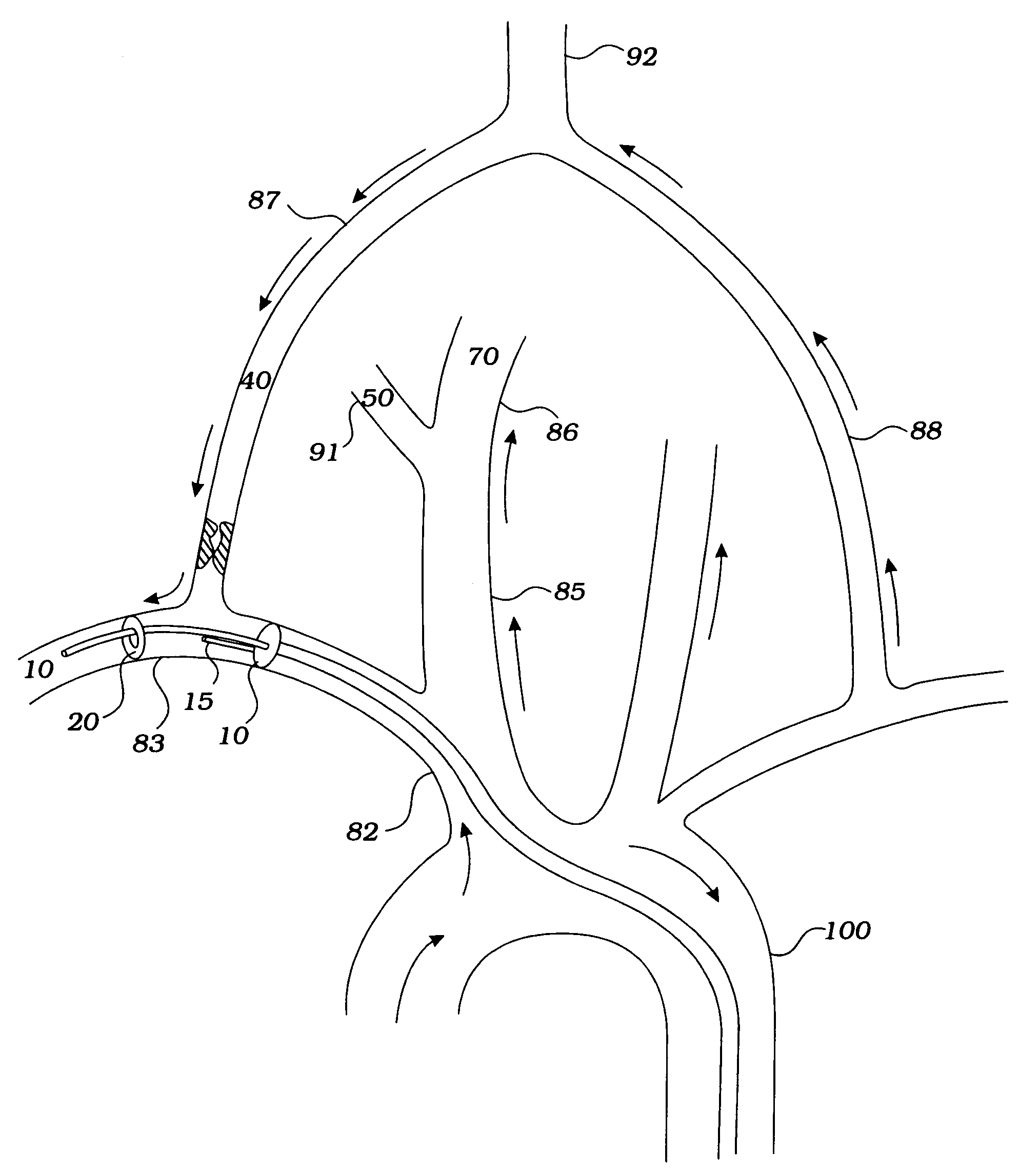
Figure 1 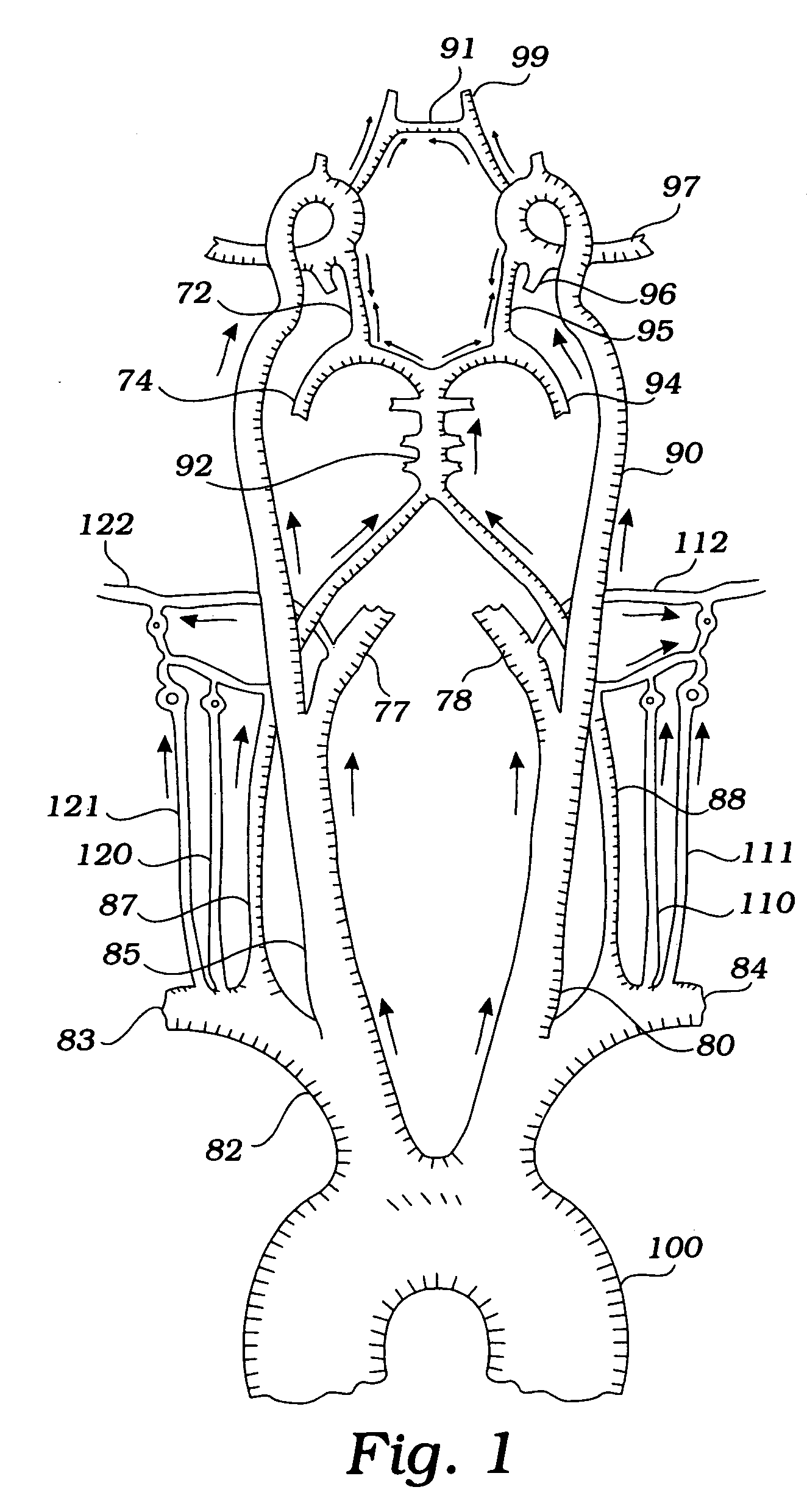
Figure 2 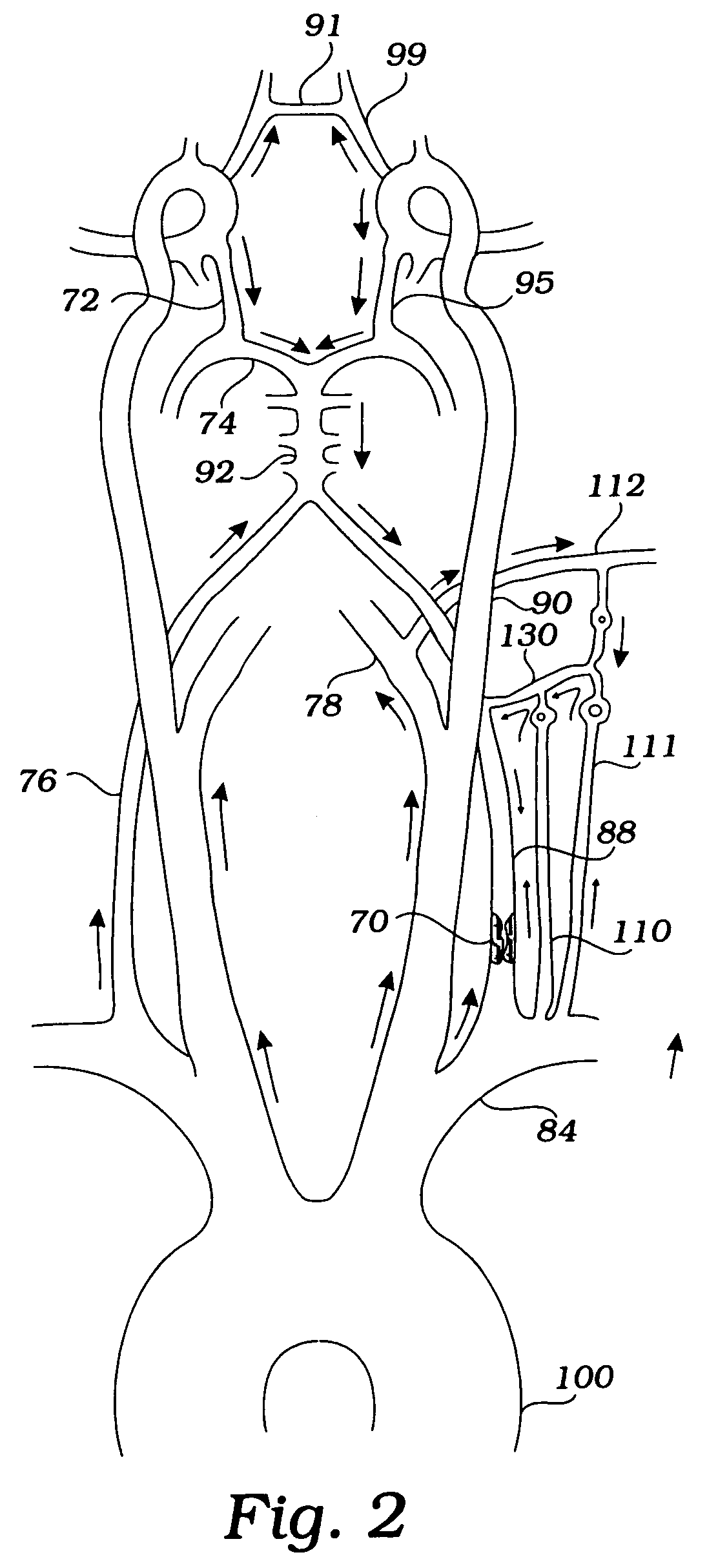
Figure 3
Abstract
Description
[0001] This is a divisional of U.S. application Ser. No. 09 / 792,732, now U.S. Pat. No. 6.887,227, filed Feb. 23, 2001, which is hereby expressly incorporated by reference in its entirety.FIELD OF THE INVENTION
[0002] The present invention relates generally to devices and methods useful in treating patients with stroke or occlusive cerebrovascular disease. More specifically, the invention provides an extracranial device capable of reversing flow down a vertebral or basilar artery, and into the innominate, subclavian, or brachial artery during an invasive procedure, thereby avoiding distal embolization of vascular debris. Various diagnostic or therapeutic instruments, including an atherectomy catheter, a filter, and / or an angioplasty / stent catheter, can be introduced through or in combination with the device for treating the vertebrobasilar occlusion. The invention may also be useful to reverse flow during a stroke.BACKGROUND OF THE INVENTION
[0003] Stroke is the third most common cause of...
Examples
Embodiment Construction
[0049]The cerebral circulation is regulated in such a way that a constant total cerebral blood flow (CBF) is generally maintained under varying conditions. For example, a reduction in flow to one part of the brain, such as in stroke, may be compensated by an increase in flow to another part, so that CBF to any one region of the brain remains unchanged. More importantly, when one part of the brain becomes ischemic due to a vascular occlusion, the brain compensates by increasing blood flow to the ischemic area through its collateral circulation via the Circle of Willis.
[0050]FIG. 1 depicts normal cerebral circulation and collateral blood flow in the Circle of Willis and the posterior circulation. Aorta 100 gives rise to right brachiocephalic trunk 82, left common carotid artery (CCA) 80, and left subclavian artery 84. The brachiocephalic artery further branches into right common carotid artery 85 and right subclavian artery 83. The left CCA gives rise to left internal carotid artery (...