
Salt bath ferritic nitrocarburizing of brake rotors
a technology of ferritic nitrocarburizing and brake rotors, which is applied in the direction of heat treatment apparatus, brake discs, manufacturing tools, etc., can solve the problems of surface corrosion, pedal pulsation or a corroded braking surface, high temperatures on the rotor cheek surfaces, etc., and achieve the absence of distortion of the case structure and provide oxidation resistance.
Patent Information
- Authority / Receiving Office
- US · United States
- Patent Type
- Patents(United States)
- Current Assignee / Owner
- Publication Date
- 2012-10-16
Smart Images
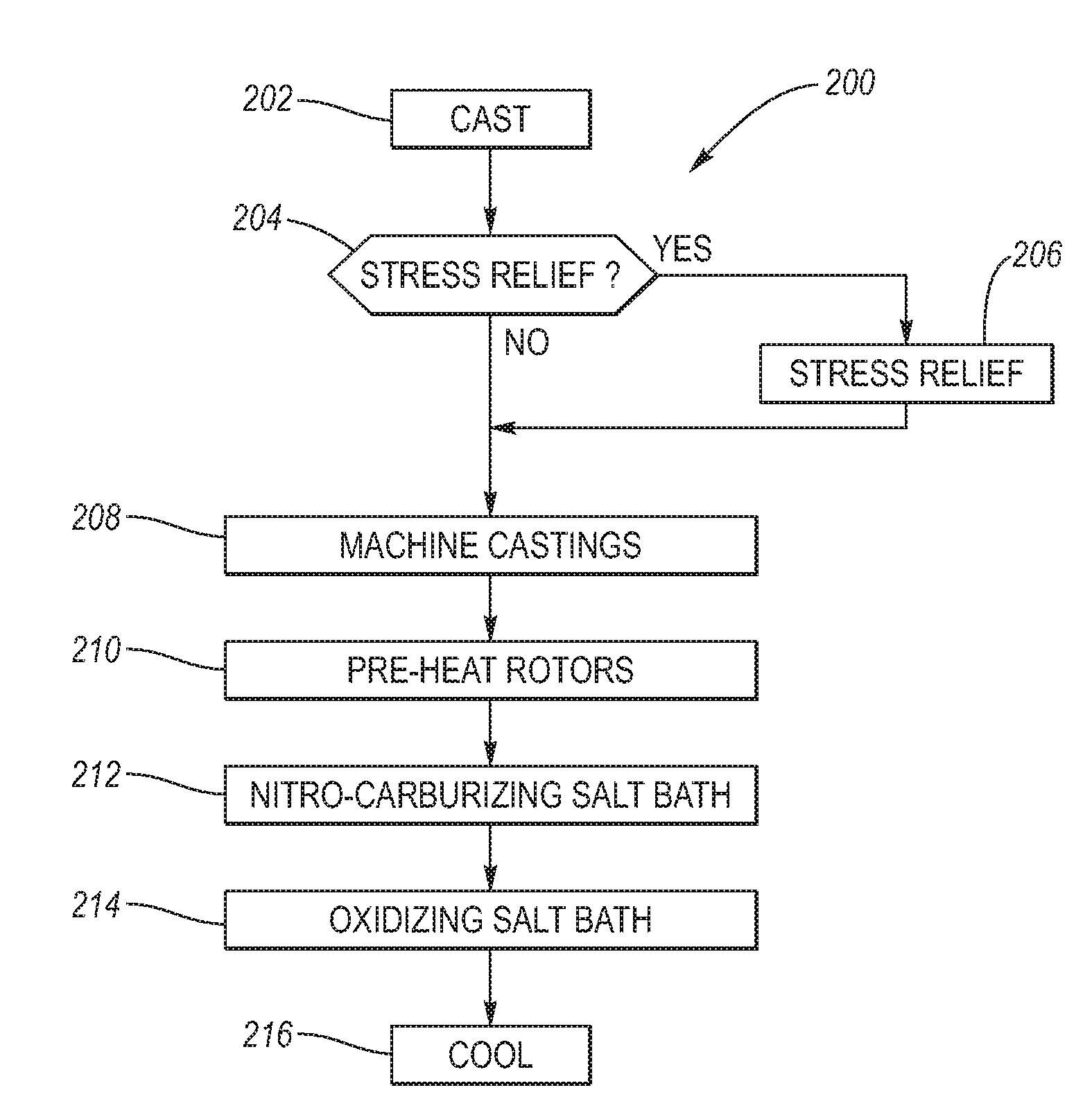
Figure 1 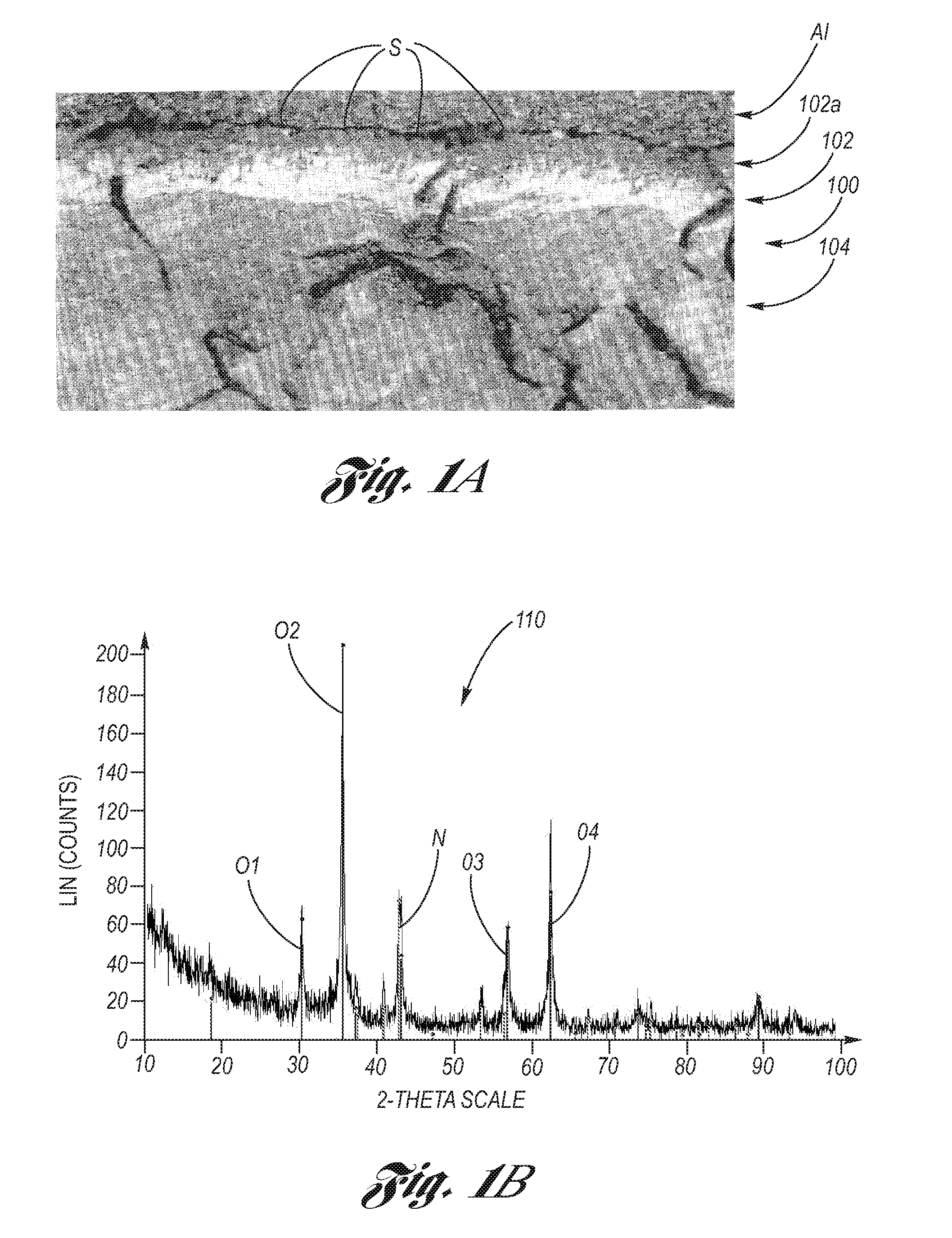
Figure 2 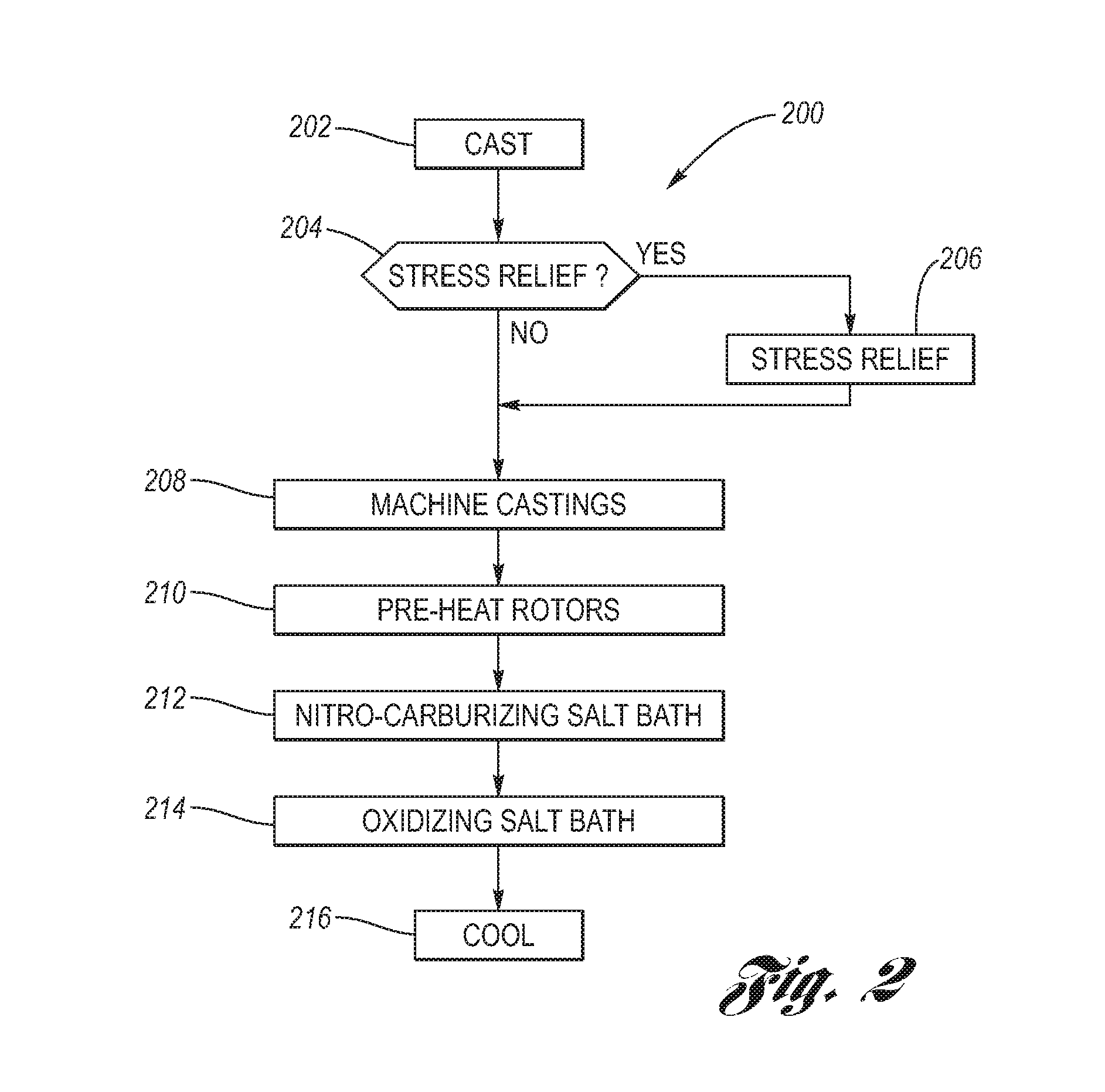
Figure 3
Abstract
Description
TECHNICAL FIELD
[0001] The present invention relates to the treatment of the surface of cast iron brake rotors to improve performance characteristics, and more particularly to the nitrocarburizing of the surface of cast iron brake rotors to mitigate the effects of rotor surface oxidation and corrosion.BACKGROUND OF THE INVENTION
[0002] The brake rotor is an integral component of braking systems across multiple types of motor vehicles. The disc brake is an energy conversion device which converts mechanical energy to heat. Disc braking systems consist of a non-rotating friction material and application sub-systems, as well as a brake rotor that rotates with the wheel. To stop or slow the vehicle, the friction material sub-system is engaged with the braking surfaces (rotor cheeks) of the brake rotor to generate heat due to friction, thereby converting mechanical energy to heat, and thereby slowing the rotation of the wheel.
[0003] The performance of the braking system, in general, and the br...
Examples
Embodiment Construction
[0027]Referring now to the Drawing, FIGS. 1A through 5 depict an example of a two salt bath ferritic nitrocarburizing system (process and apparatus) for producing a ferritic nitrocarburized surface treatment of cast iron brake rotors. The following description of the preferred embodiments is merely exemplary in nature and is not intended to limit the invention, its applications, or its uses.
[0028]FIG. 1A shows a cross-section of the surface microstructure of a ferrous material 100, a pearlitic cast iron brake rotor, subjected to the salt bath ferritic nitrocarburizing process according to the present invention. This process initially introduces carbon and nitrogen simultaneously from a nitrocarburizing salt bath into the surface S of the ferrous material 100 (an aluminum foil Al which is shown is merely an artifact of the testing set-up, and it does not form a part of the ferrous material 100). Thereafter, the ferrous material 100 is treated in an oxidizing salt bath. This step of t...