
Optical system for following ocular movements and associated support device
a technology of optical system and ocular movement, which is applied in the field of optical system for tracking ocular movement, can solve the problems of introducing optical distortion, bulky system, and difficult to utilize in a portable manner, and achieves the effects of reducing the reflection present on the individual's eyes, reducing the optical distortion of acquired images, and facilitating detection and analysis
Patent Information
- Authority / Receiving Office
- US · United States
- Current Assignee / Owner
- Publication Date
- 2015-07-28
Smart Images
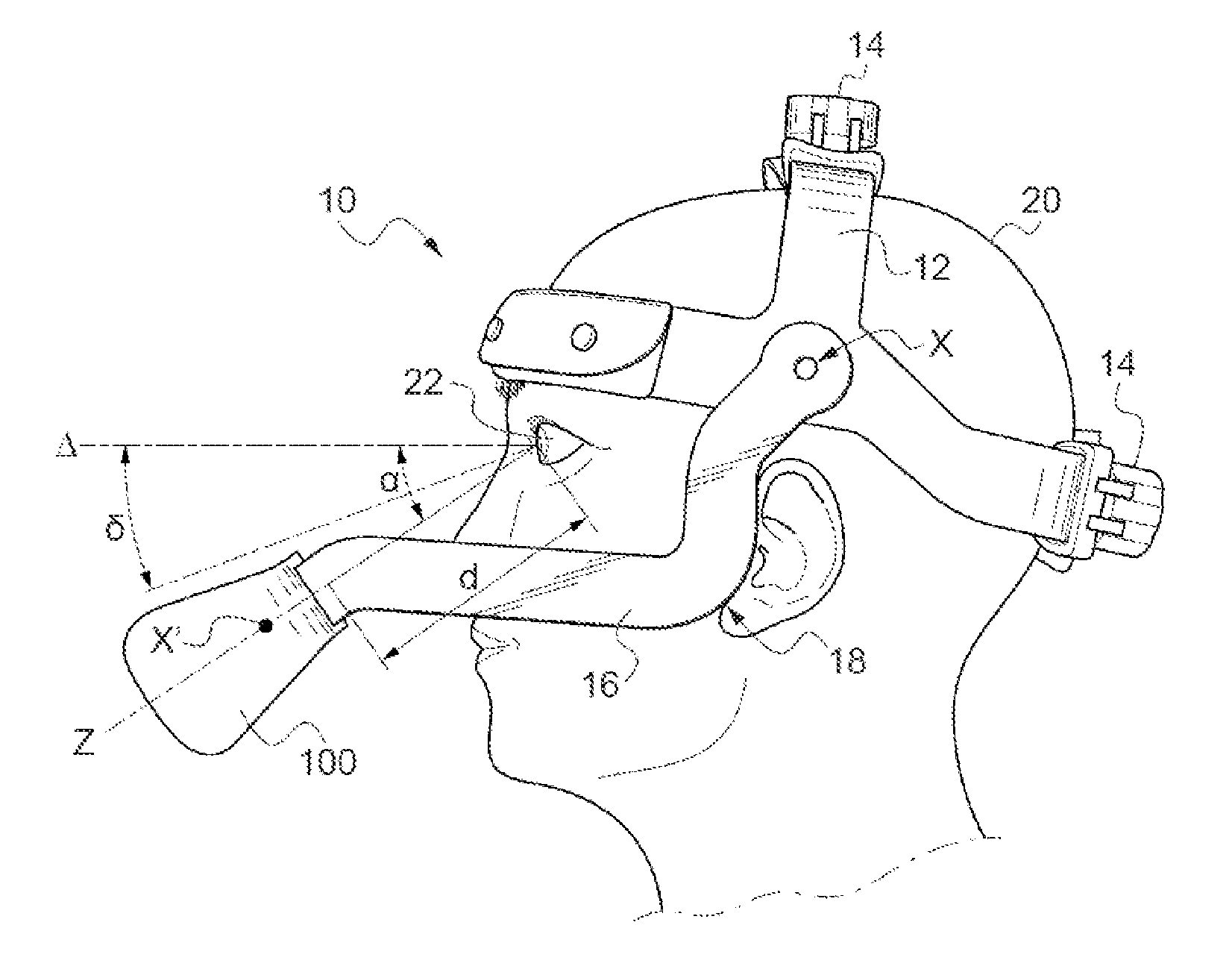
Figure 1 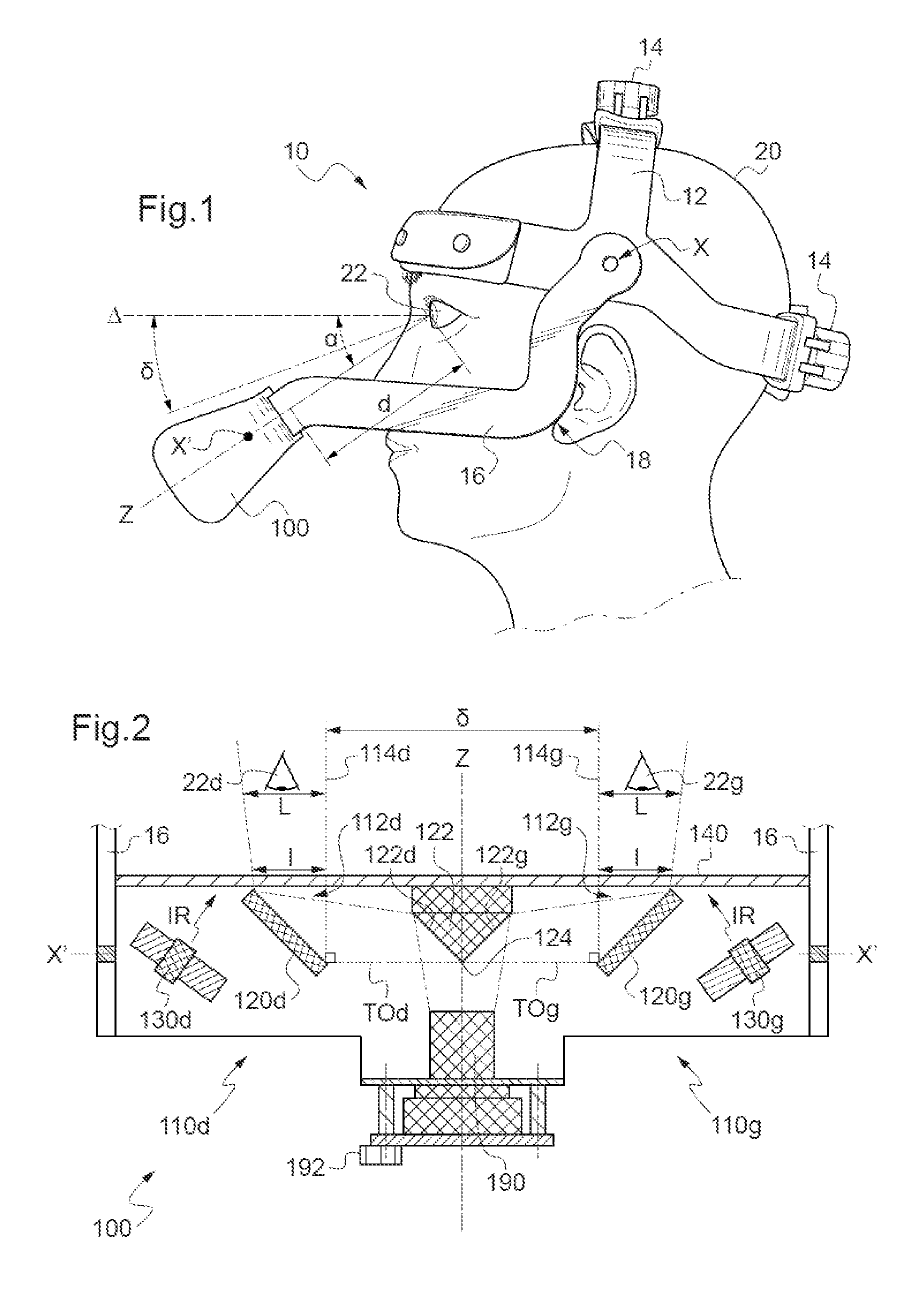
Figure 2 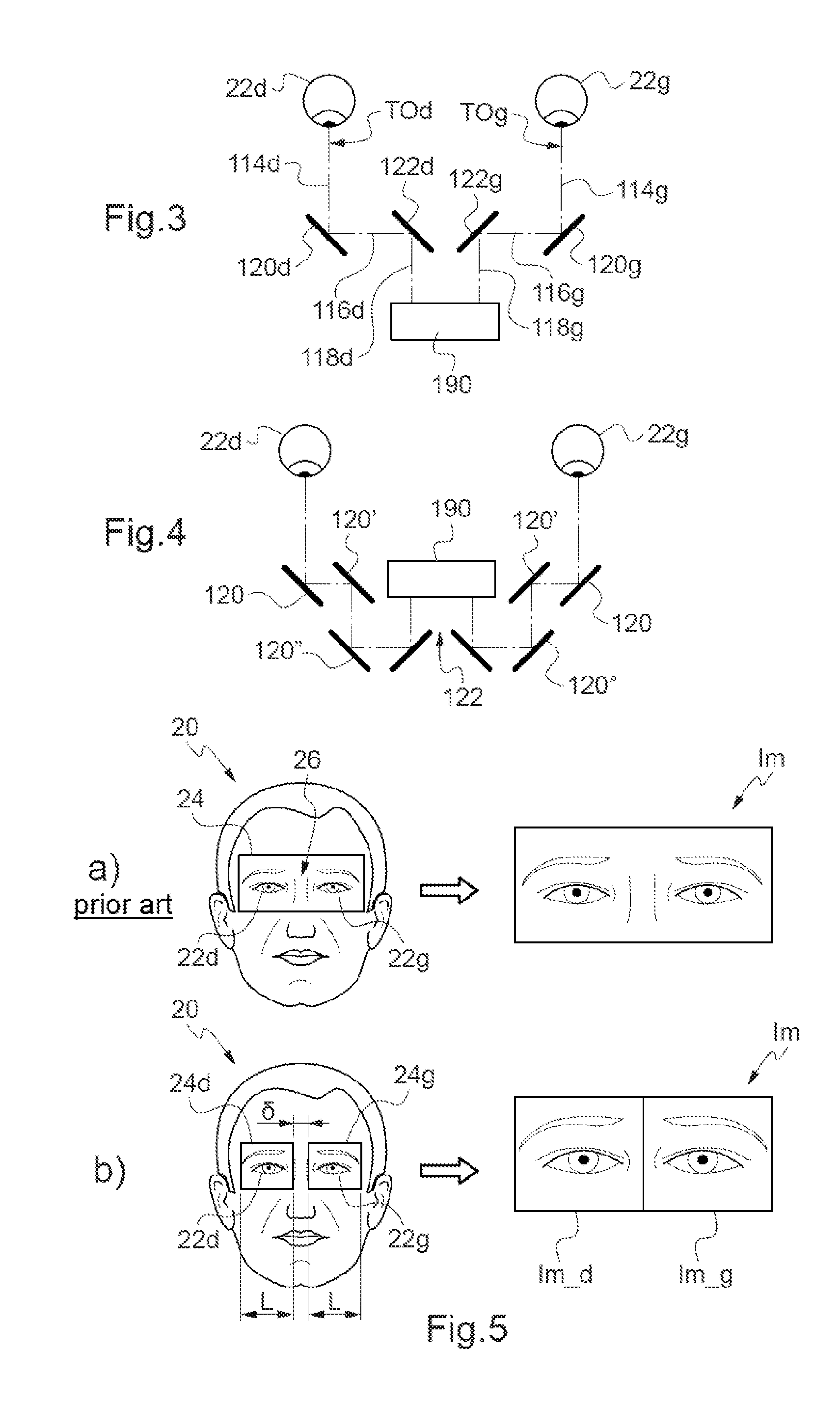
Figure 3
Abstract
Description
BACKGROUND OF THE INVENTION
[0001] The present invention relates to an optical system for tracking ocular movements of an individual and an associated support-type device worn on the head like a helmet.DESCRIPTION OF THE RELATED ART
[0002] The tracking of ocular movements takes place in numerous applications, medical as well as technological or marketing.
[0003] For example, eye-movement analysis constitutes an aid to medical diagnosis, in particular in the diagnosis of neurological and psychiatric diseases such as neurodegenerative diseases including parkinsonian syndromes.
[0004] This analysis also makes it possible to deepen understanding in research fields such as visual exploration, visual strategy or the exploration of pathologies.
[0005] Another field of application is the detection of ocular movements in order to control electronic systems, such as for example the control of a computer pointer or of a high resolution display, by eye gaze.
[0006] Conventional optical systems for tracking...
Examples
Embodiment Construction
[0049]With reference to FIG. 1, a helmet-type support 10 for tracking the ocular movements of an individual comprises a helmet structure 12 provided in order to be adjusted to the head of an individual 20, for example using elastic means (holding elastic strap passing around the head) or mechanical adjustment means 14.
[0050]The helmet 10 also comprises two attachment arms 16 on either side of the individual's face, mounted mobile in rotation about the horizontal axis X relative to the structure 12.
[0051]The attachment arms 16 are bent and extend diagonally from the points of rotation situated at the height of the individual's temporal areas towards the lower part of the face, firstly by a substantially vertical section, then by a horizontal section. The bend 18 makes it possible, as the figure shows, to free the individual's side field of view.
[0052]At the end of the two attachment arms there is arranged, in an articulated manner about the horizontal axis X′, an optical system 100 f...