
Polyamide-based film, preparation method thereof, and cover window comprising same
a polyamide-based film and film-based technology, applied in the field of polyamide-based films, can solve the problems of deterioration of optical properties, lack of original screen color implementation angle, loss of angle of view, etc., and achieve excellent optical properties, low haze, and high transmittance
Patent Information
- Authority / Receiving Office
- US · United States
- Patent Type
- Applications(United States)
- Current Assignee / Owner
- Publication Date
- 2020-12-31
Smart Images
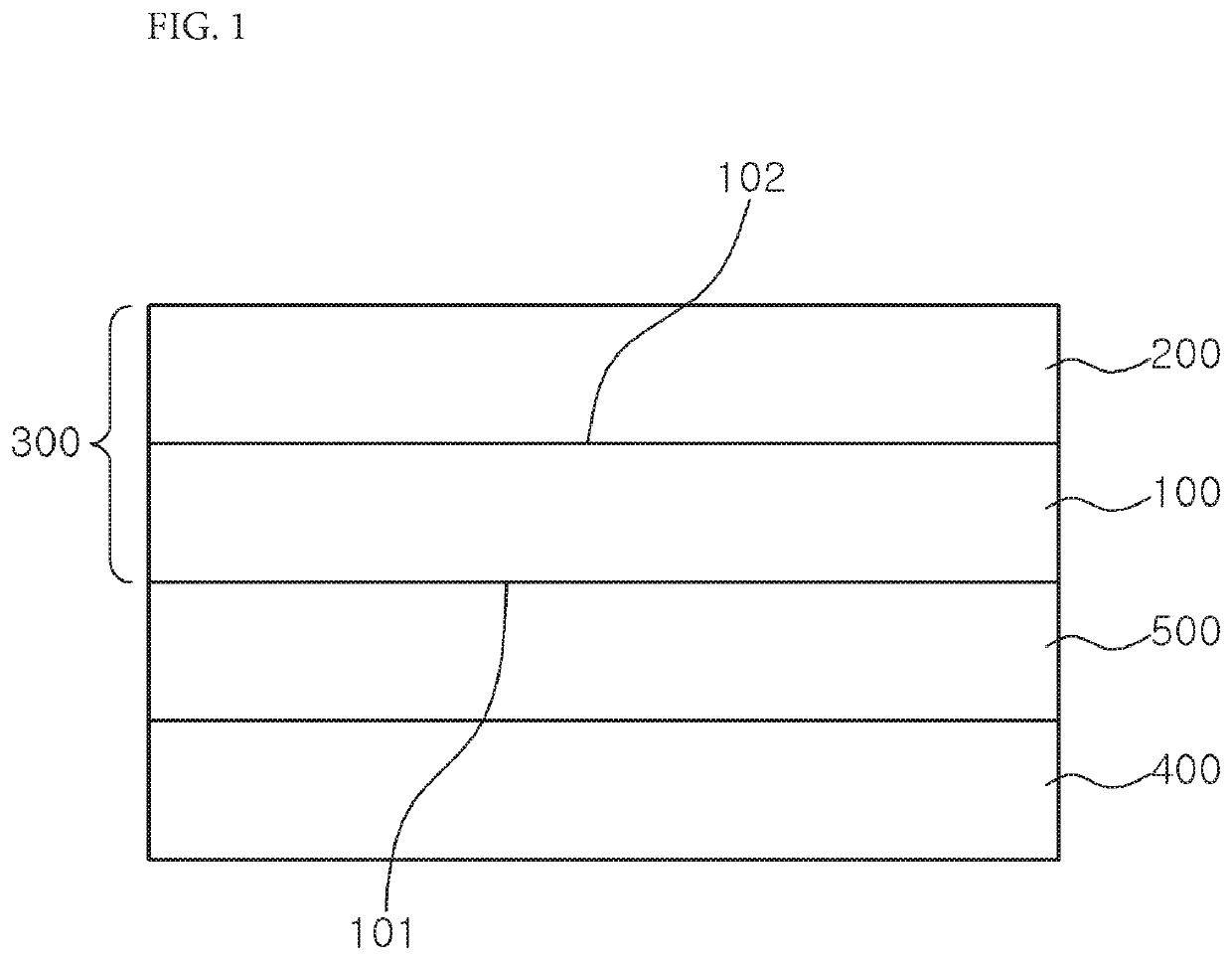
Figure 1 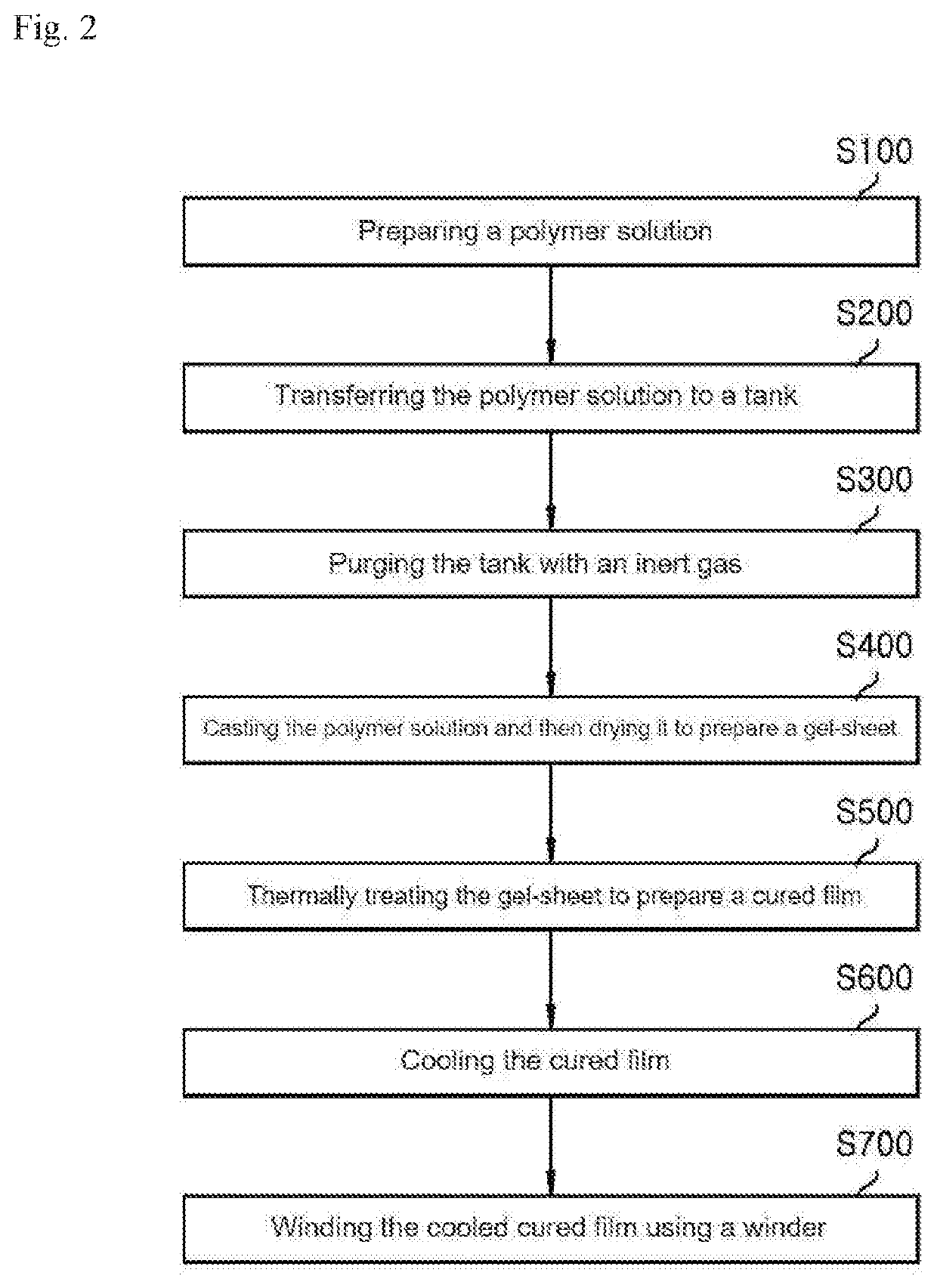
Figure 2 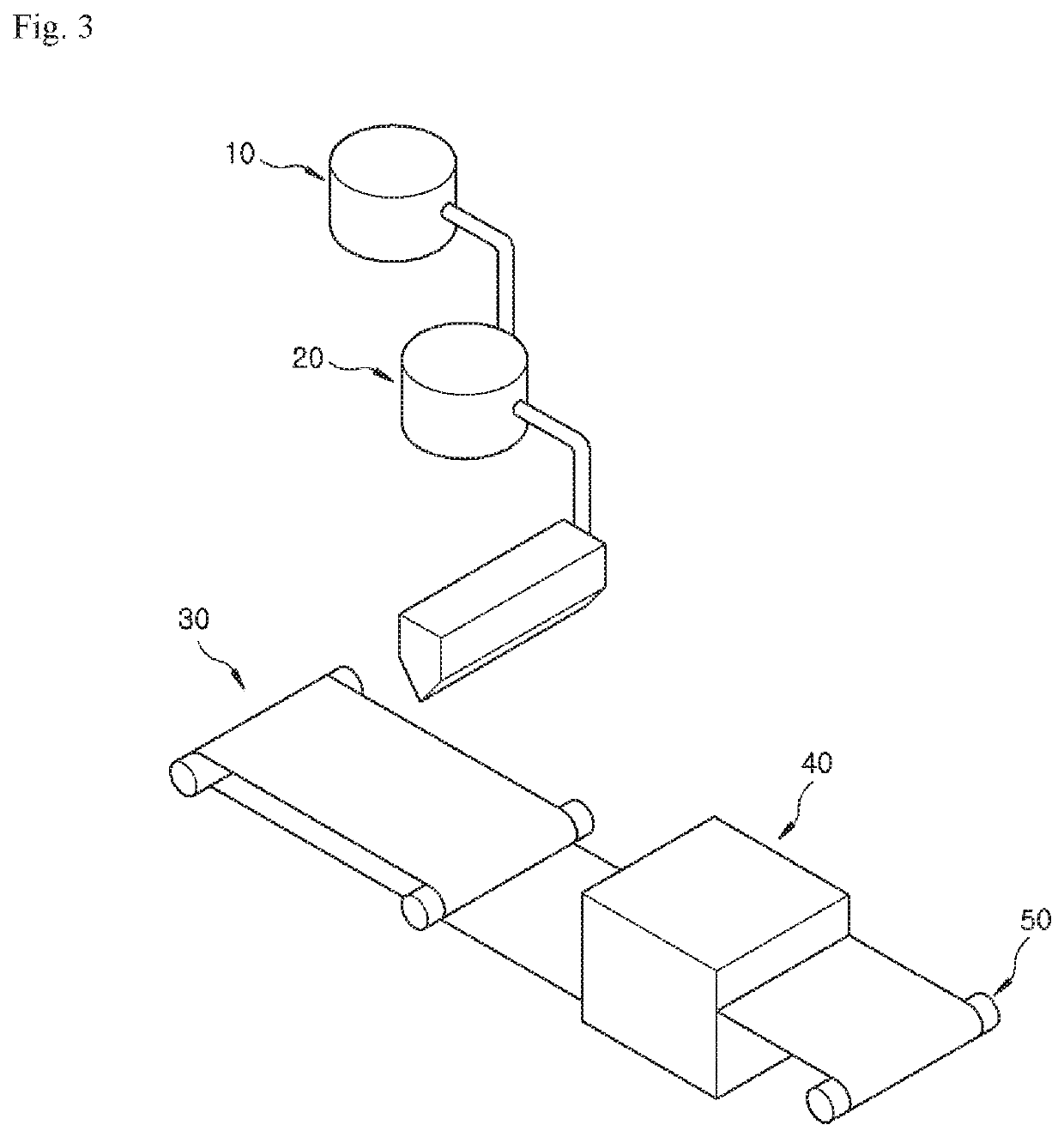
Figure 3
Abstract
Description
TECHNICAL FIELD
[0001] Embodiments relate to a polyamide-based film that is colorless and transparent, is excellent in mechanical properties and optical properties, has a wide angle of view by securing at least a certain level of luminance at various angles, and, in particular, has gloss characteristics similar to those of glass, a process for preparing the same, and a cover window comprising the same.BACKGROUND ART OF THE INVENTION
[0002] Polyimide-based resins such as poly(amide-imide) (PAI) are excellent in resistance to friction, heat, and chemicals. Thus, they are employed in such applications as primary electrical insulation, coatings, adhesives, resins for extrusion, heat-resistant paintings, heat-resistant boards, heat-resistant adhesives, heat-resistant fibers, and heat-resistant films.
[0003] Polyimide is used in various fields. For example, polyimide is made in the form of a powder and used as a coating for a metal or a magnetic wire. It is mixed with other additives depending ...
Examples
example
Example 1a
[0335]A 1-liter glass reactor equipped with a temperature-controllable double jacket was charged with 779.1 g of dimethylacetamide (DMAc) as an organic solvent at 20° C. under a nitrogen atmosphere. Then, 64 g (0.2 mole) of 2,2′-bis(trifluoromethyl)-4,4′-diaminobiphenyl (TFMB) was slowly added thereto and dissolved. Subsequently, 4.44 g (0.01 mole) of 2,2′-bis(3,4-dicarboxyphenyl)hexafluoropropane dianhydride (6FDA) was slowly added thereto, and the mixture was stirred for 1 hour. Then, 12.2 g (0.06 mole) of isophthaloyl chloride (IPC) was added, followed by stirring for 1 hour. And 26.43 g (0.13 mole) of terephthaloyl chloride (TPC) was added, followed by stirring for 1 hour, thereby preparing a polymer solution.
[0336]Subsequently, a barium sulfate dispersion (solids content: 18.2% by weight and organic solvent: DMAc) was added to the polymer solution and stirred.
[0337]The polymer solution thus obtained was coated onto a glass plate and then dried with hot air at 80° C. f...
example 2a
[0340]Films were prepared in the same manner as in Example 1a, except that the types and contents of the respective reactants and the like were changed as shown in Table 1 below.
example 1b
[0341]A 1-liter glass reactor equipped with a temperature-controllable double jacket was charged with 779.1 g of dimethylacetamide (DMAc) as an organic solvent at 20° C. under a nitrogen atmosphere. Then, 64 g (0.2 mole) of 2,2′-bis(trifluoromethyl)-4,4′-diaminobiphenyl (TFMB) was slowly added thereto and dissolved. Subsequently, 21.3 g (0.048 mole) of 2,2′-bis(3,4-dicarboxyphenyl)hexafluoropropane dianhydride (6FDA) was slowly added thereto, and the mixture was stirred for 1 hour. Then, 2.44 g (0.012 mole) of isophthaloyl chloride (IPC) was added, followed by stirring for 1 hour. And 28.42 g (0.14 mole) of terephthaloyl chloride (TPC) was added, followed by stirring for 1 hour, thereby preparing a polymer solution. Thereafter, 500 ppm of silica (average particle diameter of 100 nm to 150 nm) was added as a matting agent to the polymer solution thus prepared based on the total weight of the polyamide-based polymer, which was stirred.
[0342]The polymer solution thus obtained was coate...