
Optimizing power consumption of a base station
a base station and power consumption technology, applied in the field of mobile telecommunications, can solve the problems of significantly lower power consumption, limited maximum used output load of amplifiers, inefficient operation of base stations, etc., and achieve the effect of improving the apparatus of base stations and improving computer-readable storage media
Patent Information
- Authority / Receiving Office
- US · United States
- Patent Type
- Patents(United States)
- Current Assignee / Owner
- Publication Date
- 2015-06-30
Smart Images
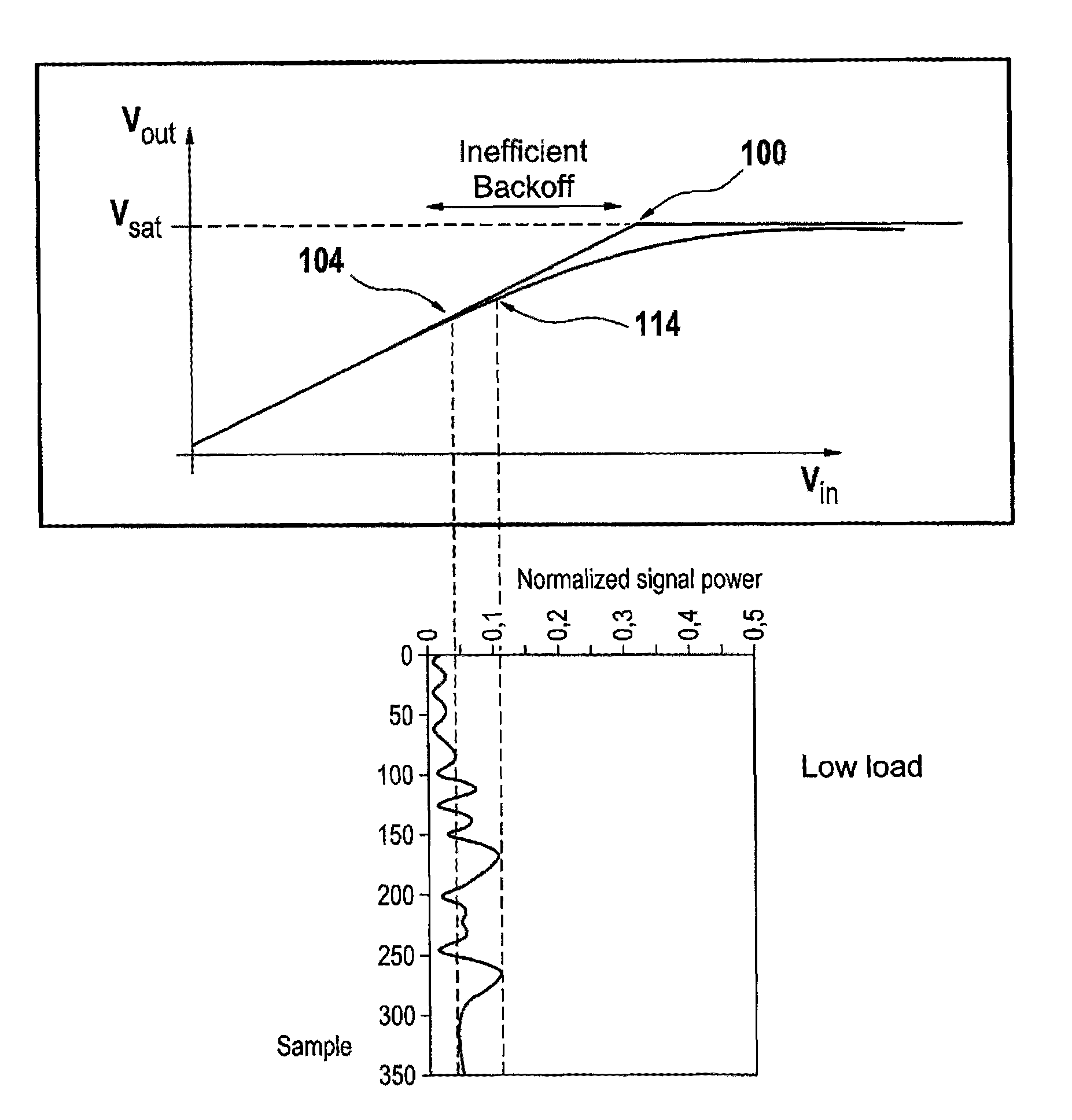
Figure 1 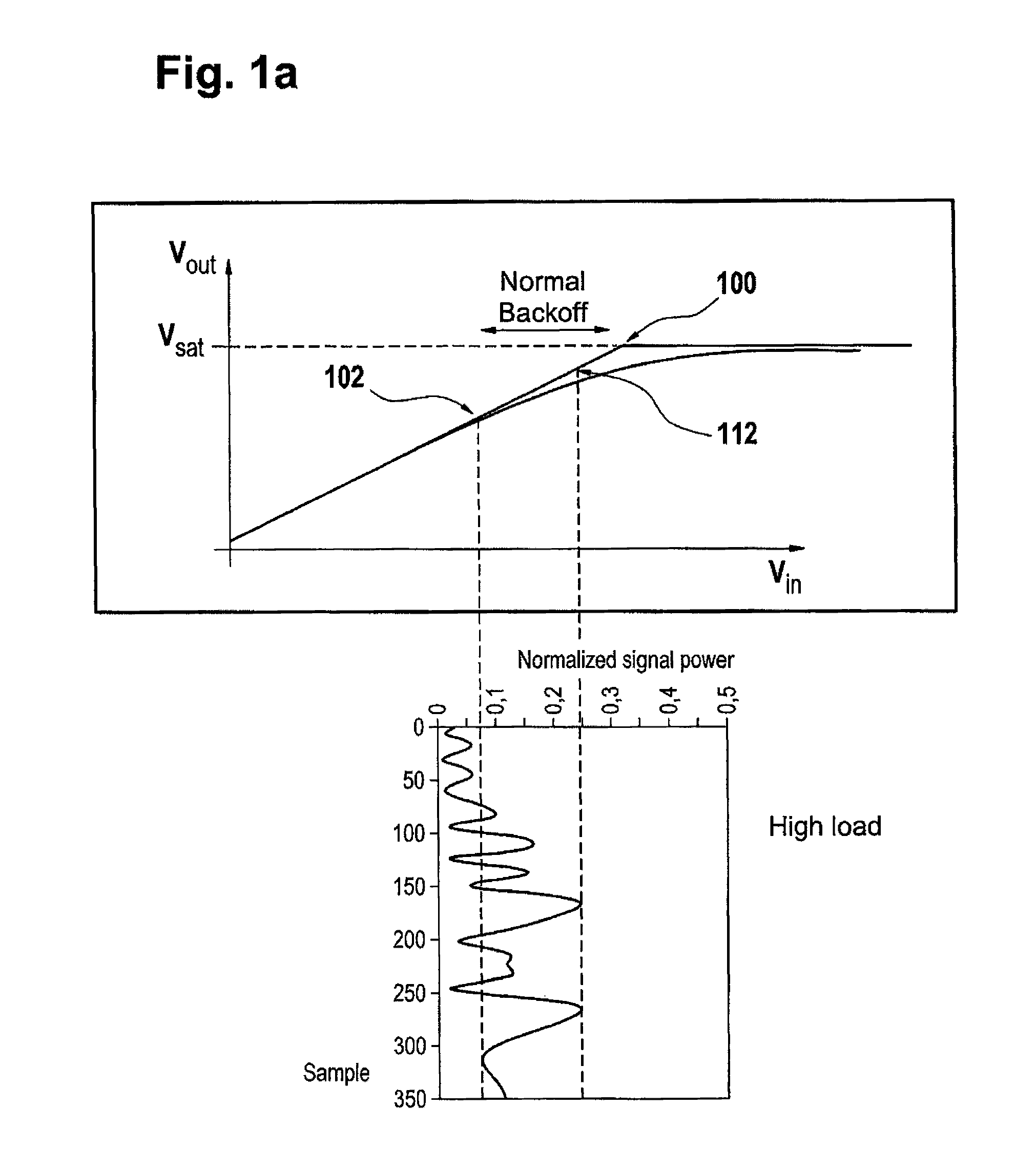
Figure 2 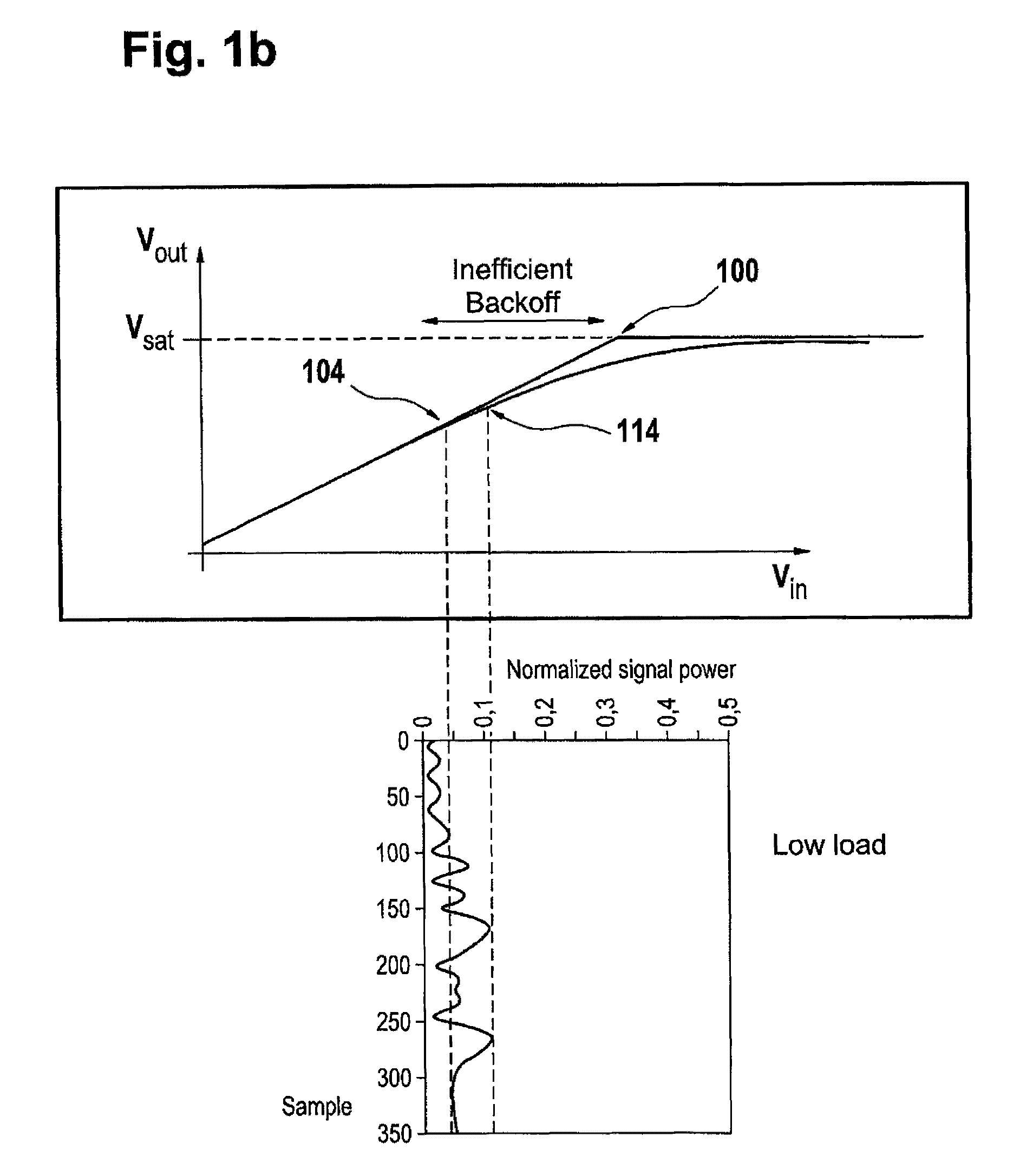
Figure 3
Abstract
Description
FIELD OF THE INVENTION
[0001] The invention relates to the field of mobile telecommunication, more specifically to optimizing power consumption of a base station in a mobile telecommunication network.BACKGROUND AND RELATED ART
[0002] A state of the art base station consumes a maximum power for a maximum traffic load in the respective cell. Such a base station is optimized for the maximum traffic load in the respective cell and consumes more than 50% of the maximum power even when no data is transmitted or received by the base station. The base station is operated inefficiently in times of low traffic loads in the respective cell, because a lower traffic load does not lead to a significantly lower power consumption of the base station. In other words, the ratio of consumed power per transmitted data bit increases significantly for relatively low traffic loads.SUMMARY
[0003] It is an object of the invention to provide an improved method of communication in a mobile telecommunication network...
Examples
Embodiment Construction
[0042]Like numbered elements in these Figs. are either identical elements or perform the same function. Elements which have been discussed previously will not necessarily be discussed in later Figs. if the function is identical.
[0043]FIG. 1 is a schematic view of characteristic curves of a base station amplifier. Each diagram consists of a characteristic curve and a corresponding traffic load diagram of the traffic load in the respective cell. FIG. 1a shows the characteristic curve for a state of the art amplifier in a cell with a relatively high traffic load. FIG. 1b illustrates the characteristic curve of the state of the art amplifier in a cell with a relatively low traffic load. The higher the traffic load the higher is the operation point of the amplifier. In other words, for higher traffic loads the operation point is located nearer to a saturation point 100 of the amplifier. FIG. 1a shows the characteristic curve of an amplifier and the operation point 102 in a cell with a re...