
Method and compounds for generation of iPSCs
a technology of ipscs and stem cells, applied in the field of induced pluripotent stem cells, can solve the problems of low efficiency of reprogramming, inefficient, and unclear molecular basis of reprogramming, and achieve the effects of avoiding immune rejection, increasing the number of cells, and preventing or reducing the number of cells
Patent Information
- Authority / Receiving Office
- US · United States
- Patent Type
- Patents(United States)
- Current Assignee / Owner
- Publication Date
- 2016-08-09
- Estimated Expiration
- Not applicable · inactive patent
Smart Images
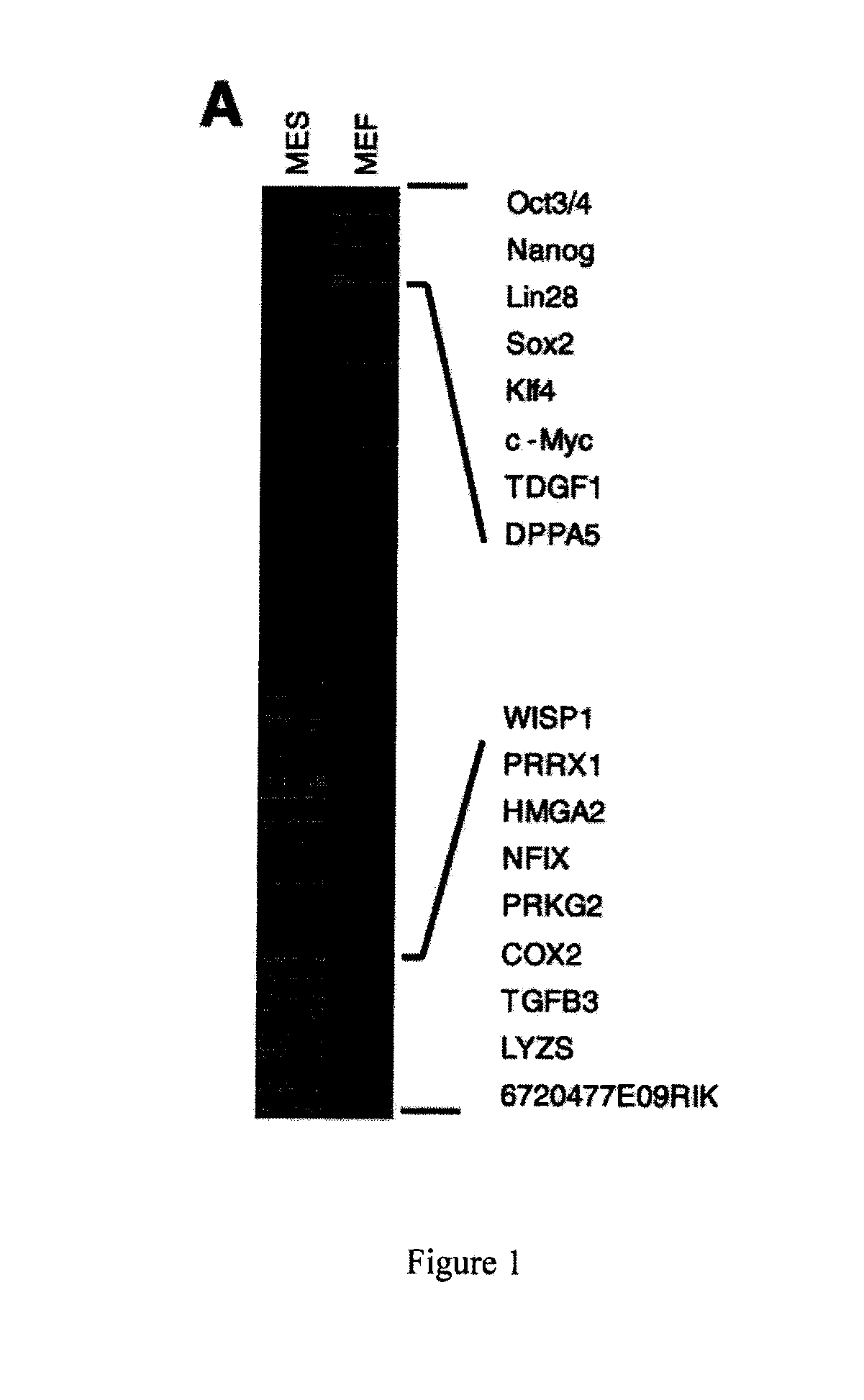
Figure 1 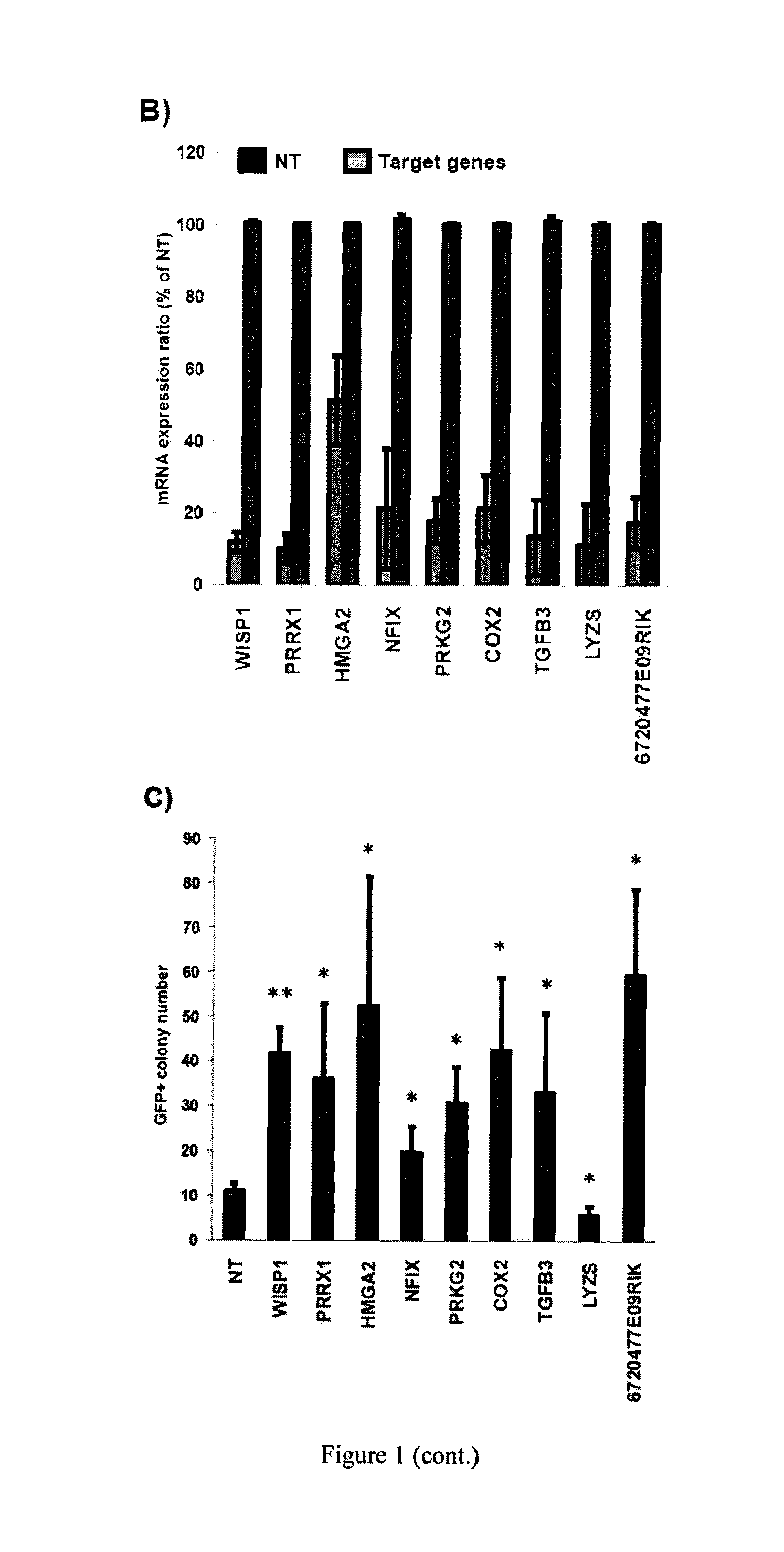
Figure 2 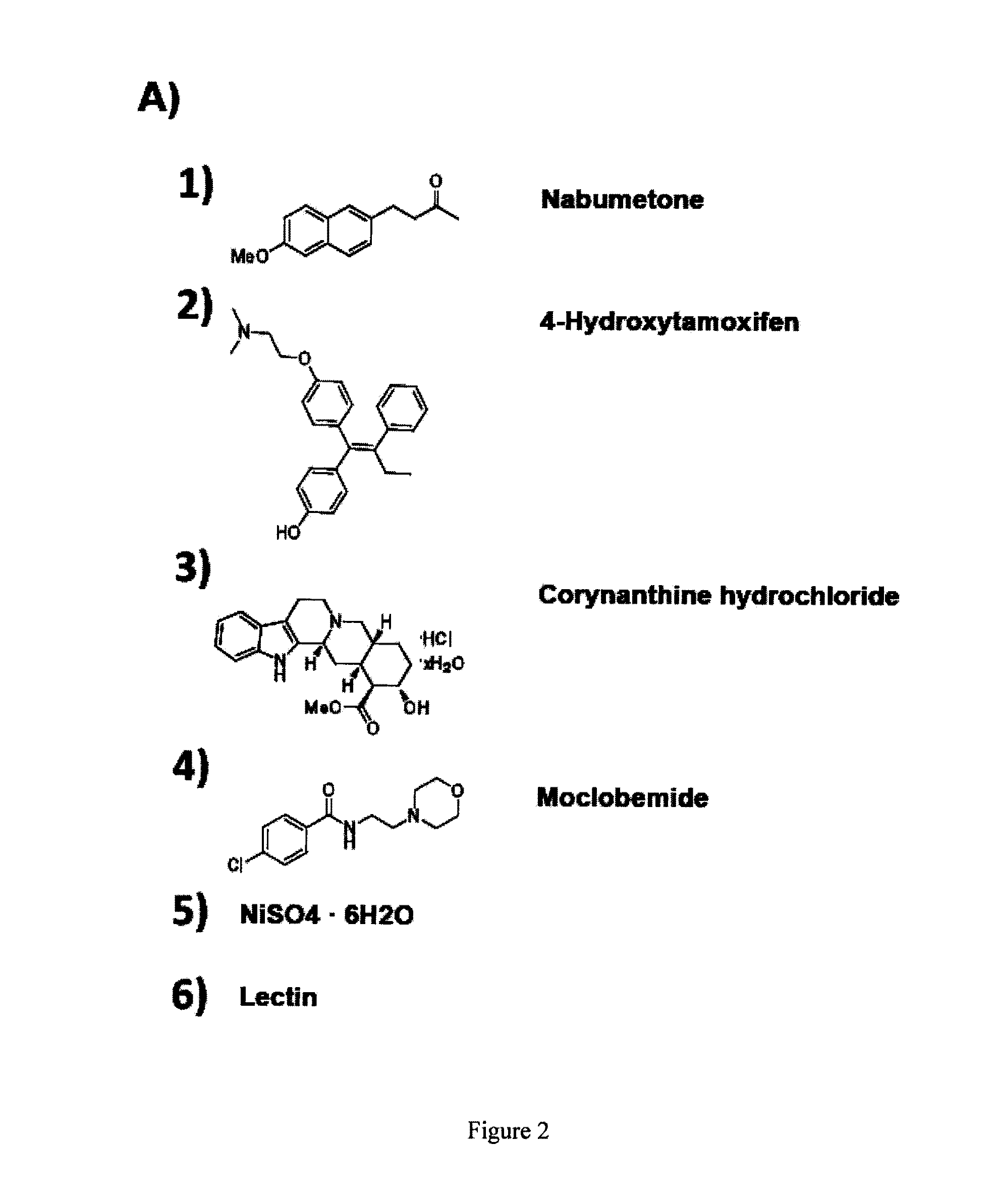
Figure 3
Abstract
Description
CROSS REFERENCE TO RELATED APPLICATION(S)
[0001] This application claims the benefit of priority under 35 U.S.C. §119(e) of U.S. Ser. No. 61 / 445,481, filed Feb. 22, 2011, the entire contents of which is incorporated herein by reference in its entirety.BACKGROUND
[0002] 1. Field of the Invention
[0003] The invention relates generally to the field of induced pluripotent stem cells (iPSCs) and more specifically to methods of generating such cells, as well as identifying agents useful in generating iPSCs.
[0004] 2. Background Information
[0005] Embryonic stem (ES) cells are not only versatile tools for investigating early developmental events but provide a promising source of tissues potentially useful for regenerative therapies. Recent breakthroughs in generating iPSCs provide alternative means to obtain ES-like cells without destroying embryos by introducing four reprogramming factors (Oct3 / 4, Sox2, and Klf4 / c-Myc or Nanog / Lin28) into somatic cells. iPS cells are known to share numerous traits ...
Examples
example 1
Use of Agents in iPSC Induction
[0069]This example illustrates that down-regulation by siRNAs of several key MEF-specific genes encoding proteins with catalytic or regulatory functions, including WISP1, PRRX1, HMGA2, NFIX, PRKG2, COX2, and TGFβ3, greatly increased reprogramming efficiency. Screening results showed that: (a) the non-steroidal anti-inflammatory drug (NSAID) nabumetone acts as a COX2 inhibitor to enhance reprogramming; (b) the anti-cancer drug OHTM can replace Sox2 during reprogramming by inducing endogenous Sox2 expression; and (c) nabumetone can replace c-Myc or Sox2 in reprogramming without compromising self-renewal and pluripotency of derived iPS cells.
[0070]The following materials and experimental methods were utilized.
[0071]Mouse Embryonic Fibroblast (MEF) Derivation.
[0072]Oct4-EGFP MEFs were derived from the mouse strain B6; 129S4-Pou5f1tm2(EGFP)Jae / J (The Jackson Laboratory, Bar Harbor, Me., USA, on the world wide web at jax.org / ; stock #008214) following the pr...