

Method and device for visually impaired assistance
a visual aid and computer technology, applied in the field of visual aid devices, can solve the problems of limited or not present ability to perceive and recognize objects, substantial impediment in walking confidence, and partially sighted or blind people's ability to perceive objects, etc., and achieve the effect of replacing or augmenting vision
Patent Information
- Authority / Receiving Office
- US · United States
- Patent Type
- Patents(United States)
- Current Assignee / Owner
- Publication Date
- 2017-10-17
Smart Images
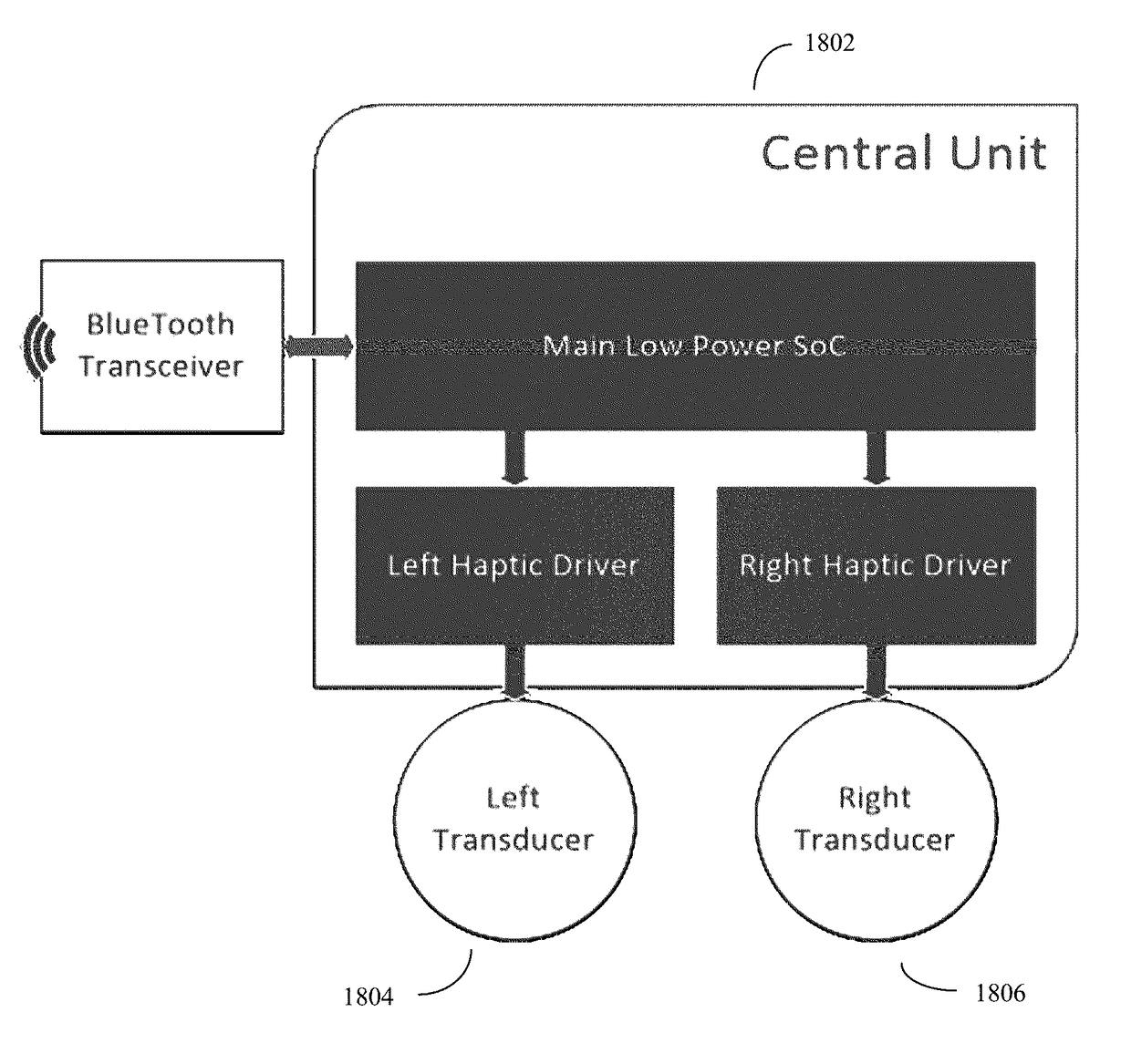
Figure 1 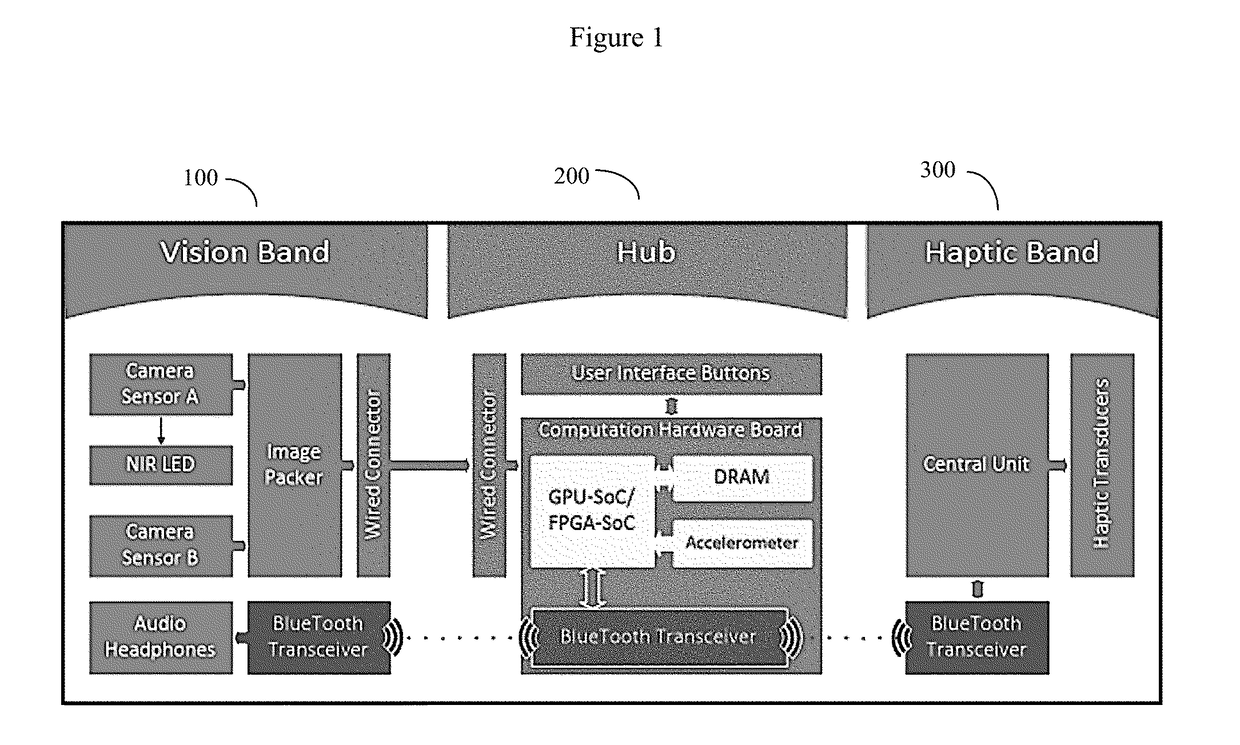
Figure 2 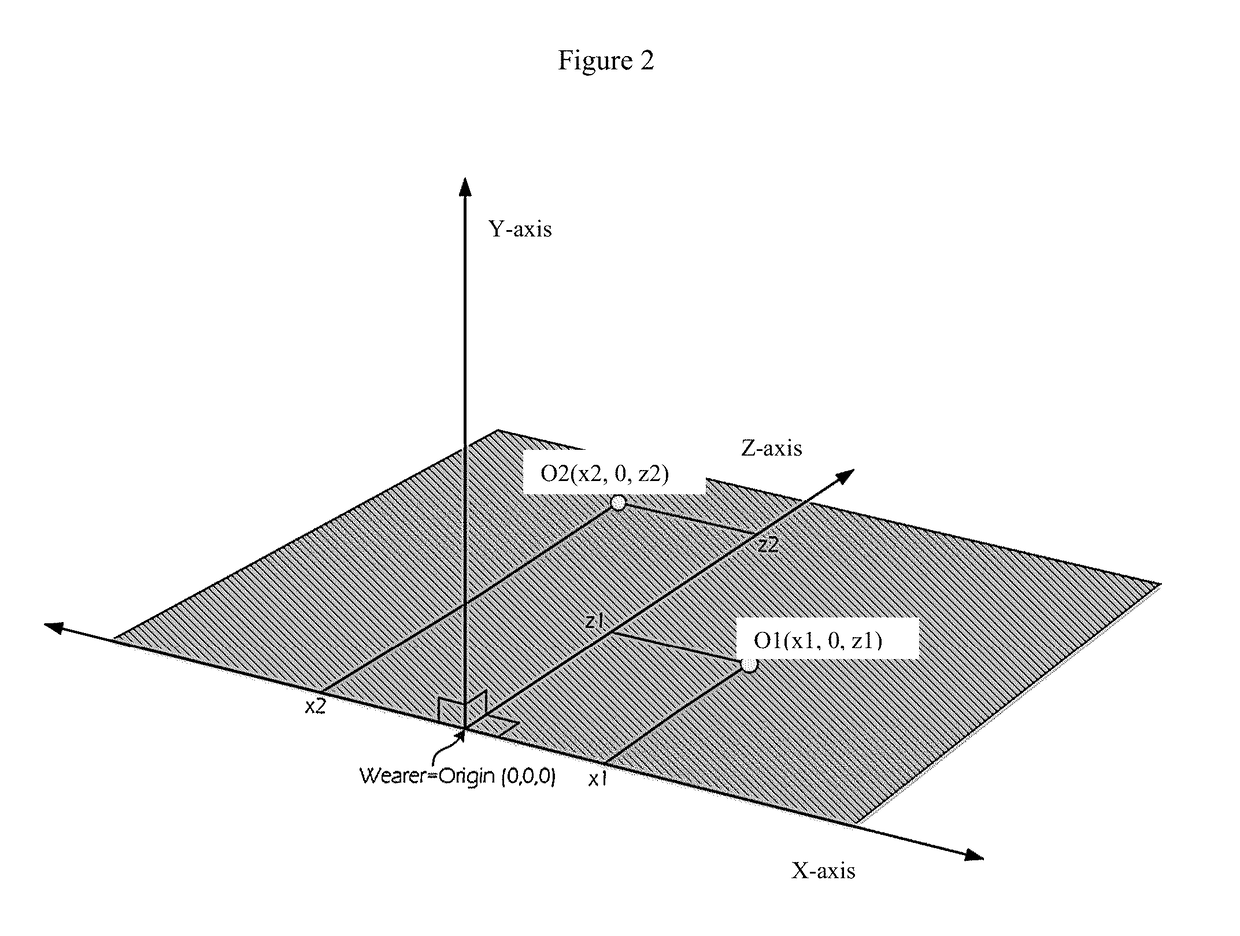
Figure 3
Abstract
Description
CROSS REFERENCE TO RELATED APPLICATIONS
[0001] This application claims the priority benefit of U.S. provisional application 62 / 441,284 “Device for Visually Impaired Assistance”, filed Dec. 31, 2016, the entire contents of which are incorporated herein by reference.BACKGROUND OF THE INVENTIONField of the Invention
[0002] This invention is in the field of computerized visual assist devices for the visually impaired.Description of the Related Art
[0003] According to a WHO 2010 global survey, the number of people who are visually impaired is “estimated to be 285 million, of whom 39 million are blind”. Per the 2000 US census, 3.4 million Americans had blindness or low vision, and this number is estimated to increase by about 70% by the year 2020. Even accounting only for adults age 40 and above, there are about 1.3 million blind people, and this number is projected to grow to 2.1 million by 2030.
[0004] However, many other also people experience functional limitations due to vision loss, even th...
Examples
Embodiment Construction
[0037]In broad terms, the invention may be viewed as a method, system, or device for visual assistance for a human user in an environment.
[0038]The invention typically comprises a head mounted video sensor band with at least two video sensors, here often referred to as “a plurality of user worn video sensors”. These video sensors are preferably worn about eye or forehead level, and in some embodiments may be configured to either look like standard eyeglasses, or may be configured to look like a specialized device as shown in FIG. 3.
[0039]The invention also typically comprises a haptic transducer band (see FIG. 18) equipped with at least two computer-controlled haptic transducers, here often called a plurality of spatially separated user worn haptic transducers. To keep the user's hand and fingers free for everyday use, these user-worn haptic transducers will typically be configured to be worn on parts of the body other than the user's hands, such as the user's arm (e.g. above the wr...