
Superhydrophobic coating
A fluorine-free, peptide-conjugated nanoparticle-based material forms a stable, superhydrophobic coating on various surfaces, addressing environmental and cost concerns while providing high stability and self-cleaning properties.
Patent Information
- Application Number
- PCT/IL2024/051000
- Authority / Receiving Office
- WO · WO
- Patent Type
- Applications
- Current Assignee / Owner
- Priority Date
- 2023-11-02
- Filing Date
- 2024-10-14
- Publication Date
- 2025-05-08
AI Technical Summary
Existing superhydrophobic coatings face challenges such as environmental concerns due to fluorinated materials, high synthesis costs, mechanical instability, and limited chemical resistance, particularly in applications involving soft electroadhesive surfaces.
Development of a fluorine-free, peptide-conjugated nanoparticle-based material that self-assembles to form a stable, superhydrophobic coating on various surfaces, including soft electroadhesive surfaces, using short peptides with hydrophobic aromatic functionalities and SiO2 nanoparticles.
The coating achieves high chemical, thermal, and radiation stability, with a water contact angle of ~161° and a sliding angle of ~1°, demonstrating effective self-cleaning properties and versatility across different substrates, while being eco-friendly and cost-effective.
Smart Images

Figure IMGF000051_0001 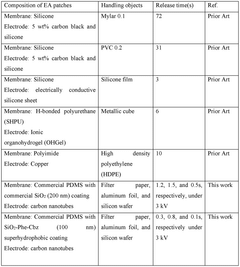
Figure IMGF000045_0001 
Figure 00000062_0000
Abstract
Description
[0001] SUPERHYDROPHOBIC COATING
[0002] TECHNOLOGICAL FIELD
[0003] The invention generally relates to fluorine-free superhydrophobic coatings fabricated by amino acids on a variety of surfaces, including soft electroadhesive surfaces.
[0004] BACKGROUND
[0005] Superhydrophobic coatings are defined as having a static water contact angle (WCA) higher than 150° and a sliding angle (SA) lower than 10°. These coatings have broad application prospects in anti-corrosion, self-cleaning, anti-fogging, drag-reduction, anti-icing, emulsion separation, and protection of electronic devices. These coatings are typically achieved through a precise synergistic combination of suitable surface morphology and low surface energy materials. Numerous studies have achieved superhydrophobic coatings using nanocomposite materials, including fluoropolysiloxane and TiCh, FesC nanoparticles (NPs), melanin NPs, cellulose-based derivatives, stoichiometric silanization, fluorinated nanodiamonds, polytetrafluoroethylene, polystyrene@SiO2, and fluorinated SiCh NPs. Recently, the use of these materials raised environmental concerns related to fluorinated materials. In addition, some of these materials require a complex coating process and may have high synthesis costs. Therefore, designing and practically applying superhydrophobic nanocomposite materials that are cost-effective, easy to prepare, and eco-friendly remains a critical and challenging task.
[0006] Silica-based (SiCh) superhydrophobic materials have been widely studied due to their abundance, cost-effectiveness, and ease of surface modification compared to other nanomaterials. However, the silica-based superhydrophobic coatings made by nonfluorinated derivatives of silane still have several disadvantages that limit their practical applications, including coating stability (mechanical instability, durability issues, sensitivity to environmental conditions, and limited chemical resistance) and potential environmental and health concerns. For example, AEROSIL®E 972 (SiO2-DDS) comprises SiCh NPs treated with dimethyldichlorosilane (DDS), which have been widely used as commercial superhydrophobic coatings for various applications. However, it raises potential environmental concerns due to the treatment by DDS, leading to chemical persistence, and marine toxicity. Soft robotic grippers have attracted considerable attention due to their inherent compliance and adaptability, which allows them to handle flat, soft, fragile, and deformable objects. To date, various types of soft grippers have been designed and developed, including soft bending grippers using pneumatic actuation, dielectric elastomer actuators (DEAs), jamming grippers, suction cup grippers, gecko-adhesion grippers, and electroadhesive (EA) grippers. Among these, EA-based soft grippers offer simple and reversible control of attractive electrostatic forces between two surfaces under a high electric field (typically on a scale of 1 MV m'1). This results in precise control over the adhesive force, fast response, lack of residue, quiet operation, gentle / flexible handling, and low energy consumption compared to other existing soft gripper systems. Soft EA grippers have been utilized in robotic prototypes for anti-gravity locomotion, aerial perching, and fragile object handling.
[0007] Soft EA devices consist of an insulating dielectric layer and a pair of electrodes, which are critical components. Intensive studies have focused on developing soft electrodes (i.e., ionic organohydrogel) and dielectric elastomers (i.e., polydimethylsiloxane (PDMS) and polyurethane) with favorable material properties and processibility to create desirable EA devices. However, practical applications of soft EA grippers remain challenging. One issue is the residual electrostatic charge that persists for a few seconds or minutes after voltage removal. Additionally, the inherent tackiness of the dielectric elastomer outer layer also complicates the release of light objects. Moreover, they are prone to dielectric breakdown when grasping wet objects. Various approaches have been proposed to speed up de-adhesion, including polarity reverse control, air jets for mechanical detachment, vibration release, and incorporation with actuators. However, these methods tend to increase the fabrication costs and gripper complexity.
[0008] SUMMARY OF THE INVENTION
[0009] In view of the disadvantages highlighted above, there exists a need for using eco- friendly, biodegradable and stable materials, such as natural materials, amino acids and peptides, instead of synthetic chemicals presently used, for generating superhydrophobic materials and superhydrophobic surfaces. The generation of fluoride- or chloride-free, heavy metal-free and generally eco-friendly and stable superhydrophobic coating has been realized by a specially designed family of short peptides that are capable of self- assembly, demonstrating high chemical, thermal, and radiation stability. Due to the peptides’ hydrophobic nature, self-cleaning properties and an unlimited versatile applicability to different substrates has also been realized.
[0010] As demonstrated in Fig. 1A, SiO2nanoparticles (NPs) associated to -Phe-Cbz were used to fabricate a superhydrophobic coating on soft electroadhesive (EA) grippers. When applied, the coated grippers showed rapid release and the ability to grasp various objects including wet objects and irregular objects. When a fluorine-free SiO2(np)-O- propylene-NH-Phe-Cbz coating was formed on a PDMS substrate, a water contact angle (WCA) of ~ 161° and a sliding angle (SA) of ~1° were measured, attesting to the superhydrophobic nature of the coating.
[0011] Without wishing to be bound by theory, the exhibited superhydrophobic behavior is attributed to the presence of short peptides that are hydrophobic in nature and which can assemble or be assembled into a continuous and compact film that does not degrade or deteriorate upon prolonged exposures to water, humidity or generally wet environments. The presence of aromatic functionalities along the film not only increases the hydrophobic behavior but also enables 7t-7t interactions along the film. Also, the use of nanoparticles to anchor and orient the short peptides increases protection of the surface on which the film is formed, increases the stability of the film and greatly contributes to the overall prolonged and robust superhydrophobic properties. As explained and demonstrated herein, superhydrophobic properties may be achievable by forming thin films or coatings of short peptide-functionalized nanoparticles that comprise hydrophobic aromatic functionalities.
[0012] In most general terms, the invention concerns peptide-conjugated nanoparticles for forming superhydrophobic films on surfaces or substrates of a variety of composites and surface properties. More specifically, the invention concerns a nanoparticle-based material for forming superhydrophobic films or coatings, the material comprising a nanoparticle associating one or more short peptides, each of the one or more peptides comprising between 1 and 10 amino acids. The short peptides comprise a hydrophobic aromatic amino acid and a hydrophobic amino acid or a hydrophobic functionality. Where the peptide comprises a single amino acid, this amino acid may be selected amongst hydrophobic aromatic amino acids. In such cases, the single hydrophobic aromatic amino acid may be associated or chemically bonded to a hydrophobic functionality that may or may not be aromatic. As further explained herein, the conjugation or association of the peptide to the nanoparticle surface may be direct or via a linker moiety. The actual association to the nanoparticle surface may be by covalent or non-covalent bonding, e.g., ionic, electrostatic, metallic or by way of a complex. In some cases, the association to the nanoparticle surface is via covalent bonding. In other cases, the association is not covalent.
[0013] As used herein, the term “peptide” refers to a chemical group that comprises between 1 and 10 amino acids and additional functionalities that are not amino acids. Thus, the term encompasses any functional sequence of atoms, as described herein, provided that it comprises an amino acid, as known in the art and defined herein.
[0014] In a first of its aspects, the invention concerns a nanoparticle-based material for forming superhydrophobic films or coating, the material being peptide-conjugated nanoparticles, wherein the peptide comprises between 1 and 10 amino acids, one or more of said amino acids being selected from hydrophobic aromatic amino acid; and wherein the peptide comprises one or more hydrophobic amino acid or a hydrophobic functionality.
[0015] The invention further concerns a nanoparticle-based material for forming superhydrophobic films or coatings, the material being of the formula NP-[P]n, wherein NP designates a nanoparticle, [P] designates a short peptide of between 1 and 10 amino acids, and n designates a number of the short peptides [P] surface-associated to the nanoparticle surface, wherein [P] is of formula -L-[AA]-X, wherein L may be absent or is a linker moiety, [AA] designates one or a plurality of hydrophobic aromatic amino acids associated to each other through peptide bonds, each ” - “ designates a chemical bond, being covalent or non-covalent, and X designates one or more hydrophobic amino acids bonded in sequence or a capping hydrophobic functionality.
[0016] In some embodiments, each of designates a covalent bond.
[0017] In some embodiments, n is one or more.
[0018] In some embodiments, X is not an amino acid. In some embodiments, the hydrophobic functionality comprises an aromatic group (i.e., an aryl group), as defined herein.
[0019] The invention also provides a nanoparticle-based material of the form NP-[L- [AA]-X]n, wherein NP designates a nanoparticle, L may be absent or is a linker moiety, [AA] designates one or a plurality of hydrophobic aromatic amino acids, X designates one or more hydrophobic amino acid or hydrophobic functionalities, each of designates a chemical bond, e.g., a covalent bond, and n designates a number of -L-[AA]- X groups that are surface-associated to the NP surface, wherein the L-[AA]-X group comprises between 2 and 10 amino acids in total.
[0020] The invention also provides a material of the formulaNP-[L-[AA]-X]n, as defined herein.
[0021] The invention further provides a superhydrophobic film comprising a nanoparticle-based material of a formula NP-[P]n, as defined herein.
[0022] The superhydrophobic film comprising or consisting a plurality of nanoparticlebased materials according to the invention, is formed on a surface region of any substrate. Alternatively, the film may be formed by a bonding material, such as a polymeric material, that bonds or securely associates a plurality of the nanoparticle-based materials (as a homogeneous or heterogenous mixture of nanoparticle populations) to a surface region of a substrate, as further disclosed herein. In some embodiments, the superhydrophobic film comprises a heterogenous population or a mixture of two or more populations of nanoparticle-based materials, wherein each population differs in composition (as may be reflected in the amino acids present, the number of amino acids used, the different lengths of the peptide chains, etc).
[0023] As used herein, the term superhydrophobic film or coating is one that exhibits a very low wettability for water and other polar liquids. The hydrophobic nature may be reflected in a film or a coating having a static water contact angle (WCA) higher than 150° and a sliding angle (SA) lower than 10°. Both the WCA and SA may be measured following formation of the film or coating on a substrate or a surface by means known in the art. The static contact angle may be measured at a three-phase boundary (a boundary intersection of a liquid— a water droplet, gas— air, and solid — the surface) of a droplet of water placed on the film or coating formed. A sliding angle measurement determines the angle at which a droplet of water placed on the film or coating begins to slide off once the surface is tilted. The sliding angle may be determined by the Inclined Plane Method, by the Tilting Plate Method, by the Rotational Method, by an Automated Optical Method or by any other method known in the art.
[0024] While the superhydrophobicity relates to the film or coating formed of nanoparticle-based materials, the term hydrophobic used in reference to certain amino acids or groups making up a material of the invention, refers to such that tend not to dissolve or interact with polar solvents, especially water, or which do not tend to be wetted by water. The hydrophobic amino acids or hydrophobic functionalities may contain saturated or unsaturated, linear, branched cyclic hydrocarbon, or aromatic-based groups.
[0025] The nanoparticle-based material of the invention, used for generating a superhydrophobic film or coating, is a peptide which comprises between 1 and 10 amino acids and which is nanoparticle-bound. The nanoparticle-based material thus comprises a nanoparticle that is surface associated with a one or a plurality (n number) of short peptide groups, being all same or different (a mixture of peptides), each of the formula - L-[AA]-X, as defined herein. The number (n) of peptides bound to the surface of the nanoparticle is typically not controlled and may greatly vary between few to several dozens. Without limitation, n represents at least one peptide or between 1 and 200 or more, depending inter alia on the size of the nanoparticles. The actual number of the peptides bound to the nanoparticles is of no effect on the superhydrophobicity of a film formed therefrom.
[0026] In some embodiments, n is 1. In other embodiments, n is between 5 and 200. In some embodiments, n is greater than several hundred. In some embodiments, n is statistically random and may vary between nanoparticles.
[0027] Generally speaking, all functionalities and amino acids making up the peptides of the form -L-[AA]-X are free of fluorine and chlorine atoms, and are selected amongst hydrophobic amino acids and hydrophobic groups. The nanoparticles are similarly free of such atoms and are further free of heavy metals.
[0028] The nanoparticles carrying the peptide [P], as defined herein, are selected of materials that are water-insoluble and which do not undergo dissolution or degradation in presence of water or organic solvents. Typically, the nanoparticles are between 1 and 900 nm in size or diameter. The nanoparticles may be spherical, spheroid, oval, elongated, or of any shape and may be of a material selected amongst organic, inorganic, metallic, metal oxide, ceramic, glass, and others. In some embodiment, the nanoparticles utilized are between 1 and 500 nm in size, or between 10 and 500 nm in size, or between 30 and 550 nm in size, or between 50 and 500 nm in size, or between 50 and 400nm, or between 50 and 300nm, or between 50 and 300nm, or between 50 and lOOnm, or between 100 and 400nm, or between 100 and 300nm, or between 100 and 200nm in size. Metallic nanoparticles may be purely made of metals and can be monometallic, bimetallic, or polymetallic. Bimetallic nanoparticles may be made from alloys or formed in core / shell forms. Non-limiting examples of metallic nanoparticles include nanoparticles of Ag, Au, Al, Fe, Co, Ni and alloys thereof. Metal oxide nanoparticles may include SiO2, AI2O3, CoFe2O4, FesCU, ZnO, TiCh, and others. Ceramic nanoparticles may include clay, carbonates, carbides, phosphates, and oxides of metals and metalloids. Organic nanoparticles may be formed of carbon dots, graphite and various polymeric materials and combinations.
[0029] In some embodiments, the nanoparticles are metallic nanoparticles, selected from Ag, Au, Al, Fe, Co, Ni and alloys thereof.
[0030] In some embodiments, the nanoparticles are metal oxide nanoparticles, selected from SiO2, AI2O3, CoFe2O4, Fe3O4, ZnO, and TiO2.
[0031] In some embodiments, the nanoparticles are SiO2.
[0032] The nanoparticles may or may not be surface-decorated with reactive or unreactive ligand molecules. In some cases, to permit facile or versatile surface association with the peptide(s) [P], as disclosed herein, the nanoparticles may be surface decorated with reactive ligands. The ligand groups may be surface exposed thiol groups, hydroxyl groups, amine groups, aldehyde groups, acid groups, carboxyl groups, carbonyl groups and others. Thus, in some embodiments, the peptide(s) [P] may be associated to the nanoparticles’ surface through the reactive ligands. In some embodiments, the peptide(s) may be directly associated to the nanoparticles’ surface.
[0033] In some embodiments, where the nanoparticles are metallic nanoparticles, such as Au nanoparticles, the surface thereof may be free of ligand molecules. In some embodiments, where the nanoparticles are oxide particles, such as SiO2, the nanoparticles surface may comprise functional ligand groups such as surface exposed hydroxyl groups.
[0034] A material of the form NP-[L-[AA]-X]n, according to the invention, may or may not comprise a linker group L through which the group AA associates to the nanoparticles surface. In some cases, L is absent and the material is of the form NP-[AA]-X]n. In such cases, the group AA may be associated to the nanoparticle surface through ligands present on the nanoparticle surface.
[0035] Where group L is present, it may be a homo-bifunctional or hetero-bifunctional linker moiety or an amino acid having a nanoparticle surface associating group and an amino acid associating group (permitting association to an amino acid of group [AA]). The linker L may be a hydrophobic moiety having between 1 and 5 carbon atoms or 1 or 2 amino acids. Typically, the nanoparticle-surface associating group depends on the nature and composition of the nanoparticle and / or the presence or absence of surface ligands or surface functionalities that may be present on the nanoparticles surface. For example, where the nanoparticle is a metallic nanoparticle, the surface associating group may be a thiol a disulfide, an amine, an alcohol and others. Where the nanoparticle is a metal oxide having e.g., surface exposed hydroxyl groups, the surface associating group may be an ester, an aldehyde, an acid, a silyl, and others. In other examples, where the nanoparticle has surface ligands with terminal amine groups, the surface associating group may be a halide, a carboxylic acid, an aldehyde, and others. Thus, the nanoparticle surface associating group may be generally selected from a thiol, a sulfide, a hydroxyl, a halide, a carboxylic acid, an aldehyde, an ester, an amine, a silyl and others.
[0036] In an assembled nanoparticle of the invention, the linker L may thus be associated to the surface of the nanoparticle via a group or an atom selected from -O-, -N=, -NH-, - S-, -S-S-, -NH-C(=O)-, -C(=O)-NH-, -CH2-, -CHR-, -CRR’-, -Si-, and others. Each of R and R’ may be same or different and is typically selected from H or a -Ci-Csalkyl.
[0037] The amino acid associating group may be any such group reactive with a carboxyl group or an amine group of the amino acid. Such groups may be an amine, a carboxylic acid, an ester, a hydroxy, a halide, a thiol, an aldehyde and others.
[0038] The bifunctional linker L may be a linear, branched or cyclic hydrocarbon or an aromatic group or a combination of same. Non-limiting examples include a -Ci- Csalkylene, -C2-Csalkenylene, -C2-C5alkenylene, -C1-C5alkylene-C6-Cioarylene, -C2- Csalkenylene-C6-Cioarylene, -C2-C3alkynylene-C6-Cioarylene, -C6-Cioarylene, -C3- Ceheteroarylene (comprising between 1 and 3 heteroatoms such as N, O and S), and others.
[0039] As used herein, the term “-Ci-Csalkylene” refers to a divalent moiety of alkyl, comprising 1, 2, 3, 4 or 5 carbon atoms, namely 1 to 5 -CH2- groups in a linear or branched sequence. In some embodiments, an alkylene group has 2 to 5 carbon atoms (C2-C6 alkylene). Examples of -Ci-C4alkylene include methylene (Cl), ethylene (C2), propylene (C3) (e.g., n-propyl, isopropyl), butylene (C4) (e.g., n-butyl, tert-butyl, sec-butyl, isobutyl), and pentylene (C5) (e.g., n-pentyl, 3-pentanyl, amyl, neopentyl, 3-methyl-2- butanyl, tert-amyl). Unless otherwise specified, each instance of an alkylene group is independently unsubstituted or substituted with one or more substituents (e.g., not including Cl and F).
[0040] In some embodiments, the linker is a -C1-C5alkylene, being in some embodiments propylene.
[0041] The term "-C2-C5alkenylenenrefers to a divalent alkenyl, comprising 2, 3, 4, or 5 carbon atoms and 1 or 2 double bonds. In some embodiments, an alkenylene group has 3 to 5 carbon atoms (Cs-Csalkenylene). Examples of C2-C5alkenylene groups include ethenylene (C2), 1 -propenylene (C3), 2-propenylene (C3), 1-butenylene (C4), 2- butenylene (C4), butadienylene (C4), and the like.
[0042] The term ‘"-C2-C5alkenylenenrefers to a divalent alkynylene, comprising 2, 3, 4, or 5 carbon atoms and 1 or 2 triple bonds. In some embodiments, an alkynylene group has 3 to 5 carbon atoms (C3-C5alkynylene). Examples of C2-C5alkynylene groups include, without limitation, ethynylene (C2), 1-propynylene (C3), 2- propynylene (C3), 1- butynylene (C4), 2-butynylene (C4), and the like.
[0043] The term "-C1-C3alkenylene-C6-C10arylene" refers to an alkylene comprising 1 to 3 carbon atoms, as defined herein, that is bonded to an aryelene group comprising 6 to 10 carbon atoms. Aryelene is a divalent moiety of aryl, a monocyclic or polycyclic aromatic ring or ring system. The arylene may be phenylene, 1 -naphthylene or 2-naphthylene. Examples of -C1-C5alkylene-C6-Cioarylene include benzyl, phenylethylene, and others.
[0044] The term “-C6-C10arylene” refers to an arylene, as defined herein, comprising 6 to 10 carbon atoms.
[0045] The term "-C2-C3alkenylene-C6-C10arylene" aanndd "-C2-C3alkenylene-C6-C10arylene" refer o alkenylene and alkynylene, respectively, that are bonded to an arylene moiety, each as defined herein.
[0046] The term “-C3-C6heteroarylene" refers to a divalent heteroaryl comprising between 1 and 3 heteroatoms such as N, O and S, and between 4 and 7 carbon atoms. The heteroarylene is a 5-10 membered monocyclic or polycyclic aromatic ring system. Examples of heteroarylene groups include indolylene, quinolinylene, carbazolylene, and the like.
[0047] In some embodiments, the nanoparticle-based material is of a formula selected from
[0048] NP-O-L-N-[AA]-X,
[0049] NP-N-L-N-[AA]-X, NP-Si-L-N-[AA]-X,
[0050] NP-S-L-N-[AA]-X,
[0051] NP-S-S-L-N-[AA]-X,
[0052] NP-O-L-O-[AA]-X,
[0053] NP-O-L-S-[AA]-X, and others, wherein each of NP, [AA], L and X is as defined herein, and wherein Si is a silicone atom, N is a nitrogen atom or a nitrogen-containing group (such as NH, or NR, wherein R is as defined herein), O is an oxygen atom, S is a sulfur atom, S-S is a disulfide group.
[0054] It should be noted that an atom directly associating the NP to the linker moiety L, or amino acid AA, may be an atom of the NP or may be part of the linker L or the amino acid AA. For example, where the NP is SiO2, and wherein the compound is of formula NP-O-L-N-[AA]-X, the O atom may be an atom of a hydroxylated SiO2nanopartcile.
[0055] In some embodiments, group L is -C1-C5alkylene, namely any alkylene comprising 1 to 5 carbon atoms (inclusive). These include methylene, ethylene, propylene, iso-propylene, butylene, iso-butylene, tert-butylene, pentylene, tert-pentylene, neopentylene, and iso-pentylene.
[0056] In some embodiments, group L is a -C1-C5alkylene or a -Cs-Csalkylene.
[0057] In some embodiments, group L is a -C1-C5alkylene, e.g., methylene, ethylene, propylene, or iso-propylene.
[0058] In some embodiments, group L is propylene.
[0059] In some embodiments, the nanoparticle-based material is of a formula selected from
[0060] NP-O-CH2-CH2-CH2-N-[AA]-X,
[0061] NP-N-CH2-CH2-CH2-N-[AA]-X,
[0062] NP-Si-CH2-CH2-CH2-N-[AA]-X,
[0063] NP-S-CH2-CH2-CH2-N-[AA]-X,
[0064] NP-S-S-CH2-CH2-CH2-N-[AA]-X,
[0065] NP-O-CH2-CH2-CH2-O-[AA]-X,
[0066] NP-O-CH2-CH2-CH2-S-[AA]-X,
[0067] NP-N-CH2-CH2-CH2-O-[AA]-X, and others, wherein each of NP, [AA], and X is as defined herein, and wherein Si is a silicone atom, N is a nitrogen atom or a nitrogen-containing group (e.g., NH), O is an oxygen atom, S is a sulfur atom, S-S is a disulfide group.
[0068] In some embodiments, the nanoparticle-based material is of a formula selected from
[0069] NP-O-CH2-CH2-CH2-NH-[AA]-X,
[0070] NP-NH-CH2-CH2-CH2-NH-[AA]-X,
[0071] NP-Si-CH2-CH2-CH2-NH-[AA]-X,
[0072] NP-S-CH2-CH2-CH2-NH-[AA]-X,
[0073] NP-S-S-CH2-CH2-CH2-NH-[AA]-X,
[0074] NP-O-CH2-CH2-CH2-O-[AA]-X,
[0075] NP-O-CH2-CH2-CH2-S-[AA]-X,
[0076] NP-NH-CH2-CH2-CH2-O-[AA]-X, and others, wherein each of NP, [AA], and X is as defined herein.
[0077] In some embodiments, the nanoparticle-based material is of a formula selected from
[0078] NP-O-CH2-CH2-CH2-NH-[AA]-X,
[0079] NP-NH-CH2-CH2-CH2-NH-[AA]-X,
[0080] NP-O-CH2-CH2-CH2-O-[AA]-X, and
[0081] NP-NH-CH2-CH2-CH2-O-[AA]-X, wherein each of NP, [AA], and X is as defined herein.
[0082] Group AA designates a hydrophobic aromatic amino acid or a sequence of such amino acids. The group [AA] may thus comprise a single hydrophobic aromatic amino acid or between 2 and 5 such amino acids. As used herein, a hydrophobic aromatic amino acid is an aromatic amino acid having a low water solubility. Such hydrophobic aromatic amino acids include phenylalanine (Phe), phenylalanine derivatives and tryptophan (Trp).
[0083] In some embodiments, the AA is or includes between 2 and 5 phenylalanine (Phe) groups, phenylalanine derivatives and / or tryptophan (Trp) groups.
[0084] In some embodiments, AA comprises or consists a single phenylalanine (Phe), a single phenylalanine derivative or a single tryptophan (Trp).
[0085] In some embodiments, AA comprises or consists between 1 and 5 phenylalanine (Phe) amino acids, between 1 and 5 phenylalanine derivatives or between 1 and 5 tryptophan (Trp) amino acids. The phenylalanine derivative may be selected from 4-methoxy-phenylalanine, 4- carbamimidoyl-l-phenylalanine, 3 -cyano-phenylalanine, 4-bromo-phenylalanine, 4- cyano-phenylalanine, 4-hydroxymethyl-phenylalanine, 4-methyl-phenylalanine, 1- naphthyl-alanine, 3-(9-anthryl)-alanine, 3-methyl-phenylalanine, m-amidinophenyl-3- alanine, phenylserine, benzylcysteine, 4,4- biphenylalanine, 2-cyano-phenylalanine, 3,4- dihydroxy-phenylalanine, 3, 5 -dibromotyrosine, 3, 3 -diphenylalanine, 3-ethyl- phenylalanine, 4-amino-L-phenylalanine, homophenylalanine, 3-(8-hydroxyquinolin-3- yl)-l-alanine, 3 -iodo-tyrosine, kynurenine, 3,4-dimethyl-phenylalanine, 2-methyl- phenylalanine, m-tyrosine, 2-naphthyl-alanine, 5-hydroxy-l-naphthalene, 6-hydroxy-2- naphthalene, meta-nitro-tyrosine, (beta)-beta-hydroxy-l-tyrosine, o-tyrosine, 4-benzoyl- phenylalanine, 3-(2-pyridyl)-alanine, 3-(3-pyridyl)-alanine, 3 -(4- pyridyl)-alanine, 3-(2- quinolyl)-alanine, 3-(3-quinolyl)-alanine, 3-(4-quinolyl)-alanine, 3- (5-quinolyl)-alanine, 3-(6-quinolyl)-alanine, 3-(2-quinoxalyl)-alanine, styrylalanine, 4-iodo-phenylalanine, 4- nitro-phenylalanine, phosphotyrosine, 4-tert-butyl-phenylalanine, 3-amino-L-tyrosine, 3,5-diiodotyrosine, 3 -amino-6-hydroxy -tyrosine, and others.
[0086] In some embodiments, AA is Phe or a phenylalanine derivative.
[0087] In some embodiments, the nanoparticle-based material is NP-L-Phe-X. In some embodiments, L is a -C1-C5alkylene, e.g., methylene, ethylene, propylene, or isopropylene. In some embodiments, group L is n-propylene. In some embodiments, the nanoparticle-based material is of a formula selected from
[0088] NP-O-CH2-CH2-CH2-NH-Phe-X, NP-NH-CH2-CH2-CH2-NH-Phe-X, NP-Si-CH2-CH2-CH2-NH-Phe-X, NP-S-CH2-CH2-CH2-NH-Phe-X, NP-S-S-CH2-CH2-CH2-NH-Phe-X, NP-O-CH2-CH2-CH2-O-Phe-X, NP-O-CH2-CH2-CH2-S-Phe-X, NP-NH-CH2-CH2-CH2-O-Phe-X, and others, wherein each of NP and X is as defined herein.
[0089] In some embodiments, the nanoparticle-based material is of a formula selected from
[0090] NP-O-CH2-CH2-CH2-NH-Phe-X,
[0091] NP-NH-CH2-CH2-CH2-NH-Phe-X, NP-O-CH2-CH2-CH2-O-Phe-X, and
[0092] NP-NH-CH2-CH2-CH2-O-Phe-X.
[0093] Group X designates one or more hydrophobic amino acids bonded in sequence or may be a capping hydrophobic functionality. In some cases, X is a hydrophobic amino acid, or a sequence of hydrophobic amino acids comprising between 2 and 5 hydrophobic amino acids. In some cases, the hydrophobic amino acids may be selected amongst hydrophobic aromatic amino acids, as defined herein.
[0094] In some embodiments, X comprises between 1 and 5 hydrophobic amino acids. In some embodiments, the hydrophobic amino acids are selected from glycine (Gly), alanine (Ala), valine (Vai), leucine (Leu), isoleucine (He), proline (Pro), phenylalanine (Phe), methionine (Met), and tryptophan (Trp).
[0095] In other cases, X designates a hydrophobic functionality, not an amino acid. The hydrophobic functionality acting as a capping group or an end group may be selected from -C1-C5alkyl, -C2-C5alkenyl, -C2-C5alkynyl, -C1-C5alkylene-C6-Cioaryl, -Ci- C3alkyl-C6-C10arylene, -C2-C5alkenlene-C6-Cioaryl, -C2-C3alkynylene-C6-Cioaryl, -C6- Cioaryl, and others.
[0096] In some embodiments, X is selected amongst X may be -C1-C5alkyl, -C1- C3alkylene-C6-Cioaryl, -C1-Csalkyl-C6-Cioarylene, and -C6-Cioaryl.
[0097] Non-limiting examples of X include ethyl, propyl, butyl, pentyl, phenyl, benzyl, naphthyl, ethylenephenyl, propylenephenyl, butylenephenyl, pentylenephenyl and others.
[0098] In some embodiments, X may be phenyl, benzyl, naphthyl, ethylenephenyl, propylenephenyl, butylenephenyl, or pentylenephenyl.
[0099] In some embodiments, X is benzyl.
[0100] The hydrophobic amino acid or hydrophobic functionality may be associated with the hydrophobic aromatic amino acid via a peptide bond, where relevant, or any other bonding atom or group. The atoms or groups of atoms include atoms such as N, O, S, and C, or groups containing same. The bonding group may be selected from -O-, -N=, -NH-, -S-, -S-S-, -NH-C(=O)-, -C(=O)-NH-, -O-C(=O)-, -CH2-, -CHR-, -CRR-, and others.
[0101] In some embodiments, the hydrophobic amino acid AA is bonded to benzyloxycarbonyl (Cbz).
[0102] In some embodiments, the nanoparticle-based material is NP-O-CH2-CH2-CH2- NH-Phe-Cbz.
[0103] Non-limiting examples of nanoparticle-based materials of the invention include: NP-0-(CH2)y-NH-[Phe]z-X, wherein NP is a nanoparticle as defined herein, y is an integer between 1 and 5, z is an integer between 1 and 5, X is as defined herein;
[0104] NP-S-(CH2)y-NH-[Phe]z-X, wherein NP is a nanoparticle as defined herein, y is an integer between 1 and 5, z is an integer between 1 and 5, X is as defined herein;
[0105] NP-S-S-(CH2)y-NH-[Phe]z-X, wherein NP is a nanoparticle as defined herein, y is an integer between 1 and 5, z is an integer between 1 and 5, X is as defined herein;.
[0106] NP-NH-(CH2)y-NH-[Phe]z-X, wherein NP is a nanoparticle as defined herein, y is an integer between 1 and 5, z is an integer between 1 and 5, X is as defined herein;
[0107] NP-0-(CH2)y-NH-[Phe]z-X, wherein NP is a metal oxide nanoparticle as defined herein, y is an integer between 1 and 5, z is an integer between 1 and 5, X is as defined herein;
[0108] NP-S-(CH2)y-NH-[Phe]z-X, wherein NP is a metal oxide nanoparticle as defined herein, y is an integer between 1 and 5, z is an integer between 1 and 5, X is as defined herein;
[0109] NP-NH-(CH2)y-NH-[Phe]z-X, wherein NP is a metal oxide nanoparticle as defined herein, y is an integer between 1 and 5, z is an integer between 1 and 5, X is as defined herein;
[0110] NP-0-(CH2)y-NH-[Phe]z-X, wherein NP is a SiO2nanoparticle, y is an integer between 1 and 5, z is an integer between 1 and 5, X is as defined herein;
[0111] NP-S-(CH2)y-NH-[Phe]z-X, wherein NP is a SiO2nanoparticle as defined herein, y is an integer between 1 and 5, z is an integer between 1 and 5, X is as defined herein;
[0112] NP-NH-(CH2)y-NH-[Phe]z-X, wherein NP is a SiO2nanoparticle as defined herein, y is an integer between 1 and 5, z is an integer between 1 and 5, X is as defined herein;
[0113] NP-O-CH2-CH2-CH2-NH-Phe-X,
[0114] NP-NH-CH2-CH2-CH2-NH-Phe-X,
[0115] NP-Si-CH2-CH2-CH2-NH-Phe-X,
[0116] NP-S-CH2-CH2-CH2-NH-Phe-X,
[0117] NP-S-S-CH2-CH2-CH2-NH-Phe-X,
[0118] NP-O-CH2-CH2-CH2-O-Phe-X,
[0119] NP-O-CH2-CH2-CH2-S-Phe-X,
[0120] NP-NH-CH2-CH2-CH2-O-Phe-X,
[0121] NP-O-CH2-CH2-CH2-NH-[AA]-X, NP-NH-CH2-CH2-CH2-NH-[AA]-X,
[0122] NP-Si-CH2-CH2-CH2-NH-[AA]-X,
[0123] NP-S-CH2-CH2-CH2-NH-[AA]-X,
[0124] NP-S-S-CH2-CH2-CH2-NH-[AA]-X,
[0125] NP-O-CH2-CH2-CH2-O-[AA]-X,
[0126] NP-O-CH2-CH2-CH2-S-[AA]-X,
[0127] NP-NH-CH2-CH2-CH2-O-[AA]-X,
[0128] NP-O-CH2-CH2-CH2-NH-[AA]-X,
[0129] NP-N-CH2-CH2-CH2-NH-[AA]-X,
[0130] NP-Si-CH2-CH2-CH2-NH-[AA]-X,
[0131] NP-S-CH2-CH2-CH2-NH-[AA]-X,
[0132] NP-S-S-CH2-CH2-CH2-NH-[AA]-X,
[0133] NP-O-CH2-CH2-CH2-O-[AA]-X,
[0134] NP-O-CH2-CH2-CH2-S-[AA]-X,
[0135] NP-N-CH2-CH2-CH2-O-[AA]-X,
[0136] NP-O-L-NH-[AA]-X,
[0137] NP-N-L-NH-[AA]-X,
[0138] NP-Si-L-NH-[AA]-X,
[0139] NP-S-L-NH-[AA]-X,
[0140] NP-S-S-L-NH-[AA]-X,
[0141] NP-O-L-O-[AA]-X,
[0142] NP-O-L-S-[AA]-X, wherein in each of the aforementioned materials, L, AA and X are as defined herein;
[0143] SiO2np-O-(CH2)3-NH- [Phe]i-X, wherein X is as defined herein;
[0144] SiO2np-O-(CH2)4-NH-[Phe]i-X, wherein X is as defined herein;
[0145] SiO2np-O-(CH2)5-NH-[Phe]i-X, wherein X is as defined herein;
[0146] SiO2np-O-(CH2)3-NH-[Phe]2-X, wherein X is as defined herein;
[0147] SiO2np-O-(CH2)3-NH-[Phe]3-X, wherein X is as defined herein;
[0148] SiO2np-O-(CH2)3-NH-[Phe]4-X, wherein X is as defined herein;
[0149] SiO2np-O-(CH2)3-NH-[Phe]5-X, wherein X is as defined herein;
[0150] Si02np-0-(CH2)3-NH-[Phe]i-C1-C5alkyleneC6-Cioaryl, wherein -Ci-
[0151] C5alkyleneC6-Cioaryl is as defined herein; Si02np-0-(CH2)3-NH-[Phe]2-C1-C5alkyleneC6-Cioaryl, wherein -Ci-
[0152] C5alkyleneC6-Cioaryl is as defined herein;
[0153] Si02np-0-(CH2)3-NH-[Phe]3-C1-C5alkyleneC6-Cioaryl, wherein -Ci-
[0154] C5alkyleneC6-Cioaryl is as defined herein;
[0155] Si02np-0-(CH2)3-NH-[Phe]i-C(=0)-0-C1-C5alkyleneC6-Cioaryl, wherein -Ci-
[0156] C5alkyleneC6-Cioaryl is as defined herein;
[0157] Si02np-0-(CH2)3-NH-[Phe]2-C(=0)-0-C1-C5alkyleneC6-Cioaryl, wherein -Ci-
[0158] C5alkyleneC6-Cioaryl is as defined herein;
[0159] Si02np-0-(CH2)3-NH-[Phe]3-C(=0)-0-C1-C5alkyleneC6-Cioaryl, wherein -Ci-
[0160] C5alkyleneC6-Cioaryl is as defined herein;
[0161] SiO2np-O-(CH2)3-NH-Phe-C(=O)-O-phenyl;
[0162] SiO2np-O-(CH2)4-NH-Phe-C(=O)-O-phenyl;
[0163] SiO2np-O-(CH2)5-NH-Phe-C(=O)-O-phenyl;
[0164] SiO2np-O-(CH2)3-NH-Phe-C(=O)-O-benzyl;
[0165] SiO2np-O-(CH2)4-NH-Phe-C(=O)-O-benzyl;
[0166] SiO2np-O-(CH2)5-NH-Phe-C(=O)-O-benzyl; and others.
[0167] Nanoparticle-based materials of the invention may be produced by solid state synthesis or by solution- state synthesis. Without wishing to be bound by a particular fabrication process, the materials may be produced by surface modification of preformed nanoparticles. Surface functionalization of the nanoparticles may involve a first step of functionalization using a homo- or a hetero-bifunctional linker L with the aim to add an atom or an organic functional group (R-NH2, R-COOH, etc.) useful in achieving binding of the peptide [P], For example, for silica nanoparticles, aminosilanes may be used that introduce an amino group on the nanoparticle surface for the next conjugation. Alternatively, the surface of the silica nanoparticles may be modified to form surface- exposed hydroxyl groups that can be substituted. Metals, such as gold, can be functionalized by using crosslinkers with -SH or -NH2 groups able to react with the metal and to produce a covalent bond. Nanoparticles formed of metal oxides can be easily modified by using a ligand exchange strategy based on the substitution of the original surfaces with functional groups such as diol, amine, carboxylic acid, and thiol useful for the next steps.
[0168] Carbon-based nanoparticles contain SP2hybridized atoms that can be exploited to generate functional groups such as -COOH, -OH, and -(C= O)- on the nanoparticle’s surface. Using halogenation techniques, it is possible to obtain active surface regions that can be further modified or functionalized.
[0169] Once the nanoparticle surface is modified or functionalized for association or conjugation with the peptide [P], covalent bond strategy can be implemented to attach the peptide(s) . The covalent bonding of the peptide group(s) can be achieved using various linker molecules. An example is a bifunctional linker, such as L, that can be provided with specific functional groups at the ends and used as a homo-bifunctional or a heterobifunctional linker to perform a wide range of functionalization processes. Thanks to the ability to directly associate the peptide [P] to the modified or functionalized nanoparticle surface, the linker L may be pre-conjugated to the peptide [P] .
[0170] Transmission electron microscopy (TEM), scanning electron microscopy (SEM), Fourier transform infrared spectroscopy (FTIR), dynamic light scattering (DLS), and C,- potential analysis may be used to determine shape, size, chemical composition, and superficial charge of the nanoparticles, at any stage of the synthesis and to confirm final shape, size and chemical composition of the formed nanoparticles.
[0171] In a non-limiting example, SiO2particles modified by the amino acid Cbz-Phe, were synthesized by coupling of the amino acid onto functionalized silica NPs, as exemplified in Fig. 1A. SiO2-OH particles were synthesized by hydrolysis of tetraethyl orthosilicate (TEOS). The formed -OH modified silica nanoparticles were then reacted with a linker material aminopropyltriethoxysilane (APTES) to produce surface conjugation with propylamine (being a linker L mediating the nanoparticle surface and the amino acid AA). The exposed -NH2 groups were than substituted with Phe-Cbz to generate the SiO2-O-propylene-NH-Phe-Cbz nanoparticles.
[0172] Thus, the invention further provides a method for making or synthesizing a nanoparticle-based material of the form NP-[P], wherein NP is a nanoparticle and P is a peptide, the method comprising exposing or treating a nanoparticle having a suitable surface exposed functionality to a peptide group having a reactive functionality capable of covalently associating with the surface exposed functionality.
[0173] In some embodiments, the method comprising providing a population of nanoparticle having suitable surface exposed functionalities.
[0174] In some embodiments, the method comprising functionalizing a surface of a nanoparticle to form thereon a plurality of suitable surface exposed functionalities. The “suitable surface exposed functionality” is any such functionality that can form a covalent or a non-covalent bond with a reactive functionality of the peptide [P], The suitable surface exposed functionality may be an inherent group of the nanoparticle, e.g., -OH, - NH2 and others, or may be specifically selected based on the peptide group to be conjugated. Both the suitable surface exposed functionality and the reactive functionality on the peptide [P] may vary and be selected as disclosed herein.
[0175] In some embodiments, the peptide [P] comprises at least one hydrophobic aromatic amino acid and optionally comprises a linker group L. In some embodiments, the peptide [P] is of the structure -L-[AA]-X, wherein each of L, AA and X is as defined herein.
[0176] In some embodiments, the method comprises obtaining a peptide [P], as defined herein.
[0177] In some embodiments, the method comprises reacting the nanoparticle having suitable surface exposed functionalities with a bifunctional linker group L capable of associating to an amino acid, e.g., AA.
[0178] In some embodiments, the method comprises:
[0179] -obtaining nanoparticles having suitable surface exposed functionalities;
[0180] -obtaining a peptide [P], as defined herein, having a reactive functionality;
[0181] -mixing both the nanoparticles and the peptide group under conditions permitting association of the peptide groups to the surface exposed functionalities, to thereby form a material of the form NP-L-[AA]-X.
[0182] The invention further a method for making or synthesizing a nanoparticle-based material of the form NP-L-[AA]-X, the method comprising exposing or treating a nanoparticle having a suitable surface exposed functionality to a bifunctional linker moiety L to associate the linker L to the surface exposed functionalities and form a compound of the form NP-L and reacting said compound with a peptide group of the form -AA-X to covalently associate with the linker L, thereby obtaining the material of the form NP-L-[AA]-X.
[0183] The invention further provides a solution or a medium comprising a nanoparticlebased material of the invention. The solution or medium may be an organic liquid that can solubilize or carry (e.g., suspension or dispersion) the nanoparticle-based material in a homogenous form. The organic liquid may be an aromatic liquid such as benzene, toluene and others; or non-aromatic liquids such as methanol, ethanol, isopropanol and others. In some cases, the solution or medium comprising the nanoparticle-based material is a polymeric solution or medium comprising the material and at least one polymer or pre-polymer or monomer or oligomer of a polymer, as further discussed hereinbelow.
[0184] Films and coatings may be formed on any surface or substrate which wetting property is to be modulated or rendered superhydrophobic. Such surfaces or substrates may be of unlimited compositions, shapes and surface roughness. Examples of surface materials include metallic, polymeric, glass, ceramic, paper and other fibrous materials, hybrid materials, natural materials and others. In some embodiments, the surface is a metallic surface, formed of a single metal, an alloy of metals, metal oxides, conducting metals, semiconductors, etc. Non-limiting examples of metallic surfaces include a gold surface, a silver surface, an aluminum surface, a titanium surface, a silica surface, an alumina surface, a copper surface, an iron surface, a steel surface, a stainless-steel surface, a bronze surface, a brass surface and others. Polymeric surfaces may be plastic surfaces, nylon surfaces, Teflon surfaces, polystyrene surfaces, polyurethane surfaces, epoxy surfaces, acrylic surfaces, and silicon surfaces. Non-limiting examples of polymeric surface include polydimethylsiloxane (PDMS), cellulose and others.
[0185] As stated herein, films and coating of the invention are continuous structures that fully or partially cover a surface region of a substrate. The film or coating is continuous where superhydrophobic properties are to be endowed. Thus, in some cases the film may be a continuous or non-continuous structure formed of the material of the invention and as defined herein, with a thickness that is substantially monolayer, yet could also be multilayered. The film or coating may be on a full surface of the substrate or object (as a coating).
[0186] The film or coating may be formed by direct deposition of the nanoparticle-based material on a surface region of a substrate or may be formed by using an adhesive material or a bonding layer that can associate the nanoparticle-based material to the surface. The bonding layer may be a thin continuous film of an adhesive having a thickness sufficient for bonding without completely encapsulated or engulfing the nanoparticle-based material. Generally speaking, the thickness of the bonding layer may be at most 50% of the size or diameter of the nanoparticle-based material. In some embodiments, the thickness of the bonding layer is 40%, 30%, 20% or 10% of the size of the nanoparticlebased material. For example, where the nanoparticle-based material is of a dimeter or about 100 nm, the bonding layer may be about 10 nm. In some embodiments, the bonding layer having a thickness of between 1 and 20 nm.
[0187] Superhydrophobic films and coating of the invention may be characterized by water contact angles (WCA) that are higher than 150° and / or sliding angles (SA) that are lower than 10°. In some embodiments, films and coatings of the invention are characterized by a WCA that is between 150 and 200°, or between 150 and 190°, or between 150 and 180°, or between 150 and 170°, or between 150 and 160°, or between 160 and 200°, or between 160 and 190°, or between 160 and 180°. In some embodiments, the WCA is greater than 200°.
[0188] In some embodiments, films and coting of the invention are characterized by a SA between 10 and 1°, or between 9 and 1°, or between 8 and 1°, or between 7 and 1°, or between 6 and 1°, or between 5 and 1°, or between 4 and 1°, or between 3 and 1°, or between 2 and 1°. In some embodiments, the WCA is below 1°.
[0189] In some embodiments, any combination of WCA and SA mentioned above embodies an independent embodiment of the invention, in other words, films and coatings of the invention may be characterized by any WCA value and any SA value such that the WCA value is greater than 150° and a SA value lower than 1°.
[0190] In some embodiments, films and coatings of the invention are characterized by a water contact angle (WCA) of about 161° and a sliding angle (SA) of about 1°
[0191] The bonding layer may be formed of a polymer composition comprising at least one polymer and optionally at least one additive. In some cases, the polymeric bonding film may be formed from polymeric compositions containing a polymeric material or a pre-polymer material which may be formed into a film, a coating, a sheet, a foam, a spray coating solution, a hydrogel or a polymeric article or object that is a solid, a semi-solid or a gel, by means known in the art. Generally speaking, the polymers may be selected from homopolymers, copolymers, terpolymer, block copolymers and the like, or pre-polymer forms thereof that can easily generate the polymer (such pre-polymers may be monomers, oligomers etc.).
[0192] The polymer or pre-polymer may be a material that can be processed by any polymerization reaction, curing, sintering, light irradiation, or thermal or chemical treatments to transform the polymer or pre-polymer into a solid or a semisolid or a geltype bonding layer that holds the nanoparticle-based material in an exposed fashion to render the coated substrate superhydrophobic. The processing protocols and conditions used may vary depending, inter alia, on the coating or object to be formed. Thus, the polymers may be selected amongst such polymers that can be polymerized by reactions involving formation of radicals, cations, anions; reactions involving thermal or chemical curing; extrusion reactions and others. Examples of such polymers and pre-polymers include liquid or solid polymers, co-polymers, block copolymers, grafted polymers and oligomers, monomers or prepolymers thereof. The polymers may be selected amongst thermoplastic and thermoset materials and the pre-polymers are selected to transform into such materials.
[0193] In some embodiments, the polymeric composition may include, in addition to the at least one polymer or pre-polymer thereof, a photo initiator or a crosslinking material, each as known in the art. In some embodiments, polymerization or curing is achievable thermally or under light irradiation, optionally in absence of a photo initiator or a crosslinking agent.
[0194] Examples of polymers may include polyolefins, olefin copolymers with polar monomers, poly acrylates and methacrylates, styrene polymers, polyesters, polyamides, polyimines, polycarbonates, natural polymers, cellulosic materials, polysaccharides, thermoplastic elastomers, polyvinyl alcohols, polynitriles, polyacetals, polyimides, polyarylketones, polyetherketones, polyhydroxyalkanoates, polycaprolactones, polyurethanes, polysulfones, polyphenylene oxides, polyphenylene sulfides, polyacetates, liquid crystal polymers, fluoropolymers, ionomeric polymers, thermoplastic elastomers, and blends thereof.
[0195] Specific non-limiting examples of polymers include acrylonitrile butadiene styrene (ABS), polymethyl methacrylate (PMMA), cellulose acetate, cyclic olefin copolymer (COC), ethylene-vinyl acetate (EVA), ethylene vinyl alcohol (EVOH), polytetrafluoroethylene (PTFE), ionomers, polyoxymethylene (POM or Acetal), polyacrylonitrile (PAN), polyamide 6, polyamide 6,6, polyamide-imide (PAI), polyaryletherketone (PAEK), polybutadiene (PBD), polybutylene (PB), polybutylene terephthalate (PBT), polycaprolactone (PCL), polychlorotrifluoroethylene (PCTFE), polyethylene terephthalate (PET), polycyclohexylene dimethylene terephthalate (PCT), polycarbonate (PC), polyhydroxybutyrate (PUB), polyethylene (PE), polyetheretherketone (PEEK), polyetherketoneketone (PEKK), polyetherimide (PEI), polyethersulfone (PES), chlorinated polyethylene (CPE), polyimide (PI), polylactic acid (PLA), polymethylpentene (PMP), polyphenylene oxide (PPO), polyphenylene sulfide (PPS), polyphthalamide (PPA), polypropylene (PP), polysulfone (PSU), polytrimethylene terephthalate (PTT), polyurethane (PU), polyvinyl acetate (PVA), ethylene methyl acrylate (EMA), styrene-acrylonitrile (SAN), ethyl cellulose, hydroxy propyl cellulose, cellulose acetate, cellulose acetate phthalate, chitosan and others.
[0196] Additional specific non-limiting examples include carrageenan, alginates, polysaccharides, pectin, gelatin, agar, cellulose derivatives, polyacrylate derivatives, polyacrylamide polymers, Carbopol (polyacrylat), chitosan (Poly-D-Glucosamin), Dermacryl 79 (Carboxylates Acrylpolymer), ethylcellulose, Eudragit NE (ethyl acrylate methylmethacrylate copolymer), Eudragit RL-100 (polymethacrylate polymere), Eudragit RS-100 (polymethacrylate polymer), Eudragit L30D-55 (methacrylate- ethylacrylate-copolymer), hydroxypropyl-beta-cyclodextrin, hydroxypropylmethyl cellulose (HPMC), Klucel (Hydroxypropyl cellulose), Macrogol, methyl cellulose, poloxamer (polyethylenepolypropylene glycol), plastoid (Butyl methacrylatemethylmethacrylate copolymer), polydimethylsiloxane (PDMS), polyvinyl alcohol (PVA), polyvinyl pyrrolidine (PVP), quaternary polymethacrylate (QPM), Sepineo P600 (acrylamide / sodium acryloldimethyltaurate), silicone and others.
[0197] In some embodiments, the polymer is a plastic material selected from malleable and moldable materials. Non-limiting examples of plastics include polyester (PES); polyethylene terephthalate (PET); polyethylene (PE); high-density polyethylene (HDPE); low-density polyethylene (LDPE); polypropylene (PP); polyvinyl chloride (PVC); polyvinylidene chloride (PVDC); polystyrene (PS); high impact polystyrene (HIPS); polyamides (PA); acrylonitrile butadiene styrene (ABS); polyethylene / acrylonitrile butadiene styrene (PE / ABS); polycarbonate (PC); polycarbonate / acrylonitrile butadiene styrene (PC / ABS); polyurethane (PU); polylactic acid (PLA); polyimide; poly etherimide (PEI); polyetheretherketone (PEEK); phenol formaldehydes (PF); polymethyl methacrylate (PMMA) and others.
[0198] In some embodiments, films and coatings of the invention are polymeric films formed directly on a surface region of a subject by depositing, by any of the methods mentioned hereinabove (e.g., spraying, wetting, printing etc), a polymeric composition or formulation or solution comprising the at least one polymer or prepolymer thereof, followed by deposition on the polymeric film, yet not cured or crosslinked, a composition or formulation containing the nanoparticle-based material of the invention. A solid polymeric film or coating may be obtained by allowing the polymeric film to harden, cure or polymerize.
[0199] The invention further provides a method of forming a superhydrophobic film containing a polymer and a nanoparticle-based material of the invention, the method comprising forming a film of a polymer composition on a surface region of a substrate, followed by deposition thereon of a composition or formulation comprising the material of the invention and curing, crosslinking or hardening the film.
[0200] Each of the polymeric composition and the nanoparticle-based material may be formed into films by spray coating, dipping, brushing, deposition, printing or by any other method involving contacting of the surface or substrate with a solution or a medium containing a polymer, a pre-polymer, a monomer or an oligomer of the polymer and a material or a mixture of materials according to the invention. Following deposition on the surface or substrate of both the polymeric composition and the nanoparticle-based material, the film or coating may be cured to provide a robust, undetachable and durable film or coating that can sustain mechanical disturbances (such as searching) and maintains superhydrophobic characteristics over time. Curing of the film or coating may be achievable by thermally treating the film under preselected conditions.
[0201] In some embodiments, the “preselected conditions” include thermally treating the surface at a temperature below the melting temperature of the surface or substrate, or below a temperature at which the film may detach or degrade. Such conditions my include a temperature between 60 and 150 °C. In some embodiments, the temperature is between 60 and 140 °C, 60 and 130 °C, 60 and 120 °C, 60 and 110 °C, 60 and 100 °C, 60 and 90 °C, 60 and 80 °C, 80 and 150 °C, 90 and 150 °C, 100 and 150 °C, or between 110 and 150 °C. In some embodiments, the temperature is 70, 80, 90, 100 or 110 °C.
[0202] The invention further provides a device, an element or an object having at least one surface region coated with a film of a superhydrophobic material of the invention. In some cases, the film is formed directly on the surface region. In other cases, the film is formed in a bonding layer, e.g., polymeric layer. The device, element or object may be selected from fabrics, windshields and glass surface, maritime facilities and maritime vehicles, aircraft wings and other external regions, robotic arms, surgical tools and appliances, medical equipment, implants, lenses, wood surfaces exposed to the elements, and others. The superhydrophobic films or coatings may be formed on a surface region of any apparatus, device, unit, element or feature of a machine or an object. The superhydrophobic film or coating may be formed on the surface region to modulate at the coated surface region the wetting property and optionally at least one surface property, including for example corrosion resistance and long-term chemical stability. The superhydrophobic coatings may be used as anti-fog coating, anti-freeze surfaces, oil and water separation, anti-bacterial surfaces, and for medical applications due to the surface compatibility with living cells.
[0203] A non-limiting example of a use of superhydrophobic surface is in soft robotic grippers such as soft bending grippers using pneumatic actuation, dielectric elastomer actuators (DEAs), jamming grippers, suction cup grippers, gecko-adhesion grippers, and electroadhesive (EA) grippers.
[0204] The invention thus provides:
[0205] A nanoparticle-based material for use in forming a superhydrophobic film on a surface region of a substrate, the material comprising a plurality of nanoparticles, each nanoparticle being surface-associated with at least one peptide having between 1 and 10 amino acids, wherein said amino acids comprising one or more hydrophobic aromatic amino acids, and wherein said at least one peptide comprising one or more hydrophobic amino acids or hydrophobic functionalities.
[0206] In some cases concerning any material of the invention, the material is of the formula NP-[P]n, wherein NP designates the nanoparticle, [P] designates the at least one peptide and n designates a number of the peptides [P] that are surface-associated to the nanoparticle surface, wherein [P] is of a formula -L-[AA]-X, wherein L is absent or is a linker moiety, [AA] designates one or a plurality of hydrophobic aromatic amino acids associated to each other through peptide bonds, each ” - “ designates a covalent bond or a non-covalent bond, and X designates one or more hydrophobic amino acids bonded in sequence or X is a hydrophobic functionality, wherein [P] comprises a total of between 2 and 10 amino acids.
[0207] In some cases concerning any material of the invention, the material is of formula NP-[L-[AA]-X]n, wherein NP designates the nanoparticle, L is absent or is a linker moiety, [AA] designates one or a plurality of hydrophobic aromatic amino acids, X designates one or more hydrophobic amino acids or one or more hydrophobic functionalities, each of designates a covalent bond, and n designates a number of L-
[0208] [AA]-X groups surface-associated to the NP.
[0209] In some cases concerning any material of the invention, the material is for forming the film directly on the surface region of the substrate.
[0210] In some cases concerning any material of the invention, the material is for forming the film on a bonding layer pre-formed on the surface region of the substrate.
[0211] In some cases concerning any material of the invention, the nanoparticles carrying the at least one peptide [P] are water-insoluble and do not undergo dissolution or degradation in presence of water or organic solvents.
[0212] In some cases concerning any material of the invention, the nanoparticles are between 1 and 900 nm in size or diameter.
[0213] In some cases concerning any material of the invention, the nanoparticles are metallic nanoparticles.
[0214] In some cases concerning any material of the invention, the nanoparticles are metal oxide nanoparticles
[0215] In some cases concerning any material of the invention, the nanoparticles are formed of a metal oxide selected from SiO2, AI2O3, CoFe2O4, FesCU, ZnO, and TiCh.
[0216] In some cases concerning any material of the invention, the nanoparticles are SiO2nanoparticles.
[0217] In some cases concerning any material of the invention, the SiO2nanoparticles are surface decorated with -OH groups.
[0218] In some cases concerning any material of the invention, linker L is absent.
[0219] In some cases concerning any material of the invention, linker L is a homobifunctional or hetero-bifunctional linker.
[0220] In some cases concerning any material of the invention, linker L is a hydrophobic moiety having between 1 and 5 carbon atoms or 1 or 2 amino acids.
[0221] In some cases concerning any material of the invention, linker L is associated to the surface region of the nanoparticle NP via a group or an atom selected from -O-, -N=, -NH-, -S-, -S-S-, -NH-C(=O)-, -C(=O)-NH-, -CH2-, -CHR-, -CRR’-, -Si-, wherein each of R and R’, independently, is selected from H and -Ci-Csalkyl.
[0222] In some cases concerning any material of the invention, the linker L is a linear, branched or cyclic hydrocarbon or an aromatic group or a combination of same. In some cases concerning any material of the invention, linker L is selected from -C1-C5alkylene, -C2-C5alkenylene, -C2-C5alkenylene, -C1-C5alkylene-C6-Cioarylene, - C2-C3alkenylene-C6-Cioarylene, -C2-C3alkynylene-C6-Cioarylene, -C6-Cioarylene, and - C3-Ceheteroarylene.
[0223] In some cases concerning any material of the invention, linker L is a -Ci- Csalkylene.
[0224] In some cases concerning any material of the invention, linker L is methylene, ethylene, propylene, butylene or pentylene.
[0225] In some cases concerning any material of the invention, linker L is propylene.
[0226] In some cases concerning any material of the invention, the material having a formula selected from
[0227] NP-O-L-N-[AA]-X,
[0228] NP-N-L-N-[AA]-X,
[0229] NP-Si-L-N-[AA]-X,
[0230] NP-S-L-N-[AA]-X,
[0231] NP-S-S-L-N-[AA]-X,
[0232] NP-O-L-O-[AA]-X, and
[0233] NP-O-L-S-[AA]-X, wherein each of NP, [AA], L and X is as defined herein, and wherein Si is a silicone atom, N is a nitrogen atom or a nitrogen-containing group, O is an oxygen atom, S is a sulfur atom, S-S is a disulfide group.
[0234] In some cases concerning any material of the invention, the NP is SiO2.
[0235] In some cases concerning any material of the invention, linker L is propylene.
[0236] In some cases concerning any material of the invention, being a material selected from
[0237] NP-O-CH2-CH2-CH2-NH-[AA]-X,
[0238] NP-N-CH2-CH2-CH2-NH-[AA]-X,
[0239] NP-Si-CH2-CH2-CH2-NH-[AA]-X,
[0240] NP-S-CH2-CH2-CH2-NH-[AA]-X,
[0241] NP-S-S-CH2-CH2-CH2-NH-[AA]-X,
[0242] NP-O-CH2-CH2-CH2-O-[AA]-X,
[0243] NP-O-CH2-CH2-CH2-S-[AA]-X, and
[0244] NP-N-CH2-CH2-CH2-O-[AA]-X, wherein each of NP, [AA], and X is as defined herein.
[0245] In some cases concerning any material of the invention, being a material selected from
[0246] NP-O-CH2-CH2-CH2-NH-[AA]-X,
[0247] NP-NH-CH2-CH2-CH2-NH-[AA]-X,
[0248] NP-O-CH2-CH2-CH2-O-[AA]-X, and
[0249] NP-NH-CH2-CH2-CH2-O-[AA]-X.
[0250] In some cases concerning any material of the invention, AA comprises a single hydrophobic aromatic amino acid or a sequence of between 2 and 5 hydrophobic aromatic amino acids.
[0251] In some cases concerning any material of the invention, the hydrophobic aromatic amino acid is phenylalanine (Phe), a phenylalanine derivative and tryptophan (Trp).
[0252] In some cases concerning any material of the invention, AA is or comprises between 2 and 5 phenylalanine (Phe) groups, phenylalanine derivatives and / or tryptophan (Trp) groups.
[0253] In some cases concerning any material of the invention, AA comprises or consists a single phenylalanine (Phe), a single phenylalanine derivative or a single tryptophan (Trp).
[0254] In some cases concerning any material of the invention, AA comprises or consists between 1 and 5 phenylalanine (Phe) amino acids, between 1 and 5 phenylalanine derivatives or between 1 and 5 tryptophan (Trp) amino acids.
[0255] In some cases concerning any material of the invention, the phenylalanine derivative is selected from 4-methoxy-phenylalanine, 4-carbamimidoyl-l-phenylalanine, 3 -cyano- phenylalanine, 4-bromo-phenylalanine, 4-cyano-phenylalanine, 4- hydroxymethyl- phenylalanine, 4-methyl-phenylalanine, 1-naphthyl-alanine, 3-(9- anthryl)-alanine, 3-methyl-phenylalanine, m-amidinophenyl-3 -alanine, phenylserine, benzylcysteine, 4,4-biphenylalanine, 2-cyano-phenylalanine, 3,4-dihydroxy- phenylalanine, 3, 5 -dibromotyrosine, 3,3-diphenylalanine, 3-ethyl-phenylalanine, 4- amino-L-phenylalanine, homophenylalanine, 3-(8-hydroxyquinolin-3-yl)-l-alanine, 3- iodo-tyrosine, kynurenine, 3,4-dimethyl-phenylalanine, 2-methyl-phenylalanine, m- tyrosine, 2-naphthyl-alanine, 5-hydroxy-l-naphthalene, 6-hydroxy-2-naphthalene, meta- nitro-tyrosine, (beta)-beta-hydroxy-l-tyrosine, o-tyrosine, 4-benzoyl-phenylalanine, 3-(2- pyridyl)-alanine, 3-(3-pyridyl)-alanine, 3 -(4- pyridyl)-alanine, 3-(2-quinolyl)-alanine, 3- (3-quinolyl)-alanine, 3-(4-quinolyl)-alanine, 3-(5-quinolyl)-alanine, 3-(6-quinolyl)- alanine, 3-(2-quinoxalyl)-alanine, styrylalanine, 4-iodo-phenylalanine, 4-nitro- phenylalanine, phosphotyrosine, 4-tert-butyl-phenylalanine, 3-amino-L-tyrosine, 3,5- diiodotyrosine, and 3 -amino-6-hydroxy -tyrosine.
[0256] In some cases concerning any material of the invention, AA is Phe.
[0257] In some cases concerning any material of the invention, being selected from NP-O-CH2-CH2-CH2-NH-Phe-X, NP-NH-CH2-CH2-CH2-NH-Phe-X, NP-Si-CH2-CH2-CH2-NH-Phe-X, NP-S-CH2-CH2-CH2-NH-Phe-X, NP-S-S-CH2-CH2-CH2-NH-Phe-X, NP-O-CH2-CH2-CH2-O-Phe-X, NP-O-CH2-CH2-CH2-S-Phe-X, and NP-NH-CH2-CH2-CH2-O-Phe-X, wherein each of NP and X is as defined herein.
[0258] In some cases concerning any material of the invention, X is between 2 and 5 hydrophobic amino acids bonded in sequence or X is a capping hydrophobic functionality.
[0259] In some cases concerning any material of the invention, the hydrophobic amino acid is selected from glycine (Gly), alanine (Ala), valine (Vai), leucine (Leu), isoleucine (He), proline (Pro), phenylalanine (Phe), methionine (Met), and tryptophan (Trp).
[0260] In some cases concerning any material of the invention, X is different from a hydrophobic aromatic amino acid.
[0261] In some cases concerning any material of the invention, X is a hydrophobic functionality, different from an amino acid, and selected from -Ci-Csalkyl, -C2-Csalkenyl, -C2-Csalkynyl, -Ci-Cralkylene-C6-Cioaryl, -C2-C3alkenlene-C6-Cioaryl, -C2- Cralkynylene-C6-Cioaryl, -C6-Cioaryl.
[0262] In some cases concerning any material of the invention, X is selected from -Ci- Csalkyl, -Ci-Cralkylene-C6-Cioaryl, and -C6-Cioaryl.
[0263] In some cases concerning any material of the invention, X is selected from ethyl, propyl, butyl, pentyl, phenyl, benzyl, naphthyl, ethylenephenyl, propylenephenyl, butylenephenyl, and pentylenephenyl. In some cases concerning any material of the invention, X is phenyl, benzyl, naphthyl, ethylenephenyl, propylenephenyl, butylenephenyl, or pentylenephenyl.
[0264] In some cases concerning any material of the invention, X is benzyl.
[0265] In some cases concerning any material of the invention, X is associated with the hydrophobic aromatic amino acid AA via a peptide bond, or via a group selected from - O-, -N=, -NH-, -S-, -S-S-, -NH-C(=O)-, -C(=O)-NH-, -O-C(=O)-, -CH2-.
[0266] In some cases concerning any material of the invention, AA is bonded to benzyloxycarbonyl (Cbz).
[0267] In some cases concerning any material of the invention, being NP-O-CH2-CH2- CH2-NH-Phe-Cbz.
[0268] In some cases concerning any material of the invention, the material is selected from:
[0269] NP-O-(CH2)y-NH-[Phe]z-X, wherein NP is the nanoparticle, y is an integer between 1 and 5, z is an integer between 1 and 5, X is as defined herein;
[0270] NP-S-(CH2)y-NH-[Phe]z-X, wherein NP is the nanoparticle, y is an integer between 1 and 5, z is an integer between 1 and 5, X is as defined herein;
[0271] NP-S-S-(CH2)y-NH-[Phe]z-X, wherein NP is the nanoparticle, y is an integer between 1 and 5, z is an integer between 1 and 5, X is as defined herein;
[0272] NP-NH-(CH2)y-NH-[Phe]z-X, wherein NP is the nanoparticle, y is an integer between 1 and 5, z is an integer between 1 and 5, X is as defined herein;
[0273] NP-O-(CH2)y-NH-[Phe]z-X, wherein NP is a metal oxide nanoparticle, y is an integer between 1 and 5, z is an integer between 1 and 5, X is as defined herein;
[0274] NP-S-(CH2)y-NH-[Phe]z-X, wherein NP is a metal oxide nanoparticle, y is an integer between 1 and 5, z is an integer between 1 and 5, X is as defined herein;
[0275] NP-NH-(CH2)y-NH-[Phe]z-X, wherein NP is a metal oxide nanoparticle, y is an integer between 1 and 5, z is an integer between 1 and 5, X is as defined herein;
[0276] NP-O-(CH2)y-NH-[Phe]z-X, wherein NP is a SiO2nanoparticle, y is an integer between 1 and 5, z is an integer between 1 and 5, X is as defined herein;
[0277] NP-S-(CH2)y-NH-[Phe]z-X, wherein NP is a SiO2nanoparticle, y is an integer between 1 and 5, z is an integer between 1 and 5, X is as defined herein;
[0278] NP-NH-(CH2)y-NH-[Phe]z-X, wherein NP is a SiO2nanoparticle, y is an integer between 1 and 5, z is an integer between 1 and 5, X is as defined herein;
[0279] NP-O-CH2-CH2-CH2-NH-Phe-X, wherein NP and X is as defined herein; NP-NH-CH2-CH2-CH2-NH-Phe-X, wherein NP and X is as defined herein;
[0280] NP-Si-CH2-CH2-CH2-NH-Phe-X, wherein NP and X is as defined herein;
[0281] NP-S-CH2-CH2-CH2-NH-Phe-X, wherein NP and X is as defined herein;
[0282] NP-S-S-CH2-CH2-CH2-NH-Phe-X, wherein NP and X is as defined herein;
[0283] NP-O-CH2-CH2-CH2-O-Phe-X, wherein NP and X is as defined herein;
[0284] NP-O-CH2-CH2-CH2-S-Phe-X, wherein NP and X is as defined herein;
[0285] NP-NH-CH2-CH2-CH2-O-Phe-X, wherein NP and X is as defined herein;
[0286] NP-O-CH2-CH2-CH2-NH-[AA]-X, wherein NP, AA and X is as defined herein;
[0287] NP-NH-CH2-CH2-CH2-NH-[AA]-X, wherein NP, AA and X is as defined herein;
[0288] NP-Si-CH2-CH2-CH2-NH-[AA]-X, wherein NP, AA and X is as defined herein;
[0289] NP-S-CH2-CH2-CH2-NH-[AA]-X, wherein NP, AA and X is as defined herein;
[0290] NP-S-S-CH2-CH2-CH2-NH-[AA]-X, wherein NP, AA and X is as defined herein;
[0291] NP-O-CH2-CH2-CH2-O-[AA]-X, wherein NP, AA and X is as defined herein;
[0292] NP-O-CH2-CH2-CH2-S-[AA]-X, wherein NP, AA and X is as defined herein;
[0293] NP-NH-CH2-CH2-CH2-O-[AA]-X, wherein NP, AA and X is as defined herein;
[0294] NP-O-CH2-CH2-CH2-NH-[AA]-X, wherein NP, AA and X is as defined herein;
[0295] NP-N-CH2-CH2-CH2-NH-[AA]-X, wherein NP, AA and X is as defined herein;
[0296] NP-Si-CH2-CH2-CH2-NH-[AA]-X, wherein NP, AA and X is as defined herein;
[0297] NP-S-CH2-CH2-CH2-NH-[AA]-X, wherein NP, AA and X is as defined herein;
[0298] NP-S-S-CH2-CH2-CH2-NH-[AA]-X, wherein NP, AA and X is as defined herein;
[0299] NP-O-CH2-CH2-CH2-O-[AA]-X, wherein NP, AA and X is as defined herein;
[0300] NP-O-CH2-CH2-CH2-S-[AA]-X, wherein NP, AA and X is as defined herein;
[0301] NP-N-CH2-CH2-CH2-O-[AA]-X, wherein NP, AA and X is as defined herein;
[0302] NP-O-L-NH-[AA]-X, wherein NP, L, AA and X is as defined herein;
[0303] NP-N-L-NH-[AA]-X, wherein NP, L, AA and X is as defined herein;
[0304] NP-Si-L-NH-[AA]-X, wherein NP, L, AA and X is as defined herein;
[0305] NP-S-L-NH-[AA]-X, wherein NP, L, AA and X is as defined herein;
[0306] NP-S-S-L-NH-[AA]-X, wherein NP, L, AA and X is as defined herein;
[0307] NP-O-L-O-[AA]-X, wherein NP, L, AA and X is as defined herein;
[0308] NP-O-L-S-[AA]-X, wherein NP, L, AA and X is as defined herein;
[0309] SiO2np-O-(CH2)3-NH- [Phe]i-X, wherein X is as defined herein;
[0310] SiO2np-O-(CH2)4-NH-[Phe]i-X, wherein X is as defined herein;
[0311] SiO2np-O-(CH2)5-NH- [Phe]i-X, wherein X is as defined herein; SiO2np-O-(CH2)3-NH- [Phe]2-X, wherein X is as defined herein;
[0312] SiO2np-O-(CH2)3-NH- [Phe]3-X, wherein X is as defined herein;
[0313] SiO2np-O-(CH2)3-NH- [Phe]4-X, wherein X is as defined herein;
[0314] SiO2np-O-(CH2)3-NH-[Phe]5-X, wherein X is as defined herein;
[0315] Si02np-0-(CH2)3-NH-[Phe]i-C1-C5alkyleneC6-Cioaryl;
[0316] Si02np-0-(CH2)3-NH-[Phe]2-C1-C5alkyleneC6-Cioaryl;
[0317] Si02np-0-(CH2)3-NH-[Phe]3-C1-C5alkyleneC6-Cioaryl;
[0318] Si02np-0-(CH2)3-NH-[Phe]i-C(=0)-0-C1-C5alkyleneC6-Cioaryl;
[0319] Si02np-0-(CH2)3-NH-[Phe]2-C(=0)-0-C1-C5alkyleneC6-Cioaryl;
[0320] Si02np-0-(CH2)3-NH-[Phe]3-C(=0)-0-C1-C5alkyleneC6-Cioaryl;
[0321] SiO2np-O-(CH2)3-NH-Phe-C(=O)-O-phenyl;
[0322] SiO2np-O-(CH2)4-NH-Phe-C(=O)-O-phenyl;
[0323] SiO2np-O-(CH2)5-NH-Phe-C(=O)-O-phenyl;
[0324] SiO2np-O-(CH2)3-NH-Phe-C(=O)-O-benzyl;
[0325] SiO2np-O-(CH2)4-NH-Phe-C(=O)-O-benzyl; and
[0326] SiO2np-O-(CH2)5-NH-Phe-C(=O)-O-benzyl.
[0327] Each material constitutes a separate embodiment or aspect of the invention.
[0328] A solution or a medium comprising a material according to the invention, the solution or medium comprising an organic liquid solubilizing or carrying the material in a homogenous form.
[0329] In some cases of a solution or medium of the invention, the organic liquid is selected from benzene, toluene methanol, ethanol, and isopropanol.
[0330] A superhydrophobic film or coatings, the film comprising or consisting a material according to the invention.
[0331] In some cases concerning any film or coating of the invention, the film or coating is formed directly on a surface region of a substrate.
[0332] In some cases concerning any film or coating of the invention, the film or coating is formed on a bonding or an adhesive film preformed on a surface region of a substrate.
[0333] In some cases concerning any film or coating of the invention, the bonding or adhesive film is a curable or a crosslinkable film.
[0334] In some cases concerning any film or coating of the invention, the bonding or adhesive film is formed on the surface region prior to deposition of a film of the material according to the invention. In some cases concerning any film or coating of the invention, the film or coating formed by a method comprising depositing a film of a material according to the invention on a thin film of a bonding or an adhesive material preformed on a surface region of a substrate to render said surface region superhydrophobic.
[0335] In some cases concerning any film or coating of the invention, the film or coating is formed by a method comprising
[0336] -forming a thin film of a bonding or adhesive material on a surface region of a substrate; and
[0337] -depositing the material on the thin film and causing said thin film to solidify to obtain a superhydrophobic film.
[0338] In some cases concerning any film or coating of the invention, said causing comprises thermal curing.
[0339] In some cases concerning any film or coating of the invention, the film or coating formed on a surface region of a substrate selected from a metallic, polymeric, glass, ceramic, paper and other fibrous materials, hybrid materials, and natural materials.
[0340] In some cases concerning any film or coating of the invention, the bonding or the adhesive film is a thin continuous film of a thickness of at most 50% of the nanoparticle NP size or diameter.
[0341] In some cases concerning any film or coating of the invention, the bonding or the adhesive film comprises a polymer selected from homopolymers, copolymers, terpolymer, and block copolymers; or a pre-polymer.
[0342] In some cases concerning any film or coating of the invention, the bonding or the adhesive film is formed of a material selected from polyolefins, olefin copolymers with polar monomers, poly acrylates and methacrylates, styrene polymers, polyesters, polyamides, polyimines, polycarbonates, natural polymers, cellulosic materials, polysaccharides, thermoplastic elastomers, polyvinyl alcohols, polynitriles, polyacetals, polyimides, polyarylketones, polyetherketones, polyhydroxyalkanoates, polycaprolactones, polyurethanes, polysulfones, polyphenylene oxides, polyphenylene sulfides, polyacetates, liquid crystal polymers, fluoropolymers, ionomeric polymers, thermoplastic elastomers, and blends thereof.
[0343] In some cases concerning any film or coating of the invention, the bonding or the adhesive film is formed of a material selected from acrylonitrile butadiene styrene (ABS), polymethyl methacrylate (PMMA), cellulose acetate, cyclic olefin copolymer (COC), ethylene-vinyl acetate (EVA), ethylene vinyl alcohol (EVOH), polytetrafluoroethylene (PTFE), ionomers, polyoxymethylene (POM or Acetal), polyacrylonitrile (PAN), polyamide 6, polyamide 6,6, polyamide-imide (PAI), polyaryletherketone (PAEK), polybutadiene (PBD), polybutylene (PB), polybutylene terephthalate (PBT), polycaprolactone (PCL), polychlorotrifluoroethylene (PCTFE), polyethylene terephthalate (PET), polycyclohexylene dimethylene terephthalate (PCT), polycarbonate (PC), polyhydroxybutyrate (PHB), polyethylene (PE), polyetheretherketone (PEEK), polyetherketoneketone (PEKK), polyetherimide (PEI), polyethersulfone (PES), chlorinated polyethylene (CPE), polyimide (PI), polylactic acid (PLA), polymethylpentene (PMP), polyphenylene oxide (PPO), polyphenylene sulfide (PPS), polyphthalamide (PPA), polypropylene (PP), polysulfone (PSU), polytrimethylene terephthalate (PTT), polyurethane (PU), polyvinyl acetate (PVA), ethylene methyl acrylate (EMA), styrene-acrylonitrile (SAN), ethyl cellulose, hydroxy propyl cellulose, cellulose acetate, cellulose acetate phthalate, chitosan.
[0344] In some cases concerning any film or coating of the invention, the bonding or adhesive film is formed of a material selected from carrageenan, alginates, polysaccharides, pectin, gelatin, agar, cellulose derivatives, polyacrylate derivatives, polyacrylamide polymers, Carbopol (polyacrylate), chitosan (Poly-D-Glucosamin), Dermacryl 79 (Carboxylates Acrylpolymer), ethylcellulose, Eudragit NE (ethyl acrylate methylmethacrylate copolymer), Eudragit RL-100 (polymethacrylate polymere), Eudragit RS-100 (polymethacrylate polymer), Eudragit L30D-55 (methacrylate- ethylacrylate-copolymer), hydroxypropyl-beta-cyclodextrin, hydroxypropylmethyl cellulose (HPMC), Klucel (Hydroxypropyl cellulose), Macrogol, methyl cellulose, poloxamer (polyethylenepolypropylene glycol), plastoid (Butyl methacrylatemethylmethacrylate copolymer), polydimethylsiloxane (PDMS), polyvinyl alcohol (PVA), polyvinyl pyrrolidine (PVP), quaternary polymethacrylate (QPM), Sepineo P600 (acrylamide / sodium acryloldimethyltaurate), silicone.
[0345] In some cases concerning any film or coating of the invention, the bonding or the adhesive film comprises or consists PDMS.
[0346] In some cases concerning any film or coating of the invention, the bonding or the adhesive film is formed of a material selected from polyester (PES); polyethylene terephthalate (PET); polyethylene (PE); high-density polyethylene (HDPE); low-density polyethylene (LDPE); polypropylene (PP); polyvinyl chloride (PVC); polyvinylidene chloride (PVDC); polystyrene (PS); high impact polystyrene (HIPS); polyamides (PA); acrylonitrile butadiene styrene (ABS); polyethylene / acrylonitrile butadiene styrene (PE / ABS); polycarbonate (PC); polycarbonate / acrylonitrile butadiene styrene (PC / ABS); polyurethane (PU); polylactic acid (PLA); polyimide; polyetherimide (PEI); polyetheretherketone (PEEK); phenol formaldehydes (PF); polymethyl methacrylate (PMMA).
[0347] In some cases concerning any film or coating of the invention, the film or coating formed on a surface region of a substrate, the film comprising a bonding PDMS layer and a layer of a material according to the invention formed on the PDMS layer.
[0348] In some cases concerning any film or coating of the invention, the material is SiO2np-O-(CH2)3-NH-Phe-C(=O)-O-benzyl.
[0349] A method of forming a superhydrophobic film containing a polymer and a nanoparticle-based material according to the invention, the method comprising forming a bonding film of a polymer on a surface region of a substrate, and depositing thereon the material.
[0350] In some cases concerning any method of the invention, the method comprising curing, crosslinking or hardening the bonding film with the deposited material.
[0351] In some cases concerning any method of the invention, the bonding film and the film of the material is formed by spray coating, dipping, brushing, deposition, or printing.
[0352] In some cases concerning any method of the invention, the bonding film and the material deposited thereon are cured at a temperature below the melting temperature of the surface or substrate, or below a temperature at which the bonding film detaches or degrades.
[0353] In some cases concerning any method of the invention, the temperature is between 60 and 150 °C.
[0354] A device, an element or an object having at least one surface region coated with a superhydrophobic film according to the invention.
[0355] In some cases concerning any device of the invention, the device, element or object being selected from fabrics, windshields and glass surface, maritime facilities and maritime vehicles, aircraft wings and other external regions, robotic arms, surgical tools and appliances, medical equipment, implants, lenses, and wood surfaces.
[0356] In some cases concerning any device of the invention, the device, element or object being soft robotic grippers. A superhydrophobic film formed on a surface region of a substrate, the film comprising a bonding PDMS layer and a layer of a material according to the invention formed on the PDMS layer.
[0357] In some cases concerning any film of the invention, the material is SiO2np-O- (CH2)3-NH-Phe-C(=O)-O-benzyl.
[0358] In some cases concerning any film of the invention, the film is formed on a surface of a fabric, windshield, glass surface, maritime facility, maritime vehicle, aircraft wing, robotic arm, surgical tool, surgical appliance, medical equipment, implant, lenses, or wood surface.
[0359] In some cases concerning any film of the invention, the film formed on a soft robotic gripper.
[0360] In some cases concerning any film of the invention, the film having a water contact angle (WCA) of about 161° and a sliding angle (SA) of about 1°.
[0361] In some cases concerning any method of the invention, the film having a water contact angle (WCA) of about 161° and a sliding angle (SA) of about 1°.
[0362] BRIEF DESCRIPTION OF THE DRAWINGS
[0363] In order to better understand the subject matter that is disclosed herein and to exemplify how it may be carried out in practice, embodiments will now be described, by way of non-limiting example only, with reference to the accompanying drawings, in which:
[0364] Figs. 1A-G. Characterization of synthesized SiO2-Phe-Cbz NPs. (A) Schematic illustration of the synthesis process of SiO2-Phe-Cbz NPs. (B) MTT cell viability assay of human ovarian A2780 exposed to different concentrations of the particles after an incubation period of three days, error bars indicate the standard deviations of three independent experiments, n = 3, with triplicates N = 3. (C) FT-IR spectra and (D) XPS analysis (N Is) of synthesized SiO2-OH, SiO2-NH2, and SiO2-Phe-Cbz NPs. (E)-(G) SEM images and particle size distribution of the synthesized SiO2-OH, SiO2-NH2, and SiO2- Phe-Cbz NPs.
[0365] Figs. 2A-C. (A) Photographs of the synthesized SiO2-OH, SiO2-NH2, and SiO2- Phe-Cbz NPs (B) Full FT-IR spectrum for SiO2-OH, SiO2-NH2, and SiO2-Phe-Cbz NPs. (C) XPS (N Is) analysis of SiO2-NH2. Figs. 3A-H. Characterization of the coating formed by the SiO2-Phe-Cbz NPs on a PDMS substrate. (A) Schematic illustration of the fabrication process for SiO2-Phe-Cbz coating on PDMS substrates. (B) The WCA and SA values obtained for uncoated PDMS substrates and the coating generated by Cbz-Phe, SiO2-OH, SiO2-NH2, and SiO2-Phe-Cbz on PDMS substrates, respectively. (C)-(E) SEM images and (F)-(H) AFM images (scan area: 5 pm * 5 pm) of the coatings formed by SiO2-OH, SiO2-NH2, or SiO2-Phe-Cbz, respectively.
[0366] Figs. 4A-H. Optimization of the coating formed by SiO2-Phe-Cbz on PDMS substrates. (A) WCA and SA values of the coatings formed by the different ratios of PDMS and SiO2-Phe-Cbz NPs. (B) Representative images of uncoated (left) and 100% SiO2-Phe-Cbz coated PDMS substrates (right). SEM images of coatings with different ratios of SiO2-Phe-Cbz NPs (C) 20%, (D) 40%, (E) 60%, (F) 100%, (G)150%, and (H) 200%, respectively.
[0367] Figs. 5A-J. The mechanical, thermal, and physical stability and properties of the SiO2-Phe-Cbz coating. (A) WCA and SA values for the coated PDMS substrates subjected to 10 cycles of abrasion tests. (B) WCA and SA values for the coated PDMS after physical, chemical, and thermal, and light treatments. (C) Photographs showing the water droplets on the superhydrophobic coating fabricated by SiO2-Phe-Cbz NPs at 0% and 100% strain, respectively. (D) Stress-strain curve and (E) Young’s modulus of uncoated and coated PDMS substrates. (F) Cyclic curves representing the hysteresis loss of coated PDMS substrates for 10 cycles. (G) The hysteresis loss analysis of uncoated and coated PDMS substrates. (H) Illustration of self-cleaning properties of superhydrophobic coatings on PDMS substrates. (I) Representative images and (J) WCA values of SiO2-Phe-Cbz-based coating on various substrates (1 cm x 1 cm).
[0368] Figs. 6A-B. Schematic diagram of (A) sand and (B) water impinging tests.
[0369] Figs. 7A-H. SEM images of the treated coated PDMS by (A) Sand impinging (120 g), (B) water drop impinging (10 L), (C) 0.1 M NaOH for 12 h, (D) 0.1 M HC1 for 12 h, (E) 1%SDS for 12 h, (F) heat (150 °C for 18 h), (G) UV for 10 min, and (H) near IR for 30 min.
[0370] Fig. 8. Cyclic curves representing the hysteresis loss of uncoated PDMS substrates for 10 cycles.
[0371] Figs. 9A-G. The performance of EA grippers with a superhydrophobic coating. (A) Schematic illustration of the fabrication process of CNT parallel-plate electrodes (2 cm x 3 cm, gap: 1 mm) for EA grippers. (B) Representative images showing coated EA patch picking up aluminum foil, filter paper, and silicon wafer (from left to right). (C) Recorded release time of coated EA patch releasing aluminum foil, filter paper, and silicon wafer under different working voltages. (D) Recorded shear pressure of EA patch on aluminum foil, filter paper, and silicon wafer under a voltage input of 3 kV (Same sample measured repeatedly, mean ± s.d., n= 5). (E) Recorded normal adhesion pressure of EA patch on aluminum foil, filter paper, and silicon wafer under varying voltage inputs (Same sample measured repeatedly, mean ± s.d., n= 5). (F) Image of coated soft EA grippers fabricated by PDMS outer layers and CNT parallel-plate electrodes. (G) Photographs showing the coated soft EA grippers picking up a titanium cube, a wood cube, a piece of tofu, a clove of garlic, and a chocolate ball (from left to right). The orange scale bar represents 2 cm.
[0372] Figs. 10A-E. (A) Representative photographs of uncoated (left) and coated patch (right). (B) The representative shear force curve of shear forces for aluminum foil. (C) The representative normal force curve of shear forces for aluminum foil. (D) The photograph showing the breakdown of the uncoated outer layer (400 pm) of the EA patch after contact with wet objects. (E) The representative image of clean coated EA grippers after grasping those objects.
[0373] DETAILED DESCRIPTION OF EMBODIMENTS
[0374] A family of novel peptide modified nanoparticles have been prepared demonstrating superhydrophobic properties. The so-called nanoparticle-based materials may be described as nanoparticles which are surface associated with a plurality of short peptides. The short peptides are unique in having a surface anchoring or surface associating groups or functionality and a hydrophobic end group that endows, in combination with the amino acid(s) making up the peptide, superhydrophobic surface properties. As demonstrated herein, films formed of such peptide are superhydrophobic and additionally exhibit anti-fog and other properties.
[0375] The nanoparticle-based material of the invention is generally depicted as having a structure NP-L-[AA]-X, as defined herein. While a great number of materials of the aforementioned structure may render superhydrophobic properties. An exemplary compound SiO2-O-propylene-NH-Phe-Cbz (referred to in short in the figures as SiO2- Phe-Cbz) is demonstrated herein. Results and discussion
[0376] Synthesis of amino-acid-based superhydrophobic materials
[0377] Here, we design superhydrophobic SiO2particles modified by the amino acid, Cbz-Phe, by coupling this fluorine-free hydrophobic amino acid onto functionalized silica NPs (Fig. 1A). SiO2-OH particles were synthesized by the hydrolysis of tetraethyl orthosilicate (TEOS) followed by a treatment using aminopropyltriethoxysilane (APTES) to produce free amine groups, SiO2-O-propylene-NH2. The SiO2-O-propylene-NH- Phe- Cbz NPs were then synthesized by conjugating SiO2-O-propylene-NH2 with Cbz-Phe.
[0378] To investigate the cytotoxicity of the synthesized SiO2-OH, SiO2-NH2, and SiO2- O-propylene-NH-Phe-Cbz NPs, we performed the MTT (3-(4,5-dimethylthiazolyl)-2,5- diphenyltetrazolium Bromide) assay using ovarian carcinoma (A2780) cell line. In this assay, the cells were incubated with the synthesized NPs (up to 50 pg / mL) for 72 h. As shown in Fig- IB, the cell viability after incubation with SiO2-OH, SiO2-NH2, and SiO2- Phe-Cbz NPs was as high as 70%, indicating that all three synthesized SiO2-based NPs are non-toxic towards the cells in a wide range of concentrations. This also revealed that non-toxic and fluorine-free amino-acid-based superhydrophobic NPs can be good candidates for the fabrication of superhydrophobic coatings used in agriculture and food.
[0379] To validate the synthesis of SiO2-OH, SiO2-NH2, and SiO2-Phe-Cbz NPs, we analyzed the particles using photographs, Fourier transform infrared spectroscopy (FT- IR) and X-ray photoelectron spectroscopy (XPS). It was noted that the color of synthesized SiO2-Phe-Cbz NPs was different from SiO2-OH and SiO2-NH2NPs (Fig. 2A). As shown in Fig. 1C and Fig. 2B, the FT-IR spectra exhibited significant peaks at 1630 cm'1and 3260 cm'1for these three NPs, due to O-H stretching and silanol bending. Similar peaks were found in SiO2and SiO2-APTES NPs in a previous work. The intense band at 1069 cm'1was assigned to the asymmetric Si-O-Si stretching, which was the characteristic peak of SiO2-based NPs. Importantly, two distinct peaks around 1650 cm'1and 1706 cm'1appeared in SiO2-Phe-Cbz NPs, corresponding to the stretching of C=O in the amide group (amide I) of the amino acid, confirming the successful synthesis. Additionally, a weak peak was also found around 1540 cm'1, corresponding to the bending of N-H (amide II) of amino acids. Fig. ID and Fig. 2C show the XPS spectra of the N (Is) region of SiO2-NH2and SiO2-Phe-Cbz, respectively. No N (Is) signal could be detected for the SiO2-OH NPs. The N (Is) peaks for SiO2-NH2at 399.14 eV and 400.88 eV were observed (Fig. 2C). The peak at 399.14 eV indicated the presence of free NH2 groups, which originated from the Si end of the APTES reaction with the silanol groups of the SiO2via a condensation reaction. This is in accordance with a previous study that demonstrated that APTES-functionalized SiO2NPs exhibited a binding energy of 399.70 eV. The peak at 400.88 eV probably resulted from the NH2 groups of the APTES attaching to the silanol groups of the SiO2by hydrogen bonding (in a reverse attachment). This revealed that the silanization process is accompanied by a secondary reaction, in agreement with previous studies. Importantly, the peak at 399.14 eV was significantly higher, indicating predominantly silanized bonding with free NH2 termination. In SiO2- Phe-Cbz NPs, peaks at 399.83 eV and 401.64 eV indicated different components of N (Is), with shifts of -0.69 eV and -0.76 eV compared to SiO2-NH2, corresponding to NH groups from SiO2-NH2and Cbz-Phe, respectively. These findings confirmed the successful synthesis of SiO2-Phe-Cbz. Subsequently, we conducted SEM and particle size distribution analysis. As shown in Figs. 1E-G, all three synthesized NPs were monodispersed and spherical with a uniform size. The SiO2-OH NPs had an average size of 85±5 nm, while SiO2-NH2and SiO2-Phe-Cbz NPs were with an average size of 95±5 nm and 100±6 nm, respectively. This result was consistent with the observation of the particle size distribution by DLS measurements. These findings also demonstrated the functionalization of APTES and Cbz-Phe, respectively, which agrees with the findings from the FT-IR and XPS analysis.
[0380] Surface morphology and wettability of the coatings
[0381] To generate a superhydrophobic coating on a PDMS substrate, we employed a spray coating method. Commercial PDMS SYLGARD 184 was first sprayed on a PDMS substrate to serve as a bonding layer, facilitating the adhesion between the PDMS substrate and SiO2-Phe-Cbz NPs (Fig. 3A). The values of WCA and SA are shown in Fig. 3B. The bare PDMS and PDMS coated with the bonding layer exhibited WCAs values of 112°±2° and 114°±3°, respectively, indicating that the bonding layer did not significantly affect the wettability of the PDMS substrate. The WCA of the PDMS coated with SiO2-OH NPs, SiO2-NH2, and SiO2-Phe-Cbz NPs was 137°±3°, 143°±2°, and 160°±2°, respectively. According to the definition of superhydrophobicity, the SiO2-Phe- Cbz NPs coated PDMS had an adequate WCA (above 150°) and SA (less than 10°) confirming its superhydrophobic nature. The enhanced superhydrophobicity of SiO2-Phe- Cbz NP coatings could be attributed to the high hydrophobicity of Cbz-Phe compared to the -OH and -NH2 groups, whereas the WCA value of Cbz-Phe coating was 140°±4° using the same casting method (Fig. 3B).
[0382] To further investigate the differences between coatings formed by SiO2-OH, SiO2- NH2, or SiO2-Phe-Cbz NPs, we analyzed the morphology of the coated surfaces using SEM and AFM. As shown in Fig. 3C-D, the coatings formed by SiO2-OH or SiO2-NH2 displayed partial embedding of NPs into the PDMS bonding layers, forming localized aggregates. In contrast, the SiO2-Phe-Cbz NPs (Fig. 3E) exhibited a more uniform and denser distribution of nano-roughness structures using the same casting method, leading to their superhydrophobicity. From AFM images in Figs. 3F-G, it was evident that coating by SiO2-OH, SiO2-NH2, or SiO2-Phe-Cbz NPs resulted in NP aggregations with the bonding layer, consistent with the SEM analysis. The average roughness (Ra) of the coating formed by SiO2-OH, SiO2-NH2, and SiO2-Phe-Cbz NPs coatings was 200 nm, 225 nm, and 170 nm, respectively, confirming a more uniform coating by SiO2-Phe-Cbz NPs. The micro / nano roughness structure generated by NPs, combined with low surface energy of SiO2-Phe-Cbz, rendered the coating with superhydrophobicity.
[0383] Optimization of SiOi-Phe-Cbz NPs contents on superhydrophobic coatings
[0384] To optimize superhydrophobicity of the coating formed by the SiO2-Phe-Cbz NPs, different weight percentage of SiO2-Phe-Cbz NPs were applied on the surface. This percentage was defined by the ratio of SiO2-Phe-Cbz NPs / PDMS utilized as a bonding layer (w / w, 0%, 20%, 60%, 100%, 150%, and 200%, respectively). Since the SiO2-Phe- Cbz NPs roughened the surface, the ratio of SiO2-Phe-Cbz NPs / PDMS bonding layer (w / w) affected the morphology of the surface, directly influencing the superhydrophobic properties. As shown in Fig. 4A, increasing the percentage of SiO2-Phe-Cbz NPs significantly increased the WCA and decreased the SA. A WCA of -125° was observed for 20% SiO2-Phe-Cbz NPs, while a WCA of -160° achieved with 100% SiO2-Phe-Cbz NPs. Notably, the WCA for the coating fabricated by 200% SiO2-Phe-Cbz NPs decreased to 1610when compared to that for the coating formed by 150% SiO2-Phe-Cbz NPs, likely due to excessive NPs filling the micro / nanostructures, which reduced surface roughness. It should be noted that the resulting coating (100% SiO2-Phe-Cbz NPs) was not transparent (Fig. 4B) SEM images (Figs. 4C-H) revealed a rough coating with nanoparticle aggregations at high contents of SiO2-Phe-Cbz NPs. The NPs became denser and more uniform as the percentage of SiO2-Phe-Cbz NPs increased. Therefore, 100% SiO2-Phe-Cbz NPs was determined to be the optimal amount to create a superhydrophobic coating with the desired properties.
[0385] Mechanical robustness, durability, and stability of the SiO2-Phe-Cbz-based coating
[0386] The mechanical robustness, thermal stability, and chemical resistance are critical factors determining the long-term application of superhydrophobic coatings. We conducted an abrasion test on the optimized SiO2-Phe-Cbz superhydrophobic coating with a sandpaper of 1400-mesh at a load of 200 g. The WCA and SA were monitored after different abrasion cycles (Fig. 5A). Even after 10 abrasion cycles, the WCA and SA remained >150° and <5°, respectively, indicating the sustained superhydrophobicity. Although partial loss of roughness might occur due to the physical force, the NPs-based coating exhibited remarkable mechanical robustness and stability, making it suitable for practical applications. To further explore the physical stability, we subjected the SiO2- Phe-Cbz coating to sand and water drop impinging tests (schematic diagram in Fig. 6). Briefly, the sand (120 g, 30-40 mesh) and water (10 L, 20 min) impinging tests were evaluated by releasing sand and water drops from a height of 50 cm to impact the surface inclined at 45° (Fig. 6). The coating remained superhydrophobic after these tests with a WCA of -150° and -152° respectively (Fig. 5B). These values are slightly lower than the untreated surface due to the roughness destruction observed by SEM images (Figs. 7A- B). Additionally, chemical stress and light irradiation did not affect the coating as it maintained its superhydrophobicity upon exposure to heat (150 °C for 18 h), UV light, and near IR (Fig. 5B and Fig. 7).
[0387] Given that PDMS is a typical elastomer with stretching properties, we evaluated the WCA under a strain, s (s = (L - Lo) / Lo * 100%, in which Co is the original length of the relaxed surface and L is the stretched length) of 0% and 100%. Fig. 5C shows that the SiO2-Phe-Cbz-based coating maintained its superhydrophobicity at 100% strain with a WCA of -160° and a SA of ~1°. We also examined the effect of the coating on the mechanical properties of the PDMS. The elastomer exhibited a strain-hardening behavior due to the limited extensibility of polymer chains. The coated surface showed a comparative maximum strain value (-147%) to the uncoated substrate (-155%) (Figs. 5D-G and Fig. 8). The measured Young’s modulus of uncoated and coated PDMS was 1.29±0.10 MPa and 1.23±0.20 MPa, respectively, indicating no significant change in the mechanical properties (Fig. 5E). Moreover, we evaluated cyclic curves (10 times) of the uncoated and coated PDMS to obtain the energy dissipation characteristics. During the cyclic loading and unloading process, the stress on reloading was observed to be lower than that on the initial loading for the same strain, resulting in a stress-softening phenomenon known as the Mullins effect. This effect contributed to a large hysteresis loss in the first cycle, which is the ratio of dissipated energy to loaded energy, represented by the area of the curve and the integration of the loading curve, respectively. The hysteresis loss of the coated PDMS was slightly lower than uncoated PDMS (Figs. 5F-G and Fig. 8), indicating minimal alteration in elastomer properties due to the superhydrophobic coating.
[0388] To demonstrate the self-cleaning properties of the superhydrophobic coating, we spread lysogeny broth (LB) powder containing nutritional compounds (i.e., proteins and polysaccharides) as dirt on the uncoated and coated surfaces. As shown in Fig. 5H, the coated superhydrophobic PDMS was kept clean upon application of distilled water to wash the polluted surfaces, while the dirt was still attached on the uncoated surfaces. We also demonstrated that the dirt can be easily removed by a stream of nitrogen gas, suggesting the self-cleaning properties of the superhydrophobic coating. This feature broadens the potential application of the SiO2-Phe-Cbz-based coating. We also confirmed the superhydrophobicity of the coating on various substrates like filter paper, polystyrene, glass, and copper, suggesting its versatility for different surfaces (Figs. 5I-J).
[0389] Object manipulation of soft EA grippers with SiOi-Phe-Cbz superhydrophobic coating
[0390] EA grippers have been widely applied as soft grippers for soft robotics due to precise control of adhesive force, fast response, quiet operation, gentle / flexible handling, and low energy consumption when compared to other existing soft gripper systems. Current EA grippers still face limitations such as the inherent tackiness of the dielectric elastomer outer layer, slow release after voltage cutoff, and susceptibility to dielectric breakdown when handling wet objects. Herein, we applied our superhydrophobic coatings onto EA patches to address these limitations. Fig. 9 illustrates the fabrication of flexible EA electrodes by depositing a dispersion of carbon nanotube (CNT) on a parallelplate mask with a gap of 1mm between the electrodes. These electrodes were then transferred onto a 100 pm thick PDMS substrate and encapsulated with another 400 pm thick PDMS outer layer. The PDMS substrate was coated with SiO2-Phe-Cbz NPs as described earlier to create a superhydrophobic coating (Fig. 10). Subsequently, the coated EA patch was tested for adhesion capabilities with various objects. As depicted in Fig. 9B, both uncoated and coated EA patches successfully picked up aluminum foil (1 kV), filter paper (0.5 kV), and a silicon wafer (2 kV) under low voltage output (< 2 kV). It has been reported that the electrostatic adhesion mechanism on conductors and dielectric materials was different. For a conductive material, electrons are free to move throughout the conductor allowing them to migrate under the positive electrodes and generate electron holes under the negative electrodes, which led to the EA patch acting as a capacitor. These charges will uniformly distribute on the surface facing the electrode immediately under a voltage output. As for dielectric materials, the charge collection mainly originates from polarization when a voltage is applied. In this case, the soft EA patch can quickly adhere to the conductive materials and dielectric materials, indicating a promising practical application. However, upon voltage cutoff, the uncoated EA patch failed to release objects in a short time (release time for three objects > 10 min) due to residual charge and inherent tackiness of PDMS outer layers. In contrast, the coated EA patch released all objects within 1 s (Fig. 9C), including ultrathin filter paper, indicating effective elimination of adhesion and faster charge dissipation post-voltage cutoff. Moreover, the coating formed by commercial SiO2NPs decreased the release time (under 3 kV, aluminum foil ~1.5 s, filter paper -1.2 s, and silicon wafer: -0.5 s, Table 1), but our superhydrophobic EA patches (within 1 s for three objects) still exhibited a faster deadhesion. Importantly, compared to the commercial SiO2coating, the superhydrophobic SiO2-Phe-Cbz coating possessed the self-cleaning properties (Fig. 5H), which would be important to the practical application for handling objects. Moreover, the release (< 1 s) of our superhydrophobic EA patches was faster than that of EA patches in previous studies in Table 1. Further analysis of shear and normal pressure using a standardized testing method according to our previous work. As shown in Figs. 9D-E and Figs. 10B- C, the coated EA patch can generate a high shear pressure (>1 kPa) for aluminum foil, filter paper, and silicon wafer under 3 kV, showing shear pressures with a magnitude equal to that in previous studies. Moreover, the coated EA patch measured higher normal pressure with increasing voltage input and manifested a stronger effect on conductors (aluminum, 0.7 kPa under 2 kV) than dielectrics (glass, 0.5 kPa under 2 kV, Fig. 10E). This can be attributed to the different electrostatic adhesion mechanisms. Table 1. Comparison of release time of EA patch for handling objects after a voltage cutoff.
[0391] The fluorine-free amino acid NPs (SiO2-Phe-Cbz) were non-toxic (Fig. IB) and thus the SiO2-Phe-Cbz coating was suitable to be utilized in handling agricultural and food products. To assess practical applications, we combined two EA patches as soft grippers (Fig. 10F) and tested their grasping ability with various obj ects such as a titanium cube, a wood cube, a piece of tofu, a clove of garlic, and a chocolate ball. As shown in Fig. 9G, the coated EA gripper rapidly grasped and released various dry and wet objects under different voltage inputs, extending the practical utility of EA grippers. However, it was noted that the uncoated outer layer was easily broken down when in contact with the wet objects (tofu), indicating the limitation for the uncoated EA grippers picking up wet objects (Fig. 10D). Moreover, the coated flexible EA grippers could also quickly handle irregular objects (garlic) and round objects (chocolate ball) within 1 s. Importantly, we also noticed that the coated EA grippers kept clean after handling objects due to the selfcleaning properties of the superhydrophobic coating (Fig. 10E). These results highlighted the efficacy of the superhydrophobic coating in overcoming limitations of uncoated EA grippers, including inherent tackiness, slow-release, and susceptibility to dielectric breakdown when handling wet objects. The fluorine-free superhydrophobic EA grippers with non-toxicity can be widely utilized in handling agricultural and food products.
[0392] Methods
[0393] Materials
[0394] Tetraethyl orthosilicate (TEOS), (3 -Aminopropyl)tri ethoxy silane (APTES), N- [(Dimethylamino)-lH-l,2,3-triazolo-[4,5-b]pyridin-l-ylmethylene]-N- methylmethanaminium hexafluorophosphate N-oxide (HATU), N,N- Diisopropylethylamine (DIPEA, 98%), ammonium hydroxide (NH4OH, 28%) solution, ethanol (>99.9%), isopropanol (>99.9%), commercial SiO2NPs (200 nm), carbon nanotube (CNT, 99%), Triton X-100, sodium dodecyl sulfate (SDS), lysogeny broth (LB, Miller), Roswell Park Memorial Institute (RPMI) 1640 medium, and 3-(4,5- dimethylthiazolyl)-2,5-diphenyltetrazolium bromide (MTT) were purchased from Sigma- Aldrich (St. Louis, Missouri, USA). Cbz-Phe (>98%) was purchased from Bachem AG (Bubendorf, Switzerland) Co., Ltd. The precursors of polydimethylsiloxane (PDMS, Sylgard 184 base) and curing agent were supplied by Dow Corning (USA). Ovarian carcinoma (A2780) was purchased from the European Collection of Authenticated Cell Cultures. Fetal Bovine Serum, 1% Penicillin-Streptomycin, and 1% L-Glutamine were purchased from Biological Industries (Beit Haemek, Israel). All reagents were analytical purity grade. Synthesis of SiO2-Phe-Cbz nanoparticles SiO2-Phe-Cbz nanoparticles were synthesized using the procedure outlined in Fig. 1A. Initially, 3 mL of TEOS and 3.3 mL of NH4OH were added to 50 mL of absolute ethanol and stirred overnight. Subsequently, 1.2 mL of APTES solution was slowly added to the mixture and allowed to react overnight. SiO2-NH2was obtained through centrifugation (10000 rpm, 10 min) followed by washing with ethanol for at least 3 cycles, and then dried for 12 h in a vacuum oven at 60 °C. To obtain the SiO2-Phe-Cbz nanoparticles, the synthesized SiO2-NH2NPs (5 mM) described above were dispersed in DMF solvent. Then, Cbz-Phe (10 mM), HATU (12 mM), and DIPEA (12 mM) were added into SiO2-NH2dispersion to initiate the coupling reaction. The resulting SiO2-Phe- Cbz nanoparticles were collected using the same purification procedure described above.
[0395] Characterization of synthesized SiOi-Phe-Cbz NPs
[0396] To confirm the synthesis of SiO2-Phe-Cbz NPs, FT-IR, XPS, and SEM analyses were carried out. FT-IR spectra were recorded using a Nicolet 6700 FT-IR spectrometer with a deuterated triglycine sulfate (DTGS) detector (Thermo Fisher Scientific, MA, USA) at a 4 cm'1resolution and averaged after 2000 scans. X-ray photoelectron spectroscopy (XPS) was performed on a Thermo Fisher K-alpha photoelectron spectrometer. The SEM images were recorded by a JEOL field emission scanning electron microscope (JSM-7600F). As for the particle size distribution, 0.5 mg / mL of SiO2-OH, SiO2-NH2, and SiO2-Phe-Cbz solution was dispersed into absolute ethanol and the size distribution was performed by a Malvern dynamic light scattering (DLS) instrument (Zetasizer Nano ZSZEN3600).
[0397] Cell cytotoxicity of synthesized SiO2-Phe-Cbz NPs
[0398] Cell cytotoxicity was measured using a human ovarian A2780 cell line by the 3- (4,5-dimethylthiazol-2-yl)-2,5-diphenyl-2H-tetrazolium bromide (MTT) assay. Briefly, Cells (0.6 x 10⁶) in medium (containing 88% RPMI-1640, 10% fetal bovine serum, 1% L-glutamine, and 1% penicillin-streptomycin) were seeded in a 96-well plate in medium and allowed to attach for one day. The cells were subsequently administered with synthesized nanoparticles tested at 10 different concentrations (from 0 to 50 pg / mL). After a standard of 3 days incubation at 37 °C in an atmosphere of 5% CO2, MTT (5mg / mL) was added, and the cells were incubated for an additional 3 h. Thereafter, the MTT solution was removed, and 200 pL of isopropanol was added. The absorbance at 550 nm was measured by a Spark 10 M Multimode Microplate Reader spectrophotometer (Tecan Group Ltd.). Each measurement was repeated 3 ^ 3 times, namely, three repeats per plate, all repeated 3 times on different days.
[0399] Fabrication of the SiO2-Phe-Cbz-based superhydrophobic coating
[0400] The SiO2-Phe-Cbz-based coating was prepared as depicted in Fig. 3A. Initially, a PDMS substrate (1 cm x 1cm) was washed with ethanol 3 times and dried by nitrogen. A mixture of 0.3 g PDMS and 0.3 g curing agent was dissolved in 25 mL toluene and then continuously stirred for 60 min. The mixture was sprayed onto a horizontally placed PDMS substrate using an airbrush (nozzle diameter: 0.5 mm) with 0.4 MPa air. Different amounts of SiO2-Phe-Cbz (in a ratio of SiO2-Phe-Cbz / bonding PDMS, w / w, at 0%, 20%, 60%, 100%, 150%, and 200%, respectively) were added into 25 mL toluene and then sonicated for 15 min to obtain a uniform nanoparticles dispersion. After curing the presprayed PDMS coating matrix at 90°C for 10 minutes, the dispersion containing the SiO2- Phe-Cbz was immediately spray-coated onto the pre-cured PDMS coating matrix. The spray airbrush was placed perpendicular to the substrate (10-15 cm) and moved at a constant speed from top to bottom for uniform coating. After curing at 90°C for 2 hours, the superhydrophobic SiO2-Phe-Cbz coating was achieved. As a control, Cbz-Phe, SiO2- OH, and SiO2-NEL coating was fabricated by the same spray-coating method described above. The same coating procedure was applied to different substrates (paper, polystyrene, glass, and copper substrates, 1 cm2).
[0401] Water contact angle (WCA) and sliding angle (SA) measurements
[0402] WCA was measured by a video optical contact system (OCA 20, Data Physics, Germany) using a sessile drop with a drop volume of 8 pL. SA was measured by placing a drop of 8 pL ultrapure water (18.2 MQ cm) and then slowly rotating until the drop started to move. The corresponding angle was measured on a scale with a precision of about 0.5° and the angle from which the droplet started to move is referred to as the “SA”. Each experimental measurement was repeated five times, and the reported angles were averaged. Characterization and stability of SiOi-Phe-Cbz superhydrophobic coating
[0403] The superhydrophobic coating was evaluated by SEM and Atomic Force Microscope (AFM). The SEM and AFM images were recorded by a JEOL field emission scanning electron microscope (JSM-7600F) and AFM (AFM Park Systems NX10), respectively. For coating stability, a standard abrasion test was performed to study the mechanical properties of the coating. The coating was brought into contact with a sandpaper (1400 mesh), Under the horizontal push of an external force, the coatings moved slowly back and forth along a ruler under a load of 200 g for 20 cm, which was defined as one cycle. WCA and SA values were recorded during 10 cycles. The sand (120 g, 30-40 mesh) and water (10 L, 20 min) impinging tests were also evaluated by releasing drops of sand and water from a height of 50 cm to impact the surface of the sample inclined at 45° according to a previous study by Guo et al. with the same modification. Then, the wetting properties of the surface were evaluated. The chemical stability (immersing the coating into 0.1 M NaOH, 0.1 M HC1, and 1% SDS for 12 h), thermal stability (150 °C for 18 h), and sensitivity to radiation (UV light (340 nm) for 10 min and near IR for 30 min) were also evaluated.
[0404] To investigate the effect of superhydrophobic coating on the properties of the elastomer, we measured the WCA and SA values under the stretching state, as well as tensile tests for the uncoated and coated substrates. The stress-strain curves of the uncoated and coated substrates (1 cm x 1 cm) were acquired with MTS criterion model 43 (MTS Systems Corporation, Eden Prairie, MN, USA) static mechanical tester using a standard ISO procedure at a strain rate of 10 min'1. Cyclic tensile test measurements (10 times) were performed by stretching the samples to a limiting strain of 100% at the same strain rate. The hysteresis area was evaluated as the area difference between the loading and unloading curves.
[0405] Fabrication of superhydrophobic electroadhesive (EA) patches and grippers
[0406] The EA patch consisted of interdigital electrodes and two PDMS-based outer layers. To fabricate the electrodes, 20 mg CNT powder and 60 mg triton X-100 were added into 150 mL distilled water and then sonicated for 30 min to obtain a uniform CNT solution. CNT solution was then disposed of onto a parallel-plate mask (the gap was 1mm). The dried CNT electrode film was transferred onto a PDMS layer (100 pm) and then another outer layer (400 pm) encapsulated the electrodes. SiO2-Phe-Cbz NPs were sprayed coated on the PDMS layer (100 pm) to generate the superhydrophobicity. We also used commercial SiO2NPs (200 nm) to form the coating on EA patches using the same coating procedure. The shear and normal force were measured according to our previous study.
Claims
CLAIMS:
1. A nanoparticle-based material for use in forming a superhydrophobic film on a surface region of a substrate, the material comprising a plurality of nanoparticles, each nanoparticle being surface-associated with at least one peptide having between 1 and 10 amino acids, wherein said amino acids comprising one or more hydrophobic aromatic amino acids, and wherein said at least one peptide comprising one or more hydrophobic amino acids or hydrophobic functionalities.
2. The material according to claim 1, being of the formula NP-[P]n, wherein NP designates the nanoparticle, [P] designates the at least one peptide and n designates a number of the peptides [P] that are surface-associated to the nanoparticle surface, wherein [P] is of a formula -L-[AA]-X, wherein L is absent or is a linker moiety, [AA] designates one or a plurality of hydrophobic aromatic amino acids associated to each other through peptide bonds, each ” - “ designates a covalent bond or a non-covalent bond, and X designates one or more hydrophobic amino acids bonded in sequence or X is a hydrophobic functionality, wherein [P] comprises a total of between 2 and 10 amino acids.
3. The material of claim 1, being of formula NP-[L-[AA]-X]n, wherein NP designates the nanoparticle, L is absent or is a linker moiety, [AA] designates one or a plurality of hydrophobic aromatic amino acids, X designates one or more hydrophobic amino acids or one or more hydrophobic functionalities, each ofdesignates a covalent bond, and n designates a number of L-[AA]-X groups surface-associated to the NP.
4. The material according to any one of claims 1 to 3, for forming the film directly on the surface region of the substrate.
5. The material according to any one of claims 1 to 3, for forming the film on a bonding layer pre-formed on the surface region of the substrate.
6. The material according to any one of the preceding claims, wherein the nanoparticles carrying the at least one peptide [P] are water-insoluble and do not undergo dissolution or degradation in presence of water or organic solvents.
7. The material according to any one of the preceding claims, wherein the nanoparticles are between 1 and 900 nm in size or diameter.
8. The material according to any one of the preceding claims, wherein the nanoparticles are metallic nanoparticles.
9. The material according to any one of claims 1 to 7, wherein the nanoparticles are metal oxide nanoparticles10. The material according to claim 9, wherein the nanoparticles are formed of a metal oxide selected from SiO2, AI2O3, CoFe2O4, Fe3O4, ZnO, and TiO2.
11. The material according to claim 9 or 10, wherein the nanoparticles are SiO2nanoparticles.
12. The material according to claim 11, wherein the SiO2nanoparticles are surface decorated with -OH groups.
13. The material according to any one of the preceding claims, wherein linker L is absent.
14. The material according to any one of claims 1 to 12, wherein linker L is a homobifunctional or hetero-bifunctional linker.
15. The material according to claim 14, wherein the linker L is a hydrophobic moiety having between 1 and 5 carbon atoms or 1 or 2 amino acids.
16. The material according to claim 15, wherein the linker L is associated to the surface region of the nanoparticle NP via a group or an atom selected from -O-, -N=, - NH-, -S-, -S-S-, -NH-C(=O)-, -C(=O)-NH-, -CH2-, -CHR-, -CRR’-, -Si-, wherein each of R and R’, independently, is selected from H and -C1-C5alkyl.
17. The material according to any one of claims 14 to 16, wherein the linker L is a linear, branched or cyclic hydrocarbon or an aromatic group or a combination of same.
18. The material according to any one of claims 14 to 17, wherein the linker L is selected from -C1-C5alkylene, -C2-C5alkenylene, -C2-C5alkynylene, -C1-C5alkylene-C6- Cioarylene, -C2-C3alkenylene-C6-Cioarylene, -C2-C3alkynylene-C6-Cioarylene, -C6- Cioarylene, and -C3-C6heteroarylene.
19. The material according to claim 18, wherein the linker L is a -C1-C5alkylene.
20. The material according to claim 19, wherein the linker L is methylene, ethylene, propylene, butylene or pentylene.
21. The material according to claim 19 or 20, wherein the linker L is propylene.
22. The material according to any one of the preceding claims, having a formula selected fromNP-O-L-N-[AA]-X,NP-N-L-N-[AA]-X,NP-Si-L-N-[AA]-X,NP-S-L-N-[AA]-X,NP-S-S-L-N-[AA]-X,NP-O-L-O-[AA]-X, andNP-O-L-S-[AA]-X, wherein each of NP, [AA], L and X is as defined in claim 2, and wherein Si is a silicone atom, N is a nitrogen atom or a nitrogen-containing group, O is an oxygen atom, S is a sulfur atom, S-S is a disulfide group.
23. The material according to claim 22, wherein the NP is SiO2.
24. The material according to claim 22, wherein the linker L is propylene.
25. The material according to any one of claims 1 to 21, being a material selected fromNP-O-CH2-CH2-CH2-NH-[AA]-X,NP-N-CH2-CH2-CH2-NH-[AA]-X,NP-Si-CH2-CH2-CH2-NH-[AA]-X,NP-S-CH2-CH2-CH2-NH-[AA]-X,NP-S-S-CH2-CH2-CH2-NH-[AA]-X,NP-O-CH2-CH2-CH2-O-[AA]-X,NP-O-CH2-CH2-CH2-S-[AA]-X, andNP-N-CH2-CH2-CH2-O-[AA]-X, wherein each of NP, [AA], and X is as defined in claim 2.
26. The material according to claim 25, being a material selected fromNP-O-CH2-CH2-CH2-NH-[AA]-X,NP-NH-CH2-CH2-CH2-NH-[AA]-X,NP-O-CH2-CH2-CH2-O-[AA]-X, andNP-NH-CH2-CH2-CH2-O-[AA]-X.
27. The material according to any one of the preceding claims, wherein AA comprises a single hydrophobic aromatic amino acid or a sequence of between 2 and 5 hydrophobic aromatic amino acids.
28. The material according to claim 27, wherein the hydrophobic aromatic amino acid is phenylalanine (Phe), a phenylalanine derivative and tryptophan (Trp).
29. The material according to claim 27 or 28, wherein AA is or comprises between 2 and 5 phenylalanine (Phe) groups, phenylalanine derivatives and / or tryptophan (Trp) groups.
30. The material according to claim 27 or 28, wherein AA comprises or consists a single phenylalanine (Phe), a single phenylalanine derivative or a single tryptophan (Trp).
31. The material according to claim 27 or 28, wherein AA comprises or consists between 1 and 5 phenylalanine (Phe) amino acids, between 1 and 5 phenylalanine derivatives or between 1 and 5 tryptophan (Trp) amino acids.
32. The material according to claim 27 or 31, wherein the phenylalanine derivative is selected from 4-methoxy -phenylalanine, 4-carbamimidoyl-l-phenylalanine, 3- cyano- phenylalanine, 4-bromo-phenylalanine, 4-cyano-phenylalanine, 4- hydroxymethyl- phenylalanine, 4-methyl-phenylalanine, 1-naphthyl-alanine, 3-(9- anthryl)-alanine, 3-methyl-phenylalanine, m-amidinophenyl-3 -alanine, phenylserine, benzylcysteine, 4,4-biphenylalanine, 2-cyano-phenylalanine, 3,4-dihydroxy- phenylalanine, 3, 5 -dibromotyrosine, 3,3-diphenylalanine, 3-ethyl-phenylalanine, 4- amino-L-phenylalanine, homophenylalanine, 3-(8-hydroxyquinolin-3-yl)-l-alanine, 3- iodo-tyrosine, kynurenine, 3,4-dimethyl-phenylalanine, 2-methyl-phenylalanine, m- tyrosine, 2-naphthyl-alanine, 5-hydroxy-l-naphthalene, 6-hydroxy-2-naphthalene, meta- nitro-tyrosine, (beta)-beta-hydroxy-l-tyrosine, o-tyrosine, 4-benzoyl-phenylalanine, 3-(2- pyridyl)-alanine, 3-(3-pyridyl)-alanine, 3 -(4- pyridyl)-alanine, 3-(2-quinolyl)-alanine, 3- (3-quinolyl)-alanine, 3-(4-quinolyl)-alanine, 3-(5-quinolyl)-alanine, 3-(6-quinolyl)- alanine, 3-(2-quinoxalyl)-alanine, styrylalanine, 4-iodo-phenylalanine, 4-nitro- phenylalanine, phosphotyrosine, 4-tert-butyl-phenylalanine, 3-amino-L-tyrosine, 3,5- diiodotyrosine, and 3 -amino-6-hydroxy -tyrosine.
33. The material according to claim 27 or 31, wherein AA is Phe.
34. The material according to any one of claims 1 to 21, being selected from NP-O-CH2-CH2-CH2-NH-Phe-X, NP-NH-CH2-CH2-CH2-NH-Phe-X, NP-Si-CH2-CH2-CH2-NH-Phe-X, NP-S-CH2-CH2-CH2-NH-Phe-X, NP-S-S-CH2-CH2-CH2-NH-Phe-X, NP-O-CH2-CH2-CH2-O-Phe-X, NP-O-CH2-CH2-CH2-S-Phe-X, and NP-NH-CH2-CH2-CH2-O-Phe-X, wherein each of NP and X is as defined in claim 2.
35. The material according to any one of the preceding claims, wherein X is between 2 and 5 hydrophobic amino acids bonded in sequence or X is a capping hydrophobic functionality.
36. The material according to claim 35, wherein the hydrophobic amino acid is selected from glycine (Gly), alanine (Ala), valine (Vai), leucine (Leu), isoleucine (He), proline (Pro), phenylalanine (Phe), methionine (Met), and tryptophan (Trp).
37. The material according to claim 36, wherein X is different from a hydrophobic aromatic amino acid.
38. The material according to claim 35, wherein X is a hydrophobic functionality, different from an amino acid, and selected from -Ci-Csalkyl, -C2-Csalkenyl, -C2- Csalkynyl, -Ci-Csalkylene-Ce-Cioaryl, -C2-C3alkenlene-Ce-Cioaryl, -C2-C3alkynylene- Ce-Cioaryl, -Ce-Cioaryl.
39. The material according to claim 38, wherein X is selected from -Ci-Csalkyl, -Ci- Csalkylene-Ce-Cioaryl, and -Ce-Cioaryl.
40. The material according to any one of claims 37 to 39, wherein X is selected from ethyl, propyl, butyl, pentyl, phenyl, benzyl, naphthyl, ethylenephenyl, propylenephenyl, butylenephenyl, and pentylenephenyl.
41. The material according to any one of claims 37 to 40, wherein X is phenyl, benzyl, naphthyl, ethylenephenyl, propylenephenyl, butylenephenyl, or pentylenephenyl.
42. The material according to any one of claims 37 to 41, wherein X is benzyl.
43. The material according to any one of claims 35 to 42, wherein X is associated with the hydrophobic aromatic amino acid AA via a peptide bond, or via a group selected from -O-, -N=, -NH-, -S-, -S-S-, -NH-C(=O)-, -C(=O)-NH-, -O-C(=O)-, -CH2-.
44. The material according to claim 43, wherein AA is bonded to benzyloxycarbonyl (Cbz).
45. The material according to any one of the preceding claims, being NP-O-CH2-CH2- CH2-NH-Phe-Cbz.
46. The material according to any one of claims 1 to 21, selected from: NP-O-(CH2)y-NH-[Phe]z-X, wherein NP is the nanoparticle, y is an integer between 1 and 5, z is an integer between 1 and 5, X is as defined in claim 2;NP-S-(CH2)y-NH-[Phe]z-X, wherein NP is the nanoparticle, y is an integer between 1 and 5, z is an integer between 1 and 5, X is as defined in claim 2;NP-S-S-(CH2)y-NH-[Phe]z-X, wherein NP is the nanoparticle, y is an integer between 1 and 5, z is an integer between 1 and 5, X is as defined in claim 2;NP-NH-(CH2)y-NH-[Phe]z-X, wherein NP is the nanoparticle, y is an integer between 1 and 5, z is an integer between 1 and 5, X is as defined in claim 2;NP-0-(CH2)y-NH-[Phe]z-X, wherein NP is a metal oxide nanoparticle, y is an integer between 1 and 5, z is an integer between 1 and 5, X is as defined in claim 2;NP-S-(CH2)y-NH-[Phe]z-X, wherein NP is a metal oxide nanoparticle, y is an integer between 1 and 5, z is an integer between 1 and 5, X is as defined in claim 2;NP-NH-(CH2)y-NH-[Phe]z-X, wherein NP is a metal oxide nanoparticle, y is an integer between 1 and 5, z is an integer between 1 and 5, X is as defined in claim 2;NP-0-(CH2)y-NH-[Phe]z-X, wherein NP is a SiCh nanoparticle, y is an integer between 1 and 5, z is an integer between 1 and 5, X is as defined in claim 2;NP-S-(CH2)y-NH-[Phe]z-X, wherein NP is a SiCh nanoparticle, y is an integer between 1 and 5, z is an integer between 1 and 5, X is as defined in claim 2;NP-NH-(CH2)y-NH-[Phe]z-X, wherein NP is a SiCh nanoparticle, y is an integer between 1 and 5, z is an integer between 1 and 5, X is as defined in claim 2;NP-O-CH2-CH2-CH2-NH-Phe-X, wherein NP and X is as defined in claim 2;NP-NH-CH2-CH2-CH2-NH-Phe-X, wherein NP and X is as defined in claim 2;NP-Si-CH2-CH2-CH2-NH-Phe-X, wherein NP and X is as defined in claim 2;NP-S-CH2-CH2-CH2-NH-Phe-X, wherein NP and X is as defined in claim 2;NP-S-S-CH2-CH2-CH2-NH-Phe-X, wherein NP and X is as defined in claim 2;NP-O-CH2-CH2-CH2-O-Phe-X, wherein NP and X is as defined in claim 2;NP-O-CH2-CH2-CH2-S-Phe-X, wherein NP and X is as defined in claim 2;NP-NH-CH2-CH2-CH2-O-Phe-X, wherein NP and X is as defined in claim 2;NP-O-CH2-CH2-CH2-NH-[AA]-X, wherein NP, AA and X is as defined in claim 2;NP-NH-CH2-CH2-CH2-NH-[AA]-X, wherein NP, AA and X is as defined in claim 2;NP-Si-CH2-CH2-CH2-NH-[AA]-X, wherein NP, AA and X is as defined in claimNP-S-CH2-CH2-CH2-NH-[AA]-X, wherein NP, AA and X is as defined in claimNP-S-S-CH2-CH2-CH2-NH-[AA]-X, wherein NP, AA and X is as defined in claim 2;NP-O-CH2-CH2-CH2-O-[AA]-X, wherein NP, AA and X is as defined in claim 2;NP-O-CH2-CH2-CH2-S-[AA]-X, wherein NP, AA and X is as defined in claim 2;NP-NH-CH2-CH2-CH2-O-[AA]-X, wherein NP, AA and X is as defined in claim 2;NP-O-CH2-CH2-CH2-NH-[AA]-X, wherein NP, AA and X is as defined in claim 2;NP-N-CH2-CH2-CH2-NH-[AA]-X, wherein NP, AA and X is as defined in claim 2;NP-Si-CH2-CH2-CH2-NH-[AA]-X, wherein NP, AA and X is as defined in claim 2;NP-S-CH2-CH2-CH2-NH-[AA]-X, wherein NP, AA and X is as defined in claim 2;NP-S-S-CH2-CH2-CH2-NH-[AA]-X, wherein NP, AA and X is as defined in claim 2;NP-O-CH2-CH2-CH2-O-[AA]-X, wherein NP, AA and X is as defined in claim 2;NP-O-CH2-CH2-CH2-S-[AA]-X, wherein NP, AA and X is as defined in claim 2;NP-N-CH2-CH2-CH2-O-[AA]-X, wherein NP, AA and X is as defined in claim 2;NP-O-L-NH-[AA]-X, wherein NP, L, AA and X is as defined in claim 2;NP-N-L-NH-[AA]-X, wherein NP, L, AA and X is as defined in claim 2;NP-Si-L-NH-[AA]-X, wherein NP, L, AA and X is as defined in claim 2;NP-S-L-NH-[AA]-X, wherein NP, L, AA and X is as defined in claim 2;NP-S-S-L-NH-[AA]-X, wherein NP, L, AA and X is as defined in claim 2;NP-O-L-O-[AA]-X, wherein NP, L, AA and X is as defined in claim 2;NP-O-L-S-[AA]-X, wherein NP, L, AA and X is as defined in claim 2;SiO2np-O-(CH2)3-NH- [Phe]i-X, wherein X is as defined in claim 2;SiO2np-O-(CH2)4-NH-[Phe]i-X, wherein X is as defined in claim 2;SiO2np-O-(CH2)5-NH- [Phe]i-X, wherein X is as defined in claim 2;SiO2np-O-(CH2)3-NH- [Phe]2-X, wherein X is as defined in claim 2;SiO2np-O-(CH2)3-NH- [Phe]3-X, wherein X is as defined in claim 2;SiO2np-O-(CH2)3-NH- [Phe]4-X, wherein X is as defined in claim 2;SiO2np-O-(CH2)3-NH-[Phe]5-X, wherein X is as defined in claim 2;Si02np-0-(CH2)3-NH-[Phe]i-Ci-C5alkyleneC6-Cioaryl;Si02np-0-(CH2)3-NH-[Phe]2-C1-C5alkyleneC6-Cioaryl;Si02np-0-(CH2)3-NH-[Phe]3-C1-C5alkyleneC6-Cioaryl;Si02np-0-(CH2)3-NH-[Phe]i-C(=0)-0-Ci-C5alkyleneC6-Cioaryl;Si02np-0-(CH2)3-NH-[Phe]2-C(=0)-0-Ci-C5alkyleneC6-Cioaryl;Si02np-0-(CH2)3-NH-[Phe]3-C(=0)-0-C1-C5alkyleneC6-Cioaryl;SiO2np-O-(CH2)3-NH-Phe-C(=O)-O-phenyl;SiO2np-O-(CH2)4-NH-Phe-C(=O)-O-phenyl;SiO2np-O-(CH2)5-NH-Phe-C(=O)-O-phenyl;SiO2np-O-(CH2)3-NH-Phe-C(=O)-O-benzyl;SiO2np-O-(CH2)4-NH-Phe-C(=O)-O-benzyl; and SiO2np-O-(CH2)5-NH-Phe-C(=O)-O-benzyl.
47. A solution or a medium comprising a material according to any one of claims 1 to 46, the solution or medium comprising an organic liquid solubilizing or carrying the material in a homogenous form.
48. The solution or medium according to claim 47, wherein the organic liquid is selected from benzene, toluene methanol, ethanol, and isopropanol.
49. A superhydrophobic film or coatings, the film comprising or consisting a material according to any one of claims 1 to 46.
50. The film or coating according to claim 49, formed directly on a surface region of a substrate.
51. The film or coating according to claim 49 or 50, formed on a bonding or an adhesive film preformed on a surface region of a substrate.
52. The film or coating according to claim 51, wherein the bonding or adhesive film is a curable or a crosslinkable film.
53. The film or coating according to claim 51 or 52, wherein the bonding or adhesive film is formed on the surface region prior to deposition of a film of the material according to any one of claims 1 to 46.
54. The film or coating according to any one of claims 51 to 53, the film or coating formed by a method comprising depositing a film of a material according to any one of claims 1 to 46 on a thin film of a bonding or an adhesive material preformed on a surface region of a substrate to render said surface region superhydrophobic.
55. The film or coating according to claim 54, the method comprising-forming a thin film of a bonding or adhesive material on a surface region of a substrate; and-depositing the material on the thin film and causing said thin film to solidify to obtain a superhydrophobic film.
56. The film or coating according to claim 55, wherein said causing comprises thermal curing.
57. The film or coating according to any one of claims 50 to 56, formed on a surface region of a substrate selected from a metallic, polymeric, glass, ceramic, paper and other fibrous materials, hybrid materials, and natural materials.
58. The film according to any one of claims 51 to 57, wherein the bonding or the adhesive film is a thin continuous film of a thickness of at most 50% of the nanoparticle NP size or diameter.
59. The film or coating according to any one of claims 51 to 58, wherein the bonding or the adhesive film comprises a polymer selected from homopolymers, copolymers, terpolymer, and block copolymers; or a pre-polymer.
60. The film or coating according to claim 59, wherein the bonding or the adhesive film is formed of a material selected from polyolefins, olefin copolymers with polar monomers, poly acrylates and methacrylates, styrene polymers, polyesters, polyamides, polyimines, polycarbonates, natural polymers, cellulosic materials, polysaccharides, thermoplastic elastomers, polyvinyl alcohols, polynitriles, polyacetals, polyimides, polyarylketones, polyetherketones, polyhydroxyalkanoates, polycaprolactones, polyurethanes, polysulfones, polyphenylene oxides, polyphenylene sulfides, polyacetates, liquid crystal polymers, fluoropolymers, ionomeric polymers, thermoplastic elastomers, and blends thereof.
61. The film or coating according to claim 59, wherein the bonding or the adhesive film is formed of a material selected from acrylonitrile butadiene styrene (ABS), polymethyl methacrylate (PMMA), cellulose acetate, cyclic olefin copolymer (COC), ethylene-vinyl acetate (EVA), ethylene vinyl alcohol (EVOH), polytetrafluoroethylene (PTFE), ionomers, polyoxymethylene (POM or Acetal), polyacrylonitrile (PAN), polyamide 6, polyamide 6,6, polyamide-imide (PAI), polyaryletherketone (PAEK), polybutadiene (PBD), polybutylene (PB), polybutylene terephthalate (PBT), polycaprolactone (PCL), polychlorotrifluoroethylene (PCTFE), polyethylene terephthalate (PET), polycyclohexylene dimethylene terephthalate (PCT), polycarbonate(PC), polyhydroxybutyrate (PHB), polyethylene (PE), polyetheretherketone (PEEK), polyetherketoneketone (PEKK), polyetherimide (PEI), polyethersulfone (PES), chlorinated polyethylene (CPE), polyimide (PI), polylactic acid (PLA), polymethylpentene (PMP), polyphenylene oxide (PPO), polyphenylene sulfide (PPS), polyphthalamide (PPA), polypropylene (PP), polysulfone (PSU), polytrimethylene terephthalate (PTT), polyurethane (PU), polyvinyl acetate (PVA), ethylene methyl acrylate (EMA), styrene-acrylonitrile (SAN), ethyl cellulose, hydroxy propyl cellulose, cellulose acetate, cellulose acetate phthalate, chitosan.
62. The film or coating according to claim 59, wherein the bonding or adhesive film is formed of a material selected from carrageenan, alginates, polysaccharides, pectin, gelatin, agar, cellulose derivatives, polyacrylate derivatives, polyacrylamide polymers, Carbopol (polyacrylate), chitosan (Poly-D-Glucosamin), Dermacryl 79 (Carboxylates Acrylpolymer), ethylcellulose, Eudragit NE (ethyl acrylate methylmethacrylate copolymer), Eudragit RL-100 (polymethacrylate polymere), Eudragit RS-100 (polymethacrylate polymer), Eudragit L30D-55 (methacrylate-ethylacrylate-copolymer), hydroxypropyl-beta-cyclodextrin, hydroxypropylmethyl cellulose (HPMC), Klucel (Hydroxypropyl cellulose), Macrogol, methyl cellulose, poloxamer (polyethylenepolypropylene glycol), plastoid (Butyl methacrylate-methylmethacrylate copolymer), poly dimethyl siloxane (PDMS), polyvinyl alcohol (PVA), polyvinyl pyrrolidine (PVP), quaternary polymethacrylate (QPM), Sepineo P600 (acrylamide / sodium acryloldimethyltaurate), silicone.
63. The film or coating according to claim 52, wherein the bonding or the adhesive film comprises or consists PDMS.
64. The film or coating according to claim 59, wherein the bonding or the adhesive film is formed of a material selected from polyester (PES); polyethylene terephthalate (PET); polyethylene (PE); high-density polyethylene (HDPE); low-density polyethylene (LDPE); polypropylene (PP); polyvinyl chloride (PVC); polyvinylidene chloride (PVDC); polystyrene (PS); high impact polystyrene (HIPS); polyamides (PA); acrylonitrile butadiene styrene (ABS); polyethylene / acrylonitrile butadiene styrene (PE / ABS); polycarbonate (PC); polycarbonate / acrylonitrile butadiene styrene (PC / ABS); polyurethane (PU); polylactic acid (PLA); polyimide; polyetherimide (PEI); polyetheretherketone (PEEK); phenol formaldehydes (PF); polymethyl methacrylate (PMMA).
65. The film or coating according to any one of claims 49 to 64, formed on a surface region of a substrate, the film comprising a bonding PDMS layer and a layer of a material according to any one of claims 1 to 46 formed on the PDMS layer.
66. The film or coating according to claim 65, wherein the material is SiChnp-O- (CH2)3-NH-Phe-C(=O)-O-benzyl.
67. A method of forming a superhydrophobic film containing a polymer and a nanoparticle-based material according to any one of claims 1 to 46, the method comprising forming a bonding film of a polymer on a surface region of a substrate, and depositing thereon the material.
68. The method according to claim 67, comprising curing, crosslinking or hardening the bonding film with the deposited material.
69. The method according to claim 67, wherein the bonding film and the film of the material is formed by spray coating, dipping, brushing, deposition, or printing.
70. The method according to claim 68, wherein the bonding film and the material deposited thereon are cured at a temperature below the melting temperature of the surface or substrate, or below a temperature at which the bonding film detaches or degrades.
71. The method according to claim 70, wherein the temperature is between 60 and 150 °C .
72. A device, an element or an object having at least one surface region coated with a superhydrophobic film according to any one of claims 49 to 66.
73. The device, element or object according to claim 72, being selected from fabrics, windshields and glass surface, maritime facilities and maritime vehicles, aircraft wings and other external regions, robotic arms, surgical tools and appliances, medical equipment, implants, lenses, and wood surfaces.
74. The device, element or object according to claim 72 or 73 being soft robotic grippers.
75. A superhydrophobic film formed on a surface region of a substrate, the film comprising a bonding PDMS layer and a layer of a material according to any one of claims 1 to 46 formed on the PDMS layer.
76. The film according to claim 75, wherein the material is SiO2np-O-(CH2)3-NH- Phe-C(=O)-O-benzyl .
77. The film according to claim 75, formed on a surface of a fabric, windshield, glass surface, maritime facility, maritime vehicle, aircraft wing, robotic arm, surgical tool, surgical appliance, medical equipment, implant, lenses, or wood surface.
78. The film according to claim 77, formed on a soft robotic gripper.
79. The film according to any one of claims 75 to 78, having a water contact angle (WCA) of about 161° and a sliding angle (SA) of about 1°.
80. The film according to any one of claims 49 to 66, having a water contact angle (WCA) of about 161° and a sliding angle (SA) of about 1°.
Citation Information
Patent Citations
Novel compositions magnetic particles covered with gem-bisphosphonate derivatives
US20040253181A1
Compounds for the diagnosis of apoptosis
US20100143250A1
Antifouling materials
US20180079912A1
Peptidomimetic polymers for antifouling surfaces
WO2006055531A2
Formation of functionalized nanoparticles by supramolecular co-assembly
WO2017125933A1