Advances in high-precision PMSM actuators
AUG 15, 20259 MIN READ
Generate Your Research Report Instantly with AI Agent
PatSnap Eureka helps you evaluate technical feasibility & market potential.
PMSM Actuator Evolution
The evolution of Permanent Magnet Synchronous Motor (PMSM) actuators has been marked by significant technological advancements over the past few decades. Initially developed in the 1970s, PMSMs have undergone continuous improvements in design, materials, and control strategies, leading to their widespread adoption in various high-precision applications.
In the early stages, PMSM actuators were primarily used in specialized industrial applications due to their superior performance compared to traditional induction motors. The 1980s saw the introduction of rare-earth permanent magnets, particularly neodymium-iron-boron (NdFeB) magnets, which dramatically improved the power density and efficiency of PMSM actuators.
The 1990s brought about advancements in power electronics and digital control systems, enabling more precise and responsive control of PMSM actuators. This period also saw the development of field-oriented control (FOC) techniques, which allowed for better dynamic performance and energy efficiency.
As we entered the 2000s, the focus shifted towards miniaturization and integration. Compact PMSM actuators with integrated controllers began to emerge, opening up new possibilities in robotics, aerospace, and medical devices. Simultaneously, improvements in magnetic materials and manufacturing processes led to higher torque-to-weight ratios and reduced cogging torque.
The past decade has witnessed a surge in research and development aimed at enhancing the precision and reliability of PMSM actuators. Advanced sensorless control algorithms have been developed, eliminating the need for position sensors in many applications. This has resulted in simpler, more robust designs suitable for harsh environments.
Recent years have seen a growing emphasis on sustainability and energy efficiency. This has led to the development of more efficient PMSM designs, including the use of advanced magnetic materials and optimized motor geometries. Additionally, the integration of artificial intelligence and machine learning techniques has enabled predictive maintenance and self-optimization capabilities in PMSM actuator systems.
Looking ahead, the evolution of PMSM actuators is expected to continue along several key trajectories. These include further improvements in power density, thermal management, and noise reduction. The development of novel magnetic materials, such as high-temperature superconductors, may lead to breakthroughs in actuator performance. Moreover, the integration of PMSM actuators with emerging technologies like Internet of Things (IoT) and edge computing is likely to enable new levels of system intelligence and autonomy.
In the early stages, PMSM actuators were primarily used in specialized industrial applications due to their superior performance compared to traditional induction motors. The 1980s saw the introduction of rare-earth permanent magnets, particularly neodymium-iron-boron (NdFeB) magnets, which dramatically improved the power density and efficiency of PMSM actuators.
The 1990s brought about advancements in power electronics and digital control systems, enabling more precise and responsive control of PMSM actuators. This period also saw the development of field-oriented control (FOC) techniques, which allowed for better dynamic performance and energy efficiency.
As we entered the 2000s, the focus shifted towards miniaturization and integration. Compact PMSM actuators with integrated controllers began to emerge, opening up new possibilities in robotics, aerospace, and medical devices. Simultaneously, improvements in magnetic materials and manufacturing processes led to higher torque-to-weight ratios and reduced cogging torque.
The past decade has witnessed a surge in research and development aimed at enhancing the precision and reliability of PMSM actuators. Advanced sensorless control algorithms have been developed, eliminating the need for position sensors in many applications. This has resulted in simpler, more robust designs suitable for harsh environments.
Recent years have seen a growing emphasis on sustainability and energy efficiency. This has led to the development of more efficient PMSM designs, including the use of advanced magnetic materials and optimized motor geometries. Additionally, the integration of artificial intelligence and machine learning techniques has enabled predictive maintenance and self-optimization capabilities in PMSM actuator systems.
Looking ahead, the evolution of PMSM actuators is expected to continue along several key trajectories. These include further improvements in power density, thermal management, and noise reduction. The development of novel magnetic materials, such as high-temperature superconductors, may lead to breakthroughs in actuator performance. Moreover, the integration of PMSM actuators with emerging technologies like Internet of Things (IoT) and edge computing is likely to enable new levels of system intelligence and autonomy.
Market Demand Analysis
The market demand for high-precision Permanent Magnet Synchronous Motor (PMSM) actuators has been experiencing significant growth across various industries. This surge is primarily driven by the increasing need for precise motion control in advanced manufacturing, robotics, aerospace, and medical equipment sectors.
In the manufacturing industry, the adoption of Industry 4.0 principles has led to a higher demand for automation and precision in production processes. High-precision PMSM actuators play a crucial role in enhancing the accuracy and efficiency of industrial robots, CNC machines, and other automated systems. The automotive sector, in particular, has shown a strong interest in these actuators for applications in electric power steering, active suspension systems, and electric vehicle powertrains.
The robotics industry has also been a major contributor to the growing demand for high-precision PMSM actuators. As robots become more sophisticated and are deployed in increasingly complex tasks, the need for precise and responsive motion control has become paramount. This is especially evident in collaborative robots (cobots) and medical robots, where safety and accuracy are critical.
In the aerospace sector, high-precision PMSM actuators are finding applications in flight control systems, satellite positioning, and space exploration equipment. The demand for these actuators is driven by the need for lightweight, compact, and highly reliable motion control solutions that can operate in extreme environments.
The medical equipment industry has emerged as another significant market for high-precision PMSM actuators. These actuators are used in a wide range of medical devices, including surgical robots, imaging equipment, and prosthetics. The increasing adoption of minimally invasive surgical techniques and the development of advanced diagnostic tools are fueling the demand for more precise and compact actuators.
Market analysts project that the global high-precision PMSM actuator market will continue to grow at a steady pace in the coming years. This growth is expected to be driven by ongoing technological advancements, increasing automation across industries, and the rising demand for energy-efficient motion control solutions.
However, the market also faces certain challenges. The high initial cost of high-precision PMSM actuators compared to conventional alternatives may limit their adoption in some price-sensitive applications. Additionally, the complexity of control systems required for these actuators can pose integration challenges for some end-users.
Despite these challenges, the overall market outlook remains positive. The continuous improvement in PMSM technology, coupled with the growing emphasis on precision and efficiency across industries, is expected to sustain the demand for high-precision PMSM actuators in the foreseeable future.
In the manufacturing industry, the adoption of Industry 4.0 principles has led to a higher demand for automation and precision in production processes. High-precision PMSM actuators play a crucial role in enhancing the accuracy and efficiency of industrial robots, CNC machines, and other automated systems. The automotive sector, in particular, has shown a strong interest in these actuators for applications in electric power steering, active suspension systems, and electric vehicle powertrains.
The robotics industry has also been a major contributor to the growing demand for high-precision PMSM actuators. As robots become more sophisticated and are deployed in increasingly complex tasks, the need for precise and responsive motion control has become paramount. This is especially evident in collaborative robots (cobots) and medical robots, where safety and accuracy are critical.
In the aerospace sector, high-precision PMSM actuators are finding applications in flight control systems, satellite positioning, and space exploration equipment. The demand for these actuators is driven by the need for lightweight, compact, and highly reliable motion control solutions that can operate in extreme environments.
The medical equipment industry has emerged as another significant market for high-precision PMSM actuators. These actuators are used in a wide range of medical devices, including surgical robots, imaging equipment, and prosthetics. The increasing adoption of minimally invasive surgical techniques and the development of advanced diagnostic tools are fueling the demand for more precise and compact actuators.
Market analysts project that the global high-precision PMSM actuator market will continue to grow at a steady pace in the coming years. This growth is expected to be driven by ongoing technological advancements, increasing automation across industries, and the rising demand for energy-efficient motion control solutions.
However, the market also faces certain challenges. The high initial cost of high-precision PMSM actuators compared to conventional alternatives may limit their adoption in some price-sensitive applications. Additionally, the complexity of control systems required for these actuators can pose integration challenges for some end-users.
Despite these challenges, the overall market outlook remains positive. The continuous improvement in PMSM technology, coupled with the growing emphasis on precision and efficiency across industries, is expected to sustain the demand for high-precision PMSM actuators in the foreseeable future.
Technical Challenges
The development of high-precision Permanent Magnet Synchronous Motor (PMSM) actuators faces several significant technical challenges that researchers and engineers must overcome to achieve further advancements in this field.
One of the primary challenges is the precise control of rotor position and speed. As the demand for higher precision increases, traditional control methods struggle to meet the requirements. The nonlinear characteristics of PMSMs, coupled with external disturbances and parameter variations, make it difficult to maintain accurate control over a wide range of operating conditions. Advanced control algorithms, such as model predictive control and adaptive control, are being explored to address this issue, but their implementation in real-time systems remains complex.
Another critical challenge is the reduction of torque ripple and cogging torque. These unwanted torque variations can significantly impact the smoothness and accuracy of PMSM actuators, especially in high-precision applications. While various techniques, such as optimized magnet shapes and skewed stator designs, have been proposed, achieving ultra-low torque ripple while maintaining high efficiency and power density remains a formidable task.
Thermal management presents another significant hurdle in the development of high-precision PMSM actuators. As these motors are often required to operate at high speeds or under heavy loads, managing heat dissipation becomes crucial. Excessive heat can lead to demagnetization of permanent magnets, reduced efficiency, and decreased lifespan of the actuator. Developing effective cooling strategies and thermally robust designs without compromising the compact size and lightweight nature of these actuators is an ongoing challenge.
The integration of high-resolution position sensors is also a critical area of focus. While optical encoders offer high precision, they are sensitive to environmental factors and can be costly. Alternative sensing technologies, such as magnetic encoders or sensorless control methods, are being investigated, but each comes with its own set of limitations in terms of accuracy, reliability, or complexity of implementation.
Furthermore, the manufacturing and assembly processes for high-precision PMSM actuators pose significant challenges. Achieving tight tolerances, minimizing eccentricity, and ensuring consistent magnetic properties across production batches are essential for maintaining high performance. Advanced manufacturing techniques, such as 3D printing of magnetic components and precision assembly automation, are being explored to address these issues.
Lastly, the development of high-performance magnetic materials remains an ongoing challenge. While rare-earth magnets offer excellent magnetic properties, concerns about their cost and environmental impact drive research into alternative materials. Balancing magnetic performance with cost-effectiveness and sustainability is crucial for the widespread adoption of high-precision PMSM actuators across various industries.
One of the primary challenges is the precise control of rotor position and speed. As the demand for higher precision increases, traditional control methods struggle to meet the requirements. The nonlinear characteristics of PMSMs, coupled with external disturbances and parameter variations, make it difficult to maintain accurate control over a wide range of operating conditions. Advanced control algorithms, such as model predictive control and adaptive control, are being explored to address this issue, but their implementation in real-time systems remains complex.
Another critical challenge is the reduction of torque ripple and cogging torque. These unwanted torque variations can significantly impact the smoothness and accuracy of PMSM actuators, especially in high-precision applications. While various techniques, such as optimized magnet shapes and skewed stator designs, have been proposed, achieving ultra-low torque ripple while maintaining high efficiency and power density remains a formidable task.
Thermal management presents another significant hurdle in the development of high-precision PMSM actuators. As these motors are often required to operate at high speeds or under heavy loads, managing heat dissipation becomes crucial. Excessive heat can lead to demagnetization of permanent magnets, reduced efficiency, and decreased lifespan of the actuator. Developing effective cooling strategies and thermally robust designs without compromising the compact size and lightweight nature of these actuators is an ongoing challenge.
The integration of high-resolution position sensors is also a critical area of focus. While optical encoders offer high precision, they are sensitive to environmental factors and can be costly. Alternative sensing technologies, such as magnetic encoders or sensorless control methods, are being investigated, but each comes with its own set of limitations in terms of accuracy, reliability, or complexity of implementation.
Furthermore, the manufacturing and assembly processes for high-precision PMSM actuators pose significant challenges. Achieving tight tolerances, minimizing eccentricity, and ensuring consistent magnetic properties across production batches are essential for maintaining high performance. Advanced manufacturing techniques, such as 3D printing of magnetic components and precision assembly automation, are being explored to address these issues.
Lastly, the development of high-performance magnetic materials remains an ongoing challenge. While rare-earth magnets offer excellent magnetic properties, concerns about their cost and environmental impact drive research into alternative materials. Balancing magnetic performance with cost-effectiveness and sustainability is crucial for the widespread adoption of high-precision PMSM actuators across various industries.
Current PMSM Solutions
01 Precision control techniques for PMSM actuators
Advanced control algorithms and techniques are employed to enhance the precision of PMSM actuators. These may include adaptive control, model predictive control, and intelligent control methods to compensate for nonlinearities and disturbances, resulting in improved positioning accuracy and dynamic performance.- Precision control techniques for PMSM actuators: Advanced control techniques are employed to enhance the precision of PMSM actuators. These may include adaptive control algorithms, model predictive control, and intelligent control systems that can compensate for various disturbances and nonlinearities in the actuator system, resulting in improved positioning accuracy and dynamic performance.
- Sensor integration for high-precision feedback: High-resolution sensors are integrated into PMSM actuator systems to provide accurate feedback on position, velocity, and torque. This may include the use of advanced encoders, resolvers, or Hall effect sensors, combined with sophisticated signal processing techniques to achieve precise control and monitoring of the actuator's performance.
- Mechanical design optimization for precision: The mechanical design of PMSM actuators is optimized to minimize factors that can affect precision, such as backlash, friction, and thermal expansion. This may involve the use of high-quality bearings, precision gears, and materials with low thermal expansion coefficients to ensure consistent and accurate performance across various operating conditions.
- Advanced motor design for improved precision: Innovations in PMSM design focus on enhancing the precision of the actuator. This may include optimizing the magnet arrangement, improving the stator winding configuration, and using advanced materials to reduce cogging torque and increase torque density, resulting in smoother operation and more precise control.
- Thermal management for precision stability: Effective thermal management strategies are implemented to maintain the precision of PMSM actuators under varying load conditions. This may involve advanced cooling systems, temperature monitoring, and compensation algorithms to mitigate the effects of thermal expansion and ensure consistent performance across a wide operating temperature range.
02 Sensor integration for high-precision feedback
High-resolution sensors are integrated into PMSM actuator systems to provide accurate feedback for position, speed, and torque control. This may include encoders, resolvers, or advanced sensing technologies that enable precise monitoring and control of the actuator's performance.Expand Specific Solutions03 Mechanical design optimization for precision
The mechanical design of PMSM actuators is optimized to minimize factors that affect precision, such as backlash, friction, and thermal expansion. This may involve using high-quality bearings, precision gears, and materials with low thermal expansion coefficients to enhance overall system accuracy.Expand Specific Solutions04 Thermal management for stability and precision
Effective thermal management strategies are implemented to maintain stable operating temperatures in PMSM actuators. This helps to minimize thermal-induced errors and ensure consistent performance, which is crucial for maintaining high precision in various applications.Expand Specific Solutions05 Advanced manufacturing and calibration techniques
Precision manufacturing processes and advanced calibration techniques are employed to produce high-quality PMSM actuators. This includes using computer-controlled machining, laser alignment, and sophisticated calibration procedures to ensure that each actuator meets stringent precision requirements.Expand Specific Solutions
Key Industry Players
The competitive landscape for advances in high-precision PMSM actuators is characterized by a mature market with significant growth potential. The industry is in a phase of rapid technological development, driven by increasing demand for precision control in various applications. The market size is substantial and expanding, fueled by automation trends across industries. Technologically, while the field is well-established, there's ongoing innovation to improve efficiency, power density, and control precision. Key players like ABB Group, Infineon Technologies, and Rolls-Royce are at the forefront, alongside academic institutions such as Harbin Institute of Technology and Southeast University, which contribute significantly to research and development. This collaboration between industry and academia is accelerating technological advancements and market growth.
Harbin Institute of Technology
Technical Solution: Harbin Institute of Technology (HIT) has been at the forefront of research in high-precision PMSM actuators, focusing on advanced control strategies and novel motor designs. HIT researchers have developed adaptive control algorithms that can compensate for parameter variations and external disturbances, significantly improving the precision and robustness of PMSM actuators [13]. The institute has also made progress in the design of novel rotor structures, including the development of hybrid permanent magnet configurations that optimize torque production and reduce torque ripple [14]. HIT's work extends to the integration of advanced sensing technologies, such as high-resolution optical encoders and innovative sensorless control methods, further enhancing the precision of PMSM actuators [15].
Strengths: Cutting-edge research in control algorithms and motor design, focus on adaptive and robust control. Weaknesses: Some technologies may still be in the research phase, potential challenges in commercialization and mass production.
ABB Group
Technical Solution: ABB Group has made significant advances in high-precision PMSM actuators, focusing on their SynRM (Synchronous Reluctance Motor) technology. This innovative approach combines the principles of permanent magnet and reluctance motors, resulting in highly efficient and precise actuators. ABB's SynRM technology offers up to 40% energy savings compared to traditional induction motors [1]. The company has also developed advanced control algorithms that enable precise rotor position detection without the need for additional sensors, enhancing the overall system reliability and reducing costs [2]. ABB's high-precision PMSM actuators incorporate advanced magnetic materials and optimized designs to minimize cogging torque and maximize torque density, resulting in smoother operation and improved positioning accuracy [3].
Strengths: High energy efficiency, advanced sensorless control, improved reliability. Weaknesses: Potentially higher initial cost, may require specialized knowledge for maintenance and operation.
Core PMSM Innovations
Control device for high efficiency operation and control method for high efficiency operation of permanent magnet synchronous motor
PatentActiveJP2022121778A
Innovation
- A v/f control method that generates a 3-phase voltage command using a v/f control pattern with zero excitation current, combined with a rotor position estimator and speed electromotive force phase estimator to correct the voltage command via PI control, ensuring efficient operation despite temperature changes.


Method for controlling permanent magnet synchronous motor
PatentActiveUS20110241578A1
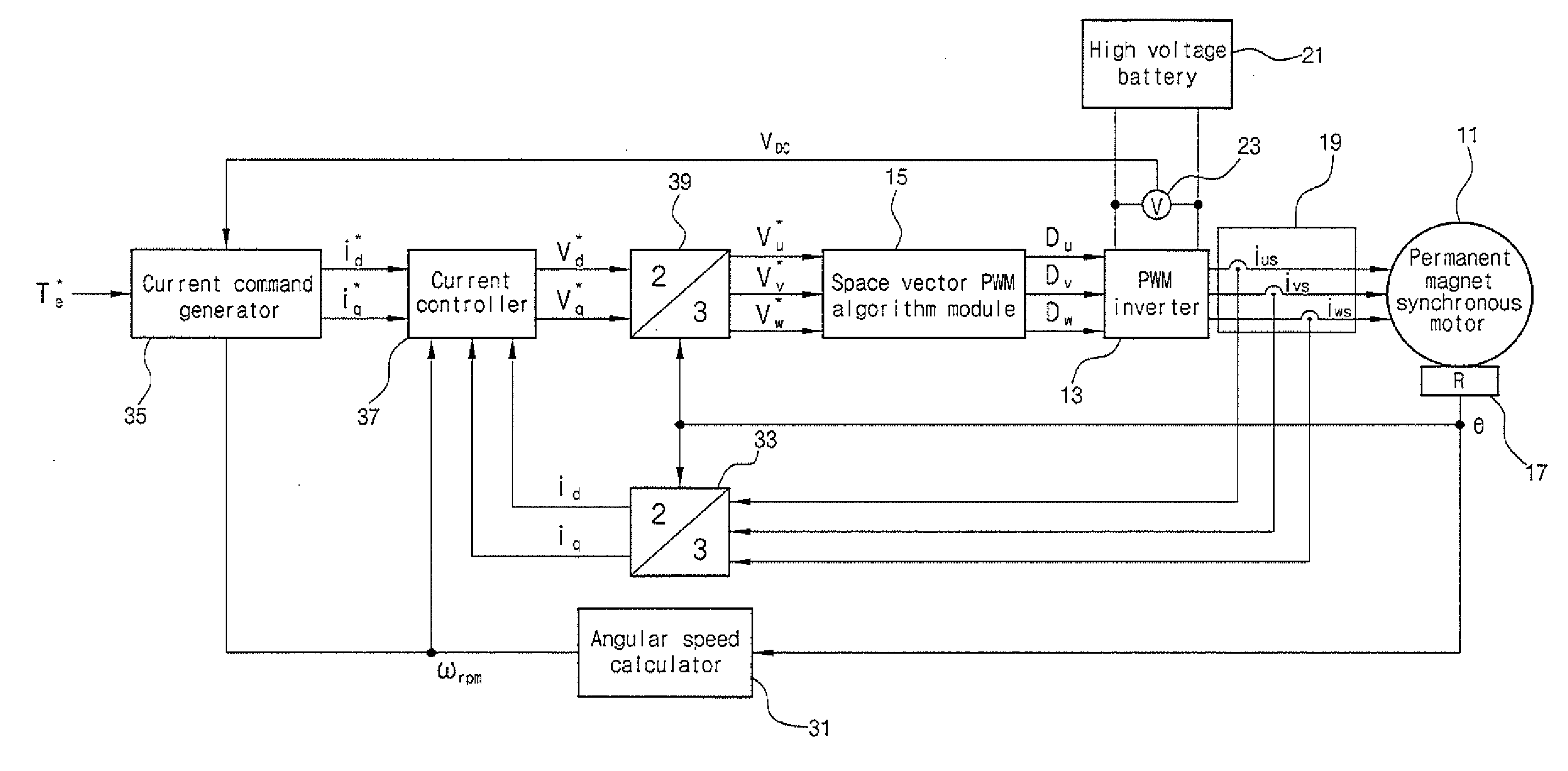
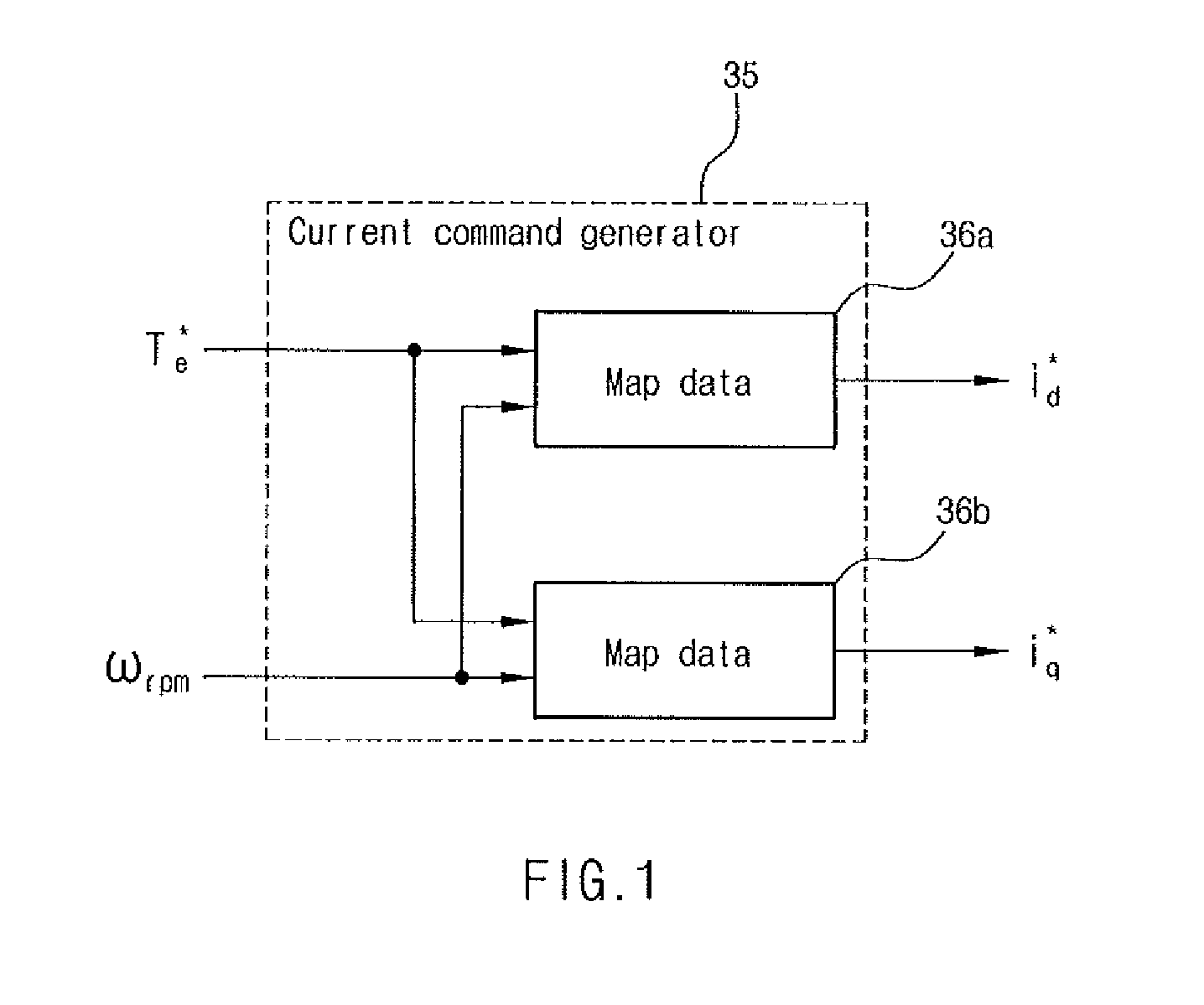
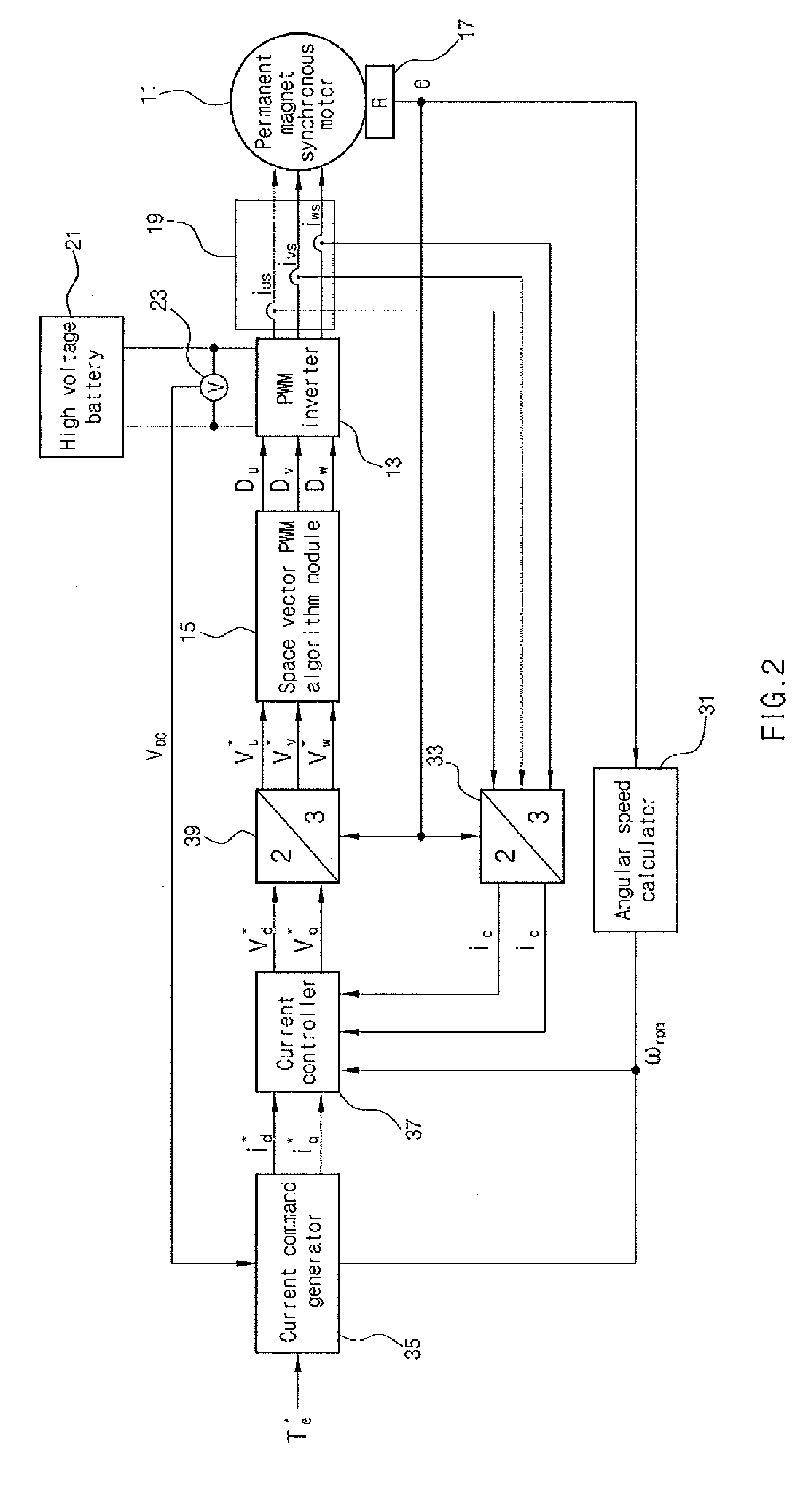
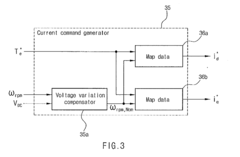
Innovation
- A method that detects battery voltage variations and compensates for them in real time by calculating a compensated speed, which is used to generate d-axis and q-axis current commands, thereby improving voltage utilization and motor control efficiency.
Performance Benchmarks
Performance benchmarks for high-precision PMSM actuators have evolved significantly in recent years, reflecting the continuous advancements in this field. These benchmarks serve as crucial indicators of the actuators' capabilities and are essential for evaluating their suitability for various applications.
One of the primary performance metrics is positioning accuracy. State-of-the-art PMSM actuators can achieve sub-micron level precision, with some advanced systems demonstrating accuracies in the nanometer range. This level of precision is particularly critical in applications such as semiconductor manufacturing and high-resolution microscopy.
Another key benchmark is the actuator's dynamic response. Modern PMSM actuators exhibit impressive acceleration and deceleration capabilities, with some high-end models achieving acceleration rates of over 100 m/s². This rapid response is vital in applications requiring quick and precise movements, such as pick-and-place operations in electronics assembly.
Torque density is a crucial performance indicator for PMSM actuators. Recent advancements have led to significant improvements in this area, with some actuators achieving torque densities exceeding 10 Nm/kg. This high torque-to-weight ratio enables more compact and efficient designs, particularly beneficial in robotics and aerospace applications.
Energy efficiency is an increasingly important benchmark. The latest PMSM actuators boast efficiency ratings of over 90%, with some high-performance models reaching up to 98% efficiency. This improvement not only reduces energy consumption but also minimizes heat generation, which is critical in sensitive applications.
Bandwidth is another essential performance metric, indicating the actuator's ability to respond to high-frequency control signals. Advanced PMSM actuators now offer bandwidths exceeding 1 kHz, enabling precise control in applications requiring rapid, small-scale movements, such as in optical systems and vibration control.
Reliability and longevity have also seen significant improvements. Modern PMSM actuators demonstrate mean time between failures (MTBF) of tens of thousands of hours, with some high-reliability models exceeding 100,000 hours. This increased durability is crucial for applications in harsh environments or where maintenance access is limited.
The noise and vibration characteristics of PMSM actuators have been substantially improved. Current benchmarks show noise levels below 50 dB for many applications, with some ultra-quiet designs achieving levels as low as 35 dB. This reduction in noise and vibration is particularly important in medical equipment and precision measurement instruments.
These performance benchmarks collectively demonstrate the remarkable progress in high-precision PMSM actuator technology. They set new standards for precision, efficiency, and reliability across various industries, driving innovation and enabling new applications previously thought impossible.
One of the primary performance metrics is positioning accuracy. State-of-the-art PMSM actuators can achieve sub-micron level precision, with some advanced systems demonstrating accuracies in the nanometer range. This level of precision is particularly critical in applications such as semiconductor manufacturing and high-resolution microscopy.
Another key benchmark is the actuator's dynamic response. Modern PMSM actuators exhibit impressive acceleration and deceleration capabilities, with some high-end models achieving acceleration rates of over 100 m/s². This rapid response is vital in applications requiring quick and precise movements, such as pick-and-place operations in electronics assembly.
Torque density is a crucial performance indicator for PMSM actuators. Recent advancements have led to significant improvements in this area, with some actuators achieving torque densities exceeding 10 Nm/kg. This high torque-to-weight ratio enables more compact and efficient designs, particularly beneficial in robotics and aerospace applications.
Energy efficiency is an increasingly important benchmark. The latest PMSM actuators boast efficiency ratings of over 90%, with some high-performance models reaching up to 98% efficiency. This improvement not only reduces energy consumption but also minimizes heat generation, which is critical in sensitive applications.
Bandwidth is another essential performance metric, indicating the actuator's ability to respond to high-frequency control signals. Advanced PMSM actuators now offer bandwidths exceeding 1 kHz, enabling precise control in applications requiring rapid, small-scale movements, such as in optical systems and vibration control.
Reliability and longevity have also seen significant improvements. Modern PMSM actuators demonstrate mean time between failures (MTBF) of tens of thousands of hours, with some high-reliability models exceeding 100,000 hours. This increased durability is crucial for applications in harsh environments or where maintenance access is limited.
The noise and vibration characteristics of PMSM actuators have been substantially improved. Current benchmarks show noise levels below 50 dB for many applications, with some ultra-quiet designs achieving levels as low as 35 dB. This reduction in noise and vibration is particularly important in medical equipment and precision measurement instruments.
These performance benchmarks collectively demonstrate the remarkable progress in high-precision PMSM actuator technology. They set new standards for precision, efficiency, and reliability across various industries, driving innovation and enabling new applications previously thought impossible.
Energy Efficiency Impact
The energy efficiency impact of advances in high-precision PMSM actuators is significant and multifaceted. These advancements have led to substantial improvements in the overall energy consumption of systems utilizing PMSM actuators, contributing to reduced operational costs and environmental footprint.
One of the primary areas of improvement is in the reduction of energy losses during operation. High-precision PMSM actuators exhibit lower copper losses due to optimized winding designs and improved magnetic materials. This results in less heat generation and consequently, reduced energy waste. Additionally, the enhanced precision in control algorithms allows for more accurate positioning and smoother motion profiles, minimizing unnecessary movements and associated energy expenditure.
The integration of advanced power electronics and control systems has further boosted energy efficiency. Modern inverter technologies, coupled with sophisticated control strategies such as field-oriented control (FOC) and model predictive control (MPC), enable precise regulation of current and voltage supplied to the actuator. This optimization ensures that energy is delivered only when and where it is needed, significantly reducing idle power consumption.
Another crucial aspect is the improved efficiency at various operating points. High-precision PMSM actuators maintain high efficiency across a wider range of speeds and loads compared to their predecessors. This characteristic is particularly beneficial in applications with variable operating conditions, such as electric vehicles or industrial automation, where energy savings can be realized throughout the entire operational cycle.
The advancements in magnetic materials and rotor designs have also contributed to enhanced energy efficiency. The use of high-performance permanent magnets, such as neodymium-iron-boron (NdFeB), allows for stronger magnetic fields with less material, reducing the overall weight and inertia of the rotor. This leads to improved dynamic performance and lower energy requirements for acceleration and deceleration.
Furthermore, the integration of regenerative braking capabilities in high-precision PMSM actuators has opened up new avenues for energy recovery. In applications involving frequent starts and stops or reversals, the ability to convert kinetic energy back into electrical energy during deceleration significantly reduces overall energy consumption and improves system efficiency.
The cumulative effect of these advancements has led to substantial energy savings in various industries. For instance, in manufacturing, the adoption of high-precision PMSM actuators in robotic systems and CNC machines has resulted in reduced energy consumption while maintaining or even improving production output. In the automotive sector, the use of these actuators in electric power steering systems has contributed to improved fuel efficiency in conventional vehicles and extended range in electric vehicles.
One of the primary areas of improvement is in the reduction of energy losses during operation. High-precision PMSM actuators exhibit lower copper losses due to optimized winding designs and improved magnetic materials. This results in less heat generation and consequently, reduced energy waste. Additionally, the enhanced precision in control algorithms allows for more accurate positioning and smoother motion profiles, minimizing unnecessary movements and associated energy expenditure.
The integration of advanced power electronics and control systems has further boosted energy efficiency. Modern inverter technologies, coupled with sophisticated control strategies such as field-oriented control (FOC) and model predictive control (MPC), enable precise regulation of current and voltage supplied to the actuator. This optimization ensures that energy is delivered only when and where it is needed, significantly reducing idle power consumption.
Another crucial aspect is the improved efficiency at various operating points. High-precision PMSM actuators maintain high efficiency across a wider range of speeds and loads compared to their predecessors. This characteristic is particularly beneficial in applications with variable operating conditions, such as electric vehicles or industrial automation, where energy savings can be realized throughout the entire operational cycle.
The advancements in magnetic materials and rotor designs have also contributed to enhanced energy efficiency. The use of high-performance permanent magnets, such as neodymium-iron-boron (NdFeB), allows for stronger magnetic fields with less material, reducing the overall weight and inertia of the rotor. This leads to improved dynamic performance and lower energy requirements for acceleration and deceleration.
Furthermore, the integration of regenerative braking capabilities in high-precision PMSM actuators has opened up new avenues for energy recovery. In applications involving frequent starts and stops or reversals, the ability to convert kinetic energy back into electrical energy during deceleration significantly reduces overall energy consumption and improves system efficiency.
The cumulative effect of these advancements has led to substantial energy savings in various industries. For instance, in manufacturing, the adoption of high-precision PMSM actuators in robotic systems and CNC machines has resulted in reduced energy consumption while maintaining or even improving production output. In the automotive sector, the use of these actuators in electric power steering systems has contributed to improved fuel efficiency in conventional vehicles and extended range in electric vehicles.
Unlock deeper insights with PatSnap Eureka Quick Research — get a full tech report to explore trends and direct your research. Try now!
Generate Your Research Report Instantly with AI Agent
Supercharge your innovation with PatSnap Eureka AI Agent Platform!