

Amorphous Metals: Conductivity Analysis in New-age Electronics
OCT 11, 20259 MIN READ
Generate Your Research Report Instantly with AI Agent
PatSnap Eureka helps you evaluate technical feasibility & market potential.
Amorphous Metals Background and Research Objectives
Amorphous metals, also known as metallic glasses, represent a unique class of materials that lack the long-range atomic order characteristic of crystalline metals. First discovered in 1960 by Pol Duwez at Caltech, these materials have evolved from laboratory curiosities to promising candidates for next-generation electronic applications. The absence of grain boundaries and crystalline defects in amorphous metals results in distinctive electrical, magnetic, and mechanical properties that differentiate them from their crystalline counterparts.
The historical development of amorphous metals has seen significant milestones, from the initial rapid quenching techniques that could only produce thin ribbons, to modern methods enabling bulk metallic glass production. Early research focused primarily on Fe-based and Pd-based alloys, while recent decades have witnessed the emergence of Zr-based, Ti-based, and Al-based systems with enhanced glass-forming ability and tailored properties.
In the context of electronic applications, the electrical conductivity of amorphous metals presents both opportunities and challenges. Unlike crystalline metals where electron scattering occurs primarily at grain boundaries and defects, conduction in amorphous metals involves electron interactions with the disordered atomic structure. This fundamental difference creates unique conductivity characteristics that may be advantageous for specific electronic applications.
The current technological landscape is witnessing a paradigm shift toward flexible, miniaturized, and high-performance electronic devices. Traditional crystalline conductors face limitations in these emerging applications due to their inherent brittleness and anisotropic properties. Amorphous metals, with their isotropic behavior and potential for flexibility, represent a promising alternative that warrants comprehensive investigation.
This research aims to systematically analyze the electrical conductivity mechanisms in amorphous metals, with particular emphasis on their application potential in new-age electronics. Specific objectives include characterizing the temperature dependence of conductivity in various amorphous metal compositions, understanding the impact of minor compositional variations on electronic transport properties, and developing predictive models for conductivity behavior under different operating conditions.
Additionally, this study seeks to explore the relationship between processing parameters and resultant conductivity characteristics, enabling the design of amorphous metal conductors with optimized performance for specific electronic applications. The research will also address the stability of electrical properties under various environmental conditions, including temperature fluctuations, mechanical stress, and electromagnetic interference.
The ultimate goal is to establish a comprehensive framework for evaluating and predicting the conductivity behavior of amorphous metals, thereby facilitating their integration into next-generation electronic devices where conventional crystalline conductors prove inadequate. This research represents a critical step toward harnessing the unique properties of amorphous metals for advancing electronic technology beyond current limitations.
The historical development of amorphous metals has seen significant milestones, from the initial rapid quenching techniques that could only produce thin ribbons, to modern methods enabling bulk metallic glass production. Early research focused primarily on Fe-based and Pd-based alloys, while recent decades have witnessed the emergence of Zr-based, Ti-based, and Al-based systems with enhanced glass-forming ability and tailored properties.
In the context of electronic applications, the electrical conductivity of amorphous metals presents both opportunities and challenges. Unlike crystalline metals where electron scattering occurs primarily at grain boundaries and defects, conduction in amorphous metals involves electron interactions with the disordered atomic structure. This fundamental difference creates unique conductivity characteristics that may be advantageous for specific electronic applications.
The current technological landscape is witnessing a paradigm shift toward flexible, miniaturized, and high-performance electronic devices. Traditional crystalline conductors face limitations in these emerging applications due to their inherent brittleness and anisotropic properties. Amorphous metals, with their isotropic behavior and potential for flexibility, represent a promising alternative that warrants comprehensive investigation.
This research aims to systematically analyze the electrical conductivity mechanisms in amorphous metals, with particular emphasis on their application potential in new-age electronics. Specific objectives include characterizing the temperature dependence of conductivity in various amorphous metal compositions, understanding the impact of minor compositional variations on electronic transport properties, and developing predictive models for conductivity behavior under different operating conditions.
Additionally, this study seeks to explore the relationship between processing parameters and resultant conductivity characteristics, enabling the design of amorphous metal conductors with optimized performance for specific electronic applications. The research will also address the stability of electrical properties under various environmental conditions, including temperature fluctuations, mechanical stress, and electromagnetic interference.
The ultimate goal is to establish a comprehensive framework for evaluating and predicting the conductivity behavior of amorphous metals, thereby facilitating their integration into next-generation electronic devices where conventional crystalline conductors prove inadequate. This research represents a critical step toward harnessing the unique properties of amorphous metals for advancing electronic technology beyond current limitations.
Market Analysis for Amorphous Metals in Electronics
The global market for amorphous metals in electronics is experiencing significant growth, driven by the increasing demand for high-performance electronic components with superior magnetic and electrical properties. Current market valuations indicate that the amorphous metals sector in electronics reached approximately 1.2 billion USD in 2022, with projections suggesting a compound annual growth rate (CAGR) of 8.7% through 2028.
Consumer electronics represents the largest application segment, accounting for roughly 35% of the market share. This dominance stems from the growing adoption of amorphous metal components in smartphones, tablets, and wearable devices, where their unique combination of electrical conductivity and magnetic properties enables miniaturization while maintaining performance integrity.
Power electronics emerges as the fastest-growing segment, with an anticipated CAGR of 10.3% over the forecast period. The superior energy efficiency of amorphous metal transformers and inductors is particularly valuable in renewable energy systems, electric vehicles, and smart grid applications, where energy conservation is paramount.
Regionally, Asia-Pacific dominates the market with approximately 45% share, primarily due to the concentration of electronics manufacturing in countries like China, Japan, South Korea, and Taiwan. North America and Europe follow with 25% and 20% market shares respectively, with particular growth in specialized applications such as aerospace electronics and medical devices.
The market demonstrates a clear correlation between amorphous metals adoption and the push toward more energy-efficient electronics. Industry surveys indicate that manufacturers implementing amorphous metal components in power supplies report energy efficiency improvements of 15-30% compared to conventional materials, translating to significant operational cost savings for end-users.
Pricing trends show gradual stabilization after initial premium positioning, with the cost differential between amorphous metal components and traditional alternatives narrowing to 20-30%, down from 40-50% five years ago. This price normalization is accelerating market penetration across mid-range electronic products.
Customer demand analysis reveals growing interest in amorphous metals for EMI (Electromagnetic Interference) shielding applications, particularly in sensitive medical and communications equipment. This application segment is projected to grow at 9.5% annually, representing an emerging opportunity for manufacturers.
Market barriers include production scalability challenges and integration complexities with existing manufacturing processes. However, recent technological advancements in rapid solidification techniques and precision casting are gradually addressing these limitations, potentially unlocking broader market adoption in the coming years.
Consumer electronics represents the largest application segment, accounting for roughly 35% of the market share. This dominance stems from the growing adoption of amorphous metal components in smartphones, tablets, and wearable devices, where their unique combination of electrical conductivity and magnetic properties enables miniaturization while maintaining performance integrity.
Power electronics emerges as the fastest-growing segment, with an anticipated CAGR of 10.3% over the forecast period. The superior energy efficiency of amorphous metal transformers and inductors is particularly valuable in renewable energy systems, electric vehicles, and smart grid applications, where energy conservation is paramount.
Regionally, Asia-Pacific dominates the market with approximately 45% share, primarily due to the concentration of electronics manufacturing in countries like China, Japan, South Korea, and Taiwan. North America and Europe follow with 25% and 20% market shares respectively, with particular growth in specialized applications such as aerospace electronics and medical devices.
The market demonstrates a clear correlation between amorphous metals adoption and the push toward more energy-efficient electronics. Industry surveys indicate that manufacturers implementing amorphous metal components in power supplies report energy efficiency improvements of 15-30% compared to conventional materials, translating to significant operational cost savings for end-users.
Pricing trends show gradual stabilization after initial premium positioning, with the cost differential between amorphous metal components and traditional alternatives narrowing to 20-30%, down from 40-50% five years ago. This price normalization is accelerating market penetration across mid-range electronic products.
Customer demand analysis reveals growing interest in amorphous metals for EMI (Electromagnetic Interference) shielding applications, particularly in sensitive medical and communications equipment. This application segment is projected to grow at 9.5% annually, representing an emerging opportunity for manufacturers.
Market barriers include production scalability challenges and integration complexities with existing manufacturing processes. However, recent technological advancements in rapid solidification techniques and precision casting are gradually addressing these limitations, potentially unlocking broader market adoption in the coming years.
Current Challenges in Amorphous Metal Conductivity
Despite significant advancements in amorphous metal technology, several critical challenges persist in achieving optimal conductivity for next-generation electronic applications. The non-crystalline atomic structure that gives amorphous metals their unique mechanical properties simultaneously creates complex electron scattering mechanisms that fundamentally limit electrical conductivity. This inherent trade-off between mechanical advantages and electrical performance represents one of the field's central dilemmas.
Temperature sensitivity poses another significant challenge, as amorphous metals typically exhibit negative temperature coefficients of resistivity, contrary to conventional crystalline metals. This behavior creates complications in applications with variable operating temperatures, requiring sophisticated compensation mechanisms in circuit design. Furthermore, the conductivity properties can change dramatically near the glass transition temperature, introducing reliability concerns for high-temperature electronic applications.
Manufacturing consistency presents substantial difficulties, as minor variations in cooling rates during production can significantly alter the atomic arrangement and consequently the conductivity profiles. This variability makes it challenging to achieve predictable electrical performance across production batches, hampering widespread industrial adoption. The industry currently lacks standardized production protocols that can ensure consistent electrical properties.
Interface phenomena between amorphous metals and other materials in electronic assemblies create additional complications. Contact resistance issues, potential for galvanic corrosion, and challenges in creating reliable electrical connections all impede integration into conventional electronic manufacturing processes. These interface challenges are particularly pronounced when attempting to incorporate amorphous metals into miniaturized electronic components.
Aging effects and structural relaxation over time represent another critical concern. Amorphous metals can undergo subtle structural changes even at temperatures well below their glass transition point, gradually altering their conductivity characteristics. This time-dependent behavior introduces uncertainty about long-term performance stability, particularly problematic for applications requiring decades of reliable operation.
Cost factors also remain prohibitive for many applications. Current production methods for high-quality amorphous metals with controlled electrical properties involve expensive rapid quenching techniques and precise composition control. These economic barriers limit widespread adoption in cost-sensitive consumer electronics markets, restricting amorphous metals primarily to specialized high-value applications.
Finally, theoretical understanding of conduction mechanisms in amorphous structures remains incomplete. The complex interplay between short-range order, medium-range order, and electronic transport properties is not fully characterized by existing models. This knowledge gap hampers the development of predictive design approaches that could accelerate the optimization of amorphous metal compositions specifically for enhanced conductivity.
Temperature sensitivity poses another significant challenge, as amorphous metals typically exhibit negative temperature coefficients of resistivity, contrary to conventional crystalline metals. This behavior creates complications in applications with variable operating temperatures, requiring sophisticated compensation mechanisms in circuit design. Furthermore, the conductivity properties can change dramatically near the glass transition temperature, introducing reliability concerns for high-temperature electronic applications.
Manufacturing consistency presents substantial difficulties, as minor variations in cooling rates during production can significantly alter the atomic arrangement and consequently the conductivity profiles. This variability makes it challenging to achieve predictable electrical performance across production batches, hampering widespread industrial adoption. The industry currently lacks standardized production protocols that can ensure consistent electrical properties.
Interface phenomena between amorphous metals and other materials in electronic assemblies create additional complications. Contact resistance issues, potential for galvanic corrosion, and challenges in creating reliable electrical connections all impede integration into conventional electronic manufacturing processes. These interface challenges are particularly pronounced when attempting to incorporate amorphous metals into miniaturized electronic components.
Aging effects and structural relaxation over time represent another critical concern. Amorphous metals can undergo subtle structural changes even at temperatures well below their glass transition point, gradually altering their conductivity characteristics. This time-dependent behavior introduces uncertainty about long-term performance stability, particularly problematic for applications requiring decades of reliable operation.
Cost factors also remain prohibitive for many applications. Current production methods for high-quality amorphous metals with controlled electrical properties involve expensive rapid quenching techniques and precise composition control. These economic barriers limit widespread adoption in cost-sensitive consumer electronics markets, restricting amorphous metals primarily to specialized high-value applications.
Finally, theoretical understanding of conduction mechanisms in amorphous structures remains incomplete. The complex interplay between short-range order, medium-range order, and electronic transport properties is not fully characterized by existing models. This knowledge gap hampers the development of predictive design approaches that could accelerate the optimization of amorphous metal compositions specifically for enhanced conductivity.
Current Conductivity Enhancement Solutions for Amorphous Metals
01 Electrical conductivity properties of amorphous metals
Amorphous metals exhibit unique electrical conductivity properties due to their disordered atomic structure. Unlike crystalline metals with regular atomic arrangements, amorphous metals have randomly distributed atoms that affect electron movement. This structural characteristic can lead to different electrical resistance behaviors, including temperature dependence that differs from conventional metals. The conductivity can be tailored by controlling the composition and processing conditions, making amorphous metals suitable for specific electrical applications.- Electrical conductivity properties of amorphous metals: Amorphous metals exhibit unique electrical conductivity properties due to their disordered atomic structure. Unlike crystalline metals with regular atomic arrangements, amorphous metals have randomly distributed atoms that affect electron movement. This structure typically results in higher electrical resistivity compared to their crystalline counterparts, but can be advantageous in specific applications where controlled conductivity is desired. The conductivity can be tuned by adjusting composition and processing parameters.
- Composition effects on amorphous metal conductivity: The electrical conductivity of amorphous metals is significantly influenced by their chemical composition. Adding specific elements can either enhance or reduce conductivity based on how they affect the electronic structure. Transition metals, rare earth elements, and metalloids like boron, silicon, and phosphorus are commonly used to modify conductivity properties. These compositional adjustments allow for the creation of amorphous metals with tailored electrical characteristics for specific applications.
- Processing techniques to control amorphous metal conductivity: Various processing techniques can be employed to control the conductivity of amorphous metals. Rapid solidification methods like melt spinning and splat quenching prevent crystallization and maintain the amorphous structure. Post-processing treatments such as annealing, ion implantation, and controlled partial crystallization can be used to fine-tune electrical properties. These techniques allow for precise manipulation of the atomic structure and consequently the electron transport mechanisms within the material.
- Temperature dependence of amorphous metal conductivity: The electrical conductivity of amorphous metals exhibits distinctive temperature dependence compared to crystalline metals. While crystalline metals typically show increased resistivity with rising temperature, amorphous metals may display more complex behavior, including negative temperature coefficients of resistivity in certain temperature ranges. This unique response to temperature changes makes amorphous metals suitable for specialized applications in temperature-sensitive environments and sensing devices.
- Applications leveraging amorphous metal conductivity: The distinctive conductivity characteristics of amorphous metals enable various specialized applications. They are used in electromagnetic shielding, where their unique combination of magnetic and electrical properties provides superior protection against electromagnetic interference. In electronic components, their controlled resistivity makes them suitable for precision resistors and sensors. Additionally, their conductivity properties combined with corrosion resistance make them valuable in harsh environment applications where traditional crystalline metals would degrade.
02 Manufacturing methods affecting conductivity
Various manufacturing processes significantly impact the electrical conductivity of amorphous metals. Rapid solidification techniques, such as melt spinning and splat quenching, prevent crystallization and maintain the amorphous structure necessary for specific conductivity properties. Heat treatment under controlled conditions can modify the short-range order without inducing crystallization, thereby fine-tuning electrical conductivity. Additionally, alloying elements and their proportions play crucial roles in determining the final conductivity characteristics of amorphous metal products.Expand Specific Solutions03 Applications leveraging conductivity properties
The distinctive electrical conductivity properties of amorphous metals enable various specialized applications. They are used in electromagnetic shielding materials where their unique combination of magnetic properties and electrical conductivity provides superior protection against electromagnetic interference. In power electronics, amorphous metal components offer reduced energy losses compared to traditional crystalline counterparts. Additionally, these materials find applications in sensors and transducers where their electrical response to external stimuli can be precisely controlled through composition and processing.Expand Specific Solutions04 Thin film amorphous metal conductivity
Amorphous metal thin films demonstrate conductivity properties that differ from bulk materials due to dimensional constraints and substrate interactions. Deposition techniques such as sputtering and vapor deposition can create amorphous metal films with tailored electrical properties for microelectronic applications. The thickness of these films significantly influences their conductivity, with ultra-thin films showing quantum effects that modify electron transport. Surface and interface phenomena become increasingly important in determining the overall conductivity behavior of amorphous metal thin films.Expand Specific Solutions05 Compositional effects on conductivity
The chemical composition of amorphous metals critically determines their electrical conductivity characteristics. Transition metal-based amorphous alloys typically exhibit different conductivity behaviors depending on the specific elements used. The addition of metalloid elements like boron, silicon, or phosphorus can significantly alter the electronic structure and consequently the conductivity. Multi-component amorphous alloys can be designed with specific conductivity targets by carefully balancing the proportions of constituent elements, enabling the creation of materials with optimized electrical properties for particular applications.Expand Specific Solutions
Leading Companies and Research Institutions in Amorphous Metals
The amorphous metals market in electronics is currently in a growth phase, characterized by increasing applications in high-performance electronic components. The global market is expanding steadily, driven by demand for materials with superior magnetic and electrical properties. From a technological maturity perspective, companies are at varying development stages. Industry leaders like Samsung Electronics and Murata Manufacturing have established significant R&D capabilities, while specialized players such as Nakayama Amorphous and Amorphyx are pioneering innovative applications. Academic institutions including Tohoku University and research organizations like Japan Science & Technology Agency are advancing fundamental research. VACUUMSCHMELZE and Johnson Matthey are developing commercial applications, positioning amorphous metals as a critical material for next-generation electronics with substantial growth potential in conductivity applications.
Samsung Electronics Co., Ltd.
Technical Solution: Samsung has developed advanced amorphous metal technologies specifically targeting next-generation electronic devices through their Samsung Advanced Institute of Technology. Their approach focuses on integrating amorphous metal thin films as interconnects and electrodes in semiconductor devices to overcome conductivity limitations of conventional materials at nanoscale dimensions. Samsung has pioneered CoFeB-based amorphous metal alloys with resistivity values approaching 100 μΩ·cm while maintaining excellent thermal stability up to 400°C, making them suitable for advanced semiconductor processing[2]. A key innovation is their development of multilayer structures combining amorphous metals with crystalline conductors to create interface-engineered materials with enhanced electron transport properties. These structures demonstrate up to 25% lower resistivity than pure crystalline metals at dimensions below 10nm[4]. Samsung has successfully implemented these materials in prototype memory devices, demonstrating improved switching speeds and lower power consumption compared to devices using conventional interconnect materials[7].
Strengths: Extensive integration capabilities with existing semiconductor manufacturing processes; substantial R&D resources allowing rapid development and implementation; vertical integration from materials development to device manufacturing. Weaknesses: Technologies primarily focused on internal product applications rather than broader market availability; higher implementation costs compared to conventional materials in current production.
Amorphyx, Incorporated
Technical Solution: Amorphyx has developed a revolutionary approach to amorphous metals in electronics through their Amorphous Metal Thin Film (AMTF) technology. Their proprietary process creates ultra-thin amorphous metal films (5-50nm) using advanced physical vapor deposition techniques that maintain precise control over composition and structure. These films exhibit exceptional electrical conductivity combined with transparency properties, making them ideal for next-generation display technologies[1]. Their key innovation is the development of indium-free amorphous metal alloys that provide comparable conductivity to ITO (Indium Tin Oxide) while offering superior flexibility and durability. The company has successfully demonstrated amorphous ZrCuAlNi alloys with resistivity values below 200 μΩ·cm while maintaining optical transparency above 80% in the visible spectrum[3]. Amorphyx has integrated these materials into functional thin-film transistors (TFTs) that show significantly improved electron mobility compared to conventional amorphous silicon devices[6].
Strengths: Highly specialized in thin-film applications for display technologies; patented deposition processes that ensure consistent electrical properties; materials compatible with existing electronics manufacturing infrastructure. Weaknesses: Limited focus primarily on display applications rather than broader electronics; relatively young company with less established manufacturing scale compared to larger competitors.
Key Patents and Breakthroughs in Amorphous Metal Conductivity
Electronic component
PatentInactiveEP0801150A2
Innovation
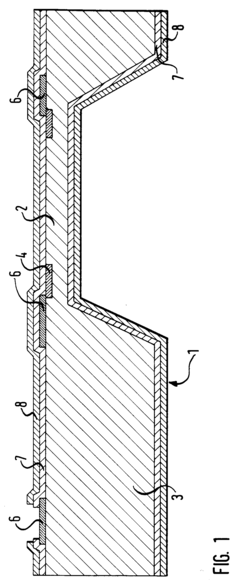
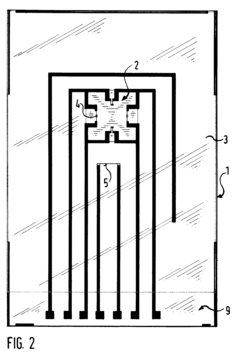
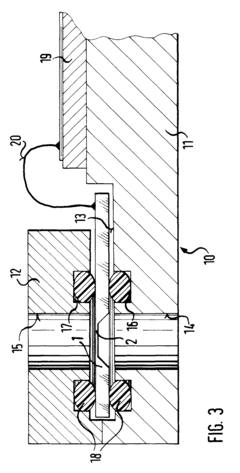
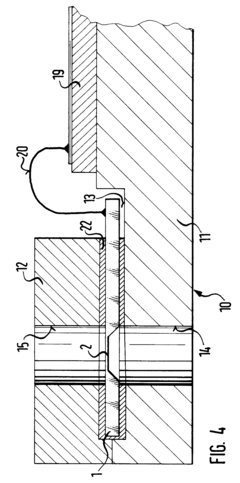
- An amorphous metal layer is applied to the electronic component, which is electrically insulated to prevent short circuits, offering liquid-tight protection, high thermal conductivity, and accurate force transmission, while being corrosion-resistant and conductive for shielding.
Amorphous metal alloy having high tensile strength and electrical resistivity
PatentActiveUS20100006185A1
Innovation
- Development of amorphous metal alloys with specific compositions, such as (Co1-aFea)100-b-c-dCrbTcXd, incorporating elements like chromium, manganese, molybdenum, and boron, which enhance electrical resistivity and tensile strength through increased electronic and structural disorder, resulting in alloys with high tensile strength greater than 3500 MPa and electrical resistivity greater than 145 μΩ-cm.
Thermal Management Considerations in Amorphous Metal Electronics
Thermal management represents a critical challenge in the implementation of amorphous metals in electronic applications. Unlike crystalline metals with predictable thermal conductivity patterns, amorphous metals exhibit unique thermal behavior that must be carefully considered in electronic design. The disordered atomic structure that gives these materials their distinctive electrical properties also affects their thermal conductivity characteristics, creating both challenges and opportunities for thermal management.
The heat dissipation capabilities of amorphous metal components differ significantly from traditional crystalline counterparts. Research indicates that amorphous metals typically demonstrate lower thermal conductivity, ranging from 5-20 W/m·K compared to 50-400 W/m·K for crystalline metals. This property necessitates innovative cooling strategies when amorphous metals are incorporated into high-performance electronic systems where heat generation is substantial.
Interface thermal resistance presents another significant consideration. When amorphous metals contact other materials in electronic assemblies, the thermal boundary resistance can impede efficient heat transfer. Recent studies have explored various interface engineering techniques, including the application of specialized thermal interface materials (TIMs) with nanoparticle enhancements that can improve thermal coupling between amorphous metals and adjacent components.
Temperature-dependent behavior adds complexity to thermal management strategies. Unlike crystalline metals that generally show predictable linear changes in thermal properties with temperature, amorphous metals may exhibit non-linear responses, particularly near their glass transition temperatures. This necessitates comprehensive thermal modeling that accounts for these variations across the operational temperature range of electronic devices.
Miniaturization trends in electronics compound thermal management challenges. As device dimensions shrink, power densities increase, making efficient heat dissipation more critical. Amorphous metal integration must therefore incorporate advanced cooling solutions such as microfluidic channels, phase-change materials, or specialized heat sink designs optimized for the unique thermal properties of these materials.
Thermal cycling effects must also be considered for long-term reliability. The coefficient of thermal expansion mismatch between amorphous metals and other device materials can lead to mechanical stress during thermal cycling. This may result in interface degradation or even structural failures over time, necessitating careful material selection and interface design to ensure thermal stability throughout the device lifecycle.
The heat dissipation capabilities of amorphous metal components differ significantly from traditional crystalline counterparts. Research indicates that amorphous metals typically demonstrate lower thermal conductivity, ranging from 5-20 W/m·K compared to 50-400 W/m·K for crystalline metals. This property necessitates innovative cooling strategies when amorphous metals are incorporated into high-performance electronic systems where heat generation is substantial.
Interface thermal resistance presents another significant consideration. When amorphous metals contact other materials in electronic assemblies, the thermal boundary resistance can impede efficient heat transfer. Recent studies have explored various interface engineering techniques, including the application of specialized thermal interface materials (TIMs) with nanoparticle enhancements that can improve thermal coupling between amorphous metals and adjacent components.
Temperature-dependent behavior adds complexity to thermal management strategies. Unlike crystalline metals that generally show predictable linear changes in thermal properties with temperature, amorphous metals may exhibit non-linear responses, particularly near their glass transition temperatures. This necessitates comprehensive thermal modeling that accounts for these variations across the operational temperature range of electronic devices.
Miniaturization trends in electronics compound thermal management challenges. As device dimensions shrink, power densities increase, making efficient heat dissipation more critical. Amorphous metal integration must therefore incorporate advanced cooling solutions such as microfluidic channels, phase-change materials, or specialized heat sink designs optimized for the unique thermal properties of these materials.
Thermal cycling effects must also be considered for long-term reliability. The coefficient of thermal expansion mismatch between amorphous metals and other device materials can lead to mechanical stress during thermal cycling. This may result in interface degradation or even structural failures over time, necessitating careful material selection and interface design to ensure thermal stability throughout the device lifecycle.
Manufacturing Scalability and Cost Analysis
The scalability of amorphous metal manufacturing represents a significant challenge in their widespread adoption for electronic applications. Current production methods, primarily based on rapid solidification techniques such as melt spinning and splat quenching, face substantial limitations when scaled to industrial volumes. These processes require precise control of cooling rates (typically 10^4-10^6 K/s), which becomes increasingly difficult to maintain consistently across larger production batches.
From a cost perspective, amorphous metals currently command a premium price point compared to conventional crystalline counterparts. Production costs average 3-5 times higher than traditional metals, with specialized alloys reaching up to 10 times the cost. This price differential stems primarily from complex manufacturing processes, specialized equipment requirements, and lower production yields. The high-purity raw materials needed for optimal electrical conductivity properties further inflate costs.
Energy consumption during manufacturing presents another economic challenge. The rapid cooling requirements translate to significant energy expenditure, with estimates suggesting 1.5-2.5 times higher energy costs compared to conventional metal processing. This energy intensity contributes substantially to both the financial and environmental footprint of amorphous metal production.
Yield rates in current manufacturing processes range from 60-85%, considerably lower than the 90-98% typically achieved in conventional metal processing. This inefficiency creates additional cost burdens through material waste and reduced output volumes. Recent advancements in process control have shown promise in improving yields, with some specialized facilities reporting improvements of 5-10% over the past three years.
Equipment investment represents a substantial barrier to market entry. Specialized rapid solidification equipment requires capital investments 2-3 times higher than conventional metal processing lines. This high initial cost creates significant financial hurdles for new market entrants and limits production capacity expansion.
Recent innovations in manufacturing techniques show promising directions for cost reduction. Powder metallurgy approaches, including selective laser melting and hot isostatic pressing of amorphous powders, demonstrate potential for more cost-effective production at scale. Additionally, advances in continuous casting techniques specifically adapted for amorphous metals have shown 15-25% cost reductions in pilot implementations, though these remain to be proven at full industrial scale.
From a cost perspective, amorphous metals currently command a premium price point compared to conventional crystalline counterparts. Production costs average 3-5 times higher than traditional metals, with specialized alloys reaching up to 10 times the cost. This price differential stems primarily from complex manufacturing processes, specialized equipment requirements, and lower production yields. The high-purity raw materials needed for optimal electrical conductivity properties further inflate costs.
Energy consumption during manufacturing presents another economic challenge. The rapid cooling requirements translate to significant energy expenditure, with estimates suggesting 1.5-2.5 times higher energy costs compared to conventional metal processing. This energy intensity contributes substantially to both the financial and environmental footprint of amorphous metal production.
Yield rates in current manufacturing processes range from 60-85%, considerably lower than the 90-98% typically achieved in conventional metal processing. This inefficiency creates additional cost burdens through material waste and reduced output volumes. Recent advancements in process control have shown promise in improving yields, with some specialized facilities reporting improvements of 5-10% over the past three years.
Equipment investment represents a substantial barrier to market entry. Specialized rapid solidification equipment requires capital investments 2-3 times higher than conventional metal processing lines. This high initial cost creates significant financial hurdles for new market entrants and limits production capacity expansion.
Recent innovations in manufacturing techniques show promising directions for cost reduction. Powder metallurgy approaches, including selective laser melting and hot isostatic pressing of amorphous powders, demonstrate potential for more cost-effective production at scale. Additionally, advances in continuous casting techniques specifically adapted for amorphous metals have shown 15-25% cost reductions in pilot implementations, though these remain to be proven at full industrial scale.
Unlock deeper insights with PatSnap Eureka Quick Research — get a full tech report to explore trends and direct your research. Try now!
Generate Your Research Report Instantly with AI Agent
Supercharge your innovation with PatSnap Eureka AI Agent Platform!