

Creative PMSM applications in problem-solving robotics
AUG 15, 20259 MIN READ
Generate Your Research Report Instantly with AI Agent
PatSnap Eureka helps you evaluate technical feasibility & market potential.
PMSM in Robotics: Background and Objectives
Permanent Magnet Synchronous Motors (PMSMs) have emerged as a pivotal technology in the field of robotics, particularly in problem-solving applications. The evolution of PMSMs in robotics can be traced back to the late 20th century when the need for more efficient and precise motor control became apparent. As robotics advanced, the demand for motors with higher power density, improved efficiency, and better controllability grew exponentially.
The primary objective of integrating PMSMs into problem-solving robotics is to enhance the overall performance, accuracy, and adaptability of robotic systems. These motors offer superior torque-to-weight ratios, excellent dynamic response, and high efficiency, making them ideal for applications requiring precise motion control and energy optimization. The goal is to leverage these characteristics to develop robots capable of tackling complex tasks in various environments, from industrial automation to search and rescue operations.
In recent years, the focus has shifted towards developing more sophisticated control algorithms and sensor integration techniques to fully exploit the capabilities of PMSMs in robotics. This includes advancements in sensorless control methods, adaptive control strategies, and the implementation of artificial intelligence to optimize motor performance in real-time. The aim is to create robotic systems that can autonomously adjust their behavior based on environmental feedback, thereby improving their problem-solving capabilities.
Another significant objective is the miniaturization of PMSM-driven robotic systems without compromising on power output. This trend is driven by the growing demand for compact, agile robots capable of operating in confined spaces or performing delicate tasks. Researchers and engineers are exploring novel materials and manufacturing techniques to reduce the size and weight of PMSMs while maintaining or even improving their performance characteristics.
The integration of PMSMs with other cutting-edge technologies, such as artificial intelligence, machine learning, and advanced sensors, is a key focus area. The goal is to create synergies that enhance the robot's ability to perceive its environment, make decisions, and execute actions with unprecedented precision and adaptability. This interdisciplinary approach aims to push the boundaries of what is possible in problem-solving robotics, opening up new applications in fields like healthcare, space exploration, and environmental conservation.
As we look to the future, the development of PMSMs for robotics is increasingly aligned with sustainability goals. There is a growing emphasis on improving the energy efficiency of these motors, exploring eco-friendly materials for their construction, and developing recycling methods for end-of-life components. This environmental consciousness is shaping the research and development efforts in the field, driving innovations that not only enhance performance but also reduce the ecological footprint of robotic systems.
The primary objective of integrating PMSMs into problem-solving robotics is to enhance the overall performance, accuracy, and adaptability of robotic systems. These motors offer superior torque-to-weight ratios, excellent dynamic response, and high efficiency, making them ideal for applications requiring precise motion control and energy optimization. The goal is to leverage these characteristics to develop robots capable of tackling complex tasks in various environments, from industrial automation to search and rescue operations.
In recent years, the focus has shifted towards developing more sophisticated control algorithms and sensor integration techniques to fully exploit the capabilities of PMSMs in robotics. This includes advancements in sensorless control methods, adaptive control strategies, and the implementation of artificial intelligence to optimize motor performance in real-time. The aim is to create robotic systems that can autonomously adjust their behavior based on environmental feedback, thereby improving their problem-solving capabilities.
Another significant objective is the miniaturization of PMSM-driven robotic systems without compromising on power output. This trend is driven by the growing demand for compact, agile robots capable of operating in confined spaces or performing delicate tasks. Researchers and engineers are exploring novel materials and manufacturing techniques to reduce the size and weight of PMSMs while maintaining or even improving their performance characteristics.
The integration of PMSMs with other cutting-edge technologies, such as artificial intelligence, machine learning, and advanced sensors, is a key focus area. The goal is to create synergies that enhance the robot's ability to perceive its environment, make decisions, and execute actions with unprecedented precision and adaptability. This interdisciplinary approach aims to push the boundaries of what is possible in problem-solving robotics, opening up new applications in fields like healthcare, space exploration, and environmental conservation.
As we look to the future, the development of PMSMs for robotics is increasingly aligned with sustainability goals. There is a growing emphasis on improving the energy efficiency of these motors, exploring eco-friendly materials for their construction, and developing recycling methods for end-of-life components. This environmental consciousness is shaping the research and development efforts in the field, driving innovations that not only enhance performance but also reduce the ecological footprint of robotic systems.
Market Analysis for PMSM-Driven Robotic Solutions
The market for PMSM-driven robotic solutions is experiencing significant growth, driven by the increasing demand for high-performance, energy-efficient, and precise motion control systems in various industries. Permanent Magnet Synchronous Motors (PMSMs) have emerged as a preferred choice for robotic applications due to their superior power density, efficiency, and controllability compared to traditional motor technologies.
In the industrial robotics sector, PMSM-driven solutions are gaining traction in manufacturing, assembly, and material handling applications. The automotive industry, in particular, has been a major adopter of PMSM-powered robots for tasks such as welding, painting, and assembly line operations. The precision and reliability offered by PMSM-driven robots have led to improved product quality and increased production efficiency.
The collaborative robotics market, where robots work alongside humans, is another area where PMSM-driven solutions are making significant inroads. The smooth and precise motion control provided by PMSMs enables safe human-robot interaction, opening up new possibilities in industries such as healthcare, logistics, and small-scale manufacturing.
In the field of medical robotics, PMSM-driven systems are being increasingly utilized in surgical robots and rehabilitation devices. The high torque-to-inertia ratio and precise positioning capabilities of PMSMs make them ideal for applications requiring delicate movements and force control, such as minimally invasive surgeries and exoskeletons for patient rehabilitation.
The consumer robotics market is also benefiting from PMSM technology, with applications in household cleaning robots, personal assistance robots, and entertainment robots. The compact size and high efficiency of PMSMs allow for the development of smaller, more agile, and longer-running robotic devices for home use.
The market for PMSM-driven robotic solutions is expected to continue its growth trajectory, with a compound annual growth rate (CAGR) projected to be in the double digits over the next five years. This growth is fueled by advancements in motor design, control algorithms, and power electronics, which are continuously improving the performance and cost-effectiveness of PMSM-based systems.
Geographically, Asia-Pacific leads the market for PMSM-driven robotic solutions, with countries like Japan, South Korea, and China at the forefront of adoption and innovation. North America and Europe follow closely, with strong demand in automotive, aerospace, and healthcare sectors driving market growth.
As the trend towards Industry 4.0 and smart manufacturing accelerates, the demand for more intelligent and flexible robotic solutions is expected to further boost the PMSM-driven robotics market. The integration of artificial intelligence and machine learning with PMSM control systems is opening up new possibilities for adaptive and self-optimizing robotic applications, particularly in problem-solving scenarios where robots need to adapt to changing environments and tasks.
In the industrial robotics sector, PMSM-driven solutions are gaining traction in manufacturing, assembly, and material handling applications. The automotive industry, in particular, has been a major adopter of PMSM-powered robots for tasks such as welding, painting, and assembly line operations. The precision and reliability offered by PMSM-driven robots have led to improved product quality and increased production efficiency.
The collaborative robotics market, where robots work alongside humans, is another area where PMSM-driven solutions are making significant inroads. The smooth and precise motion control provided by PMSMs enables safe human-robot interaction, opening up new possibilities in industries such as healthcare, logistics, and small-scale manufacturing.
In the field of medical robotics, PMSM-driven systems are being increasingly utilized in surgical robots and rehabilitation devices. The high torque-to-inertia ratio and precise positioning capabilities of PMSMs make them ideal for applications requiring delicate movements and force control, such as minimally invasive surgeries and exoskeletons for patient rehabilitation.
The consumer robotics market is also benefiting from PMSM technology, with applications in household cleaning robots, personal assistance robots, and entertainment robots. The compact size and high efficiency of PMSMs allow for the development of smaller, more agile, and longer-running robotic devices for home use.
The market for PMSM-driven robotic solutions is expected to continue its growth trajectory, with a compound annual growth rate (CAGR) projected to be in the double digits over the next five years. This growth is fueled by advancements in motor design, control algorithms, and power electronics, which are continuously improving the performance and cost-effectiveness of PMSM-based systems.
Geographically, Asia-Pacific leads the market for PMSM-driven robotic solutions, with countries like Japan, South Korea, and China at the forefront of adoption and innovation. North America and Europe follow closely, with strong demand in automotive, aerospace, and healthcare sectors driving market growth.
As the trend towards Industry 4.0 and smart manufacturing accelerates, the demand for more intelligent and flexible robotic solutions is expected to further boost the PMSM-driven robotics market. The integration of artificial intelligence and machine learning with PMSM control systems is opening up new possibilities for adaptive and self-optimizing robotic applications, particularly in problem-solving scenarios where robots need to adapt to changing environments and tasks.
PMSM Technology: Current State and Challenges
Permanent Magnet Synchronous Motors (PMSMs) have emerged as a cornerstone technology in modern robotics, particularly in problem-solving applications. The current state of PMSM technology is characterized by high efficiency, precise control, and compact design, making it ideal for robotic systems that require precise movements and high torque-to-weight ratios.
One of the primary challenges in PMSM technology for robotics is thermal management. As robots become more compact and powerful, the heat generated by PMSMs can lead to performance degradation and reduced lifespan. Researchers are actively working on advanced cooling techniques and materials to mitigate this issue, including the development of novel heat-dissipating structures and the integration of phase-change materials.
Another significant challenge is the optimization of control algorithms for PMSMs in dynamic robotic applications. While PMSMs offer excellent controllability, the complex and often unpredictable environments in which problem-solving robots operate require adaptive and robust control strategies. Current research focuses on implementing advanced control techniques such as model predictive control and reinforcement learning to enhance the performance of PMSMs in varying conditions.
The integration of PMSMs with advanced sensing technologies presents both opportunities and challenges. Incorporating high-resolution position sensors and real-time torque estimation capabilities can greatly enhance the precision and responsiveness of robotic systems. However, the integration of these sensors often increases system complexity and cost, necessitating innovative solutions for seamless sensor fusion and data processing.
Energy efficiency remains a critical concern, particularly for mobile and autonomous robots. While PMSMs are inherently efficient, there is ongoing research to further improve their energy consumption through optimized design and control strategies. This includes the development of more efficient magnetic materials and the implementation of energy recovery systems to harness braking energy.
The miniaturization of PMSMs for micro-robotic applications is an emerging field that poses unique challenges. Researchers are exploring novel manufacturing techniques and materials to create ultra-compact PMSMs without sacrificing performance. This includes the use of advanced 3D printing technologies and the development of high-performance magnetic nanocomposites.
Lastly, the cost-effectiveness of PMSM technology in mass-produced robotic applications remains a challenge. While PMSMs offer superior performance, their reliance on rare-earth magnets can lead to high production costs and supply chain vulnerabilities. Efforts are underway to develop alternative motor designs that reduce or eliminate the need for rare-earth materials while maintaining comparable performance characteristics.
One of the primary challenges in PMSM technology for robotics is thermal management. As robots become more compact and powerful, the heat generated by PMSMs can lead to performance degradation and reduced lifespan. Researchers are actively working on advanced cooling techniques and materials to mitigate this issue, including the development of novel heat-dissipating structures and the integration of phase-change materials.
Another significant challenge is the optimization of control algorithms for PMSMs in dynamic robotic applications. While PMSMs offer excellent controllability, the complex and often unpredictable environments in which problem-solving robots operate require adaptive and robust control strategies. Current research focuses on implementing advanced control techniques such as model predictive control and reinforcement learning to enhance the performance of PMSMs in varying conditions.
The integration of PMSMs with advanced sensing technologies presents both opportunities and challenges. Incorporating high-resolution position sensors and real-time torque estimation capabilities can greatly enhance the precision and responsiveness of robotic systems. However, the integration of these sensors often increases system complexity and cost, necessitating innovative solutions for seamless sensor fusion and data processing.
Energy efficiency remains a critical concern, particularly for mobile and autonomous robots. While PMSMs are inherently efficient, there is ongoing research to further improve their energy consumption through optimized design and control strategies. This includes the development of more efficient magnetic materials and the implementation of energy recovery systems to harness braking energy.
The miniaturization of PMSMs for micro-robotic applications is an emerging field that poses unique challenges. Researchers are exploring novel manufacturing techniques and materials to create ultra-compact PMSMs without sacrificing performance. This includes the use of advanced 3D printing technologies and the development of high-performance magnetic nanocomposites.
Lastly, the cost-effectiveness of PMSM technology in mass-produced robotic applications remains a challenge. While PMSMs offer superior performance, their reliance on rare-earth magnets can lead to high production costs and supply chain vulnerabilities. Efforts are underway to develop alternative motor designs that reduce or eliminate the need for rare-earth materials while maintaining comparable performance characteristics.
Existing PMSM Solutions for Problem-Solving Robots
01 Motor design and structure
PMSM designs focus on optimizing the arrangement of permanent magnets and stator windings to enhance efficiency and performance. Innovations include novel rotor configurations, improved magnet placement, and advanced stator designs to reduce cogging torque and increase power density.- Motor design and structure: PMSM designs focus on optimizing the arrangement of permanent magnets and stator windings to enhance performance. This includes innovations in rotor and stator configurations, magnet placement, and overall motor geometry to improve efficiency, power density, and torque characteristics.
- Control strategies and algorithms: Advanced control techniques are developed for PMSMs to improve their dynamic performance, efficiency, and reliability. These include sensorless control methods, adaptive control algorithms, and advanced modulation strategies to optimize motor operation under various conditions.
- Thermal management and cooling systems: Innovations in thermal management for PMSMs focus on efficient heat dissipation to maintain optimal performance and extend motor life. This includes novel cooling designs, materials with improved thermal properties, and temperature monitoring and control systems.
- Fault diagnosis and condition monitoring: Techniques for real-time fault detection, diagnosis, and condition monitoring in PMSMs are developed to enhance reliability and maintenance strategies. These include sensor-based and sensorless methods for identifying and predicting various motor faults and performance issues.
- Integration with power electronics and drive systems: Advancements in the integration of PMSMs with power electronic converters and drive systems aim to improve overall system efficiency and performance. This includes optimized inverter designs, novel control interfaces, and integrated motor-drive packages for various applications.
02 Control systems and algorithms
Advanced control strategies are developed for PMSMs to improve their dynamic performance and efficiency. These include sensorless control techniques, adaptive control algorithms, and model predictive control methods to enhance speed regulation, torque control, and overall system stability.Expand Specific Solutions03 Efficiency improvement techniques
Various approaches are employed to increase the efficiency of PMSMs, such as optimizing magnetic circuit design, reducing core losses, and implementing energy recovery systems. These techniques aim to minimize power consumption and heat generation, leading to improved overall performance.Expand Specific Solutions04 Fault diagnosis and protection
Methods for detecting and diagnosing faults in PMSMs are developed to enhance reliability and prevent damage. These include real-time monitoring systems, fault-tolerant control strategies, and protection mechanisms against issues like demagnetization and short circuits.Expand Specific Solutions05 Application-specific optimizations
PMSMs are tailored for specific applications such as electric vehicles, industrial automation, and renewable energy systems. These optimizations involve customizing motor parameters, cooling systems, and integration techniques to meet the unique requirements of each application domain.Expand Specific Solutions
Key Players in PMSM Robotics Industry
The creative application of Permanent Magnet Synchronous Motors (PMSM) in problem-solving robotics is an emerging field in the early stages of development. The market size is growing, driven by increasing demand for efficient and precise robotic solutions across industries. Technologically, PMSM applications in robotics are advancing rapidly, with companies like ABB Group, Xilinx, and Google leading innovation. These firms are developing sophisticated control algorithms, integrating AI, and enhancing motor efficiency for robotic applications. While the technology is progressing, it is not yet fully mature, presenting opportunities for further research and development by both established players and emerging startups in the robotics and motor technology sectors.
ABB Group
Technical Solution: ABB Group has developed advanced PMSM (Permanent Magnet Synchronous Motor) solutions for problem-solving robotics. Their approach integrates high-efficiency PMSMs with sophisticated control algorithms to enhance robot performance and energy efficiency. ABB's PMSMs feature high power density and precise torque control, enabling robots to perform complex tasks with improved accuracy and speed[1]. The company has implemented adaptive control techniques that allow robots to adjust their behavior in real-time, responding to changing environmental conditions and task requirements[3]. ABB's PMSM-driven robots also incorporate advanced sensor fusion and machine learning algorithms, enabling them to learn from experience and optimize their problem-solving capabilities over time[5].
Strengths: High efficiency, precise control, and adaptability. Weaknesses: Potentially higher initial costs and complexity in implementation compared to simpler motor technologies.
Xilinx, Inc.
Technical Solution: Xilinx has developed FPGA-based solutions for PMSM control in problem-solving robotics. Their approach combines high-performance FPGAs with specialized IP cores for motor control, enabling real-time processing and flexible control algorithms. Xilinx's solution allows for the implementation of advanced control techniques such as Field-Oriented Control (FOC) and Model Predictive Control (MPC) for PMSMs, resulting in improved dynamic response and efficiency[2]. The company's adaptive hardware architecture enables on-the-fly reconfiguration of control algorithms, allowing robots to optimize their behavior for different tasks and environments[4]. Xilinx has also integrated AI acceleration capabilities into their FPGA platforms, enabling robots to perform complex decision-making and problem-solving tasks alongside precise motor control[6].
Strengths: High flexibility, real-time processing capabilities, and integration of AI acceleration. Weaknesses: Potential complexity in programming and higher power consumption compared to ASIC solutions.
Innovative PMSM Designs for Robotic Efficiency
Tuning a sliding mode observer for a permanent magnet synchronous motor
PatentPendingUS20250183828A1
Innovation
- The method involves tuning a sliding mode observer (SMO) by determining coefficients based on electrical parameters of the PMSM, allowing the SMO to estimate rotor position and speed without the need for sensors.


Driving circuit and driving method for permanent magnet synchronous motor
PatentActiveUS20170085196A1
Innovation
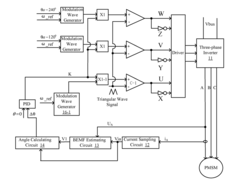
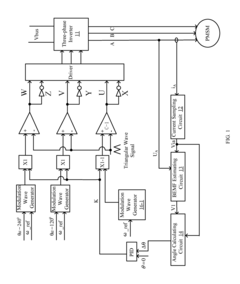
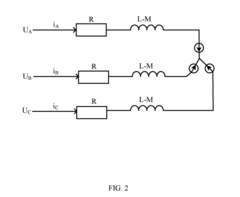
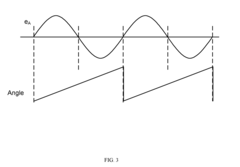
- A driving circuit and method that includes a current sampling circuit, back electromotive force (BEMF) circuit, and torque regulating circuit to estimate BEMF information and regulate the amplitude of a U-shaped modulation wave, allowing for maximum torque per ampere without a position sensor, using a sliding mode controller and PID regulator to synchronize rotor current with the modulation wave.
Energy Efficiency and Sustainability in PMSM Robotics
Energy efficiency and sustainability have become paramount concerns in the development of problem-solving robotics utilizing Permanent Magnet Synchronous Motors (PMSMs). As the demand for autonomous and intelligent robotic systems continues to grow, the need for energy-efficient and environmentally friendly solutions has become increasingly critical.
PMSMs have emerged as a preferred choice in robotics applications due to their high power density, excellent efficiency, and precise control capabilities. However, the challenge lies in optimizing their energy consumption while maintaining or improving performance. Recent advancements in PMSM design and control strategies have led to significant improvements in energy efficiency.
One key area of focus has been the development of advanced motor control algorithms that minimize energy losses. Vector control techniques, such as Field-Oriented Control (FOC) and Direct Torque Control (DTC), have been refined to achieve better dynamic performance and reduced power consumption. These methods allow for precise control of motor torque and flux, resulting in improved overall system efficiency.
Material innovations have also played a crucial role in enhancing the energy efficiency of PMSMs. The use of high-performance magnetic materials, such as neodymium-iron-boron (NdFeB) magnets, has enabled the creation of more compact and efficient motors. Additionally, advancements in stator and rotor designs have contributed to reduced core losses and improved thermal management.
Regenerative braking systems have been increasingly integrated into PMSM-driven robots, allowing for energy recovery during deceleration or descending motions. This recovered energy can be stored in batteries or capacitors for later use, significantly extending the operational time of mobile robots and reducing overall energy consumption.
The integration of smart power management systems has further enhanced the energy efficiency of PMSM-based robots. These systems dynamically adjust motor parameters based on the current task requirements, optimizing power consumption in real-time. Machine learning algorithms have been employed to predict energy needs and adapt motor behavior accordingly, leading to more intelligent and efficient operation.
Sustainability considerations have also driven innovations in PMSM manufacturing and lifecycle management. Efforts to reduce the environmental impact of motor production have led to the development of more eco-friendly manufacturing processes and the use of recyclable materials. Furthermore, research into alternative magnetic materials aims to decrease reliance on rare earth elements, addressing concerns about resource scarcity and environmental impact.
As the field of problem-solving robotics continues to evolve, the focus on energy efficiency and sustainability in PMSM applications remains a critical area of research and development. The ongoing efforts to optimize motor design, control strategies, and power management systems promise to deliver increasingly efficient and environmentally friendly robotic solutions in the future.
PMSMs have emerged as a preferred choice in robotics applications due to their high power density, excellent efficiency, and precise control capabilities. However, the challenge lies in optimizing their energy consumption while maintaining or improving performance. Recent advancements in PMSM design and control strategies have led to significant improvements in energy efficiency.
One key area of focus has been the development of advanced motor control algorithms that minimize energy losses. Vector control techniques, such as Field-Oriented Control (FOC) and Direct Torque Control (DTC), have been refined to achieve better dynamic performance and reduced power consumption. These methods allow for precise control of motor torque and flux, resulting in improved overall system efficiency.
Material innovations have also played a crucial role in enhancing the energy efficiency of PMSMs. The use of high-performance magnetic materials, such as neodymium-iron-boron (NdFeB) magnets, has enabled the creation of more compact and efficient motors. Additionally, advancements in stator and rotor designs have contributed to reduced core losses and improved thermal management.
Regenerative braking systems have been increasingly integrated into PMSM-driven robots, allowing for energy recovery during deceleration or descending motions. This recovered energy can be stored in batteries or capacitors for later use, significantly extending the operational time of mobile robots and reducing overall energy consumption.
The integration of smart power management systems has further enhanced the energy efficiency of PMSM-based robots. These systems dynamically adjust motor parameters based on the current task requirements, optimizing power consumption in real-time. Machine learning algorithms have been employed to predict energy needs and adapt motor behavior accordingly, leading to more intelligent and efficient operation.
Sustainability considerations have also driven innovations in PMSM manufacturing and lifecycle management. Efforts to reduce the environmental impact of motor production have led to the development of more eco-friendly manufacturing processes and the use of recyclable materials. Furthermore, research into alternative magnetic materials aims to decrease reliance on rare earth elements, addressing concerns about resource scarcity and environmental impact.
As the field of problem-solving robotics continues to evolve, the focus on energy efficiency and sustainability in PMSM applications remains a critical area of research and development. The ongoing efforts to optimize motor design, control strategies, and power management systems promise to deliver increasingly efficient and environmentally friendly robotic solutions in the future.
Human-Robot Interaction with PMSM-Driven Systems
Human-Robot Interaction (HRI) with Permanent Magnet Synchronous Motor (PMSM)-driven systems represents a significant advancement in the field of robotics, particularly in problem-solving applications. This integration enhances the precision, efficiency, and adaptability of robotic systems, leading to more effective human-robot collaboration.
PMSM-driven systems offer superior control and responsiveness, which is crucial for intricate interactions between humans and robots. The high torque-to-inertia ratio of PMSMs allows for rapid and accurate movements, enabling robots to react swiftly to human inputs or environmental changes. This responsiveness is particularly valuable in scenarios where real-time adjustments are necessary, such as in collaborative manufacturing or assistive robotics.
The smooth operation characteristic of PMSMs contributes to safer and more natural interactions. Unlike traditional motors that may exhibit jerky movements, PMSMs provide a seamless motion profile, reducing the risk of accidents during close human-robot collaboration. This smooth operation also enhances the user experience, making interactions more intuitive and less intimidating for human operators.
In problem-solving robotics, PMSM-driven systems excel in tasks requiring precise force control. The ability to accurately modulate force output allows robots to handle delicate objects or perform complex assembly tasks alongside human workers. This precision is invaluable in applications such as surgical robotics, where minute movements can have significant consequences.
The energy efficiency of PMSMs also plays a crucial role in HRI applications. Longer operational times without the need for frequent recharging or maintenance contribute to more reliable and consistent interactions. This is particularly important in scenarios where continuous operation is critical, such as in healthcare or emergency response robotics.
Furthermore, the compact design of PMSMs allows for the development of more ergonomic and user-friendly robotic interfaces. Smaller, lighter robotic appendages can be created, facilitating closer and more natural interactions between humans and machines. This design advantage is particularly beneficial in wearable robotics or exoskeletons, where the weight and bulk of the system directly impact user comfort and adoption.
The integration of advanced sensors and control algorithms with PMSM-driven systems enables adaptive behavior in robots. These systems can learn from human interactions, adjusting their responses based on individual user preferences or changing environmental conditions. This adaptability is key to creating more intelligent and context-aware robotic assistants capable of solving complex problems in collaboration with human operators.
PMSM-driven systems offer superior control and responsiveness, which is crucial for intricate interactions between humans and robots. The high torque-to-inertia ratio of PMSMs allows for rapid and accurate movements, enabling robots to react swiftly to human inputs or environmental changes. This responsiveness is particularly valuable in scenarios where real-time adjustments are necessary, such as in collaborative manufacturing or assistive robotics.
The smooth operation characteristic of PMSMs contributes to safer and more natural interactions. Unlike traditional motors that may exhibit jerky movements, PMSMs provide a seamless motion profile, reducing the risk of accidents during close human-robot collaboration. This smooth operation also enhances the user experience, making interactions more intuitive and less intimidating for human operators.
In problem-solving robotics, PMSM-driven systems excel in tasks requiring precise force control. The ability to accurately modulate force output allows robots to handle delicate objects or perform complex assembly tasks alongside human workers. This precision is invaluable in applications such as surgical robotics, where minute movements can have significant consequences.
The energy efficiency of PMSMs also plays a crucial role in HRI applications. Longer operational times without the need for frequent recharging or maintenance contribute to more reliable and consistent interactions. This is particularly important in scenarios where continuous operation is critical, such as in healthcare or emergency response robotics.
Furthermore, the compact design of PMSMs allows for the development of more ergonomic and user-friendly robotic interfaces. Smaller, lighter robotic appendages can be created, facilitating closer and more natural interactions between humans and machines. This design advantage is particularly beneficial in wearable robotics or exoskeletons, where the weight and bulk of the system directly impact user comfort and adoption.
The integration of advanced sensors and control algorithms with PMSM-driven systems enables adaptive behavior in robots. These systems can learn from human interactions, adjusting their responses based on individual user preferences or changing environmental conditions. This adaptability is key to creating more intelligent and context-aware robotic assistants capable of solving complex problems in collaboration with human operators.
Unlock deeper insights with PatSnap Eureka Quick Research — get a full tech report to explore trends and direct your research. Try now!
Generate Your Research Report Instantly with AI Agent
Supercharge your innovation with PatSnap Eureka AI Agent Platform!