

DED Consumable Development: Powder Morphology And Alloy Design
AUG 29, 20259 MIN READ
Generate Your Research Report Instantly with AI Agent
PatSnap Eureka helps you evaluate technical feasibility & market potential.
DED Powder Technology Background and Objectives
Directed Energy Deposition (DED) technology has evolved significantly over the past three decades, transitioning from a niche research area to a commercially viable additive manufacturing process. The technology originated in the 1990s as laser cladding and has since expanded into various forms including LENS (Laser Engineered Net Shaping), DMD (Direct Metal Deposition), and WAAM (Wire Arc Additive Manufacturing). This evolution has been driven by advancements in laser technology, powder delivery systems, and process control methodologies.
The powder materials used in DED processes play a critical role in determining the final properties of manufactured components. Historically, DED systems utilized powders originally designed for other applications such as thermal spray or powder metallurgy, which were not optimized for the unique thermal conditions and processing parameters of DED technology. This has led to inconsistent build quality, material property variations, and process reliability issues that continue to challenge widespread industrial adoption.
Current technological trends in DED powder development focus on tailoring powder morphology, size distribution, and chemical composition specifically for DED processes. Spherical powders with controlled size distributions have demonstrated superior flowability and deposition characteristics, while novel alloy designs are being explored to address the rapid solidification conditions inherent to DED processing. The industry is moving toward powders that can accommodate the high cooling rates (103-106 K/s) and thermal gradients characteristic of DED processes.
The primary objective of DED consumable development is to establish design principles for powder morphology and alloy composition that optimize processability, microstructural development, and mechanical properties of DED-manufactured components. This includes developing powders with improved flowability for consistent feed rates, controlled oxygen content to minimize oxide inclusion formation, and tailored particle size distributions to enhance deposition efficiency and surface finish.
Additionally, alloy design objectives include developing compositions with improved weldability to reduce cracking susceptibility, controlled solidification behavior to minimize segregation and porosity, and enhanced high-temperature stability for applications in aerospace, energy, and automotive sectors. These developments aim to expand the material palette available for DED processing beyond conventional alloys to include high-performance materials such as nickel superalloys, titanium alloys, and metal matrix composites.
The ultimate goal is to establish a scientific framework for DED powder development that connects powder characteristics to process parameters and final component properties, enabling predictive capabilities for new material development and process optimization. This would significantly reduce the current empirical approach to DED material development and accelerate industrial implementation across diverse manufacturing sectors.
The powder materials used in DED processes play a critical role in determining the final properties of manufactured components. Historically, DED systems utilized powders originally designed for other applications such as thermal spray or powder metallurgy, which were not optimized for the unique thermal conditions and processing parameters of DED technology. This has led to inconsistent build quality, material property variations, and process reliability issues that continue to challenge widespread industrial adoption.
Current technological trends in DED powder development focus on tailoring powder morphology, size distribution, and chemical composition specifically for DED processes. Spherical powders with controlled size distributions have demonstrated superior flowability and deposition characteristics, while novel alloy designs are being explored to address the rapid solidification conditions inherent to DED processing. The industry is moving toward powders that can accommodate the high cooling rates (103-106 K/s) and thermal gradients characteristic of DED processes.
The primary objective of DED consumable development is to establish design principles for powder morphology and alloy composition that optimize processability, microstructural development, and mechanical properties of DED-manufactured components. This includes developing powders with improved flowability for consistent feed rates, controlled oxygen content to minimize oxide inclusion formation, and tailored particle size distributions to enhance deposition efficiency and surface finish.
Additionally, alloy design objectives include developing compositions with improved weldability to reduce cracking susceptibility, controlled solidification behavior to minimize segregation and porosity, and enhanced high-temperature stability for applications in aerospace, energy, and automotive sectors. These developments aim to expand the material palette available for DED processing beyond conventional alloys to include high-performance materials such as nickel superalloys, titanium alloys, and metal matrix composites.
The ultimate goal is to establish a scientific framework for DED powder development that connects powder characteristics to process parameters and final component properties, enabling predictive capabilities for new material development and process optimization. This would significantly reduce the current empirical approach to DED material development and accelerate industrial implementation across diverse manufacturing sectors.
Market Analysis for DED Consumable Materials
The global market for Directed Energy Deposition (DED) consumable materials is experiencing robust growth, driven by increasing adoption of additive manufacturing technologies across various industrial sectors. Current market valuations indicate that the DED consumables segment represents approximately 15% of the overall metal additive manufacturing materials market, with a compound annual growth rate projected to exceed 20% through 2028.
Powder-based consumables dominate the DED materials landscape, accounting for nearly 80% of the market share. This dominance stems from the versatility and precision that powder feedstock offers in creating complex geometries and achieving superior material properties. Wire-based consumables constitute the remaining market share, primarily utilized in applications where deposition speed takes precedence over geometric complexity.
Aerospace and defense sectors currently represent the largest end-users of DED consumable materials, collectively accounting for approximately 40% of market demand. These industries particularly value the ability to produce large, complex components with high-performance alloys while minimizing material waste. The medical implant sector follows as the second-largest consumer, driven by requirements for biocompatible titanium alloys with customized porosity and surface characteristics.
Regional analysis reveals North America as the leading market for DED consumables, holding approximately 45% of global market share due to its concentrated aerospace manufacturing base and substantial research investments. Europe follows at 30%, with particularly strong growth in Germany, France, and the UK. The Asia-Pacific region, while currently representing about 20% of the market, is experiencing the fastest growth rate, led by rapid industrialization in China, Japan, and South Korea.
From a materials perspective, nickel-based superalloys command the highest market value among DED consumables due to their critical applications in high-temperature environments. Titanium alloys follow closely, driven by aerospace and medical applications. Steel alloys represent the largest volume segment, while aluminum alloys are experiencing the fastest growth rate due to expanding applications in automotive and consumer electronics sectors.
Market trends indicate increasing demand for specialized powder morphologies optimized for specific DED processes, with spherical powders with controlled size distributions commanding premium pricing. Additionally, there is growing interest in custom alloy formulations designed to address specific performance requirements or processing challenges, creating opportunities for materials suppliers with advanced powder metallurgy capabilities.
Powder-based consumables dominate the DED materials landscape, accounting for nearly 80% of the market share. This dominance stems from the versatility and precision that powder feedstock offers in creating complex geometries and achieving superior material properties. Wire-based consumables constitute the remaining market share, primarily utilized in applications where deposition speed takes precedence over geometric complexity.
Aerospace and defense sectors currently represent the largest end-users of DED consumable materials, collectively accounting for approximately 40% of market demand. These industries particularly value the ability to produce large, complex components with high-performance alloys while minimizing material waste. The medical implant sector follows as the second-largest consumer, driven by requirements for biocompatible titanium alloys with customized porosity and surface characteristics.
Regional analysis reveals North America as the leading market for DED consumables, holding approximately 45% of global market share due to its concentrated aerospace manufacturing base and substantial research investments. Europe follows at 30%, with particularly strong growth in Germany, France, and the UK. The Asia-Pacific region, while currently representing about 20% of the market, is experiencing the fastest growth rate, led by rapid industrialization in China, Japan, and South Korea.
From a materials perspective, nickel-based superalloys command the highest market value among DED consumables due to their critical applications in high-temperature environments. Titanium alloys follow closely, driven by aerospace and medical applications. Steel alloys represent the largest volume segment, while aluminum alloys are experiencing the fastest growth rate due to expanding applications in automotive and consumer electronics sectors.
Market trends indicate increasing demand for specialized powder morphologies optimized for specific DED processes, with spherical powders with controlled size distributions commanding premium pricing. Additionally, there is growing interest in custom alloy formulations designed to address specific performance requirements or processing challenges, creating opportunities for materials suppliers with advanced powder metallurgy capabilities.
Current Challenges in Powder Morphology Development
Despite significant advancements in Directed Energy Deposition (DED) technology, powder morphology development continues to present substantial challenges that impede optimal process performance and material properties. The inconsistency in powder particle size distribution remains a primary concern, as DED processes require precise control over particle dimensions to ensure proper flowability and deposition characteristics. Current powder production methods struggle to deliver the narrow size distributions needed for high-precision DED applications, resulting in process variability and reduced repeatability.
Surface irregularities in powder particles constitute another significant challenge. Satellites, agglomerates, and non-spherical particles frequently occur during powder manufacturing, adversely affecting powder flow behavior and ultimately compromising the quality of deposited layers. These morphological defects can lead to porosity, lack of fusion, and inconsistent material properties in the final components.
Oxidation of powder particles presents a persistent problem, particularly for reactive alloys commonly used in aerospace and medical applications. Even minimal oxygen content can significantly alter the microstructure and mechanical properties of DED-manufactured components. Current powder handling and storage protocols often prove insufficient to prevent oxidation, especially during prolonged build processes or in non-inert environments.
The relationship between powder morphology and process parameters remains inadequately understood. While empirical correlations exist, comprehensive models that accurately predict how specific powder characteristics influence deposition behavior across different process conditions are lacking. This knowledge gap hampers the development of optimized powder specifications tailored for specific DED applications and alloy systems.
Cost considerations further complicate powder morphology development. High-quality powders with controlled morphology typically command premium prices, creating economic barriers to widespread adoption of DED technology. The trade-off between powder quality and cost efficiency continues to challenge manufacturers seeking to implement DED processes in cost-sensitive industries.
Cross-contamination between different powder batches or alloy compositions represents another significant challenge, particularly in production environments where multiple materials are processed. Even minor contamination can compromise material properties and certification requirements, necessitating stringent handling protocols that add complexity and cost to DED operations.
Recycling and reuse of powders introduce additional morphological challenges. The thermal exposure during DED processing can alter particle morphology and chemistry of unused powder, potentially affecting subsequent builds. Current methods for assessing powder degradation and establishing safe reuse parameters remain limited, creating uncertainty in quality control protocols.
Surface irregularities in powder particles constitute another significant challenge. Satellites, agglomerates, and non-spherical particles frequently occur during powder manufacturing, adversely affecting powder flow behavior and ultimately compromising the quality of deposited layers. These morphological defects can lead to porosity, lack of fusion, and inconsistent material properties in the final components.
Oxidation of powder particles presents a persistent problem, particularly for reactive alloys commonly used in aerospace and medical applications. Even minimal oxygen content can significantly alter the microstructure and mechanical properties of DED-manufactured components. Current powder handling and storage protocols often prove insufficient to prevent oxidation, especially during prolonged build processes or in non-inert environments.
The relationship between powder morphology and process parameters remains inadequately understood. While empirical correlations exist, comprehensive models that accurately predict how specific powder characteristics influence deposition behavior across different process conditions are lacking. This knowledge gap hampers the development of optimized powder specifications tailored for specific DED applications and alloy systems.
Cost considerations further complicate powder morphology development. High-quality powders with controlled morphology typically command premium prices, creating economic barriers to widespread adoption of DED technology. The trade-off between powder quality and cost efficiency continues to challenge manufacturers seeking to implement DED processes in cost-sensitive industries.
Cross-contamination between different powder batches or alloy compositions represents another significant challenge, particularly in production environments where multiple materials are processed. Even minor contamination can compromise material properties and certification requirements, necessitating stringent handling protocols that add complexity and cost to DED operations.
Recycling and reuse of powders introduce additional morphological challenges. The thermal exposure during DED processing can alter particle morphology and chemistry of unused powder, potentially affecting subsequent builds. Current methods for assessing powder degradation and establishing safe reuse parameters remain limited, creating uncertainty in quality control protocols.
Current Powder Morphology Control Solutions
01 Particle size and distribution in DED powder consumables
The morphology of Direct Energy Deposition (DED) powder consumables is significantly influenced by particle size and distribution. Optimal particle sizes typically range from 45-150 microns for DED applications, with spherical particles providing better flowability. Controlled particle size distribution ensures consistent powder flow rates during deposition, which directly impacts build quality and mechanical properties of the final parts. Uniform size distribution also minimizes porosity and improves surface finish of the printed components.- Powder particle size and distribution for DED processes: The morphology of powder particles used in Directed Energy Deposition (DED) processes significantly impacts build quality and material properties. Optimal particle size distributions typically range from 45-150 μm, with spherical particles providing better flowability and deposition characteristics. Controlling particle size distribution helps achieve consistent powder flow rates, uniform layer formation, and reduced porosity in the final parts.
- Surface treatment and coating of DED powder materials: Surface modifications and coatings applied to DED powder particles can enhance their performance characteristics. These treatments may include plasma coating, chemical functionalization, or oxide layer management to improve flowability, wettability, and laser absorption properties. Modified surface morphology can reduce agglomeration tendencies, improve powder bed density, and enhance the metallurgical bonding between layers during the deposition process.
- Powder composition and alloying effects on morphology: The chemical composition of DED powders influences their morphological characteristics and processing behavior. Multi-component alloys, composite powders, and specialized formulations can be designed with specific morphological features to enhance processability and final part properties. The interaction between alloying elements affects melting behavior, solidification dynamics, and microstructural development during the DED process.
- Powder flow characteristics and feeding mechanisms: The flow behavior of DED powder materials is critically dependent on particle morphology. Spherical particles with smooth surfaces typically demonstrate superior flowability compared to irregular shapes. Powder rheology, apparent density, and tap density are key parameters affected by morphological characteristics. Advanced feeding mechanisms and delivery systems are designed to accommodate specific powder morphologies to ensure consistent material deposition rates.
- Recycling and powder degradation considerations: The morphological changes in DED powders during recycling processes affect their reusability and performance. Repeated exposure to processing conditions can alter particle shape, size distribution, and surface characteristics. Monitoring and controlling these morphological changes through proper handling, sieving, and reconditioning techniques helps maintain consistent powder quality across multiple build cycles and reduces material waste.
02 Sphericity and surface characteristics of DED powders
The sphericity and surface characteristics of powder particles are critical for DED processes. Highly spherical particles with smooth surfaces provide optimal flow properties and packing density. Surface roughness affects how particles interact with each other and with the laser or electron beam energy source. Powders with high sphericity minimize inter-particle friction, reduce nozzle clogging, and enable more precise deposition. Manufacturing methods like gas atomization produce more spherical particles compared to water atomization or mechanical grinding processes.Expand Specific Solutions03 Chemical composition and purity of DED powder materials
The chemical composition and purity of DED powder consumables directly influence the properties of fabricated parts. Impurities and contaminants can lead to defects, reduced mechanical properties, and inconsistent build quality. Oxygen content is particularly critical for reactive metals like titanium and aluminum alloys. High-purity powders with controlled chemical composition ensure consistent material properties across builds. Alloying elements must be uniformly distributed throughout the powder batch to achieve homogeneous properties in the final parts.Expand Specific Solutions04 Powder flowability and rheological properties
Flowability and rheological properties are essential characteristics of DED powder consumables. These properties determine how effectively the powder can be delivered through the deposition nozzle and spread across the build area. Factors affecting flowability include particle shape, size distribution, surface moisture, and interparticle forces. Powders with excellent flow characteristics enable consistent feed rates and uniform layer deposition. Various additives and surface treatments can be applied to improve flowability while maintaining the desired mechanical properties in the final part.Expand Specific Solutions05 Powder recycling and morphology degradation
Powder recycling in DED processes leads to morphological changes that affect performance. With repeated use, powder particles can become less spherical, develop satellites, or agglomerate. Oxidation increases during recycling, particularly for reactive metals. Particle size distribution tends to shift as finer particles are preferentially consumed or lost during processing. Effective recycling strategies include sieving, magnetic separation, and blending with virgin powder to maintain consistent morphological properties. Understanding morphology degradation is crucial for establishing powder reuse protocols that maintain part quality.Expand Specific Solutions
Leading Manufacturers and Research Institutions
The Directed Energy Deposition (DED) consumable development market, focusing on powder morphology and alloy design, is currently in a growth phase with increasing adoption across aerospace, automotive, and industrial sectors. The global market size for metal additive manufacturing, including DED technologies, is expanding rapidly, projected to reach several billion dollars by 2025. Leading players demonstrate varying levels of technical maturity: FormAlloy Technologies and Divergent Technologies represent specialized DED innovators, while established corporations like General Electric, Rolls-Royce, and Boeing are investing heavily in powder metallurgy capabilities. Research institutions including EWI, University of California, and Central South University are advancing fundamental powder morphology science. Companies like Sandvik and EOS GmbH have developed mature powder production technologies, while JFE Steel and Ningbo Haishu Gulin focus on specialized metallurgical applications.
FormAlloy Technologies, Inc.
Technical Solution: FormAlloy has developed a comprehensive approach to DED consumable development focusing on powder morphology optimization and custom alloy design. Their patented powder delivery systems specifically address the challenges of powder flow consistency in DED processes. They've engineered powders with controlled sphericity (>95%) and narrow particle size distributions (typically 45-150μm) to enhance flowability and deposition uniformity. FormAlloy's Alloy Development Platform (ADP) enables rapid prototyping of novel alloy compositions, allowing for systematic testing of up to 30 different material combinations in a single build. Their powder characterization techniques include advanced rheological analysis to predict powder behavior during deposition, resulting in materials with documented 30% improvement in layer consistency compared to standard powders.
Strengths: Specialized focus on DED-specific powder development; proprietary powder delivery systems designed specifically for DED applications; ability to rapidly prototype custom alloys. Weaknesses: Relatively smaller scale compared to major metal powder producers; potentially higher costs for specialized powders compared to general-purpose alternatives.
General Electric Company
Technical Solution: GE has developed an integrated approach to DED consumable development through its GE Additive division. Their technology focuses on tailored powder morphology control systems that optimize particle shape, size distribution, and surface characteristics for DED processes. GE's powder development includes specialized atomization techniques that produce highly spherical particles (sphericity >98%) with minimal satellite formation, crucial for consistent powder flow in DED applications. Their alloy design program has created several proprietary nickel and titanium-based superalloys specifically engineered for high-temperature aerospace applications manufactured via DED. GE's powder characterization suite includes advanced rheological testing, oxygen content analysis (<150ppm for reactive metals), and in-process monitoring systems that correlate powder characteristics with final part properties. Their closed-loop powder recycling system maintains powder quality through multiple reuse cycles while monitoring degradation markers.
Strengths: Extensive metallurgical expertise across multiple alloy families; vertical integration from powder production to final part manufacturing; significant R&D resources for developing specialized materials. Weaknesses: Primarily focused on aerospace-grade materials which may limit applicability in other industries; proprietary nature of developments may restrict broader industry adoption.
Key Patents in DED Alloy Design
Directed energy deposition to facilitate high speed applications
PatentWO2016205816A1
Innovation
- The method involves impulsively heating a portion of the fluid to create a lower density region surrounded by a higher density region, synchronizing this with detonating a reactant in a pulsed propulsion unit, and repeating this process at rates ranging from 0.1 Hz to 100 kHz to propel an object through a fluid, thereby reducing drag and enhancing propulsion efficiency.

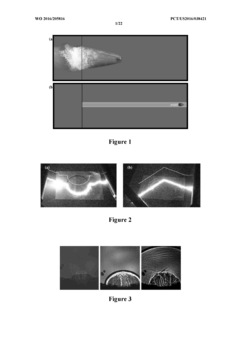
Directed energy deposition to facilitate high speed applications
PatentActiveUS10669653B2
Innovation
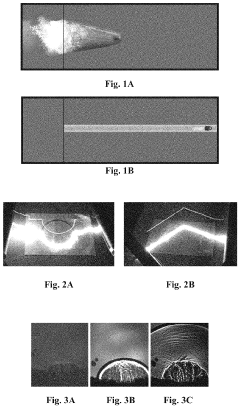
- The method involves impulsively heating a portion of a fluid to create a lower density region within a higher density region, synchronized with detonating a reactant in a pulsed propulsion unit, using techniques like laser filamentation or electrical discharges to form a low-density tube through which objects can travel with reduced drag and acoustic signature.
Material Sustainability and Recycling Considerations
In the context of DED (Directed Energy Deposition) consumable development, sustainability and recycling considerations have become increasingly critical factors. The metal powder used in DED processes represents not only a significant cost component but also an environmental concern. Current manufacturing processes for specialized alloy powders are energy-intensive, with substantial carbon footprints. Implementing sustainable practices throughout the powder lifecycle can significantly reduce environmental impact while potentially lowering production costs.
Powder recycling systems for DED applications have advanced considerably, allowing for the collection and reprocessing of unused powder. However, challenges remain regarding the morphological changes that occur during recycling. Sphericity degradation and satellite formation after multiple recycling cycles can compromise powder flowability and ultimately affect part quality. Research indicates that most alloy powders can undergo 3-5 recycling cycles before significant property degradation occurs, though this varies based on alloy composition and process parameters.
Alloy design strategies are increasingly incorporating sustainability metrics. The development of alloys with wider processing windows enables more efficient powder utilization and reduces waste generation. Additionally, designing alloys that maintain their key properties even with minor compositional variations from recycling processes represents a frontier in sustainable DED consumable development.
Material traceability systems are being integrated into powder management workflows, allowing manufacturers to track powder batches through multiple recycling iterations. This data-driven approach enables precise quality control and optimization of recycling protocols specific to different alloy systems. Advanced characterization techniques such as automated SEM analysis can rapidly assess recycled powder quality, ensuring that only suitable materials re-enter the production stream.
From an economic perspective, effective recycling strategies can reduce material costs by 30-40% in high-volume DED operations. The establishment of closed-loop material systems, where post-processing waste and unused powder are systematically recaptured, presents opportunities for significant cost savings while aligning with increasingly stringent environmental regulations and corporate sustainability goals.
The future of sustainable DED consumables lies in the development of specialized alloys designed specifically for recyclability, with compositions that resist oxidation and maintain morphological stability through multiple processing cycles. Research into novel powder production methods with reduced energy requirements and the potential for using recycled feedstock in powder production represents another promising direction for improving the overall sustainability profile of DED manufacturing.
Powder recycling systems for DED applications have advanced considerably, allowing for the collection and reprocessing of unused powder. However, challenges remain regarding the morphological changes that occur during recycling. Sphericity degradation and satellite formation after multiple recycling cycles can compromise powder flowability and ultimately affect part quality. Research indicates that most alloy powders can undergo 3-5 recycling cycles before significant property degradation occurs, though this varies based on alloy composition and process parameters.
Alloy design strategies are increasingly incorporating sustainability metrics. The development of alloys with wider processing windows enables more efficient powder utilization and reduces waste generation. Additionally, designing alloys that maintain their key properties even with minor compositional variations from recycling processes represents a frontier in sustainable DED consumable development.
Material traceability systems are being integrated into powder management workflows, allowing manufacturers to track powder batches through multiple recycling iterations. This data-driven approach enables precise quality control and optimization of recycling protocols specific to different alloy systems. Advanced characterization techniques such as automated SEM analysis can rapidly assess recycled powder quality, ensuring that only suitable materials re-enter the production stream.
From an economic perspective, effective recycling strategies can reduce material costs by 30-40% in high-volume DED operations. The establishment of closed-loop material systems, where post-processing waste and unused powder are systematically recaptured, presents opportunities for significant cost savings while aligning with increasingly stringent environmental regulations and corporate sustainability goals.
The future of sustainable DED consumables lies in the development of specialized alloys designed specifically for recyclability, with compositions that resist oxidation and maintain morphological stability through multiple processing cycles. Research into novel powder production methods with reduced energy requirements and the potential for using recycled feedstock in powder production represents another promising direction for improving the overall sustainability profile of DED manufacturing.
Quality Control Standards for DED Consumables
Quality control standards for DED consumables are essential to ensure consistent and reliable additive manufacturing processes. These standards must address the unique characteristics of powder feedstock used in Directed Energy Deposition (DED) applications, with particular emphasis on powder morphology and alloy composition parameters.
The primary quality control metrics for DED powder consumables include particle size distribution (PSD), which typically ranges from 45-150 μm for most DED systems. This distribution must be tightly controlled as it directly impacts flowability and deposition characteristics. Sphericity measurements, quantified through aspect ratio analysis, should maintain values above 0.9 to ensure optimal flow behavior during the deposition process.
Chemical composition verification represents another critical quality control parameter, requiring techniques such as X-ray fluorescence (XRF) and inductively coupled plasma (ICP) analysis to confirm adherence to specified alloy formulations. Tolerance limits for primary alloying elements typically range within ±0.5% of nominal values, while trace elements may have stricter controls depending on their impact on mechanical properties.
Moisture content in DED powders must be maintained below 0.05% by weight, necessitating standardized drying protocols and hermetic storage conditions. Oxygen content, particularly critical for reactive alloys like titanium and aluminum, requires monitoring through inert gas fusion techniques with maximum acceptable levels typically below 300 ppm for most engineering applications.
Flow characteristics, measured through Hall flowmeter testing or alternative dynamic flow analysis, must meet application-specific benchmarks. Typical acceptable flow rates range from 25-35 seconds per 50g for standard DED powder feedstock, with variations based on specific alloy density and particle morphology.
Apparent density and tap density measurements provide crucial information about powder packing behavior, with recommended apparent-to-tap density ratios between 0.55-0.65 for optimal deposition consistency. Powder recyclability assessment protocols must also be established, defining the maximum number of reuse cycles before significant degradation in morphological or compositional properties occurs.
Batch-to-batch consistency verification requires statistical process control methodologies, with acceptance criteria typically set at ±3% variation in key parameters across consecutive production lots. Documentation requirements include comprehensive certificates of analysis (CoA) detailing all measured parameters against specification limits, with full traceability to raw material sources and processing conditions.
The primary quality control metrics for DED powder consumables include particle size distribution (PSD), which typically ranges from 45-150 μm for most DED systems. This distribution must be tightly controlled as it directly impacts flowability and deposition characteristics. Sphericity measurements, quantified through aspect ratio analysis, should maintain values above 0.9 to ensure optimal flow behavior during the deposition process.
Chemical composition verification represents another critical quality control parameter, requiring techniques such as X-ray fluorescence (XRF) and inductively coupled plasma (ICP) analysis to confirm adherence to specified alloy formulations. Tolerance limits for primary alloying elements typically range within ±0.5% of nominal values, while trace elements may have stricter controls depending on their impact on mechanical properties.
Moisture content in DED powders must be maintained below 0.05% by weight, necessitating standardized drying protocols and hermetic storage conditions. Oxygen content, particularly critical for reactive alloys like titanium and aluminum, requires monitoring through inert gas fusion techniques with maximum acceptable levels typically below 300 ppm for most engineering applications.
Flow characteristics, measured through Hall flowmeter testing or alternative dynamic flow analysis, must meet application-specific benchmarks. Typical acceptable flow rates range from 25-35 seconds per 50g for standard DED powder feedstock, with variations based on specific alloy density and particle morphology.
Apparent density and tap density measurements provide crucial information about powder packing behavior, with recommended apparent-to-tap density ratios between 0.55-0.65 for optimal deposition consistency. Powder recyclability assessment protocols must also be established, defining the maximum number of reuse cycles before significant degradation in morphological or compositional properties occurs.
Batch-to-batch consistency verification requires statistical process control methodologies, with acceptance criteria typically set at ±3% variation in key parameters across consecutive production lots. Documentation requirements include comprehensive certificates of analysis (CoA) detailing all measured parameters against specification limits, with full traceability to raw material sources and processing conditions.
Unlock deeper insights with PatSnap Eureka Quick Research — get a full tech report to explore trends and direct your research. Try now!
Generate Your Research Report Instantly with AI Agent
Supercharge your innovation with PatSnap Eureka AI Agent Platform!