

DED For Multi-Layer Porous Structures: Tailored Permeability Design
AUG 29, 202510 MIN READ
Generate Your Research Report Instantly with AI Agent
PatSnap Eureka helps you evaluate technical feasibility & market potential.
DED Technology Evolution and Objectives
Directed Energy Deposition (DED) technology has evolved significantly since its inception in the 1990s, transforming from a simple repair technique to a sophisticated additive manufacturing process. Initially limited to single-material deposition, DED has progressively incorporated multi-material capabilities, enabling the creation of functionally graded materials and complex structures. The evolution of DED technology has been driven by advancements in laser technology, powder delivery systems, and process control mechanisms, allowing for greater precision and reproducibility in fabricated components.
The development of DED for multi-layer porous structures represents a significant technological leap, addressing the growing demand for components with tailored permeability characteristics. This advancement has been particularly notable in the last decade, with researchers focusing on controlling porosity distribution, pore size, and interconnectivity within deposited structures. The ability to design and fabricate components with predetermined permeability profiles has opened new possibilities across various industries, from biomedical implants to aerospace components.
Current technological objectives for DED in multi-layer porous structures center around achieving precise control over permeability gradients within a single component. This involves developing sophisticated process parameters that can dynamically adjust during deposition to create zones with different permeability characteristics. The ultimate goal is to establish a robust methodology for designing and manufacturing components with spatially varied permeability that can be tailored to specific application requirements.
Another critical objective is enhancing the repeatability and reliability of the DED process for porous structures. Despite significant progress, challenges remain in consistently producing structures with predetermined permeability profiles, particularly when scaling from laboratory prototypes to industrial production. Research efforts are focused on developing comprehensive process models that can predict and control the formation of porous structures under various deposition conditions.
The integration of real-time monitoring and feedback control systems represents another key technological objective. These systems aim to detect and correct deviations during the deposition process, ensuring that the resulting porous structures meet design specifications. Advanced sensing technologies, including thermal imaging and optical coherence tomography, are being explored to provide in-situ data on melt pool dynamics and solidification behavior, which are critical factors in determining the final permeability characteristics.
Looking forward, the technology roadmap for DED in multi-layer porous structures includes developing standardized design methodologies and process parameters for specific permeability profiles. This standardization will facilitate broader industrial adoption and enable engineers to confidently incorporate tailored permeability designs into their components, ultimately realizing the full potential of this transformative technology.
The development of DED for multi-layer porous structures represents a significant technological leap, addressing the growing demand for components with tailored permeability characteristics. This advancement has been particularly notable in the last decade, with researchers focusing on controlling porosity distribution, pore size, and interconnectivity within deposited structures. The ability to design and fabricate components with predetermined permeability profiles has opened new possibilities across various industries, from biomedical implants to aerospace components.
Current technological objectives for DED in multi-layer porous structures center around achieving precise control over permeability gradients within a single component. This involves developing sophisticated process parameters that can dynamically adjust during deposition to create zones with different permeability characteristics. The ultimate goal is to establish a robust methodology for designing and manufacturing components with spatially varied permeability that can be tailored to specific application requirements.
Another critical objective is enhancing the repeatability and reliability of the DED process for porous structures. Despite significant progress, challenges remain in consistently producing structures with predetermined permeability profiles, particularly when scaling from laboratory prototypes to industrial production. Research efforts are focused on developing comprehensive process models that can predict and control the formation of porous structures under various deposition conditions.
The integration of real-time monitoring and feedback control systems represents another key technological objective. These systems aim to detect and correct deviations during the deposition process, ensuring that the resulting porous structures meet design specifications. Advanced sensing technologies, including thermal imaging and optical coherence tomography, are being explored to provide in-situ data on melt pool dynamics and solidification behavior, which are critical factors in determining the final permeability characteristics.
Looking forward, the technology roadmap for DED in multi-layer porous structures includes developing standardized design methodologies and process parameters for specific permeability profiles. This standardization will facilitate broader industrial adoption and enable engineers to confidently incorporate tailored permeability designs into their components, ultimately realizing the full potential of this transformative technology.
Market Applications for Multi-Layer Porous Structures
Multi-layer porous structures with tailored permeability designs have emerged as transformative materials across diverse market sectors, offering unprecedented control over fluid flow, filtration efficiency, and material properties. The healthcare industry represents one of the most promising application areas, with these structures enabling advanced drug delivery systems that can release medications at precisely controlled rates. Additionally, tissue engineering scaffolds utilizing multi-layer porosity gradients better mimic natural tissue structures, enhancing cell growth and vascularization for improved implant integration.
In the energy sector, these materials are revolutionizing battery technology through optimized electrode structures that balance ionic transport and mechanical stability. Fuel cell efficiency has similarly benefited from tailored gas diffusion layers that maximize reactant transport while managing water removal. The petroleum industry has adopted these structures for enhanced oil recovery systems, where controlled permeability enables more efficient resource extraction with reduced environmental impact.
Environmental applications represent another significant market opportunity, particularly in advanced filtration systems. Multi-layer porous structures enable simultaneous removal of particulates of varying sizes while maintaining flow efficiency, addressing growing demands for water purification and air quality management solutions. The aerospace and automotive industries have incorporated these materials into lightweight structural components that combine strength with thermal management capabilities through controlled fluid passage.
Consumer electronics manufacturers have begun integrating these structures into thermal management systems for high-performance devices, where directional heat dissipation is critical. The growing trend toward miniaturization in electronics has further increased demand for materials that can efficiently manage thermal loads in compact spaces.
The global market for advanced porous materials is experiencing robust growth, driven by increasing environmental regulations, energy efficiency requirements, and healthcare innovation. Regions with strong manufacturing bases in high-tech industries, particularly East Asia, North America, and Western Europe, show the highest adoption rates for these technologies.
Market analysis indicates that companies capable of developing customized multi-layer porous structures for specific applications command premium pricing, highlighting the value of tailored permeability design capabilities. The ability to precisely engineer porosity gradients represents a significant competitive advantage in this evolving market landscape.
As sustainability concerns intensify globally, multi-layer porous structures are increasingly valued for their potential to improve resource efficiency across industrial processes. This trend is expected to accelerate adoption in emerging economies seeking to balance industrial growth with environmental protection measures.
In the energy sector, these materials are revolutionizing battery technology through optimized electrode structures that balance ionic transport and mechanical stability. Fuel cell efficiency has similarly benefited from tailored gas diffusion layers that maximize reactant transport while managing water removal. The petroleum industry has adopted these structures for enhanced oil recovery systems, where controlled permeability enables more efficient resource extraction with reduced environmental impact.
Environmental applications represent another significant market opportunity, particularly in advanced filtration systems. Multi-layer porous structures enable simultaneous removal of particulates of varying sizes while maintaining flow efficiency, addressing growing demands for water purification and air quality management solutions. The aerospace and automotive industries have incorporated these materials into lightweight structural components that combine strength with thermal management capabilities through controlled fluid passage.
Consumer electronics manufacturers have begun integrating these structures into thermal management systems for high-performance devices, where directional heat dissipation is critical. The growing trend toward miniaturization in electronics has further increased demand for materials that can efficiently manage thermal loads in compact spaces.
The global market for advanced porous materials is experiencing robust growth, driven by increasing environmental regulations, energy efficiency requirements, and healthcare innovation. Regions with strong manufacturing bases in high-tech industries, particularly East Asia, North America, and Western Europe, show the highest adoption rates for these technologies.
Market analysis indicates that companies capable of developing customized multi-layer porous structures for specific applications command premium pricing, highlighting the value of tailored permeability design capabilities. The ability to precisely engineer porosity gradients represents a significant competitive advantage in this evolving market landscape.
As sustainability concerns intensify globally, multi-layer porous structures are increasingly valued for their potential to improve resource efficiency across industrial processes. This trend is expected to accelerate adoption in emerging economies seeking to balance industrial growth with environmental protection measures.
Technical Barriers in Porous Structure Fabrication
Despite the significant advancements in Directed Energy Deposition (DED) technology, several technical barriers persist in fabricating multi-layer porous structures with tailored permeability. The primary challenge lies in achieving precise control over pore size, distribution, and interconnectivity across multiple layers while maintaining structural integrity. Current DED systems struggle with the fine resolution required for creating consistent micro-porosity, particularly when transitioning between layers with different permeability requirements.
Material selection presents another significant barrier. The powders used in DED processes must possess specific flow characteristics and particle size distributions to create the desired porosity. However, many materials exhibit poor flowability or tend to agglomerate during deposition, resulting in inconsistent pore formation. Additionally, the high thermal gradients inherent in DED processes can cause unintended densification or warping, compromising the designed porosity.
Process parameter optimization remains exceptionally complex for multi-layer porous structures. The relationship between laser power, scan speed, powder feed rate, and resulting porosity characteristics is highly non-linear and material-dependent. This complexity increases exponentially when attempting to create gradient porosity or distinct permeability zones within a single component, requiring sophisticated process models that are still under development.
Post-processing techniques for porous structures also present significant challenges. Conventional finishing methods often damage or clog the porous network, while heat treatments intended to relieve residual stresses can cause unintended microstructural changes that affect permeability. The lack of standardized non-destructive testing methods for evaluating internal pore networks further complicates quality assurance.
Computational modeling limitations constitute another barrier. Current simulation tools struggle to accurately predict the formation of porous structures during DED processes, particularly for complex geometries with varying permeability requirements. The multi-physics nature of the problem—involving fluid dynamics, heat transfer, and material phase changes—demands computational resources beyond what is typically available in industrial settings.
Scalability and repeatability issues also hinder industrial adoption. While laboratory-scale demonstrations have shown promising results, translating these to production-scale manufacturing remains challenging. Variations in environmental conditions, powder characteristics, and equipment performance can lead to inconsistent results, making it difficult to establish robust manufacturing protocols for multi-layer porous structures with predictable permeability profiles.
Material selection presents another significant barrier. The powders used in DED processes must possess specific flow characteristics and particle size distributions to create the desired porosity. However, many materials exhibit poor flowability or tend to agglomerate during deposition, resulting in inconsistent pore formation. Additionally, the high thermal gradients inherent in DED processes can cause unintended densification or warping, compromising the designed porosity.
Process parameter optimization remains exceptionally complex for multi-layer porous structures. The relationship between laser power, scan speed, powder feed rate, and resulting porosity characteristics is highly non-linear and material-dependent. This complexity increases exponentially when attempting to create gradient porosity or distinct permeability zones within a single component, requiring sophisticated process models that are still under development.
Post-processing techniques for porous structures also present significant challenges. Conventional finishing methods often damage or clog the porous network, while heat treatments intended to relieve residual stresses can cause unintended microstructural changes that affect permeability. The lack of standardized non-destructive testing methods for evaluating internal pore networks further complicates quality assurance.
Computational modeling limitations constitute another barrier. Current simulation tools struggle to accurately predict the formation of porous structures during DED processes, particularly for complex geometries with varying permeability requirements. The multi-physics nature of the problem—involving fluid dynamics, heat transfer, and material phase changes—demands computational resources beyond what is typically available in industrial settings.
Scalability and repeatability issues also hinder industrial adoption. While laboratory-scale demonstrations have shown promising results, translating these to production-scale manufacturing remains challenging. Variations in environmental conditions, powder characteristics, and equipment performance can lead to inconsistent results, making it difficult to establish robust manufacturing protocols for multi-layer porous structures with predictable permeability profiles.
Current Approaches to Permeability Control
01 Process parameters for controlling porosity in DED structures
Specific process parameters in Directed Energy Deposition can be manipulated to control the porosity and permeability of multi-layer structures. These parameters include laser power, scanning speed, powder feed rate, and layer thickness. By optimizing these parameters, manufacturers can create controlled porous structures with desired permeability characteristics. The careful calibration of these parameters allows for the creation of gradient porosity or uniform porous networks throughout the deposited material.- Process parameters for controlling porosity in DED structures: Specific process parameters in Directed Energy Deposition can be manipulated to control the porosity and permeability of multi-layer structures. These parameters include laser power, scanning speed, powder feed rate, and layer thickness. By optimizing these parameters, manufacturers can create controlled porous structures with predetermined permeability characteristics. The careful calibration of these parameters allows for the creation of gradient porosity or uniform porous networks throughout the deposited material.
- Multi-material DED for functionally graded porous structures: Directed Energy Deposition enables the fabrication of multi-material porous structures with controlled permeability gradients. By varying material composition during the deposition process, structures can be created with regions of different porosity and permeability characteristics. This approach allows for the development of functionally graded materials where permeability can transition from one region to another, enabling applications such as filtration systems, heat exchangers, and biomedical implants with specific fluid flow requirements.
- Post-processing techniques to enhance permeability in DED structures: Various post-processing techniques can be applied to DED-fabricated porous structures to enhance or modify their permeability characteristics. These techniques include heat treatment, chemical etching, and mechanical processing. Heat treatment can be used to sinter particles and control pore size, while chemical etching can be employed to open closed pores or enlarge existing ones. Mechanical processing, such as shot peening or ultrasonic treatment, can also be used to modify surface characteristics and internal pore networks, thereby tailoring the permeability of the structure.
- Design strategies for optimizing fluid flow in DED porous structures: Specific design strategies can be implemented to optimize fluid flow through DED-fabricated porous structures. These include the use of computational fluid dynamics to model and predict flow behavior, the incorporation of designed channels or pathways within the porous structure, and the implementation of hierarchical porosity networks. By strategically designing the internal architecture of the porous structure, manufacturers can create predetermined flow paths that enhance permeability while maintaining structural integrity, enabling applications in filtration, catalysis, and heat exchange.
- Characterization and testing methods for permeability in DED structures: Various methods and techniques are used to characterize and test the permeability of multi-layer porous structures fabricated using Directed Energy Deposition. These include gas permeability tests, liquid infiltration tests, micro-CT scanning for 3D pore network visualization, and mercury intrusion porosimetry. These characterization methods provide quantitative data on pore size distribution, interconnectivity, and overall permeability, allowing for the validation of design parameters and process controls. The data obtained from these tests can be used to refine manufacturing processes and ensure consistent permeability characteristics in the final products.
02 Multi-material DED for functionally graded porous structures
Directed Energy Deposition enables the fabrication of functionally graded porous structures using multiple materials. By varying material composition during the deposition process, structures with gradient porosity and permeability can be achieved. This approach allows for the creation of components with location-specific properties, such as regions with different permeability rates or mechanical characteristics. The integration of multiple materials can enhance both the structural integrity and functional performance of porous components.Expand Specific Solutions03 Post-processing techniques to enhance permeability of DED structures
Various post-processing techniques can be applied to DED-fabricated porous structures to enhance their permeability characteristics. These techniques include heat treatment, chemical etching, and mechanical processing. Post-processing can help in removing partially melted particles, refining the pore structure, and creating interconnected channels within the material. These treatments can significantly improve fluid flow properties and overall permeability of the multi-layer porous structures.Expand Specific Solutions04 Design strategies for optimizing fluid flow in DED porous structures
Specific design strategies can be implemented to optimize fluid flow through DED-fabricated porous structures. These include the creation of hierarchical pore networks, controlled channel geometries, and strategic placement of pores. Advanced computational modeling can be used to predict and optimize fluid dynamics within these structures. By incorporating these design principles, manufacturers can create porous components with tailored permeability characteristics for specific applications such as filtration, heat exchange, or tissue engineering.Expand Specific Solutions05 In-situ monitoring and control systems for DED porous structure fabrication
In-situ monitoring and control systems can be integrated into the DED process to ensure consistent porosity and permeability in multi-layer structures. These systems use real-time sensors to monitor melt pool characteristics, thermal gradients, and material deposition rates. The data collected can be used in closed-loop control systems to make immediate adjustments to process parameters, ensuring consistent pore formation throughout the build. This approach enables the production of porous structures with highly predictable and repeatable permeability properties.Expand Specific Solutions
Industry Leaders in Additive Manufacturing
The DED for Multi-Layer Porous Structures market is currently in an early growth phase, characterized by increasing research activity and emerging commercial applications. The global market for tailored permeability structures is estimated at approximately $3.5 billion, with projected annual growth of 12-15% driven by aerospace, medical, and energy sector demands. Leading academic institutions (Xi'an Jiaotong University, Chongqing University, Technical University of Denmark) are advancing fundamental research, while established industrial players like General Electric, Lockheed Martin, and Toyota are developing practical applications. Material specialists including Mott Corp., SCHOTT AG, and DuPont are focusing on specialized porous media solutions. The technology remains in early-to-mid maturity, with significant R&D investment from both academic and industrial sectors working to overcome manufacturing scalability and material property optimization challenges.
Honeywell International Technologies Ltd.
Technical Solution: Honeywell has pioneered a hybrid DED approach for multi-layer porous structures that combines directed energy deposition with controlled atmosphere processing. Their technology utilizes variable power laser sources coupled with precision powder delivery systems to create tailored permeability gradients within aerospace components. Honeywell's process incorporates in-situ monitoring that measures both thermal gradients and melt pool characteristics to ensure consistent pore formation across layers. Their proprietary algorithm adjusts process parameters in real-time to compensate for thermal history effects that typically cause inconsistent porosity in multi-layer builds. The company has successfully implemented this technology in filtration systems and thermal management components where controlled permeability is critical for performance. Honeywell's approach also includes post-processing treatments that can further refine pore structures through controlled sintering or chemical treatments to achieve precise permeability specifications.
Strengths: Excellent process stability for consistent pore formation; sophisticated monitoring systems ensure quality; demonstrated success in high-performance aerospace applications. Weaknesses: Limited material compatibility compared to conventional manufacturing; challenging quality control for extremely fine pore structures; higher production costs than traditional methods.
General Electric Company
Technical Solution: General Electric has developed advanced DED technology for multi-layer porous structures with tailored permeability through their Additive Manufacturing division. Their approach combines powder-fed DED systems with precise control algorithms to create functionally graded porous materials with controlled permeability gradients. GE's solution incorporates real-time monitoring systems that analyze melt pool dynamics and adjust process parameters to achieve specific porosity distributions across multiple layers. Their proprietary software enables designers to map permeability requirements throughout complex components and automatically generates optimized toolpaths that vary energy density, powder feed rate, and scanning strategies to achieve the desired microstructural features. This technology has been particularly successful in heat exchanger applications where GE has demonstrated the ability to create components with spatially varying permeability that optimize fluid flow while maintaining structural integrity.
Strengths: Comprehensive integration with design software allows for precise permeability control; extensive material library developed specifically for porous structures; proven implementation in aerospace components. Weaknesses: High capital equipment costs; requires specialized training; limited to certain material combinations that can achieve stable porous structures.
Key Patents in Multi-Layer Porous Structure Design
Method for manufacturing lightweight component having porous metal combined with non-porous metal
PatentWO2023033592A1
Innovation
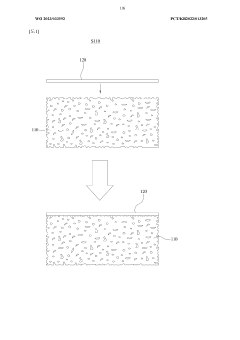
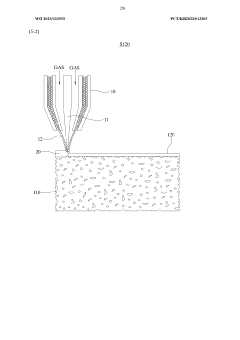
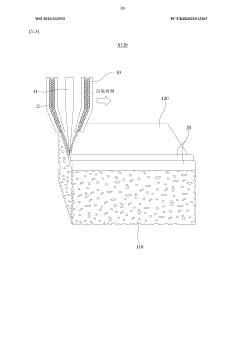
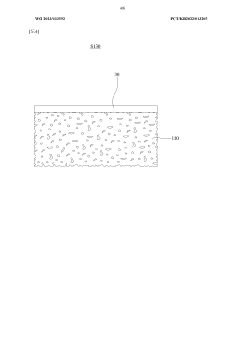
- A method using direct energy deposition (DED) technology where a metal plate is flattened on a porous metal base, and a laser beam is used to melt the metal plate and powder, forming overlapping molten pools that are rapidly solidified to create a flat metal layer, allowing for the stacking of multiple layers with improved density and strength by varying the nozzle movement direction.
Material Selection Considerations
Material selection for Directed Energy Deposition (DED) processes in multi-layer porous structures requires careful consideration of both physical and chemical properties to achieve desired permeability characteristics. The primary materials used in DED for porous structures include various metal alloys, ceramics, and composite materials, each offering distinct advantages for specific applications.
Metal powders such as titanium alloys (Ti-6Al-4V), stainless steel (316L, 17-4PH), and nickel-based superalloys (Inconel 625, 718) demonstrate excellent processability in DED systems while providing good mechanical strength and corrosion resistance. These materials are particularly suitable for aerospace, biomedical, and chemical processing applications where structural integrity under harsh conditions is essential.
Particle size distribution significantly impacts the final permeability of the structure. Typically, powders with size ranges between 45-150 μm are utilized in DED processes, with narrower distributions yielding more predictable pore architectures. The morphology of particles—whether spherical, irregular, or flake-like—directly influences powder flowability during deposition and subsequently affects the formation of interconnected pore networks.
Material compatibility between layers must be evaluated when designing multi-layer structures with varying permeability. Thermal expansion coefficient matching between adjacent materials prevents delamination and crack formation during thermal cycling. Additionally, the wettability characteristics between layers determine interface quality and overall structural integrity.
For biomedical applications, biocompatible materials such as titanium alloys and certain ceramics are preferred due to their favorable interaction with biological tissues. In contrast, chemical processing applications may require materials with superior corrosion resistance like high-grade stainless steels or specialized ceramics.
The thermal conductivity of selected materials plays a crucial role in controlling the solidification rate during DED processing, which directly affects pore formation mechanisms. Materials with higher thermal conductivity generally produce more uniform pore structures due to more consistent cooling rates throughout the build.
Post-processing compatibility must also be considered, as some materials may require heat treatment, surface modification, or chemical etching to achieve final permeability specifications. The selected material should maintain structural integrity during these secondary operations while allowing for permeability adjustment.
Cost considerations cannot be overlooked, particularly for large-scale industrial applications. While exotic alloys may offer superior performance characteristics, their high cost may prohibit widespread adoption. Therefore, material selection often involves balancing performance requirements against economic constraints to achieve optimal cost-effectiveness.
Metal powders such as titanium alloys (Ti-6Al-4V), stainless steel (316L, 17-4PH), and nickel-based superalloys (Inconel 625, 718) demonstrate excellent processability in DED systems while providing good mechanical strength and corrosion resistance. These materials are particularly suitable for aerospace, biomedical, and chemical processing applications where structural integrity under harsh conditions is essential.
Particle size distribution significantly impacts the final permeability of the structure. Typically, powders with size ranges between 45-150 μm are utilized in DED processes, with narrower distributions yielding more predictable pore architectures. The morphology of particles—whether spherical, irregular, or flake-like—directly influences powder flowability during deposition and subsequently affects the formation of interconnected pore networks.
Material compatibility between layers must be evaluated when designing multi-layer structures with varying permeability. Thermal expansion coefficient matching between adjacent materials prevents delamination and crack formation during thermal cycling. Additionally, the wettability characteristics between layers determine interface quality and overall structural integrity.
For biomedical applications, biocompatible materials such as titanium alloys and certain ceramics are preferred due to their favorable interaction with biological tissues. In contrast, chemical processing applications may require materials with superior corrosion resistance like high-grade stainless steels or specialized ceramics.
The thermal conductivity of selected materials plays a crucial role in controlling the solidification rate during DED processing, which directly affects pore formation mechanisms. Materials with higher thermal conductivity generally produce more uniform pore structures due to more consistent cooling rates throughout the build.
Post-processing compatibility must also be considered, as some materials may require heat treatment, surface modification, or chemical etching to achieve final permeability specifications. The selected material should maintain structural integrity during these secondary operations while allowing for permeability adjustment.
Cost considerations cannot be overlooked, particularly for large-scale industrial applications. While exotic alloys may offer superior performance characteristics, their high cost may prohibit widespread adoption. Therefore, material selection often involves balancing performance requirements against economic constraints to achieve optimal cost-effectiveness.
Quality Control and Characterization Methods
Quality control and characterization methods are critical components in the development and implementation of DED (Directed Energy Deposition) processes for multi-layer porous structures with tailored permeability. Effective quality assessment ensures that the manufactured structures meet design specifications and functional requirements.
Non-destructive testing (NDT) techniques play a pivotal role in evaluating porous structures without compromising their integrity. X-ray computed tomography (CT) scanning has emerged as a primary method for visualizing internal features, allowing for detailed 3D reconstruction of pore networks, interconnectivity assessment, and detection of manufacturing defects. Ultrasonic testing provides complementary information about material density variations and structural discontinuities, particularly valuable for thicker porous components.
Microscopy techniques, including scanning electron microscopy (SEM) and optical microscopy, enable detailed surface and cross-sectional analysis of porous structures. These methods reveal critical microstructural features such as pore morphology, strut thickness, and surface roughness that directly influence permeability characteristics. Advanced image analysis algorithms can quantify these parameters with high precision, establishing correlations between manufacturing parameters and resultant pore architectures.
Permeability testing represents a fundamental characterization method for multi-layer porous structures. Standardized flow tests measuring pressure drop across samples at controlled flow rates provide direct quantification of permeability coefficients. Specialized test rigs have been developed to evaluate directional permeability in anisotropic structures, crucial for applications requiring preferential flow paths.
Mechanical testing protocols have been adapted specifically for porous structures, accounting for their unique deformation behaviors. Compression testing, three-point bending, and fatigue testing under simulated operational conditions help establish relationships between porosity profiles and mechanical performance. These data are essential for validating computational models and ensuring structural integrity during service.
In-process monitoring systems represent the cutting edge of quality control for DED-manufactured porous structures. High-speed thermal imaging cameras track melt pool dynamics and cooling rates, while layer-wise optical scanning detects anomalies in real-time. Machine learning algorithms increasingly analyze this sensor data to predict porosity characteristics and implement closed-loop control adjustments, minimizing variability between production runs.
Statistical process control methodologies have been adapted for porous structure manufacturing, establishing control limits for key process parameters and correlating them with resultant permeability characteristics. This approach enables systematic optimization of manufacturing parameters and provides quantitative metrics for process certification and repeatability assessment.
Non-destructive testing (NDT) techniques play a pivotal role in evaluating porous structures without compromising their integrity. X-ray computed tomography (CT) scanning has emerged as a primary method for visualizing internal features, allowing for detailed 3D reconstruction of pore networks, interconnectivity assessment, and detection of manufacturing defects. Ultrasonic testing provides complementary information about material density variations and structural discontinuities, particularly valuable for thicker porous components.
Microscopy techniques, including scanning electron microscopy (SEM) and optical microscopy, enable detailed surface and cross-sectional analysis of porous structures. These methods reveal critical microstructural features such as pore morphology, strut thickness, and surface roughness that directly influence permeability characteristics. Advanced image analysis algorithms can quantify these parameters with high precision, establishing correlations between manufacturing parameters and resultant pore architectures.
Permeability testing represents a fundamental characterization method for multi-layer porous structures. Standardized flow tests measuring pressure drop across samples at controlled flow rates provide direct quantification of permeability coefficients. Specialized test rigs have been developed to evaluate directional permeability in anisotropic structures, crucial for applications requiring preferential flow paths.
Mechanical testing protocols have been adapted specifically for porous structures, accounting for their unique deformation behaviors. Compression testing, three-point bending, and fatigue testing under simulated operational conditions help establish relationships between porosity profiles and mechanical performance. These data are essential for validating computational models and ensuring structural integrity during service.
In-process monitoring systems represent the cutting edge of quality control for DED-manufactured porous structures. High-speed thermal imaging cameras track melt pool dynamics and cooling rates, while layer-wise optical scanning detects anomalies in real-time. Machine learning algorithms increasingly analyze this sensor data to predict porosity characteristics and implement closed-loop control adjustments, minimizing variability between production runs.
Statistical process control methodologies have been adapted for porous structure manufacturing, establishing control limits for key process parameters and correlating them with resultant permeability characteristics. This approach enables systematic optimization of manufacturing parameters and provides quantitative metrics for process certification and repeatability assessment.
Unlock deeper insights with PatSnap Eureka Quick Research — get a full tech report to explore trends and direct your research. Try now!
Generate Your Research Report Instantly with AI Agent
Supercharge your innovation with PatSnap Eureka AI Agent Platform!