Deep-sea exploration with high-efficiency PMSM systems
AUG 15, 20259 MIN READ
Generate Your Research Report Instantly with AI Agent
PatSnap Eureka helps you evaluate technical feasibility & market potential.
PMSM Deep-Sea Tech Evolution
The evolution of Permanent Magnet Synchronous Motor (PMSM) technology for deep-sea exploration has been marked by significant advancements over the past few decades. Initially, deep-sea exploration relied on hydraulic and pneumatic systems, which were limited in efficiency and control precision. The introduction of PMSM systems in the 1990s marked a turning point, offering improved power density, efficiency, and controllability.
In the early 2000s, PMSM systems for deep-sea applications focused on enhancing reliability and corrosion resistance. Engineers developed specialized sealing techniques and materials to protect motors from extreme pressures and corrosive saltwater environments. This period also saw the integration of advanced control algorithms, enabling more precise positioning and movement of underwater vehicles and equipment.
The mid-2000s brought about a shift towards energy efficiency and miniaturization. Researchers developed high-efficiency PMSM designs that could operate at lower temperatures, reducing the need for complex cooling systems. This era also saw the introduction of rare-earth permanent magnets, significantly improving the power-to-weight ratio of PMSM systems.
From 2010 onwards, the focus shifted to intelligent and adaptive PMSM systems. The integration of sensors and real-time monitoring capabilities allowed for predictive maintenance and adaptive control, crucial for long-duration deep-sea missions. Additionally, advancements in power electronics led to the development of more compact and efficient motor drives, further enhancing the overall system performance.
Recent years have seen a surge in the development of modular and scalable PMSM systems. This approach allows for easier customization and maintenance, addressing the diverse requirements of different deep-sea exploration tasks. Furthermore, there has been increased emphasis on environmental sustainability, with research into biodegradable lubricants and eco-friendly materials for motor construction.
Looking ahead, the evolution of PMSM technology for deep-sea exploration is likely to focus on extreme depth capabilities, with motors designed to operate at the deepest ocean trenches. There is also growing interest in autonomous operation, with PMSM systems being developed to support long-term, unmanned deep-sea exploration missions. The integration of artificial intelligence and machine learning algorithms is expected to play a crucial role in this next phase of evolution, enabling adaptive and self-optimizing motor systems capable of operating in the most challenging underwater environments.
In the early 2000s, PMSM systems for deep-sea applications focused on enhancing reliability and corrosion resistance. Engineers developed specialized sealing techniques and materials to protect motors from extreme pressures and corrosive saltwater environments. This period also saw the integration of advanced control algorithms, enabling more precise positioning and movement of underwater vehicles and equipment.
The mid-2000s brought about a shift towards energy efficiency and miniaturization. Researchers developed high-efficiency PMSM designs that could operate at lower temperatures, reducing the need for complex cooling systems. This era also saw the introduction of rare-earth permanent magnets, significantly improving the power-to-weight ratio of PMSM systems.
From 2010 onwards, the focus shifted to intelligent and adaptive PMSM systems. The integration of sensors and real-time monitoring capabilities allowed for predictive maintenance and adaptive control, crucial for long-duration deep-sea missions. Additionally, advancements in power electronics led to the development of more compact and efficient motor drives, further enhancing the overall system performance.
Recent years have seen a surge in the development of modular and scalable PMSM systems. This approach allows for easier customization and maintenance, addressing the diverse requirements of different deep-sea exploration tasks. Furthermore, there has been increased emphasis on environmental sustainability, with research into biodegradable lubricants and eco-friendly materials for motor construction.
Looking ahead, the evolution of PMSM technology for deep-sea exploration is likely to focus on extreme depth capabilities, with motors designed to operate at the deepest ocean trenches. There is also growing interest in autonomous operation, with PMSM systems being developed to support long-term, unmanned deep-sea exploration missions. The integration of artificial intelligence and machine learning algorithms is expected to play a crucial role in this next phase of evolution, enabling adaptive and self-optimizing motor systems capable of operating in the most challenging underwater environments.
Deep-Sea Exploration Market Analysis
The deep-sea exploration market has been experiencing significant growth in recent years, driven by increasing demand for natural resources, scientific research, and environmental monitoring. The global deep-sea exploration market was valued at approximately $10 billion in 2020 and is projected to reach $15 billion by 2025, with a compound annual growth rate (CAGR) of 8.5%.
The market for high-efficiency Permanent Magnet Synchronous Motor (PMSM) systems in deep-sea exploration is a crucial segment within this broader market. These systems are essential for powering underwater vehicles, robotic arms, and other equipment used in deep-sea operations. The demand for PMSM systems is expected to grow at a CAGR of 7.2% from 2021 to 2026, reaching a market value of $1.8 billion by the end of the forecast period.
Key factors driving the growth of the deep-sea exploration market include the increasing need for offshore oil and gas exploration, growing interest in deep-sea mining for rare earth metals and minerals, and the rising importance of marine biodiversity research. Additionally, advancements in underwater technology, such as autonomous underwater vehicles (AUVs) and remotely operated vehicles (ROVs), are fueling market expansion.
The oil and gas industry remains the largest end-user segment for deep-sea exploration equipment, accounting for approximately 45% of the market share. However, the fastest-growing segment is marine research and environmental monitoring, with a projected CAGR of 9.8% from 2021 to 2026. This growth is driven by increasing concerns about climate change, ocean acidification, and marine ecosystem conservation.
Geographically, North America dominates the deep-sea exploration market, followed by Europe and Asia-Pacific. The Asia-Pacific region is expected to witness the highest growth rate in the coming years, primarily due to increasing investments in offshore energy exploration and marine research by countries like China, Japan, and South Korea.
The market for high-efficiency PMSM systems in deep-sea exploration is characterized by intense competition and rapid technological advancements. Key players in this market are focusing on developing more efficient, compact, and reliable motor systems capable of withstanding extreme underwater conditions. The integration of advanced materials, such as high-temperature superconductors and rare earth magnets, is expected to further enhance the performance of PMSM systems in deep-sea applications.
In conclusion, the deep-sea exploration market, particularly the segment for high-efficiency PMSM systems, presents significant growth opportunities. As technology continues to advance and the demand for deep-sea resources and research intensifies, the market is poised for sustained expansion in the coming years.
The market for high-efficiency Permanent Magnet Synchronous Motor (PMSM) systems in deep-sea exploration is a crucial segment within this broader market. These systems are essential for powering underwater vehicles, robotic arms, and other equipment used in deep-sea operations. The demand for PMSM systems is expected to grow at a CAGR of 7.2% from 2021 to 2026, reaching a market value of $1.8 billion by the end of the forecast period.
Key factors driving the growth of the deep-sea exploration market include the increasing need for offshore oil and gas exploration, growing interest in deep-sea mining for rare earth metals and minerals, and the rising importance of marine biodiversity research. Additionally, advancements in underwater technology, such as autonomous underwater vehicles (AUVs) and remotely operated vehicles (ROVs), are fueling market expansion.
The oil and gas industry remains the largest end-user segment for deep-sea exploration equipment, accounting for approximately 45% of the market share. However, the fastest-growing segment is marine research and environmental monitoring, with a projected CAGR of 9.8% from 2021 to 2026. This growth is driven by increasing concerns about climate change, ocean acidification, and marine ecosystem conservation.
Geographically, North America dominates the deep-sea exploration market, followed by Europe and Asia-Pacific. The Asia-Pacific region is expected to witness the highest growth rate in the coming years, primarily due to increasing investments in offshore energy exploration and marine research by countries like China, Japan, and South Korea.
The market for high-efficiency PMSM systems in deep-sea exploration is characterized by intense competition and rapid technological advancements. Key players in this market are focusing on developing more efficient, compact, and reliable motor systems capable of withstanding extreme underwater conditions. The integration of advanced materials, such as high-temperature superconductors and rare earth magnets, is expected to further enhance the performance of PMSM systems in deep-sea applications.
In conclusion, the deep-sea exploration market, particularly the segment for high-efficiency PMSM systems, presents significant growth opportunities. As technology continues to advance and the demand for deep-sea resources and research intensifies, the market is poised for sustained expansion in the coming years.
PMSM Challenges in Deep-Sea Environment
The deep-sea environment presents unique challenges for Permanent Magnet Synchronous Motor (PMSM) systems, significantly impacting their performance and reliability. One of the primary obstacles is the extreme hydrostatic pressure encountered at great depths. As exploration ventures into deeper waters, PMSMs must withstand pressures exceeding 1,000 atmospheres, which can cause structural deformation and compromise the integrity of motor components.
Corrosion is another critical issue in the deep-sea environment. The high salinity of seawater accelerates the corrosion process, potentially leading to premature failure of motor components. This necessitates the use of specialized materials and protective coatings to ensure longevity and maintain operational efficiency.
Temperature variations pose a significant challenge for PMSM systems in deep-sea applications. While surface waters may be relatively warm, temperatures can drop dramatically at greater depths, often approaching near-freezing levels. These temperature fluctuations can affect the magnetic properties of permanent magnets and impact the overall performance of the motor.
The presence of marine organisms and sediments introduces additional complications. Biofouling can occur on motor surfaces, potentially obstructing cooling mechanisms and reducing efficiency. Sediment particles suspended in the water can infiltrate motor components, causing abrasion and accelerating wear.
Electrical insulation becomes particularly challenging in the deep-sea environment. The combination of high pressure and conductive seawater can lead to insulation breakdown, potentially resulting in short circuits and motor failure. Advanced insulation techniques and materials are required to maintain the integrity of electrical systems under these conditions.
Power transmission and control systems face unique hurdles in deep-sea operations. Long power cables are susceptible to voltage drops and signal degradation, necessitating sophisticated power management and control strategies. Additionally, the remote nature of deep-sea exploration demands robust and reliable communication systems for motor control and monitoring.
The need for high efficiency in deep-sea PMSM systems is paramount due to the limited power available in remote underwater environments. Achieving optimal performance while contending with the aforementioned challenges requires innovative design approaches and advanced materials.
Lastly, the issue of heat dissipation in the deep-sea environment cannot be overlooked. The high thermal conductivity of water, combined with the absence of convection currents at great depths, necessitates novel cooling solutions to prevent overheating and maintain motor efficiency.
Corrosion is another critical issue in the deep-sea environment. The high salinity of seawater accelerates the corrosion process, potentially leading to premature failure of motor components. This necessitates the use of specialized materials and protective coatings to ensure longevity and maintain operational efficiency.
Temperature variations pose a significant challenge for PMSM systems in deep-sea applications. While surface waters may be relatively warm, temperatures can drop dramatically at greater depths, often approaching near-freezing levels. These temperature fluctuations can affect the magnetic properties of permanent magnets and impact the overall performance of the motor.
The presence of marine organisms and sediments introduces additional complications. Biofouling can occur on motor surfaces, potentially obstructing cooling mechanisms and reducing efficiency. Sediment particles suspended in the water can infiltrate motor components, causing abrasion and accelerating wear.
Electrical insulation becomes particularly challenging in the deep-sea environment. The combination of high pressure and conductive seawater can lead to insulation breakdown, potentially resulting in short circuits and motor failure. Advanced insulation techniques and materials are required to maintain the integrity of electrical systems under these conditions.
Power transmission and control systems face unique hurdles in deep-sea operations. Long power cables are susceptible to voltage drops and signal degradation, necessitating sophisticated power management and control strategies. Additionally, the remote nature of deep-sea exploration demands robust and reliable communication systems for motor control and monitoring.
The need for high efficiency in deep-sea PMSM systems is paramount due to the limited power available in remote underwater environments. Achieving optimal performance while contending with the aforementioned challenges requires innovative design approaches and advanced materials.
Lastly, the issue of heat dissipation in the deep-sea environment cannot be overlooked. The high thermal conductivity of water, combined with the absence of convection currents at great depths, necessitates novel cooling solutions to prevent overheating and maintain motor efficiency.
Current High-Efficiency PMSM Solutions
01 Advanced control strategies for PMSM systems
Implementation of sophisticated control algorithms to enhance the efficiency of PMSM systems. These strategies may include vector control, model predictive control, or adaptive control techniques to optimize motor performance under various operating conditions.- Advanced control strategies for PMSM systems: Implementation of sophisticated control algorithms to enhance the efficiency of PMSM systems. These strategies may include vector control, model predictive control, or adaptive control techniques to optimize motor performance under various operating conditions.
- Improved motor design and materials: Enhancements in PMSM design, including the use of advanced magnetic materials, optimized rotor and stator configurations, and improved thermal management to reduce losses and increase overall system efficiency.
- Power electronics and drive optimization: Development of high-performance power electronic converters and drive systems specifically tailored for PMSM applications. This includes the use of wide-bandgap semiconductors, advanced modulation techniques, and optimized circuit topologies to minimize losses and improve system efficiency.
- Sensorless control techniques: Implementation of sensorless control methods to eliminate the need for position sensors, reducing system complexity and cost while maintaining high efficiency. These techniques may involve back-EMF estimation, flux observers, or high-frequency signal injection methods.
- Energy recovery and regenerative systems: Integration of energy recovery mechanisms and regenerative braking systems in PMSM-based applications to capture and reuse kinetic energy, thereby improving overall system efficiency and reducing energy consumption.
02 Improved motor design and materials
Enhancements in PMSM design, including the use of advanced magnetic materials, optimized rotor and stator configurations, and improved thermal management to reduce losses and increase overall system efficiency.Expand Specific Solutions03 Power electronics and drive optimization
Development of high-performance power electronic converters and drive systems specifically tailored for PMSM applications. This includes the use of wide-bandgap semiconductors, advanced modulation techniques, and optimized circuit topologies to minimize switching losses and improve overall system efficiency.Expand Specific Solutions04 Sensorless control techniques
Implementation of sensorless control methods to eliminate the need for position sensors, reducing system complexity and cost while maintaining high efficiency. These techniques may involve back-EMF estimation, flux observers, or high-frequency signal injection methods.Expand Specific Solutions05 Energy recovery and regenerative systems
Integration of energy recovery mechanisms and regenerative braking systems in PMSM-based applications to capture and reuse kinetic energy, thereby improving overall system efficiency and reducing energy consumption.Expand Specific Solutions
Key Players in Deep-Sea PMSM Industry
The deep-sea exploration market utilizing high-efficiency PMSM systems is in a growth phase, driven by increasing demand for underwater resources and technological advancements. The market size is expanding, with significant potential in offshore energy, marine research, and defense sectors. Technologically, the field is advancing rapidly, with key players like Ocean University of China, Harbin Institute of Technology, and ATLAS ELEKTRONIK GmbH leading research and development efforts. Companies such as Flowserve Management Co. and Chevron U.S.A., Inc. are also contributing to the industry's progress, indicating a competitive landscape with both academic and commercial entities driving innovation in PMSM systems for deep-sea applications.
Ocean University of China
Technical Solution: Ocean University of China has developed a high-efficiency PMSM system specifically designed for deep-sea exploration vehicles. Their approach focuses on maximizing power density while minimizing energy consumption. The university's research team has implemented advanced sensorless control techniques that eliminate the need for fragile position sensors in harsh underwater environments[2]. They have also developed a unique rotor design that reduces cogging torque by 40%, resulting in smoother operation and increased efficiency[4]. The system incorporates a novel thermal management solution that allows for sustained operation at depths of up to 11,000 meters[6].
Strengths: Sensorless control technology, high power density, and extreme depth capability. Weaknesses: Potential complexity in manufacturing and maintenance of specialized components.
Qingdao Institute of Marine Geology
Technical Solution: Qingdao Institute of Marine Geology has developed a PMSM system tailored for deep-sea geological exploration equipment. Their technology focuses on reliability and long-term operation in challenging underwater environments. The institute has implemented a fault-tolerant design that allows the motor to continue functioning even if one or more phases fail[7]. They have also developed a specialized sealing technology that prevents water ingress at extreme depths, extending the operational life of the motor[9]. The institute's PMSM system incorporates advanced power electronics that optimize efficiency across a wide range of operating conditions, resulting in energy savings of up to 30% compared to conventional systems[11].
Strengths: Fault-tolerant design, advanced sealing technology, and wide-range efficiency optimization. Weaknesses: Potentially higher initial cost due to specialized components and design.
Core PMSM Innovations for Deep-Sea Use
Device for control of a pmsm
PatentActiveUS20120280641A1
Innovation
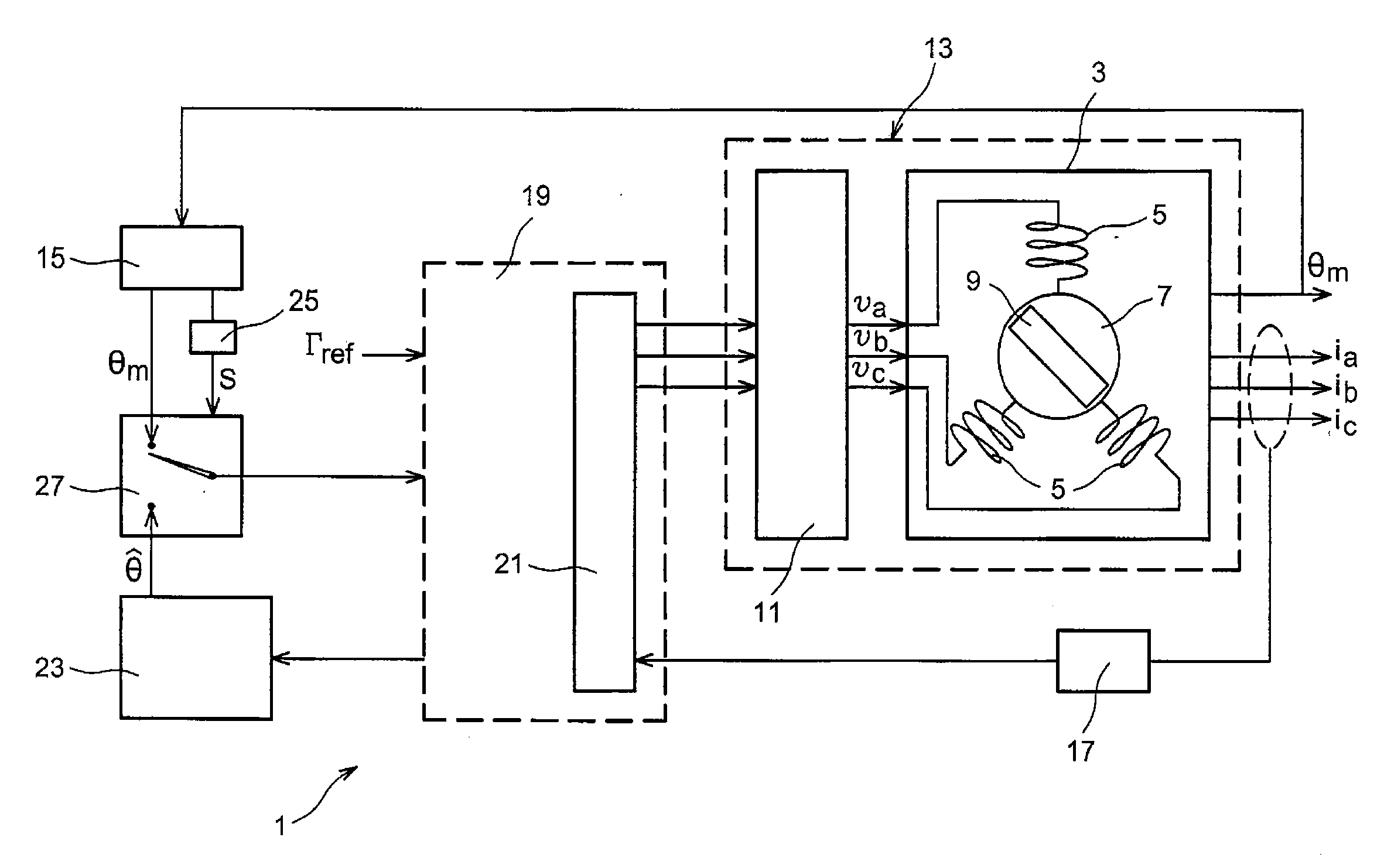
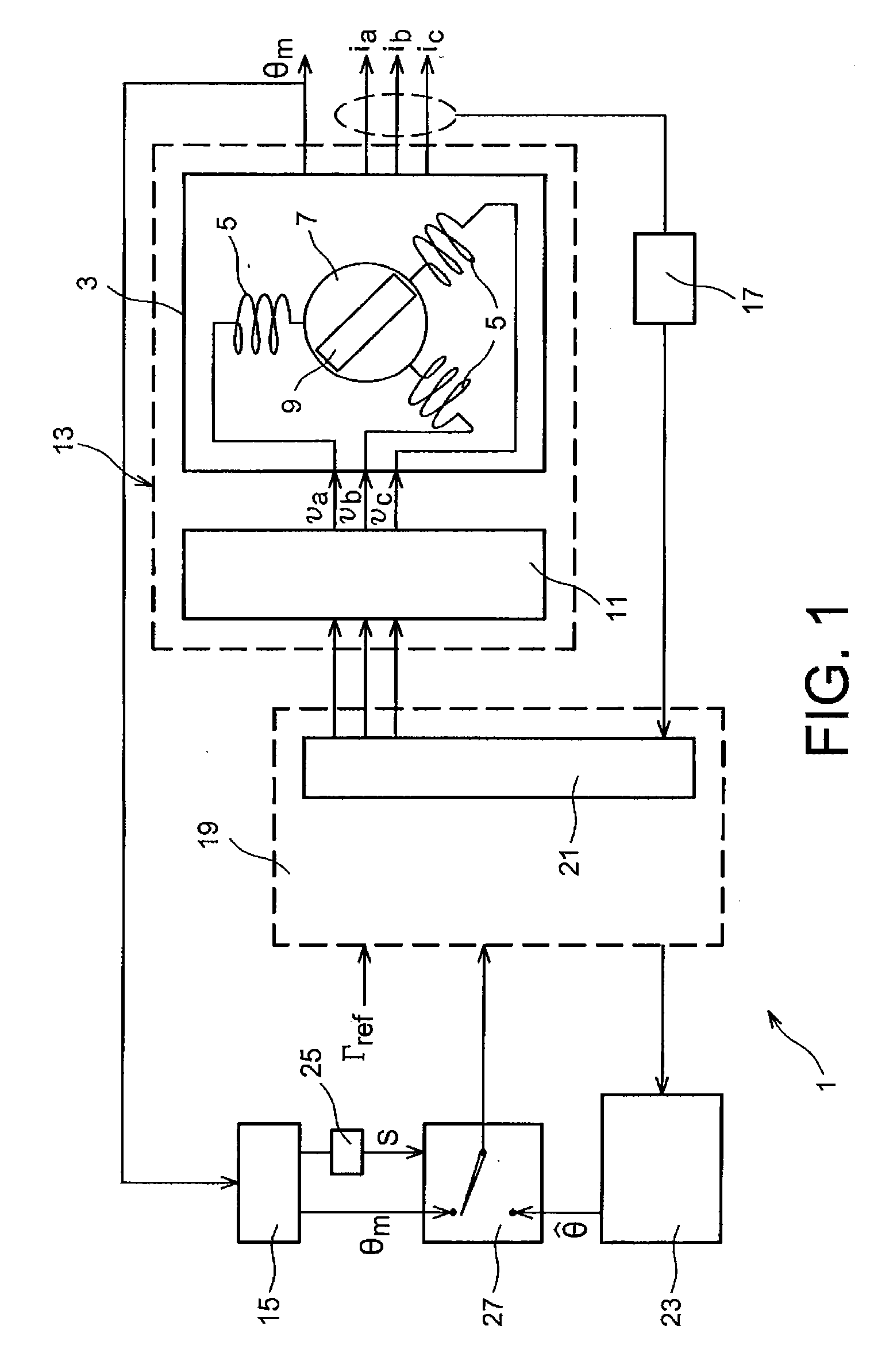
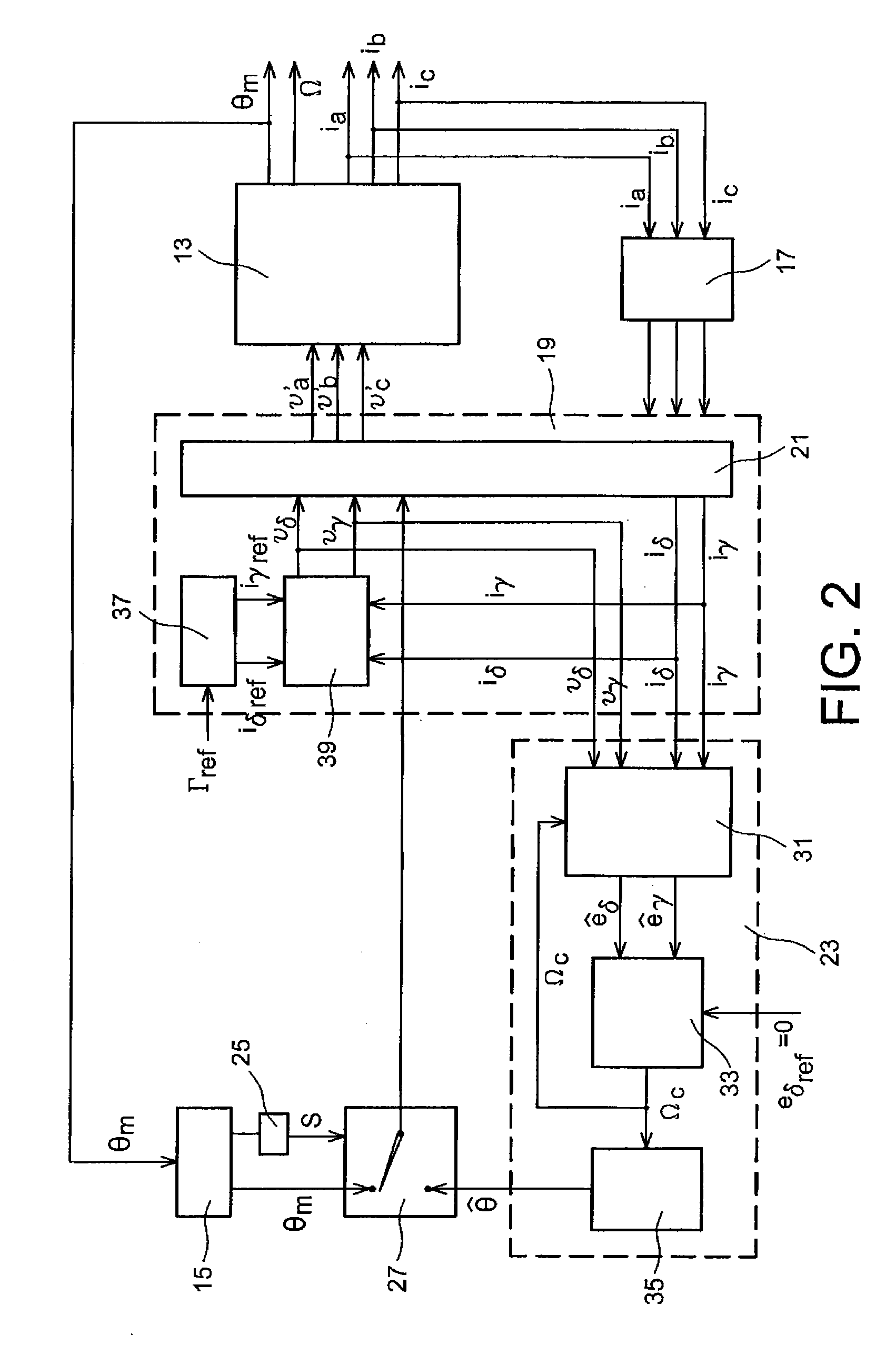
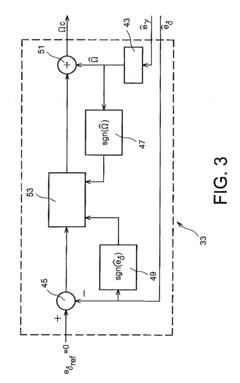
- A control device that includes a sensor for measuring rotor position, estimation means to determine an estimated rotor position, a malfunction detector, and a switch to transition from sensor-based to sensorless control when a malfunction is detected, using an electromotive force estimator and non-linear corrector to ensure global convergence to the desired operating point.
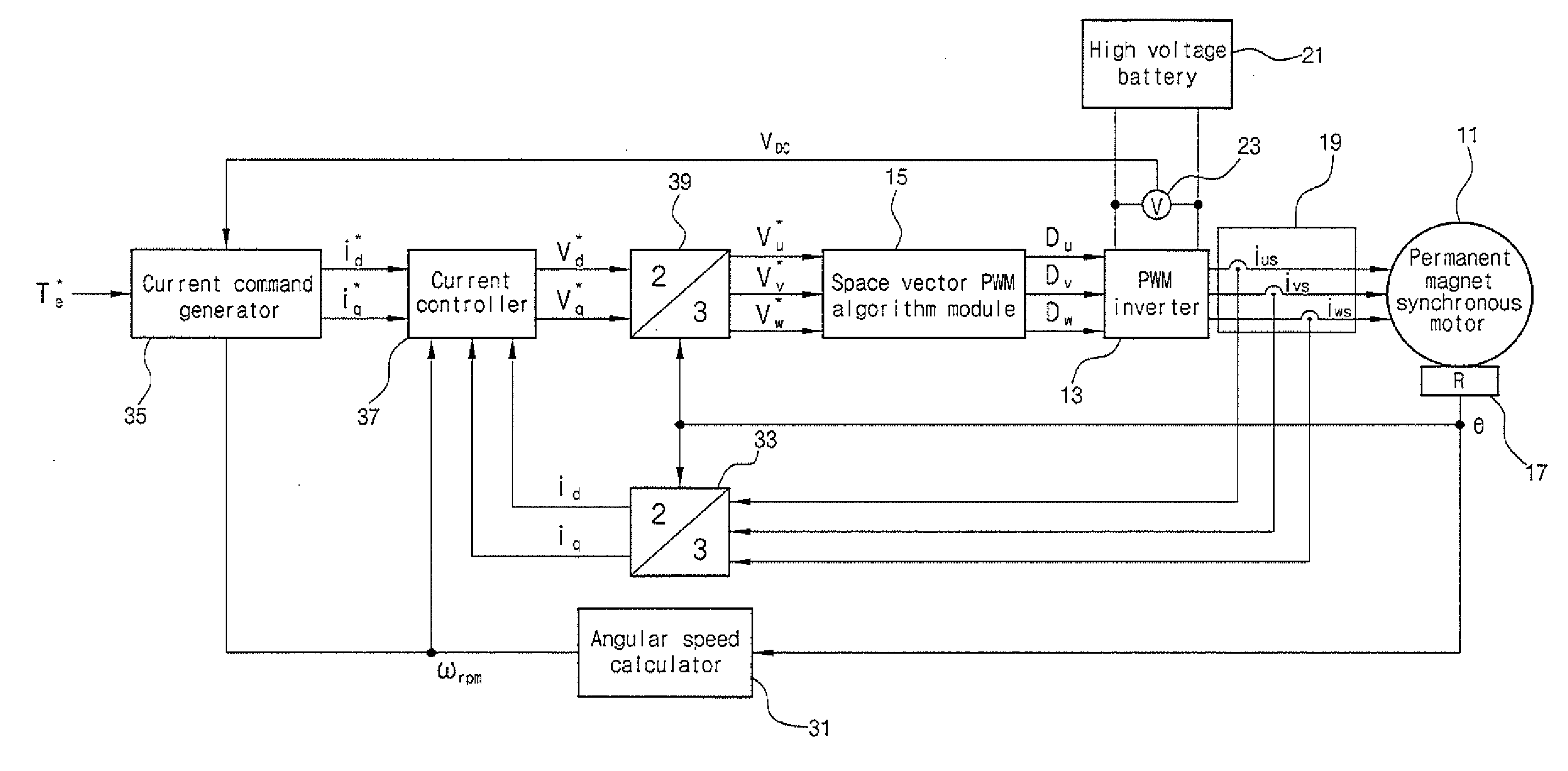
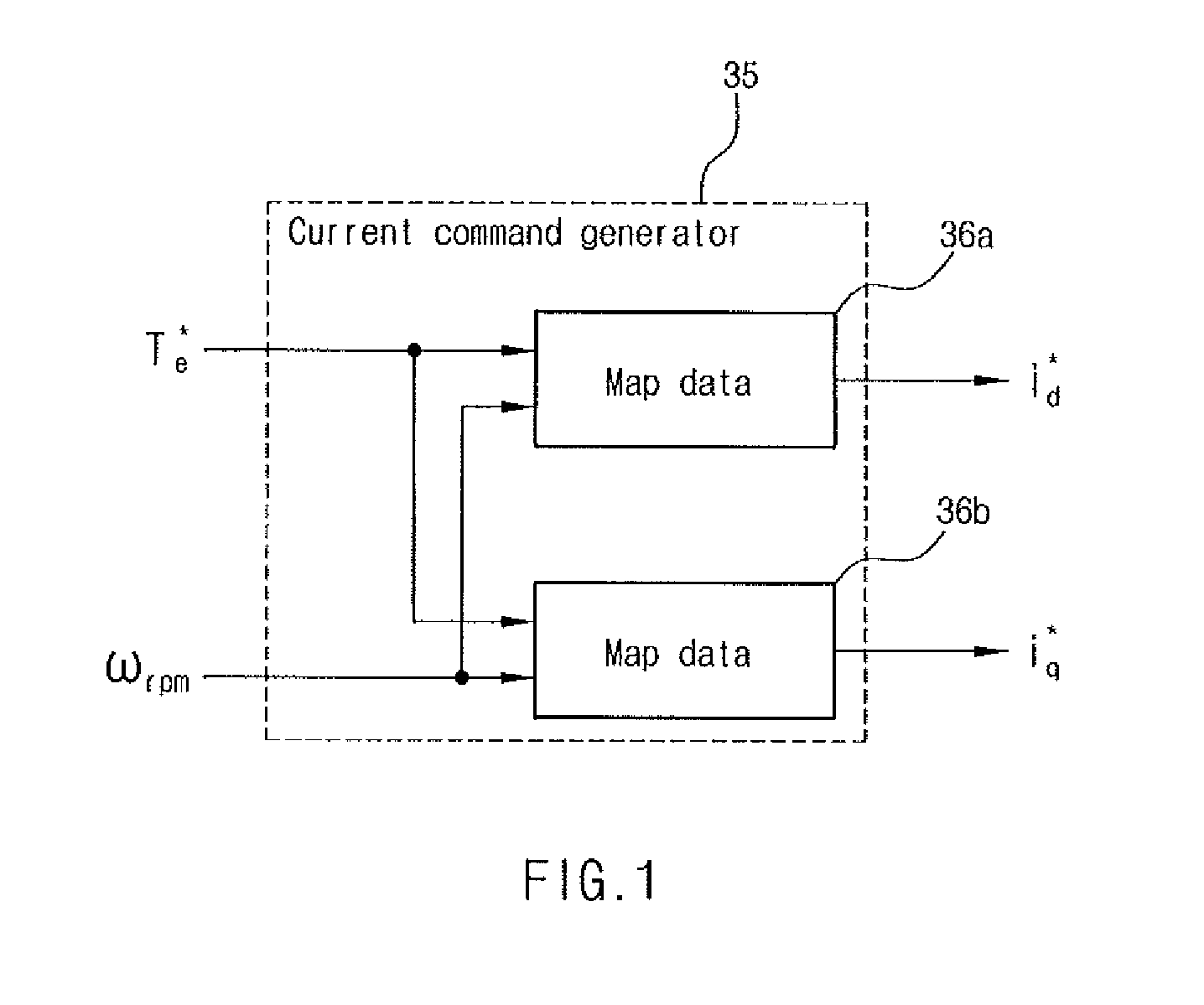
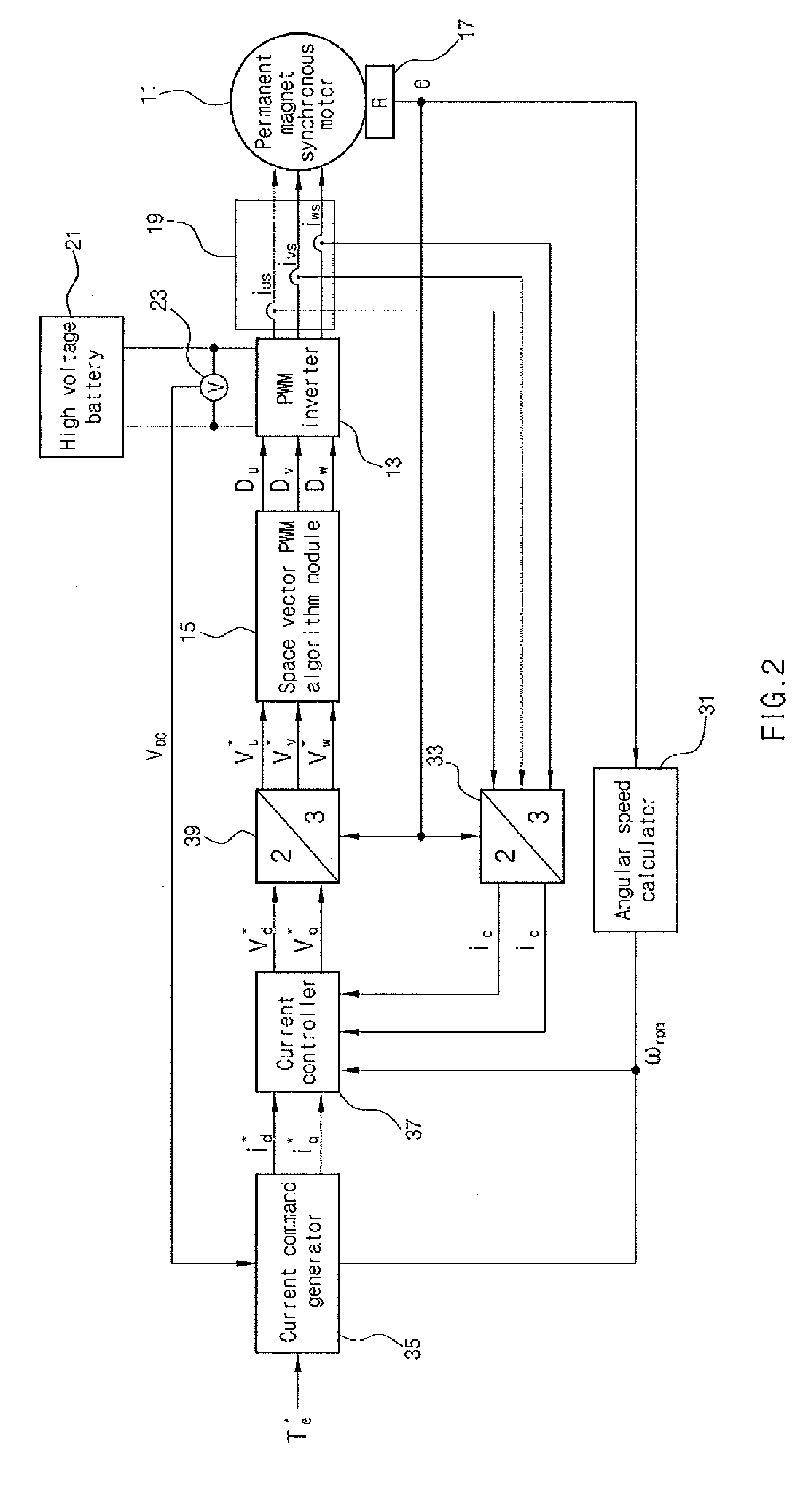
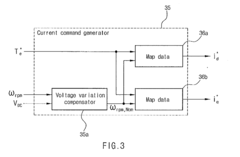
Method for controlling permanent magnet synchronous motor
PatentActiveUS20110241578A1
Innovation
- A method that detects battery voltage variations and compensates for them in real time by calculating a compensated speed, which is used to generate d-axis and q-axis current commands, thereby improving voltage utilization and motor control efficiency.
Environmental Impact Assessment
The implementation of high-efficiency Permanent Magnet Synchronous Motor (PMSM) systems in deep-sea exploration necessitates a comprehensive environmental impact assessment. These advanced motor systems, while offering significant improvements in efficiency and performance, may have both positive and negative effects on the delicate marine ecosystems.
One of the primary environmental benefits of high-efficiency PMSM systems is their reduced energy consumption compared to traditional motor systems. This translates to lower fuel requirements for deep-sea exploration vessels, resulting in decreased emissions of greenhouse gases and other pollutants. Consequently, the carbon footprint of deep-sea exploration activities can be significantly reduced, aligning with global efforts to combat climate change.
However, the introduction of PMSM systems in deep-sea environments also raises concerns about potential electromagnetic interference (EMI) with marine life. Many marine species rely on electromagnetic fields for navigation, communication, and prey detection. The operation of PMSM systems may generate electromagnetic fields that could disrupt these natural processes, potentially affecting the behavior and well-being of marine organisms.
Noise pollution is another critical factor to consider. While PMSM systems generally operate more quietly than conventional motors, the cumulative effect of multiple systems in use during deep-sea exploration could still impact marine fauna. Many deep-sea species are highly sensitive to sound, and even low-level noise disturbances could affect their communication, feeding, and reproductive behaviors.
The materials used in PMSM systems, particularly rare earth elements in the permanent magnets, also warrant attention. The mining and processing of these materials can have significant environmental impacts on terrestrial ecosystems. Additionally, the potential for accidental release of these materials in the marine environment during equipment failure or decommissioning must be carefully evaluated and mitigated.
On a positive note, the improved efficiency and precision of PMSM systems may lead to more targeted and less invasive exploration techniques. This could result in reduced physical disturbance to the seafloor and benthic habitats compared to traditional exploration methods. The ability to conduct more precise operations may also minimize the overall footprint of deep-sea exploration activities.
The long-term effects of PMSM systems on deep-sea ecosystems remain an area requiring further research. Continuous monitoring and assessment of their impact on marine biodiversity, particularly on vulnerable deep-sea species and habitats, will be crucial. This should include studies on the potential for bioaccumulation of any materials that might leach from the systems over time.
In conclusion, while high-efficiency PMSM systems offer promising advancements for deep-sea exploration, their environmental impact must be carefully managed. A balanced approach, incorporating rigorous environmental safeguards and ongoing research, will be essential to harness the benefits of this technology while preserving the integrity of our ocean ecosystems.
One of the primary environmental benefits of high-efficiency PMSM systems is their reduced energy consumption compared to traditional motor systems. This translates to lower fuel requirements for deep-sea exploration vessels, resulting in decreased emissions of greenhouse gases and other pollutants. Consequently, the carbon footprint of deep-sea exploration activities can be significantly reduced, aligning with global efforts to combat climate change.
However, the introduction of PMSM systems in deep-sea environments also raises concerns about potential electromagnetic interference (EMI) with marine life. Many marine species rely on electromagnetic fields for navigation, communication, and prey detection. The operation of PMSM systems may generate electromagnetic fields that could disrupt these natural processes, potentially affecting the behavior and well-being of marine organisms.
Noise pollution is another critical factor to consider. While PMSM systems generally operate more quietly than conventional motors, the cumulative effect of multiple systems in use during deep-sea exploration could still impact marine fauna. Many deep-sea species are highly sensitive to sound, and even low-level noise disturbances could affect their communication, feeding, and reproductive behaviors.
The materials used in PMSM systems, particularly rare earth elements in the permanent magnets, also warrant attention. The mining and processing of these materials can have significant environmental impacts on terrestrial ecosystems. Additionally, the potential for accidental release of these materials in the marine environment during equipment failure or decommissioning must be carefully evaluated and mitigated.
On a positive note, the improved efficiency and precision of PMSM systems may lead to more targeted and less invasive exploration techniques. This could result in reduced physical disturbance to the seafloor and benthic habitats compared to traditional exploration methods. The ability to conduct more precise operations may also minimize the overall footprint of deep-sea exploration activities.
The long-term effects of PMSM systems on deep-sea ecosystems remain an area requiring further research. Continuous monitoring and assessment of their impact on marine biodiversity, particularly on vulnerable deep-sea species and habitats, will be crucial. This should include studies on the potential for bioaccumulation of any materials that might leach from the systems over time.
In conclusion, while high-efficiency PMSM systems offer promising advancements for deep-sea exploration, their environmental impact must be carefully managed. A balanced approach, incorporating rigorous environmental safeguards and ongoing research, will be essential to harness the benefits of this technology while preserving the integrity of our ocean ecosystems.
Deep-Sea PMSM Reliability Analysis
The reliability of Permanent Magnet Synchronous Motor (PMSM) systems in deep-sea environments is crucial for successful exploration missions. These motors face unique challenges due to extreme pressure, corrosive saltwater, and limited maintenance opportunities. To ensure optimal performance and longevity, a comprehensive reliability analysis is essential.
One of the primary concerns in deep-sea PMSM systems is the integrity of the motor's insulation. The high-pressure environment can cause water ingress, leading to electrical shorts and motor failure. Advanced insulation materials and techniques, such as vacuum pressure impregnation (VPI) and hermetic sealing, are employed to mitigate these risks. Regular monitoring of insulation resistance and partial discharge levels can provide early warning signs of potential failures.
Bearing reliability is another critical factor in deep-sea PMSM systems. The extreme pressures and potential contamination from seawater can accelerate bearing wear and reduce motor efficiency. Specialized bearings, such as ceramic hybrid bearings or magnetically levitated bearings, are often used to enhance reliability in these harsh conditions. Implementing condition monitoring systems that analyze vibration patterns and temperature fluctuations can help predict bearing failures before they occur.
Thermal management is a significant challenge in deep-sea environments, where heat dissipation is limited by the surrounding water. Overheating can lead to reduced efficiency, accelerated aging of components, and ultimately, motor failure. Advanced cooling systems, including forced oil circulation and integrated heat exchangers, are employed to maintain optimal operating temperatures. Thermal modeling and real-time temperature monitoring are essential for ensuring the motor's reliability and longevity.
Corrosion resistance is paramount in saltwater environments. PMSM systems for deep-sea applications often utilize specialized materials such as super duplex stainless steel or titanium alloys for motor housings and components. Cathodic protection systems and advanced coatings further enhance corrosion resistance. Regular inspections and material degradation assessments are crucial for maintaining the structural integrity of the motor system.
To enhance overall reliability, redundancy and fault-tolerant designs are often incorporated into deep-sea PMSM systems. This may include multiple motor units, redundant control systems, and fail-safe mechanisms. Advanced diagnostic and prognostic algorithms are implemented to detect anomalies and predict potential failures, allowing for preventive maintenance and minimizing downtime during critical operations.
Long-term reliability testing under simulated deep-sea conditions is essential for validating the performance and durability of PMSM systems. Accelerated life testing and environmental stress screening help identify potential failure modes and improve system design. Continuous data collection and analysis from operational systems provide valuable insights for ongoing reliability improvements and future design iterations.
One of the primary concerns in deep-sea PMSM systems is the integrity of the motor's insulation. The high-pressure environment can cause water ingress, leading to electrical shorts and motor failure. Advanced insulation materials and techniques, such as vacuum pressure impregnation (VPI) and hermetic sealing, are employed to mitigate these risks. Regular monitoring of insulation resistance and partial discharge levels can provide early warning signs of potential failures.
Bearing reliability is another critical factor in deep-sea PMSM systems. The extreme pressures and potential contamination from seawater can accelerate bearing wear and reduce motor efficiency. Specialized bearings, such as ceramic hybrid bearings or magnetically levitated bearings, are often used to enhance reliability in these harsh conditions. Implementing condition monitoring systems that analyze vibration patterns and temperature fluctuations can help predict bearing failures before they occur.
Thermal management is a significant challenge in deep-sea environments, where heat dissipation is limited by the surrounding water. Overheating can lead to reduced efficiency, accelerated aging of components, and ultimately, motor failure. Advanced cooling systems, including forced oil circulation and integrated heat exchangers, are employed to maintain optimal operating temperatures. Thermal modeling and real-time temperature monitoring are essential for ensuring the motor's reliability and longevity.
Corrosion resistance is paramount in saltwater environments. PMSM systems for deep-sea applications often utilize specialized materials such as super duplex stainless steel or titanium alloys for motor housings and components. Cathodic protection systems and advanced coatings further enhance corrosion resistance. Regular inspections and material degradation assessments are crucial for maintaining the structural integrity of the motor system.
To enhance overall reliability, redundancy and fault-tolerant designs are often incorporated into deep-sea PMSM systems. This may include multiple motor units, redundant control systems, and fail-safe mechanisms. Advanced diagnostic and prognostic algorithms are implemented to detect anomalies and predict potential failures, allowing for preventive maintenance and minimizing downtime during critical operations.
Long-term reliability testing under simulated deep-sea conditions is essential for validating the performance and durability of PMSM systems. Accelerated life testing and environmental stress screening help identify potential failure modes and improve system design. Continuous data collection and analysis from operational systems provide valuable insights for ongoing reliability improvements and future design iterations.
Unlock deeper insights with PatSnap Eureka Quick Research — get a full tech report to explore trends and direct your research. Try now!
Generate Your Research Report Instantly with AI Agent
Supercharge your innovation with PatSnap Eureka AI Agent Platform!