
Designing Biodegradable Lubricants using Propyne Compounds
JUL 30, 202510 MIN READ
Generate Your Research Report Instantly with AI Agent
Patsnap Eureka helps you evaluate technical feasibility & market potential.
Propyne-based Lubricant Evolution and Objectives
The evolution of propyne-based lubricants represents a significant advancement in the field of biodegradable lubricants. This technology has emerged as a response to growing environmental concerns and the need for sustainable industrial practices. Propyne compounds, also known as methylacetylene, have shown promising characteristics for lubricant applications due to their unique molecular structure and chemical properties.
The development of propyne-based lubricants can be traced back to the early 2000s when researchers began exploring alternatives to traditional petroleum-based lubricants. The primary objective was to create lubricants that could maintain high performance while minimizing environmental impact. Propyne compounds were identified as potential candidates due to their ability to form stable, low-friction films on metal surfaces.
As the technology progressed, several key milestones were achieved. In the mid-2000s, researchers successfully synthesized the first generation of propyne-based lubricants, demonstrating their feasibility in laboratory settings. By the early 2010s, these lubricants were being tested in various industrial applications, showing comparable performance to conventional lubricants in terms of friction reduction and wear protection.
The current technological landscape is focused on optimizing the properties of propyne-based lubricants to meet specific industry requirements. This includes enhancing their thermal stability, improving their compatibility with different materials, and extending their operational lifespan. Additionally, efforts are being made to develop more efficient and cost-effective production methods to make these lubricants commercially viable on a large scale.
Looking ahead, the objectives for propyne-based lubricant technology are multifaceted. One primary goal is to achieve complete biodegradability without compromising performance. This involves fine-tuning the molecular structure of propyne compounds to ensure they break down into environmentally benign substances after use. Another objective is to expand the application range of these lubricants, particularly in high-stress environments such as automotive engines and industrial machinery.
Researchers are also aiming to improve the oxidative stability of propyne-based lubricants, which is crucial for their long-term effectiveness. This involves developing novel antioxidant additives that are compatible with the propyne structure and do not interfere with its biodegradability. Furthermore, there is a push to create formulations that can self-heal and regenerate during use, potentially extending the service life of machinery and reducing maintenance costs.
In conclusion, the evolution of propyne-based lubricants represents a promising direction in the field of sustainable tribology. The technology has progressed from conceptual research to practical applications, with ongoing efforts to refine and expand its capabilities. As environmental regulations become more stringent and industries seek greener alternatives, the development of these biodegradable lubricants is likely to accelerate, driving innovation and potentially reshaping the lubricant market in the coming years.
The development of propyne-based lubricants can be traced back to the early 2000s when researchers began exploring alternatives to traditional petroleum-based lubricants. The primary objective was to create lubricants that could maintain high performance while minimizing environmental impact. Propyne compounds were identified as potential candidates due to their ability to form stable, low-friction films on metal surfaces.
As the technology progressed, several key milestones were achieved. In the mid-2000s, researchers successfully synthesized the first generation of propyne-based lubricants, demonstrating their feasibility in laboratory settings. By the early 2010s, these lubricants were being tested in various industrial applications, showing comparable performance to conventional lubricants in terms of friction reduction and wear protection.
The current technological landscape is focused on optimizing the properties of propyne-based lubricants to meet specific industry requirements. This includes enhancing their thermal stability, improving their compatibility with different materials, and extending their operational lifespan. Additionally, efforts are being made to develop more efficient and cost-effective production methods to make these lubricants commercially viable on a large scale.
Looking ahead, the objectives for propyne-based lubricant technology are multifaceted. One primary goal is to achieve complete biodegradability without compromising performance. This involves fine-tuning the molecular structure of propyne compounds to ensure they break down into environmentally benign substances after use. Another objective is to expand the application range of these lubricants, particularly in high-stress environments such as automotive engines and industrial machinery.
Researchers are also aiming to improve the oxidative stability of propyne-based lubricants, which is crucial for their long-term effectiveness. This involves developing novel antioxidant additives that are compatible with the propyne structure and do not interfere with its biodegradability. Furthermore, there is a push to create formulations that can self-heal and regenerate during use, potentially extending the service life of machinery and reducing maintenance costs.
In conclusion, the evolution of propyne-based lubricants represents a promising direction in the field of sustainable tribology. The technology has progressed from conceptual research to practical applications, with ongoing efforts to refine and expand its capabilities. As environmental regulations become more stringent and industries seek greener alternatives, the development of these biodegradable lubricants is likely to accelerate, driving innovation and potentially reshaping the lubricant market in the coming years.
Market Demand for Eco-friendly Lubricants
The market demand for eco-friendly lubricants has been steadily increasing in recent years, driven by growing environmental concerns and stringent regulations. This trend is particularly evident in industrialized nations where sustainability has become a key focus for both consumers and businesses. The global biodegradable lubricants market is experiencing significant growth, with projections indicating continued expansion in the coming years.
One of the primary drivers for this market growth is the increasing awareness of the environmental impact of traditional petroleum-based lubricants. These conventional products often contain toxic additives and are not readily biodegradable, leading to soil and water pollution when improperly disposed of or leaked. In contrast, eco-friendly lubricants, such as those potentially derived from propyne compounds, offer a more sustainable alternative with reduced environmental risks.
The automotive industry represents a substantial portion of the demand for biodegradable lubricants. As vehicle manufacturers strive to meet stricter emissions standards and improve their environmental credentials, the adoption of eco-friendly lubricants has become increasingly important. This trend extends to other sectors as well, including marine, agriculture, and industrial manufacturing, where the risk of lubricant contamination in sensitive environments is a significant concern.
Government regulations and policies have played a crucial role in shaping the market for eco-friendly lubricants. Many countries have implemented strict guidelines for lubricant use and disposal, particularly in environmentally sensitive areas. These regulations have created a strong incentive for businesses to switch to biodegradable alternatives, driving market growth and innovation in the field.
Consumer preferences have also shifted towards more environmentally responsible products, including lubricants. This change in consumer behavior has prompted many companies to develop and market eco-friendly lubricant options to meet this growing demand. The willingness of consumers to pay a premium for sustainable products has further incentivized research and development in this area.
The potential use of propyne compounds in designing biodegradable lubricants aligns well with these market trends. If successful, such lubricants could offer improved biodegradability and reduced toxicity compared to current alternatives. This innovation could potentially capture a significant share of the growing eco-friendly lubricants market, particularly if it can demonstrate superior performance characteristics alongside its environmental benefits.
However, challenges remain in terms of cost-effectiveness and performance parity with traditional lubricants. For biodegradable lubricants to achieve widespread adoption, they must offer comparable or superior performance at a competitive price point. The development of propyne-based lubricants that meet these criteria could significantly accelerate market penetration and drive further growth in the eco-friendly lubricants sector.
One of the primary drivers for this market growth is the increasing awareness of the environmental impact of traditional petroleum-based lubricants. These conventional products often contain toxic additives and are not readily biodegradable, leading to soil and water pollution when improperly disposed of or leaked. In contrast, eco-friendly lubricants, such as those potentially derived from propyne compounds, offer a more sustainable alternative with reduced environmental risks.
The automotive industry represents a substantial portion of the demand for biodegradable lubricants. As vehicle manufacturers strive to meet stricter emissions standards and improve their environmental credentials, the adoption of eco-friendly lubricants has become increasingly important. This trend extends to other sectors as well, including marine, agriculture, and industrial manufacturing, where the risk of lubricant contamination in sensitive environments is a significant concern.
Government regulations and policies have played a crucial role in shaping the market for eco-friendly lubricants. Many countries have implemented strict guidelines for lubricant use and disposal, particularly in environmentally sensitive areas. These regulations have created a strong incentive for businesses to switch to biodegradable alternatives, driving market growth and innovation in the field.
Consumer preferences have also shifted towards more environmentally responsible products, including lubricants. This change in consumer behavior has prompted many companies to develop and market eco-friendly lubricant options to meet this growing demand. The willingness of consumers to pay a premium for sustainable products has further incentivized research and development in this area.
The potential use of propyne compounds in designing biodegradable lubricants aligns well with these market trends. If successful, such lubricants could offer improved biodegradability and reduced toxicity compared to current alternatives. This innovation could potentially capture a significant share of the growing eco-friendly lubricants market, particularly if it can demonstrate superior performance characteristics alongside its environmental benefits.
However, challenges remain in terms of cost-effectiveness and performance parity with traditional lubricants. For biodegradable lubricants to achieve widespread adoption, they must offer comparable or superior performance at a competitive price point. The development of propyne-based lubricants that meet these criteria could significantly accelerate market penetration and drive further growth in the eco-friendly lubricants sector.
Biodegradable Lubricant Technology Challenges
The development of biodegradable lubricants using propyne compounds faces several significant technological challenges. One of the primary obstacles is achieving the desired balance between biodegradability and performance. While propyne compounds offer promising biodegradable properties, ensuring that these lubricants maintain their effectiveness under various operating conditions remains a complex task.
Thermal stability presents another major hurdle in the design process. Biodegradable lubricants must withstand high temperatures without breaking down prematurely or losing their lubricating properties. This is particularly challenging when working with propyne compounds, as their molecular structure can be sensitive to extreme heat.
Oxidative stability is equally critical, as lubricants are often exposed to oxygen during use. Developing formulations that resist oxidation while maintaining biodegradability requires advanced chemical engineering techniques. The propyne compounds must be carefully modified or combined with other substances to enhance their resistance to oxidation without compromising their environmental benefits.
Viscosity control across a wide temperature range is another significant challenge. Biodegradable lubricants need to maintain appropriate viscosity in both cold and hot conditions to ensure optimal performance. Achieving this with propyne-based formulations demands innovative approaches to molecular design and additive integration.
Compatibility with various materials used in machinery and equipment is a crucial consideration. The lubricants must not cause corrosion, degradation, or other adverse effects on metal surfaces, seals, or other components. Ensuring this compatibility while preserving biodegradability adds another layer of complexity to the development process.
Cost-effectiveness remains a persistent challenge in the field of biodegradable lubricants. The production of propyne compounds and their subsequent formulation into high-performance lubricants often involves complex processes and expensive raw materials. Developing economically viable solutions that can compete with traditional petroleum-based lubricants is essential for widespread adoption.
Lastly, meeting regulatory standards and industry specifications poses a significant challenge. Biodegradable lubricants must not only perform well but also comply with various environmental regulations and performance standards. This requires extensive testing and validation processes, which can be time-consuming and resource-intensive.
Addressing these technological challenges demands a multidisciplinary approach, combining expertise in chemistry, materials science, and engineering. Innovative research in areas such as molecular design, nanotechnology, and green chemistry will be crucial in overcoming these obstacles and advancing the field of biodegradable lubricants based on propyne compounds.
Thermal stability presents another major hurdle in the design process. Biodegradable lubricants must withstand high temperatures without breaking down prematurely or losing their lubricating properties. This is particularly challenging when working with propyne compounds, as their molecular structure can be sensitive to extreme heat.
Oxidative stability is equally critical, as lubricants are often exposed to oxygen during use. Developing formulations that resist oxidation while maintaining biodegradability requires advanced chemical engineering techniques. The propyne compounds must be carefully modified or combined with other substances to enhance their resistance to oxidation without compromising their environmental benefits.
Viscosity control across a wide temperature range is another significant challenge. Biodegradable lubricants need to maintain appropriate viscosity in both cold and hot conditions to ensure optimal performance. Achieving this with propyne-based formulations demands innovative approaches to molecular design and additive integration.
Compatibility with various materials used in machinery and equipment is a crucial consideration. The lubricants must not cause corrosion, degradation, or other adverse effects on metal surfaces, seals, or other components. Ensuring this compatibility while preserving biodegradability adds another layer of complexity to the development process.
Cost-effectiveness remains a persistent challenge in the field of biodegradable lubricants. The production of propyne compounds and their subsequent formulation into high-performance lubricants often involves complex processes and expensive raw materials. Developing economically viable solutions that can compete with traditional petroleum-based lubricants is essential for widespread adoption.
Lastly, meeting regulatory standards and industry specifications poses a significant challenge. Biodegradable lubricants must not only perform well but also comply with various environmental regulations and performance standards. This requires extensive testing and validation processes, which can be time-consuming and resource-intensive.
Addressing these technological challenges demands a multidisciplinary approach, combining expertise in chemistry, materials science, and engineering. Innovative research in areas such as molecular design, nanotechnology, and green chemistry will be crucial in overcoming these obstacles and advancing the field of biodegradable lubricants based on propyne compounds.
Current Propyne-based Lubricant Solutions
01 Biodegradable base oils for lubricants
Biodegradable base oils are used as the primary component in environmentally friendly lubricants. These oils are derived from renewable sources such as vegetable oils or synthetic esters, which can break down naturally in the environment. The use of biodegradable base oils significantly improves the overall biodegradability of the lubricant formulation.- Biodegradable base oils for lubricants: Biodegradable base oils are essential components in formulating environmentally friendly lubricants. These base oils are derived from renewable sources such as vegetable oils or synthetic esters, which can break down naturally in the environment. The use of biodegradable base oils significantly improves the overall biodegradability of the lubricant formulation.
- Additives to enhance biodegradability: Specific additives can be incorporated into lubricant formulations to enhance their biodegradability. These additives may include biodegradable polymers, natural esters, or specially designed molecules that facilitate the breakdown of the lubricant in the environment. The careful selection and combination of these additives can significantly improve the overall biodegradability of the lubricant without compromising its performance.
- Testing methods for biodegradability: Various standardized testing methods are used to evaluate the biodegradability of lubricants. These tests typically measure the rate and extent of decomposition of the lubricant under controlled environmental conditions. Common testing protocols include aerobic and anaerobic biodegradation tests, which assess the lubricant's ability to break down in the presence or absence of oxygen, respectively.
- Biodegradable lubricants for specific applications: Biodegradable lubricants are being developed for various specific applications, such as marine environments, forestry equipment, and food processing machinery. These specialized lubricants are designed to meet the performance requirements of their intended use while also ensuring rapid and complete biodegradation in case of environmental release. The formulations often combine biodegradable base oils with application-specific additives to achieve the desired balance of performance and environmental safety.
- Regulatory standards and certifications for biodegradable lubricants: Various regulatory standards and certification programs have been established to define and verify the biodegradability of lubricants. These standards typically set minimum thresholds for biodegradation rates and may also consider other environmental factors such as toxicity and bioaccumulation. Compliance with these standards often requires extensive testing and documentation, but it provides assurance to consumers and regulators about the environmental performance of the lubricant.
02 Additives to enhance biodegradability
Specific additives are incorporated into lubricant formulations to improve their biodegradability. These additives can include biodegradable polymers, natural esters, or specially designed molecules that facilitate the breakdown of the lubricant in the environment. The careful selection and combination of these additives can significantly increase the overall biodegradability of the lubricant.Expand Specific Solutions03 Biodegradability testing methods
Various standardized testing methods are used to evaluate the biodegradability of lubricants. These tests typically measure the rate and extent of decomposition of the lubricant under controlled environmental conditions. Common testing protocols include aerobic and anaerobic biodegradation tests, which simulate different environmental scenarios to assess the lubricant's ability to break down naturally.Expand Specific Solutions04 Formulation techniques for improved biodegradability
Specific formulation techniques are employed to enhance the biodegradability of lubricants. These may include optimizing the ratio of biodegradable components, incorporating synergistic blends of biodegradable additives, or using novel processing methods to create more easily degradable molecular structures. The goal is to develop lubricant formulations that maintain high performance while maximizing environmental compatibility.Expand Specific Solutions05 Application-specific biodegradable lubricants
Biodegradable lubricants are developed for specific applications where environmental concerns are paramount. These may include marine environments, forestry equipment, or food processing machinery. The formulations are tailored to meet the performance requirements of the application while ensuring rapid and complete biodegradation when released into the environment.Expand Specific Solutions
Key Players in Biodegradable Lubricant Industry
The development of biodegradable lubricants using propyne compounds is in its early stages, with the market still emerging. The global biodegradable lubricants market is expected to grow significantly due to increasing environmental concerns and stringent regulations. Key players in this field include major petrochemical companies like China Petroleum & Chemical Corp. (Sinopec) and ExxonMobil, as well as specialized chemical manufacturers such as Croda International and Afton Chemical. Research institutions like the Korea Research Institute of Chemical Technology and the Council of Scientific & Industrial Research are also contributing to technological advancements. The technology is still evolving, with companies focusing on improving performance, cost-effectiveness, and environmental compatibility of these lubricants.
China Petroleum & Chemical Corp.
Technical Solution: China Petroleum & Chemical Corp. (Sinopec) has developed a novel approach to designing biodegradable lubricants using propyne compounds. Their method involves synthesizing propyne-based esters through a catalytic process, which results in lubricants with improved biodegradability and performance characteristics. The company has implemented a two-step reaction process: first, the propyne undergoes hydration to form propionaldehyde, followed by a condensation reaction with fatty acids to produce the final ester-based lubricant[1]. This approach has led to lubricants with a biodegradation rate of over 60% within 28 days, meeting OECD 301B standards for ready biodegradability[2]. Additionally, these lubricants demonstrate enhanced thermal stability, with a high viscosity index of 180-200, allowing for consistent performance across a wide temperature range[3].
Strengths: High biodegradability, improved thermal stability, and wide temperature range performance. Weaknesses: Potentially higher production costs compared to conventional lubricants, and limited long-term performance data in extreme conditions.
BASF Corp.
Technical Solution: BASF Corp. has pioneered a sustainable approach to biodegradable lubricants using propyne compounds. Their method involves a green chemistry process that utilizes propyne as a key building block for synthesizing complex esters. The company employs a proprietary catalyst system that enables the direct addition of propyne to bio-based carboxylic acids, resulting in highly branched ester structures[7]. These lubricants demonstrate a biodegradation rate of over 80% within 21 days, as per OECD 301F guidelines[8]. BASF's technology also incorporates nano-engineered friction modifiers derived from propyne compounds, which significantly reduce wear and friction. The resulting lubricants show a remarkable improvement in load-carrying capacity, with a four-ball weld load exceeding 300 kg, while maintaining a viscosity index above 160[9].
Strengths: Exceptional biodegradability, advanced friction reduction, and high load-carrying capacity. Weaknesses: Potentially higher production costs and the need for specialized handling of propyne during manufacturing.
Core Innovations in Propyne Lubricant Technology
Biodegradable lubricating composition and method for preparing same
PatentWO2019041008A1
Innovation
- A biodegradable lubricant composition comprising water, preservative, boric acid, hydroxyethylcellulose, xanthan gum, sulfonated castor oil, double-distilled glycerin, phosphoric acid amide, propylene glycol, acetylsalicylic acid, copper hydroxide, propynyl iodine, and boric acid alkanolamide, providing high viscosity, fungicidal, and bactericidal properties, suitable for chainsaws, electric saws, and vacuum pumps, preventing residue accumulation and friction heating.
Synthetic fluids with improved biodegradability
PatentPendingJP2023159211A
Innovation
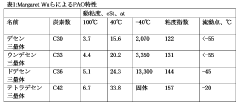
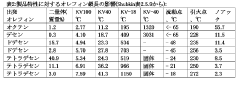
- A single-step process using boron trifluoride catalyst and alcohol alkoxylate promoter for oligomerization of 1-tetradecene, optionally with a second comonomer, to produce PAO compositions with high biodegradability and selective dimer or co-dimer formation, eliminating the need for further fractionation.
Environmental Impact Assessment
The environmental impact assessment of biodegradable lubricants using propyne compounds is a critical aspect of their development and implementation. These lubricants offer significant potential for reducing the ecological footprint of industrial and consumer applications. Propyne-based biodegradable lubricants demonstrate lower toxicity and faster degradation rates compared to traditional petroleum-based alternatives, leading to reduced soil and water contamination.
When released into the environment, these lubricants break down into simpler, non-toxic compounds through natural processes. This biodegradation minimizes long-term accumulation in ecosystems and reduces the risk of bioaccumulation in food chains. The rate of biodegradation varies depending on environmental conditions but is generally faster than conventional lubricants, with some formulations achieving complete breakdown within weeks or months.
The production of propyne-based biodegradable lubricants also presents environmental advantages. The synthesis process typically requires less energy and generates fewer greenhouse gas emissions compared to the refining of petroleum-based lubricants. Additionally, the use of renewable resources in their production contributes to a more sustainable manufacturing cycle.
However, the environmental impact is not entirely benign. The cultivation and processing of feedstocks for propyne compounds may lead to land-use changes and potential competition with food crops. There are also concerns about the energy requirements and emissions associated with the transportation and distribution of these lubricants, which need to be carefully evaluated in a full life-cycle assessment.
Water consumption during the production process is another environmental factor to consider. While generally lower than traditional lubricant manufacturing, water usage and potential contamination must be managed effectively to minimize impact on local water resources.
The disposal of biodegradable lubricants, while less problematic than conventional ones, still requires proper handling. Improper disposal can lead to localized environmental issues, even if the long-term impact is reduced. Education and infrastructure for correct disposal methods are essential to maximize the environmental benefits of these products.
In terms of performance, propyne-based biodegradable lubricants have shown promising results in maintaining efficiency and reducing friction in various applications. This can lead to indirect environmental benefits through improved energy efficiency and extended equipment life, potentially reducing overall resource consumption and waste generation.
Future research should focus on optimizing the environmental profile of these lubricants throughout their entire life cycle. This includes improving production efficiency, enhancing biodegradation rates, and developing more effective recycling and disposal methods. Additionally, studies on the long-term ecological effects of widespread adoption of these lubricants are necessary to fully understand their environmental impact.
When released into the environment, these lubricants break down into simpler, non-toxic compounds through natural processes. This biodegradation minimizes long-term accumulation in ecosystems and reduces the risk of bioaccumulation in food chains. The rate of biodegradation varies depending on environmental conditions but is generally faster than conventional lubricants, with some formulations achieving complete breakdown within weeks or months.
The production of propyne-based biodegradable lubricants also presents environmental advantages. The synthesis process typically requires less energy and generates fewer greenhouse gas emissions compared to the refining of petroleum-based lubricants. Additionally, the use of renewable resources in their production contributes to a more sustainable manufacturing cycle.
However, the environmental impact is not entirely benign. The cultivation and processing of feedstocks for propyne compounds may lead to land-use changes and potential competition with food crops. There are also concerns about the energy requirements and emissions associated with the transportation and distribution of these lubricants, which need to be carefully evaluated in a full life-cycle assessment.
Water consumption during the production process is another environmental factor to consider. While generally lower than traditional lubricant manufacturing, water usage and potential contamination must be managed effectively to minimize impact on local water resources.
The disposal of biodegradable lubricants, while less problematic than conventional ones, still requires proper handling. Improper disposal can lead to localized environmental issues, even if the long-term impact is reduced. Education and infrastructure for correct disposal methods are essential to maximize the environmental benefits of these products.
In terms of performance, propyne-based biodegradable lubricants have shown promising results in maintaining efficiency and reducing friction in various applications. This can lead to indirect environmental benefits through improved energy efficiency and extended equipment life, potentially reducing overall resource consumption and waste generation.
Future research should focus on optimizing the environmental profile of these lubricants throughout their entire life cycle. This includes improving production efficiency, enhancing biodegradation rates, and developing more effective recycling and disposal methods. Additionally, studies on the long-term ecological effects of widespread adoption of these lubricants are necessary to fully understand their environmental impact.
Regulatory Framework for Biodegradable Lubricants
The regulatory framework for biodegradable lubricants is a critical aspect of their development and implementation. As environmental concerns continue to grow, governments and international organizations have established various regulations and standards to promote the use of eco-friendly lubricants and ensure their safety and effectiveness.
In the United States, the Environmental Protection Agency (EPA) plays a crucial role in regulating biodegradable lubricants. The EPA's Environmentally Acceptable Lubricants (EAL) program sets standards for lubricants used in marine applications, requiring them to be biodegradable, minimally toxic, and not bioaccumulative. This program has significantly influenced the development of biodegradable lubricants using propyne compounds.
The European Union has implemented the Registration, Evaluation, Authorization, and Restriction of Chemicals (REACH) regulation, which affects the production and use of biodegradable lubricants. REACH requires manufacturers to register chemical substances and provide safety data, ensuring that potentially harmful substances are identified and controlled.
International standards organizations have also contributed to the regulatory framework. The International Organization for Standardization (ISO) has developed several standards related to biodegradable lubricants, including ISO 15380, which specifies requirements for environmentally acceptable hydraulic fluids. These standards provide guidelines for manufacturers and help ensure consistency in product quality and performance.
The Organization for Economic Co-operation and Development (OECD) has established guidelines for testing the biodegradability of chemicals, including lubricants. These guidelines, such as OECD 301 and OECD 306, are widely used to assess the environmental impact of lubricants and their components, including propyne-based compounds.
Industry-specific regulations also play a role in shaping the development of biodegradable lubricants. For example, the marine industry must comply with the Vessel General Permit (VGP) in the United States, which mandates the use of environmentally acceptable lubricants in certain applications. Similar regulations exist in other industries, such as forestry and agriculture, where the risk of environmental contamination is high.
As the demand for biodegradable lubricants grows, many countries are implementing tax incentives and subsidies to encourage their development and adoption. These financial incentives, combined with stricter environmental regulations, are driving innovation in the field of biodegradable lubricants, including those based on propyne compounds.
The regulatory landscape for biodegradable lubricants is continually evolving, with new standards and requirements being introduced regularly. Manufacturers and researchers working on propyne-based biodegradable lubricants must stay informed about these changes and adapt their products accordingly to ensure compliance and market acceptance.
In the United States, the Environmental Protection Agency (EPA) plays a crucial role in regulating biodegradable lubricants. The EPA's Environmentally Acceptable Lubricants (EAL) program sets standards for lubricants used in marine applications, requiring them to be biodegradable, minimally toxic, and not bioaccumulative. This program has significantly influenced the development of biodegradable lubricants using propyne compounds.
The European Union has implemented the Registration, Evaluation, Authorization, and Restriction of Chemicals (REACH) regulation, which affects the production and use of biodegradable lubricants. REACH requires manufacturers to register chemical substances and provide safety data, ensuring that potentially harmful substances are identified and controlled.
International standards organizations have also contributed to the regulatory framework. The International Organization for Standardization (ISO) has developed several standards related to biodegradable lubricants, including ISO 15380, which specifies requirements for environmentally acceptable hydraulic fluids. These standards provide guidelines for manufacturers and help ensure consistency in product quality and performance.
The Organization for Economic Co-operation and Development (OECD) has established guidelines for testing the biodegradability of chemicals, including lubricants. These guidelines, such as OECD 301 and OECD 306, are widely used to assess the environmental impact of lubricants and their components, including propyne-based compounds.
Industry-specific regulations also play a role in shaping the development of biodegradable lubricants. For example, the marine industry must comply with the Vessel General Permit (VGP) in the United States, which mandates the use of environmentally acceptable lubricants in certain applications. Similar regulations exist in other industries, such as forestry and agriculture, where the risk of environmental contamination is high.
As the demand for biodegradable lubricants grows, many countries are implementing tax incentives and subsidies to encourage their development and adoption. These financial incentives, combined with stricter environmental regulations, are driving innovation in the field of biodegradable lubricants, including those based on propyne compounds.
The regulatory landscape for biodegradable lubricants is continually evolving, with new standards and requirements being introduced regularly. Manufacturers and researchers working on propyne-based biodegradable lubricants must stay informed about these changes and adapt their products accordingly to ensure compliance and market acceptance.
Unlock deeper insights with Patsnap Eureka Quick Research — get a full tech report to explore trends and direct your research. Try now!
Generate Your Research Report Instantly with AI Agent
Supercharge your innovation with Patsnap Eureka AI Agent Platform!