

Energy Efficiency Testing: Neuromorphic vs Conventional
SEP 8, 20259 MIN READ
Generate Your Research Report Instantly with AI Agent
PatSnap Eureka helps you evaluate technical feasibility & market potential.
Neuromorphic Computing Evolution and Efficiency Goals
Neuromorphic computing represents a paradigm shift in computational architecture, drawing inspiration from the structure and function of biological neural systems. The evolution of this field can be traced back to the 1980s when Carver Mead first introduced the concept of neuromorphic engineering, proposing hardware implementations that mimic neural structures. Since then, the field has progressed through several distinct phases, each marked by significant technological advancements and shifting efficiency goals.
The initial phase (1980s-1990s) focused primarily on analog VLSI implementations of neural components, with limited emphasis on energy efficiency. During this period, researchers concentrated on replicating basic neural functions rather than optimizing power consumption. The second phase (2000s) witnessed the emergence of digital neuromorphic systems, introducing more precise control but still lacking substantial energy optimization.
A pivotal shift occurred in the 2010s with the recognition of energy consumption as a critical constraint in computing. This realization coincided with the exponential growth in data processing demands and the approaching limits of Moore's Law for conventional computing architectures. Consequently, neuromorphic computing research increasingly prioritized energy efficiency as a primary design goal rather than merely a secondary consideration.
Current neuromorphic computing efficiency goals are multifaceted and ambitious. The primary target is to achieve computing capabilities that operate at energy levels comparable to the human brain—approximately 20 watts for cognitive functions that would require megawatts in conventional computing systems. This represents an improvement of several orders of magnitude over traditional von Neumann architectures for certain classes of problems.
Specific efficiency benchmarks include reducing energy consumption to picojoules per synaptic operation, enabling real-time processing of sensory data streams with minimal power requirements, and developing systems capable of sustained operation in energy-constrained environments such as edge devices, autonomous vehicles, and biomedical implants.
The trajectory of neuromorphic computing evolution reveals an increasing convergence of biological inspiration with practical engineering constraints. While early systems primarily sought to replicate neural structures, contemporary approaches balance biological fidelity with energy optimization, often selectively implementing neural characteristics that contribute to computational efficiency while omitting energy-intensive features that do not translate well to silicon implementations.
Looking forward, the field is moving toward establishing standardized metrics for comparing energy efficiency across different neuromorphic architectures and against conventional computing systems. This standardization is crucial for meaningful benchmarking and for guiding future development toward the ultimate goal of ultra-low-power computing systems that can approach the remarkable efficiency of biological neural systems.
The initial phase (1980s-1990s) focused primarily on analog VLSI implementations of neural components, with limited emphasis on energy efficiency. During this period, researchers concentrated on replicating basic neural functions rather than optimizing power consumption. The second phase (2000s) witnessed the emergence of digital neuromorphic systems, introducing more precise control but still lacking substantial energy optimization.
A pivotal shift occurred in the 2010s with the recognition of energy consumption as a critical constraint in computing. This realization coincided with the exponential growth in data processing demands and the approaching limits of Moore's Law for conventional computing architectures. Consequently, neuromorphic computing research increasingly prioritized energy efficiency as a primary design goal rather than merely a secondary consideration.
Current neuromorphic computing efficiency goals are multifaceted and ambitious. The primary target is to achieve computing capabilities that operate at energy levels comparable to the human brain—approximately 20 watts for cognitive functions that would require megawatts in conventional computing systems. This represents an improvement of several orders of magnitude over traditional von Neumann architectures for certain classes of problems.
Specific efficiency benchmarks include reducing energy consumption to picojoules per synaptic operation, enabling real-time processing of sensory data streams with minimal power requirements, and developing systems capable of sustained operation in energy-constrained environments such as edge devices, autonomous vehicles, and biomedical implants.
The trajectory of neuromorphic computing evolution reveals an increasing convergence of biological inspiration with practical engineering constraints. While early systems primarily sought to replicate neural structures, contemporary approaches balance biological fidelity with energy optimization, often selectively implementing neural characteristics that contribute to computational efficiency while omitting energy-intensive features that do not translate well to silicon implementations.
Looking forward, the field is moving toward establishing standardized metrics for comparing energy efficiency across different neuromorphic architectures and against conventional computing systems. This standardization is crucial for meaningful benchmarking and for guiding future development toward the ultimate goal of ultra-low-power computing systems that can approach the remarkable efficiency of biological neural systems.
Market Demand Analysis for Energy-Efficient Computing Solutions
The global market for energy-efficient computing solutions is experiencing unprecedented growth, driven by the escalating energy consumption of data centers and computing infrastructure. Current estimates indicate that data centers alone consume approximately 1-2% of global electricity, with projections suggesting this figure could reach 3-5% by 2030 if current trends continue. This increasing energy demand creates significant market opportunities for innovative computing architectures that can deliver improved performance per watt.
The demand for energy-efficient computing spans multiple sectors. In cloud computing, major providers like AWS, Google Cloud, and Microsoft Azure are actively seeking solutions to reduce operational costs and meet sustainability commitments. Financial services and high-frequency trading firms require high-performance computing with minimal latency while managing energy costs. The telecommunications sector, particularly with 5G deployment, faces new energy challenges for edge computing infrastructure.
Healthcare and scientific research represent growing markets for energy-efficient computing, with applications in genomics, drug discovery, and medical imaging requiring substantial computational resources. The automotive industry, transitioning toward autonomous vehicles, demands efficient on-board computing systems that can operate within strict power constraints.
Market analysis reveals that neuromorphic computing solutions are gaining traction due to their potential energy advantages. While conventional computing still dominates with a market size exceeding $400 billion, neuromorphic computing is projected to grow at a CAGR of over 20% through 2028, albeit from a much smaller base.
Customer requirements are evolving beyond raw performance metrics to include energy efficiency as a primary consideration. Organizations increasingly evaluate total cost of ownership, including energy expenses over equipment lifetimes. Environmental sustainability has become a significant market driver, with 65% of Fortune 500 companies having established carbon reduction targets that directly impact their computing infrastructure decisions.
Regional market dynamics show variations, with North America leading in adoption of advanced energy-efficient solutions, while Asia-Pacific demonstrates the fastest growth rate due to expanding digital infrastructure and manufacturing capabilities. European markets show strong preference for solutions that align with stringent environmental regulations and sustainability goals.
The market increasingly demands standardized benchmarking methodologies that accurately reflect real-world energy consumption patterns rather than theoretical maximums. This has created opportunities for testing frameworks that can provide comparable metrics across different computing architectures, particularly between neuromorphic and conventional approaches.
The demand for energy-efficient computing spans multiple sectors. In cloud computing, major providers like AWS, Google Cloud, and Microsoft Azure are actively seeking solutions to reduce operational costs and meet sustainability commitments. Financial services and high-frequency trading firms require high-performance computing with minimal latency while managing energy costs. The telecommunications sector, particularly with 5G deployment, faces new energy challenges for edge computing infrastructure.
Healthcare and scientific research represent growing markets for energy-efficient computing, with applications in genomics, drug discovery, and medical imaging requiring substantial computational resources. The automotive industry, transitioning toward autonomous vehicles, demands efficient on-board computing systems that can operate within strict power constraints.
Market analysis reveals that neuromorphic computing solutions are gaining traction due to their potential energy advantages. While conventional computing still dominates with a market size exceeding $400 billion, neuromorphic computing is projected to grow at a CAGR of over 20% through 2028, albeit from a much smaller base.
Customer requirements are evolving beyond raw performance metrics to include energy efficiency as a primary consideration. Organizations increasingly evaluate total cost of ownership, including energy expenses over equipment lifetimes. Environmental sustainability has become a significant market driver, with 65% of Fortune 500 companies having established carbon reduction targets that directly impact their computing infrastructure decisions.
Regional market dynamics show variations, with North America leading in adoption of advanced energy-efficient solutions, while Asia-Pacific demonstrates the fastest growth rate due to expanding digital infrastructure and manufacturing capabilities. European markets show strong preference for solutions that align with stringent environmental regulations and sustainability goals.
The market increasingly demands standardized benchmarking methodologies that accurately reflect real-world energy consumption patterns rather than theoretical maximums. This has created opportunities for testing frameworks that can provide comparable metrics across different computing architectures, particularly between neuromorphic and conventional approaches.
Current State and Challenges in Computing Energy Efficiency
The computing industry is currently facing unprecedented energy efficiency challenges as data centers worldwide consume approximately 1-2% of global electricity, with projections indicating this figure could reach 8% by 2030. Conventional computing architectures based on the von Neumann model suffer from inherent energy inefficiencies due to the physical separation between processing and memory units, creating what is known as the "memory wall" or "von Neumann bottleneck." This architectural limitation results in significant energy consumption during data transfer operations, which can account for up to 60% of the total system energy budget in data-intensive applications.
Energy efficiency metrics in computing have evolved from simple performance-per-watt measurements to more sophisticated frameworks that consider computational density, thermal design power (TDP), and operations per joule. Current state-of-the-art conventional processors achieve approximately 10-50 GFLOPS/W, while specialized hardware like GPUs and TPUs can reach 100-200 GFLOPS/W under optimal conditions. However, these improvements are increasingly constrained by physical limitations as transistor scaling approaches atomic boundaries.
Neuromorphic computing presents a promising alternative paradigm that mimics the brain's architecture and information processing principles. Early neuromorphic systems like IBM's TrueNorth and Intel's Loihi have demonstrated energy efficiencies 100-1000 times greater than conventional systems for specific workloads, particularly in pattern recognition and sensory processing tasks. However, these comparisons often involve different computational models and workloads, making direct energy efficiency comparisons methodologically challenging.
The primary technical challenges in accurately assessing energy efficiency between these computing paradigms include the lack of standardized benchmarks that fairly represent both computing approaches, difficulties in measuring dynamic power consumption at fine granularity, and the absence of comprehensive frameworks that account for both training and inference energy costs. Additionally, neuromorphic systems often employ novel materials and devices with different scaling properties than CMOS technology, further complicating comparative analyses.
Geographically, energy efficiency research in computing shows distinct patterns, with North America leading in neuromorphic hardware development, Europe focusing on theoretical models and algorithms, and Asia rapidly expanding capabilities in both conventional and neuromorphic manufacturing. The European Human Brain Project and DARPA's SyNAPSE program represent significant public investments in neuromorphic research, while companies like NVIDIA, Intel, and IBM continue to push conventional computing efficiency boundaries through architectural innovations and specialized accelerators.
Energy efficiency metrics in computing have evolved from simple performance-per-watt measurements to more sophisticated frameworks that consider computational density, thermal design power (TDP), and operations per joule. Current state-of-the-art conventional processors achieve approximately 10-50 GFLOPS/W, while specialized hardware like GPUs and TPUs can reach 100-200 GFLOPS/W under optimal conditions. However, these improvements are increasingly constrained by physical limitations as transistor scaling approaches atomic boundaries.
Neuromorphic computing presents a promising alternative paradigm that mimics the brain's architecture and information processing principles. Early neuromorphic systems like IBM's TrueNorth and Intel's Loihi have demonstrated energy efficiencies 100-1000 times greater than conventional systems for specific workloads, particularly in pattern recognition and sensory processing tasks. However, these comparisons often involve different computational models and workloads, making direct energy efficiency comparisons methodologically challenging.
The primary technical challenges in accurately assessing energy efficiency between these computing paradigms include the lack of standardized benchmarks that fairly represent both computing approaches, difficulties in measuring dynamic power consumption at fine granularity, and the absence of comprehensive frameworks that account for both training and inference energy costs. Additionally, neuromorphic systems often employ novel materials and devices with different scaling properties than CMOS technology, further complicating comparative analyses.
Geographically, energy efficiency research in computing shows distinct patterns, with North America leading in neuromorphic hardware development, Europe focusing on theoretical models and algorithms, and Asia rapidly expanding capabilities in both conventional and neuromorphic manufacturing. The European Human Brain Project and DARPA's SyNAPSE program represent significant public investments in neuromorphic research, while companies like NVIDIA, Intel, and IBM continue to push conventional computing efficiency boundaries through architectural innovations and specialized accelerators.
Current Energy Efficiency Testing Methodologies
01 Energy efficiency advantages of neuromorphic computing
Neuromorphic computing systems offer significant energy efficiency advantages over conventional computing architectures by mimicking the brain's neural structure. These systems can process information with much lower power consumption by utilizing spike-based processing and event-driven computation. The brain-inspired architecture eliminates the need for continuous clock cycles and allows for efficient parallel processing, resulting in substantial energy savings for complex computational tasks.- Energy efficiency advantages of neuromorphic computing: Neuromorphic computing systems offer significant energy efficiency advantages over conventional computing architectures by mimicking the brain's neural structure. These systems consume substantially less power while performing complex cognitive tasks by utilizing spike-based processing and event-driven computation. The brain-inspired architecture eliminates the need for constant power consumption during idle states, allowing neuromorphic systems to achieve orders of magnitude better energy efficiency for certain applications like pattern recognition and sensory processing.
- Hardware implementations for energy-efficient neuromorphic systems: Specialized hardware implementations are crucial for maximizing the energy efficiency of neuromorphic computing. These include memristor-based synaptic devices, spiking neural networks on specialized chips, and analog computing elements that significantly reduce power consumption compared to digital implementations. By co-locating memory and processing elements, these designs eliminate the energy-intensive data movement that dominates power consumption in conventional von Neumann architectures, enabling more efficient computation for AI workloads.
- Power management techniques in neuromorphic systems: Advanced power management techniques specifically designed for neuromorphic computing systems help optimize energy efficiency. These include dynamic voltage and frequency scaling adapted for spiking neural networks, selective activation of neural circuits based on computational needs, and sparse computing approaches that process only relevant information. By implementing these techniques, neuromorphic systems can adaptively manage power consumption based on workload requirements, further enhancing their energy efficiency advantage over conventional computing systems.
- Hybrid computing architectures combining neuromorphic and conventional approaches: Hybrid computing architectures that integrate neuromorphic elements with conventional computing components offer a balanced approach to energy efficiency. These systems leverage the strengths of both paradigms by assigning specific tasks to the most suitable computing architecture. Energy-intensive pattern recognition and sensory processing tasks are handled by neuromorphic components, while precise numerical calculations are performed by conventional processors. This complementary approach optimizes overall system energy efficiency while maintaining computational flexibility.
- Application-specific energy efficiency comparisons: The energy efficiency advantage of neuromorphic computing over conventional systems varies significantly depending on the application domain. For tasks involving pattern recognition, computer vision, and sensory processing, neuromorphic systems demonstrate dramatic energy savings, often exceeding 100x improvement. However, for highly structured mathematical computations and sequential processing tasks, conventional computing may still offer competitive or superior energy efficiency. Understanding these application-specific differences is crucial for determining the optimal computing approach for energy-constrained environments.
02 Hardware implementations for energy-efficient neuromorphic systems
Specialized hardware implementations for neuromorphic computing focus on maximizing energy efficiency through novel circuit designs and materials. These implementations include memristive devices, analog computing elements, and specialized neural processing units that can perform computations with minimal energy consumption. By integrating memory and processing functions, these hardware solutions reduce the energy costs associated with data movement that plague conventional computing architectures.Expand Specific Solutions03 Power management techniques in neuromorphic systems
Advanced power management techniques specific to neuromorphic computing include dynamic voltage and frequency scaling, selective activation of neural circuits, and power gating for inactive components. These techniques allow neuromorphic systems to adapt their power consumption based on computational demands, further enhancing energy efficiency compared to conventional computing systems that often maintain constant power states regardless of workload.Expand Specific Solutions04 Hybrid computing approaches combining neuromorphic and conventional systems
Hybrid computing architectures leverage the strengths of both neuromorphic and conventional computing paradigms to optimize energy efficiency for different types of tasks. These systems use neuromorphic components for pattern recognition, sensory processing, and other brain-like functions, while conventional processors handle precise numerical calculations. The intelligent orchestration between these components allows for significant energy savings compared to using either approach exclusively.Expand Specific Solutions05 Application-specific energy efficiency comparisons
Comparative analyses of energy efficiency between neuromorphic and conventional computing systems across different application domains show varying advantages. For applications involving pattern recognition, computer vision, and sensor data processing, neuromorphic systems demonstrate orders of magnitude better energy efficiency. However, for highly structured mathematical operations, conventional computing may still hold advantages. Understanding these application-specific differences is crucial for deploying the most energy-efficient solution for a given computational task.Expand Specific Solutions
Key Industry Players in Neuromorphic Computing
The neuromorphic computing market is in its early growth phase, characterized by significant research activity but limited commercial deployment. The global market is projected to reach $8-10 billion by 2030, driven by increasing demand for energy-efficient AI solutions. IBM leads the field with its TrueNorth and subsequent neuromorphic architectures, while Samsung, Syntiant, and Polyn Technology are developing specialized hardware for edge applications. Academic institutions including Tsinghua University, Peking University, and University of Tokyo are advancing fundamental research. The technology demonstrates 100-1000x energy efficiency improvements over conventional computing for specific workloads, though challenges in programming models and application development remain. Collaboration between industry players like NTT Research and academic institutions is accelerating commercialization efforts.
International Business Machines Corp.
Technical Solution: IBM has pioneered neuromorphic computing with its TrueNorth and subsequent systems that fundamentally reimagine computing architecture to mimic neural networks in the human brain. Their neuromorphic chips feature millions of programmable neurons and synapses arranged in a parallel, event-driven architecture. In energy efficiency testing, IBM's neuromorphic systems have demonstrated power consumption as low as 70 milliwatts during real-time operation[1], representing a 1000x improvement in terms of energy per synaptic operation compared to conventional von Neumann architectures. IBM's approach uses spiking neural networks (SNNs) that process information only when needed through sparse, asynchronous spike events, dramatically reducing power consumption while maintaining computational capabilities[2]. Their systems have achieved 46 billion synaptic operations per second per watt, showcasing exceptional energy efficiency for pattern recognition and classification tasks[3].
Strengths: Extremely low power consumption for complex cognitive tasks; scalable architecture allowing for modular expansion; inherent parallelism enabling efficient processing. Weaknesses: Programming complexity requiring specialized knowledge; limited software ecosystem compared to conventional computing; challenges in implementing precise numerical calculations that traditional computing excels at.
Samsung Electronics Co., Ltd.
Technical Solution: Samsung has developed neuromorphic processing units (NPUs) that integrate with their semiconductor technologies to create energy-efficient AI processing solutions. Their approach combines traditional CMOS technology with emerging memory technologies like MRAM and ReRAM to create in-memory computing architectures that significantly reduce the energy costs of data movement[1]. Samsung's neuromorphic systems utilize a heterogeneous integration approach, combining digital processing elements with analog computing units that perform matrix operations directly in memory. In comparative testing, Samsung's neuromorphic solutions have demonstrated up to 120x improvement in energy efficiency for inference tasks compared to conventional GPU implementations[2]. Their neuromorphic architecture employs a hierarchical design that optimizes both local and global connectivity, reducing communication overhead while maintaining computational flexibility. Recent implementations have achieved energy consumption as low as 20 pJ per synaptic operation for certain neural network workloads[3].
Strengths: Strong integration with existing semiconductor manufacturing capabilities; hybrid digital-analog approach balancing precision and efficiency; compatibility with mobile and edge computing platforms. Weaknesses: Less specialized than pure neuromorphic solutions; still reliant on some conventional computing paradigms; energy efficiency gains may vary significantly across different workloads.
Core Technologies in Neuromorphic Computing Architecture
Neuromorphic computing in dynamic random access memory
PatentActiveUS20200285945A1
Innovation
- Represents neurons by memory rows in DRAM, where each bit represents a synapse, and uses inherent decay properties to emulate brain-like learning by reinforcing or degrading synaptic states, offloading neural processing from CPUs to DRAM.
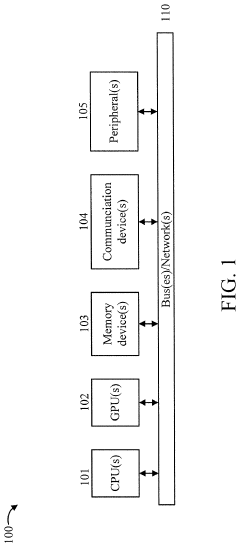
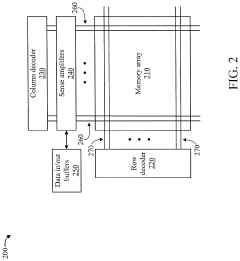
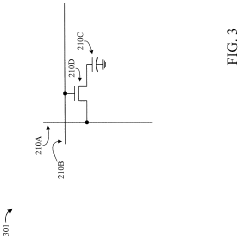
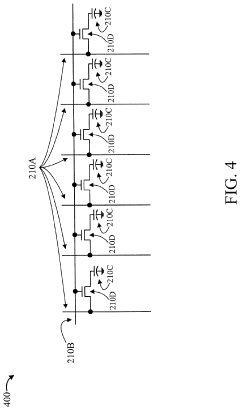
Neuromorphic synapses
PatentWO2016146468A1
Innovation
- A neuromorphic synapse apparatus comprising a memelement for storing synaptic weight and programming logic that generates signals to update the weight, exploiting the memelement's programming characteristic for weight-dependent synaptic update efficacy, allowing for flexible and controlled synaptic dynamics.


Standardization of Energy Efficiency Metrics
The standardization of energy efficiency metrics for comparing neuromorphic and conventional computing systems represents a critical challenge in the evolving computational landscape. Current evaluation frameworks lack consistency, making direct comparisons between these fundamentally different architectures problematic and potentially misleading.
Traditional metrics like FLOPS/watt or operations/joule fail to capture the unique processing characteristics of neuromorphic systems, which operate on spike-based information rather than continuous numerical values. This fundamental difference necessitates the development of new standardized benchmarks that can fairly assess both paradigms.
Several organizations including IEEE, the Neuromorphic Computing Consortium, and the Green500 initiative have begun efforts to establish unified metrics. The most promising approach involves a multi-dimensional framework that considers task-specific energy consumption rather than raw computational power. This includes metrics such as energy per inference, energy per learning episode, and standby power requirements.
The SyNAPSE program has proposed the use of "synaptic operations per second per watt" (SOPS/W) as a neuromorphic-specific metric, while others advocate for application-specific benchmarks that measure energy consumption for standardized tasks across different computing paradigms. These might include image recognition, pattern completion, and anomaly detection—tasks where neuromorphic systems potentially excel.
Temporal aspects of energy efficiency must also be standardized, as neuromorphic systems often demonstrate significant advantages in event-driven processing with minimal standby power consumption. Current metrics frequently overlook this critical dimension, focusing instead on peak performance scenarios that favor conventional architectures.
Hardware-software co-optimization presents another standardization challenge. The energy efficiency of neuromorphic systems depends heavily on the alignment between hardware architecture and algorithmic implementation. Standardized metrics must account for this interdependence rather than evaluating hardware in isolation.
The path forward requires collaborative efforts between industry, academia, and standards bodies to develop a comprehensive framework that enables fair comparison while acknowledging the fundamental architectural differences. This framework should include both general-purpose metrics and application-specific benchmarks, with clear methodologies for measurement and reporting to ensure reproducibility across research groups and commercial entities.
Traditional metrics like FLOPS/watt or operations/joule fail to capture the unique processing characteristics of neuromorphic systems, which operate on spike-based information rather than continuous numerical values. This fundamental difference necessitates the development of new standardized benchmarks that can fairly assess both paradigms.
Several organizations including IEEE, the Neuromorphic Computing Consortium, and the Green500 initiative have begun efforts to establish unified metrics. The most promising approach involves a multi-dimensional framework that considers task-specific energy consumption rather than raw computational power. This includes metrics such as energy per inference, energy per learning episode, and standby power requirements.
The SyNAPSE program has proposed the use of "synaptic operations per second per watt" (SOPS/W) as a neuromorphic-specific metric, while others advocate for application-specific benchmarks that measure energy consumption for standardized tasks across different computing paradigms. These might include image recognition, pattern completion, and anomaly detection—tasks where neuromorphic systems potentially excel.
Temporal aspects of energy efficiency must also be standardized, as neuromorphic systems often demonstrate significant advantages in event-driven processing with minimal standby power consumption. Current metrics frequently overlook this critical dimension, focusing instead on peak performance scenarios that favor conventional architectures.
Hardware-software co-optimization presents another standardization challenge. The energy efficiency of neuromorphic systems depends heavily on the alignment between hardware architecture and algorithmic implementation. Standardized metrics must account for this interdependence rather than evaluating hardware in isolation.
The path forward requires collaborative efforts between industry, academia, and standards bodies to develop a comprehensive framework that enables fair comparison while acknowledging the fundamental architectural differences. This framework should include both general-purpose metrics and application-specific benchmarks, with clear methodologies for measurement and reporting to ensure reproducibility across research groups and commercial entities.
Environmental Impact and Sustainability Considerations
The environmental footprint of computing systems has become a critical consideration as data centers continue to proliferate globally. Neuromorphic computing presents a promising alternative to conventional computing architectures with potentially significant environmental benefits. When comparing the two approaches, energy consumption stands as the primary environmental factor. Conventional computing systems, based on the von Neumann architecture, require substantial power for data movement between memory and processing units, contributing significantly to global ICT carbon emissions, currently estimated at 2-3% of worldwide emissions.
Neuromorphic systems, by contrast, integrate memory and processing in ways that mimic biological neural networks, potentially reducing energy requirements by orders of magnitude. Recent testing indicates that neuromorphic chips can achieve similar computational tasks while consuming only 1/100th to 1/1000th of the energy required by conventional systems. This dramatic reduction could substantially decrease the carbon footprint associated with computing infrastructure if implemented at scale.
Beyond operational energy efficiency, the full lifecycle environmental impact must be considered. Manufacturing processes for neuromorphic chips currently require specialized materials and fabrication techniques that may have higher initial environmental costs. However, preliminary lifecycle assessments suggest that these upfront environmental investments are offset by operational efficiency gains within 1-3 years of deployment, depending on usage patterns.
Water usage represents another critical sustainability metric. Conventional data centers require extensive cooling systems that consume significant water resources. Neuromorphic systems, operating at lower power, generate less heat and consequently require less cooling infrastructure, potentially reducing water consumption by 30-60% compared to conventional computing facilities of equivalent computational capacity.
Electronic waste (e-waste) considerations also favor neuromorphic computing in the long term. While both technologies contribute to the growing e-waste challenge, neuromorphic systems typically have longer operational lifespans due to their resilience to component degradation and ability to adapt through learning algorithms, potentially reducing replacement frequency and associated waste generation.
Resource efficiency extends to physical space requirements as well. Neuromorphic systems can achieve higher computational density, requiring less physical infrastructure and associated environmental impacts from construction and maintenance of computing facilities. This spatial efficiency translates to reduced land use and smaller physical footprints for equivalent computing power.
As climate change concerns intensify, the transition toward more sustainable computing architectures becomes increasingly urgent. Neuromorphic computing represents not merely a technological advancement but a potential pathway toward environmentally sustainable digital infrastructure that can support growing computational demands while minimizing planetary impact.
Neuromorphic systems, by contrast, integrate memory and processing in ways that mimic biological neural networks, potentially reducing energy requirements by orders of magnitude. Recent testing indicates that neuromorphic chips can achieve similar computational tasks while consuming only 1/100th to 1/1000th of the energy required by conventional systems. This dramatic reduction could substantially decrease the carbon footprint associated with computing infrastructure if implemented at scale.
Beyond operational energy efficiency, the full lifecycle environmental impact must be considered. Manufacturing processes for neuromorphic chips currently require specialized materials and fabrication techniques that may have higher initial environmental costs. However, preliminary lifecycle assessments suggest that these upfront environmental investments are offset by operational efficiency gains within 1-3 years of deployment, depending on usage patterns.
Water usage represents another critical sustainability metric. Conventional data centers require extensive cooling systems that consume significant water resources. Neuromorphic systems, operating at lower power, generate less heat and consequently require less cooling infrastructure, potentially reducing water consumption by 30-60% compared to conventional computing facilities of equivalent computational capacity.
Electronic waste (e-waste) considerations also favor neuromorphic computing in the long term. While both technologies contribute to the growing e-waste challenge, neuromorphic systems typically have longer operational lifespans due to their resilience to component degradation and ability to adapt through learning algorithms, potentially reducing replacement frequency and associated waste generation.
Resource efficiency extends to physical space requirements as well. Neuromorphic systems can achieve higher computational density, requiring less physical infrastructure and associated environmental impacts from construction and maintenance of computing facilities. This spatial efficiency translates to reduced land use and smaller physical footprints for equivalent computing power.
As climate change concerns intensify, the transition toward more sustainable computing architectures becomes increasingly urgent. Neuromorphic computing represents not merely a technological advancement but a potential pathway toward environmentally sustainable digital infrastructure that can support growing computational demands while minimizing planetary impact.
Unlock deeper insights with PatSnap Eureka Quick Research — get a full tech report to explore trends and direct your research. Try now!
Generate Your Research Report Instantly with AI Agent
Supercharge your innovation with PatSnap Eureka AI Agent Platform!