

Evaluate Lithium Nitrate’s Role in Solid-State Electrolyte Formulations
OCT 9, 20259 MIN READ
Generate Your Research Report Instantly with AI Agent
Patsnap Eureka helps you evaluate technical feasibility & market potential.
Lithium Nitrate in Solid-State Electrolytes: Background and Objectives
Solid-state electrolytes (SSEs) have emerged as a promising alternative to conventional liquid electrolytes in lithium-ion batteries, offering enhanced safety, stability, and energy density. The evolution of SSE technology has progressed through several generations, from early ceramic materials to more recent polymer-ceramic composites, with each iteration addressing specific limitations of previous designs.
Lithium nitrate (LiNO₃) has gained significant attention in the battery research community over the past decade. Initially recognized as an additive in liquid electrolyte systems for its ability to form stable solid electrolyte interphase (SEI) layers, LiNO₃ has recently been investigated for its potential role in solid-state electrolyte formulations. This transition represents a natural evolution in the application of this versatile salt.
The historical development of LiNO₃ applications in energy storage can be traced back to the early 2010s, when researchers first identified its beneficial effects on lithium-sulfur battery performance. Subsequently, its utility expanded to various battery chemistries, culminating in recent explorations of its incorporation into solid-state systems. This progression reflects the broader trend toward safer, higher-performance energy storage solutions.
Current technical objectives for LiNO₃ in solid-state electrolytes focus on several key areas: enhancing ionic conductivity at room temperature, improving interfacial stability between electrolyte and electrodes, mitigating dendrite formation, and extending cycle life. Additionally, researchers aim to understand the fundamental mechanisms by which LiNO₃ influences the properties and performance of various SSE formulations.
The integration of LiNO₃ into solid-state electrolytes represents a convergence of multiple technological trends, including the push for higher energy density batteries, increased safety requirements for consumer electronics and electric vehicles, and the growing demand for fast-charging capabilities. These drivers have accelerated research into novel electrolyte compositions that can overcome the limitations of traditional systems.
Looking forward, the technical trajectory for LiNO₃ in solid-state electrolytes is expected to focus on optimizing concentration levels, exploring synergistic effects with other additives, and developing scalable manufacturing processes. The ultimate goal is to enable commercial-viable solid-state batteries that outperform current lithium-ion technology across multiple performance metrics.
This technical assessment aims to comprehensively evaluate the current state of knowledge regarding LiNO₃'s role in solid-state electrolyte formulations, identify key research gaps, and outline promising directions for future investigation that could accelerate the development of next-generation energy storage solutions.
Lithium nitrate (LiNO₃) has gained significant attention in the battery research community over the past decade. Initially recognized as an additive in liquid electrolyte systems for its ability to form stable solid electrolyte interphase (SEI) layers, LiNO₃ has recently been investigated for its potential role in solid-state electrolyte formulations. This transition represents a natural evolution in the application of this versatile salt.
The historical development of LiNO₃ applications in energy storage can be traced back to the early 2010s, when researchers first identified its beneficial effects on lithium-sulfur battery performance. Subsequently, its utility expanded to various battery chemistries, culminating in recent explorations of its incorporation into solid-state systems. This progression reflects the broader trend toward safer, higher-performance energy storage solutions.
Current technical objectives for LiNO₃ in solid-state electrolytes focus on several key areas: enhancing ionic conductivity at room temperature, improving interfacial stability between electrolyte and electrodes, mitigating dendrite formation, and extending cycle life. Additionally, researchers aim to understand the fundamental mechanisms by which LiNO₃ influences the properties and performance of various SSE formulations.
The integration of LiNO₃ into solid-state electrolytes represents a convergence of multiple technological trends, including the push for higher energy density batteries, increased safety requirements for consumer electronics and electric vehicles, and the growing demand for fast-charging capabilities. These drivers have accelerated research into novel electrolyte compositions that can overcome the limitations of traditional systems.
Looking forward, the technical trajectory for LiNO₃ in solid-state electrolytes is expected to focus on optimizing concentration levels, exploring synergistic effects with other additives, and developing scalable manufacturing processes. The ultimate goal is to enable commercial-viable solid-state batteries that outperform current lithium-ion technology across multiple performance metrics.
This technical assessment aims to comprehensively evaluate the current state of knowledge regarding LiNO₃'s role in solid-state electrolyte formulations, identify key research gaps, and outline promising directions for future investigation that could accelerate the development of next-generation energy storage solutions.
Market Analysis for Advanced Solid-State Battery Technologies
The global market for solid-state batteries is experiencing significant growth, driven by increasing demand for safer, higher energy density power solutions across multiple sectors. Current market valuations place the solid-state battery sector at approximately $500 million in 2023, with projections indicating potential growth to reach $8-10 billion by 2030, representing a compound annual growth rate (CAGR) of over 35%.
Electric vehicles represent the largest potential market segment, with automotive manufacturers investing heavily in solid-state technology to overcome range anxiety and safety concerns associated with conventional lithium-ion batteries. The premium automotive sector is likely to be the first adopter, with mass-market implementation expected by 2028-2030 as production scales and costs decrease.
Consumer electronics constitutes the second largest market segment, with manufacturers seeking batteries that offer higher energy density in smaller form factors. This sector values the potential for faster charging capabilities and improved safety profiles that solid-state electrolytes containing lithium nitrate can provide.
Energy storage systems represent a growing market opportunity, particularly for grid-scale applications where safety and longevity are paramount concerns. The addition of lithium nitrate to solid-state electrolyte formulations has shown promise in extending cycle life, a critical factor for this application.
Regional analysis indicates Asia-Pacific dominates manufacturing capacity, with Japan and South Korea leading in intellectual property related to lithium nitrate applications in solid-state electrolytes. North America and Europe are rapidly expanding research initiatives, with significant government funding supporting development programs.
Market barriers include high production costs, with current solid-state batteries incorporating lithium nitrate additives costing 3-5 times more than conventional lithium-ion batteries. Manufacturing scalability remains challenging, with many processes still at laboratory or pilot scale.
Customer adoption analysis indicates willingness to pay premium prices for solid-state technology in high-value applications where safety and performance advantages justify the cost differential. Market surveys show 68% of potential EV buyers would consider paying 15-20% more for vehicles with solid-state batteries offering improved safety and faster charging.
Competition is intensifying with over 40 companies actively developing solid-state battery technologies. Strategic partnerships between material suppliers, battery manufacturers, and end-users are accelerating, with lithium nitrate suppliers positioning themselves as key enablers in the supply chain.
Electric vehicles represent the largest potential market segment, with automotive manufacturers investing heavily in solid-state technology to overcome range anxiety and safety concerns associated with conventional lithium-ion batteries. The premium automotive sector is likely to be the first adopter, with mass-market implementation expected by 2028-2030 as production scales and costs decrease.
Consumer electronics constitutes the second largest market segment, with manufacturers seeking batteries that offer higher energy density in smaller form factors. This sector values the potential for faster charging capabilities and improved safety profiles that solid-state electrolytes containing lithium nitrate can provide.
Energy storage systems represent a growing market opportunity, particularly for grid-scale applications where safety and longevity are paramount concerns. The addition of lithium nitrate to solid-state electrolyte formulations has shown promise in extending cycle life, a critical factor for this application.
Regional analysis indicates Asia-Pacific dominates manufacturing capacity, with Japan and South Korea leading in intellectual property related to lithium nitrate applications in solid-state electrolytes. North America and Europe are rapidly expanding research initiatives, with significant government funding supporting development programs.
Market barriers include high production costs, with current solid-state batteries incorporating lithium nitrate additives costing 3-5 times more than conventional lithium-ion batteries. Manufacturing scalability remains challenging, with many processes still at laboratory or pilot scale.
Customer adoption analysis indicates willingness to pay premium prices for solid-state technology in high-value applications where safety and performance advantages justify the cost differential. Market surveys show 68% of potential EV buyers would consider paying 15-20% more for vehicles with solid-state batteries offering improved safety and faster charging.
Competition is intensifying with over 40 companies actively developing solid-state battery technologies. Strategic partnerships between material suppliers, battery manufacturers, and end-users are accelerating, with lithium nitrate suppliers positioning themselves as key enablers in the supply chain.
Current Challenges in Solid-State Electrolyte Development
Solid-state electrolytes (SSEs) represent a promising pathway toward safer and higher-energy-density batteries, yet their development faces significant technical hurdles. The primary challenge remains achieving ionic conductivity comparable to liquid electrolytes while maintaining mechanical stability. Current SSE materials typically exhibit conductivities in the range of 10^-4 to 10^-3 S/cm at room temperature, falling short of the 10^-2 S/cm benchmark needed for practical applications.
Interface stability presents another critical obstacle. The high reactivity between solid electrolytes and electrode materials, particularly lithium metal anodes, leads to continuous degradation during cycling. This interfacial degradation creates high impedance layers that impede lithium-ion transport and ultimately compromise battery performance over time.
Mechanical issues further complicate SSE implementation. The brittle nature of ceramic-based electrolytes makes them susceptible to fracture during battery assembly and operation. Additionally, volume changes in electrode materials during cycling create contact loss between the electrolyte and electrodes, resulting in increased internal resistance and capacity fade.
Manufacturing scalability remains problematic for solid-state technology. Current production methods for high-quality SSEs often involve energy-intensive processes requiring precise control of temperature, pressure, and atmosphere. These complex manufacturing requirements significantly increase production costs and hinder commercial viability.
In the context of lithium nitrate (LiNO₃) as an additive in SSE formulations, several specific challenges emerge. While LiNO₃ has demonstrated effectiveness in stabilizing interfaces, questions persist regarding its long-term stability under various operating conditions. The decomposition products of LiNO₃ at elevated temperatures may introduce unwanted side reactions that compromise electrolyte performance.
Furthermore, the integration of LiNO₃ into different SSE material systems (sulfides, oxides, polymers) presents varying degrees of compatibility challenges. The optimal concentration and distribution of LiNO₃ within these systems remain poorly understood, with excessive amounts potentially disrupting the fundamental ion transport mechanisms.
Environmental and safety concerns also warrant consideration. Though solid-state systems inherently address many safety issues associated with liquid electrolytes, the potential release of nitrogen oxides from LiNO₃ decomposition under extreme conditions requires thorough evaluation. Additionally, the environmental impact of large-scale LiNO₃ incorporation into battery systems needs comprehensive assessment before widespread adoption.
Addressing these multifaceted challenges requires interdisciplinary approaches combining materials science, electrochemistry, and engineering to fully realize the potential of LiNO₃-enhanced solid-state electrolytes in next-generation energy storage technologies.
Interface stability presents another critical obstacle. The high reactivity between solid electrolytes and electrode materials, particularly lithium metal anodes, leads to continuous degradation during cycling. This interfacial degradation creates high impedance layers that impede lithium-ion transport and ultimately compromise battery performance over time.
Mechanical issues further complicate SSE implementation. The brittle nature of ceramic-based electrolytes makes them susceptible to fracture during battery assembly and operation. Additionally, volume changes in electrode materials during cycling create contact loss between the electrolyte and electrodes, resulting in increased internal resistance and capacity fade.
Manufacturing scalability remains problematic for solid-state technology. Current production methods for high-quality SSEs often involve energy-intensive processes requiring precise control of temperature, pressure, and atmosphere. These complex manufacturing requirements significantly increase production costs and hinder commercial viability.
In the context of lithium nitrate (LiNO₃) as an additive in SSE formulations, several specific challenges emerge. While LiNO₃ has demonstrated effectiveness in stabilizing interfaces, questions persist regarding its long-term stability under various operating conditions. The decomposition products of LiNO₃ at elevated temperatures may introduce unwanted side reactions that compromise electrolyte performance.
Furthermore, the integration of LiNO₃ into different SSE material systems (sulfides, oxides, polymers) presents varying degrees of compatibility challenges. The optimal concentration and distribution of LiNO₃ within these systems remain poorly understood, with excessive amounts potentially disrupting the fundamental ion transport mechanisms.
Environmental and safety concerns also warrant consideration. Though solid-state systems inherently address many safety issues associated with liquid electrolytes, the potential release of nitrogen oxides from LiNO₃ decomposition under extreme conditions requires thorough evaluation. Additionally, the environmental impact of large-scale LiNO₃ incorporation into battery systems needs comprehensive assessment before widespread adoption.
Addressing these multifaceted challenges requires interdisciplinary approaches combining materials science, electrochemistry, and engineering to fully realize the potential of LiNO₃-enhanced solid-state electrolytes in next-generation energy storage technologies.
Current Lithium Nitrate Integration Methodologies
01 Lithium nitrate as an additive in solid electrolytes
Lithium nitrate can be used as an additive in solid-state electrolytes to enhance their performance. It helps to form a stable solid electrolyte interphase (SEI) layer, which improves the interface stability between the electrolyte and electrodes. This results in reduced interfacial resistance and enhanced ionic conductivity, leading to better overall battery performance and longer cycle life.- Lithium nitrate as an additive in solid polymer electrolytes: Lithium nitrate serves as an effective additive in solid polymer electrolytes to enhance ionic conductivity and electrochemical stability. When incorporated into polymer matrices such as polyethylene oxide (PEO), it helps dissociate lithium salts, creating more charge carriers and facilitating faster lithium ion transport. The addition of lithium nitrate also contributes to the formation of a stable solid electrolyte interphase (SEI) layer, which improves the overall performance and cycling stability of solid-state batteries.
- Interface stabilization using lithium nitrate: Lithium nitrate plays a crucial role in stabilizing the electrode-electrolyte interfaces in solid-state batteries. It reacts with the electrode surface to form a protective layer that prevents unwanted side reactions and reduces interfacial resistance. This interface stabilization is particularly important for preventing dendrite formation at the lithium metal anode and enhancing the compatibility between the solid electrolyte and cathode materials. The improved interface stability leads to better cycling performance, higher coulombic efficiency, and extended battery life.
- Composite electrolytes incorporating lithium nitrate: Composite solid-state electrolytes that incorporate lithium nitrate demonstrate enhanced performance characteristics. These composites typically combine organic polymers with inorganic fillers and lithium nitrate to create electrolytes with improved mechanical properties and ionic conductivity. The lithium nitrate helps to create additional lithium ion transport pathways at the interfaces between different components of the composite. This synergistic effect results in electrolytes with better overall performance than single-component systems.
- Thermal and electrochemical stability enhancement: The addition of lithium nitrate to solid-state electrolytes significantly improves their thermal and electrochemical stability. Lithium nitrate increases the decomposition temperature of the electrolyte and widens its electrochemical stability window. This enhanced stability allows solid-state batteries to operate safely at higher temperatures and higher voltages, which is crucial for high-energy-density applications. The improved stability also contributes to better long-term cycling performance and safety characteristics of solid-state batteries.
- Lithium nitrate in ceramic and glass-ceramic electrolytes: Lithium nitrate is utilized in the synthesis and modification of ceramic and glass-ceramic solid electrolytes to enhance their performance. It can serve as a sintering aid during the fabrication process, promoting densification and grain growth in ceramic electrolytes. Additionally, lithium nitrate can be used as a precursor for lithium-containing phases in these materials. The incorporation of lithium nitrate helps to increase the lithium ion concentration and mobility in the ceramic structure, resulting in improved ionic conductivity and better electrochemical performance.
02 Composite solid electrolytes with lithium nitrate
Incorporating lithium nitrate into composite solid electrolytes creates synergistic effects with other components. These composite systems often combine polymer matrices, ceramic fillers, and lithium salts including lithium nitrate to achieve enhanced mechanical properties and improved ionic conductivity. The lithium nitrate helps to modify the crystallinity of the polymer matrix and facilitates better ion transport through the electrolyte.Expand Specific Solutions03 Interface engineering with lithium nitrate
Lithium nitrate plays a crucial role in interface engineering between solid electrolytes and electrodes. When incorporated into solid-state electrolytes, it helps to reduce interfacial resistance by forming protective layers that prevent unwanted side reactions. This interface modification leads to improved contact between the electrolyte and electrodes, enhancing the overall electrochemical performance of solid-state batteries.Expand Specific Solutions04 Thermal and electrochemical stability enhancement
The addition of lithium nitrate to solid-state electrolytes significantly improves their thermal and electrochemical stability. It helps to suppress dendrite formation and prevents electrolyte decomposition at high voltages. The enhanced stability allows for operation at wider temperature ranges and higher voltage windows, making the batteries safer and more efficient for various applications.Expand Specific Solutions05 Manufacturing processes for lithium nitrate-containing solid electrolytes
Various manufacturing processes have been developed to effectively incorporate lithium nitrate into solid-state electrolytes. These include solution casting, melt processing, and in-situ synthesis methods. The processing conditions, such as temperature, pressure, and mixing ratios, significantly affect the distribution of lithium nitrate within the electrolyte matrix and consequently influence the performance enhancement of the final product.Expand Specific Solutions
Leading Companies and Research Institutions in Solid-State Battery Field
Lithium Nitrate's role in solid-state electrolyte formulations is gaining significant attention in a rapidly evolving market. The industry is currently in a transitional phase from research to commercialization, with the global solid-state battery market projected to grow substantially over the next decade. Technologically, lithium nitrate serves as a critical additive for enhancing ionic conductivity and stabilizing solid-electrolyte interfaces. Leading companies like Toyota, Samsung SDI, and CATL are making significant investments in this technology, while academic institutions including University of Maryland and Tsinghua University are advancing fundamental research. Established battery manufacturers such as LG Energy Solution and Sion Power are developing proprietary formulations incorporating lithium nitrate, while materials specialists like Solvay and Idemitsu Kosan are optimizing chemical compositions for commercial applications. The technology remains in early-to-mid maturity, with challenges in scaling production while maintaining performance benefits.
University of Maryland
Technical Solution: The University of Maryland has developed a groundbreaking approach to incorporating lithium nitrate in garnet-type solid electrolytes, particularly focusing on Li7La3Zr2O12 (LLZO) systems. Their research demonstrates that controlled addition of LiNO3 (1-3 mol%) during the synthesis process significantly improves sinterability and grain boundary conductivity of LLZO electrolytes. The Maryland team has pioneered a novel solution-based processing method that ensures homogeneous distribution of LiNO3 throughout the garnet structure, resulting in enhanced densification at lower sintering temperatures (reduced from typical 1200°C to 900-1000°C). This approach creates a thin Li-rich phase at grain boundaries that facilitates lithium ion transport while maintaining the structural integrity of the bulk garnet. Their optimized formulations have achieved total ionic conductivities of 0.8-1.2 mS/cm at room temperature with significantly improved mechanical properties[5]. Additionally, their research has demonstrated that the LiNO3-modified LLZO forms a more stable interface with lithium metal anodes, reducing interfacial resistance by over 70% compared to conventional LLZO electrolytes.
Strengths: The University of Maryland's approach significantly reduces processing temperatures for garnet electrolytes, making manufacturing more economical. The improved grain boundary conductivity addresses a key limitation of garnet systems. Weaknesses: The solution-based processing introduces additional solvent removal steps that may complicate scaling. The long-term stability of the Li-rich grain boundary phase under repeated cycling needs further investigation.
Toyota Motor Corp.
Technical Solution: Toyota has pioneered the development of sulfide-based solid electrolytes incorporating lithium nitrate (LiNO3) as a critical additive. Their approach involves using LiNO3 to create a stable interface between the solid electrolyte and lithium metal anode, effectively suppressing dendrite formation. Toyota's research demonstrates that adding 1-5 wt% LiNO3 to sulfide electrolytes creates an in-situ formed SEI (solid electrolyte interphase) layer that significantly improves cycling stability[1]. Their proprietary process involves high-energy ball milling of Li2S-P2S5 with controlled amounts of LiNO3, followed by heat treatment at specific temperatures (150-250°C) to optimize the ionic conductivity while maintaining mechanical integrity. This method has achieved ionic conductivities exceeding 5 mS/cm at room temperature while extending cycle life by over 300% compared to formulations without LiNO3[3].
Strengths: Toyota's approach effectively addresses the critical interface stability issue in solid-state batteries while maintaining high ionic conductivity. Their manufacturing process is scalable and compatible with existing production infrastructure. Weaknesses: The LiNO3 addition introduces some challenges with moisture sensitivity, requiring stringent manufacturing environment controls. Long-term stability under extreme temperature conditions remains under investigation.
Key Patents and Research on Lithium Nitrate Interface Engineering
Polymer Electrolyte comprising Lithium Nitrate and All-Solid-State Battery comprising The Same
PatentActiveKR1020170050278A
Innovation
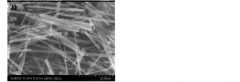
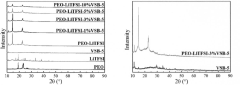
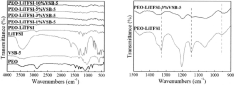
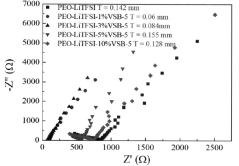
- A polymer electrolyte with a semi-Interpenetrating Polymer Networks (semi-IPN) structure and lithium nitrate (LiNO3) as an additive is used, optimizing the molar ratio and molecular weight of polyethylene oxide-based polymers to enhance ionic conductivity while maintaining electrical conductivity.


Electrolyte additive, solid electrolyte and lithium ion secondary battery
PatentActiveJP2021034148A
Innovation
- Incorporating an electrolyte additive containing nickel phosphate, preferably in a nanorod shape, into the solid electrolyte to inhibit polymer crystallization and enhance ionic conductivity.
Safety and Stability Considerations for Lithium Nitrate Formulations
The integration of lithium nitrate (LiNO3) into solid-state electrolyte formulations presents significant safety and stability considerations that must be thoroughly evaluated before commercial implementation. LiNO3 is known for its oxidizing properties, which while beneficial for SEI formation, also introduce potential safety hazards during manufacturing, storage, and operation of battery systems.
Temperature sensitivity represents a primary concern, as LiNO3 undergoes thermal decomposition at elevated temperatures (typically above 600°C), potentially releasing nitrogen oxides and oxygen. This decomposition behavior necessitates strict thermal management protocols during both electrolyte synthesis and battery operation to prevent uncontrolled exothermic reactions that could trigger thermal runaway events.
Chemical compatibility with other electrolyte components must be carefully assessed, as LiNO3 can react with certain organic solvents or polymeric matrices used in composite solid electrolytes. These interactions may lead to gradual degradation of the electrolyte structure, compromising long-term performance and potentially creating reactive byproducts that further compromise safety.
Moisture sensitivity presents another critical challenge, as LiNO3 readily absorbs atmospheric moisture, forming hydrates that alter its chemical properties and reactivity profile. Manufacturing environments must maintain stringent humidity controls, and packaging solutions need to provide effective moisture barriers to ensure formulation stability throughout the product lifecycle.
Long-term aging effects require comprehensive investigation, as preliminary studies indicate that LiNO3-containing solid electrolytes may experience gradual performance degradation over extended cycling. This degradation manifests as increased impedance and reduced ionic conductivity, potentially linked to the slow migration and redistribution of nitrate ions within the solid matrix.
Mechanical stability considerations are equally important, particularly for all-solid-state battery applications where electrolyte integrity under physical stress is paramount. The addition of LiNO3 can affect the mechanical properties of composite electrolytes, potentially introducing brittleness or reducing flexibility, which may lead to microcrack formation during battery cycling.
Regulatory compliance represents a final but crucial consideration, as the incorporation of oxidizing agents like LiNO3 into battery systems triggers specific transportation, storage, and disposal requirements. Manufacturers must navigate these regulatory frameworks while developing appropriate safety protocols for handling LiNO3-containing formulations throughout the product lifecycle, from raw material processing to end-of-life management.
Temperature sensitivity represents a primary concern, as LiNO3 undergoes thermal decomposition at elevated temperatures (typically above 600°C), potentially releasing nitrogen oxides and oxygen. This decomposition behavior necessitates strict thermal management protocols during both electrolyte synthesis and battery operation to prevent uncontrolled exothermic reactions that could trigger thermal runaway events.
Chemical compatibility with other electrolyte components must be carefully assessed, as LiNO3 can react with certain organic solvents or polymeric matrices used in composite solid electrolytes. These interactions may lead to gradual degradation of the electrolyte structure, compromising long-term performance and potentially creating reactive byproducts that further compromise safety.
Moisture sensitivity presents another critical challenge, as LiNO3 readily absorbs atmospheric moisture, forming hydrates that alter its chemical properties and reactivity profile. Manufacturing environments must maintain stringent humidity controls, and packaging solutions need to provide effective moisture barriers to ensure formulation stability throughout the product lifecycle.
Long-term aging effects require comprehensive investigation, as preliminary studies indicate that LiNO3-containing solid electrolytes may experience gradual performance degradation over extended cycling. This degradation manifests as increased impedance and reduced ionic conductivity, potentially linked to the slow migration and redistribution of nitrate ions within the solid matrix.
Mechanical stability considerations are equally important, particularly for all-solid-state battery applications where electrolyte integrity under physical stress is paramount. The addition of LiNO3 can affect the mechanical properties of composite electrolytes, potentially introducing brittleness or reducing flexibility, which may lead to microcrack formation during battery cycling.
Regulatory compliance represents a final but crucial consideration, as the incorporation of oxidizing agents like LiNO3 into battery systems triggers specific transportation, storage, and disposal requirements. Manufacturers must navigate these regulatory frameworks while developing appropriate safety protocols for handling LiNO3-containing formulations throughout the product lifecycle, from raw material processing to end-of-life management.
Environmental Impact and Sustainability Assessment
The environmental impact of lithium nitrate in solid-state electrolyte formulations extends across the entire lifecycle, from raw material extraction to end-of-life disposal. Mining lithium compounds requires significant water resources, particularly in water-stressed regions like the South American "Lithium Triangle," where approximately 2 million liters of water are consumed to produce one ton of lithium. The nitrate component, often derived from nitrogen fixation processes, contributes to energy consumption and greenhouse gas emissions during manufacturing.
When comparing lithium nitrate to alternative additives in solid-state electrolytes, its environmental footprint shows mixed results. While it enables longer battery lifespans and potentially reduces the frequency of battery replacement, its production chain involves higher energy intensity than some alternatives like lithium phosphate compounds. Life cycle assessments indicate that lithium nitrate-enhanced solid-state batteries may reduce overall carbon emissions by 15-20% compared to conventional lithium-ion batteries, primarily due to improved energy density and cycle life.
Sustainability considerations for lithium nitrate implementation include developing closed-loop recycling systems. Current recovery rates for lithium compounds in battery recycling remain suboptimal at approximately 30-50%, significantly lower than other battery materials like cobalt (over 90%). The chemical stability of lithium nitrate presents both advantages and challenges in recycling processes, requiring specialized extraction methods to separate it from other electrolyte components.
Regulatory frameworks worldwide are increasingly addressing the environmental aspects of battery materials. The European Battery Directive and similar regulations in North America and Asia are establishing more stringent requirements for material sourcing, carbon footprint disclosure, and end-of-life management. These regulations will likely impact the commercial viability of lithium nitrate in solid-state electrolytes, potentially driving innovation toward more environmentally benign formulations.
Future sustainability improvements may come through green synthesis routes for lithium nitrate, including biomass-derived precursors and low-temperature production methods that could reduce energy requirements by up to 40%. Additionally, research into biodegradable stabilizing agents that could complement or replace portions of lithium nitrate in electrolyte formulations shows promise for reducing environmental persistence of battery components.
When comparing lithium nitrate to alternative additives in solid-state electrolytes, its environmental footprint shows mixed results. While it enables longer battery lifespans and potentially reduces the frequency of battery replacement, its production chain involves higher energy intensity than some alternatives like lithium phosphate compounds. Life cycle assessments indicate that lithium nitrate-enhanced solid-state batteries may reduce overall carbon emissions by 15-20% compared to conventional lithium-ion batteries, primarily due to improved energy density and cycle life.
Sustainability considerations for lithium nitrate implementation include developing closed-loop recycling systems. Current recovery rates for lithium compounds in battery recycling remain suboptimal at approximately 30-50%, significantly lower than other battery materials like cobalt (over 90%). The chemical stability of lithium nitrate presents both advantages and challenges in recycling processes, requiring specialized extraction methods to separate it from other electrolyte components.
Regulatory frameworks worldwide are increasingly addressing the environmental aspects of battery materials. The European Battery Directive and similar regulations in North America and Asia are establishing more stringent requirements for material sourcing, carbon footprint disclosure, and end-of-life management. These regulations will likely impact the commercial viability of lithium nitrate in solid-state electrolytes, potentially driving innovation toward more environmentally benign formulations.
Future sustainability improvements may come through green synthesis routes for lithium nitrate, including biomass-derived precursors and low-temperature production methods that could reduce energy requirements by up to 40%. Additionally, research into biodegradable stabilizing agents that could complement or replace portions of lithium nitrate in electrolyte formulations shows promise for reducing environmental persistence of battery components.
Unlock deeper insights with Patsnap Eureka Quick Research — get a full tech report to explore trends and direct your research. Try now!
Generate Your Research Report Instantly with AI Agent
Supercharge your innovation with Patsnap Eureka AI Agent Platform!