Examining regulatory context for solid-state sodium battery growth
OCT 27, 202510 MIN READ
Generate Your Research Report Instantly with AI Agent
PatSnap Eureka helps you evaluate technical feasibility & market potential.
Solid-State Sodium Battery Development Background and Objectives
Solid-state sodium batteries represent a significant evolution in energy storage technology, emerging as a promising alternative to conventional lithium-ion batteries. The development of these batteries traces back to the early 2000s, when researchers began exploring sodium as a more abundant and cost-effective alternative to lithium. This technological trajectory gained momentum around 2010, as concerns about lithium supply constraints and geopolitical dependencies intensified within the global energy storage landscape.
The fundamental appeal of solid-state sodium batteries lies in their utilization of sodium, the sixth most abundant element on Earth, compared to lithium which faces potential supply limitations. This abundance translates to significant cost advantages, with sodium resources being approximately 1000 times more plentiful than lithium and distributed more evenly across global regions, potentially democratizing battery production capabilities.
Technical evolution in this field has focused on addressing key challenges, particularly the development of suitable solid electrolytes that can facilitate efficient sodium ion transport while maintaining structural integrity. Early research concentrated on ceramic and polymer-based electrolytes, with recent breakthroughs in composite materials showing promising performance metrics. The transition from liquid to solid electrolytes represents a critical advancement, offering enhanced safety profiles by eliminating flammable components.
The regulatory landscape surrounding solid-state sodium batteries is currently in a formative stage, with frameworks evolving to accommodate this emerging technology. Various jurisdictions are developing standards for safety testing, performance evaluation, and end-of-life management. These regulatory considerations are crucial for market acceptance and commercial viability, particularly in applications where safety is paramount.
The primary technical objectives driving solid-state sodium battery development include achieving energy densities comparable to lithium-ion counterparts (targeting >300 Wh/kg), extending cycle life to >1000 cycles, improving rate capability for faster charging, and ensuring operational stability across wider temperature ranges. Additionally, researchers aim to develop manufacturing processes compatible with existing production infrastructure to facilitate market adoption.
Environmental sustainability represents another critical objective, with solid-state sodium batteries potentially offering reduced environmental impact compared to conventional technologies. The abundance of sodium resources minimizes extraction-related environmental damage, while the solid-state architecture eliminates toxic liquid electrolytes, contributing to safer disposal and recycling processes.
As regulatory frameworks continue to evolve, they will significantly influence the commercialization timeline and application scope of solid-state sodium batteries. Understanding these regulatory dynamics is essential for strategic technology development and market positioning in this rapidly advancing field.
The fundamental appeal of solid-state sodium batteries lies in their utilization of sodium, the sixth most abundant element on Earth, compared to lithium which faces potential supply limitations. This abundance translates to significant cost advantages, with sodium resources being approximately 1000 times more plentiful than lithium and distributed more evenly across global regions, potentially democratizing battery production capabilities.
Technical evolution in this field has focused on addressing key challenges, particularly the development of suitable solid electrolytes that can facilitate efficient sodium ion transport while maintaining structural integrity. Early research concentrated on ceramic and polymer-based electrolytes, with recent breakthroughs in composite materials showing promising performance metrics. The transition from liquid to solid electrolytes represents a critical advancement, offering enhanced safety profiles by eliminating flammable components.
The regulatory landscape surrounding solid-state sodium batteries is currently in a formative stage, with frameworks evolving to accommodate this emerging technology. Various jurisdictions are developing standards for safety testing, performance evaluation, and end-of-life management. These regulatory considerations are crucial for market acceptance and commercial viability, particularly in applications where safety is paramount.
The primary technical objectives driving solid-state sodium battery development include achieving energy densities comparable to lithium-ion counterparts (targeting >300 Wh/kg), extending cycle life to >1000 cycles, improving rate capability for faster charging, and ensuring operational stability across wider temperature ranges. Additionally, researchers aim to develop manufacturing processes compatible with existing production infrastructure to facilitate market adoption.
Environmental sustainability represents another critical objective, with solid-state sodium batteries potentially offering reduced environmental impact compared to conventional technologies. The abundance of sodium resources minimizes extraction-related environmental damage, while the solid-state architecture eliminates toxic liquid electrolytes, contributing to safer disposal and recycling processes.
As regulatory frameworks continue to evolve, they will significantly influence the commercialization timeline and application scope of solid-state sodium batteries. Understanding these regulatory dynamics is essential for strategic technology development and market positioning in this rapidly advancing field.
Market Demand Analysis for Solid-State Sodium Batteries
The global market for solid-state sodium batteries is experiencing significant growth driven by increasing demand for sustainable energy storage solutions. As concerns about lithium resource scarcity intensify, sodium-based alternatives have gained substantial attention from both industry stakeholders and end-users. Market research indicates that the electric vehicle sector represents the largest potential market for solid-state sodium batteries, with projections suggesting this segment could account for over 30% of the total addressable market by 2030.
Energy storage systems for grid applications constitute another rapidly expanding market segment. Utility companies worldwide are investing in large-scale storage solutions to balance renewable energy integration and enhance grid stability. The solid-state sodium battery market in this sector is expected to grow at a compound annual rate exceeding 25% through 2028, primarily due to sodium's abundance and cost advantages over lithium-based alternatives.
Consumer electronics manufacturers are also showing increased interest in solid-state sodium battery technology. The demand for longer-lasting, safer batteries in portable devices represents a significant market opportunity, particularly as consumers become more environmentally conscious and regulatory pressures for sustainable products intensify.
Regional market analysis reveals varying adoption rates and regulatory environments. Asia-Pacific currently leads in manufacturing capacity development, with China, Japan, and South Korea making substantial investments in sodium battery technology. European markets show strong demand signals driven by stringent environmental regulations and ambitious decarbonization targets, creating favorable conditions for sodium battery adoption.
Market barriers include competition from established lithium-ion technologies and emerging alternatives such as lithium-sulfur and zinc-air batteries. However, the unique value proposition of solid-state sodium batteries—combining safety, sustainability, and potential cost advantages—positions them favorably in specific application segments.
Consumer and industrial surveys indicate growing awareness of battery sustainability issues, with 68% of industrial purchasers expressing willingness to adopt sodium-based technologies if performance metrics approach those of lithium-ion counterparts. This sentiment is particularly strong in regions with established recycling infrastructure and circular economy initiatives.
Market forecasts suggest the global solid-state sodium battery market could reach significant scale by 2035, with the most optimistic projections indicating potential displacement of up to 15% of the current lithium-ion market in specific applications where energy density requirements are less stringent than power delivery and cycle life characteristics.
Energy storage systems for grid applications constitute another rapidly expanding market segment. Utility companies worldwide are investing in large-scale storage solutions to balance renewable energy integration and enhance grid stability. The solid-state sodium battery market in this sector is expected to grow at a compound annual rate exceeding 25% through 2028, primarily due to sodium's abundance and cost advantages over lithium-based alternatives.
Consumer electronics manufacturers are also showing increased interest in solid-state sodium battery technology. The demand for longer-lasting, safer batteries in portable devices represents a significant market opportunity, particularly as consumers become more environmentally conscious and regulatory pressures for sustainable products intensify.
Regional market analysis reveals varying adoption rates and regulatory environments. Asia-Pacific currently leads in manufacturing capacity development, with China, Japan, and South Korea making substantial investments in sodium battery technology. European markets show strong demand signals driven by stringent environmental regulations and ambitious decarbonization targets, creating favorable conditions for sodium battery adoption.
Market barriers include competition from established lithium-ion technologies and emerging alternatives such as lithium-sulfur and zinc-air batteries. However, the unique value proposition of solid-state sodium batteries—combining safety, sustainability, and potential cost advantages—positions them favorably in specific application segments.
Consumer and industrial surveys indicate growing awareness of battery sustainability issues, with 68% of industrial purchasers expressing willingness to adopt sodium-based technologies if performance metrics approach those of lithium-ion counterparts. This sentiment is particularly strong in regions with established recycling infrastructure and circular economy initiatives.
Market forecasts suggest the global solid-state sodium battery market could reach significant scale by 2035, with the most optimistic projections indicating potential displacement of up to 15% of the current lithium-ion market in specific applications where energy density requirements are less stringent than power delivery and cycle life characteristics.
Technical Status and Challenges in Solid-State Sodium Battery Development
Solid-state sodium batteries represent a promising alternative to conventional lithium-ion batteries, offering potential advantages in cost, safety, and sustainability. Currently, the global development of this technology is progressing rapidly but faces significant technical challenges that must be addressed before widespread commercialization becomes viable.
The current technical landscape reveals that solid-state sodium batteries are still predominantly in the research and development phase, with limited commercial deployment. Research institutions and companies across North America, Europe, and Asia are actively pursuing advancements, with particularly strong initiatives emerging from China, Japan, and South Korea where government support for next-generation battery technologies is substantial.
A primary technical challenge lies in the development of suitable solid electrolytes that can facilitate efficient sodium ion transport while maintaining mechanical stability. Current solid electrolytes for sodium batteries typically demonstrate ionic conductivities in the range of 10^-4 to 10^-3 S/cm at room temperature, which remains lower than the performance required for many practical applications. The interfacial resistance between the electrolyte and electrodes presents another significant hurdle, often leading to capacity degradation during cycling.
Material compatibility issues further complicate development efforts. The chemical reactivity between sodium metal anodes and most solid electrolytes creates unstable interfaces that compromise long-term performance. Additionally, volume changes during charge-discharge cycles can cause mechanical stress and eventual failure of the solid-state structure, particularly at the electrode-electrolyte interfaces.
Manufacturing scalability represents another substantial challenge. Current laboratory-scale production methods for solid-state sodium batteries are difficult to translate to mass production environments. Techniques for creating thin, uniform solid electrolyte layers without defects or impurities remain underdeveloped, and the equipment necessary for large-scale manufacturing requires significant investment and innovation.
From a regulatory perspective, the development of solid-state sodium batteries faces varying frameworks across different regions. While safety advantages over liquid electrolyte systems may streamline some approval processes, the novelty of these technologies means that regulatory bodies are still establishing appropriate testing and certification protocols. This regulatory uncertainty can impede investment and commercialization timelines.
Energy density limitations also persist as a technical barrier. Current prototypes of solid-state sodium batteries typically achieve energy densities of 100-150 Wh/kg, which falls short of commercial lithium-ion batteries (200-300 Wh/kg). Improving this metric while maintaining the other advantages of sodium-based systems remains a critical research focus.
Despite these challenges, recent breakthroughs in materials science and engineering approaches suggest pathways toward overcoming these obstacles, particularly in developing novel composite electrolytes and interface engineering strategies that could significantly enhance performance metrics and manufacturing feasibility.
The current technical landscape reveals that solid-state sodium batteries are still predominantly in the research and development phase, with limited commercial deployment. Research institutions and companies across North America, Europe, and Asia are actively pursuing advancements, with particularly strong initiatives emerging from China, Japan, and South Korea where government support for next-generation battery technologies is substantial.
A primary technical challenge lies in the development of suitable solid electrolytes that can facilitate efficient sodium ion transport while maintaining mechanical stability. Current solid electrolytes for sodium batteries typically demonstrate ionic conductivities in the range of 10^-4 to 10^-3 S/cm at room temperature, which remains lower than the performance required for many practical applications. The interfacial resistance between the electrolyte and electrodes presents another significant hurdle, often leading to capacity degradation during cycling.
Material compatibility issues further complicate development efforts. The chemical reactivity between sodium metal anodes and most solid electrolytes creates unstable interfaces that compromise long-term performance. Additionally, volume changes during charge-discharge cycles can cause mechanical stress and eventual failure of the solid-state structure, particularly at the electrode-electrolyte interfaces.
Manufacturing scalability represents another substantial challenge. Current laboratory-scale production methods for solid-state sodium batteries are difficult to translate to mass production environments. Techniques for creating thin, uniform solid electrolyte layers without defects or impurities remain underdeveloped, and the equipment necessary for large-scale manufacturing requires significant investment and innovation.
From a regulatory perspective, the development of solid-state sodium batteries faces varying frameworks across different regions. While safety advantages over liquid electrolyte systems may streamline some approval processes, the novelty of these technologies means that regulatory bodies are still establishing appropriate testing and certification protocols. This regulatory uncertainty can impede investment and commercialization timelines.
Energy density limitations also persist as a technical barrier. Current prototypes of solid-state sodium batteries typically achieve energy densities of 100-150 Wh/kg, which falls short of commercial lithium-ion batteries (200-300 Wh/kg). Improving this metric while maintaining the other advantages of sodium-based systems remains a critical research focus.
Despite these challenges, recent breakthroughs in materials science and engineering approaches suggest pathways toward overcoming these obstacles, particularly in developing novel composite electrolytes and interface engineering strategies that could significantly enhance performance metrics and manufacturing feasibility.
Current Technical Solutions for Solid-State Sodium Batteries
01 Safety regulations for solid-state sodium batteries
Solid-state sodium batteries are subject to specific safety regulations due to their unique properties and potential hazards. These regulations address thermal stability, fire safety, and prevention of sodium reactions with moisture. Manufacturers must comply with international standards for battery safety testing, transportation, and disposal. The regulatory framework includes requirements for protective circuitry to prevent overcharging and thermal runaway events.- Safety regulations for solid-state sodium batteries: Solid-state sodium batteries are subject to specific safety regulations due to their unique properties and potential hazards. These regulations address thermal stability, fire safety, and prevention of sodium reactions with moisture. Manufacturers must comply with these safety standards during production, transportation, and disposal of these batteries to ensure consumer protection and environmental safety.
- Environmental compliance requirements: Regulatory frameworks for solid-state sodium batteries include environmental compliance requirements focusing on sustainable production methods, recyclability, and proper disposal procedures. These regulations aim to minimize environmental impact throughout the battery lifecycle, including restrictions on hazardous materials and mandates for recycling programs. Manufacturers must demonstrate adherence to these environmental standards to obtain market approval.
- Certification and testing standards: Solid-state sodium batteries must undergo rigorous certification and testing procedures before market approval. These standards evaluate performance metrics, safety parameters, and longevity under various conditions. Testing protocols include cycle life assessment, temperature tolerance, and structural integrity evaluations. Certification bodies require comprehensive documentation of test results and compliance with international standards to ensure battery reliability and safety.
- Import/export regulations and trade compliance: International trade of solid-state sodium batteries is governed by specific import/export regulations that vary by region. These regulations address customs classifications, tariff considerations, and transportation requirements. Manufacturers and distributors must navigate complex trade compliance frameworks, including restrictions on technology transfer and strategic materials. Documentation requirements include safety data sheets, origin certificates, and technical specifications to facilitate cross-border movement.
- Intellectual property protection and standardization: The regulatory landscape for solid-state sodium batteries includes intellectual property considerations and standardization efforts. Patent protection strategies are crucial for manufacturers developing proprietary technologies in this emerging field. Meanwhile, industry standardization initiatives aim to establish common technical specifications, terminology, and testing methodologies. These standards facilitate market development while ensuring interoperability and consistent quality across different manufacturers.
02 Environmental compliance and sustainability requirements
Regulatory frameworks for solid-state sodium batteries include environmental compliance measures addressing the full lifecycle of these energy storage systems. These regulations focus on sustainable sourcing of raw materials, manufacturing processes with reduced environmental impact, and end-of-life management including recycling requirements. Manufacturers must adhere to restrictions on hazardous substances and demonstrate compliance with circular economy principles to reduce waste and resource consumption.Expand Specific Solutions03 Performance standards and certification processes
Solid-state sodium batteries must meet specific performance standards established by regulatory bodies to ensure reliability and safety. These standards include requirements for energy density, cycle life, charge/discharge rates, and temperature tolerance. Certification processes involve rigorous testing protocols to verify compliance with these standards before market approval. Third-party certification bodies evaluate battery performance under various operating conditions to ensure they meet the minimum requirements for commercial applications.Expand Specific Solutions04 Transportation and storage regulations
Specific regulations govern the transportation and storage of solid-state sodium batteries to ensure safety during handling and shipping. These include classification requirements under dangerous goods regulations, packaging specifications, labeling requirements, and quantity limitations. Storage regulations address facility requirements, temperature control, segregation from incompatible materials, and emergency response procedures. Compliance with these regulations is mandatory for international and domestic shipment of sodium battery technologies.Expand Specific Solutions05 Market access and standardization requirements
Regulatory frameworks establish market access requirements for solid-state sodium batteries, including mandatory standards harmonization across different regions. These requirements include electromagnetic compatibility testing, electrical safety certification, and compliance with region-specific energy storage regulations. Manufacturers must navigate varying regulatory landscapes across global markets, with some regions requiring additional testing or documentation. Standardization efforts aim to create unified technical specifications to facilitate international trade and technology adoption.Expand Specific Solutions
Key Industry Players in Solid-State Sodium Battery Market
The regulatory landscape for solid-state sodium battery development is evolving within a competitive market characterized by early-stage commercialization efforts. While the technology promises cost advantages and improved safety over lithium-ion batteries, regulatory frameworks remain under development globally. Major automotive players including Toyota, GM, Honda, Hyundai, and Stellantis are investing significantly, positioning themselves for future deployment. Technology companies like Samsung Electronics and CATL are advancing research capabilities, while specialized firms such as Blue Current, Enevate, and Factorial focus on breakthrough innovations. Academic institutions including Beijing Institute of Technology and Shanghai Institute of Ceramics collaborate with industry to address technical challenges. The market anticipates substantial growth as regulations mature, with companies navigating safety standards, transportation requirements, and end-of-life disposal regulations that will shape competitive advantage.
Toyota Motor Corp.
Technical Solution: Toyota has developed a comprehensive regulatory compliance strategy for solid-state sodium battery technology, focusing on safety standards and environmental regulations. Their approach includes working closely with regulatory bodies across multiple markets to establish appropriate safety protocols for sodium-based solid electrolytes. Toyota has invested significantly in developing sodium battery technologies that meet or exceed existing lithium-ion battery regulations while advocating for sodium-specific standards. The company has established partnerships with government agencies in Japan, the US, and Europe to create regulatory frameworks that address the unique characteristics of solid-state sodium batteries, particularly regarding thermal stability and fire safety requirements[1]. Toyota's regulatory strategy also emphasizes end-of-life considerations, developing recycling protocols that comply with circular economy regulations while highlighting sodium's greater abundance and lower environmental impact compared to lithium[3].
Strengths: Strong relationships with regulatory bodies across global markets; extensive experience navigating complex automotive safety regulations; ability to influence standards development. Weaknesses: Regulatory frameworks specifically for sodium batteries remain underdeveloped in many markets; compliance costs may impact commercialization timeline and initial pricing.
Contemporary Amperex Technology Co., Ltd.
Technical Solution: CATL has developed a comprehensive regulatory navigation strategy for solid-state sodium battery commercialization, focusing particularly on China's evolving regulatory landscape while preparing for global market entry. The company has established a specialized regulatory compliance team dedicated to sodium battery technologies that works closely with Chinese authorities to shape appropriate safety standards and certification requirements. CATL's approach includes developing testing protocols specifically designed for sodium-based systems that address their unique characteristics while demonstrating compliance with existing battery safety frameworks. The company has implemented a staged regulatory approval process that begins with domestic Chinese certification followed by targeted international markets with favorable regulatory environments for new battery technologies. CATL actively participates in China's national standardization committees for energy storage technologies, helping to develop technical standards that accommodate sodium battery chemistry's distinct properties[1]. Their strategy also includes comprehensive environmental compliance planning, addressing the full lifecycle regulatory requirements from raw material sourcing through manufacturing and end-of-life recycling[3].
Strengths: Strong position to influence Chinese regulatory standards; extensive experience navigating China's battery certification processes; established relationships with regulatory authorities. Weaknesses: International regulatory strategy less developed than domestic approach; varying global standards may require market-specific compliance modifications.
Core Patents and Technical Literature Analysis
Anode-free sodium all-solid-state battery
PatentWO2025085362A1
Innovation
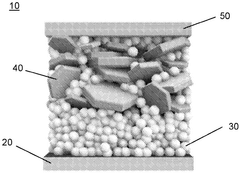
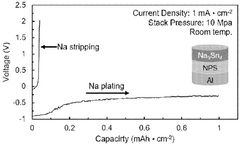
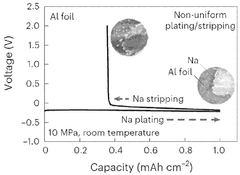
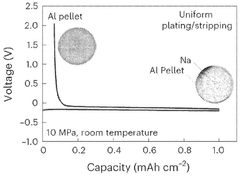
- The development of an anode-free sodium solid-state battery cell using a solid electrolyte separator made from sodium borohydride particles and a current collector formed from compressed metal particles, such as aluminum, to facilitate direct sodium deposition and improve solid-solid contact.
Solid-state sodium silicate battery (SSSB) employing sodium and calcium rich electrolyte enriched with sodium
PatentWO2023242870A1
Innovation
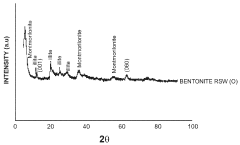
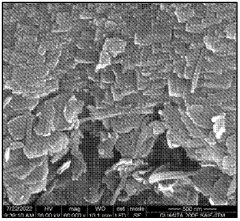
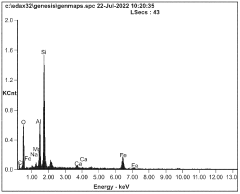
- A solid-state sodium silicate battery (SSSB) is developed, utilizing a sodium and calcium-rich electrolyte enriched with sodium, where the cathode is made of sodium silicate and the anode of carbon black, with a separator membrane coated with a naturally sodium and calcium-rich material further enriched with sodium, acting as a solid-state electrolyte.
Regulatory Framework and Compliance Requirements
The regulatory landscape for solid-state sodium batteries represents a complex matrix of standards, certifications, and legal requirements that vary significantly across global markets. Current regulations primarily evolved from lithium-ion battery frameworks, creating potential misalignment with sodium battery technology's unique characteristics. This regulatory gap presents both challenges and opportunities for industry stakeholders seeking market entry.
Safety certification standards constitute the primary regulatory hurdle for solid-state sodium batteries. Key international standards include IEC 62660 for performance and safety testing, UN 38.3 for transport safety, and UL 1642 for cell-level safety requirements. However, these standards were developed primarily for lithium-based chemistries, necessitating adaptation or new development for sodium-based technologies. Regulatory bodies including the International Electrotechnical Commission (IEC) and Underwriters Laboratories (UL) have initiated working groups to address these gaps.
Transportation regulations present another critical compliance area. The International Air Transport Association (IATA) and International Maritime Organization (IMO) currently classify sodium batteries under similar dangerous goods categories as lithium batteries, though their different chemical properties may warrant distinct handling protocols. Several jurisdictions are reviewing these classifications as sodium technology advances toward commercialization.
Environmental compliance requirements vary substantially by region. The European Union's Battery Directive and upcoming Battery Regulation establish stringent sustainability metrics, including carbon footprint declarations, recycled content requirements, and extended producer responsibility. These regulations generally favor sodium technology due to its reduced environmental impact and absence of critical raw materials compared to lithium-ion alternatives.
Market access regulations differ across key regions. China's battery certification system under GB/T standards requires specific testing protocols, while North American markets follow UL and CSA standards. Japan implements its own JIS certification requirements. This regulatory fragmentation increases compliance costs and market entry barriers, particularly for startups and smaller manufacturers without established regulatory expertise.
Intellectual property considerations intersect with regulatory compliance, as certain safety mechanisms and manufacturing processes for solid-state sodium batteries may be patent-protected. Companies must navigate both technical compliance requirements and IP landscapes simultaneously to avoid infringement while meeting regulatory standards.
Forward-looking regulatory developments indicate a trend toward technology-neutral frameworks that focus on performance and safety outcomes rather than specific chemistries. This shift would benefit sodium battery technologies by removing implicit biases toward established lithium-ion standards, potentially accelerating market adoption and technological innovation.
Safety certification standards constitute the primary regulatory hurdle for solid-state sodium batteries. Key international standards include IEC 62660 for performance and safety testing, UN 38.3 for transport safety, and UL 1642 for cell-level safety requirements. However, these standards were developed primarily for lithium-based chemistries, necessitating adaptation or new development for sodium-based technologies. Regulatory bodies including the International Electrotechnical Commission (IEC) and Underwriters Laboratories (UL) have initiated working groups to address these gaps.
Transportation regulations present another critical compliance area. The International Air Transport Association (IATA) and International Maritime Organization (IMO) currently classify sodium batteries under similar dangerous goods categories as lithium batteries, though their different chemical properties may warrant distinct handling protocols. Several jurisdictions are reviewing these classifications as sodium technology advances toward commercialization.
Environmental compliance requirements vary substantially by region. The European Union's Battery Directive and upcoming Battery Regulation establish stringent sustainability metrics, including carbon footprint declarations, recycled content requirements, and extended producer responsibility. These regulations generally favor sodium technology due to its reduced environmental impact and absence of critical raw materials compared to lithium-ion alternatives.
Market access regulations differ across key regions. China's battery certification system under GB/T standards requires specific testing protocols, while North American markets follow UL and CSA standards. Japan implements its own JIS certification requirements. This regulatory fragmentation increases compliance costs and market entry barriers, particularly for startups and smaller manufacturers without established regulatory expertise.
Intellectual property considerations intersect with regulatory compliance, as certain safety mechanisms and manufacturing processes for solid-state sodium batteries may be patent-protected. Companies must navigate both technical compliance requirements and IP landscapes simultaneously to avoid infringement while meeting regulatory standards.
Forward-looking regulatory developments indicate a trend toward technology-neutral frameworks that focus on performance and safety outcomes rather than specific chemistries. This shift would benefit sodium battery technologies by removing implicit biases toward established lithium-ion standards, potentially accelerating market adoption and technological innovation.
Environmental Impact and Sustainability Considerations
Solid-state sodium batteries represent a significant advancement in sustainable energy storage technology, offering environmental benefits that extend beyond their operational advantages. The extraction of sodium, unlike lithium, presents a substantially lower environmental footprint. Sodium is the sixth most abundant element in the Earth's crust, with reserves widely distributed globally, reducing the ecological damage associated with resource extraction and minimizing habitat disruption compared to lithium mining operations.
The manufacturing process for solid-state sodium batteries demonstrates promising sustainability metrics. Initial lifecycle assessments indicate a potential reduction in carbon emissions by 30-40% compared to conventional lithium-ion production. This improvement stems from lower processing temperatures and the elimination of toxic liquid electrolytes, resulting in decreased energy consumption during manufacturing and reduced hazardous waste generation.
End-of-life considerations further enhance the environmental profile of solid-state sodium batteries. The absence of volatile organic compounds and reduced presence of toxic materials simplifies recycling processes. Current research indicates recovery rates for sodium and other components could reach 80-90%, significantly higher than existing battery technologies. This circular economy potential addresses critical concerns regarding resource depletion and waste management in the energy storage sector.
Water conservation represents another notable environmental advantage. Sodium extraction typically requires 50-60% less water than lithium production, particularly beneficial in water-stressed regions. This reduction in water footprint contributes to the overall sustainability proposition of sodium-based energy storage technologies.
Carbon footprint analyses across the full lifecycle reveal solid-state sodium batteries could contribute to greenhouse gas reduction targets when replacing conventional energy storage systems. When paired with renewable energy sources, these batteries enable greater integration of intermittent power generation while minimizing the environmental impact associated with energy storage.
Regulatory frameworks are increasingly incorporating sustainability metrics into battery technology assessments. The European Battery Directive revision and similar initiatives worldwide are establishing environmental performance standards that may accelerate solid-state sodium battery adoption. These regulations emphasize reduced carbon footprints, responsible sourcing, and enhanced recyclability—areas where sodium-based technologies demonstrate competitive advantages.
Future regulatory developments will likely strengthen sustainability requirements, potentially creating market advantages for technologies with superior environmental profiles. Companies developing solid-state sodium batteries should proactively address these considerations to align with evolving regulatory landscapes and consumer expectations for environmentally responsible energy solutions.
The manufacturing process for solid-state sodium batteries demonstrates promising sustainability metrics. Initial lifecycle assessments indicate a potential reduction in carbon emissions by 30-40% compared to conventional lithium-ion production. This improvement stems from lower processing temperatures and the elimination of toxic liquid electrolytes, resulting in decreased energy consumption during manufacturing and reduced hazardous waste generation.
End-of-life considerations further enhance the environmental profile of solid-state sodium batteries. The absence of volatile organic compounds and reduced presence of toxic materials simplifies recycling processes. Current research indicates recovery rates for sodium and other components could reach 80-90%, significantly higher than existing battery technologies. This circular economy potential addresses critical concerns regarding resource depletion and waste management in the energy storage sector.
Water conservation represents another notable environmental advantage. Sodium extraction typically requires 50-60% less water than lithium production, particularly beneficial in water-stressed regions. This reduction in water footprint contributes to the overall sustainability proposition of sodium-based energy storage technologies.
Carbon footprint analyses across the full lifecycle reveal solid-state sodium batteries could contribute to greenhouse gas reduction targets when replacing conventional energy storage systems. When paired with renewable energy sources, these batteries enable greater integration of intermittent power generation while minimizing the environmental impact associated with energy storage.
Regulatory frameworks are increasingly incorporating sustainability metrics into battery technology assessments. The European Battery Directive revision and similar initiatives worldwide are establishing environmental performance standards that may accelerate solid-state sodium battery adoption. These regulations emphasize reduced carbon footprints, responsible sourcing, and enhanced recyclability—areas where sodium-based technologies demonstrate competitive advantages.
Future regulatory developments will likely strengthen sustainability requirements, potentially creating market advantages for technologies with superior environmental profiles. Companies developing solid-state sodium batteries should proactively address these considerations to align with evolving regulatory landscapes and consumer expectations for environmentally responsible energy solutions.
Unlock deeper insights with PatSnap Eureka Quick Research — get a full tech report to explore trends and direct your research. Try now!
Generate Your Research Report Instantly with AI Agent
Supercharge your innovation with PatSnap Eureka AI Agent Platform!