Solid-state sodium battery patents unlocking future innovations
OCT 27, 20259 MIN READ
Generate Your Research Report Instantly with AI Agent
Patsnap Eureka helps you evaluate technical feasibility & market potential.
Solid-State Sodium Battery Background and Objectives
Solid-state sodium batteries represent a significant evolution in energy storage technology, emerging as a promising alternative to conventional lithium-ion batteries. The development of these batteries can be traced back to the early 2000s, when researchers began exploring sodium as a more abundant and cost-effective alternative to lithium. The trajectory of this technology has accelerated notably in the past decade, driven by increasing concerns about lithium supply constraints and the growing demand for sustainable energy storage solutions.
The evolution of solid-state sodium battery technology has been marked by several key innovations, particularly in electrolyte materials. Traditional liquid electrolytes have been replaced with solid-state alternatives, addressing critical safety concerns related to flammability while simultaneously enhancing energy density and cycle life. This transition from liquid to solid electrolytes represents one of the most significant technological leaps in battery development in recent years.
Patent activity in this field has shown exponential growth since 2015, with particular concentration in materials science innovations addressing ion conductivity challenges and interface stability issues. These patents reveal a clear trend toward multi-layered electrode designs and composite electrolyte systems that optimize sodium ion transport while minimizing degradation mechanisms.
The primary technical objectives in solid-state sodium battery development include achieving room-temperature ionic conductivity comparable to liquid electrolytes (>10^-3 S/cm), extending cycle life beyond 1,000 cycles, and developing manufacturing processes compatible with existing production infrastructure. Additionally, researchers aim to increase energy density to exceed 300 Wh/kg while maintaining operational safety under extreme conditions.
Environmental sustainability represents another critical objective, with sodium's abundance (2.6% of Earth's crust compared to lithium's 0.002%) offering significant advantages in resource utilization. The elimination of toxic and flammable organic electrolytes further enhances the environmental profile of these batteries.
Looking forward, the technology roadmap for solid-state sodium batteries anticipates commercial viability for stationary storage applications by 2025, followed by potential integration into electric vehicles by 2030. This progression depends on overcoming current technical challenges, particularly those related to interface stability and manufacturing scalability, which continue to be addressed through innovative patent-protected solutions.
The evolution of solid-state sodium battery technology has been marked by several key innovations, particularly in electrolyte materials. Traditional liquid electrolytes have been replaced with solid-state alternatives, addressing critical safety concerns related to flammability while simultaneously enhancing energy density and cycle life. This transition from liquid to solid electrolytes represents one of the most significant technological leaps in battery development in recent years.
Patent activity in this field has shown exponential growth since 2015, with particular concentration in materials science innovations addressing ion conductivity challenges and interface stability issues. These patents reveal a clear trend toward multi-layered electrode designs and composite electrolyte systems that optimize sodium ion transport while minimizing degradation mechanisms.
The primary technical objectives in solid-state sodium battery development include achieving room-temperature ionic conductivity comparable to liquid electrolytes (>10^-3 S/cm), extending cycle life beyond 1,000 cycles, and developing manufacturing processes compatible with existing production infrastructure. Additionally, researchers aim to increase energy density to exceed 300 Wh/kg while maintaining operational safety under extreme conditions.
Environmental sustainability represents another critical objective, with sodium's abundance (2.6% of Earth's crust compared to lithium's 0.002%) offering significant advantages in resource utilization. The elimination of toxic and flammable organic electrolytes further enhances the environmental profile of these batteries.
Looking forward, the technology roadmap for solid-state sodium batteries anticipates commercial viability for stationary storage applications by 2025, followed by potential integration into electric vehicles by 2030. This progression depends on overcoming current technical challenges, particularly those related to interface stability and manufacturing scalability, which continue to be addressed through innovative patent-protected solutions.
Market Demand Analysis for Sodium Battery Technologies
The global market for sodium battery technologies is experiencing significant growth, driven primarily by the increasing demand for sustainable and cost-effective energy storage solutions. As lithium resources face supply constraints and price volatility, sodium-based alternatives are gaining substantial attention from both industry stakeholders and investors. Market research indicates that the solid-state sodium battery segment is projected to grow at a compound annual growth rate of over 30% between 2023 and 2030, reflecting the strong commercial interest in this technology.
The primary market drivers for sodium battery technologies stem from several converging factors. First, the rapid expansion of renewable energy installations worldwide necessitates advanced energy storage systems that can effectively manage intermittent power generation. Solid-state sodium batteries offer promising grid-scale storage capabilities with potentially lower costs than traditional lithium-ion solutions. Second, the electric vehicle market's exponential growth creates demand for alternative battery chemistries that can alleviate supply chain pressures on critical minerals like lithium, cobalt, and nickel.
Industrial applications represent another significant market segment for sodium battery technologies. Stationary energy storage systems for commercial and industrial facilities are increasingly adopting sodium-based solutions due to their favorable safety profiles, longer cycle life, and reduced environmental impact. The telecommunications sector has also emerged as an early adopter, utilizing sodium batteries for backup power systems in remote locations where cost-effectiveness and reliability are paramount.
Geographically, the market demand shows distinct regional patterns. Asia-Pacific, particularly China, leads in both research activities and commercial deployment of sodium battery technologies, supported by strong government initiatives to dominate the next generation of energy storage solutions. Europe follows closely, driven by stringent environmental regulations and ambitious decarbonization targets that favor sustainable battery technologies. North America shows growing interest, particularly in grid-scale applications and specialized industrial uses.
Consumer electronics represents a smaller but potentially lucrative market segment for solid-state sodium batteries. While current technologies still lag behind lithium-ion in energy density, the safety advantages and potential cost benefits make them attractive for specific applications where these factors outweigh size and weight considerations.
Market analysis reveals that end-users are increasingly prioritizing total cost of ownership over initial acquisition costs, which benefits sodium battery technologies due to their potentially longer operational lifespans and lower maintenance requirements. Additionally, the circular economy considerations favor sodium batteries, as they present fewer recycling challenges compared to conventional lithium-ion batteries, aligning with strengthening regulatory frameworks for battery end-of-life management worldwide.
The primary market drivers for sodium battery technologies stem from several converging factors. First, the rapid expansion of renewable energy installations worldwide necessitates advanced energy storage systems that can effectively manage intermittent power generation. Solid-state sodium batteries offer promising grid-scale storage capabilities with potentially lower costs than traditional lithium-ion solutions. Second, the electric vehicle market's exponential growth creates demand for alternative battery chemistries that can alleviate supply chain pressures on critical minerals like lithium, cobalt, and nickel.
Industrial applications represent another significant market segment for sodium battery technologies. Stationary energy storage systems for commercial and industrial facilities are increasingly adopting sodium-based solutions due to their favorable safety profiles, longer cycle life, and reduced environmental impact. The telecommunications sector has also emerged as an early adopter, utilizing sodium batteries for backup power systems in remote locations where cost-effectiveness and reliability are paramount.
Geographically, the market demand shows distinct regional patterns. Asia-Pacific, particularly China, leads in both research activities and commercial deployment of sodium battery technologies, supported by strong government initiatives to dominate the next generation of energy storage solutions. Europe follows closely, driven by stringent environmental regulations and ambitious decarbonization targets that favor sustainable battery technologies. North America shows growing interest, particularly in grid-scale applications and specialized industrial uses.
Consumer electronics represents a smaller but potentially lucrative market segment for solid-state sodium batteries. While current technologies still lag behind lithium-ion in energy density, the safety advantages and potential cost benefits make them attractive for specific applications where these factors outweigh size and weight considerations.
Market analysis reveals that end-users are increasingly prioritizing total cost of ownership over initial acquisition costs, which benefits sodium battery technologies due to their potentially longer operational lifespans and lower maintenance requirements. Additionally, the circular economy considerations favor sodium batteries, as they present fewer recycling challenges compared to conventional lithium-ion batteries, aligning with strengthening regulatory frameworks for battery end-of-life management worldwide.
Current Technical Challenges in Solid-State Sodium Batteries
Despite significant advancements in solid-state sodium battery technology, several critical technical challenges continue to impede widespread commercialization. The interface stability between solid electrolytes and electrodes remains one of the most formidable obstacles. Unlike liquid electrolytes that can maintain consistent contact with electrode surfaces during charging and discharging cycles, solid electrolytes struggle to maintain this crucial interface, leading to increased impedance and reduced battery performance over time.
Sodium ion conductivity in solid electrolytes presents another significant challenge. Current solid electrolytes exhibit ionic conductivities typically ranging from 10^-5 to 10^-3 S/cm at room temperature, which falls short of the conductivity levels required for high-power applications. This limitation directly impacts charging rates and overall battery performance, making solid-state sodium batteries less competitive compared to conventional lithium-ion technologies.
Mechanical stress management during cycling constitutes a third major hurdle. Volume changes in electrode materials during sodium insertion and extraction create mechanical stresses at the electrode-electrolyte interface. These stresses can lead to contact loss, crack formation, and ultimately, battery failure. Patent literature reveals various approaches to address this issue, including the development of composite electrolytes with enhanced mechanical properties and buffer layers to accommodate volume changes.
Manufacturing scalability presents additional complications. Current laboratory-scale production methods for solid-state sodium batteries involve complex processes that are difficult to scale up economically. Patent analysis indicates that conventional battery manufacturing equipment requires significant modifications to handle solid electrolyte materials, which often demand specialized processing conditions including high-temperature sintering and precise pressure control during assembly.
The dendrite growth problem, while less severe than in lithium-based systems, remains a concern for long-term battery stability. Sodium dendrites can still form and penetrate through certain solid electrolytes, creating internal short circuits. Recent patents have focused on electrolyte compositions with enhanced mechanical strength and specialized interface engineering to mitigate this risk.
Material cost and availability considerations also present challenges. While sodium is abundantly available compared to lithium, some solid electrolyte formulations incorporate expensive elements or require energy-intensive processing. Patent trends show increasing interest in developing electrolyte compositions based on earth-abundant elements and simplified synthesis routes to address cost concerns.
Thermal stability across wide operating temperature ranges represents another technical barrier. Many promising solid electrolytes exhibit significant performance degradation at temperature extremes, limiting their practical applications. Recent innovation efforts have focused on developing composite electrolyte systems that maintain conductivity and stability across broader temperature ranges.
Sodium ion conductivity in solid electrolytes presents another significant challenge. Current solid electrolytes exhibit ionic conductivities typically ranging from 10^-5 to 10^-3 S/cm at room temperature, which falls short of the conductivity levels required for high-power applications. This limitation directly impacts charging rates and overall battery performance, making solid-state sodium batteries less competitive compared to conventional lithium-ion technologies.
Mechanical stress management during cycling constitutes a third major hurdle. Volume changes in electrode materials during sodium insertion and extraction create mechanical stresses at the electrode-electrolyte interface. These stresses can lead to contact loss, crack formation, and ultimately, battery failure. Patent literature reveals various approaches to address this issue, including the development of composite electrolytes with enhanced mechanical properties and buffer layers to accommodate volume changes.
Manufacturing scalability presents additional complications. Current laboratory-scale production methods for solid-state sodium batteries involve complex processes that are difficult to scale up economically. Patent analysis indicates that conventional battery manufacturing equipment requires significant modifications to handle solid electrolyte materials, which often demand specialized processing conditions including high-temperature sintering and precise pressure control during assembly.
The dendrite growth problem, while less severe than in lithium-based systems, remains a concern for long-term battery stability. Sodium dendrites can still form and penetrate through certain solid electrolytes, creating internal short circuits. Recent patents have focused on electrolyte compositions with enhanced mechanical strength and specialized interface engineering to mitigate this risk.
Material cost and availability considerations also present challenges. While sodium is abundantly available compared to lithium, some solid electrolyte formulations incorporate expensive elements or require energy-intensive processing. Patent trends show increasing interest in developing electrolyte compositions based on earth-abundant elements and simplified synthesis routes to address cost concerns.
Thermal stability across wide operating temperature ranges represents another technical barrier. Many promising solid electrolytes exhibit significant performance degradation at temperature extremes, limiting their practical applications. Recent innovation efforts have focused on developing composite electrolyte systems that maintain conductivity and stability across broader temperature ranges.
Current Patent Solutions for Solid-State Sodium Batteries
01 Solid-state electrolyte compositions for sodium batteries
Various compositions of solid-state electrolytes specifically designed for sodium batteries have been developed to improve ionic conductivity and electrochemical stability. These electrolytes typically include sodium-containing compounds such as sodium phosphates, sodium sulfides, or sodium oxides combined with other materials to form stable structures that allow efficient sodium ion transport while preventing dendrite formation. The solid-state nature of these electrolytes addresses safety concerns associated with liquid electrolytes while potentially enabling higher energy density.- Solid-state electrolyte compositions for sodium batteries: Various compositions of solid-state electrolytes specifically designed for sodium batteries that offer improved ionic conductivity and electrochemical stability. These electrolytes typically include sodium-containing compounds such as sodium phosphates, sodium sulfides, or sodium oxides combined with other materials to enhance performance. The solid-state nature eliminates the need for liquid electrolytes, improving safety and allowing for higher energy density designs.
- Electrode materials for solid-state sodium batteries: Specialized electrode materials developed for solid-state sodium battery applications, including cathode and anode compositions that are compatible with solid electrolytes. These materials are designed to accommodate sodium ion intercalation while maintaining structural stability and good electrical contact with the electrolyte. Innovations focus on materials that can deliver high capacity, good cycle life, and fast charging capabilities in solid-state configurations.
- Manufacturing processes for solid-state sodium batteries: Novel manufacturing techniques and processes specifically developed for the production of solid-state sodium batteries. These include methods for layer deposition, interface engineering between components, and assembly processes that ensure good contact between electrodes and electrolytes. The manufacturing innovations address challenges such as reducing interfacial resistance and ensuring uniform component distribution throughout the battery structure.
- Interface engineering in solid-state sodium batteries: Technologies focused on improving the interfaces between different components in solid-state sodium batteries, which are critical for battery performance. These innovations address issues such as interfacial resistance, chemical and mechanical stability at interfaces, and methods to enhance sodium ion transport across boundaries. Approaches include the use of interlayers, surface modifications, and specialized coatings to optimize the electrode-electrolyte interfaces.
- Safety and performance enhancements for solid-state sodium batteries: Innovations specifically aimed at improving the safety characteristics and overall performance of solid-state sodium batteries. These include thermal management systems, pressure regulation mechanisms, and structural designs that prevent dendrite formation. The technologies also address cycle life extension, improved energy density, and better rate capability while maintaining the inherent safety advantages of solid-state configurations.
02 Electrode materials for solid-state sodium batteries
Advanced electrode materials have been developed specifically for solid-state sodium battery applications. These materials include novel cathode compositions with high sodium storage capacity, anode materials designed to accommodate sodium ions efficiently, and interface engineering approaches to improve the electrode-electrolyte contact. The electrode materials are designed to maintain structural stability during repeated sodium insertion/extraction cycles while providing high energy density and power output.Expand Specific Solutions03 Manufacturing methods for solid-state sodium batteries
Innovative manufacturing techniques have been developed for the production of solid-state sodium batteries. These methods address challenges such as creating intimate contact between solid components, reducing interfacial resistance, and ensuring uniform layer deposition. Techniques include specialized sintering processes, thin-film deposition methods, and novel assembly approaches that enable the mass production of reliable solid-state sodium batteries with consistent performance characteristics.Expand Specific Solutions04 Interface engineering in solid-state sodium batteries
Interface engineering approaches have been developed to address the critical challenges at the electrode-electrolyte interfaces in solid-state sodium batteries. These innovations focus on reducing interfacial resistance, preventing unwanted side reactions, and maintaining stable contact between components during cycling. Methods include the use of buffer layers, surface modifications, and specialized coatings that improve sodium ion transport across interfaces while preventing degradation mechanisms that would otherwise limit battery performance and lifetime.Expand Specific Solutions05 Sodium battery systems with enhanced safety and stability
Comprehensive solid-state sodium battery systems have been designed with a focus on enhanced safety and long-term stability. These systems incorporate protective mechanisms against thermal runaway, mechanical stress management features, and designs that prevent sodium dendrite growth. The innovations include specialized cell architectures, battery management systems tailored for sodium chemistry, and structural elements that maintain performance under various environmental conditions while extending cycle life and calendar life of the batteries.Expand Specific Solutions
Key Industry Players and Competitive Landscape
The solid-state sodium battery market is currently in an early growth phase, characterized by intensive R&D activities and increasing patent filings. Major automotive players like Toyota, Honda, and Samsung SDI are actively developing this technology as a promising alternative to lithium-ion batteries. The market is projected to expand significantly as companies address key technical challenges around electrolyte stability and interface management. Technology maturity varies across competitors, with established battery manufacturers like CATL, LG Energy Solution, and QuantumScape making substantial progress in electrode materials and cell design. Academic-industrial partnerships involving institutions like Cornell University and University of Michigan are accelerating innovation, while specialized companies like NGK Insulators and TDK are focusing on component-level advancements to overcome current performance limitations.
Toyota Motor Corp.
Technical Solution: Toyota has pioneered solid-state sodium battery technology through their comprehensive patent portfolio focusing on novel electrolyte compositions and electrode structures. Their approach centers on NASICON (Na Super Ionic CONductor) type materials with proprietary modifications to enhance ionic conductivity. Toyota's patents detail a multi-layered battery architecture that incorporates a sodium-ion conducting solid electrolyte with specialized interface engineering to minimize resistance at electrode-electrolyte boundaries. The company has developed a unique manufacturing process that addresses the challenge of volume changes during sodium insertion/extraction cycles, utilizing a flexible composite structure that accommodates expansion while maintaining structural integrity. Toyota's patents also cover innovative cathode materials based on transition metal oxides specifically optimized for sodium-ion transport, achieving energy densities approaching 300 Wh/kg in laboratory conditions.
Strengths: Toyota's technology offers exceptional thermal stability (operational up to 100°C), eliminates dendrite formation risks, and provides longer cycle life (2000+ cycles demonstrated). Their manufacturing approach is compatible with existing production infrastructure. Weaknesses: Higher production costs compared to conventional lithium-ion batteries, challenges with scaling production to commercial volumes, and relatively lower power density limiting high-current applications.
SAMSUNG SDI CO LTD
Technical Solution: Samsung SDI has developed an innovative solid-state sodium battery technology centered around their patented NaTMO2 (where TM represents transition metals like Fe, Mn, Ni) cathode materials coupled with advanced solid electrolytes. Their patents reveal a sophisticated multi-layer design incorporating a sodium superionic conductor with modified grain boundaries to enhance ionic conductivity while suppressing electronic conductivity. Samsung's approach includes a proprietary interface engineering method that creates a stable solid-electrolyte interphase (SEI) layer, critical for long-term cycling stability. The company has patented a specialized manufacturing process that addresses the challenge of maintaining intimate contact between electrodes and electrolyte during thermal cycling, utilizing a pressure-assisted sintering technique that achieves over 95% of theoretical density. Their patents also cover novel sodium-ion conducting polymer composites that serve as protective layers, preventing unwanted side reactions while facilitating rapid sodium-ion transport across interfaces.
Strengths: Samsung's technology demonstrates excellent cycling stability (>1000 cycles with minimal capacity fade), operates across a wide temperature range (-20°C to 80°C), and achieves high energy density (reported 250-300 Wh/kg). Their manufacturing approach is scalable and compatible with existing production lines. Weaknesses: Higher initial production costs compared to conventional batteries, challenges with mechanical stress during cycling leading to potential interface degradation, and relatively slower charging capabilities at low temperatures.
Critical Patent Analysis and Technical Innovations
Boron-Containing Plastic Crystal Polymer and Preparation Method therefor and Application thereof
PatentActiveUS20220052377A1
Innovation
- A boron-containing plastic crystal polymer is prepared through a method involving a mixture of a plastic crystal, a metal salt, a boron-containing ternary crosslinker, and a photoinitiator, which is then cured and used as a solid-state electrolyte in all-solid-state ion batteries, enhancing ionic conductivity and mechanical strength.
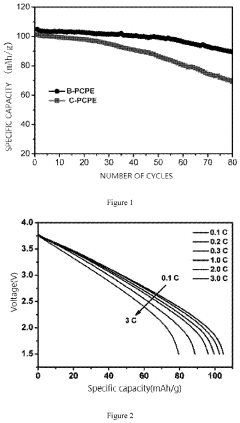
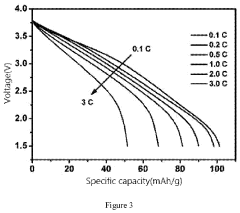
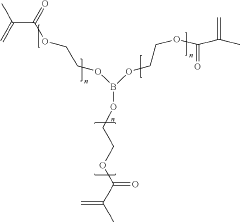
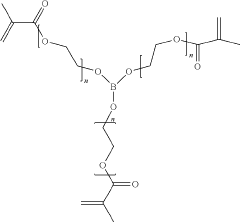
All-solid-state battery using sodium ion intercalation cathode with li/na exchanging layer
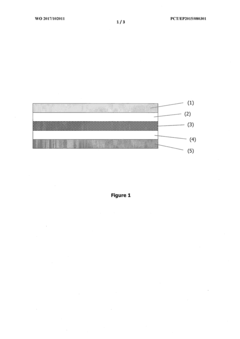
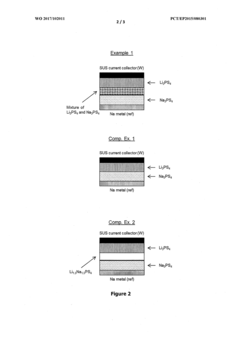
PatentWO2017102011A1
Innovation
- An all-solid-state battery configuration is developed with a Li/Na exchanging layer, comprising a physical mixture of sulfide-based sodium-containing and lithium-containing solid electrolyte materials, enhancing ion exchange and increasing battery voltage through a Li/Na hybrid system.

Material Supply Chain Considerations for Sodium Batteries
The sodium battery supply chain presents a fundamentally different landscape compared to lithium-ion batteries, offering significant advantages in terms of material abundance and geographical distribution. Sodium resources are approximately 1,000 times more abundant than lithium in the Earth's crust and are widely available across multiple continents, reducing geopolitical supply risks that currently plague lithium supply chains.
Primary sodium sources include seawater, salt lakes, and mineral deposits, with extraction methods being considerably less resource-intensive than lithium mining operations. This abundance translates to potentially lower raw material costs, with sodium carbonate pricing historically showing greater stability compared to lithium carbonate's volatile market fluctuations.
For solid-state sodium battery production, the supply chain extends beyond sodium itself to include solid electrolyte materials such as NASICON-type ceramics, beta-alumina, and sodium-containing sulfides. These components require specialized manufacturing processes but utilize more widely available elements compared to lithium-based alternatives.
Cathode materials for sodium batteries typically incorporate iron, manganese, and other transition metals that face fewer supply constraints than cobalt and nickel used in lithium-ion batteries. This reduces dependency on mining operations concentrated in politically sensitive regions like the Democratic Republic of Congo.
Manufacturing infrastructure presents both challenges and opportunities. While existing lithium-ion production facilities cannot be directly repurposed for solid-state sodium batteries without significant modifications, the overall manufacturing processes share similarities that could facilitate industry transition. New production lines would require investments in specialized equipment for handling sodium materials and solid electrolyte fabrication.
Recycling considerations for sodium batteries appear promising, with potentially simpler recovery processes due to the lower economic value and reactivity of sodium compared to lithium. This could establish more sustainable circular material flows as the technology matures.
Patent analysis reveals increasing focus on supply chain resilience, with innovations targeting simplified material processing, reduced dependency on critical minerals, and manufacturing methods compatible with existing production infrastructure. These patents demonstrate industry recognition of supply chain advantages as a key driver for sodium battery commercialization.
The transition toward sodium battery technology could significantly reshape global battery material supply chains, potentially reducing the industry's vulnerability to supply disruptions while creating new opportunities for countries with abundant sodium resources to participate in the energy storage economy.
Primary sodium sources include seawater, salt lakes, and mineral deposits, with extraction methods being considerably less resource-intensive than lithium mining operations. This abundance translates to potentially lower raw material costs, with sodium carbonate pricing historically showing greater stability compared to lithium carbonate's volatile market fluctuations.
For solid-state sodium battery production, the supply chain extends beyond sodium itself to include solid electrolyte materials such as NASICON-type ceramics, beta-alumina, and sodium-containing sulfides. These components require specialized manufacturing processes but utilize more widely available elements compared to lithium-based alternatives.
Cathode materials for sodium batteries typically incorporate iron, manganese, and other transition metals that face fewer supply constraints than cobalt and nickel used in lithium-ion batteries. This reduces dependency on mining operations concentrated in politically sensitive regions like the Democratic Republic of Congo.
Manufacturing infrastructure presents both challenges and opportunities. While existing lithium-ion production facilities cannot be directly repurposed for solid-state sodium batteries without significant modifications, the overall manufacturing processes share similarities that could facilitate industry transition. New production lines would require investments in specialized equipment for handling sodium materials and solid electrolyte fabrication.
Recycling considerations for sodium batteries appear promising, with potentially simpler recovery processes due to the lower economic value and reactivity of sodium compared to lithium. This could establish more sustainable circular material flows as the technology matures.
Patent analysis reveals increasing focus on supply chain resilience, with innovations targeting simplified material processing, reduced dependency on critical minerals, and manufacturing methods compatible with existing production infrastructure. These patents demonstrate industry recognition of supply chain advantages as a key driver for sodium battery commercialization.
The transition toward sodium battery technology could significantly reshape global battery material supply chains, potentially reducing the industry's vulnerability to supply disruptions while creating new opportunities for countries with abundant sodium resources to participate in the energy storage economy.
Environmental Impact and Sustainability Assessment
Solid-state sodium batteries represent a significant advancement in sustainable energy storage technology, offering substantial environmental benefits compared to conventional lithium-ion batteries. The environmental impact assessment of these batteries reveals multiple sustainability advantages throughout their lifecycle, from raw material extraction to end-of-life management.
The abundance and widespread geographical distribution of sodium resources significantly reduce the environmental footprint associated with material extraction. Unlike lithium mining, which often involves water-intensive processes in ecologically sensitive areas, sodium can be sourced from seawater and common salt deposits with considerably lower environmental disruption. Patent analyses indicate that innovative extraction methods are being developed to further minimize the ecological impact of sodium procurement.
Carbon emissions across the manufacturing lifecycle of solid-state sodium batteries show promising reductions compared to conventional battery technologies. Recent patents highlight manufacturing processes that require less energy input and generate fewer greenhouse gas emissions. These innovations align with global carbon reduction targets and contribute to mitigating climate change impacts associated with energy storage technologies.
Water conservation represents another critical environmental benefit. Traditional lithium extraction can consume up to 500,000 gallons of water per ton of lithium, whereas sodium extraction methods outlined in recent patents demonstrate significantly lower water requirements. This aspect is particularly valuable in water-stressed regions where battery manufacturing facilities might be located.
The absence of toxic and flammable liquid electrolytes in solid-state sodium batteries substantially reduces environmental hazards during operation and after accidental damage. Patents focusing on solid electrolyte compositions emphasize non-toxic components that pose minimal risk to ecosystems in case of disposal or leakage incidents.
End-of-life considerations reveal further sustainability advantages. Patent documents describing recycling methodologies for solid-state sodium batteries indicate higher recovery rates for key materials compared to conventional lithium-ion technologies. The simpler chemistry and design facilitate more efficient recycling processes, contributing to circular economy principles and reducing waste.
Regulatory compliance assessments within patent applications demonstrate that solid-state sodium battery technologies align well with emerging environmental legislation worldwide, including the European Union's Battery Directive and similar frameworks in North America and Asia. This regulatory alignment positions these batteries favorably for future market adoption while ensuring environmental protection standards are maintained.
The abundance and widespread geographical distribution of sodium resources significantly reduce the environmental footprint associated with material extraction. Unlike lithium mining, which often involves water-intensive processes in ecologically sensitive areas, sodium can be sourced from seawater and common salt deposits with considerably lower environmental disruption. Patent analyses indicate that innovative extraction methods are being developed to further minimize the ecological impact of sodium procurement.
Carbon emissions across the manufacturing lifecycle of solid-state sodium batteries show promising reductions compared to conventional battery technologies. Recent patents highlight manufacturing processes that require less energy input and generate fewer greenhouse gas emissions. These innovations align with global carbon reduction targets and contribute to mitigating climate change impacts associated with energy storage technologies.
Water conservation represents another critical environmental benefit. Traditional lithium extraction can consume up to 500,000 gallons of water per ton of lithium, whereas sodium extraction methods outlined in recent patents demonstrate significantly lower water requirements. This aspect is particularly valuable in water-stressed regions where battery manufacturing facilities might be located.
The absence of toxic and flammable liquid electrolytes in solid-state sodium batteries substantially reduces environmental hazards during operation and after accidental damage. Patents focusing on solid electrolyte compositions emphasize non-toxic components that pose minimal risk to ecosystems in case of disposal or leakage incidents.
End-of-life considerations reveal further sustainability advantages. Patent documents describing recycling methodologies for solid-state sodium batteries indicate higher recovery rates for key materials compared to conventional lithium-ion technologies. The simpler chemistry and design facilitate more efficient recycling processes, contributing to circular economy principles and reducing waste.
Regulatory compliance assessments within patent applications demonstrate that solid-state sodium battery technologies align well with emerging environmental legislation worldwide, including the European Union's Battery Directive and similar frameworks in North America and Asia. This regulatory alignment positions these batteries favorably for future market adoption while ensuring environmental protection standards are maintained.
Unlock deeper insights with Patsnap Eureka Quick Research — get a full tech report to explore trends and direct your research. Try now!
Generate Your Research Report Instantly with AI Agent
Supercharge your innovation with Patsnap Eureka AI Agent Platform!