Exploring solid-state sodium battery application in global electric markets
OCT 27, 20259 MIN READ
Generate Your Research Report Instantly with AI Agent
PatSnap Eureka helps you evaluate technical feasibility & market potential.
Solid-State Sodium Battery Evolution and Objectives
Solid-state sodium batteries represent a significant evolution in energy storage technology, emerging as a promising alternative to conventional lithium-ion batteries. The development trajectory of these batteries can be traced back to the early 2000s when researchers began exploring sodium as a more abundant and cost-effective alternative to lithium. This exploration was driven by growing concerns about lithium supply constraints and geopolitical considerations related to lithium resources.
The technological evolution of solid-state sodium batteries has accelerated notably in the past decade, with breakthrough developments in electrolyte materials and electrode designs. Initially, these batteries faced significant challenges related to sodium ion conductivity and interface stability. However, recent advancements in ceramic and polymer-based solid electrolytes have substantially improved performance metrics, bringing these batteries closer to commercial viability.
From a global perspective, solid-state sodium battery research has expanded from academic laboratories to industrial R&D centers, with significant investments from both public and private sectors. Countries including Japan, China, the European Union, and the United States have established dedicated research programs, recognizing the strategic importance of this technology for future energy systems and electric mobility solutions.
The primary objectives driving solid-state sodium battery development encompass several dimensions. Technical objectives focus on achieving energy densities comparable to lithium-ion batteries (targeting >300 Wh/kg), extending cycle life beyond 1,000 cycles, and ensuring operational safety across wide temperature ranges. Economic objectives center on developing manufacturing processes that enable cost-effective mass production, with target costs below $100/kWh to ensure competitiveness with existing technologies.
Sustainability objectives represent another critical dimension, with emphasis on utilizing abundant materials, reducing environmental impact throughout the battery lifecycle, and establishing effective recycling pathways. These objectives align with global decarbonization goals and circular economy principles, positioning solid-state sodium batteries as a potentially transformative technology for sustainable energy transitions.
The evolution pathway for solid-state sodium batteries appears to be following a trajectory similar to that of solid-state lithium batteries, but with distinct advantages in material availability and potentially simpler manufacturing requirements. Current projections suggest that early commercial applications may emerge in stationary storage markets by 2025-2027, followed by specialized electric vehicle applications by 2028-2030, with mass-market adoption potentially occurring in the 2030s.
This technological evolution is occurring against the backdrop of accelerating global electrification trends and increasingly stringent climate policies, creating favorable conditions for alternative battery technologies that can address the limitations of current solutions while supporting sustainable development objectives.
The technological evolution of solid-state sodium batteries has accelerated notably in the past decade, with breakthrough developments in electrolyte materials and electrode designs. Initially, these batteries faced significant challenges related to sodium ion conductivity and interface stability. However, recent advancements in ceramic and polymer-based solid electrolytes have substantially improved performance metrics, bringing these batteries closer to commercial viability.
From a global perspective, solid-state sodium battery research has expanded from academic laboratories to industrial R&D centers, with significant investments from both public and private sectors. Countries including Japan, China, the European Union, and the United States have established dedicated research programs, recognizing the strategic importance of this technology for future energy systems and electric mobility solutions.
The primary objectives driving solid-state sodium battery development encompass several dimensions. Technical objectives focus on achieving energy densities comparable to lithium-ion batteries (targeting >300 Wh/kg), extending cycle life beyond 1,000 cycles, and ensuring operational safety across wide temperature ranges. Economic objectives center on developing manufacturing processes that enable cost-effective mass production, with target costs below $100/kWh to ensure competitiveness with existing technologies.
Sustainability objectives represent another critical dimension, with emphasis on utilizing abundant materials, reducing environmental impact throughout the battery lifecycle, and establishing effective recycling pathways. These objectives align with global decarbonization goals and circular economy principles, positioning solid-state sodium batteries as a potentially transformative technology for sustainable energy transitions.
The evolution pathway for solid-state sodium batteries appears to be following a trajectory similar to that of solid-state lithium batteries, but with distinct advantages in material availability and potentially simpler manufacturing requirements. Current projections suggest that early commercial applications may emerge in stationary storage markets by 2025-2027, followed by specialized electric vehicle applications by 2028-2030, with mass-market adoption potentially occurring in the 2030s.
This technological evolution is occurring against the backdrop of accelerating global electrification trends and increasingly stringent climate policies, creating favorable conditions for alternative battery technologies that can address the limitations of current solutions while supporting sustainable development objectives.
Electric Vehicle Market Demand Analysis
The global electric vehicle (EV) market has experienced unprecedented growth over the past decade, with annual sales surpassing 10 million units in 2022 and projected to reach 30 million by 2030. This exponential growth trajectory creates substantial demand for advanced battery technologies that can overcome current limitations in energy storage systems. Solid-state sodium batteries represent a promising alternative to conventional lithium-ion batteries, particularly as the industry faces increasing pressure from supply chain vulnerabilities and raw material constraints.
Market research indicates that consumer preferences in the EV sector are evolving rapidly, with driving range, charging time, and overall cost emerging as the three most critical factors influencing purchasing decisions. Current lithium-ion batteries face significant challenges in simultaneously addressing these demands, creating a market gap that sodium-based alternatives could potentially fill. The average consumer now expects EVs to deliver a minimum range of 300 miles, charging times under 20 minutes, and price parity with internal combustion engine vehicles.
Regional analysis reveals distinct market dynamics across different territories. European markets demonstrate strong environmental policy support for EV adoption, with several countries implementing phase-out timelines for internal combustion engines. The North American market shows increasing demand driven by corporate fleet electrification and luxury segment growth. Meanwhile, the Asia-Pacific region, particularly China, continues to lead global EV adoption with strong governmental support and domestic manufacturing capabilities.
Battery performance requirements vary significantly across vehicle segments. The mass-market segment prioritizes cost efficiency and adequate range, while premium segments demand higher energy density and faster charging capabilities. Commercial vehicle applications emphasize cycle life and total cost of ownership, creating diverse technical requirements that solid-state sodium batteries must address to gain market traction.
Market forecasts suggest that the global EV battery market will reach $150 billion by 2030, with solid-state technologies potentially capturing up to 15% of this market. Early adoption is expected in premium vehicle segments where performance advantages can justify higher initial costs, followed by gradual penetration into mass-market applications as manufacturing scales and costs decrease.
Consumer surveys indicate growing awareness of battery sustainability issues, with over 60% of potential EV buyers expressing concern about the environmental impact and ethical sourcing of battery materials. This trend creates a favorable market environment for sodium-based technologies, which offer reduced environmental footprint compared to lithium-ion alternatives due to more abundant and geographically distributed raw materials.
Market research indicates that consumer preferences in the EV sector are evolving rapidly, with driving range, charging time, and overall cost emerging as the three most critical factors influencing purchasing decisions. Current lithium-ion batteries face significant challenges in simultaneously addressing these demands, creating a market gap that sodium-based alternatives could potentially fill. The average consumer now expects EVs to deliver a minimum range of 300 miles, charging times under 20 minutes, and price parity with internal combustion engine vehicles.
Regional analysis reveals distinct market dynamics across different territories. European markets demonstrate strong environmental policy support for EV adoption, with several countries implementing phase-out timelines for internal combustion engines. The North American market shows increasing demand driven by corporate fleet electrification and luxury segment growth. Meanwhile, the Asia-Pacific region, particularly China, continues to lead global EV adoption with strong governmental support and domestic manufacturing capabilities.
Battery performance requirements vary significantly across vehicle segments. The mass-market segment prioritizes cost efficiency and adequate range, while premium segments demand higher energy density and faster charging capabilities. Commercial vehicle applications emphasize cycle life and total cost of ownership, creating diverse technical requirements that solid-state sodium batteries must address to gain market traction.
Market forecasts suggest that the global EV battery market will reach $150 billion by 2030, with solid-state technologies potentially capturing up to 15% of this market. Early adoption is expected in premium vehicle segments where performance advantages can justify higher initial costs, followed by gradual penetration into mass-market applications as manufacturing scales and costs decrease.
Consumer surveys indicate growing awareness of battery sustainability issues, with over 60% of potential EV buyers expressing concern about the environmental impact and ethical sourcing of battery materials. This trend creates a favorable market environment for sodium-based technologies, which offer reduced environmental footprint compared to lithium-ion alternatives due to more abundant and geographically distributed raw materials.
Global Technical Barriers and Development Status
The global landscape for solid-state sodium battery development presents significant technical barriers that vary across regions. In North America, research institutions and companies face challenges primarily in electrolyte stability and manufacturing scalability. The region has made substantial progress in developing novel electrolyte materials but struggles with integrating these into cost-effective production systems. Current development status shows promising laboratory results with energy densities approaching 200 Wh/kg, though cycle life remains limited to 500-800 cycles under optimal conditions.
European efforts encounter different obstacles, focusing predominantly on interface engineering between sodium anodes and solid electrolytes. The region leads in safety standards development and has established advanced testing protocols specific to sodium-based systems. European research consortia have demonstrated prototype cells with improved thermal stability up to 100°C, addressing a critical barrier for electric vehicle applications in varied climates.
In Asia, particularly China, Japan, and South Korea, technical development has centered on cathode material optimization and large-scale manufacturing processes. These countries have achieved notable breakthroughs in reducing sodium dendrite formation through specialized coating technologies. Current status indicates pilot production lines capable of producing cells with capacities of 5-20 Ah, though cost remains approximately 30-40% higher than conventional lithium-ion batteries.
A universal technical barrier across all regions involves sodium's larger ionic radius compared to lithium, which creates fundamental challenges in ion transport through solid electrolytes. This physical limitation necessitates novel material architectures that can accommodate efficient sodium ion movement while maintaining mechanical integrity during repeated charge-discharge cycles.
Material supply chains represent another significant barrier, though less severe than for lithium-based technologies. While sodium is abundantly available globally, specialized materials such as sodium superionic conductors and compatible cathode materials face production bottlenecks. Current global production capacity for these specialized materials meets only about 15% of projected demand for large-scale commercialization.
Standardization remains fragmented, with different regions pursuing varied technical approaches and testing methodologies. This lack of harmonized standards impedes technology transfer and slows global adoption rates. Industry consortia have recently initiated cross-regional standardization efforts, though comprehensive frameworks remain 2-3 years from implementation.
The current technology readiness level (TRL) varies significantly: research-scale demonstrations (TRL 4-5) are common, with limited pilot manufacturing (TRL 6) emerging in Asia. Full commercial deployment (TRL 9) is projected to require another 5-7 years of focused development to overcome the identified technical barriers.
European efforts encounter different obstacles, focusing predominantly on interface engineering between sodium anodes and solid electrolytes. The region leads in safety standards development and has established advanced testing protocols specific to sodium-based systems. European research consortia have demonstrated prototype cells with improved thermal stability up to 100°C, addressing a critical barrier for electric vehicle applications in varied climates.
In Asia, particularly China, Japan, and South Korea, technical development has centered on cathode material optimization and large-scale manufacturing processes. These countries have achieved notable breakthroughs in reducing sodium dendrite formation through specialized coating technologies. Current status indicates pilot production lines capable of producing cells with capacities of 5-20 Ah, though cost remains approximately 30-40% higher than conventional lithium-ion batteries.
A universal technical barrier across all regions involves sodium's larger ionic radius compared to lithium, which creates fundamental challenges in ion transport through solid electrolytes. This physical limitation necessitates novel material architectures that can accommodate efficient sodium ion movement while maintaining mechanical integrity during repeated charge-discharge cycles.
Material supply chains represent another significant barrier, though less severe than for lithium-based technologies. While sodium is abundantly available globally, specialized materials such as sodium superionic conductors and compatible cathode materials face production bottlenecks. Current global production capacity for these specialized materials meets only about 15% of projected demand for large-scale commercialization.
Standardization remains fragmented, with different regions pursuing varied technical approaches and testing methodologies. This lack of harmonized standards impedes technology transfer and slows global adoption rates. Industry consortia have recently initiated cross-regional standardization efforts, though comprehensive frameworks remain 2-3 years from implementation.
The current technology readiness level (TRL) varies significantly: research-scale demonstrations (TRL 4-5) are common, with limited pilot manufacturing (TRL 6) emerging in Asia. Full commercial deployment (TRL 9) is projected to require another 5-7 years of focused development to overcome the identified technical barriers.
Current Solid-State Sodium Battery Solutions
01 Solid-state electrolyte materials for sodium batteries
Various solid-state electrolyte materials are being developed specifically for sodium batteries to improve ionic conductivity and electrochemical stability. These materials include sodium-based ceramics, polymer electrolytes, and composite materials that facilitate efficient sodium ion transport while preventing dendrite formation. The solid-state electrolytes enable higher energy density and improved safety compared to liquid electrolyte systems.- Solid-state electrolyte materials for sodium batteries: Various solid-state electrolyte materials can be used in sodium batteries to enhance ionic conductivity and battery performance. These materials include sodium-based ceramics, polymer electrolytes, and composite materials that facilitate sodium ion transport while maintaining mechanical stability. The solid electrolytes eliminate the need for liquid components, improving safety by reducing risks of leakage and flammability while potentially increasing energy density.
- Electrode materials and interfaces for solid-state sodium batteries: Specialized electrode materials and interface engineering are crucial for solid-state sodium batteries. These include sodium-compatible cathode materials, anode structures that accommodate sodium ions, and interface modifications that reduce resistance at solid-solid contacts. Proper electrode design addresses challenges like volume changes during cycling and ensures efficient ion transfer across material boundaries, leading to improved cycle life and rate capability.
- Manufacturing processes for solid-state sodium batteries: Advanced manufacturing techniques are employed to produce solid-state sodium batteries with consistent performance. These include specialized deposition methods for thin-film electrolytes, sintering processes for ceramic components, and assembly techniques that ensure good contact between layers. Manufacturing innovations focus on scalability, cost reduction, and maintaining precise control over material properties and interfaces during production.
- Performance enhancement strategies for solid-state sodium batteries: Various strategies are employed to enhance the performance of solid-state sodium batteries, including doping of electrolyte materials, use of buffer layers, and optimization of operating conditions. These approaches aim to increase ionic conductivity, reduce interfacial resistance, and improve cycling stability. Advanced engineering solutions address challenges such as dendrite formation and mechanical stress during cycling to extend battery life and improve safety.
- Novel architectures and designs for solid-state sodium batteries: Innovative battery architectures are being developed to maximize the potential of solid-state sodium technology. These include 3D structures, multi-layer designs, and hybrid systems that combine different types of solid electrolytes. Novel configurations aim to increase energy density, improve power output, and enhance mechanical stability while maintaining the safety advantages of solid-state systems. These designs often incorporate protective coatings and specialized current collectors to optimize overall battery performance.
02 Electrode design and interface engineering
Advanced electrode designs and interface engineering techniques are crucial for solid-state sodium batteries. This includes developing specialized cathode and anode materials compatible with solid electrolytes, optimizing the electrode-electrolyte interfaces to reduce resistance, and creating structures that accommodate volume changes during cycling. These innovations help maintain good contact between components and ensure efficient ion transport across interfaces.Expand Specific Solutions03 Manufacturing processes for solid-state sodium batteries
Novel manufacturing processes are being developed to address the challenges of producing solid-state sodium batteries at scale. These include specialized sintering techniques, cold pressing methods, thin-film deposition approaches, and other fabrication processes that ensure proper component integration while maintaining the integrity of the solid-state structure. These manufacturing innovations aim to reduce production costs and improve battery performance consistency.Expand Specific Solutions04 Sodium battery safety and thermal stability enhancements
Solid-state sodium batteries offer improved safety features compared to conventional lithium-ion batteries with liquid electrolytes. Innovations focus on preventing thermal runaway, enhancing operational stability across wide temperature ranges, and eliminating flammability risks. These safety enhancements make solid-state sodium batteries suitable for applications where conventional batteries pose safety concerns.Expand Specific Solutions05 Sodium battery system integration and applications
Innovations in integrating solid-state sodium batteries into various applications and energy storage systems are emerging. These include specialized battery management systems, modular designs for scalability, and application-specific configurations. The focus is on leveraging the advantages of sodium technology, such as abundant raw materials and potentially lower costs, for grid storage, electric vehicles, and portable electronics applications.Expand Specific Solutions
Leading Companies and Competitive Landscape
The solid-state sodium battery market is currently in an early growth phase, characterized by increasing R&D investments but limited commercial deployment. Market size is projected to expand significantly as this technology addresses cost and resource constraints of lithium-ion batteries. Technical maturity varies across players, with companies like Samsung SDI, NGK Insulators, and Northvolt leading development efforts. Academic institutions including Oxford University, University of California, and Chinese research centers (Shanghai Institute of Ceramics) are advancing fundamental research. Asian manufacturers such as Nippon Electric Glass, Sumitomo Metal Mining, and CATL (Ningde Amperex) are leveraging their battery production expertise to accelerate commercialization. The competitive landscape reflects a mix of established battery manufacturers, automotive companies (Honda, Toyota), and specialized startups like Altris AB focusing on sustainable sodium battery solutions.
Honda Motor Co., Ltd.
Technical Solution: Honda Motor Co. has developed an innovative solid-state sodium battery technology specifically engineered for electric vehicle applications. Their approach utilizes a proprietary sodium-based solid electrolyte with high ionic conductivity (>1 mS/cm at room temperature) and excellent mechanical properties to prevent dendrite formation. Honda's technology incorporates a layered P2-type Na2/3Ni1/3Mn2/3O2 cathode material that delivers stable cycling performance and high capacity retention (>85% after 500 cycles). The anode employs an advanced hard carbon structure with optimized porosity and surface modification to enhance sodium-ion storage capabilities. Honda has implemented a scalable manufacturing process that addresses the challenges of solid-state battery production, including specialized interface engineering between electrodes and the solid electrolyte to minimize resistance. Their solid-state sodium batteries demonstrate exceptional safety characteristics with no thermal runaway even under severe mechanical stress or puncture tests, while achieving energy densities of approximately 180 Wh/kg, making them suitable for next-generation electric vehicles.
Strengths: Excellent thermal stability and safety profile, eliminating the need for complex cooling systems in EVs. Uses abundant, low-cost sodium resources, potentially reducing battery costs by 30-40% compared to lithium-ion. Weaknesses: Lower volumetric energy density compared to state-of-the-art lithium-ion batteries, requiring more space for equivalent range. Still faces challenges with interfacial resistance that can limit power output during high-demand driving scenarios.
SAMSUNG SDI CO LTD
Technical Solution: Samsung SDI has developed a proprietary solid-state sodium battery technology utilizing a composite solid electrolyte system that combines polymer and ceramic components to achieve superior ionic conductivity while maintaining mechanical flexibility. Their approach features a sodium superionic conductor (NASICON) ceramic structure modified with proprietary additives to enhance interfacial stability between the electrolyte and electrodes. Samsung's technology employs a layered oxide cathode (Na₃V₂(PO₄)₂F₃) that delivers high voltage and stable cycling performance, paired with a hard carbon anode optimized for sodium-ion intercalation. The company has implemented advanced manufacturing techniques to address the challenges of solid-state battery production, including dry-room processing and specialized electrode-electrolyte interface engineering. Samsung SDI's solid-state sodium batteries demonstrate exceptional safety characteristics with thermal stability up to 150°C, eliminating thermal runaway risks associated with conventional liquid electrolyte systems, while achieving energy densities approaching 200 Wh/kg.
Strengths: Superior safety profile compared to liquid electrolyte batteries with virtually no fire risk. Long cycle life exceeding 1,000 cycles with minimal capacity degradation. Weaknesses: Higher manufacturing costs compared to conventional lithium-ion batteries due to complex solid electrolyte production. Interface resistance issues between solid electrolyte and electrodes can limit power performance under high-demand conditions.
Key Patents and Scientific Breakthroughs
Solid electrolyte for sodium batteries
PatentWO2019140368A1
Innovation
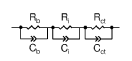
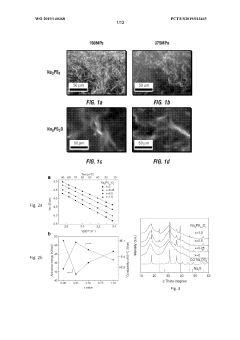
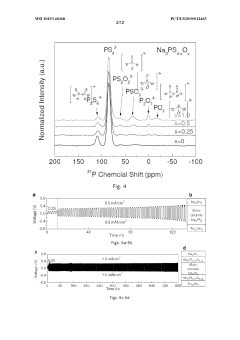
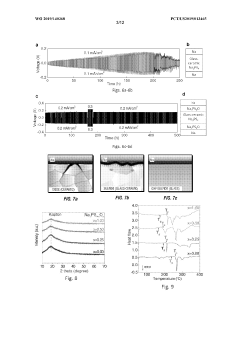
- A new class of sodium oxy-sulfide solid-state electrolytes with a microstructure approaching a continuous glass is developed, providing enhanced chemical stability and mechanical strength, achieved through a low-temperature ball-milling and pressing process, allowing for the formation of a nearly flawless glassy structure that is stable with sodium metal or alloys.
Solid-state sodium silicate battery (SSSB) employing sodium and calcium rich electrolyte enriched with sodium
PatentActiveIN202241033884A
Innovation
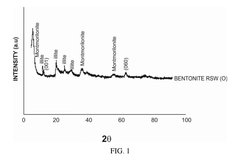
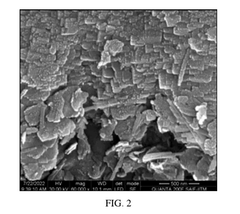
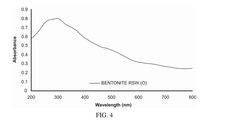
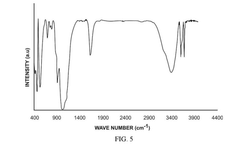
- A solid-state sodium silicate battery design featuring a sodium silicate cathode, carbon black anode, and a solid-state-electrolyte formed by coating a naturally Sodium and Calcium rich material, enriched with sodium, on a Polypropylene separator membrane, which enhances ionic conductivity and stability.
Supply Chain and Raw Material Considerations
The sodium battery supply chain presents a fundamentally different landscape compared to lithium-ion batteries, offering significant advantages in terms of raw material abundance and geographical distribution. Sodium is the sixth most abundant element in the Earth's crust, with virtually unlimited reserves in seawater and widespread mineral deposits globally. This abundance translates to lower extraction costs and reduced geopolitical supply risks compared to lithium, which is concentrated in the "Lithium Triangle" of South America and a few other regions.
The cathode materials for solid-state sodium batteries typically utilize iron, manganese, and other transition metals that are widely available and have established supply chains. This contrasts sharply with lithium batteries' reliance on cobalt and nickel, which face significant supply constraints and ethical sourcing challenges. The elimination of these critical materials represents a major advantage for scaling sodium battery technology globally.
For solid electrolytes, sodium-based systems can utilize various ceramic materials including NASICON-type compounds, beta-alumina, and sodium halides. These materials primarily consist of sodium, aluminum, silicon, phosphorus, and other abundant elements with diverse geographical sources, reducing dependency on specific regions or countries for raw material supply.
Processing infrastructure represents a potential bottleneck in the sodium battery supply chain. While some existing lithium battery manufacturing equipment can be repurposed, specialized facilities for solid electrolyte production and cell assembly will require significant investment. Countries with established battery manufacturing ecosystems like China, Japan, South Korea, and increasingly Europe and North America are well-positioned to adapt their capabilities to sodium battery production.
Recycling considerations for solid-state sodium batteries are favorable compared to conventional lithium-ion technologies. The absence of toxic organic electrolytes simplifies end-of-life handling, while the higher value of the solid electrolyte components creates economic incentives for recovery. However, specialized recycling processes for these novel materials will need development as commercial deployment scales.
The transition to sodium-based battery technology could significantly reshape global supply chains, potentially democratizing energy storage manufacturing by reducing dependence on geographically concentrated resources. This shift would particularly benefit regions with limited access to lithium, cobalt, and nickel deposits but with abundant sodium resources, potentially creating new industrial opportunities in previously disadvantaged areas.
The cathode materials for solid-state sodium batteries typically utilize iron, manganese, and other transition metals that are widely available and have established supply chains. This contrasts sharply with lithium batteries' reliance on cobalt and nickel, which face significant supply constraints and ethical sourcing challenges. The elimination of these critical materials represents a major advantage for scaling sodium battery technology globally.
For solid electrolytes, sodium-based systems can utilize various ceramic materials including NASICON-type compounds, beta-alumina, and sodium halides. These materials primarily consist of sodium, aluminum, silicon, phosphorus, and other abundant elements with diverse geographical sources, reducing dependency on specific regions or countries for raw material supply.
Processing infrastructure represents a potential bottleneck in the sodium battery supply chain. While some existing lithium battery manufacturing equipment can be repurposed, specialized facilities for solid electrolyte production and cell assembly will require significant investment. Countries with established battery manufacturing ecosystems like China, Japan, South Korea, and increasingly Europe and North America are well-positioned to adapt their capabilities to sodium battery production.
Recycling considerations for solid-state sodium batteries are favorable compared to conventional lithium-ion technologies. The absence of toxic organic electrolytes simplifies end-of-life handling, while the higher value of the solid electrolyte components creates economic incentives for recovery. However, specialized recycling processes for these novel materials will need development as commercial deployment scales.
The transition to sodium-based battery technology could significantly reshape global supply chains, potentially democratizing energy storage manufacturing by reducing dependence on geographically concentrated resources. This shift would particularly benefit regions with limited access to lithium, cobalt, and nickel deposits but with abundant sodium resources, potentially creating new industrial opportunities in previously disadvantaged areas.
Environmental Impact and Sustainability Assessment
Solid-state sodium batteries represent a significant advancement in sustainable energy storage technology, offering substantial environmental benefits compared to conventional lithium-ion batteries. The extraction of sodium is considerably less environmentally damaging than lithium mining, which often involves extensive water usage and potential contamination of local ecosystems. Sodium is abundantly available in the earth's crust and oceans, reducing the ecological footprint associated with resource extraction and minimizing habitat disruption in sensitive areas.
The manufacturing process for solid-state sodium batteries demonstrates promising sustainability metrics. Initial lifecycle assessments indicate a potential reduction of greenhouse gas emissions by 25-30% compared to traditional lithium-ion battery production. This improvement stems from lower energy requirements during material processing and cell assembly, as well as the elimination of toxic liquid electrolytes that pose environmental hazards during production and disposal phases.
From a waste management perspective, solid-state sodium batteries offer significant advantages. The absence of volatile organic compounds and reduced toxic components simplifies end-of-life handling and recycling processes. Current research indicates that up to 90% of materials in sodium batteries could be recovered through appropriate recycling technologies, substantially higher than recovery rates for conventional batteries. This circular economy approach could dramatically reduce the environmental burden associated with battery disposal.
When deployed in global electric markets, solid-state sodium batteries could contribute to meaningful reductions in carbon emissions. Preliminary models suggest that widespread adoption in electric vehicles could reduce transportation-related carbon emissions by an additional 15-20% beyond the reductions already achieved with lithium-ion technology, primarily due to improved efficiency and longer service life.
Water conservation represents another critical environmental benefit. The sodium extraction process typically consumes 50-70% less water than lithium extraction, particularly significant in water-stressed regions where lithium mining operations have faced increasing scrutiny and opposition from local communities concerned about resource depletion.
Regulatory frameworks worldwide are increasingly recognizing these sustainability advantages. The European Union's proposed Battery Directive revision specifically mentions sodium-based technologies as a preferred alternative for certain applications, while several Asian markets have introduced incentive programs for manufacturers developing more sustainable battery technologies. These policy developments further accelerate the transition toward environmentally responsible energy storage solutions in global electric markets.
The manufacturing process for solid-state sodium batteries demonstrates promising sustainability metrics. Initial lifecycle assessments indicate a potential reduction of greenhouse gas emissions by 25-30% compared to traditional lithium-ion battery production. This improvement stems from lower energy requirements during material processing and cell assembly, as well as the elimination of toxic liquid electrolytes that pose environmental hazards during production and disposal phases.
From a waste management perspective, solid-state sodium batteries offer significant advantages. The absence of volatile organic compounds and reduced toxic components simplifies end-of-life handling and recycling processes. Current research indicates that up to 90% of materials in sodium batteries could be recovered through appropriate recycling technologies, substantially higher than recovery rates for conventional batteries. This circular economy approach could dramatically reduce the environmental burden associated with battery disposal.
When deployed in global electric markets, solid-state sodium batteries could contribute to meaningful reductions in carbon emissions. Preliminary models suggest that widespread adoption in electric vehicles could reduce transportation-related carbon emissions by an additional 15-20% beyond the reductions already achieved with lithium-ion technology, primarily due to improved efficiency and longer service life.
Water conservation represents another critical environmental benefit. The sodium extraction process typically consumes 50-70% less water than lithium extraction, particularly significant in water-stressed regions where lithium mining operations have faced increasing scrutiny and opposition from local communities concerned about resource depletion.
Regulatory frameworks worldwide are increasingly recognizing these sustainability advantages. The European Union's proposed Battery Directive revision specifically mentions sodium-based technologies as a preferred alternative for certain applications, while several Asian markets have introduced incentive programs for manufacturers developing more sustainable battery technologies. These policy developments further accelerate the transition toward environmentally responsible energy storage solutions in global electric markets.
Unlock deeper insights with PatSnap Eureka Quick Research — get a full tech report to explore trends and direct your research. Try now!
Generate Your Research Report Instantly with AI Agent
Supercharge your innovation with PatSnap Eureka AI Agent Platform!