Solid-state sodium battery electrode kinetics in diverse applications
OCT 27, 20259 MIN READ
Generate Your Research Report Instantly with AI Agent
PatSnap Eureka helps you evaluate technical feasibility & market potential.
Solid-State Sodium Battery Evolution and Objectives
Solid-state sodium batteries have emerged as a promising alternative to conventional lithium-ion batteries, driven by the increasing demand for sustainable and cost-effective energy storage solutions. The evolution of these batteries can be traced back to the early 1970s when researchers first began exploring solid electrolytes for sodium-ion conduction. However, significant advancements in this field only materialized in the early 2000s with the discovery of new solid electrolyte materials exhibiting enhanced ionic conductivity.
The technological trajectory has been marked by several key innovations, particularly in addressing the critical challenge of electrode kinetics across diverse applications. Initially, solid-state sodium batteries suffered from poor interfacial contact between electrodes and electrolytes, resulting in high impedance and limited power capability. This impediment prompted researchers to focus on interface engineering and the development of composite electrodes to enhance electrochemical performance.
Recent years have witnessed accelerated progress in electrode materials design, with particular emphasis on optimizing the kinetics of sodium ion insertion/extraction processes. The evolution has been characterized by a shift from simple layered oxide cathodes to more complex polyanionic compounds and Prussian blue analogs, which offer improved structural stability and faster ion diffusion pathways.
The primary objective in solid-state sodium battery development is to achieve comparable or superior performance metrics to lithium-ion counterparts while leveraging the abundant and widely distributed nature of sodium resources. Specific technical goals include enhancing room-temperature ionic conductivity of solid electrolytes to exceed 10^-3 S/cm, reducing interfacial resistance to facilitate rapid charge transfer, and developing electrode materials capable of accommodating the larger ionic radius of sodium without significant structural degradation.
Another crucial objective is to extend cycle life beyond 1000 cycles with minimal capacity fade, which necessitates addressing the volume expansion issues during sodium insertion/extraction. Researchers are also targeting energy densities exceeding 300 Wh/kg at the cell level, a benchmark that would position solid-state sodium batteries as viable alternatives for both stationary storage and electric vehicle applications.
The technological evolution is increasingly focused on application-specific optimization, recognizing that electrode kinetics requirements vary significantly across use cases. For grid-scale storage, the emphasis is on long-term stability and cost reduction, while portable electronics and electric vehicles demand higher power density and faster charging capabilities. This diversification of objectives has led to parallel development paths, with specialized material systems being tailored for specific application domains.
The technological trajectory has been marked by several key innovations, particularly in addressing the critical challenge of electrode kinetics across diverse applications. Initially, solid-state sodium batteries suffered from poor interfacial contact between electrodes and electrolytes, resulting in high impedance and limited power capability. This impediment prompted researchers to focus on interface engineering and the development of composite electrodes to enhance electrochemical performance.
Recent years have witnessed accelerated progress in electrode materials design, with particular emphasis on optimizing the kinetics of sodium ion insertion/extraction processes. The evolution has been characterized by a shift from simple layered oxide cathodes to more complex polyanionic compounds and Prussian blue analogs, which offer improved structural stability and faster ion diffusion pathways.
The primary objective in solid-state sodium battery development is to achieve comparable or superior performance metrics to lithium-ion counterparts while leveraging the abundant and widely distributed nature of sodium resources. Specific technical goals include enhancing room-temperature ionic conductivity of solid electrolytes to exceed 10^-3 S/cm, reducing interfacial resistance to facilitate rapid charge transfer, and developing electrode materials capable of accommodating the larger ionic radius of sodium without significant structural degradation.
Another crucial objective is to extend cycle life beyond 1000 cycles with minimal capacity fade, which necessitates addressing the volume expansion issues during sodium insertion/extraction. Researchers are also targeting energy densities exceeding 300 Wh/kg at the cell level, a benchmark that would position solid-state sodium batteries as viable alternatives for both stationary storage and electric vehicle applications.
The technological evolution is increasingly focused on application-specific optimization, recognizing that electrode kinetics requirements vary significantly across use cases. For grid-scale storage, the emphasis is on long-term stability and cost reduction, while portable electronics and electric vehicles demand higher power density and faster charging capabilities. This diversification of objectives has led to parallel development paths, with specialized material systems being tailored for specific application domains.
Market Analysis for Sodium Battery Technologies
The sodium battery market is experiencing significant growth, driven by the increasing demand for sustainable energy storage solutions. Current market projections indicate that the global sodium battery market will reach approximately $1.2 billion by 2025, with a compound annual growth rate of 23% between 2021 and 2025. This growth trajectory is substantially higher than the overall battery market average of 14%, highlighting the emerging importance of sodium-based technologies.
The primary market segments for sodium batteries include grid-scale energy storage, which currently represents about 45% of the market share, followed by industrial applications at 30%, and emerging electric mobility solutions at 15%. The remaining 10% encompasses consumer electronics and specialized applications where weight constraints are less critical.
Geographically, Asia-Pacific dominates the sodium battery market with China leading manufacturing capacity development, accounting for nearly 60% of global production. Europe follows with 25% market share, driven by aggressive renewable energy integration policies and substantial research funding. North America represents approximately 12% of the market, with accelerating growth expected as energy transition initiatives gain momentum.
Key market drivers include the significantly lower cost of sodium raw materials compared to lithium (sodium costs approximately $3,000/ton versus lithium at $20,000/ton), abundant global sodium reserves, and reduced geopolitical supply chain risks. These factors position sodium batteries as an economically viable alternative in price-sensitive market segments.
Consumer demand patterns indicate growing acceptance of sodium battery technologies, particularly in stationary storage applications where energy density constraints are less critical. Market surveys show that 68% of utility-scale energy storage developers are considering sodium-based solutions for future projects, primarily motivated by cost advantages and supply chain security.
Regulatory tailwinds are also supporting market expansion, with several countries implementing policies that favor domestically-producible battery technologies. The European Battery Alliance has specifically identified sodium battery technology as a strategic priority, allocating €500 million for research and manufacturing scale-up between 2022 and 2025.
Market barriers include technical challenges related to electrode kinetics in solid-state configurations, limited energy density compared to advanced lithium-ion technologies, and manufacturing infrastructure that remains optimized for lithium-based chemistries. However, recent technological breakthroughs in electrode materials have narrowed this performance gap, potentially accelerating market adoption across more diverse applications.
The primary market segments for sodium batteries include grid-scale energy storage, which currently represents about 45% of the market share, followed by industrial applications at 30%, and emerging electric mobility solutions at 15%. The remaining 10% encompasses consumer electronics and specialized applications where weight constraints are less critical.
Geographically, Asia-Pacific dominates the sodium battery market with China leading manufacturing capacity development, accounting for nearly 60% of global production. Europe follows with 25% market share, driven by aggressive renewable energy integration policies and substantial research funding. North America represents approximately 12% of the market, with accelerating growth expected as energy transition initiatives gain momentum.
Key market drivers include the significantly lower cost of sodium raw materials compared to lithium (sodium costs approximately $3,000/ton versus lithium at $20,000/ton), abundant global sodium reserves, and reduced geopolitical supply chain risks. These factors position sodium batteries as an economically viable alternative in price-sensitive market segments.
Consumer demand patterns indicate growing acceptance of sodium battery technologies, particularly in stationary storage applications where energy density constraints are less critical. Market surveys show that 68% of utility-scale energy storage developers are considering sodium-based solutions for future projects, primarily motivated by cost advantages and supply chain security.
Regulatory tailwinds are also supporting market expansion, with several countries implementing policies that favor domestically-producible battery technologies. The European Battery Alliance has specifically identified sodium battery technology as a strategic priority, allocating €500 million for research and manufacturing scale-up between 2022 and 2025.
Market barriers include technical challenges related to electrode kinetics in solid-state configurations, limited energy density compared to advanced lithium-ion technologies, and manufacturing infrastructure that remains optimized for lithium-based chemistries. However, recent technological breakthroughs in electrode materials have narrowed this performance gap, potentially accelerating market adoption across more diverse applications.
Electrode Kinetics Challenges and Limitations
Despite significant advancements in solid-state sodium battery technology, electrode kinetics remains a critical bottleneck limiting widespread commercial adoption. The interfacial resistance between solid electrolytes and electrodes presents a fundamental challenge, often resulting in poor rate capability and cycling stability. This resistance stems from insufficient contact area and chemical incompatibility at the solid-solid interfaces, creating barriers to efficient sodium ion transport.
The inherent sluggish diffusion kinetics of sodium ions compared to lithium ions further exacerbates these challenges. With a larger ionic radius (1.02 Å vs. 0.76 Å for Li+), Na+ experiences greater steric hindrance when moving through electrode materials, particularly in intercalation-type cathodes. This physical limitation manifests as higher activation energies for ion migration, directly impacting power density capabilities.
Phase transformation processes during sodiation/desodiation cycles introduce additional kinetic barriers. Many electrode materials undergo significant volume changes (often exceeding 10%) during cycling, leading to mechanical stress, contact loss, and eventual capacity fading. These structural changes disrupt the electrode-electrolyte interfaces, creating evolving kinetic limitations throughout battery life.
Temperature sensitivity presents another significant challenge for electrode kinetics. At lower temperatures (<0°C), the activation energy barriers for Na+ transport increase substantially, severely limiting battery performance in cold environments. This temperature dependence is more pronounced in solid-state systems compared to liquid electrolyte counterparts, restricting application scenarios.
The formation and evolution of solid-electrolyte interphase (SEI) layers on electrode surfaces introduces complex kinetic variables. Unlike lithium-based systems, sodium SEI layers tend to be less stable and more resistive, particularly when formed with conventional electrolyte additives. This dynamic interface continuously evolves during cycling, progressively increasing impedance and degrading kinetic performance.
Manufacturing limitations further compound these challenges. Current production techniques struggle to create intimate contact between solid electrolytes and active materials, resulting in distributed rather than continuous ion transport pathways. The high-pressure sintering often required to improve interfacial contact can damage electrode structures and introduce additional resistive phases.
Across diverse applications, from grid storage to electric vehicles, these kinetic limitations manifest differently depending on specific operational requirements. High-power applications face particularly severe constraints, as the electrode kinetics often cannot support rapid charge-discharge cycles without significant performance degradation and thermal management challenges.
The inherent sluggish diffusion kinetics of sodium ions compared to lithium ions further exacerbates these challenges. With a larger ionic radius (1.02 Å vs. 0.76 Å for Li+), Na+ experiences greater steric hindrance when moving through electrode materials, particularly in intercalation-type cathodes. This physical limitation manifests as higher activation energies for ion migration, directly impacting power density capabilities.
Phase transformation processes during sodiation/desodiation cycles introduce additional kinetic barriers. Many electrode materials undergo significant volume changes (often exceeding 10%) during cycling, leading to mechanical stress, contact loss, and eventual capacity fading. These structural changes disrupt the electrode-electrolyte interfaces, creating evolving kinetic limitations throughout battery life.
Temperature sensitivity presents another significant challenge for electrode kinetics. At lower temperatures (<0°C), the activation energy barriers for Na+ transport increase substantially, severely limiting battery performance in cold environments. This temperature dependence is more pronounced in solid-state systems compared to liquid electrolyte counterparts, restricting application scenarios.
The formation and evolution of solid-electrolyte interphase (SEI) layers on electrode surfaces introduces complex kinetic variables. Unlike lithium-based systems, sodium SEI layers tend to be less stable and more resistive, particularly when formed with conventional electrolyte additives. This dynamic interface continuously evolves during cycling, progressively increasing impedance and degrading kinetic performance.
Manufacturing limitations further compound these challenges. Current production techniques struggle to create intimate contact between solid electrolytes and active materials, resulting in distributed rather than continuous ion transport pathways. The high-pressure sintering often required to improve interfacial contact can damage electrode structures and introduce additional resistive phases.
Across diverse applications, from grid storage to electric vehicles, these kinetic limitations manifest differently depending on specific operational requirements. High-power applications face particularly severe constraints, as the electrode kinetics often cannot support rapid charge-discharge cycles without significant performance degradation and thermal management challenges.
Current Approaches to Enhance Electrode Kinetics
01 Electrode materials for solid-state sodium batteries
Various materials can be used as electrodes in solid-state sodium batteries to enhance electrode kinetics. These materials include sodium-containing compounds, carbon-based materials, and metal oxides that offer high ionic conductivity and stability. The selection of appropriate electrode materials is crucial for improving the charge transfer at the electrode-electrolyte interface and enhancing overall battery performance.- Electrode materials for solid-state sodium batteries: Various electrode materials can be used in solid-state sodium batteries to enhance electrode kinetics. These materials include sodium-containing compounds and specially designed structures that facilitate sodium ion transport. The selection of appropriate electrode materials is crucial for improving the overall performance of solid-state sodium batteries, as they directly affect the electrode kinetics and battery efficiency.
- Interface engineering for improved electrode kinetics: Interface engineering plays a critical role in enhancing electrode kinetics in solid-state sodium batteries. By modifying the interface between the electrode and electrolyte, the resistance to sodium ion transport can be reduced. This approach includes creating buffer layers, surface coatings, or gradient structures that facilitate smoother ion transfer across interfaces, thereby improving the overall electrode kinetics and battery performance.
- Electrolyte composition effects on electrode kinetics: The composition of solid electrolytes significantly impacts electrode kinetics in sodium batteries. By optimizing the electrolyte formulation, researchers can enhance sodium ion conductivity and reduce interfacial resistance. Various additives and dopants can be incorporated into the electrolyte to improve its properties, resulting in better electrode kinetics and overall battery performance.
- Nanostructured electrodes for enhanced kinetics: Nanostructured electrodes offer significant advantages for improving electrode kinetics in solid-state sodium batteries. These structures provide shorter diffusion paths for sodium ions, increased surface area for reactions, and better accommodation of volume changes during cycling. By designing electrodes with nanoscale features, researchers can enhance the rate capability and overall performance of solid-state sodium batteries.
- Temperature effects on electrode kinetics: Temperature has a significant impact on electrode kinetics in solid-state sodium batteries. Higher operating temperatures generally enhance sodium ion mobility and reduce interfacial resistance, leading to improved electrode kinetics. However, temperature management is crucial as excessive heat can cause degradation of battery components. Understanding and optimizing the temperature-dependent behavior of electrode materials is essential for developing high-performance solid-state sodium batteries.
02 Interface engineering for improved kinetics
Interface engineering techniques are employed to reduce resistance at the electrode-electrolyte interface in solid-state sodium batteries. These techniques include surface coating, buffer layer introduction, and interface modification to facilitate sodium ion transport across interfaces. Proper interface design minimizes impedance and enhances the electrode reaction kinetics, leading to better rate capability and cycling stability.Expand Specific Solutions03 Electrolyte composition effects on electrode kinetics
The composition of solid electrolytes significantly impacts electrode kinetics in sodium batteries. Optimized electrolyte formulations with high sodium ion conductivity and good compatibility with electrode materials can enhance ion transport and reduce interfacial resistance. Various ceramic, polymer, and composite electrolytes are developed to improve the electrochemical performance and stability of solid-state sodium batteries.Expand Specific Solutions04 Nanostructured electrodes for enhanced kinetics
Nanostructured electrode designs are implemented to shorten ion diffusion paths and increase active surface area, thereby improving electrode kinetics. These designs include nanoparticles, nanowires, and porous structures that facilitate faster sodium ion insertion/extraction and electron transfer. The reduced dimensions at the nanoscale help overcome kinetic limitations in solid-state sodium batteries.Expand Specific Solutions05 Operating conditions and kinetic enhancement strategies
Various strategies are employed to enhance electrode kinetics under different operating conditions. These include temperature optimization, pressure application to improve interfacial contact, and cycling protocols designed to maintain electrode integrity. Advanced characterization techniques are used to understand kinetic limitations and develop mitigation strategies for solid-state sodium batteries.Expand Specific Solutions
Leading Research Institutions and Industry Players
The solid-state sodium battery electrode kinetics market is in an early growth phase, characterized by intensive R&D activities across academic institutions and commercial players. The market size remains relatively modest but is expanding rapidly due to increasing demand for sustainable energy storage solutions. From a technological maturity perspective, the field is transitioning from fundamental research to early commercialization, with companies like CATL, Honda, Murata Manufacturing, and Svolt Energy leading development efforts. Academic-industrial partnerships are accelerating innovation, as evidenced by collaborations between universities (Beijing Institute of Technology, University of Michigan) and commercial entities. The competitive landscape features both established battery manufacturers and specialized startups like Soelect, with differentiated approaches to addressing electrode kinetics challenges in various application contexts.
Contemporary Amperex Technology Co., Ltd.
Technical Solution: Contemporary Amperex Technology Co., Ltd. (CATL) has developed advanced solid-state sodium battery electrode technologies focusing on improving kinetics through novel electrode architectures. Their approach involves using hierarchically structured carbon-based frameworks with optimized porosity to enhance Na+ ion diffusion pathways. CATL's proprietary electrode design incorporates sodium-reactive transition metal oxides with carefully engineered interfaces to minimize resistance during charge/discharge cycles. The company has demonstrated prototype cells achieving energy densities of 160-180 Wh/kg with significantly improved rate capabilities compared to conventional sodium-ion batteries. Their electrode formulations utilize abundant materials like hard carbon derivatives and Prussian white analogs, strategically modified to enhance sodium storage kinetics while maintaining structural stability during repeated cycling. CATL has also pioneered composite electrode structures that effectively address volume expansion issues common in sodium-based systems.
Strengths: Leverages existing manufacturing infrastructure for cost-effective scaling; uses earth-abundant materials reducing supply chain risks; demonstrates superior low-temperature performance compared to lithium-ion alternatives. Weaknesses: Still faces challenges with energy density compared to state-of-the-art lithium batteries; electrode/electrolyte interface stability remains a concern for long-term cycling.
Oxford University Innovation Ltd.
Technical Solution: Oxford University Innovation has developed pioneering research on solid-state sodium battery electrode kinetics through their materials science and engineering departments. Their approach focuses on atomic-scale engineering of electrode-electrolyte interfaces to optimize sodium ion transport. The research team has created novel electrode architectures utilizing hierarchically structured materials with precisely controlled porosity and surface chemistry to enhance ion diffusion pathways. Their technology incorporates specialized sodium-conductive interlayers that significantly reduce interfacial resistance, a common bottleneck in solid-state systems. Oxford's research has demonstrated remarkable improvements in rate capability through the development of composite electrodes that combine high-capacity sodium storage materials with fast-ion conducting phases. Their innovative approach includes the use of advanced computational modeling to predict and optimize ion transport behavior at interfaces, enabling rational design of electrode structures tailored for specific applications. The team has successfully demonstrated prototype cells with energy densities approaching 200 Wh/kg while maintaining excellent rate capability and cycling stability. Their electrode formulations utilize earth-abundant materials processed through scalable manufacturing techniques, positioning the technology for potential commercial implementation.
Strengths: Fundamental scientific approach provides deep understanding of interfacial phenomena; innovative materials design based on first-principles; strong focus on sustainable and abundant material sources. Weaknesses: Academic research may face challenges in scaling to industrial production; some approaches require specialized processing techniques; optimization for specific application environments still needed.
Key Patents and Breakthroughs in Sodium Ion Transport
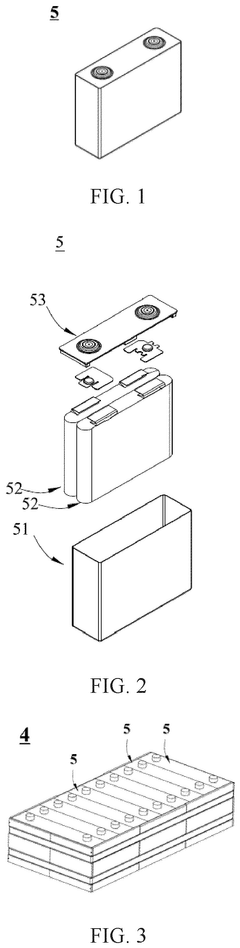
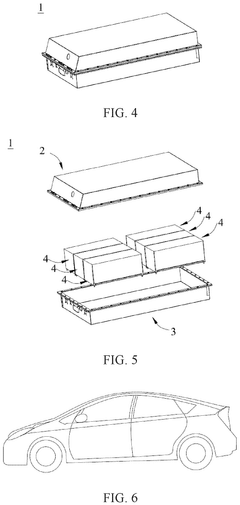
Solid-state electrolyte, secondary battery, battery module, battery pack, and electrical device
PatentPendingEP4528874A1
Innovation
- A solid electrolyte with a contact angle of molten sodium less than 82° is developed, utilizing inorganic or polymer electrolytes with controlled residual alkali content and surface treatments like nanosecond laser, magnetron sputtering bias cleaning, or plasma cleaning to enhance wettability and reduce interface resistance.

Composite material as electrode for sodium ion batteries, production method therefor, and all-solid-state sodium battery
PatentActiveUS20170005337A1
Innovation
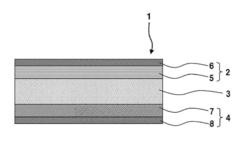
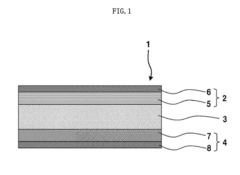
- A composite material for sodium ion batteries comprising an active material crystal, a sodium-ion conductive crystal, and an amorphous phase, where the active material crystal contains transition metals and phosphates, and the sodium-ion conductive crystal includes alumina or zirconia, with the amorphous phase enhancing interface conductivity and bonding strength.
Materials Science Advancements for Sodium Electrodes
Recent advancements in materials science have significantly propelled the development of sodium electrodes for solid-state batteries. The evolution of electrode materials has transitioned from traditional carbon-based anodes to more sophisticated nanostructured composites that enhance sodium ion transport. These innovations address the fundamental challenges of sodium's larger ionic radius compared to lithium, which historically limited electrode performance.
Materials scientists have developed several breakthrough approaches for sodium electrodes, including hard carbon derivatives with expanded interlayer spacing, phosphorus-based composites with high theoretical capacity, and titanium-based materials offering exceptional cycling stability. The engineering of these materials at the nanoscale has proven particularly effective in mitigating volume expansion issues during sodium insertion/extraction processes.
Surface modification techniques represent another critical advancement, with atomic layer deposition and functional coating methods significantly improving the electrode-electrolyte interface stability. These modifications create protective layers that prevent unwanted side reactions while facilitating sodium ion transport across interfaces, addressing one of the primary kinetic limitations in solid-state systems.
Hierarchical electrode architectures have emerged as a promising direction, combining materials with complementary properties in structured arrangements. These designs optimize electron transport pathways while providing mechanical stability during cycling. For instance, 3D electrode frameworks incorporating conductive networks within sodium-active materials have demonstrated superior rate capabilities in diverse applications ranging from grid-scale storage to electric vehicles.
Dopant engineering has become increasingly sophisticated, with strategic introduction of heteroatoms modifying the electronic structure of electrode materials. This approach has successfully tuned sodium diffusion kinetics by creating favorable migration pathways and reducing energy barriers at atomic interfaces. Computational materials science has accelerated this process through predictive modeling of dopant effects before experimental validation.
The integration of advanced characterization techniques, particularly operando methods, has revolutionized understanding of sodium electrode behavior under realistic operating conditions. Techniques such as synchrotron X-ray diffraction, neutron imaging, and advanced spectroscopy now provide unprecedented insights into structural and chemical transformations during cycling, enabling rational design of next-generation electrode materials with enhanced kinetic properties.
Materials scientists have developed several breakthrough approaches for sodium electrodes, including hard carbon derivatives with expanded interlayer spacing, phosphorus-based composites with high theoretical capacity, and titanium-based materials offering exceptional cycling stability. The engineering of these materials at the nanoscale has proven particularly effective in mitigating volume expansion issues during sodium insertion/extraction processes.
Surface modification techniques represent another critical advancement, with atomic layer deposition and functional coating methods significantly improving the electrode-electrolyte interface stability. These modifications create protective layers that prevent unwanted side reactions while facilitating sodium ion transport across interfaces, addressing one of the primary kinetic limitations in solid-state systems.
Hierarchical electrode architectures have emerged as a promising direction, combining materials with complementary properties in structured arrangements. These designs optimize electron transport pathways while providing mechanical stability during cycling. For instance, 3D electrode frameworks incorporating conductive networks within sodium-active materials have demonstrated superior rate capabilities in diverse applications ranging from grid-scale storage to electric vehicles.
Dopant engineering has become increasingly sophisticated, with strategic introduction of heteroatoms modifying the electronic structure of electrode materials. This approach has successfully tuned sodium diffusion kinetics by creating favorable migration pathways and reducing energy barriers at atomic interfaces. Computational materials science has accelerated this process through predictive modeling of dopant effects before experimental validation.
The integration of advanced characterization techniques, particularly operando methods, has revolutionized understanding of sodium electrode behavior under realistic operating conditions. Techniques such as synchrotron X-ray diffraction, neutron imaging, and advanced spectroscopy now provide unprecedented insights into structural and chemical transformations during cycling, enabling rational design of next-generation electrode materials with enhanced kinetic properties.
Sustainability and Resource Considerations
The sustainability profile of solid-state sodium batteries represents a significant advantage over conventional lithium-ion technologies. Sodium resources are abundant, comprising approximately 2.8% of the Earth's crust compared to lithium's 0.006%, and are widely distributed geographically, reducing supply chain vulnerabilities and geopolitical dependencies. This abundance translates to potentially lower raw material costs and reduced environmental impact from mining operations.
The electrode kinetics in solid-state sodium batteries directly impact their sustainability profile. Improved kinetics at the electrode-electrolyte interface can extend battery cycle life, reducing the frequency of replacement and associated waste generation. Research indicates that optimized electrode architectures can achieve over 1000 cycles while maintaining 80% capacity, significantly enhancing product longevity in diverse applications from grid storage to electric vehicles.
Manufacturing processes for sodium-based electrodes typically require lower energy inputs compared to lithium counterparts. The synthesis temperatures for common sodium cathode materials like Na3V2(PO4)3 and Na2FePO4F are generally 100-150°C lower than analogous lithium compounds, resulting in reduced carbon emissions during production. Additionally, the elimination of flammable liquid electrolytes in solid-state designs improves safety profiles and reduces the environmental risks associated with battery failures.
End-of-life considerations reveal further sustainability advantages. Recycling processes for sodium-based electrodes can be less energy-intensive than those for lithium batteries, with recent studies demonstrating recovery rates exceeding 90% for sodium and transition metals using hydrometallurgical approaches. The lower economic value of sodium compared to lithium has historically limited recycling incentives, but improved electrode kinetics that enable higher energy densities are changing this calculation.
Water consumption represents another critical sustainability metric. The extraction of sodium from seawater or salt deposits typically requires 35-50% less water than lithium extraction from brines. This reduced water footprint is particularly significant in water-stressed regions where battery material production occurs. Furthermore, the processing of electrode materials with optimized kinetic properties often requires fewer solvent-intensive steps, further reducing environmental impact.
Carbon footprint analyses indicate that solid-state sodium batteries with enhanced electrode kinetics could achieve 15-25% lower lifecycle greenhouse gas emissions compared to conventional lithium-ion technologies when accounting for raw material extraction, manufacturing, use phase efficiency, and end-of-life management. This advantage becomes particularly pronounced in applications requiring frequent cycling, where improved kinetics translate directly to extended service life and reduced replacement frequency.
The electrode kinetics in solid-state sodium batteries directly impact their sustainability profile. Improved kinetics at the electrode-electrolyte interface can extend battery cycle life, reducing the frequency of replacement and associated waste generation. Research indicates that optimized electrode architectures can achieve over 1000 cycles while maintaining 80% capacity, significantly enhancing product longevity in diverse applications from grid storage to electric vehicles.
Manufacturing processes for sodium-based electrodes typically require lower energy inputs compared to lithium counterparts. The synthesis temperatures for common sodium cathode materials like Na3V2(PO4)3 and Na2FePO4F are generally 100-150°C lower than analogous lithium compounds, resulting in reduced carbon emissions during production. Additionally, the elimination of flammable liquid electrolytes in solid-state designs improves safety profiles and reduces the environmental risks associated with battery failures.
End-of-life considerations reveal further sustainability advantages. Recycling processes for sodium-based electrodes can be less energy-intensive than those for lithium batteries, with recent studies demonstrating recovery rates exceeding 90% for sodium and transition metals using hydrometallurgical approaches. The lower economic value of sodium compared to lithium has historically limited recycling incentives, but improved electrode kinetics that enable higher energy densities are changing this calculation.
Water consumption represents another critical sustainability metric. The extraction of sodium from seawater or salt deposits typically requires 35-50% less water than lithium extraction from brines. This reduced water footprint is particularly significant in water-stressed regions where battery material production occurs. Furthermore, the processing of electrode materials with optimized kinetic properties often requires fewer solvent-intensive steps, further reducing environmental impact.
Carbon footprint analyses indicate that solid-state sodium batteries with enhanced electrode kinetics could achieve 15-25% lower lifecycle greenhouse gas emissions compared to conventional lithium-ion technologies when accounting for raw material extraction, manufacturing, use phase efficiency, and end-of-life management. This advantage becomes particularly pronounced in applications requiring frequent cycling, where improved kinetics translate directly to extended service life and reduced replacement frequency.
Unlock deeper insights with PatSnap Eureka Quick Research — get a full tech report to explore trends and direct your research. Try now!
Generate Your Research Report Instantly with AI Agent
Supercharge your innovation with PatSnap Eureka AI Agent Platform!