Solid-state sodium battery standards establishing aviation safety
OCT 27, 202510 MIN READ
Generate Your Research Report Instantly with AI Agent
PatSnap Eureka helps you evaluate technical feasibility & market potential.
Solid-State Sodium Battery Development Background and Objectives
Solid-state sodium batteries represent a significant evolution in energy storage technology, emerging as a promising alternative to conventional lithium-ion batteries. The development of these batteries dates back to the early 2000s, when researchers began exploring sodium as a more abundant and cost-effective alternative to lithium. The fundamental motivation behind this technological shift stems from the increasing scarcity and rising costs of lithium resources, coupled with growing global energy storage demands.
The aviation industry has shown particular interest in solid-state sodium battery technology due to its potential safety advantages. Traditional lithium-ion batteries used in aircraft have faced scrutiny following incidents of thermal runaway and fires, most notably in the Boeing 787 Dreamliner fleet in 2013. These safety concerns have accelerated research into alternative battery technologies that can meet the stringent safety requirements of aviation applications.
The technical evolution of solid-state sodium batteries has progressed through several key phases, beginning with fundamental materials research, followed by prototype development, and now moving toward standardization and commercialization. Early challenges included addressing lower energy density compared to lithium-ion counterparts and managing sodium's reactive nature. Recent breakthroughs in solid electrolyte materials have significantly improved performance metrics, bringing these batteries closer to commercial viability.
Current technological objectives focus on establishing comprehensive safety standards specifically tailored for aviation applications. These standards must address unique environmental conditions encountered during flight, including rapid pressure changes, temperature fluctuations, and vibration profiles. The development of these standards requires collaboration between battery manufacturers, aviation authorities, and aircraft manufacturers to ensure alignment with existing regulatory frameworks.
The strategic goal of solid-state sodium battery development for aviation extends beyond mere replacement of current technologies. The objective encompasses creating a new paradigm of energy storage that offers enhanced safety profiles while maintaining or improving performance characteristics. This includes developing batteries with higher energy density, faster charging capabilities, and longer cycle life than current aviation battery systems.
International coordination has become increasingly important in this field, with research initiatives spanning North America, Europe, and Asia. The establishment of globally recognized safety standards represents a critical milestone that will facilitate wider adoption of this technology across the aviation sector. These standards must balance innovation with rigorous safety requirements to ensure public confidence in next-generation aircraft power systems.
Looking forward, the technological roadmap for solid-state sodium batteries in aviation applications aims to achieve full certification and integration into commercial aircraft by the late 2020s, with preliminary standards expected to be formalized within the next two to three years.
The aviation industry has shown particular interest in solid-state sodium battery technology due to its potential safety advantages. Traditional lithium-ion batteries used in aircraft have faced scrutiny following incidents of thermal runaway and fires, most notably in the Boeing 787 Dreamliner fleet in 2013. These safety concerns have accelerated research into alternative battery technologies that can meet the stringent safety requirements of aviation applications.
The technical evolution of solid-state sodium batteries has progressed through several key phases, beginning with fundamental materials research, followed by prototype development, and now moving toward standardization and commercialization. Early challenges included addressing lower energy density compared to lithium-ion counterparts and managing sodium's reactive nature. Recent breakthroughs in solid electrolyte materials have significantly improved performance metrics, bringing these batteries closer to commercial viability.
Current technological objectives focus on establishing comprehensive safety standards specifically tailored for aviation applications. These standards must address unique environmental conditions encountered during flight, including rapid pressure changes, temperature fluctuations, and vibration profiles. The development of these standards requires collaboration between battery manufacturers, aviation authorities, and aircraft manufacturers to ensure alignment with existing regulatory frameworks.
The strategic goal of solid-state sodium battery development for aviation extends beyond mere replacement of current technologies. The objective encompasses creating a new paradigm of energy storage that offers enhanced safety profiles while maintaining or improving performance characteristics. This includes developing batteries with higher energy density, faster charging capabilities, and longer cycle life than current aviation battery systems.
International coordination has become increasingly important in this field, with research initiatives spanning North America, Europe, and Asia. The establishment of globally recognized safety standards represents a critical milestone that will facilitate wider adoption of this technology across the aviation sector. These standards must balance innovation with rigorous safety requirements to ensure public confidence in next-generation aircraft power systems.
Looking forward, the technological roadmap for solid-state sodium batteries in aviation applications aims to achieve full certification and integration into commercial aircraft by the late 2020s, with preliminary standards expected to be formalized within the next two to three years.
Aviation Market Demand Analysis for Sodium Battery Technology
The aviation industry is witnessing a significant shift towards more sustainable and efficient power solutions, creating substantial market demand for advanced battery technologies. Solid-state sodium batteries represent a promising alternative to conventional lithium-ion batteries, particularly for aviation applications where safety, weight, and performance are critical factors.
Current market analysis indicates that the global electric aircraft market is projected to grow at a compound annual growth rate of 15.2% from 2023 to 2030, reaching approximately 23.6 billion USD by the end of the forecast period. This growth is primarily driven by increasing environmental regulations, rising fuel costs, and the aviation industry's commitment to reducing carbon emissions by 50% by 2050 compared to 2005 levels.
The demand for sodium battery technology in aviation stems from several key market factors. First, the inherent safety advantages of solid-state sodium batteries address the aviation industry's paramount concern for passenger safety. Unlike conventional lithium-ion batteries that use flammable liquid electrolytes, solid-state sodium batteries utilize non-flammable solid electrolytes, significantly reducing fire risks during flight operations.
Weight considerations represent another critical market driver. Aviation operators continuously seek lightweight solutions to improve fuel efficiency and extend flight range. Sodium batteries offer promising energy density improvements, with recent prototypes achieving energy densities of 160-180 Wh/kg, approaching the performance of some lithium-ion batteries while using more abundant materials.
Cost factors further enhance market appeal for sodium battery technology. The aviation industry faces intense pressure to control operational expenses, and sodium's greater abundance compared to lithium (sodium is approximately 1,000 times more abundant in the Earth's crust) suggests potential for lower raw material costs. Industry analysts estimate that mature sodium battery technology could reduce battery costs by 20-30% compared to equivalent lithium-ion solutions.
Regulatory trends also support market growth for sodium battery technology. Aviation authorities worldwide are developing new certification frameworks for electric and hybrid aircraft, creating opportunities for novel battery technologies that meet stringent safety requirements. The European Union Aviation Safety Agency (EASA) and Federal Aviation Administration (FAA) have both initiated special condition frameworks for electric propulsion systems, signaling regulatory readiness to accommodate innovative battery technologies.
Market segmentation analysis reveals particularly strong demand potential in regional aviation, urban air mobility, and auxiliary power applications. Regional electric aircraft manufacturers report growing interest in sodium battery technology for short-haul routes under 500 kilometers, where the technology's current performance capabilities align well with operational requirements.
Current market analysis indicates that the global electric aircraft market is projected to grow at a compound annual growth rate of 15.2% from 2023 to 2030, reaching approximately 23.6 billion USD by the end of the forecast period. This growth is primarily driven by increasing environmental regulations, rising fuel costs, and the aviation industry's commitment to reducing carbon emissions by 50% by 2050 compared to 2005 levels.
The demand for sodium battery technology in aviation stems from several key market factors. First, the inherent safety advantages of solid-state sodium batteries address the aviation industry's paramount concern for passenger safety. Unlike conventional lithium-ion batteries that use flammable liquid electrolytes, solid-state sodium batteries utilize non-flammable solid electrolytes, significantly reducing fire risks during flight operations.
Weight considerations represent another critical market driver. Aviation operators continuously seek lightweight solutions to improve fuel efficiency and extend flight range. Sodium batteries offer promising energy density improvements, with recent prototypes achieving energy densities of 160-180 Wh/kg, approaching the performance of some lithium-ion batteries while using more abundant materials.
Cost factors further enhance market appeal for sodium battery technology. The aviation industry faces intense pressure to control operational expenses, and sodium's greater abundance compared to lithium (sodium is approximately 1,000 times more abundant in the Earth's crust) suggests potential for lower raw material costs. Industry analysts estimate that mature sodium battery technology could reduce battery costs by 20-30% compared to equivalent lithium-ion solutions.
Regulatory trends also support market growth for sodium battery technology. Aviation authorities worldwide are developing new certification frameworks for electric and hybrid aircraft, creating opportunities for novel battery technologies that meet stringent safety requirements. The European Union Aviation Safety Agency (EASA) and Federal Aviation Administration (FAA) have both initiated special condition frameworks for electric propulsion systems, signaling regulatory readiness to accommodate innovative battery technologies.
Market segmentation analysis reveals particularly strong demand potential in regional aviation, urban air mobility, and auxiliary power applications. Regional electric aircraft manufacturers report growing interest in sodium battery technology for short-haul routes under 500 kilometers, where the technology's current performance capabilities align well with operational requirements.
Current Status and Technical Barriers in Aviation Battery Standards
The aviation industry currently lacks comprehensive standards specifically designed for solid-state sodium batteries, creating significant regulatory gaps. Existing standards primarily focus on lithium-ion technologies, with frameworks such as RTCA DO-311A and SAE AS6413 addressing thermal runaway risks in conventional battery systems. These standards, while robust for current technologies, fail to address the unique characteristics and safety considerations of sodium-based solid-state batteries.
International regulatory bodies including the FAA, EASA, and ICAO are beginning to recognize this gap, but harmonized global standards remain underdeveloped. The current certification process for novel battery technologies in aviation requires extensive case-by-case evaluation, creating uncertainty for manufacturers and potentially slowing innovation in this promising field.
Technical barriers to standardization include the limited operational data from real-world applications of solid-state sodium batteries in aviation environments. Without sufficient performance data across various flight conditions, temperature ranges, and pressure environments, establishing meaningful safety parameters becomes challenging. The aviation industry's stringent reliability requirements demand failure rate probabilities below 10^-9 per flight hour for critical systems, necessitating extensive testing regimes that have yet to be fully defined for this emerging technology.
Material characterization presents another significant barrier, as the long-term stability of solid electrolytes under aviation-specific conditions remains inadequately documented. Current test methodologies for mechanical integrity, thermal stability, and electrochemical performance require adaptation to address the unique failure modes of solid-state sodium batteries, which differ substantially from lithium-ion counterparts.
The interface between battery management systems and solid-state sodium cells represents a critical standardization challenge. Existing BMS protocols are optimized for lithium-ion chemistry and may not adequately monitor or control sodium-based systems, potentially missing early warning signs of degradation or failure. This disconnect necessitates new sensing technologies and algorithms specifically calibrated for sodium battery characteristics.
Emergency response protocols constitute another standardization gap, as current firefighting and containment strategies for battery incidents are largely designed around lithium-ion thermal runaway scenarios. The different thermal and chemical properties of sodium batteries require revised safety procedures and potentially new suppression agents, which have not yet been codified in aviation standards.
Accelerated aging test protocols that can reliably predict the 15-20 year lifespan required for aviation applications remain underdeveloped for solid-state sodium technologies, creating uncertainty around long-term airworthiness maintenance requirements.
International regulatory bodies including the FAA, EASA, and ICAO are beginning to recognize this gap, but harmonized global standards remain underdeveloped. The current certification process for novel battery technologies in aviation requires extensive case-by-case evaluation, creating uncertainty for manufacturers and potentially slowing innovation in this promising field.
Technical barriers to standardization include the limited operational data from real-world applications of solid-state sodium batteries in aviation environments. Without sufficient performance data across various flight conditions, temperature ranges, and pressure environments, establishing meaningful safety parameters becomes challenging. The aviation industry's stringent reliability requirements demand failure rate probabilities below 10^-9 per flight hour for critical systems, necessitating extensive testing regimes that have yet to be fully defined for this emerging technology.
Material characterization presents another significant barrier, as the long-term stability of solid electrolytes under aviation-specific conditions remains inadequately documented. Current test methodologies for mechanical integrity, thermal stability, and electrochemical performance require adaptation to address the unique failure modes of solid-state sodium batteries, which differ substantially from lithium-ion counterparts.
The interface between battery management systems and solid-state sodium cells represents a critical standardization challenge. Existing BMS protocols are optimized for lithium-ion chemistry and may not adequately monitor or control sodium-based systems, potentially missing early warning signs of degradation or failure. This disconnect necessitates new sensing technologies and algorithms specifically calibrated for sodium battery characteristics.
Emergency response protocols constitute another standardization gap, as current firefighting and containment strategies for battery incidents are largely designed around lithium-ion thermal runaway scenarios. The different thermal and chemical properties of sodium batteries require revised safety procedures and potentially new suppression agents, which have not yet been codified in aviation standards.
Accelerated aging test protocols that can reliably predict the 15-20 year lifespan required for aviation applications remain underdeveloped for solid-state sodium technologies, creating uncertainty around long-term airworthiness maintenance requirements.
Existing Aviation Safety Standards for Battery Technologies
01 Solid electrolyte interface (SEI) formation for sodium battery safety
The formation of a stable solid electrolyte interface (SEI) layer is crucial for the safety of solid-state sodium batteries. This protective layer prevents direct contact between the sodium metal anode and the electrolyte, reducing the risk of thermal runaway and improving the overall safety profile of the battery. Various additives and surface treatments can be employed to enhance the stability and uniformity of the SEI layer, thereby minimizing dendrite formation and preventing short circuits.- Solid electrolyte interface (SEI) layer formation for safety enhancement: The formation of a stable solid electrolyte interface (SEI) layer is crucial for the safety of solid-state sodium batteries. This protective layer prevents direct contact between the sodium metal anode and the electrolyte, reducing the risk of thermal runaway and short circuits. Various additives and coating materials can be used to promote the formation of a uniform and stable SEI layer, which improves the overall safety performance of the battery by suppressing dendrite growth and preventing electrolyte decomposition.
- Thermal stability and fire resistance mechanisms: Solid-state sodium batteries incorporate various thermal stability and fire resistance mechanisms to enhance safety. These include the use of non-flammable solid electrolytes that eliminate the risk of electrolyte leakage and fire hazards associated with liquid electrolytes. Advanced thermal management systems and heat-resistant separators are also employed to prevent thermal runaway. Additionally, the incorporation of flame-retardant materials and temperature-responsive safety features helps maintain battery integrity under extreme conditions.
- Pressure management and mechanical stability: Effective pressure management and mechanical stability are essential for the safe operation of solid-state sodium batteries. These batteries incorporate design features that accommodate volume changes during charging and discharging cycles, preventing internal stress buildup that could lead to mechanical failure. Flexible interfaces between components, pressure-relief mechanisms, and structurally reinforced cell designs help maintain the physical integrity of the battery under various operating conditions, reducing the risk of short circuits and catastrophic failure.
- Advanced monitoring and safety control systems: Solid-state sodium batteries implement advanced monitoring and safety control systems to ensure safe operation. These systems include integrated sensors that continuously monitor temperature, pressure, and voltage parameters. When abnormal conditions are detected, built-in safety mechanisms can automatically activate to prevent thermal runaway or other safety incidents. Some designs incorporate electronic control units that can isolate faulty cells or modules, preventing cascading failures within battery packs and enhancing overall system reliability.
- Novel electrode and electrolyte materials for enhanced safety: The development of novel electrode and electrolyte materials significantly enhances the safety profile of solid-state sodium batteries. These materials include sodium-ion conducting solid electrolytes with high ionic conductivity and low electronic conductivity, which prevent internal short circuits. Advanced cathode materials with improved structural stability reduce the risk of oxygen release during high-temperature conditions. Additionally, composite electrodes with specially designed interfaces minimize resistance and heat generation during operation, while maintaining mechanical integrity throughout battery cycling.
02 Thermal management systems for solid-state sodium batteries
Effective thermal management systems are essential for maintaining the safety of solid-state sodium batteries, especially during high-rate charging and discharging. These systems help to dissipate heat and prevent thermal runaway, which can lead to battery failure or fire. Advanced cooling mechanisms, temperature monitoring sensors, and thermal insulation materials are incorporated into battery designs to ensure optimal operating temperatures and enhance safety during various usage conditions.Expand Specific Solutions03 Separator and barrier technologies for preventing sodium dendrite growth
Specialized separator and barrier technologies are developed to prevent sodium dendrite growth, which is a major safety concern in solid-state sodium batteries. These technologies include ceramic-polymer composite separators, ion-selective membranes, and mechanically robust barriers that can physically block dendrite penetration. By preventing dendrites from causing internal short circuits, these technologies significantly improve the safety and reliability of solid-state sodium battery systems.Expand Specific Solutions04 Non-flammable electrolyte formulations for enhanced safety
The development of non-flammable solid electrolyte formulations is critical for enhancing the safety of sodium batteries. These formulations typically incorporate flame-retardant additives, ionic liquids, or polymer-ceramic composites that maintain high ionic conductivity while eliminating the fire hazards associated with conventional liquid electrolytes. The non-flammable nature of these electrolytes significantly reduces the risk of fire or explosion in case of battery damage or failure.Expand Specific Solutions05 Safety monitoring and battery management systems
Advanced safety monitoring and battery management systems are implemented to ensure the safe operation of solid-state sodium batteries. These systems continuously monitor critical parameters such as voltage, current, temperature, and pressure to detect abnormal conditions before they lead to safety incidents. Integrated protection circuits can automatically disconnect the battery in case of overcharging, over-discharging, or overheating, while sophisticated algorithms predict and prevent potential failure modes, thereby enhancing the overall safety of sodium battery systems.Expand Specific Solutions
Key Industry Players in Solid-State Sodium Battery Development
The solid-state sodium battery aviation safety standards landscape is evolving rapidly, with the market currently in an early growth phase. Despite modest market size, technological advancements are accelerating, driven by increasing demand for safer, more sustainable aviation power solutions. Key players like Samsung SDI, Toyota, and Murata Manufacturing are leading commercial development, while research institutions such as Shanghai Institute of Ceramics and University of Maryland are advancing fundamental technologies. Aviation companies including Korea Aerospace Research Institute and Lufthansa Technik are collaborating with battery manufacturers to establish rigorous safety protocols. The competitive environment features both established corporations and specialized startups like Faradion, with technological maturity varying significantly across different sodium battery chemistries and form factors designed specifically for aviation applications.
Korea Aerospace Research Institute
Technical Solution: The Korea Aerospace Research Institute (KARI) has pioneered a solid-state sodium battery technology specifically engineered for aerospace applications with stringent safety requirements. Their approach features a layered oxide cathode structure combined with a phosphate-based solid electrolyte system that demonstrates exceptional stability under aviation-specific conditions. KARI has developed a proprietary manufacturing process that eliminates internal short circuit risks through precise control of interface properties between electrodes and electrolyte. Their solid-state sodium batteries incorporate specialized pressure-relief mechanisms designed to safely manage any gas generation during extreme conditions without compromising structural integrity. The institute has conducted extensive testing under simulated aerospace environments, including rapid pressure changes, extreme vibration, and temperature fluctuations from -60°C to 80°C. Their batteries have demonstrated compliance with DO-160 environmental conditions for airborne equipment and RTCA/DO-311A safety standards for rechargeable lithium batteries, adapting these frameworks for sodium-based systems.
Strengths: Purpose-built for aerospace applications with specific safety features; excellent performance under aviation-specific environmental stresses; comprehensive testing under aerospace conditions; integration with aircraft power management systems. Weaknesses: Limited production capacity focused on research quantities; higher cost structure than mass-market alternatives; technology still in pre-commercialization phase; requires specialized integration expertise.
SAMSUNG SDI CO LTD
Technical Solution: Samsung SDI has developed an advanced solid-state sodium battery platform targeting aviation applications with stringent safety requirements. Their technology employs a proprietary sodium-superionic conductor (NASICON) structured electrolyte that demonstrates exceptional ionic conductivity at aviation operating temperatures. The company has engineered a multi-layered safety architecture including thermal isolation barriers between cells and integrated battery management systems specifically calibrated for aviation safety parameters. Samsung's solid-state sodium batteries utilize a non-flammable inorganic solid electrolyte that eliminates the risk of electrolyte leakage and subsequent fire hazards. Their batteries have undergone extensive testing under simulated aviation conditions, including rapid decompression tests, vibration resistance evaluations, and extreme temperature cycling to ensure compliance with FAA and EASA safety regulations. The technology incorporates real-time monitoring systems that can detect and isolate potential failure points before they escalate into safety incidents.
Strengths: Excellent thermal stability across wide temperature ranges; inherently non-flammable electrolyte composition; sophisticated battery management system optimized for aviation; compliance with international aviation safety standards. Weaknesses: Currently higher manufacturing costs than conventional batteries; challenges in scaling production to commercial levels; slightly lower energy density than cutting-edge lithium technologies.
Critical Patents and Research in Sodium Battery Safety Mechanisms
Solid electrolyte for sodium batteries
PatentWO2019140368A1
Innovation
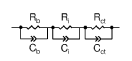
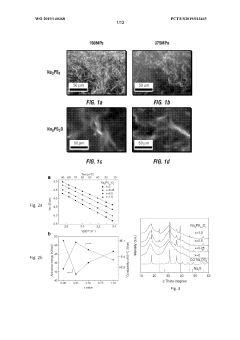
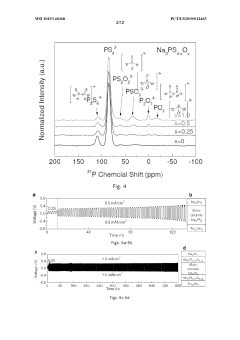
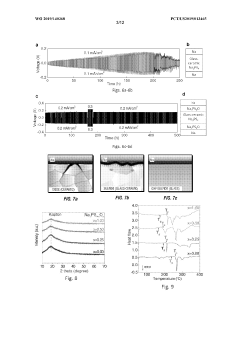
- A new class of sodium oxy-sulfide solid-state electrolytes with a microstructure approaching a continuous glass is developed, providing enhanced chemical stability and mechanical strength, achieved through a low-temperature ball-milling and pressing process, allowing for the formation of a nearly flawless glassy structure that is stable with sodium metal or alloys.
Electric aircraft
PatentActiveUS20240132223A1
Innovation
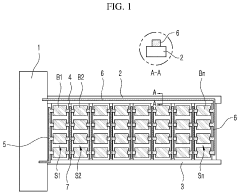
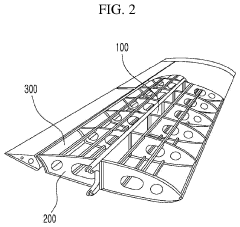
- Implementing solid state batteries as both the energy storage device and wing skin, with spars and ribs serving as structural supports for mounting and connecting the batteries in series and parallel configurations, allowing the battery surface to function as the wing skin.
Regulatory Framework and Certification Pathways
The regulatory landscape for solid-state sodium batteries in aviation presents a complex framework that requires careful navigation. Current aviation safety regulations primarily address lithium-ion battery technologies, creating a regulatory gap for emerging sodium-based alternatives. The Federal Aviation Administration (FAA) and European Union Aviation Safety Agency (EASA) are actively developing certification pathways specifically for solid-state battery technologies, with special attention to sodium-based systems due to their unique safety characteristics and thermal properties.
These regulatory bodies are establishing a multi-tiered approach to certification, requiring manufacturers to demonstrate compliance across several critical domains: thermal runaway resistance, pressure containment capabilities, electrolyte stability, and operational performance under extreme aviation conditions. The RTCA/DO-311A standard, while originally developed for lithium batteries, is being adapted to accommodate the specific characteristics of solid-state sodium batteries, with particular emphasis on their different failure modes and safety advantages.
International standardization efforts are being coordinated through organizations such as the International Civil Aviation Organization (ICAO) and the International Electrotechnical Commission (IEC), which are working to establish globally harmonized testing protocols and safety requirements. These efforts aim to create a unified certification framework that can be adopted across different jurisdictions, reducing regulatory fragmentation and facilitating global market access for manufacturers.
The certification pathway typically involves a stage-gate process, beginning with laboratory testing under simulated conditions, followed by controlled environment testing, limited field trials, and finally full certification for commercial aviation use. This graduated approach allows for risk mitigation while enabling technological advancement. Manufacturers must document extensive test data demonstrating compliance with both general battery safety requirements and sodium-specific criteria.
Regulatory bodies are also implementing special conditions for early adopters, allowing for limited deployment under enhanced monitoring protocols. This creates a pathway for real-world data collection while maintaining stringent safety oversight. The timeline for full regulatory framework implementation is projected to be completed within the next 24-36 months, with interim guidance being issued to support ongoing development activities.
Industry stakeholders, including battery manufacturers, aircraft OEMs, and airlines, are actively participating in regulatory working groups to ensure that emerging standards are both technically sound and commercially viable. This collaborative approach aims to balance innovation with the paramount concern of aviation safety, creating a certification ecosystem that can accommodate the unique properties of solid-state sodium batteries while maintaining the rigorous safety standards expected in aviation applications.
These regulatory bodies are establishing a multi-tiered approach to certification, requiring manufacturers to demonstrate compliance across several critical domains: thermal runaway resistance, pressure containment capabilities, electrolyte stability, and operational performance under extreme aviation conditions. The RTCA/DO-311A standard, while originally developed for lithium batteries, is being adapted to accommodate the specific characteristics of solid-state sodium batteries, with particular emphasis on their different failure modes and safety advantages.
International standardization efforts are being coordinated through organizations such as the International Civil Aviation Organization (ICAO) and the International Electrotechnical Commission (IEC), which are working to establish globally harmonized testing protocols and safety requirements. These efforts aim to create a unified certification framework that can be adopted across different jurisdictions, reducing regulatory fragmentation and facilitating global market access for manufacturers.
The certification pathway typically involves a stage-gate process, beginning with laboratory testing under simulated conditions, followed by controlled environment testing, limited field trials, and finally full certification for commercial aviation use. This graduated approach allows for risk mitigation while enabling technological advancement. Manufacturers must document extensive test data demonstrating compliance with both general battery safety requirements and sodium-specific criteria.
Regulatory bodies are also implementing special conditions for early adopters, allowing for limited deployment under enhanced monitoring protocols. This creates a pathway for real-world data collection while maintaining stringent safety oversight. The timeline for full regulatory framework implementation is projected to be completed within the next 24-36 months, with interim guidance being issued to support ongoing development activities.
Industry stakeholders, including battery manufacturers, aircraft OEMs, and airlines, are actively participating in regulatory working groups to ensure that emerging standards are both technically sound and commercially viable. This collaborative approach aims to balance innovation with the paramount concern of aviation safety, creating a certification ecosystem that can accommodate the unique properties of solid-state sodium batteries while maintaining the rigorous safety standards expected in aviation applications.
Environmental Impact and Sustainability Considerations
The development of solid-state sodium battery standards for aviation safety must carefully consider environmental impact and sustainability factors throughout the battery lifecycle. Sodium-based batteries offer significant environmental advantages over traditional lithium-ion technologies, primarily due to sodium's greater natural abundance. Unlike lithium, sodium resources are widely distributed globally and can be extracted from seawater, reducing the environmental degradation associated with mining operations and minimizing geopolitical supply chain vulnerabilities.
Manufacturing processes for solid-state sodium batteries generally require lower energy inputs compared to conventional lithium-ion batteries, resulting in reduced carbon emissions during production. The elimination of flammable liquid electrolytes also removes the need for environmentally harmful fluorinated compounds commonly used in lithium battery electrolytes, further enhancing their environmental profile. These manufacturing advantages contribute to a lower overall carbon footprint when establishing aviation safety standards.
End-of-life considerations represent a critical component of environmental sustainability for aviation battery technologies. Solid-state sodium batteries demonstrate superior recyclability characteristics, with simpler separation processes for material recovery compared to conventional batteries. Aviation safety standards should incorporate requirements for design-for-recycling approaches that facilitate the efficient recovery of sodium, transition metals, and other valuable components, creating a more circular battery economy.
The reduced fire risk associated with solid-state sodium batteries also translates to fewer environmental hazards during transportation, storage, and disposal phases. Standards should address proper handling protocols that minimize environmental contamination risks while maintaining safety requirements. Additionally, the potential for second-life applications in less demanding contexts after aviation use could extend the useful life of these batteries before recycling becomes necessary.
Water usage represents another important environmental consideration in battery production. Sodium extraction typically requires significantly less water than lithium extraction from brine operations, which can deplete water resources in ecologically sensitive regions. Aviation safety standards should incorporate water efficiency metrics and encourage manufacturing processes that minimize freshwater consumption.
When establishing aviation safety standards, lifecycle assessment methodologies should be integrated to quantify the environmental impacts across production, use, and disposal phases. These assessments should include carbon emissions, resource depletion, water usage, and toxicity measures to ensure comprehensive environmental evaluation. Standards should evolve to progressively strengthen sustainability requirements as technology matures, driving continuous improvement in the environmental performance of solid-state sodium batteries for aviation applications.
Manufacturing processes for solid-state sodium batteries generally require lower energy inputs compared to conventional lithium-ion batteries, resulting in reduced carbon emissions during production. The elimination of flammable liquid electrolytes also removes the need for environmentally harmful fluorinated compounds commonly used in lithium battery electrolytes, further enhancing their environmental profile. These manufacturing advantages contribute to a lower overall carbon footprint when establishing aviation safety standards.
End-of-life considerations represent a critical component of environmental sustainability for aviation battery technologies. Solid-state sodium batteries demonstrate superior recyclability characteristics, with simpler separation processes for material recovery compared to conventional batteries. Aviation safety standards should incorporate requirements for design-for-recycling approaches that facilitate the efficient recovery of sodium, transition metals, and other valuable components, creating a more circular battery economy.
The reduced fire risk associated with solid-state sodium batteries also translates to fewer environmental hazards during transportation, storage, and disposal phases. Standards should address proper handling protocols that minimize environmental contamination risks while maintaining safety requirements. Additionally, the potential for second-life applications in less demanding contexts after aviation use could extend the useful life of these batteries before recycling becomes necessary.
Water usage represents another important environmental consideration in battery production. Sodium extraction typically requires significantly less water than lithium extraction from brine operations, which can deplete water resources in ecologically sensitive regions. Aviation safety standards should incorporate water efficiency metrics and encourage manufacturing processes that minimize freshwater consumption.
When establishing aviation safety standards, lifecycle assessment methodologies should be integrated to quantify the environmental impacts across production, use, and disposal phases. These assessments should include carbon emissions, resource depletion, water usage, and toxicity measures to ensure comprehensive environmental evaluation. Standards should evolve to progressively strengthen sustainability requirements as technology matures, driving continuous improvement in the environmental performance of solid-state sodium batteries for aviation applications.
Unlock deeper insights with PatSnap Eureka Quick Research — get a full tech report to explore trends and direct your research. Try now!
Generate Your Research Report Instantly with AI Agent
Supercharge your innovation with PatSnap Eureka AI Agent Platform!