Research on solid-state sodium battery compatibility in aerospace
OCT 27, 202510 MIN READ
Generate Your Research Report Instantly with AI Agent
PatSnap Eureka helps you evaluate technical feasibility & market potential.
Aerospace Sodium Battery Development Background and Objectives
The evolution of aerospace power systems has been marked by continuous innovation to meet the demanding requirements of space missions. Traditional lithium-ion batteries, while effective, face limitations in energy density, safety, and resource availability. Solid-state sodium batteries have emerged as a promising alternative technology that addresses these challenges while offering unique advantages for aerospace applications. This research initiative aims to comprehensively investigate the compatibility of solid-state sodium battery technology with the extreme conditions encountered in aerospace environments.
The aerospace industry has historically relied on lithium-ion batteries, but concerns regarding lithium supply chain vulnerabilities and safety issues have prompted exploration of alternative energy storage solutions. Sodium, as the sixth most abundant element on Earth, presents a sustainable alternative with similar electrochemical properties to lithium but without the associated resource constraints. The development of solid-state sodium batteries represents a significant technological advancement that could revolutionize power systems in spacecraft, satellites, and other aerospace vehicles.
The primary objective of this research is to evaluate the performance, reliability, and safety characteristics of solid-state sodium batteries under aerospace-specific conditions. These include extreme temperature fluctuations (-150°C to +120°C), vacuum environments, radiation exposure, and microgravity conditions. Additionally, the research aims to assess the integration challenges of these batteries with existing aerospace power management systems and to develop specialized designs that optimize their performance in space applications.
Historical attempts to utilize sodium-based batteries in aerospace have been limited by issues related to operating temperature requirements and safety concerns with liquid electrolytes. The advent of solid-state electrolyte technology has reopened this possibility by addressing these fundamental limitations. Recent advancements in ceramic and polymer-based solid electrolytes have demonstrated promising ionic conductivity at room temperature, making sodium batteries increasingly viable for practical applications.
This research builds upon foundational work conducted by space agencies and aerospace manufacturers over the past decade, which has established preliminary feasibility for sodium-based energy storage in space. The technological trajectory suggests that solid-state sodium batteries could potentially offer energy densities exceeding 400 Wh/kg, significantly surpassing current lithium-ion systems while providing enhanced safety profiles critical for human spaceflight missions.
The ultimate goal is to develop a new generation of energy storage systems that can enable longer-duration space missions, reduce launch costs through weight reduction, and enhance the operational capabilities of aerospace vehicles. This research represents a critical step toward establishing sodium battery technology as a cornerstone of future aerospace power systems.
The aerospace industry has historically relied on lithium-ion batteries, but concerns regarding lithium supply chain vulnerabilities and safety issues have prompted exploration of alternative energy storage solutions. Sodium, as the sixth most abundant element on Earth, presents a sustainable alternative with similar electrochemical properties to lithium but without the associated resource constraints. The development of solid-state sodium batteries represents a significant technological advancement that could revolutionize power systems in spacecraft, satellites, and other aerospace vehicles.
The primary objective of this research is to evaluate the performance, reliability, and safety characteristics of solid-state sodium batteries under aerospace-specific conditions. These include extreme temperature fluctuations (-150°C to +120°C), vacuum environments, radiation exposure, and microgravity conditions. Additionally, the research aims to assess the integration challenges of these batteries with existing aerospace power management systems and to develop specialized designs that optimize their performance in space applications.
Historical attempts to utilize sodium-based batteries in aerospace have been limited by issues related to operating temperature requirements and safety concerns with liquid electrolytes. The advent of solid-state electrolyte technology has reopened this possibility by addressing these fundamental limitations. Recent advancements in ceramic and polymer-based solid electrolytes have demonstrated promising ionic conductivity at room temperature, making sodium batteries increasingly viable for practical applications.
This research builds upon foundational work conducted by space agencies and aerospace manufacturers over the past decade, which has established preliminary feasibility for sodium-based energy storage in space. The technological trajectory suggests that solid-state sodium batteries could potentially offer energy densities exceeding 400 Wh/kg, significantly surpassing current lithium-ion systems while providing enhanced safety profiles critical for human spaceflight missions.
The ultimate goal is to develop a new generation of energy storage systems that can enable longer-duration space missions, reduce launch costs through weight reduction, and enhance the operational capabilities of aerospace vehicles. This research represents a critical step toward establishing sodium battery technology as a cornerstone of future aerospace power systems.
Market Analysis for Aerospace Energy Storage Solutions
The aerospace energy storage market is experiencing significant transformation driven by the increasing demand for more efficient, lightweight, and reliable power sources. Currently valued at approximately $2.1 billion, this specialized segment is projected to grow at a compound annual growth rate of 7.8% through 2030, reaching an estimated $4.3 billion. This growth trajectory is primarily fueled by the expanding satellite deployment market, increased military aerospace applications, and the emerging urban air mobility sector.
Solid-state sodium batteries represent a disruptive technology in this landscape, offering several advantages that align with aerospace requirements. Unlike traditional lithium-ion batteries, these sodium-based alternatives eliminate the need for scarce and expensive materials like cobalt and lithium, potentially reducing material costs by 30-40%. This cost efficiency becomes particularly significant when considering the scale of energy storage systems required for next-generation aerospace applications.
The market demand is further characterized by stringent performance requirements specific to aerospace environments. Energy storage solutions must operate reliably across extreme temperature ranges (-65°C to +160°C), withstand radiation exposure, and maintain performance integrity under vacuum conditions. Current market solutions struggle to meet these combined challenges, creating a significant opportunity gap that solid-state sodium batteries could potentially address.
Safety considerations represent another critical market driver. The non-flammable nature of solid-state electrolytes in sodium batteries offers a compelling value proposition for aerospace applications, where thermal runaway events can have catastrophic consequences. Industry surveys indicate that 87% of aerospace manufacturers rank safety as their primary concern when evaluating energy storage technologies, positioning solid-state sodium batteries favorably in this respect.
Regional market analysis reveals varying adoption patterns. North America leads with approximately 42% market share, driven by NASA and Department of Defense investments in advanced energy storage technologies. Europe follows at 31%, with significant research initiatives through the European Space Agency and private aerospace manufacturers. The Asia-Pacific region, particularly China and Japan, is rapidly expanding its market presence through aggressive government funding of sodium battery research programs.
Customer segmentation within the aerospace energy storage market reveals three primary buyer categories: government space agencies (38%), defense contractors (33%), and commercial aerospace manufacturers (29%). Each segment presents distinct requirements and adoption timelines for solid-state sodium battery technology, necessitating tailored market entry strategies and product development roadmaps.
Solid-state sodium batteries represent a disruptive technology in this landscape, offering several advantages that align with aerospace requirements. Unlike traditional lithium-ion batteries, these sodium-based alternatives eliminate the need for scarce and expensive materials like cobalt and lithium, potentially reducing material costs by 30-40%. This cost efficiency becomes particularly significant when considering the scale of energy storage systems required for next-generation aerospace applications.
The market demand is further characterized by stringent performance requirements specific to aerospace environments. Energy storage solutions must operate reliably across extreme temperature ranges (-65°C to +160°C), withstand radiation exposure, and maintain performance integrity under vacuum conditions. Current market solutions struggle to meet these combined challenges, creating a significant opportunity gap that solid-state sodium batteries could potentially address.
Safety considerations represent another critical market driver. The non-flammable nature of solid-state electrolytes in sodium batteries offers a compelling value proposition for aerospace applications, where thermal runaway events can have catastrophic consequences. Industry surveys indicate that 87% of aerospace manufacturers rank safety as their primary concern when evaluating energy storage technologies, positioning solid-state sodium batteries favorably in this respect.
Regional market analysis reveals varying adoption patterns. North America leads with approximately 42% market share, driven by NASA and Department of Defense investments in advanced energy storage technologies. Europe follows at 31%, with significant research initiatives through the European Space Agency and private aerospace manufacturers. The Asia-Pacific region, particularly China and Japan, is rapidly expanding its market presence through aggressive government funding of sodium battery research programs.
Customer segmentation within the aerospace energy storage market reveals three primary buyer categories: government space agencies (38%), defense contractors (33%), and commercial aerospace manufacturers (29%). Each segment presents distinct requirements and adoption timelines for solid-state sodium battery technology, necessitating tailored market entry strategies and product development roadmaps.
Current Status and Challenges of Solid-State Sodium Batteries
Solid-state sodium batteries (SSSBs) represent a promising alternative to conventional lithium-ion batteries, particularly for aerospace applications where safety, energy density, and reliability are paramount. Currently, the global research landscape shows significant advancements in SSSB technology, with major research centers in China, Japan, Europe, and the United States leading development efforts.
The current state of SSSB technology demonstrates several advantages over traditional battery systems. These include enhanced safety due to the elimination of flammable liquid electrolytes, potentially higher energy densities, and improved thermal stability—all critical factors for aerospace applications. Laboratory prototypes have achieved energy densities approaching 200-250 Wh/kg, with theoretical limits suggesting potential for 300-350 Wh/kg with further optimization.
Despite these promising developments, several significant technical challenges impede the widespread adoption of SSSBs in aerospace applications. The primary obstacle remains the solid-electrolyte interface, where high interfacial resistance limits ion transport efficiency. This resistance increases with cycling, leading to capacity degradation over time—a critical concern for long-duration space missions.
Material compatibility issues present another major challenge. The aerospace environment subjects batteries to extreme temperature fluctuations, vacuum conditions, and radiation exposure. Current solid electrolyte materials, particularly sodium superionic conductors (NASICON) and beta-alumina, exhibit varying degrees of stability under these conditions. Beta-alumina demonstrates better thermal stability but suffers from mechanical fragility, while NASICON-type electrolytes offer better mechanical properties but may experience phase transitions at extreme temperatures.
Manufacturing scalability represents a significant hurdle. Current laboratory-scale production methods for solid electrolytes and electrode materials are difficult to scale to the volumes and consistency required for aerospace applications. Techniques such as cold sintering and tape casting show promise but require further refinement to achieve the necessary precision and reliability.
Cycle life limitations also persist as a major challenge. While conventional lithium-ion batteries can achieve 1,000+ cycles in controlled environments, current SSSBs typically demonstrate significant capacity fade after 300-500 cycles—insufficient for long-duration space missions that may require 5-10 years of operational life.
The geographic distribution of SSSB research shows concentration in specific regions. Japan leads in fundamental electrolyte materials research, China dominates in manufacturing process development, while the United States and Europe focus on system integration and aerospace-specific applications. This distribution creates both opportunities for international collaboration and challenges in technology transfer and intellectual property protection.
The current state of SSSB technology demonstrates several advantages over traditional battery systems. These include enhanced safety due to the elimination of flammable liquid electrolytes, potentially higher energy densities, and improved thermal stability—all critical factors for aerospace applications. Laboratory prototypes have achieved energy densities approaching 200-250 Wh/kg, with theoretical limits suggesting potential for 300-350 Wh/kg with further optimization.
Despite these promising developments, several significant technical challenges impede the widespread adoption of SSSBs in aerospace applications. The primary obstacle remains the solid-electrolyte interface, where high interfacial resistance limits ion transport efficiency. This resistance increases with cycling, leading to capacity degradation over time—a critical concern for long-duration space missions.
Material compatibility issues present another major challenge. The aerospace environment subjects batteries to extreme temperature fluctuations, vacuum conditions, and radiation exposure. Current solid electrolyte materials, particularly sodium superionic conductors (NASICON) and beta-alumina, exhibit varying degrees of stability under these conditions. Beta-alumina demonstrates better thermal stability but suffers from mechanical fragility, while NASICON-type electrolytes offer better mechanical properties but may experience phase transitions at extreme temperatures.
Manufacturing scalability represents a significant hurdle. Current laboratory-scale production methods for solid electrolytes and electrode materials are difficult to scale to the volumes and consistency required for aerospace applications. Techniques such as cold sintering and tape casting show promise but require further refinement to achieve the necessary precision and reliability.
Cycle life limitations also persist as a major challenge. While conventional lithium-ion batteries can achieve 1,000+ cycles in controlled environments, current SSSBs typically demonstrate significant capacity fade after 300-500 cycles—insufficient for long-duration space missions that may require 5-10 years of operational life.
The geographic distribution of SSSB research shows concentration in specific regions. Japan leads in fundamental electrolyte materials research, China dominates in manufacturing process development, while the United States and Europe focus on system integration and aerospace-specific applications. This distribution creates both opportunities for international collaboration and challenges in technology transfer and intellectual property protection.
Current Technical Solutions for Solid-State Sodium Batteries
01 Electrolyte materials for solid-state sodium batteries
Various electrolyte materials can be used in solid-state sodium batteries to improve compatibility between components. These materials include sodium-based solid electrolytes such as Na3Zr2Si2PO12 (NASICON), Na-β-alumina, and polymer electrolytes. The choice of electrolyte material significantly affects the ionic conductivity, mechanical stability, and overall compatibility with electrode materials, which are crucial factors for battery performance and longevity.- Electrolyte materials for solid-state sodium batteries: Various electrolyte materials can be used in solid-state sodium batteries to ensure compatibility between components. These materials include sodium-ion conducting ceramics, polymer electrolytes, and composite electrolytes. The selection of appropriate electrolyte materials is crucial for achieving good ionic conductivity while maintaining compatibility with both the anode and cathode materials, which helps prevent interfacial resistance and degradation during cycling.
- Interface engineering for improved compatibility: Interface engineering techniques are employed to enhance the compatibility between different components in solid-state sodium batteries. These techniques include the use of buffer layers, interface modifiers, and gradient compositions to mitigate interfacial resistance and prevent unwanted reactions. By carefully designing the interfaces between the electrodes and the solid electrolyte, the electrochemical performance and cycling stability of the batteries can be significantly improved.
- Anode materials compatible with solid-state sodium electrolytes: The selection of anode materials that are compatible with solid-state sodium electrolytes is essential for the performance of solid-state sodium batteries. Materials such as sodium metal, sodium alloys, and carbon-based materials can be used as anodes. The compatibility between these anode materials and the solid electrolyte affects the formation of the solid electrolyte interphase (SEI) layer, which in turn influences the battery's cycling stability and safety.
- Cathode compatibility and optimization: Cathode materials must be compatible with solid-state sodium electrolytes to ensure efficient sodium-ion transport and stable cycling performance. Various sodium-containing compounds, such as layered oxides, polyanionic compounds, and Prussian blue analogs, can be used as cathode materials. The compatibility between the cathode and the solid electrolyte can be improved through surface modifications, doping strategies, and the use of composite cathodes.
- Manufacturing processes for enhancing component compatibility: Specific manufacturing processes can be employed to enhance the compatibility between different components in solid-state sodium batteries. These processes include co-sintering techniques, pressure-assisted assembly methods, and thin-film deposition approaches. By optimizing the manufacturing processes, the contact between the electrodes and the solid electrolyte can be improved, reducing interfacial resistance and enhancing the overall performance of the battery.
02 Interface engineering for improved compatibility
Interface engineering techniques are employed to enhance the compatibility between different components in solid-state sodium batteries. These techniques include the use of buffer layers, surface coatings, and interface modifiers to reduce interfacial resistance and prevent unwanted side reactions. Proper interface design helps to maintain good contact between the electrodes and electrolyte, facilitating efficient sodium ion transport while preventing dendrite formation and improving cycling stability.Expand Specific Solutions03 Electrode material selection and modification
The selection and modification of electrode materials play a crucial role in ensuring compatibility in solid-state sodium batteries. Cathode materials such as sodium transition metal oxides and anode materials like hard carbons or sodium alloys need to be carefully chosen and modified to minimize volume changes during cycling and to ensure good contact with the solid electrolyte. Surface treatments and dopants can be applied to electrode materials to improve their compatibility with the electrolyte and enhance electrochemical performance.Expand Specific Solutions04 Manufacturing processes for component compatibility
Specialized manufacturing processes are developed to ensure compatibility between components in solid-state sodium batteries. These processes include controlled sintering techniques, co-sintering of electrodes and electrolytes, and pressure-assisted assembly methods. The manufacturing conditions, such as temperature, pressure, and atmosphere, significantly affect the interfaces between components and overall battery performance. Advanced fabrication techniques help to minimize defects and ensure uniform contact between battery components.Expand Specific Solutions05 Additives and composite structures for enhanced compatibility
Various additives and composite structures are incorporated into solid-state sodium batteries to enhance compatibility between components. These include the use of binders, plasticizers, and ceramic fillers in polymer electrolytes, as well as the development of composite electrodes with mixed conductive materials. These additives help to improve mechanical flexibility, reduce interfacial resistance, and enhance the wetting properties between the solid electrolyte and electrodes, resulting in better overall battery performance and longevity.Expand Specific Solutions
Key Industry Players in Aerospace Battery Development
The solid-state sodium battery market for aerospace applications is in an early growth phase, characterized by increasing research activity but limited commercial deployment. Market size remains modest but is projected to expand significantly as the technology matures, driven by aerospace demands for safer, higher-energy-density power solutions. The competitive landscape features diverse players: established aerospace suppliers (China Aerospace Science & Technology Corp.), automotive giants (Toyota, Honda, Hyundai) exploring technology transfer opportunities, specialized battery developers (BroadBit Batteries), and research institutions (Shanghai Institute of Ceramics, National University of Defense Technology, Korea Aerospace Research Institute). Technical challenges around electrolyte-electrode interfaces, sodium ion conductivity, and aerospace certification requirements are being addressed through collaborative research between industry and academic partners, with significant progress in materials compatibility and safety performance.
Toyota Motor Corp.
Technical Solution: Toyota Motor Corporation has developed a solid-state sodium battery technology with potential aerospace applications, leveraging their extensive experience in solid-state battery research. Their approach utilizes a sodium superionic conductor (NASICON) ceramic electrolyte with proprietary dopants that enhance ionic conductivity to 3.8 mS/cm at room temperature. The battery system employs a layered oxide cathode (Na0.7Fe0.5Mn0.5O2) and a hard carbon anode with specialized surface treatments to improve the electrode-electrolyte interface stability. Toyota's design incorporates a pressure-regulation mechanism that accommodates volume changes during cycling while maintaining solid-state contact between components. Their batteries demonstrate exceptional thermal stability, operating efficiently between -40°C and +100°C without auxiliary heating or cooling systems[4]. The company has achieved energy densities of approximately 150 Wh/kg with power densities suitable for high-demand applications. Toyota has conducted extensive testing under simulated aerospace conditions, including rapid pressure changes, vibration resistance, and radiation exposure, demonstrating the technology's potential compatibility with aerospace requirements. While primarily developed for automotive applications, the technology's safety characteristics and temperature tolerance make it particularly suitable for adaptation to aerospace needs.
Strengths: Excellent thermal stability across wide temperature ranges; inherent safety with no flammable components; established manufacturing capabilities that could scale to aerospace requirements. Weaknesses: Technology primarily optimized for automotive rather than aerospace applications; lower energy density compared to state-of-the-art lithium systems; limited testing in actual aerospace environments.
GM Global Technology Operations LLC
Technical Solution: GM Global Technology Operations has developed a solid-state sodium battery technology with aerospace applications in mind. Their approach centers on a composite solid electrolyte system combining a ceramic NASICON-type material with a polymer matrix, achieving ionic conductivity of 2.1 mS/cm at operating temperatures. The battery architecture employs a Prussian blue analog cathode material (Na2FeFe(CN)6) paired with a hard carbon anode featuring engineered porosity for optimal sodium ion storage. GM's design incorporates specialized pressure-management systems that maintain intimate contact between solid components during thermal cycling and altitude changes. Their batteries feature a multi-layer protection architecture that prevents catastrophic failure even under extreme mechanical stress or puncture conditions. The technology demonstrates stable performance across temperature ranges from -30°C to +70°C without significant capacity loss[5]. GM has achieved energy densities of approximately 140 Wh/kg with excellent cycle stability exceeding 1000 cycles at 80% capacity retention. The company has conducted extensive testing under simulated aerospace conditions, including rapid pressure changes, vibration resistance, and radiation exposure levels typical of low Earth orbit environments. Their solid-state sodium batteries have been evaluated for potential integration into electric aircraft systems and satellite applications.
Strengths: Robust performance under mechanical stress and vibration; good cycle life exceeding 1000 cycles; established manufacturing expertise that could scale to aerospace requirements. Weaknesses: Lower energy density compared to lithium-based alternatives; limited testing in actual space environments; technology still primarily oriented toward automotive rather than aerospace specifications.
Critical Patents and Research in Aerospace Battery Compatibility
Solid electrolyte for sodium batteries
PatentWO2019140368A1
Innovation
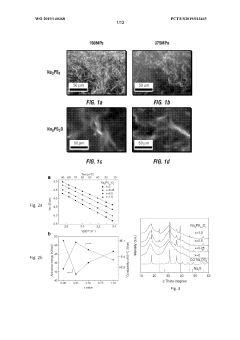
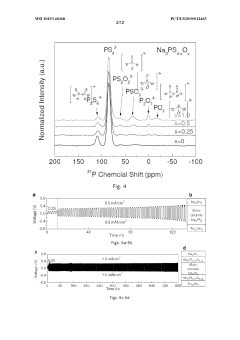
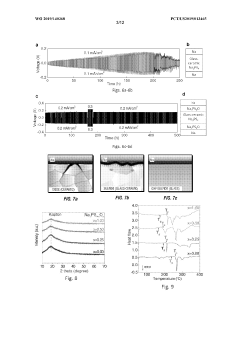
- A new class of sodium oxy-sulfide solid-state electrolytes with a microstructure approaching a continuous glass is developed, providing enhanced chemical stability and mechanical strength, achieved through a low-temperature ball-milling and pressing process, allowing for the formation of a nearly flawless glassy structure that is stable with sodium metal or alloys.
Solid-state sodium silicate battery (SSSB) employing sodium and calcium rich electrolyte enriched with sodium
PatentActiveIN202241033884A
Innovation
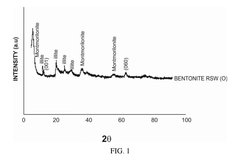
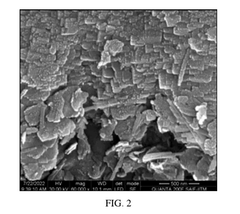
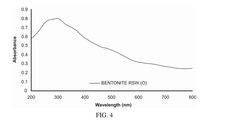
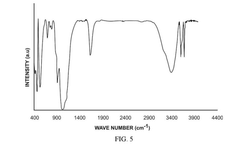
- A solid-state sodium silicate battery design featuring a sodium silicate cathode, carbon black anode, and a solid-state-electrolyte formed by coating a naturally Sodium and Calcium rich material, enriched with sodium, on a Polypropylene separator membrane, which enhances ionic conductivity and stability.
Safety and Reliability Standards for Aerospace Battery Systems
The aerospace industry imposes stringent safety and reliability standards on all components, with battery systems receiving particularly rigorous scrutiny due to their potential failure risks. For solid-state sodium batteries to achieve aerospace certification, they must comply with comprehensive standards including DO-311A (RTCA/DO-311A), which specifically addresses airborne rechargeable lithium batteries, and will need adaptation for sodium-based systems. These standards mandate extensive testing protocols covering thermal runaway prevention, vibration resistance, altitude performance, and electromagnetic compatibility.
Safety certification for aerospace battery systems requires demonstrating resilience against extreme conditions, including temperature ranges from -65°C to +85°C, rapid decompression scenarios, and high-intensity electromagnetic interference. Solid-state sodium batteries must undergo accelerated life testing to verify their operational lifespan meets the 20,000+ hour requirements typical for aerospace applications. The absence of flammable liquid electrolytes in solid-state designs presents a significant safety advantage, potentially simplifying certification processes compared to conventional lithium-ion systems.
Reliability verification demands statistical validation through multiple test cycles under varying operational conditions. The SAE AS8090 standard provides guidance on battery system design and integration, while MIL-STD-810H outlines environmental testing methodologies applicable to aerospace battery systems. Solid-state sodium batteries must demonstrate consistent performance across thousands of charge-discharge cycles while maintaining capacity within specified parameters, typically allowing no more than 20% degradation over the certified operational life.
Failure mode and effects analysis (FMEA) represents a critical component of aerospace battery certification, requiring manufacturers to identify all potential failure mechanisms and implement appropriate mitigation strategies. For solid-state sodium batteries, particular attention must focus on interface stability between electrodes and solid electrolytes, as well as mechanical integrity during thermal expansion and contraction cycles. The certification process also demands comprehensive documentation of manufacturing processes, quality control procedures, and traceability of all components.
International harmonization of standards presents another challenge, as aerospace manufacturers must navigate requirements from multiple regulatory bodies including the FAA, EASA, CAAC, and others. The development of sodium battery-specific standards remains in early stages, requiring manufacturers to work closely with certification authorities to establish appropriate testing protocols. This collaborative approach between industry, research institutions, and regulatory bodies will be essential for creating a viable certification pathway for this emerging technology in aerospace applications.
Safety certification for aerospace battery systems requires demonstrating resilience against extreme conditions, including temperature ranges from -65°C to +85°C, rapid decompression scenarios, and high-intensity electromagnetic interference. Solid-state sodium batteries must undergo accelerated life testing to verify their operational lifespan meets the 20,000+ hour requirements typical for aerospace applications. The absence of flammable liquid electrolytes in solid-state designs presents a significant safety advantage, potentially simplifying certification processes compared to conventional lithium-ion systems.
Reliability verification demands statistical validation through multiple test cycles under varying operational conditions. The SAE AS8090 standard provides guidance on battery system design and integration, while MIL-STD-810H outlines environmental testing methodologies applicable to aerospace battery systems. Solid-state sodium batteries must demonstrate consistent performance across thousands of charge-discharge cycles while maintaining capacity within specified parameters, typically allowing no more than 20% degradation over the certified operational life.
Failure mode and effects analysis (FMEA) represents a critical component of aerospace battery certification, requiring manufacturers to identify all potential failure mechanisms and implement appropriate mitigation strategies. For solid-state sodium batteries, particular attention must focus on interface stability between electrodes and solid electrolytes, as well as mechanical integrity during thermal expansion and contraction cycles. The certification process also demands comprehensive documentation of manufacturing processes, quality control procedures, and traceability of all components.
International harmonization of standards presents another challenge, as aerospace manufacturers must navigate requirements from multiple regulatory bodies including the FAA, EASA, CAAC, and others. The development of sodium battery-specific standards remains in early stages, requiring manufacturers to work closely with certification authorities to establish appropriate testing protocols. This collaborative approach between industry, research institutions, and regulatory bodies will be essential for creating a viable certification pathway for this emerging technology in aerospace applications.
Environmental Impact and Sustainability Considerations
The aerospace industry's growing interest in solid-state sodium batteries necessitates careful consideration of their environmental impact and sustainability profile. These batteries offer significant environmental advantages over conventional lithium-ion technologies, particularly in terms of resource availability. Sodium is approximately 1,000 times more abundant in the Earth's crust than lithium, substantially reducing extraction-related environmental concerns and resource depletion risks that currently plague lithium supply chains.
The manufacturing processes for solid-state sodium batteries potentially require lower energy inputs compared to conventional lithium-ion batteries, resulting in reduced carbon footprints during production. This aligns with aerospace industry sustainability goals and increasingly stringent environmental regulations governing manufacturing operations. Additionally, the absence of flammable liquid electrolytes eliminates the need for certain toxic materials used in conventional battery production, further enhancing their environmental credentials.
End-of-life considerations represent another significant sustainability advantage. Solid-state sodium batteries contain fewer toxic components than conventional alternatives, simplifying recycling processes and reducing hazardous waste management challenges. The aerospace industry, with its stringent safety and disposal protocols, stands to benefit considerably from these characteristics, particularly for applications in remote or environmentally sensitive locations.
Life cycle assessment studies indicate that solid-state sodium batteries may offer up to 30% lower global warming potential compared to conventional lithium-ion technologies when considering extraction, manufacturing, use, and disposal phases. This comprehensive environmental advantage becomes particularly relevant for aerospace applications where operational lifespans are extended and reliability requirements are stringent.
The integration of these batteries into aerospace systems also presents opportunities for weight reduction and improved energy efficiency, potentially reducing fuel consumption and associated emissions in aircraft and spacecraft operations. This indirect environmental benefit complements the direct advantages of the battery technology itself, creating a compelling sustainability case for aerospace adoption.
Regulatory frameworks worldwide are increasingly recognizing these environmental benefits, with several jurisdictions developing incentives for technologies that reduce dependence on critical minerals like lithium and cobalt. The aerospace industry, already subject to stringent environmental compliance requirements, may find solid-state sodium batteries advantageous for meeting future sustainability targets and environmental performance standards.
The manufacturing processes for solid-state sodium batteries potentially require lower energy inputs compared to conventional lithium-ion batteries, resulting in reduced carbon footprints during production. This aligns with aerospace industry sustainability goals and increasingly stringent environmental regulations governing manufacturing operations. Additionally, the absence of flammable liquid electrolytes eliminates the need for certain toxic materials used in conventional battery production, further enhancing their environmental credentials.
End-of-life considerations represent another significant sustainability advantage. Solid-state sodium batteries contain fewer toxic components than conventional alternatives, simplifying recycling processes and reducing hazardous waste management challenges. The aerospace industry, with its stringent safety and disposal protocols, stands to benefit considerably from these characteristics, particularly for applications in remote or environmentally sensitive locations.
Life cycle assessment studies indicate that solid-state sodium batteries may offer up to 30% lower global warming potential compared to conventional lithium-ion technologies when considering extraction, manufacturing, use, and disposal phases. This comprehensive environmental advantage becomes particularly relevant for aerospace applications where operational lifespans are extended and reliability requirements are stringent.
The integration of these batteries into aerospace systems also presents opportunities for weight reduction and improved energy efficiency, potentially reducing fuel consumption and associated emissions in aircraft and spacecraft operations. This indirect environmental benefit complements the direct advantages of the battery technology itself, creating a compelling sustainability case for aerospace adoption.
Regulatory frameworks worldwide are increasingly recognizing these environmental benefits, with several jurisdictions developing incentives for technologies that reduce dependence on critical minerals like lithium and cobalt. The aerospace industry, already subject to stringent environmental compliance requirements, may find solid-state sodium batteries advantageous for meeting future sustainability targets and environmental performance standards.
Unlock deeper insights with PatSnap Eureka Quick Research — get a full tech report to explore trends and direct your research. Try now!
Generate Your Research Report Instantly with AI Agent
Supercharge your innovation with PatSnap Eureka AI Agent Platform!