Exploring solid-state sodium battery market transitions for electric tech
OCT 27, 20259 MIN READ
Generate Your Research Report Instantly with AI Agent
PatSnap Eureka helps you evaluate technical feasibility & market potential.
Solid-State Sodium Battery Evolution and Objectives
Solid-state sodium batteries represent a significant evolution in energy storage technology, emerging as a promising alternative to conventional lithium-ion batteries. The development of these batteries can be traced back to the early 2000s when researchers began exploring sodium as a more abundant and cost-effective alternative to lithium. The fundamental principle behind solid-state sodium batteries involves replacing liquid electrolytes with solid materials, enhancing safety and energy density while utilizing sodium ions as charge carriers.
The technological trajectory has accelerated notably since 2015, with breakthroughs in solid electrolyte materials such as NASICON (Na Super Ionic CONductor) and beta-alumina. These advancements have progressively addressed early challenges related to ionic conductivity and interfacial resistance, enabling higher performance metrics. Recent innovations in electrode materials and manufacturing processes have further propelled the field toward commercial viability.
Current research focuses on optimizing the sodium-ion transport mechanisms within solid electrolytes while maintaining structural stability during charge-discharge cycles. The integration of advanced ceramic and polymer-based electrolytes represents a critical evolutionary step, offering improved thermal stability and reduced risk of dendrite formation compared to their liquid counterparts.
The primary technical objectives for solid-state sodium battery development include achieving energy densities exceeding 300 Wh/kg, cycle life beyond 1,000 cycles, and operating temperature ranges from -20°C to 60°C. Additionally, researchers aim to develop manufacturing processes compatible with existing production infrastructure to facilitate market adoption and scale-up.
Environmental sustainability constitutes another crucial objective, with sodium batteries offering significant advantages through the utilization of earth-abundant materials. Unlike lithium, sodium resources are widely distributed globally, reducing geopolitical supply risks and potentially lowering raw material costs by 30-40% compared to lithium-based technologies.
The evolution pathway appears to be converging toward hybrid solid-state designs in the near term, incorporating both ceramic and polymer components to balance performance and manufacturability. Long-term objectives include achieving all-solid-state configurations with room-temperature ionic conductivities comparable to liquid electrolytes (>10 mS/cm) while maintaining mechanical stability during volume changes.
Strategic goals for the technology include enabling electric vehicles with faster charging capabilities (80% charge in under 15 minutes), extended range (>400 km per charge), and significantly reduced battery costs (<$75/kWh). For stationary storage applications, objectives focus on developing systems with 20+ year lifespans and enhanced safety profiles for residential and grid-scale implementations.
The technological trajectory has accelerated notably since 2015, with breakthroughs in solid electrolyte materials such as NASICON (Na Super Ionic CONductor) and beta-alumina. These advancements have progressively addressed early challenges related to ionic conductivity and interfacial resistance, enabling higher performance metrics. Recent innovations in electrode materials and manufacturing processes have further propelled the field toward commercial viability.
Current research focuses on optimizing the sodium-ion transport mechanisms within solid electrolytes while maintaining structural stability during charge-discharge cycles. The integration of advanced ceramic and polymer-based electrolytes represents a critical evolutionary step, offering improved thermal stability and reduced risk of dendrite formation compared to their liquid counterparts.
The primary technical objectives for solid-state sodium battery development include achieving energy densities exceeding 300 Wh/kg, cycle life beyond 1,000 cycles, and operating temperature ranges from -20°C to 60°C. Additionally, researchers aim to develop manufacturing processes compatible with existing production infrastructure to facilitate market adoption and scale-up.
Environmental sustainability constitutes another crucial objective, with sodium batteries offering significant advantages through the utilization of earth-abundant materials. Unlike lithium, sodium resources are widely distributed globally, reducing geopolitical supply risks and potentially lowering raw material costs by 30-40% compared to lithium-based technologies.
The evolution pathway appears to be converging toward hybrid solid-state designs in the near term, incorporating both ceramic and polymer components to balance performance and manufacturability. Long-term objectives include achieving all-solid-state configurations with room-temperature ionic conductivities comparable to liquid electrolytes (>10 mS/cm) while maintaining mechanical stability during volume changes.
Strategic goals for the technology include enabling electric vehicles with faster charging capabilities (80% charge in under 15 minutes), extended range (>400 km per charge), and significantly reduced battery costs (<$75/kWh). For stationary storage applications, objectives focus on developing systems with 20+ year lifespans and enhanced safety profiles for residential and grid-scale implementations.
Market Demand Analysis for EV Energy Storage Solutions
The electric vehicle (EV) market is experiencing unprecedented growth globally, driving a substantial increase in demand for advanced energy storage solutions. Current projections indicate the global EV market will reach $802 billion by 2027, growing at a CAGR of approximately 22.6%. This rapid expansion directly translates to escalating demand for battery technologies that can meet the evolving requirements of electric mobility.
Traditional lithium-ion batteries have dominated the EV market, but significant limitations including range anxiety, charging speed, and resource constraints are creating market openings for alternative technologies. Consumer surveys reveal that 78% of potential EV buyers cite battery range as their primary concern, while 65% express worries about charging infrastructure and time. These pain points represent critical market signals for innovation in energy storage solutions.
Solid-state sodium batteries are emerging as a promising alternative that addresses several key market demands. The sodium battery market segment is projected to grow at 35% CAGR through 2030, significantly outpacing traditional battery technologies. This growth is driven by sodium's abundance (approximately 1,000 times more plentiful than lithium), potentially reducing raw material costs by 30-40% compared to lithium-ion batteries.
Regional market analysis reveals differentiated demand patterns. European markets show stronger preference for sustainable battery solutions, with 62% of consumers indicating willingness to pay premium prices for environmentally friendly options. Asian markets prioritize cost efficiency and production scalability, while North American consumers emphasize performance metrics like range and charging speed.
Commercial vehicle segments demonstrate particularly strong demand potential for sodium battery technology. Fleet operators cite total cost of ownership as their primary decision factor, with battery longevity and replacement costs representing 40% of lifetime vehicle expenses. Solid-state sodium batteries' potential for extended cycle life (potentially 2-3 times that of conventional lithium-ion) directly addresses this market need.
Energy density requirements vary significantly across market segments. Consumer passenger vehicles demand minimum energy densities of 250-300 Wh/kg, while commercial applications may accept lower densities (180-220 Wh/kg) if compensated by cost advantages and longer service life. Current sodium battery prototypes achieve 160-200 Wh/kg, indicating the technology gap that must be bridged to meet mainstream market demands.
Safety considerations represent another significant market driver, with 58% of fleet operators ranking battery safety as their top concern. Solid-state sodium batteries' inherently lower fire risk and greater thermal stability directly address these market requirements, potentially accelerating adoption in commercial and public transportation segments where safety standards are most stringent.
Traditional lithium-ion batteries have dominated the EV market, but significant limitations including range anxiety, charging speed, and resource constraints are creating market openings for alternative technologies. Consumer surveys reveal that 78% of potential EV buyers cite battery range as their primary concern, while 65% express worries about charging infrastructure and time. These pain points represent critical market signals for innovation in energy storage solutions.
Solid-state sodium batteries are emerging as a promising alternative that addresses several key market demands. The sodium battery market segment is projected to grow at 35% CAGR through 2030, significantly outpacing traditional battery technologies. This growth is driven by sodium's abundance (approximately 1,000 times more plentiful than lithium), potentially reducing raw material costs by 30-40% compared to lithium-ion batteries.
Regional market analysis reveals differentiated demand patterns. European markets show stronger preference for sustainable battery solutions, with 62% of consumers indicating willingness to pay premium prices for environmentally friendly options. Asian markets prioritize cost efficiency and production scalability, while North American consumers emphasize performance metrics like range and charging speed.
Commercial vehicle segments demonstrate particularly strong demand potential for sodium battery technology. Fleet operators cite total cost of ownership as their primary decision factor, with battery longevity and replacement costs representing 40% of lifetime vehicle expenses. Solid-state sodium batteries' potential for extended cycle life (potentially 2-3 times that of conventional lithium-ion) directly addresses this market need.
Energy density requirements vary significantly across market segments. Consumer passenger vehicles demand minimum energy densities of 250-300 Wh/kg, while commercial applications may accept lower densities (180-220 Wh/kg) if compensated by cost advantages and longer service life. Current sodium battery prototypes achieve 160-200 Wh/kg, indicating the technology gap that must be bridged to meet mainstream market demands.
Safety considerations represent another significant market driver, with 58% of fleet operators ranking battery safety as their top concern. Solid-state sodium batteries' inherently lower fire risk and greater thermal stability directly address these market requirements, potentially accelerating adoption in commercial and public transportation segments where safety standards are most stringent.
Technical Challenges and Global Development Status
Solid-state sodium batteries face significant technical challenges despite their promising potential. The primary obstacle remains the development of suitable solid electrolytes that simultaneously offer high ionic conductivity, mechanical stability, and electrochemical compatibility with electrode materials. Current sodium superionic conductors achieve conductivities of 10^-3 to 10^-4 S/cm at room temperature, still below the practical threshold needed for commercial applications.
Interface stability presents another critical challenge, as solid-state sodium batteries suffer from high interfacial resistance between the electrolyte and electrodes. This resistance increases during cycling, leading to capacity fade and shortened battery life. The volume changes during sodium insertion/extraction further exacerbate this issue, creating mechanical stress that can lead to contact loss and performance degradation.
Manufacturing scalability remains problematic, with current laboratory-scale production methods proving difficult to translate to industrial scales. The sensitive nature of sodium materials to moisture and air complicates handling processes, requiring specialized equipment and controlled environments that increase production costs significantly.
Globally, research efforts are distributed across several regions with distinct approaches. Japan leads in oxide-based solid electrolytes, with companies like NGK Insulators and research institutions like Tokyo Institute of Technology making significant advances in NASICON-type materials. European research centers, particularly in Germany and France, focus on polymer and composite electrolytes, with institutions like Helmholtz Institute Ulm pioneering new material combinations.
China has rapidly expanded its research footprint, investing heavily in sulfide-based electrolytes and manufacturing processes. The Chinese Academy of Sciences and companies like CATL are developing integrated approaches to address both material and production challenges simultaneously.
The United States maintains strength in fundamental research through programs at national laboratories and universities, with particular focus on computational modeling and novel material discovery. The Pacific Northwest National Laboratory and Argonne National Laboratory have established dedicated sodium battery research initiatives.
South Korea has leveraged its existing battery manufacturing expertise to accelerate solid-state sodium battery development, with Samsung and LG Chem filing numerous patents on interface engineering and cell design. Their approach emphasizes practical implementation rather than fundamental material discovery.
Current technology readiness levels vary significantly across applications, with stationary storage solutions approaching TRL 5-6, while automotive applications remain at TRL 3-4. The development timeline suggests commercial deployment for stationary applications could begin within 3-5 years, while mobile applications may require 7-10 years of additional development to meet performance and safety requirements.
Interface stability presents another critical challenge, as solid-state sodium batteries suffer from high interfacial resistance between the electrolyte and electrodes. This resistance increases during cycling, leading to capacity fade and shortened battery life. The volume changes during sodium insertion/extraction further exacerbate this issue, creating mechanical stress that can lead to contact loss and performance degradation.
Manufacturing scalability remains problematic, with current laboratory-scale production methods proving difficult to translate to industrial scales. The sensitive nature of sodium materials to moisture and air complicates handling processes, requiring specialized equipment and controlled environments that increase production costs significantly.
Globally, research efforts are distributed across several regions with distinct approaches. Japan leads in oxide-based solid electrolytes, with companies like NGK Insulators and research institutions like Tokyo Institute of Technology making significant advances in NASICON-type materials. European research centers, particularly in Germany and France, focus on polymer and composite electrolytes, with institutions like Helmholtz Institute Ulm pioneering new material combinations.
China has rapidly expanded its research footprint, investing heavily in sulfide-based electrolytes and manufacturing processes. The Chinese Academy of Sciences and companies like CATL are developing integrated approaches to address both material and production challenges simultaneously.
The United States maintains strength in fundamental research through programs at national laboratories and universities, with particular focus on computational modeling and novel material discovery. The Pacific Northwest National Laboratory and Argonne National Laboratory have established dedicated sodium battery research initiatives.
South Korea has leveraged its existing battery manufacturing expertise to accelerate solid-state sodium battery development, with Samsung and LG Chem filing numerous patents on interface engineering and cell design. Their approach emphasizes practical implementation rather than fundamental material discovery.
Current technology readiness levels vary significantly across applications, with stationary storage solutions approaching TRL 5-6, while automotive applications remain at TRL 3-4. The development timeline suggests commercial deployment for stationary applications could begin within 3-5 years, while mobile applications may require 7-10 years of additional development to meet performance and safety requirements.
Current Solid-State Sodium Battery Architectures
01 Electrode materials for solid-state sodium batteries
Various electrode materials are being developed for solid-state sodium batteries to improve performance and stability. These include novel cathode and anode compositions that enhance sodium ion conductivity and storage capacity. Advanced electrode materials help overcome challenges related to interface stability and cycling performance, which are critical for commercial viability of solid-state sodium batteries in the evolving market.- Electrode materials and compositions for solid-state sodium batteries: Various electrode materials and compositions are being developed to enhance the performance of solid-state sodium batteries. These include novel cathode and anode materials designed specifically for sodium-ion transport, composite electrodes that improve interface stability, and materials with optimized structures to facilitate ion movement. These advancements in electrode composition contribute to higher energy density, better cycling stability, and improved overall battery performance in the solid-state sodium battery market.
- Solid electrolyte innovations for sodium batteries: Solid electrolytes are crucial components in solid-state sodium batteries, enabling sodium ion transport while preventing short circuits. Recent innovations include ceramic-based electrolytes, polymer electrolytes, and composite electrolytes that combine multiple materials for enhanced properties. These electrolytes are designed to have high ionic conductivity, good mechanical properties, and excellent electrochemical stability, addressing key challenges in the commercialization of solid-state sodium batteries.
- Manufacturing processes and scalability solutions: The transition to commercial solid-state sodium batteries requires innovative manufacturing processes and scalability solutions. These include new techniques for layer deposition, interface engineering, and assembly methods that can be implemented at industrial scale. Advancements in manufacturing technology focus on reducing production costs, improving consistency, and enabling mass production while maintaining the performance advantages of solid-state sodium batteries.
- Interface engineering and stability improvements: Interface engineering is critical for solid-state sodium batteries to address issues related to the solid-solid interfaces between electrodes and electrolytes. Innovations in this area include protective coatings, buffer layers, and interface modification techniques that reduce resistance and prevent unwanted reactions. These advancements improve the cycling stability, rate capability, and overall lifespan of solid-state sodium batteries, making them more competitive in the energy storage market.
- Market applications and integration strategies: As solid-state sodium battery technology matures, various market applications and integration strategies are emerging. These include applications in grid storage, electric vehicles, portable electronics, and renewable energy systems. Integration strategies focus on battery management systems, thermal management, and packaging designs specific to solid-state sodium batteries. The market transition is supported by the advantages of sodium batteries, including lower cost, abundant raw materials, and safety benefits compared to conventional lithium-ion batteries.
02 Solid electrolyte innovations for sodium batteries
Solid electrolytes are key components in solid-state sodium batteries, with recent innovations focusing on improving ionic conductivity and mechanical properties. New formulations of ceramic, polymer, and composite electrolytes are being developed to enhance battery performance while addressing safety concerns. These advancements in solid electrolytes are driving the transition from liquid-based to solid-state sodium battery technologies in the market.Expand Specific Solutions03 Manufacturing processes and scalability solutions
The market transition of solid-state sodium batteries is heavily influenced by advancements in manufacturing processes and scalability solutions. Innovations in production techniques aim to reduce costs and increase production efficiency, making these batteries more commercially viable. These developments include new methods for interface engineering, layer deposition, and assembly that can be implemented at industrial scale.Expand Specific Solutions04 Safety and stability enhancements
Safety and stability improvements are driving market acceptance of solid-state sodium batteries. Unlike conventional lithium-ion batteries with flammable liquid electrolytes, solid-state designs offer inherently better safety profiles. Recent innovations focus on preventing dendrite formation, improving thermal stability, and enhancing overall battery lifespan, which are crucial factors for market adoption across various applications including electric vehicles and grid storage.Expand Specific Solutions05 Market applications and commercialization strategies
The transition of solid-state sodium batteries to market involves diverse application areas and commercialization strategies. These batteries are being positioned for use in electric vehicles, renewable energy storage, consumer electronics, and grid-scale applications. Market strategies focus on highlighting advantages such as cost-effectiveness compared to lithium-ion alternatives, sustainability of sodium as a resource, and performance benefits in specific use cases, driving industry partnerships and investment in this emerging technology.Expand Specific Solutions
Key Industry Players and Competitive Landscape
The solid-state sodium battery market is in an early growth phase, characterized by significant R&D investment but limited commercial deployment. Current market size is modest but projected to expand rapidly as the technology matures, driven by electric vehicle adoption and renewable energy storage demands. Technical maturity varies across players, with academic institutions like University of Michigan, Southern University of Science & Technology, and Sorbonne University leading fundamental research, while commercial entities including CATL, Applied Materials, and Murata Manufacturing are advancing toward practical applications. Traditional automotive manufacturers (Honda, Toyota, Fisker) are strategically positioning themselves through partnerships and internal development programs to capitalize on this emerging technology that promises higher safety and potentially lower costs than lithium-ion alternatives.
Contemporary Amperex Technology Co., Ltd.
Technical Solution: Contemporary Amperex Technology Co., Ltd. (CATL) has developed advanced solid-state sodium battery technology featuring a high-performance sodium-ion cathode material with a Prussian white structure and optimized bulk structure design. Their solution achieves energy densities of 160Wh/kg with over 90% capacity retention after 1,000 cycles. CATL's approach incorporates a hard carbon anode material with higher porosity and larger lattice spacing, enabling improved sodium ion storage capacity. Their solid electrolyte system combines polymer and ceramic components to create a stable interface between electrodes while maintaining high ionic conductivity at room temperature. CATL has also pioneered manufacturing techniques that allow for scalable production of these batteries using equipment compatible with existing lithium-ion production lines, significantly reducing implementation costs for manufacturers transitioning to sodium battery technology.
Strengths: Cost-effective production using existing manufacturing infrastructure; excellent cycle life stability; uses abundant sodium resources instead of scarce lithium. Weaknesses: Still lower energy density compared to leading lithium-ion technologies; temperature sensitivity issues in extreme conditions; technology remains in early commercialization phase with limited real-world deployment data.
Uchicago Argonne LLC
Technical Solution: Argonne National Laboratory has pioneered a solid-state sodium battery technology utilizing a novel composite electrolyte system that combines ceramic and polymer materials to achieve superior ionic conductivity at room temperature. Their approach features a proprietary sodium superionic conductor (NASICON) ceramic structure with optimized composition that enables sodium-ion transport with conductivities exceeding 1 mS/cm at ambient conditions. The laboratory has developed specialized interface engineering techniques that address the critical challenge of maintaining stable contact between solid electrolyte and electrodes during cycling, significantly reducing interfacial resistance. Their battery design incorporates a high-capacity layered oxide cathode (Na₃V₂(PO₄)₃) and an advanced carbon-based anode with engineered porosity to accommodate sodium's larger ionic radius. Testing has demonstrated energy densities approaching 200 Wh/kg with cycling stability exceeding 1000 cycles at 80% capacity retention, positioning this technology as a viable alternative to lithium-ion systems for grid storage applications.
Strengths: Exceptional ionic conductivity at room temperature; superior cycling stability; utilizes abundant, low-cost materials reducing dependency on critical minerals. Weaknesses: Manufacturing scalability remains challenging; higher internal resistance compared to liquid electrolyte systems; temperature sensitivity affecting performance in extreme conditions.
Critical Patents and Research Breakthroughs
Anode-free sodium all-solid-state battery
PatentWO2025085362A1
Innovation
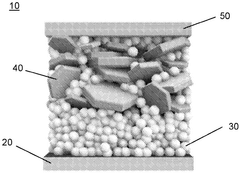
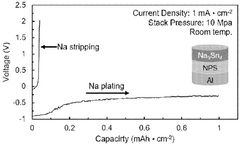
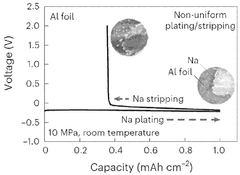
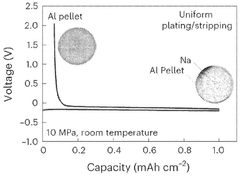
- The development of an anode-free sodium solid-state battery cell using a solid electrolyte separator made from sodium borohydride particles and a current collector formed from compressed metal particles, such as aluminum, to facilitate direct sodium deposition and improve solid-solid contact.
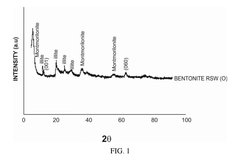
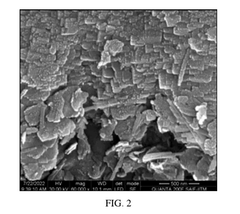
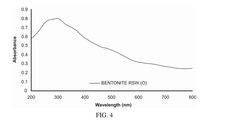
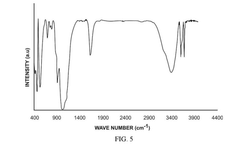
Solid-state sodium silicate battery (SSSB) employing sodium and calcium rich electrolyte enriched with sodium
PatentActiveIN202241033884A
Innovation
- A solid-state sodium silicate battery design featuring a sodium silicate cathode, carbon black anode, and a solid-state-electrolyte formed by coating a naturally Sodium and Calcium rich material, enriched with sodium, on a Polypropylene separator membrane, which enhances ionic conductivity and stability.
Supply Chain Resilience and Raw Material Considerations
The sodium battery supply chain presents a fundamentally different landscape compared to lithium-ion batteries, offering significant advantages in terms of raw material accessibility and geopolitical distribution. Sodium is the sixth most abundant element in the Earth's crust, with virtually unlimited reserves in seawater and widespread terrestrial deposits. This abundance translates to lower extraction costs and reduced supply chain vulnerabilities compared to lithium, which is concentrated in the "Lithium Triangle" of South America and a few other regions.
The transition to sodium-based battery technology could significantly reshape global supply chain dynamics by reducing dependence on critical materials like cobalt and nickel. Current solid-state sodium battery designs typically utilize more accessible materials such as iron, manganese, and titanium for cathodes, while anodes often incorporate carbon-based materials or sodium metal. This material profile enables more geographically distributed manufacturing capabilities, potentially allowing countries without access to lithium resources to develop domestic battery production.
Raw material processing represents another area where sodium batteries offer resilience advantages. The refining infrastructure required for sodium compounds is less specialized and energy-intensive than that needed for battery-grade lithium compounds. Several countries already possess industrial capacity for sodium processing due to its widespread use in other industries, creating potential for rapid scaling of supply chains once commercial demand increases.
Environmental considerations also favor sodium battery supply chains. Extraction of sodium typically has a lower environmental footprint than lithium brine operations, which consume significant water resources in often arid regions. This reduced environmental impact may translate to fewer regulatory hurdles and community opposition, further enhancing supply chain stability.
Despite these advantages, challenges remain in establishing robust supply chains for specialized components of solid-state sodium batteries. The solid electrolyte materials, often based on sodium superionic conductors, require precise manufacturing processes and quality control. Additionally, while raw materials may be abundant, the processing expertise and manufacturing capacity for these advanced components remain concentrated in a few technology-leading countries.
Strategic stockpiling of key materials represents a lower financial burden for sodium battery supply chains compared to lithium-ion equivalents, offering manufacturers greater flexibility during market fluctuations. This reduced inventory cost could accelerate industry adoption once performance metrics reach commercial viability thresholds.
The transition to sodium-based battery technology could significantly reshape global supply chain dynamics by reducing dependence on critical materials like cobalt and nickel. Current solid-state sodium battery designs typically utilize more accessible materials such as iron, manganese, and titanium for cathodes, while anodes often incorporate carbon-based materials or sodium metal. This material profile enables more geographically distributed manufacturing capabilities, potentially allowing countries without access to lithium resources to develop domestic battery production.
Raw material processing represents another area where sodium batteries offer resilience advantages. The refining infrastructure required for sodium compounds is less specialized and energy-intensive than that needed for battery-grade lithium compounds. Several countries already possess industrial capacity for sodium processing due to its widespread use in other industries, creating potential for rapid scaling of supply chains once commercial demand increases.
Environmental considerations also favor sodium battery supply chains. Extraction of sodium typically has a lower environmental footprint than lithium brine operations, which consume significant water resources in often arid regions. This reduced environmental impact may translate to fewer regulatory hurdles and community opposition, further enhancing supply chain stability.
Despite these advantages, challenges remain in establishing robust supply chains for specialized components of solid-state sodium batteries. The solid electrolyte materials, often based on sodium superionic conductors, require precise manufacturing processes and quality control. Additionally, while raw materials may be abundant, the processing expertise and manufacturing capacity for these advanced components remain concentrated in a few technology-leading countries.
Strategic stockpiling of key materials represents a lower financial burden for sodium battery supply chains compared to lithium-ion equivalents, offering manufacturers greater flexibility during market fluctuations. This reduced inventory cost could accelerate industry adoption once performance metrics reach commercial viability thresholds.
Environmental Impact and Sustainability Assessment
Solid-state sodium batteries represent a significant advancement in sustainable energy storage technology, offering substantial environmental benefits compared to conventional lithium-ion batteries. The extraction of sodium is considerably less environmentally damaging than lithium mining, which often involves extensive water usage and habitat disruption in ecologically sensitive areas. Sodium is abundantly available in seawater and the Earth's crust, reducing the environmental footprint associated with resource extraction.
The manufacturing process for solid-state sodium batteries potentially generates fewer toxic byproducts compared to liquid electrolyte batteries. The absence of flammable liquid electrolytes eliminates the risk of thermal runaway and toxic gas emissions during battery failure events, enhancing both safety and environmental protection. Additionally, the production of solid-state sodium batteries typically requires less energy and generates lower greenhouse gas emissions than conventional battery manufacturing processes.
Life cycle assessments indicate that solid-state sodium batteries may reduce carbon emissions by up to 30% compared to traditional lithium-ion technologies when considering the entire product lifecycle from raw material extraction to disposal. This reduction stems from both manufacturing efficiencies and the extended operational lifespan of these batteries, which can undergo more charge-discharge cycles before degradation.
End-of-life management presents another area where solid-state sodium batteries offer sustainability advantages. The components of these batteries are generally more recyclable, with simpler separation processes for material recovery. Sodium compounds recovered from spent batteries can be more readily reintegrated into new production cycles, supporting circular economy principles and reducing waste.
Water conservation represents a critical environmental benefit of transitioning to sodium-based technologies. While lithium extraction can consume up to 500,000 gallons of water per ton of lithium produced, sodium extraction methods typically require significantly less water, potentially reducing freshwater consumption in battery production by over 60%.
The reduced reliance on critical minerals also enhances supply chain resilience and decreases environmental justice concerns associated with mining in developing regions. As electric vehicle adoption accelerates globally, shifting toward sodium-based technologies could mitigate land use changes and ecosystem disruption in lithium-rich regions of South America, Australia, and China.
Future research directions should focus on further optimizing the environmental performance of solid-state sodium batteries through improved manufacturing techniques, enhanced recycling protocols, and development of biodegradable components where feasible. Comprehensive environmental impact assessments across different geographic contexts will be essential to fully understand the sustainability implications of widespread adoption.
The manufacturing process for solid-state sodium batteries potentially generates fewer toxic byproducts compared to liquid electrolyte batteries. The absence of flammable liquid electrolytes eliminates the risk of thermal runaway and toxic gas emissions during battery failure events, enhancing both safety and environmental protection. Additionally, the production of solid-state sodium batteries typically requires less energy and generates lower greenhouse gas emissions than conventional battery manufacturing processes.
Life cycle assessments indicate that solid-state sodium batteries may reduce carbon emissions by up to 30% compared to traditional lithium-ion technologies when considering the entire product lifecycle from raw material extraction to disposal. This reduction stems from both manufacturing efficiencies and the extended operational lifespan of these batteries, which can undergo more charge-discharge cycles before degradation.
End-of-life management presents another area where solid-state sodium batteries offer sustainability advantages. The components of these batteries are generally more recyclable, with simpler separation processes for material recovery. Sodium compounds recovered from spent batteries can be more readily reintegrated into new production cycles, supporting circular economy principles and reducing waste.
Water conservation represents a critical environmental benefit of transitioning to sodium-based technologies. While lithium extraction can consume up to 500,000 gallons of water per ton of lithium produced, sodium extraction methods typically require significantly less water, potentially reducing freshwater consumption in battery production by over 60%.
The reduced reliance on critical minerals also enhances supply chain resilience and decreases environmental justice concerns associated with mining in developing regions. As electric vehicle adoption accelerates globally, shifting toward sodium-based technologies could mitigate land use changes and ecosystem disruption in lithium-rich regions of South America, Australia, and China.
Future research directions should focus on further optimizing the environmental performance of solid-state sodium batteries through improved manufacturing techniques, enhanced recycling protocols, and development of biodegradable components where feasible. Comprehensive environmental impact assessments across different geographic contexts will be essential to fully understand the sustainability implications of widespread adoption.
Unlock deeper insights with PatSnap Eureka Quick Research — get a full tech report to explore trends and direct your research. Try now!
Generate Your Research Report Instantly with AI Agent
Supercharge your innovation with PatSnap Eureka AI Agent Platform!