

Exploring superconducting options for PMSM cooling
AUG 18, 20259 MIN READ
Generate Your Research Report Instantly with AI Agent
PatSnap Eureka helps you evaluate technical feasibility & market potential.
Superconducting PMSM Cooling: Background and Objectives
Superconducting technology has emerged as a promising solution for enhancing the performance and efficiency of Permanent Magnet Synchronous Motors (PMSMs). The evolution of this technology can be traced back to the discovery of superconductivity in 1911 by Heike Kamerlingh Onnes. Since then, significant advancements have been made in understanding and harnessing the unique properties of superconducting materials.
The development of high-temperature superconductors (HTS) in the 1980s marked a crucial milestone, opening up new possibilities for practical applications. In the context of PMSMs, superconducting technology offers the potential to revolutionize cooling systems, addressing key challenges in motor design and performance.
The primary objective of exploring superconducting options for PMSM cooling is to overcome the limitations of conventional cooling methods. Traditional cooling techniques often struggle to manage heat dissipation effectively, particularly in high-power density applications. Superconducting cooling aims to significantly reduce thermal losses, enhance power density, and improve overall motor efficiency.
Another key goal is to enable the development of more compact and lightweight motor designs. By leveraging the near-zero electrical resistance of superconductors, it becomes possible to achieve higher current densities without excessive heat generation. This could lead to substantial reductions in motor size and weight, making PMSMs more suitable for applications where space and weight constraints are critical.
Furthermore, the exploration of superconducting cooling options seeks to extend the operational range of PMSMs. By maintaining lower operating temperatures, superconducting systems can potentially increase the motor's power output and torque capabilities. This could open up new avenues for PMSMs in high-performance applications across various industries, including transportation, renewable energy, and industrial manufacturing.
The technological trajectory in this field is moving towards the development of more practical and cost-effective superconducting cooling solutions. Current research efforts are focused on improving the design of superconducting coils, optimizing cryogenic systems, and developing novel materials with superior superconducting properties at higher temperatures.
As the technology continues to mature, the ultimate aim is to create a new generation of PMSMs that can operate at significantly higher efficiencies, with reduced losses and improved reliability. This aligns with broader industry trends towards energy conservation, sustainability, and the electrification of various systems and processes.
The development of high-temperature superconductors (HTS) in the 1980s marked a crucial milestone, opening up new possibilities for practical applications. In the context of PMSMs, superconducting technology offers the potential to revolutionize cooling systems, addressing key challenges in motor design and performance.
The primary objective of exploring superconducting options for PMSM cooling is to overcome the limitations of conventional cooling methods. Traditional cooling techniques often struggle to manage heat dissipation effectively, particularly in high-power density applications. Superconducting cooling aims to significantly reduce thermal losses, enhance power density, and improve overall motor efficiency.
Another key goal is to enable the development of more compact and lightweight motor designs. By leveraging the near-zero electrical resistance of superconductors, it becomes possible to achieve higher current densities without excessive heat generation. This could lead to substantial reductions in motor size and weight, making PMSMs more suitable for applications where space and weight constraints are critical.
Furthermore, the exploration of superconducting cooling options seeks to extend the operational range of PMSMs. By maintaining lower operating temperatures, superconducting systems can potentially increase the motor's power output and torque capabilities. This could open up new avenues for PMSMs in high-performance applications across various industries, including transportation, renewable energy, and industrial manufacturing.
The technological trajectory in this field is moving towards the development of more practical and cost-effective superconducting cooling solutions. Current research efforts are focused on improving the design of superconducting coils, optimizing cryogenic systems, and developing novel materials with superior superconducting properties at higher temperatures.
As the technology continues to mature, the ultimate aim is to create a new generation of PMSMs that can operate at significantly higher efficiencies, with reduced losses and improved reliability. This aligns with broader industry trends towards energy conservation, sustainability, and the electrification of various systems and processes.
Market Demand Analysis for Advanced PMSM Cooling Solutions
The market demand for advanced cooling solutions in Permanent Magnet Synchronous Motors (PMSMs) has been steadily increasing, driven by the growing adoption of electric vehicles (EVs) and the need for more efficient industrial motors. As PMSMs become more powerful and compact, the challenge of managing heat dissipation becomes increasingly critical. This has created a significant opportunity for innovative cooling technologies, particularly in the realm of superconducting solutions.
The automotive sector represents the largest market for advanced PMSM cooling solutions. With the global EV market projected to grow at a compound annual growth rate (CAGR) of over 20% in the coming years, the demand for high-performance, efficient motors is surging. Automotive manufacturers are seeking cooling solutions that can enhance motor performance, extend range, and improve overall vehicle efficiency. This trend is further amplified by stringent emissions regulations and government incentives promoting EV adoption.
In the industrial sector, the demand for advanced PMSM cooling solutions is driven by the need for increased energy efficiency and reduced operational costs. Industries such as manufacturing, robotics, and renewable energy are increasingly adopting PMSMs for their superior performance and efficiency. The ability to operate these motors at higher power densities without compromising reliability is a key factor driving the demand for advanced cooling technologies.
The aerospace and defense sectors also present a growing market for advanced PMSM cooling solutions. The shift towards more electric aircraft and the development of electric propulsion systems for unmanned aerial vehicles (UAVs) require motors that can deliver high power output in compact, lightweight packages. Superconducting cooling solutions offer the potential to meet these demanding requirements.
Market analysis indicates that the Asia-Pacific region, particularly China and Japan, is expected to be the fastest-growing market for advanced PMSM cooling solutions. This is attributed to the rapid growth of the EV industry and government initiatives promoting clean energy technologies in these countries. North America and Europe are also significant markets, driven by the automotive and industrial sectors.
The demand for superconducting cooling solutions for PMSMs is still in its early stages but shows promising growth potential. While current market penetration is limited due to the high costs and technical challenges associated with superconducting technologies, ongoing research and development efforts are expected to drive down costs and improve feasibility in the coming years.
Key market drivers include the push for higher power density in electric motors, the need for improved thermal management in compact designs, and the potential for significant efficiency gains offered by superconducting technologies. However, challenges such as the high cost of materials, complexity of cryogenic systems, and the need for specialized infrastructure may initially limit widespread adoption to high-end applications where performance benefits outweigh cost considerations.
The automotive sector represents the largest market for advanced PMSM cooling solutions. With the global EV market projected to grow at a compound annual growth rate (CAGR) of over 20% in the coming years, the demand for high-performance, efficient motors is surging. Automotive manufacturers are seeking cooling solutions that can enhance motor performance, extend range, and improve overall vehicle efficiency. This trend is further amplified by stringent emissions regulations and government incentives promoting EV adoption.
In the industrial sector, the demand for advanced PMSM cooling solutions is driven by the need for increased energy efficiency and reduced operational costs. Industries such as manufacturing, robotics, and renewable energy are increasingly adopting PMSMs for their superior performance and efficiency. The ability to operate these motors at higher power densities without compromising reliability is a key factor driving the demand for advanced cooling technologies.
The aerospace and defense sectors also present a growing market for advanced PMSM cooling solutions. The shift towards more electric aircraft and the development of electric propulsion systems for unmanned aerial vehicles (UAVs) require motors that can deliver high power output in compact, lightweight packages. Superconducting cooling solutions offer the potential to meet these demanding requirements.
Market analysis indicates that the Asia-Pacific region, particularly China and Japan, is expected to be the fastest-growing market for advanced PMSM cooling solutions. This is attributed to the rapid growth of the EV industry and government initiatives promoting clean energy technologies in these countries. North America and Europe are also significant markets, driven by the automotive and industrial sectors.
The demand for superconducting cooling solutions for PMSMs is still in its early stages but shows promising growth potential. While current market penetration is limited due to the high costs and technical challenges associated with superconducting technologies, ongoing research and development efforts are expected to drive down costs and improve feasibility in the coming years.
Key market drivers include the push for higher power density in electric motors, the need for improved thermal management in compact designs, and the potential for significant efficiency gains offered by superconducting technologies. However, challenges such as the high cost of materials, complexity of cryogenic systems, and the need for specialized infrastructure may initially limit widespread adoption to high-end applications where performance benefits outweigh cost considerations.
Current Challenges in PMSM Cooling Technologies
Permanent Magnet Synchronous Motors (PMSMs) have become increasingly popular in various applications due to their high efficiency and power density. However, as the demand for higher performance continues to grow, the cooling of these motors has become a significant challenge. The current cooling technologies for PMSMs face several limitations that hinder their ability to meet the evolving requirements of modern applications.
One of the primary challenges in PMSM cooling is the management of heat generated by copper losses in the stator windings and iron losses in the stator core. Traditional cooling methods, such as air cooling and liquid cooling, struggle to efficiently dissipate this heat, especially in high-power density applications. Air cooling, while simple and cost-effective, has limited heat transfer capabilities and becomes increasingly inefficient as motor power increases. Liquid cooling systems offer improved heat dissipation but add complexity, weight, and potential reliability issues due to the risk of coolant leakage.
Another significant challenge is the thermal management of permanent magnets within the rotor. These magnets are sensitive to high temperatures, which can lead to demagnetization and reduced motor performance. Current cooling technologies often focus on stator cooling, leaving the rotor and magnets vulnerable to overheating. This limitation becomes particularly problematic in high-speed and high-torque applications where magnet temperatures can rise rapidly.
The integration of cooling systems into compact motor designs presents another hurdle. As PMSMs are often used in space-constrained applications, such as electric vehicles and robotics, the addition of bulky cooling systems can compromise the overall system efficiency and power density. Engineers face the challenge of developing cooling solutions that are both effective and compact, without significantly increasing the motor's size or weight.
Furthermore, the thermal conductivity of materials used in motor construction, particularly in the stator windings and insulation, poses a challenge to efficient heat dissipation. Current materials often act as thermal barriers, impeding the transfer of heat from the motor's core to the cooling system. This limitation necessitates the development of new materials with improved thermal properties without compromising electrical insulation or mechanical strength.
The increasing demand for high-efficiency motors also brings attention to the energy consumption of cooling systems themselves. Traditional active cooling methods, such as forced air or liquid cooling, require additional power input, which can offset the efficiency gains of the PMSM. Developing passive or low-energy cooling solutions that maintain motor performance while minimizing parasitic losses remains a significant challenge in the field.
Lastly, the variability in operating conditions for PMSMs across different applications complicates the design of universal cooling solutions. Motors used in automotive applications, for instance, may experience rapid temperature fluctuations and varying load conditions, requiring adaptive cooling strategies that current technologies struggle to provide efficiently.
One of the primary challenges in PMSM cooling is the management of heat generated by copper losses in the stator windings and iron losses in the stator core. Traditional cooling methods, such as air cooling and liquid cooling, struggle to efficiently dissipate this heat, especially in high-power density applications. Air cooling, while simple and cost-effective, has limited heat transfer capabilities and becomes increasingly inefficient as motor power increases. Liquid cooling systems offer improved heat dissipation but add complexity, weight, and potential reliability issues due to the risk of coolant leakage.
Another significant challenge is the thermal management of permanent magnets within the rotor. These magnets are sensitive to high temperatures, which can lead to demagnetization and reduced motor performance. Current cooling technologies often focus on stator cooling, leaving the rotor and magnets vulnerable to overheating. This limitation becomes particularly problematic in high-speed and high-torque applications where magnet temperatures can rise rapidly.
The integration of cooling systems into compact motor designs presents another hurdle. As PMSMs are often used in space-constrained applications, such as electric vehicles and robotics, the addition of bulky cooling systems can compromise the overall system efficiency and power density. Engineers face the challenge of developing cooling solutions that are both effective and compact, without significantly increasing the motor's size or weight.
Furthermore, the thermal conductivity of materials used in motor construction, particularly in the stator windings and insulation, poses a challenge to efficient heat dissipation. Current materials often act as thermal barriers, impeding the transfer of heat from the motor's core to the cooling system. This limitation necessitates the development of new materials with improved thermal properties without compromising electrical insulation or mechanical strength.
The increasing demand for high-efficiency motors also brings attention to the energy consumption of cooling systems themselves. Traditional active cooling methods, such as forced air or liquid cooling, require additional power input, which can offset the efficiency gains of the PMSM. Developing passive or low-energy cooling solutions that maintain motor performance while minimizing parasitic losses remains a significant challenge in the field.
Lastly, the variability in operating conditions for PMSMs across different applications complicates the design of universal cooling solutions. Motors used in automotive applications, for instance, may experience rapid temperature fluctuations and varying load conditions, requiring adaptive cooling strategies that current technologies struggle to provide efficiently.
Existing Superconducting Cooling Solutions for PMSMs
01 Cryogenic cooling systems for superconductors
Cryogenic cooling systems are essential for maintaining superconductors at extremely low temperatures. These systems typically use liquid helium or nitrogen to achieve the required cooling effect. Advanced designs may incorporate multi-stage cooling processes to improve efficiency and reduce energy consumption.- Cryogenic cooling systems for superconductors: Cryogenic cooling systems are essential for maintaining superconducting materials at extremely low temperatures. These systems typically use liquid helium or nitrogen to achieve the required cooling effect. Advanced designs may incorporate multi-stage cooling processes or closed-loop systems to improve efficiency and reduce operating costs.
- Pulse tube cryocoolers for superconducting applications: Pulse tube cryocoolers are a type of cooling system used in superconducting applications. They offer advantages such as low vibration, high reliability, and the ability to reach very low temperatures. These coolers use oscillating pressure waves to transport heat and can be designed for various cooling capacities.
- Magnetic refrigeration for superconducting devices: Magnetic refrigeration is an emerging technology for cooling superconducting systems. It utilizes the magnetocaloric effect to achieve cooling without the need for conventional refrigerants. This method can potentially offer higher efficiency and environmental benefits compared to traditional cooling techniques.
- Thermal management systems for superconducting magnets: Specialized thermal management systems are crucial for maintaining the stability of superconducting magnets. These systems often incorporate heat shields, radiation baffles, and precise temperature control mechanisms. Advanced designs may use a combination of cooling methods to handle different heat loads and maintain uniform temperature distribution.
- Cooling systems for superconducting power applications: Superconducting power applications, such as generators and transmission lines, require efficient cooling systems to maintain superconductivity. These systems often involve continuous circulation of cryogenic fluids and may incorporate features like quench detection and rapid cooldown capabilities. The design focuses on minimizing heat ingress and ensuring reliable long-term operation.
02 Pulse tube cryocoolers for superconducting applications
Pulse tube cryocoolers are increasingly used in superconducting cooling systems due to their high reliability and low vibration. These coolers operate without moving parts in the cold section, making them ideal for sensitive superconducting devices. They can achieve very low temperatures required for superconductor operation.Expand Specific Solutions03 Magnetic refrigeration for superconducting systems
Magnetic refrigeration is an emerging technology for cooling superconductors. It utilizes the magnetocaloric effect to achieve low temperatures without the need for conventional refrigerants. This method can potentially offer higher efficiency and environmental benefits compared to traditional cooling techniques.Expand Specific Solutions04 Thermal management in superconducting power systems
Effective thermal management is crucial in superconducting power systems to maintain optimal operating conditions. This involves the design of cooling circuits, heat exchangers, and insulation systems to efficiently remove heat and maintain superconducting states. Advanced thermal management techniques can improve the overall system efficiency and reliability.Expand Specific Solutions05 Closed-cycle refrigeration systems for superconductors
Closed-cycle refrigeration systems are widely used in superconducting applications to provide continuous cooling. These systems recirculate and reuse the cooling medium, reducing operational costs and improving system autonomy. They often incorporate multiple cooling stages to achieve the required ultra-low temperatures efficiently.Expand Specific Solutions
Key Players in Superconducting Motor Cooling Industry
The exploration of superconducting options for PMSM cooling is in an early development stage, with a growing market driven by the increasing demand for high-efficiency electric motors. The technology is still evolving, with varying levels of maturity among key players. Companies like Siemens AG, American Superconductor Corp., and General Electric are leading research efforts, leveraging their expertise in electrical systems and superconductivity. Academic institutions such as Huazhong University of Science & Technology and Qingdao University are contributing to fundamental research. The market shows potential for significant growth as superconducting technologies advance, promising improved performance and efficiency in PMSM systems.
American Superconductor Corp.
Technical Solution: American Superconductor Corp. has developed advanced superconducting wire technology for PMSM cooling applications. Their Amperium® wire, based on second-generation high-temperature superconductor (HTS) materials, can carry over 100 times more electric current than conventional copper wire of similar dimensions[1]. This technology enables the design of compact, lightweight, and highly efficient PMSMs with superior cooling capabilities. The company has also pioneered cryogenic cooling systems specifically tailored for superconducting motors, utilizing liquid nitrogen to maintain optimal operating temperatures below 77K[2]. Their integrated approach combines superconducting materials, cryogenic cooling, and advanced motor design to achieve significant improvements in power density and efficiency for PMSMs in various applications, including wind turbines and ship propulsion systems[3].
Strengths: Cutting-edge HTS wire technology, integrated cooling solutions, and extensive experience in superconducting motor systems. Weaknesses: High initial costs and complexity of cryogenic cooling systems may limit widespread adoption in some applications.
General Electric Company
Technical Solution: General Electric Company has made significant strides in superconducting technology for PMSM cooling. Their research focuses on developing high-temperature superconducting (HTS) materials and cryogenic cooling systems for large-scale applications. GE's approach involves using rare-earth barium copper oxide (REBCO) superconductors in the form of thin tapes, which can be wound into coils for motor windings[4]. These HTS coils, when cooled to cryogenic temperatures, exhibit near-zero electrical resistance, allowing for higher current densities and improved motor efficiency. GE has also developed advanced cryocoolers that use helium gas to achieve and maintain the required low temperatures for superconducting operation[5]. Their integrated motor design incorporates thermal management systems to handle the heat load and ensure stable operation. GE has demonstrated this technology in prototype motors for aircraft propulsion and wind turbine generators, showcasing potential power densities up to 8 kW/kg[6].
Strengths: Extensive R&D capabilities, experience in large-scale industrial applications, and integrated system approach. Weaknesses: High development costs and challenges in scaling up production for widespread commercial use.
Innovative Superconducting Materials for PMSM Cooling
IPMSM(Interior Permanent Magnet Synchronous Motor) with forced air cooling structure for
PatentActiveKR1020160043383A
Innovation
- A forced air-cooled heat dissipation structure is implemented within the motor, featuring a rotor with air flow holes and a fan system that directs external air through the motor to cool the stator, rotor, and permanent magnet components without interfering with magnetic fields.


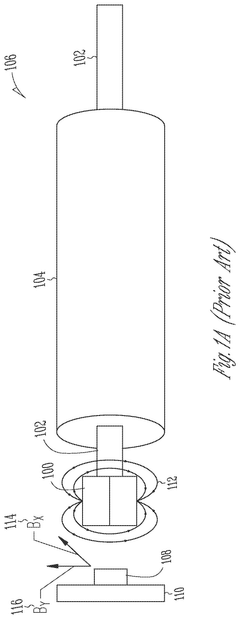
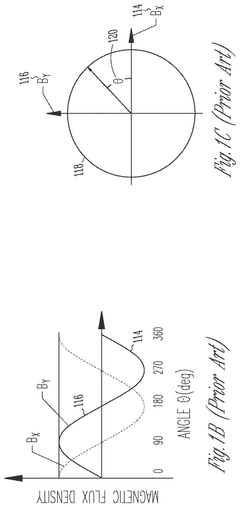
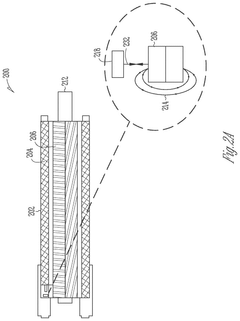
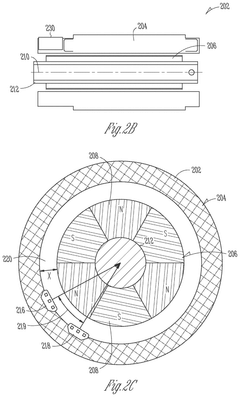
Permanent magnet synchronous motor (PMSM) integrated position sensing
PatentActiveUS12212257B2
Innovation
- The integration of analog magnetic flux sensors within the hollow cylindrical stator of the PMSM, arranged concentrically around the rotational axis at a constant mechanical angle relative to each other, allows for direct measurement of the magnetic flux from the rotor without external obstructions, enabling accurate rotor position sensing and reducing motor size and cost.
Environmental Impact of Superconducting Cooling Technologies
The adoption of superconducting technologies for PMSM cooling presents both opportunities and challenges in terms of environmental impact. While these advanced cooling systems offer significant improvements in energy efficiency and performance, their environmental footprint must be carefully considered.
Superconducting cooling technologies, particularly those utilizing high-temperature superconductors (HTS), have the potential to dramatically reduce energy losses in electric motors. This increased efficiency translates to lower overall energy consumption, which in turn can lead to reduced greenhouse gas emissions from power generation. The improved cooling capacity also allows for more compact motor designs, potentially reducing material usage and associated environmental impacts throughout the supply chain.
However, the production and operation of superconducting cooling systems come with their own environmental considerations. The manufacturing process for superconducting materials often involves rare earth elements and complex fabrication techniques, which can have significant environmental impacts if not managed properly. The extraction and processing of these materials may contribute to habitat destruction, water pollution, and increased carbon emissions.
The cryogenic systems required for maintaining superconducting temperatures also present environmental challenges. While modern cryocoolers are more efficient than ever, they still consume energy and may use refrigerants with high global warming potential. The long-term environmental impact of these systems depends on the source of electricity used to power them and the proper management of refrigerants throughout their lifecycle.
End-of-life considerations for superconducting cooling technologies are another important aspect of their environmental impact. The recycling and disposal of superconducting materials and associated cryogenic equipment require specialized processes to recover valuable components and prevent the release of potentially harmful substances into the environment.
Despite these challenges, the net environmental impact of superconducting cooling technologies for PMSMs is likely to be positive when considering their potential for energy savings over the lifetime of the motor. As the technology matures and production processes become more refined, the environmental footprint of manufacturing is expected to decrease. Additionally, ongoing research into more environmentally friendly superconducting materials and cryogenic systems promises to further mitigate potential negative impacts.
To fully realize the environmental benefits of superconducting cooling technologies, a holistic approach to their development and implementation is necessary. This includes optimizing production processes, improving the efficiency of cryogenic systems, and developing robust recycling and disposal methods. By addressing these aspects, the integration of superconducting cooling in PMSMs can contribute significantly to more sustainable and environmentally friendly electric motor systems.
Superconducting cooling technologies, particularly those utilizing high-temperature superconductors (HTS), have the potential to dramatically reduce energy losses in electric motors. This increased efficiency translates to lower overall energy consumption, which in turn can lead to reduced greenhouse gas emissions from power generation. The improved cooling capacity also allows for more compact motor designs, potentially reducing material usage and associated environmental impacts throughout the supply chain.
However, the production and operation of superconducting cooling systems come with their own environmental considerations. The manufacturing process for superconducting materials often involves rare earth elements and complex fabrication techniques, which can have significant environmental impacts if not managed properly. The extraction and processing of these materials may contribute to habitat destruction, water pollution, and increased carbon emissions.
The cryogenic systems required for maintaining superconducting temperatures also present environmental challenges. While modern cryocoolers are more efficient than ever, they still consume energy and may use refrigerants with high global warming potential. The long-term environmental impact of these systems depends on the source of electricity used to power them and the proper management of refrigerants throughout their lifecycle.
End-of-life considerations for superconducting cooling technologies are another important aspect of their environmental impact. The recycling and disposal of superconducting materials and associated cryogenic equipment require specialized processes to recover valuable components and prevent the release of potentially harmful substances into the environment.
Despite these challenges, the net environmental impact of superconducting cooling technologies for PMSMs is likely to be positive when considering their potential for energy savings over the lifetime of the motor. As the technology matures and production processes become more refined, the environmental footprint of manufacturing is expected to decrease. Additionally, ongoing research into more environmentally friendly superconducting materials and cryogenic systems promises to further mitigate potential negative impacts.
To fully realize the environmental benefits of superconducting cooling technologies, a holistic approach to their development and implementation is necessary. This includes optimizing production processes, improving the efficiency of cryogenic systems, and developing robust recycling and disposal methods. By addressing these aspects, the integration of superconducting cooling in PMSMs can contribute significantly to more sustainable and environmentally friendly electric motor systems.
Cost-Benefit Analysis of Superconducting PMSM Cooling
The implementation of superconducting cooling systems for Permanent Magnet Synchronous Motors (PMSMs) presents a complex cost-benefit scenario that requires careful analysis. Initial investment costs for superconducting systems are significantly higher than conventional cooling methods, primarily due to the expensive materials and sophisticated cryogenic equipment required. However, these systems offer substantial long-term benefits that may offset the initial expenditure.
Operational efficiency is a key advantage of superconducting cooling. By dramatically reducing electrical resistance, these systems minimize energy losses, leading to improved motor performance and reduced operating costs. Over time, the energy savings can be substantial, particularly in high-power applications where even small efficiency gains translate to significant cost reductions.
Maintenance costs present a mixed picture. While superconducting systems may require less frequent maintenance due to reduced wear and tear on motor components, the specialized nature of the technology necessitates highly skilled technicians and specialized equipment for servicing. This can increase maintenance costs in the short term but may lead to longer intervals between major overhauls.
The compact design enabled by superconducting cooling can result in space savings and weight reduction, which is particularly valuable in applications where size and weight are critical factors. This can lead to indirect cost benefits, such as reduced transportation costs or increased payload capacity in mobile applications.
Reliability improvements offered by superconducting cooling systems can significantly reduce downtime and associated costs. The enhanced thermal management can extend the lifespan of motor components, potentially reducing replacement frequency and costs over the motor's lifetime.
Environmental considerations also play a role in the cost-benefit analysis. The increased efficiency of superconducting systems can lead to reduced carbon emissions, which may have financial implications in regions with carbon pricing or emissions regulations. Additionally, the potential for using environmentally friendly cooling mediums in superconducting systems could offer long-term sustainability benefits.
Market competitiveness is another factor to consider. While the high initial costs may be a barrier to entry, the superior performance of superconducting PMSMs could provide a significant competitive advantage in certain industries, potentially leading to increased market share and revenue.
In conclusion, while the upfront costs of implementing superconducting cooling for PMSMs are substantial, the long-term benefits in efficiency, performance, and potentially reduced lifecycle costs present a compelling case for their adoption in specific high-performance applications where the advantages can be fully leveraged.
Operational efficiency is a key advantage of superconducting cooling. By dramatically reducing electrical resistance, these systems minimize energy losses, leading to improved motor performance and reduced operating costs. Over time, the energy savings can be substantial, particularly in high-power applications where even small efficiency gains translate to significant cost reductions.
Maintenance costs present a mixed picture. While superconducting systems may require less frequent maintenance due to reduced wear and tear on motor components, the specialized nature of the technology necessitates highly skilled technicians and specialized equipment for servicing. This can increase maintenance costs in the short term but may lead to longer intervals between major overhauls.
The compact design enabled by superconducting cooling can result in space savings and weight reduction, which is particularly valuable in applications where size and weight are critical factors. This can lead to indirect cost benefits, such as reduced transportation costs or increased payload capacity in mobile applications.
Reliability improvements offered by superconducting cooling systems can significantly reduce downtime and associated costs. The enhanced thermal management can extend the lifespan of motor components, potentially reducing replacement frequency and costs over the motor's lifetime.
Environmental considerations also play a role in the cost-benefit analysis. The increased efficiency of superconducting systems can lead to reduced carbon emissions, which may have financial implications in regions with carbon pricing or emissions regulations. Additionally, the potential for using environmentally friendly cooling mediums in superconducting systems could offer long-term sustainability benefits.
Market competitiveness is another factor to consider. While the high initial costs may be a barrier to entry, the superior performance of superconducting PMSMs could provide a significant competitive advantage in certain industries, potentially leading to increased market share and revenue.
In conclusion, while the upfront costs of implementing superconducting cooling for PMSMs are substantial, the long-term benefits in efficiency, performance, and potentially reduced lifecycle costs present a compelling case for their adoption in specific high-performance applications where the advantages can be fully leveraged.
Unlock deeper insights with PatSnap Eureka Quick Research — get a full tech report to explore trends and direct your research. Try now!
Generate Your Research Report Instantly with AI Agent
Supercharge your innovation with PatSnap Eureka AI Agent Platform!