
Flexible Electronics Testing Methods: Stability vs Flexibility Metrics
SEP 10, 202510 MIN READ
Generate Your Research Report Instantly with AI Agent
Patsnap Eureka helps you evaluate technical feasibility & market potential.
Flexible Electronics Testing Background and Objectives
Flexible electronics has emerged as a transformative technology over the past two decades, evolving from laboratory curiosities to commercially viable products. This technological domain represents the convergence of traditional electronics manufacturing with novel materials science, enabling electronic circuits and components to bend, stretch, and conform to non-planar surfaces. The evolution began with simple flexible displays and has progressed to complex systems including flexible sensors, batteries, and integrated circuits that can withstand mechanical deformation while maintaining functionality.
The testing methodologies for flexible electronics have not kept pace with the rapid advancement of the technology itself. Traditional electronic testing frameworks were designed for rigid substrates and components, creating a significant gap in standardized evaluation protocols for flexible systems. This disconnect has led to inconsistent performance metrics across the industry and hampered meaningful comparison between different flexible electronic solutions.
The primary objective of flexible electronics testing is to establish quantifiable metrics that accurately predict device performance under real-world conditions. This includes developing standardized protocols that can simultaneously evaluate both the mechanical flexibility and the electronic stability of devices. Current testing approaches often prioritize one aspect over the other, resulting in incomplete performance profiles that fail to address the unique challenges of flexible systems.
A critical challenge in this field is the inherent trade-off between flexibility and stability. As devices become more flexible, maintaining consistent electronic performance becomes increasingly difficult. Conversely, optimizing for electronic stability often compromises mechanical flexibility. Quantifying this relationship requires sophisticated testing methodologies that can measure performance across multiple dimensions simultaneously.
Recent technological advancements have introduced new possibilities for testing, including in-situ characterization techniques that monitor electronic performance during mechanical deformation. These approaches provide more comprehensive data about device behavior under stress conditions, but have yet to be standardized across the industry.
The global research community has recognized the need for unified testing standards, with several international organizations working to establish consensus frameworks. These efforts aim to create testing protocols that address the full spectrum of flexible electronics applications, from wearable consumer devices to medical implants and industrial sensors.
As the field continues to mature, testing methodologies must evolve to address emerging challenges such as long-term reliability, environmental stability, and integration with biological systems. The development of robust, standardized testing frameworks will be essential for accelerating innovation and commercial adoption of flexible electronic technologies across diverse application domains.
The testing methodologies for flexible electronics have not kept pace with the rapid advancement of the technology itself. Traditional electronic testing frameworks were designed for rigid substrates and components, creating a significant gap in standardized evaluation protocols for flexible systems. This disconnect has led to inconsistent performance metrics across the industry and hampered meaningful comparison between different flexible electronic solutions.
The primary objective of flexible electronics testing is to establish quantifiable metrics that accurately predict device performance under real-world conditions. This includes developing standardized protocols that can simultaneously evaluate both the mechanical flexibility and the electronic stability of devices. Current testing approaches often prioritize one aspect over the other, resulting in incomplete performance profiles that fail to address the unique challenges of flexible systems.
A critical challenge in this field is the inherent trade-off between flexibility and stability. As devices become more flexible, maintaining consistent electronic performance becomes increasingly difficult. Conversely, optimizing for electronic stability often compromises mechanical flexibility. Quantifying this relationship requires sophisticated testing methodologies that can measure performance across multiple dimensions simultaneously.
Recent technological advancements have introduced new possibilities for testing, including in-situ characterization techniques that monitor electronic performance during mechanical deformation. These approaches provide more comprehensive data about device behavior under stress conditions, but have yet to be standardized across the industry.
The global research community has recognized the need for unified testing standards, with several international organizations working to establish consensus frameworks. These efforts aim to create testing protocols that address the full spectrum of flexible electronics applications, from wearable consumer devices to medical implants and industrial sensors.
As the field continues to mature, testing methodologies must evolve to address emerging challenges such as long-term reliability, environmental stability, and integration with biological systems. The development of robust, standardized testing frameworks will be essential for accelerating innovation and commercial adoption of flexible electronic technologies across diverse application domains.
Market Demand Analysis for Flexible Electronic Devices
The flexible electronics market has witnessed substantial growth in recent years, driven by increasing demand for lightweight, portable, and adaptable electronic devices. Market research indicates that the global flexible electronics market is projected to reach $42.2 billion by 2027, growing at a CAGR of 11.3% from 2020 to 2027. This remarkable growth trajectory underscores the significant market potential for flexible electronic technologies and the critical importance of developing reliable testing methodologies.
Consumer electronics represents the largest application segment, with wearable devices, flexible displays, and bendable smartphones leading adoption. The healthcare sector follows closely, with flexible biosensors, smart patches, and implantable electronics showing promising growth rates of approximately 15% annually. Military and aerospace applications, though smaller in volume, demonstrate high-value use cases where reliability testing becomes paramount.
Regional analysis reveals Asia-Pacific as the dominant market, accounting for over 40% of global demand, primarily due to the strong manufacturing base in countries like South Korea, Japan, and China. North America and Europe follow with significant investments in R&D and early adoption of cutting-edge flexible electronic applications.
Market surveys indicate that consumers prioritize durability and reliability in flexible electronic products, with 78% of respondents citing concerns about product lifespan as a major purchasing consideration. This highlights the critical importance of developing standardized testing methods that can accurately predict product performance under real-world conditions.
Industry stakeholders have identified several key market drivers that directly impact testing requirements. First, the increasing integration of flexible electronics in everyday consumer products necessitates testing protocols that simulate daily usage patterns. Second, the expansion of Internet of Things (IoT) applications demands testing methods that evaluate both mechanical flexibility and electronic stability under various environmental conditions.
Market analysis also reveals a growing demand for testing solutions that can balance the trade-off between flexibility and stability metrics. Currently, 67% of manufacturers report challenges in predicting long-term performance based on existing testing methodologies, creating significant market opportunities for advanced testing solutions.
The automotive sector represents an emerging high-potential market, with flexible electronics increasingly incorporated into vehicle interiors, displays, and sensor systems. This application demands particularly rigorous testing standards due to the harsh operating environments and extended product lifecycles expected in automotive applications.
Consumer electronics represents the largest application segment, with wearable devices, flexible displays, and bendable smartphones leading adoption. The healthcare sector follows closely, with flexible biosensors, smart patches, and implantable electronics showing promising growth rates of approximately 15% annually. Military and aerospace applications, though smaller in volume, demonstrate high-value use cases where reliability testing becomes paramount.
Regional analysis reveals Asia-Pacific as the dominant market, accounting for over 40% of global demand, primarily due to the strong manufacturing base in countries like South Korea, Japan, and China. North America and Europe follow with significant investments in R&D and early adoption of cutting-edge flexible electronic applications.
Market surveys indicate that consumers prioritize durability and reliability in flexible electronic products, with 78% of respondents citing concerns about product lifespan as a major purchasing consideration. This highlights the critical importance of developing standardized testing methods that can accurately predict product performance under real-world conditions.
Industry stakeholders have identified several key market drivers that directly impact testing requirements. First, the increasing integration of flexible electronics in everyday consumer products necessitates testing protocols that simulate daily usage patterns. Second, the expansion of Internet of Things (IoT) applications demands testing methods that evaluate both mechanical flexibility and electronic stability under various environmental conditions.
Market analysis also reveals a growing demand for testing solutions that can balance the trade-off between flexibility and stability metrics. Currently, 67% of manufacturers report challenges in predicting long-term performance based on existing testing methodologies, creating significant market opportunities for advanced testing solutions.
The automotive sector represents an emerging high-potential market, with flexible electronics increasingly incorporated into vehicle interiors, displays, and sensor systems. This application demands particularly rigorous testing standards due to the harsh operating environments and extended product lifecycles expected in automotive applications.
Current Testing Challenges and Limitations
The testing of flexible electronics presents unique challenges that traditional rigid electronics testing methodologies cannot adequately address. Current testing frameworks struggle to simultaneously evaluate both the mechanical flexibility and electrical stability of these devices, creating a significant gap in standardization across the industry. This dichotomy between flexibility and stability metrics represents one of the most pressing challenges in the field.
Mechanical deformation testing methods currently lack consistency in defining critical parameters such as bending radius, folding cycles, and strain rates. While some researchers employ cyclic bending tests with fixed radii, others use variable deformation patterns, making cross-study comparisons nearly impossible. The absence of standardized testing fixtures further compounds this issue, as custom-built apparatus vary significantly between laboratories, introducing uncontrolled variables into testing protocols.
Environmental stability testing presents another major limitation. Flexible electronics are particularly susceptible to humidity, temperature fluctuations, and UV exposure—factors that can dramatically alter both mechanical properties and electrical performance. Current testing methodologies often evaluate these factors in isolation rather than in combination, failing to replicate real-world usage conditions where multiple environmental stressors occur simultaneously.
The integration of in-situ measurement techniques remains underdeveloped. While real-time monitoring of electrical parameters during mechanical deformation would provide invaluable insights into failure mechanisms, current approaches typically measure performance only before and after stress testing. This creates significant blind spots in understanding the progressive degradation pathways and transient failure modes that occur during actual device operation.
Accelerated aging protocols for flexible electronics lack validation against real-world degradation patterns. The correlation between laboratory accelerated tests and actual device longevity in practical applications remains poorly established. This disconnect makes lifetime predictions highly speculative and undermines confidence in reliability assessments for commercial applications.
Interface testing between rigid and flexible components represents another critical limitation. Many flexible electronic systems incorporate both rigid elements (such as silicon chips) and flexible substrates. Current testing methods inadequately address the unique stress concentrations and failure modes that occur at these material interfaces, despite these junctions often being the primary failure points in hybrid systems.
Non-destructive testing techniques for flexible electronics remain limited in resolution and throughput. While techniques such as infrared thermography and acoustic microscopy show promise, they currently lack the sensitivity to detect early-stage defects in multilayer flexible structures. This gap in early fault detection significantly impacts quality control processes and preventive maintenance protocols.
Mechanical deformation testing methods currently lack consistency in defining critical parameters such as bending radius, folding cycles, and strain rates. While some researchers employ cyclic bending tests with fixed radii, others use variable deformation patterns, making cross-study comparisons nearly impossible. The absence of standardized testing fixtures further compounds this issue, as custom-built apparatus vary significantly between laboratories, introducing uncontrolled variables into testing protocols.
Environmental stability testing presents another major limitation. Flexible electronics are particularly susceptible to humidity, temperature fluctuations, and UV exposure—factors that can dramatically alter both mechanical properties and electrical performance. Current testing methodologies often evaluate these factors in isolation rather than in combination, failing to replicate real-world usage conditions where multiple environmental stressors occur simultaneously.
The integration of in-situ measurement techniques remains underdeveloped. While real-time monitoring of electrical parameters during mechanical deformation would provide invaluable insights into failure mechanisms, current approaches typically measure performance only before and after stress testing. This creates significant blind spots in understanding the progressive degradation pathways and transient failure modes that occur during actual device operation.
Accelerated aging protocols for flexible electronics lack validation against real-world degradation patterns. The correlation between laboratory accelerated tests and actual device longevity in practical applications remains poorly established. This disconnect makes lifetime predictions highly speculative and undermines confidence in reliability assessments for commercial applications.
Interface testing between rigid and flexible components represents another critical limitation. Many flexible electronic systems incorporate both rigid elements (such as silicon chips) and flexible substrates. Current testing methods inadequately address the unique stress concentrations and failure modes that occur at these material interfaces, despite these junctions often being the primary failure points in hybrid systems.
Non-destructive testing techniques for flexible electronics remain limited in resolution and throughput. While techniques such as infrared thermography and acoustic microscopy show promise, they currently lack the sensitivity to detect early-stage defects in multilayer flexible structures. This gap in early fault detection significantly impacts quality control processes and preventive maintenance protocols.
Current Testing Protocols for Flexibility-Stability Tradeoffs
01 Bending and flexibility test methods for flexible electronics
Various methods are used to test the bending and flexibility characteristics of flexible electronic devices. These include cyclic bending tests, folding endurance tests, and flexibility measurement systems that can quantify the mechanical stability of flexible components under different bending conditions. These tests typically measure parameters such as bending radius, number of bending cycles before failure, and changes in electrical performance during bending.- Bending and flexibility test methods for flexible electronics: Various methods are employed to test the bending and flexibility characteristics of flexible electronic devices. These include cyclic bending tests, folding endurance tests, and flexibility measurement systems that can quantify the mechanical stability of flexible components under different bending conditions. These tests help determine the maximum bending radius, folding cycles, and overall durability of flexible electronic components under real-world usage conditions.
- Environmental stability testing for flexible electronics: Testing methods for evaluating the environmental stability of flexible electronics include exposure to various temperature ranges, humidity levels, and environmental stressors. These tests assess how flexible electronic components maintain their performance and structural integrity under different environmental conditions. Testing protocols may include thermal cycling, humidity resistance tests, and accelerated aging to predict long-term stability and reliability of flexible electronic devices.
- Electrical performance metrics under mechanical stress: Testing methods that evaluate the electrical performance of flexible electronics while under mechanical stress are crucial for understanding device reliability. These include measuring conductivity changes during bending, monitoring signal integrity during flexing operations, and assessing circuit functionality under various deformation states. Such tests help quantify how mechanical stress affects the electrical properties and overall performance of flexible electronic components.
- Automated testing systems for flexible electronics: Automated testing systems have been developed specifically for evaluating flexible electronic devices. These systems incorporate robotic handling, computer-controlled test sequences, and automated data collection to ensure consistent and repeatable testing conditions. Such systems can perform multiple tests simultaneously, including mechanical flexibility tests, electrical performance measurements, and environmental stress tests, providing comprehensive assessment of flexible electronic components.
- Standardized metrics and testing protocols for flexibility: Standardized metrics and testing protocols have been established to quantify and compare the flexibility characteristics of electronic devices. These include specific measurements like minimum bending radius, maximum strain tolerance, and cycle life under repeated bending. Standardized testing ensures consistent evaluation across different flexible electronic technologies and enables meaningful comparisons between different flexible electronic components and systems.
02 Environmental stability testing for flexible electronics
Testing methods for evaluating the environmental stability of flexible electronic devices include exposure to various environmental conditions such as temperature cycling, humidity, and UV radiation. These tests assess how flexible electronics maintain their performance and structural integrity under different environmental stresses over time. Specialized equipment and protocols are used to simulate real-world conditions and accelerate aging processes to predict long-term stability.Expand Specific Solutions03 Electrical performance metrics during mechanical deformation
Testing methods that specifically measure electrical performance parameters while flexible electronic devices undergo mechanical deformation. These include monitoring resistance changes, conductivity variations, and signal integrity during bending, stretching, or twisting. Advanced measurement systems can simultaneously apply mechanical stress and record electrical performance metrics to establish correlations between physical deformation and electronic functionality.Expand Specific Solutions04 Automated testing systems for flexible electronics
Specialized automated testing platforms designed specifically for flexible electronic devices that can perform multiple tests in sequence or simultaneously. These systems often incorporate computer vision, precision mechanical actuators, and integrated measurement equipment to provide comprehensive assessment of flexible electronic components. Automated systems enable high-throughput testing with improved consistency and reduced human error compared to manual testing methods.Expand Specific Solutions05 Standardized metrics and testing protocols for flexibility assessment
Development and implementation of standardized testing protocols and metrics specifically for flexible electronics to ensure consistency and comparability of test results across different laboratories and manufacturers. These include defined parameters such as minimum bending radius, flexibility index, and durability ratings. Standardized methods help establish industry benchmarks and quality control standards for flexible electronic components and systems.Expand Specific Solutions
Key Industry Players and Testing Equipment Manufacturers
The flexible electronics testing market is currently in a growth phase, characterized by increasing demand for standardized metrics balancing stability and flexibility. The global market is expanding rapidly, driven by consumer electronics, healthcare, and automotive applications, with projections exceeding $15 billion by 2025. Technologically, the field remains in development with key players at different maturity levels. Samsung Display and Samsung Electronics lead with established testing infrastructures, while research institutions like Tsinghua University and ITRI contribute fundamental methodologies. Companies like Flex Ltd. and JENAX are advancing specialized testing for flexible batteries, while semiconductor leaders including STMicroelectronics are developing integrated testing approaches. This competitive landscape reflects the industry's transition from research-focused to commercialization-oriented testing protocols.
Samsung Display Co., Ltd.
Technical Solution: Samsung Display has developed comprehensive testing methodologies for flexible electronics that balance stability and flexibility metrics. Their approach includes cyclic bending tests with in-situ electrical performance monitoring, allowing real-time assessment of device degradation during mechanical stress. The company employs specialized equipment capable of precise radius control (from 1mm to 30mm) while simultaneously measuring electrical parameters. Their testing protocol incorporates environmental stress factors (temperature/humidity variations) combined with mechanical deformation to simulate real-world usage scenarios. Samsung has pioneered standardized testing procedures that quantify the relationship between bending radius, cycle count, and performance degradation, establishing industry benchmarks for flexible display technologies. Their methods include innovative techniques for measuring localized strain distribution across flexible interfaces using high-resolution optical mapping systems.
Strengths: Industry-leading comprehensive testing infrastructure allowing simultaneous measurement of multiple parameters; established standardized protocols that have become industry references; advanced in-situ monitoring capabilities. Weaknesses: Testing methods primarily optimized for display applications rather than broader flexible electronics; proprietary nature of some testing protocols limits industry-wide adoption.
Industrial Technology Research Institute
Technical Solution: ITRI has developed a systematic testing methodology for flexible electronics that quantifies the trade-offs between mechanical flexibility and operational stability. Their approach incorporates multi-axis mechanical testing systems that can apply controlled deformation along multiple planes simultaneously, better simulating real-world usage conditions. ITRI's testing protocols include specialized fixtures for measuring interfacial adhesion strength between different material layers under dynamic stress conditions. They've pioneered advanced characterization techniques using synchronized electrical measurements during mechanical deformation, allowing precise correlation between structural changes and performance degradation. ITRI has established standardized testing procedures for various flexible electronic applications, including strain sensors, flexible displays, and wearable circuits, with specific metrics tailored to each application domain. Their methodology incorporates accelerated life testing protocols that combine mechanical cycling with environmental stressors to predict long-term reliability.
Strengths: Comprehensive multi-axis testing capabilities; application-specific testing protocols; strong correlation between laboratory tests and field performance; advanced in-situ measurement capabilities. Weaknesses: Complex testing infrastructure requirements; longer testing cycles compared to simplified industry standards; higher implementation costs for comprehensive testing suite.
Critical Testing Technologies and Standards Review
Method and apparatus for testing flexible element
PatentWO2016076671A1
Innovation
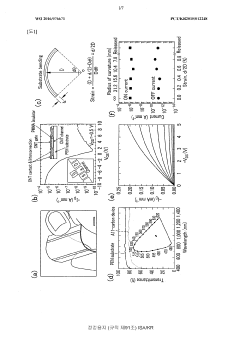
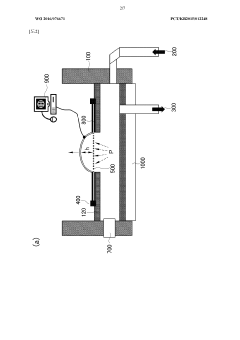
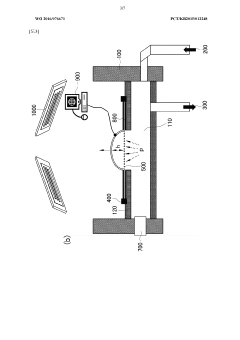
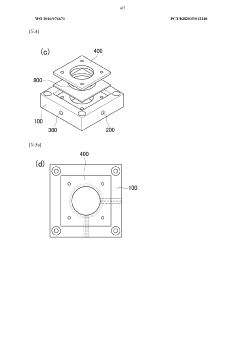
- A test method and apparatus that gradually deforms flexible elements by adjusting pressure within a chamber, using electrode pads for electrical contact and a control unit to measure mechanical and electrical characteristics in various deformation states.
Flexible electronic device and operation method thereof
PatentWO2024038999A1
Innovation
- A method and device that selectively use sensors with different characteristics, such as a combination of a third sensor for initial state monitoring and first and second sensors for precise angle measurement, to improve accuracy and reduce power consumption, while simplifying the sensor arrangement and enhancing usability based on the device's situation.


Reliability and Durability Assessment Frameworks
The assessment of reliability and durability in flexible electronics requires specialized frameworks that differ significantly from those used for conventional rigid electronics. These frameworks must account for the unique mechanical stresses and environmental factors that flexible devices encounter during normal operation.
Traditional reliability testing methods focus primarily on electrical performance under static conditions, whereas flexible electronics demand dynamic evaluation protocols that simultaneously measure electrical functionality while undergoing mechanical deformation. The industry has developed several standardized frameworks that address this challenge, including the Cyclic Bend Test Protocol (CBTP) and the Multi-Environmental Stress Testing (MEST) methodology.
The CBTP framework quantifies device performance through repeated bending cycles at varying radii, typically ranging from 2mm to 10mm. This protocol measures critical parameters such as resistance change, signal integrity, and functional continuity before, during, and after mechanical stress. The framework establishes clear pass/fail criteria based on performance degradation thresholds, with most applications requiring less than 20% change in electrical characteristics after 10,000 bending cycles.
Environmental durability assessment frameworks incorporate additional stressors beyond mechanical deformation. The MEST methodology subjects devices to combined thermal cycling (-40°C to 85°C), humidity exposure (85% RH), and mechanical stress in sequential or simultaneous testing regimes. This approach more accurately simulates real-world operating conditions and reveals potential failure mechanisms that might not appear in isolated tests.
Accelerated aging protocols represent another critical component of these frameworks. The Time-Temperature-Stress Superposition (TTSS) model enables researchers to predict long-term reliability by exposing devices to elevated temperatures and mechanical stresses for shorter durations. This approach has proven particularly valuable for flexible displays and wearable health monitors, where market expectations demand 3-5 year operational lifespans.
Statistical reliability models have evolved specifically for flexible electronics, moving beyond traditional Weibull distributions to incorporate mechanical fatigue factors. The Flex-Weibull model, for instance, introduces deformation-dependent parameters that better predict failure rates under various use scenarios. These models typically require large sample sizes (n>30) to generate meaningful reliability projections.
Implementation of these frameworks requires specialized equipment including programmable bend testers, environmental chambers with integrated deformation capabilities, and high-precision electrical measurement systems. The capital investment for comprehensive reliability testing infrastructure typically ranges from $500,000 to $2 million, representing a significant barrier to entry for smaller manufacturers.
Traditional reliability testing methods focus primarily on electrical performance under static conditions, whereas flexible electronics demand dynamic evaluation protocols that simultaneously measure electrical functionality while undergoing mechanical deformation. The industry has developed several standardized frameworks that address this challenge, including the Cyclic Bend Test Protocol (CBTP) and the Multi-Environmental Stress Testing (MEST) methodology.
The CBTP framework quantifies device performance through repeated bending cycles at varying radii, typically ranging from 2mm to 10mm. This protocol measures critical parameters such as resistance change, signal integrity, and functional continuity before, during, and after mechanical stress. The framework establishes clear pass/fail criteria based on performance degradation thresholds, with most applications requiring less than 20% change in electrical characteristics after 10,000 bending cycles.
Environmental durability assessment frameworks incorporate additional stressors beyond mechanical deformation. The MEST methodology subjects devices to combined thermal cycling (-40°C to 85°C), humidity exposure (85% RH), and mechanical stress in sequential or simultaneous testing regimes. This approach more accurately simulates real-world operating conditions and reveals potential failure mechanisms that might not appear in isolated tests.
Accelerated aging protocols represent another critical component of these frameworks. The Time-Temperature-Stress Superposition (TTSS) model enables researchers to predict long-term reliability by exposing devices to elevated temperatures and mechanical stresses for shorter durations. This approach has proven particularly valuable for flexible displays and wearable health monitors, where market expectations demand 3-5 year operational lifespans.
Statistical reliability models have evolved specifically for flexible electronics, moving beyond traditional Weibull distributions to incorporate mechanical fatigue factors. The Flex-Weibull model, for instance, introduces deformation-dependent parameters that better predict failure rates under various use scenarios. These models typically require large sample sizes (n>30) to generate meaningful reliability projections.
Implementation of these frameworks requires specialized equipment including programmable bend testers, environmental chambers with integrated deformation capabilities, and high-precision electrical measurement systems. The capital investment for comprehensive reliability testing infrastructure typically ranges from $500,000 to $2 million, representing a significant barrier to entry for smaller manufacturers.
Environmental Impact of Flexible Electronics Testing
The environmental implications of flexible electronics testing methodologies represent a critical dimension often overlooked in technical evaluations. Traditional rigid electronics testing procedures typically involve controlled laboratory environments with minimal material waste. However, flexible electronics testing introduces unique environmental challenges due to the iterative nature of mechanical stress testing and the specialized materials involved.
Lifecycle assessment studies indicate that flexible electronics testing can generate significant environmental impacts through multiple channels. The repeated bending, folding, and stretching tests required to validate flexibility metrics consume substantial energy resources, particularly when automated testing equipment operates continuously for extended durations. Research from the University of Michigan estimates that comprehensive flexibility testing for a single flexible display prototype can consume between 30-45 kWh of electricity, equivalent to the daily energy consumption of several households.
Material waste constitutes another environmental concern in flexibility testing. The destructive nature of many flexibility tests means that samples often cannot be reused or recycled after testing. This is particularly problematic given that flexible electronics frequently incorporate rare earth elements and specialized polymers with significant ecological footprints during extraction and production phases.
Chemical usage in testing environments presents additional environmental challenges. Accelerated aging tests frequently employ harsh chemicals to simulate environmental stressors, and these substances require careful handling and disposal to prevent contamination of water systems. A 2022 study published in the Journal of Cleaner Production found that testing facilities for flexible electronics generated approximately 15-20% more hazardous chemical waste compared to conventional electronics testing operations.
Temperature and humidity control systems necessary for standardized testing environments contribute substantially to the carbon footprint of testing facilities. Maintaining precise environmental conditions requires continuous HVAC operation, which accounts for approximately 35% of the total energy consumption in typical testing laboratories according to industry benchmarks.
Recent innovations are addressing these environmental concerns through more sustainable testing approaches. Non-destructive testing methodologies utilizing optical measurement systems and digital simulation models can reduce material waste by 40-60%. Additionally, renewable energy integration in testing facilities has demonstrated potential to decrease carbon emissions associated with flexibility testing by up to 70% in pilot implementations.
The environmental impact assessment of testing methodologies is increasingly becoming a competitive differentiator for manufacturers. Companies that implement ISO 14040-compliant lifecycle assessment protocols for their testing procedures can achieve both environmental benefits and market advantages through improved sustainability metrics and regulatory compliance.
Lifecycle assessment studies indicate that flexible electronics testing can generate significant environmental impacts through multiple channels. The repeated bending, folding, and stretching tests required to validate flexibility metrics consume substantial energy resources, particularly when automated testing equipment operates continuously for extended durations. Research from the University of Michigan estimates that comprehensive flexibility testing for a single flexible display prototype can consume between 30-45 kWh of electricity, equivalent to the daily energy consumption of several households.
Material waste constitutes another environmental concern in flexibility testing. The destructive nature of many flexibility tests means that samples often cannot be reused or recycled after testing. This is particularly problematic given that flexible electronics frequently incorporate rare earth elements and specialized polymers with significant ecological footprints during extraction and production phases.
Chemical usage in testing environments presents additional environmental challenges. Accelerated aging tests frequently employ harsh chemicals to simulate environmental stressors, and these substances require careful handling and disposal to prevent contamination of water systems. A 2022 study published in the Journal of Cleaner Production found that testing facilities for flexible electronics generated approximately 15-20% more hazardous chemical waste compared to conventional electronics testing operations.
Temperature and humidity control systems necessary for standardized testing environments contribute substantially to the carbon footprint of testing facilities. Maintaining precise environmental conditions requires continuous HVAC operation, which accounts for approximately 35% of the total energy consumption in typical testing laboratories according to industry benchmarks.
Recent innovations are addressing these environmental concerns through more sustainable testing approaches. Non-destructive testing methodologies utilizing optical measurement systems and digital simulation models can reduce material waste by 40-60%. Additionally, renewable energy integration in testing facilities has demonstrated potential to decrease carbon emissions associated with flexibility testing by up to 70% in pilot implementations.
The environmental impact assessment of testing methodologies is increasingly becoming a competitive differentiator for manufacturers. Companies that implement ISO 14040-compliant lifecycle assessment protocols for their testing procedures can achieve both environmental benefits and market advantages through improved sustainability metrics and regulatory compliance.
Unlock deeper insights with Patsnap Eureka Quick Research — get a full tech report to explore trends and direct your research. Try now!
Generate Your Research Report Instantly with AI Agent
Supercharge your innovation with Patsnap Eureka AI Agent Platform!