Global adoption challenges for PMSM technology
AUG 15, 20259 MIN READ
Generate Your Research Report Instantly with AI Agent
PatSnap Eureka helps you evaluate technical feasibility & market potential.
PMSM Technology Evolution
Permanent Magnet Synchronous Motor (PMSM) technology has undergone significant evolution since its inception, driven by advancements in materials science, control systems, and manufacturing processes. The journey of PMSM technology can be traced back to the early 20th century, with notable progress accelerating in the latter half of the century.
In the 1950s and 1960s, the development of high-energy permanent magnets, particularly rare-earth magnets, laid the foundation for modern PMSMs. The introduction of samarium-cobalt magnets in the 1970s marked a crucial milestone, offering superior magnetic properties that enabled more compact and efficient motor designs.
The 1980s saw a paradigm shift with the advent of neodymium-iron-boron (NdFeB) magnets, which provided even higher energy densities at lower costs. This breakthrough significantly boosted PMSM performance and expanded its potential applications across various industries.
The 1990s and early 2000s witnessed rapid advancements in power electronics and digital control systems. The integration of sophisticated vector control algorithms and high-performance microcontrollers revolutionized PMSM operation, enabling precise torque and speed control while maximizing efficiency.
In recent years, the focus has shifted towards optimizing PMSM designs for specific applications, particularly in electric vehicles and renewable energy systems. Innovations in motor topology, such as interior permanent magnet (IPM) configurations and axial flux designs, have further enhanced performance and efficiency.
The ongoing evolution of PMSM technology is characterized by several key trends. Firstly, there is a continuous effort to reduce reliance on rare-earth materials, driven by supply chain concerns and environmental considerations. This has led to research into alternative magnet materials and motor designs that maintain high performance with reduced rare-earth content.
Secondly, the integration of advanced sensing and control technologies, including sensorless control methods and artificial intelligence-based optimization algorithms, is pushing the boundaries of PMSM capabilities. These developments are enabling more robust, efficient, and adaptable motor systems across diverse operating conditions.
Lastly, the emergence of wide-bandgap semiconductors, such as silicon carbide (SiC) and gallium nitride (GaN), is revolutionizing power electronics in PMSM drives. These materials allow for higher switching frequencies, reduced losses, and improved thermal management, contributing to overall system efficiency and power density.
As PMSM technology continues to evolve, future developments are likely to focus on further improving energy efficiency, power density, and reliability while reducing costs and environmental impact. The integration of smart features, such as self-diagnostics and predictive maintenance capabilities, is also expected to play a crucial role in the next generation of PMSM systems.
In the 1950s and 1960s, the development of high-energy permanent magnets, particularly rare-earth magnets, laid the foundation for modern PMSMs. The introduction of samarium-cobalt magnets in the 1970s marked a crucial milestone, offering superior magnetic properties that enabled more compact and efficient motor designs.
The 1980s saw a paradigm shift with the advent of neodymium-iron-boron (NdFeB) magnets, which provided even higher energy densities at lower costs. This breakthrough significantly boosted PMSM performance and expanded its potential applications across various industries.
The 1990s and early 2000s witnessed rapid advancements in power electronics and digital control systems. The integration of sophisticated vector control algorithms and high-performance microcontrollers revolutionized PMSM operation, enabling precise torque and speed control while maximizing efficiency.
In recent years, the focus has shifted towards optimizing PMSM designs for specific applications, particularly in electric vehicles and renewable energy systems. Innovations in motor topology, such as interior permanent magnet (IPM) configurations and axial flux designs, have further enhanced performance and efficiency.
The ongoing evolution of PMSM technology is characterized by several key trends. Firstly, there is a continuous effort to reduce reliance on rare-earth materials, driven by supply chain concerns and environmental considerations. This has led to research into alternative magnet materials and motor designs that maintain high performance with reduced rare-earth content.
Secondly, the integration of advanced sensing and control technologies, including sensorless control methods and artificial intelligence-based optimization algorithms, is pushing the boundaries of PMSM capabilities. These developments are enabling more robust, efficient, and adaptable motor systems across diverse operating conditions.
Lastly, the emergence of wide-bandgap semiconductors, such as silicon carbide (SiC) and gallium nitride (GaN), is revolutionizing power electronics in PMSM drives. These materials allow for higher switching frequencies, reduced losses, and improved thermal management, contributing to overall system efficiency and power density.
As PMSM technology continues to evolve, future developments are likely to focus on further improving energy efficiency, power density, and reliability while reducing costs and environmental impact. The integration of smart features, such as self-diagnostics and predictive maintenance capabilities, is also expected to play a crucial role in the next generation of PMSM systems.
Market Demand Analysis
The global market for Permanent Magnet Synchronous Motors (PMSM) technology is experiencing significant growth, driven by increasing demand for energy-efficient and high-performance motor solutions across various industries. The automotive sector, particularly electric vehicles (EVs), represents a major market for PMSM technology. As governments worldwide implement stricter emissions regulations and promote sustainable transportation, the demand for electric and hybrid vehicles continues to rise, consequently boosting the adoption of PMSM technology.
In the industrial sector, PMSM technology is gaining traction due to its superior efficiency and precise control capabilities. Industries such as manufacturing, robotics, and automation are increasingly adopting PMSM-based systems to improve productivity and reduce energy consumption. The growing emphasis on Industry 4.0 and smart manufacturing further accelerates the demand for advanced motor technologies like PMSM.
The renewable energy sector, especially wind power generation, presents another significant market opportunity for PMSM technology. As countries invest in clean energy solutions, the demand for efficient and reliable wind turbines equipped with PMSM generators is expected to grow substantially.
Consumer electronics and home appliances represent another key market segment for PMSM technology. The trend towards energy-efficient and compact devices drives the adoption of PMSM in applications such as air conditioners, refrigerators, and washing machines. Manufacturers are increasingly incorporating PMSM technology to meet stringent energy efficiency standards and consumer preferences for eco-friendly products.
Despite the growing demand, the PMSM market faces challenges related to the supply and cost of rare earth materials used in permanent magnets. Fluctuations in the availability and pricing of these materials can impact the overall market growth and adoption rates. This has led to increased research and development efforts focused on alternative magnet materials and motor designs to reduce dependency on rare earth elements.
The global PMSM market is expected to witness steady growth in the coming years, with Asia-Pacific region leading in terms of both production and consumption. Factors such as rapid industrialization, increasing automotive production, and government initiatives promoting energy efficiency contribute to the region's market dominance. North America and Europe are also significant markets, driven by technological advancements and stringent environmental regulations.
As the technology matures and economies of scale are achieved, the cost of PMSM systems is expected to decrease, further driving adoption across various applications. The market is also likely to benefit from ongoing research and development activities aimed at improving motor performance, reducing costs, and addressing environmental concerns associated with rare earth materials.
In the industrial sector, PMSM technology is gaining traction due to its superior efficiency and precise control capabilities. Industries such as manufacturing, robotics, and automation are increasingly adopting PMSM-based systems to improve productivity and reduce energy consumption. The growing emphasis on Industry 4.0 and smart manufacturing further accelerates the demand for advanced motor technologies like PMSM.
The renewable energy sector, especially wind power generation, presents another significant market opportunity for PMSM technology. As countries invest in clean energy solutions, the demand for efficient and reliable wind turbines equipped with PMSM generators is expected to grow substantially.
Consumer electronics and home appliances represent another key market segment for PMSM technology. The trend towards energy-efficient and compact devices drives the adoption of PMSM in applications such as air conditioners, refrigerators, and washing machines. Manufacturers are increasingly incorporating PMSM technology to meet stringent energy efficiency standards and consumer preferences for eco-friendly products.
Despite the growing demand, the PMSM market faces challenges related to the supply and cost of rare earth materials used in permanent magnets. Fluctuations in the availability and pricing of these materials can impact the overall market growth and adoption rates. This has led to increased research and development efforts focused on alternative magnet materials and motor designs to reduce dependency on rare earth elements.
The global PMSM market is expected to witness steady growth in the coming years, with Asia-Pacific region leading in terms of both production and consumption. Factors such as rapid industrialization, increasing automotive production, and government initiatives promoting energy efficiency contribute to the region's market dominance. North America and Europe are also significant markets, driven by technological advancements and stringent environmental regulations.
As the technology matures and economies of scale are achieved, the cost of PMSM systems is expected to decrease, further driving adoption across various applications. The market is also likely to benefit from ongoing research and development activities aimed at improving motor performance, reducing costs, and addressing environmental concerns associated with rare earth materials.
PMSM Adoption Barriers
The global adoption of Permanent Magnet Synchronous Motor (PMSM) technology faces several significant barriers, despite its numerous advantages in terms of efficiency and performance. One of the primary challenges is the high initial cost associated with PMSM implementation. The permanent magnets used in these motors, particularly those containing rare earth elements like neodymium and dysprosium, are expensive and subject to price volatility in the global market.
Another major barrier is the limited availability and geopolitical concerns surrounding rare earth materials. China currently dominates the rare earth element market, controlling a significant portion of the global supply. This concentration of resources in a single country raises concerns about supply chain stability and potential geopolitical tensions, which can impact the widespread adoption of PMSM technology.
The complexity of PMSM control systems presents another obstacle. These motors require sophisticated control algorithms and power electronics, which can be challenging to design and implement. This complexity not only increases the overall system cost but also demands a higher level of expertise from engineers and technicians involved in their development and maintenance.
Environmental concerns also play a role in hindering PMSM adoption. The mining and processing of rare earth elements used in permanent magnets can have significant environmental impacts, including soil and water pollution. This has led to increased scrutiny and potential regulatory challenges in some regions, affecting the supply chain and public perception of PMSM technology.
The lack of standardization across different PMSM designs and applications is another barrier to widespread adoption. This diversity in designs can lead to compatibility issues and increased costs for manufacturers and end-users, as well as challenges in maintenance and spare parts availability.
Furthermore, the transition from traditional motor technologies to PMSM requires significant investment in retooling and retraining for many industries. This includes not only the cost of new equipment but also the time and resources needed to train personnel in the design, operation, and maintenance of PMSM systems.
Lastly, there are concerns about the long-term reliability and performance of PMSMs in certain harsh environments or high-temperature applications. While these motors generally offer excellent efficiency, their performance can degrade under extreme conditions, which may limit their adoption in specific industries or applications where reliability under such conditions is crucial.
Another major barrier is the limited availability and geopolitical concerns surrounding rare earth materials. China currently dominates the rare earth element market, controlling a significant portion of the global supply. This concentration of resources in a single country raises concerns about supply chain stability and potential geopolitical tensions, which can impact the widespread adoption of PMSM technology.
The complexity of PMSM control systems presents another obstacle. These motors require sophisticated control algorithms and power electronics, which can be challenging to design and implement. This complexity not only increases the overall system cost but also demands a higher level of expertise from engineers and technicians involved in their development and maintenance.
Environmental concerns also play a role in hindering PMSM adoption. The mining and processing of rare earth elements used in permanent magnets can have significant environmental impacts, including soil and water pollution. This has led to increased scrutiny and potential regulatory challenges in some regions, affecting the supply chain and public perception of PMSM technology.
The lack of standardization across different PMSM designs and applications is another barrier to widespread adoption. This diversity in designs can lead to compatibility issues and increased costs for manufacturers and end-users, as well as challenges in maintenance and spare parts availability.
Furthermore, the transition from traditional motor technologies to PMSM requires significant investment in retooling and retraining for many industries. This includes not only the cost of new equipment but also the time and resources needed to train personnel in the design, operation, and maintenance of PMSM systems.
Lastly, there are concerns about the long-term reliability and performance of PMSMs in certain harsh environments or high-temperature applications. While these motors generally offer excellent efficiency, their performance can degrade under extreme conditions, which may limit their adoption in specific industries or applications where reliability under such conditions is crucial.
Current PMSM Solutions
01 PMSM design and optimization
This category focuses on the design and optimization of Permanent Magnet Synchronous Motors (PMSMs). It includes innovations in motor structure, magnetic circuit design, and performance enhancement techniques. These advancements aim to improve efficiency, power density, and overall performance of PMSMs for various applications.- Motor design and structure: Permanent Magnet Synchronous Motors (PMSMs) have specific design features and structural elements that enhance their performance. These may include optimized rotor and stator configurations, improved magnet arrangements, and innovative cooling systems. Such design improvements can lead to increased efficiency, power density, and overall performance of the motor.
- Control strategies for PMSMs: Advanced control strategies are crucial for optimizing PMSM performance. These may include sensorless control techniques, adaptive control algorithms, and advanced vector control methods. Such control strategies aim to improve motor efficiency, reduce torque ripple, and enhance dynamic response under various operating conditions.
- Efficiency improvement techniques: Various techniques are employed to improve the efficiency of PMSMs. These may include the use of advanced materials for magnets and core components, optimization of winding designs, and implementation of energy recovery systems. Such improvements can lead to reduced losses and increased overall system efficiency.
- Fault diagnosis and condition monitoring: Fault diagnosis and condition monitoring systems are developed for PMSMs to enhance reliability and maintenance. These systems may use advanced sensors, data analysis techniques, and machine learning algorithms to detect and predict potential faults in the motor. Such systems can help in preventive maintenance and reduce downtime.
- Integration with power electronics and drive systems: The integration of PMSMs with advanced power electronics and drive systems is crucial for optimal performance. This may include the development of specialized inverters, power converters, and control units designed specifically for PMSMs. Such integration can lead to improved system efficiency, better control, and enhanced overall performance of the motor drive system.
02 Control strategies for PMSMs
This point covers various control strategies and algorithms developed for PMSMs. It includes techniques for precise speed and torque control, sensorless control methods, and advanced control algorithms to enhance motor performance and efficiency under different operating conditions.Expand Specific Solutions03 PMSM applications in electric vehicles
This category focuses on the application of PMSMs in electric vehicles (EVs). It includes innovations in motor design specifically for EV powertrains, integration of PMSMs with vehicle systems, and optimization techniques to improve range and performance of electric vehicles.Expand Specific Solutions04 Fault diagnosis and condition monitoring of PMSMs
This point covers techniques and systems for fault diagnosis and condition monitoring of PMSMs. It includes methods for detecting and identifying various faults, predictive maintenance strategies, and real-time monitoring systems to ensure reliable operation of PMSMs in different applications.Expand Specific Solutions05 PMSM manufacturing and assembly techniques
This category focuses on manufacturing and assembly techniques for PMSMs. It includes innovations in production processes, materials selection, and assembly methods to improve motor quality, reduce costs, and enhance mass production capabilities for PMSMs.Expand Specific Solutions
Key PMSM Manufacturers
The global adoption of PMSM technology is in a growth phase, with increasing market size driven by demand for energy-efficient motors across industries. The technology's maturity is advancing, but challenges remain in widespread implementation. Key players like Huawei, Ericsson, and Intel are investing in research and development to overcome adoption barriers. Companies such as Samsung, ABB, and Continental Automotive are focusing on integrating PMSM technology into various applications, from consumer electronics to industrial systems. The competitive landscape is characterized by a mix of established tech giants and specialized motor manufacturers, all vying to improve efficiency, reduce costs, and expand PMSM applications.
Huawei Technologies Co., Ltd.
Technical Solution: Huawei has developed advanced PMSM control algorithms and drive systems to address global adoption challenges. Their solution incorporates field-oriented control (FOC) and model predictive control (MPC) techniques to optimize motor performance and efficiency. Huawei's PMSM technology features adaptive parameter estimation to handle variations in motor characteristics and load conditions, ensuring robust operation across diverse applications and environments. The company has also implemented sensorless control methods to reduce system complexity and cost, making PMSM technology more accessible for global markets[1][3]. Additionally, Huawei has focused on improving the power density and thermal management of PMSM systems, enabling more compact and efficient designs suitable for various industrial and automotive applications worldwide.
Strengths: Advanced control algorithms, adaptive systems, and sensorless technology reduce costs and improve performance. Weaknesses: May face geopolitical challenges in some markets, potentially limiting global adoption.
Intel Corp.
Technical Solution: Intel has addressed PMSM global adoption challenges by developing integrated solutions that combine high-performance microcontrollers with dedicated motor control peripherals. Their approach focuses on simplifying PMSM implementation through hardware-software co-design. Intel's PMSM technology utilizes advanced vector control algorithms implemented on their latest generation of processors, enabling precise and efficient motor control. The company has also developed specialized instruction sets and accelerators to optimize PMSM control calculations, reducing computational overhead and improving system response times[2][4]. To facilitate global adoption, Intel provides comprehensive development tools, reference designs, and software libraries, making it easier for engineers worldwide to implement PMSM solutions. Additionally, Intel has invested in edge computing capabilities to enable distributed control architectures for PMSM systems, enhancing scalability and flexibility for various industrial applications.
Strengths: Integrated hardware-software solutions, extensive development support, and global reach. Weaknesses: Potentially higher cost compared to dedicated motor control ICs, which may limit adoption in cost-sensitive markets.
PMSM Core Innovations
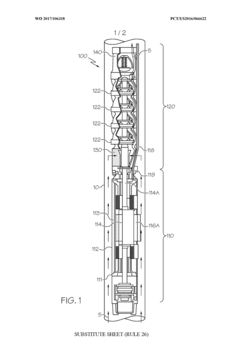
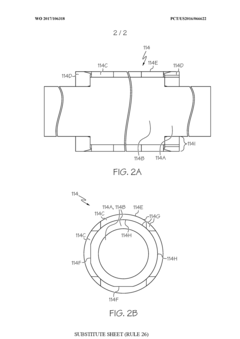
Permanent magnet submersible motor with a one-piece rotor/yoke configuration and resin embedded magnets
PatentWO2017106318A1
Innovation
- A one-piece rotor/yoke configuration with resin-embedded magnets, secured by a cladding tube and stepped collar, provides enhanced protection and durability by increasing bending stiffness, sealing the magnets from the environment, and simplifying assembly processes.
Supply Chain Challenges
The global adoption of Permanent Magnet Synchronous Motor (PMSM) technology faces significant supply chain challenges that impact its widespread implementation. One of the primary concerns is the limited availability and geographical concentration of rare earth elements, essential for manufacturing high-performance permanent magnets used in PMSMs. China currently dominates the rare earth market, controlling approximately 80% of global production, which creates potential supply vulnerabilities and price volatility for manufacturers worldwide.
This concentration of resources has led to efforts to diversify the supply chain, with countries like the United States, Australia, and Japan investing in rare earth mining and processing capabilities. However, developing alternative sources and establishing new supply chains is a time-consuming and capital-intensive process, which slows down the global adoption of PMSM technology.
Another critical supply chain challenge is the complexity of PMSM manufacturing. The production process requires specialized equipment and expertise, which are not readily available in all regions. This limitation creates bottlenecks in the supply chain, particularly in emerging markets where local manufacturing capabilities may be underdeveloped. As a result, many countries rely heavily on imports, which can lead to increased costs and longer lead times.
The global semiconductor shortage has also impacted the PMSM supply chain. Advanced motor control systems and power electronics are integral to PMSM performance, and the scarcity of semiconductor components has caused production delays and increased costs for motor manufacturers. This situation has highlighted the need for more resilient and diversified semiconductor supply chains to support the growth of PMSM technology.
Furthermore, the increasing demand for electric vehicles (EVs) and renewable energy systems, both of which heavily utilize PMSMs, has put additional strain on the supply chain. As these industries rapidly expand, competition for raw materials and manufacturing capacity intensifies, potentially leading to supply constraints and price increases for PMSM components.
To address these challenges, industry stakeholders are exploring various strategies. These include developing alternative magnet technologies that reduce reliance on rare earth elements, investing in recycling and urban mining to recover materials from end-of-life products, and establishing strategic partnerships to secure long-term supply agreements. Additionally, efforts are being made to improve supply chain transparency and traceability to better manage risks and ensure ethical sourcing practices.
As the global adoption of PMSM technology continues to accelerate, addressing these supply chain challenges will be crucial for ensuring sustainable growth and realizing the full potential of this advanced motor technology across various industries and applications.
This concentration of resources has led to efforts to diversify the supply chain, with countries like the United States, Australia, and Japan investing in rare earth mining and processing capabilities. However, developing alternative sources and establishing new supply chains is a time-consuming and capital-intensive process, which slows down the global adoption of PMSM technology.
Another critical supply chain challenge is the complexity of PMSM manufacturing. The production process requires specialized equipment and expertise, which are not readily available in all regions. This limitation creates bottlenecks in the supply chain, particularly in emerging markets where local manufacturing capabilities may be underdeveloped. As a result, many countries rely heavily on imports, which can lead to increased costs and longer lead times.
The global semiconductor shortage has also impacted the PMSM supply chain. Advanced motor control systems and power electronics are integral to PMSM performance, and the scarcity of semiconductor components has caused production delays and increased costs for motor manufacturers. This situation has highlighted the need for more resilient and diversified semiconductor supply chains to support the growth of PMSM technology.
Furthermore, the increasing demand for electric vehicles (EVs) and renewable energy systems, both of which heavily utilize PMSMs, has put additional strain on the supply chain. As these industries rapidly expand, competition for raw materials and manufacturing capacity intensifies, potentially leading to supply constraints and price increases for PMSM components.
To address these challenges, industry stakeholders are exploring various strategies. These include developing alternative magnet technologies that reduce reliance on rare earth elements, investing in recycling and urban mining to recover materials from end-of-life products, and establishing strategic partnerships to secure long-term supply agreements. Additionally, efforts are being made to improve supply chain transparency and traceability to better manage risks and ensure ethical sourcing practices.
As the global adoption of PMSM technology continues to accelerate, addressing these supply chain challenges will be crucial for ensuring sustainable growth and realizing the full potential of this advanced motor technology across various industries and applications.
Environmental Impact
The environmental impact of Permanent Magnet Synchronous Motor (PMSM) technology is a critical factor in its global adoption. As the world shifts towards more sustainable energy solutions, the environmental footprint of PMSM becomes increasingly significant.
One of the primary environmental concerns associated with PMSM technology is the sourcing and processing of rare earth elements, particularly neodymium and dysprosium, used in the permanent magnets. The extraction and refining of these materials can lead to significant environmental degradation, including soil erosion, water pollution, and the release of toxic byproducts. This has raised concerns about the long-term sustainability of PMSM production and its potential ecological consequences.
However, it is essential to consider the environmental benefits that PMSM technology offers during its operational lifetime. PMSMs are known for their high efficiency and energy-saving capabilities, which can lead to reduced power consumption and lower greenhouse gas emissions compared to conventional motor technologies. This improved efficiency can contribute to overall energy conservation efforts and help mitigate climate change impacts.
The recyclability and end-of-life management of PMSMs also play a crucial role in their environmental impact. While the permanent magnets contain valuable rare earth elements, the current recycling processes for these materials are limited and often energy-intensive. Developing more efficient and cost-effective recycling methods for PMSM components is vital to reducing the technology's environmental footprint and ensuring a circular economy approach.
Furthermore, the manufacturing processes for PMSMs have environmental implications. The production of permanent magnets and other motor components requires energy-intensive processes and may involve the use of hazardous materials. Efforts to optimize these manufacturing processes and adopt cleaner production techniques are essential for minimizing the environmental impact of PMSM technology.
The global adoption of PMSM technology also has indirect environmental effects. As PMSMs enable the development of more efficient electric vehicles and renewable energy systems, they contribute to the broader transition towards a low-carbon economy. This transition can lead to significant reductions in fossil fuel consumption and associated emissions, potentially offsetting the environmental costs of PMSM production.
In conclusion, while PMSM technology offers substantial environmental benefits through improved energy efficiency and support for sustainable energy systems, it also presents challenges related to raw material sourcing and end-of-life management. Addressing these challenges through responsible sourcing practices, advanced recycling technologies, and cleaner production methods is crucial for ensuring the long-term environmental sustainability of PMSM technology and facilitating its global adoption.
One of the primary environmental concerns associated with PMSM technology is the sourcing and processing of rare earth elements, particularly neodymium and dysprosium, used in the permanent magnets. The extraction and refining of these materials can lead to significant environmental degradation, including soil erosion, water pollution, and the release of toxic byproducts. This has raised concerns about the long-term sustainability of PMSM production and its potential ecological consequences.
However, it is essential to consider the environmental benefits that PMSM technology offers during its operational lifetime. PMSMs are known for their high efficiency and energy-saving capabilities, which can lead to reduced power consumption and lower greenhouse gas emissions compared to conventional motor technologies. This improved efficiency can contribute to overall energy conservation efforts and help mitigate climate change impacts.
The recyclability and end-of-life management of PMSMs also play a crucial role in their environmental impact. While the permanent magnets contain valuable rare earth elements, the current recycling processes for these materials are limited and often energy-intensive. Developing more efficient and cost-effective recycling methods for PMSM components is vital to reducing the technology's environmental footprint and ensuring a circular economy approach.
Furthermore, the manufacturing processes for PMSMs have environmental implications. The production of permanent magnets and other motor components requires energy-intensive processes and may involve the use of hazardous materials. Efforts to optimize these manufacturing processes and adopt cleaner production techniques are essential for minimizing the environmental impact of PMSM technology.
The global adoption of PMSM technology also has indirect environmental effects. As PMSMs enable the development of more efficient electric vehicles and renewable energy systems, they contribute to the broader transition towards a low-carbon economy. This transition can lead to significant reductions in fossil fuel consumption and associated emissions, potentially offsetting the environmental costs of PMSM production.
In conclusion, while PMSM technology offers substantial environmental benefits through improved energy efficiency and support for sustainable energy systems, it also presents challenges related to raw material sourcing and end-of-life management. Addressing these challenges through responsible sourcing practices, advanced recycling technologies, and cleaner production methods is crucial for ensuring the long-term environmental sustainability of PMSM technology and facilitating its global adoption.
Unlock deeper insights with PatSnap Eureka Quick Research — get a full tech report to explore trends and direct your research. Try now!
Generate Your Research Report Instantly with AI Agent
Supercharge your innovation with PatSnap Eureka AI Agent Platform!