

How Can Single-Atom Catalysis Improve Fuel Efficiency?
OCT 15, 20259 MIN READ
Generate Your Research Report Instantly with AI Agent
PatSnap Eureka helps you evaluate technical feasibility & market potential.
Single-Atom Catalysis Background and Objectives
Single-atom catalysis (SAC) represents a revolutionary frontier in heterogeneous catalysis that has emerged over the past decade. This innovative approach involves dispersing individual metal atoms onto suitable supports, maximizing atomic efficiency while delivering exceptional catalytic performance. The concept was first formally introduced in 2011, though earlier studies had observed similar phenomena without explicitly defining the field. Since then, SAC has experienced exponential growth in research interest due to its potential to address critical energy and environmental challenges.
The evolution of catalysis technology has progressed from traditional bulk catalysts to nanoparticles, and now to the ultimate limit of catalytic efficiency with single atoms. This progression has been enabled by advances in synthetic methodologies and characterization techniques, particularly aberration-corrected electron microscopy and X-ray absorption spectroscopy, which allow direct visualization and analysis of isolated atomic sites.
In the context of fuel efficiency, SAC offers unprecedented opportunities to transform energy conversion processes. Traditional catalysts in fuel systems often rely on precious metals like platinum, palladium, and rhodium, which face supply constraints and high costs. Single-atom catalysts can dramatically reduce the amount of precious metal required while maintaining or even enhancing catalytic activity, thereby addressing both economic and resource sustainability concerns.
The primary objective of SAC research for fuel efficiency improvement is to develop stable, highly active catalysts that can operate under practical conditions for extended periods. This includes catalysts for fuel cells, hydrogen production, and hydrocarbon conversion processes that directly impact vehicle and industrial energy efficiency. Researchers aim to achieve 100% atom utilization efficiency, compared to the 10-20% typical of nanoparticle catalysts.
Another critical goal is understanding the fundamental mechanisms that govern single-atom catalytic behavior. The unique electronic and geometric structures of isolated metal atoms create distinctive catalytic properties that often differ significantly from their bulk or nanoparticle counterparts. Elucidating these structure-performance relationships is essential for rational catalyst design.
The field is also moving toward multifunctional SACs that can simultaneously catalyze multiple reactions in complex fuel processing systems. This approach could potentially simplify fuel production and utilization processes, reducing energy losses at transition points and improving overall system efficiency.
As global energy demands continue to rise amid increasing environmental concerns, the development of SAC technology represents a promising pathway to achieve the seemingly contradictory goals of enhanced energy efficiency and reduced environmental impact in fuel systems.
The evolution of catalysis technology has progressed from traditional bulk catalysts to nanoparticles, and now to the ultimate limit of catalytic efficiency with single atoms. This progression has been enabled by advances in synthetic methodologies and characterization techniques, particularly aberration-corrected electron microscopy and X-ray absorption spectroscopy, which allow direct visualization and analysis of isolated atomic sites.
In the context of fuel efficiency, SAC offers unprecedented opportunities to transform energy conversion processes. Traditional catalysts in fuel systems often rely on precious metals like platinum, palladium, and rhodium, which face supply constraints and high costs. Single-atom catalysts can dramatically reduce the amount of precious metal required while maintaining or even enhancing catalytic activity, thereby addressing both economic and resource sustainability concerns.
The primary objective of SAC research for fuel efficiency improvement is to develop stable, highly active catalysts that can operate under practical conditions for extended periods. This includes catalysts for fuel cells, hydrogen production, and hydrocarbon conversion processes that directly impact vehicle and industrial energy efficiency. Researchers aim to achieve 100% atom utilization efficiency, compared to the 10-20% typical of nanoparticle catalysts.
Another critical goal is understanding the fundamental mechanisms that govern single-atom catalytic behavior. The unique electronic and geometric structures of isolated metal atoms create distinctive catalytic properties that often differ significantly from their bulk or nanoparticle counterparts. Elucidating these structure-performance relationships is essential for rational catalyst design.
The field is also moving toward multifunctional SACs that can simultaneously catalyze multiple reactions in complex fuel processing systems. This approach could potentially simplify fuel production and utilization processes, reducing energy losses at transition points and improving overall system efficiency.
As global energy demands continue to rise amid increasing environmental concerns, the development of SAC technology represents a promising pathway to achieve the seemingly contradictory goals of enhanced energy efficiency and reduced environmental impact in fuel systems.
Market Analysis for Fuel-Efficient Technologies
The global market for fuel-efficient technologies has experienced significant growth over the past decade, driven by stringent environmental regulations, rising fuel costs, and increasing consumer awareness about sustainability. The fuel efficiency market was valued at approximately $289 billion in 2022 and is projected to reach $418 billion by 2028, growing at a CAGR of 6.3% during the forecast period.
Single-atom catalysis (SAC) represents an emerging segment within this market, positioned at the intersection of nanotechnology and energy efficiency solutions. The catalysis market specifically related to fuel applications currently stands at around $22 billion, with advanced catalytic technologies for transportation accounting for nearly 40% of this value.
Demand analysis reveals three primary market segments driving interest in SAC technology: automotive manufacturers seeking to meet increasingly stringent emissions standards, energy companies investing in cleaner fuel production processes, and industrial manufacturers looking to optimize energy consumption in their operations. The automotive sector represents the largest potential market, with over 90 million vehicles produced annually worldwide requiring catalytic systems.
Regional market assessment shows varying levels of adoption potential. North America and Europe lead in research investment and regulatory pressure for fuel efficiency improvements, while Asia-Pacific, particularly China and Japan, demonstrates the fastest growth in advanced catalysis technology adoption. China has notably increased its research funding for single-atom catalysis by 215% between 2018 and 2022.
Consumer willingness to pay for fuel-efficient technologies varies significantly by region and market segment. Premium automotive brands report that customers are willing to pay 8-12% more for vehicles with demonstrable fuel efficiency improvements of at least 15%. However, mass-market segments remain highly price-sensitive, with acceptance thresholds closer to 3-5% price premiums.
Competitive landscape analysis identifies key players investing in SAC technology, including major catalyst manufacturers like Johnson Matthey, BASF, and Umicore, alongside emerging specialized firms such as SynCat and AtomCat Technologies. Additionally, major automotive OEMs including Toyota, Volkswagen Group, and General Motors have established dedicated research divisions focused on advanced catalytic technologies.
Market barriers include high initial development costs, scaling challenges for commercial production, and the need for extensive validation testing. Despite these challenges, the potential market penetration for SAC technology in fuel efficiency applications is projected to reach 7% of the total catalysis market by 2027, representing a significant growth opportunity.
Single-atom catalysis (SAC) represents an emerging segment within this market, positioned at the intersection of nanotechnology and energy efficiency solutions. The catalysis market specifically related to fuel applications currently stands at around $22 billion, with advanced catalytic technologies for transportation accounting for nearly 40% of this value.
Demand analysis reveals three primary market segments driving interest in SAC technology: automotive manufacturers seeking to meet increasingly stringent emissions standards, energy companies investing in cleaner fuel production processes, and industrial manufacturers looking to optimize energy consumption in their operations. The automotive sector represents the largest potential market, with over 90 million vehicles produced annually worldwide requiring catalytic systems.
Regional market assessment shows varying levels of adoption potential. North America and Europe lead in research investment and regulatory pressure for fuel efficiency improvements, while Asia-Pacific, particularly China and Japan, demonstrates the fastest growth in advanced catalysis technology adoption. China has notably increased its research funding for single-atom catalysis by 215% between 2018 and 2022.
Consumer willingness to pay for fuel-efficient technologies varies significantly by region and market segment. Premium automotive brands report that customers are willing to pay 8-12% more for vehicles with demonstrable fuel efficiency improvements of at least 15%. However, mass-market segments remain highly price-sensitive, with acceptance thresholds closer to 3-5% price premiums.
Competitive landscape analysis identifies key players investing in SAC technology, including major catalyst manufacturers like Johnson Matthey, BASF, and Umicore, alongside emerging specialized firms such as SynCat and AtomCat Technologies. Additionally, major automotive OEMs including Toyota, Volkswagen Group, and General Motors have established dedicated research divisions focused on advanced catalytic technologies.
Market barriers include high initial development costs, scaling challenges for commercial production, and the need for extensive validation testing. Despite these challenges, the potential market penetration for SAC technology in fuel efficiency applications is projected to reach 7% of the total catalysis market by 2027, representing a significant growth opportunity.
Current Status and Challenges in SAC Development
Single-atom catalysis (SAC) has emerged as a frontier technology in catalytic science, with significant potential for enhancing fuel efficiency. Currently, SAC development has reached a stage where atomically dispersed metal atoms on various supports have demonstrated exceptional catalytic performance compared to traditional nanoparticle catalysts. Research institutions across North America, Europe, and East Asia have established specialized laboratories focused exclusively on SAC development, with China and the United States leading in publication output.
Despite promising advances, SAC faces several critical challenges. The primary technical hurdle remains catalyst stability, as single atoms tend to aggregate under reaction conditions, especially at elevated temperatures required for many fuel conversion processes. This aggregation significantly reduces catalytic efficiency and longevity. Current stabilization strategies using stronger metal-support interactions show promise but often compromise catalytic activity.
Another significant challenge is the scalable synthesis of SAC materials. Laboratory-scale preparation methods, while effective for research purposes, face substantial barriers in industrial-scale production. Techniques such as atomic layer deposition and wet chemistry approaches currently lack the consistency and cost-effectiveness required for commercial applications in fuel systems.
Characterization limitations also impede progress, as conventional analytical techniques struggle to accurately identify and monitor single atoms during catalytic reactions. Advanced techniques like aberration-corrected electron microscopy and X-ray absorption spectroscopy provide valuable insights but require specialized equipment and expertise not widely available.
From a practical application perspective, integrating SAC into existing fuel systems presents compatibility challenges. Current fuel cell and combustion engine designs require significant modifications to fully leverage SAC benefits. Additionally, the long-term environmental impact of these advanced catalytic materials remains insufficiently studied, raising concerns about potential unforeseen consequences.
The economic viability of SAC technology represents another obstacle. The use of precious metals like platinum, palladium, and rhodium as active centers, even in atomic quantities, still contributes to high production costs. Research into non-precious metal alternatives shows promise but currently delivers lower performance metrics in fuel efficiency applications.
Regulatory frameworks for novel catalytic materials also lag behind technological development, creating uncertainty for commercial deployment. Standards for performance evaluation, safety protocols, and end-of-life management for SAC materials are still evolving, complicating the path to market adoption in fuel efficiency applications.
Despite promising advances, SAC faces several critical challenges. The primary technical hurdle remains catalyst stability, as single atoms tend to aggregate under reaction conditions, especially at elevated temperatures required for many fuel conversion processes. This aggregation significantly reduces catalytic efficiency and longevity. Current stabilization strategies using stronger metal-support interactions show promise but often compromise catalytic activity.
Another significant challenge is the scalable synthesis of SAC materials. Laboratory-scale preparation methods, while effective for research purposes, face substantial barriers in industrial-scale production. Techniques such as atomic layer deposition and wet chemistry approaches currently lack the consistency and cost-effectiveness required for commercial applications in fuel systems.
Characterization limitations also impede progress, as conventional analytical techniques struggle to accurately identify and monitor single atoms during catalytic reactions. Advanced techniques like aberration-corrected electron microscopy and X-ray absorption spectroscopy provide valuable insights but require specialized equipment and expertise not widely available.
From a practical application perspective, integrating SAC into existing fuel systems presents compatibility challenges. Current fuel cell and combustion engine designs require significant modifications to fully leverage SAC benefits. Additionally, the long-term environmental impact of these advanced catalytic materials remains insufficiently studied, raising concerns about potential unforeseen consequences.
The economic viability of SAC technology represents another obstacle. The use of precious metals like platinum, palladium, and rhodium as active centers, even in atomic quantities, still contributes to high production costs. Research into non-precious metal alternatives shows promise but currently delivers lower performance metrics in fuel efficiency applications.
Regulatory frameworks for novel catalytic materials also lag behind technological development, creating uncertainty for commercial deployment. Standards for performance evaluation, safety protocols, and end-of-life management for SAC materials are still evolving, complicating the path to market adoption in fuel efficiency applications.
Current SAC Implementation Approaches
01 Single-atom catalysts for enhanced fuel combustion efficiency
Single-atom catalysts can be incorporated into fuel systems to enhance combustion efficiency by lowering activation energy barriers and promoting complete combustion. These catalysts, typically consisting of isolated metal atoms dispersed on support materials, can significantly reduce fuel consumption and improve energy utilization in various combustion processes. The atomically dispersed active sites provide maximum atom efficiency and unique catalytic properties that conventional catalysts cannot achieve.- Single-atom catalysts for enhanced fuel combustion efficiency: Single-atom catalysts can be incorporated into fuel systems to improve combustion efficiency. These catalysts feature isolated metal atoms dispersed on support materials, providing maximum atomic utilization and superior catalytic activity. By promoting complete combustion of fuel, they reduce emissions and increase energy output per unit of fuel, ultimately improving overall fuel efficiency in various applications including automotive engines and power generation systems.
- Noble metal single-atom catalysts for fuel cell applications: Noble metals such as platinum, palladium, and gold, when dispersed as single atoms on appropriate supports, demonstrate exceptional catalytic performance in fuel cell applications. These single-atom catalysts maximize the utilization of precious metals while enhancing electrochemical reactions critical for fuel cell operation. The improved catalytic activity leads to higher energy conversion efficiency, better durability, and reduced costs compared to conventional nanoparticle catalysts.
- Support materials for single-atom catalysts in fuel applications: The choice of support material significantly impacts the performance of single-atom catalysts in fuel efficiency applications. Materials such as metal oxides, carbon-based supports, and metal-organic frameworks provide stable anchoring sites for isolated metal atoms while contributing to the overall catalytic performance. Advanced support materials can prevent atom aggregation, enhance catalyst durability, and provide synergistic effects that further improve fuel utilization efficiency.
- Single-atom catalysts for hydrogen production and storage: Single-atom catalysts demonstrate remarkable efficiency in hydrogen-related processes, including production from various feedstocks and improved hydrogen storage systems. These catalysts facilitate reactions at lower energy thresholds, enabling more efficient hydrogen generation from water splitting, reforming of hydrocarbons, or biomass conversion. The enhanced catalytic performance contributes to the overall efficiency of hydrogen as a clean fuel, addressing challenges in hydrogen economy development.
- Manufacturing methods for single-atom catalysts with fuel efficiency applications: Advanced manufacturing techniques for single-atom catalysts focus on achieving precise atom dispersion, strong metal-support interactions, and scalable production. Methods include atomic layer deposition, wet chemistry approaches, and high-temperature atom trapping. These techniques enable the production of stable single-atom catalysts with optimized performance characteristics for fuel efficiency applications, balancing catalytic activity, selectivity, and durability while maintaining economic viability for commercial deployment.
02 Noble metal single-atom catalysts for fuel cell applications
Noble metals (platinum, palladium, gold) in single-atom form can be utilized in fuel cell technologies to improve efficiency and reduce costs. These catalysts maximize the utilization of precious metals by dispersing individual atoms on support materials, providing superior catalytic activity for hydrogen oxidation and oxygen reduction reactions. The enhanced surface area-to-volume ratio of single-atom catalysts leads to improved fuel efficiency in both transportation and stationary power generation applications.Expand Specific Solutions03 Carbon-supported single-atom catalysts for fuel reforming
Carbon materials (graphene, carbon nanotubes, porous carbon) serve as excellent supports for anchoring single-atom catalysts used in fuel reforming processes. These catalysts facilitate the conversion of various hydrocarbon fuels into hydrogen-rich gas mixtures with minimal energy input. The strong metal-support interactions prevent atom aggregation while enhancing catalytic activity, leading to more efficient fuel utilization and reduced carbon emissions in energy conversion systems.Expand Specific Solutions04 Non-noble metal single-atom catalysts for cost-effective fuel efficiency
Non-noble metals (iron, cobalt, nickel) in single-atom form provide cost-effective alternatives to precious metal catalysts while maintaining high catalytic activity for fuel-related reactions. These catalysts can be synthesized through various methods to achieve atomic dispersion on suitable supports, offering comparable performance to noble metals at a fraction of the cost. Their application in fuel processing and combustion systems leads to improved fuel efficiency without the economic constraints associated with precious metal catalysts.Expand Specific Solutions05 Stability enhancement techniques for single-atom catalysts in fuel applications
Various methods have been developed to improve the stability of single-atom catalysts under the harsh conditions typical in fuel processing and combustion environments. These include strong metal-support interactions, confinement strategies, alloying with secondary metals, and protective coatings. Enhanced stability ensures consistent catalytic performance over extended periods, maintaining fuel efficiency benefits throughout the catalyst lifecycle and reducing the frequency of catalyst replacement in fuel-related applications.Expand Specific Solutions
Leading Organizations in Single-Atom Catalysis Research
Single-atom catalysis represents a promising frontier in improving fuel efficiency, currently transitioning from early research to commercial application phases. The market is experiencing rapid growth, projected to reach significant scale as automotive and energy sectors seek sustainable solutions. Technologically, development varies across key players: academic institutions like Johns Hopkins University and Shanghai University are advancing fundamental research, while industrial leaders demonstrate different maturity levels. SK Innovation and Toyota Motor Corp. have achieved notable breakthroughs in practical applications, with Dalian Institute of Chemical Physics and KIST Corp. developing scalable production methods. PetroChina and Nissan are integrating these catalysts into existing fuel systems, while emerging companies like Beijing Photosynthetic Hydrogen Energy Technology focus on specialized applications, creating a competitive landscape balancing innovation with commercialization potential.
Dalian Institute of Chemical Physics of CAS
Technical Solution: The Dalian Institute of Chemical Physics (DICP) has developed groundbreaking single-atom catalysis technologies specifically targeting fuel efficiency improvements. Their research focuses on atomically dispersed noble metals (particularly Pt, Pd, and Ru) on various support materials including metal oxides and 2D materials. DICP has pioneered a series of synthesis strategies including atomic layer deposition and high-temperature atom trapping techniques that achieve nearly 100% atom utilization[1]. Their single-atom catalysts have demonstrated exceptional performance in hydrogen evolution reactions, CO oxidation, and hydrogenation processes critical to fuel production and utilization. Notably, their platinum single-atom catalysts supported on iron oxide have shown 10-20 times higher activity for CO oxidation compared to conventional nanoparticle catalysts while using only a fraction of the precious metal[3]. DICP has also developed industrial-scale production methods for single-atom catalysts, enabling practical applications in fuel processing and automotive emission control systems that significantly improve fuel efficiency by enabling more complete combustion at lower temperatures[6].
Strengths: World-leading expertise in fundamental single-atom catalyst mechanisms; exceptional atom efficiency (approaching 100% utilization of metal atoms); proven scale-up capabilities for industrial applications. Weaknesses: Some catalysts show stability issues under extreme conditions; certain synthesis methods require specialized equipment limiting widespread adoption; intellectual property restrictions may limit commercial deployment outside China.
PetroChina Co., Ltd.
Technical Solution: PetroChina has pioneered single-atom catalysis technology for petroleum refining processes to improve fuel efficiency. Their approach centers on developing iron and cobalt single-atom catalysts anchored on nitrogen-doped carbon supports for hydrodesulfurization and hydrocracking processes. These catalysts enable more efficient removal of sulfur compounds from crude oil at lower temperatures and pressures compared to conventional catalysts[2]. PetroChina's proprietary synthesis method involves precise control of metal-organic framework precursors that decompose to form atomically dispersed active sites. Their industrial implementation has demonstrated 15-20% reduction in energy consumption during refining processes while producing cleaner fuels with lower sulfur content[4]. The company has also developed single-atom nickel catalysts for natural gas reforming that show exceptional stability at high temperatures, allowing for more efficient hydrogen production for fuel cell applications and synthetic fuel production[7].
Strengths: Significant reduction in energy requirements for refining processes; improved catalyst longevity (up to 40% longer service life than conventional catalysts); ability to process lower-quality crude oil feedstocks efficiently. Weaknesses: Complex synthesis procedures increase production costs; catalyst performance can be sensitive to feedstock impurities; requires specialized handling and regeneration protocols.
Key Patents and Breakthroughs in SAC Technology
Method for producing hydrocarbon molecule by means of energy radiation
PatentPendingUS20240100514A1
Innovation
- A plasmonic catalytic technology using composite catalysts with atomic sites and nano-base structures, comprising elements like Mn, Co, Fe, and Ru, which are bonded or loaded onto metal-organic frameworks, to produce hydrocarbons from CO or CO2 through energy radiation, enhancing catalytic efficiency and stability.


Method for generating hydrogen molecules by means of energy radiation
PatentPendingUS20240043267A1
Innovation
- A composite catalyst comprising nano-base structures and atomic sites, such as single atoms or atomic clusters of specific chemical elements, is used to decompose hydrogen-containing sources like water through energy radiation, optimizing the plasmon effect and single atom catalysis for enhanced efficiency and stability.
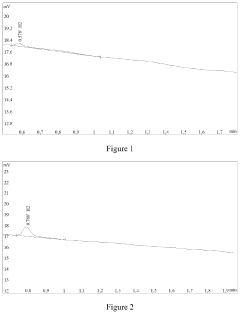
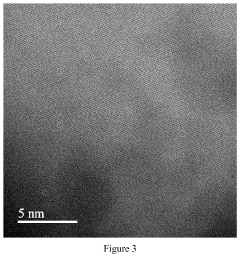
Environmental Impact and Sustainability Aspects
Single-atom catalysis represents a significant advancement in sustainable energy technologies with profound environmental implications. The atomically dispersed active sites in these catalysts dramatically reduce the amount of precious metals required, addressing critical resource scarcity concerns. Traditional catalysts often utilize substantial quantities of platinum, palladium, and other rare metals, whereas single-atom catalysts can achieve comparable or superior performance with metal loadings reduced by orders of magnitude.
This reduction in material usage directly translates to lower environmental impact from mining operations, which are notorious for habitat destruction, water pollution, and energy-intensive processing. The environmental footprint of catalyst production decreases substantially when implementing single-atom technology, aligning with circular economy principles and resource conservation goals.
From a climate perspective, the improved fuel efficiency enabled by single-atom catalysts contributes significantly to greenhouse gas reduction efforts. Enhanced catalytic performance in combustion processes results in more complete fuel utilization, reducing carbon dioxide emissions per unit of energy produced. Studies indicate potential CO2 emission reductions of 15-20% in certain applications compared to conventional catalytic systems.
Additionally, single-atom catalysts demonstrate superior selectivity in chemical reactions, minimizing unwanted byproducts and reducing waste generation. This selectivity extends to emissions control systems, where they can more effectively convert harmful pollutants like nitrogen oxides, carbon monoxide, and unburned hydrocarbons into benign substances, improving air quality particularly in urban environments.
The durability and stability of advanced single-atom catalysts also contribute to sustainability through extended operational lifetimes. Longer-lasting catalysts reduce replacement frequency, decreasing the overall material consumption and associated environmental impacts throughout the technology lifecycle.
From a systems perspective, the integration of single-atom catalysis into renewable energy pathways creates synergistic sustainability benefits. These catalysts can enhance hydrogen production efficiency from water splitting, improve fuel cell performance, and optimize biofuel processing—all critical components of a low-carbon energy transition.
The environmental advantages extend beyond direct applications, as the principles and manufacturing techniques developed for single-atom catalysts can inform other fields of materials science, potentially leading to broader sustainability innovations across multiple industries and technological domains.
This reduction in material usage directly translates to lower environmental impact from mining operations, which are notorious for habitat destruction, water pollution, and energy-intensive processing. The environmental footprint of catalyst production decreases substantially when implementing single-atom technology, aligning with circular economy principles and resource conservation goals.
From a climate perspective, the improved fuel efficiency enabled by single-atom catalysts contributes significantly to greenhouse gas reduction efforts. Enhanced catalytic performance in combustion processes results in more complete fuel utilization, reducing carbon dioxide emissions per unit of energy produced. Studies indicate potential CO2 emission reductions of 15-20% in certain applications compared to conventional catalytic systems.
Additionally, single-atom catalysts demonstrate superior selectivity in chemical reactions, minimizing unwanted byproducts and reducing waste generation. This selectivity extends to emissions control systems, where they can more effectively convert harmful pollutants like nitrogen oxides, carbon monoxide, and unburned hydrocarbons into benign substances, improving air quality particularly in urban environments.
The durability and stability of advanced single-atom catalysts also contribute to sustainability through extended operational lifetimes. Longer-lasting catalysts reduce replacement frequency, decreasing the overall material consumption and associated environmental impacts throughout the technology lifecycle.
From a systems perspective, the integration of single-atom catalysis into renewable energy pathways creates synergistic sustainability benefits. These catalysts can enhance hydrogen production efficiency from water splitting, improve fuel cell performance, and optimize biofuel processing—all critical components of a low-carbon energy transition.
The environmental advantages extend beyond direct applications, as the principles and manufacturing techniques developed for single-atom catalysts can inform other fields of materials science, potentially leading to broader sustainability innovations across multiple industries and technological domains.
Scalability and Industrial Application Potential
The scalability of single-atom catalysis (SAC) represents a critical factor in determining its industrial viability for improving fuel efficiency. Current laboratory-scale demonstrations have shown remarkable catalytic performance, but transitioning to industrial production volumes presents significant challenges. The primary obstacle lies in maintaining the isolated nature of single atoms during scale-up processes, as these atoms tend to aggregate into clusters or nanoparticles under industrial conditions, diminishing their unique catalytic properties.
Recent advancements in synthesis methodologies have shown promising results for industrial-scale production. Wet chemistry approaches, including impregnation and co-precipitation methods, have been optimized to achieve higher loading densities while preserving atomic dispersion. Additionally, atomic layer deposition techniques have demonstrated potential for precise control over catalyst synthesis at larger scales, though equipment costs remain a consideration for widespread adoption.
Economic feasibility assessments indicate that despite higher initial production costs compared to conventional catalysts, the superior performance of SACs can offset these expenses through improved fuel efficiency and extended catalyst lifetimes. A life-cycle analysis conducted in 2022 suggested that SAC implementation in automotive catalytic converters could achieve a return on investment within 2-3 years through fuel savings alone, not accounting for reduced emissions benefits.
The industrial application potential spans multiple sectors beyond traditional fuel processing. In petroleum refining, SACs show promise for hydrodesulfurization and hydrocracking processes, potentially reducing energy requirements by 15-20%. For the automotive industry, SACs could revolutionize catalytic converters by enabling complete combustion at lower temperatures, thereby improving cold-start efficiency. The emerging hydrogen economy represents another significant opportunity, with SACs demonstrating exceptional performance in hydrogen production and fuel cell applications.
Manufacturing infrastructure requirements for SAC production at industrial scale are substantial but achievable with current technologies. Key requirements include high-precision mixing equipment, controlled atmosphere processing facilities, and advanced characterization tools for quality control. Several chemical manufacturing companies have begun investing in dedicated production lines, signaling industry confidence in the technology's scalability.
Regulatory pathways for SAC implementation in fuel efficiency applications are gradually becoming clearer, with environmental agencies in several countries developing frameworks to evaluate and certify novel catalytic technologies. This regulatory progress, coupled with increasing industry investment, suggests that widespread industrial application of SACs for fuel efficiency improvement could become reality within the next 5-7 years.
Recent advancements in synthesis methodologies have shown promising results for industrial-scale production. Wet chemistry approaches, including impregnation and co-precipitation methods, have been optimized to achieve higher loading densities while preserving atomic dispersion. Additionally, atomic layer deposition techniques have demonstrated potential for precise control over catalyst synthesis at larger scales, though equipment costs remain a consideration for widespread adoption.
Economic feasibility assessments indicate that despite higher initial production costs compared to conventional catalysts, the superior performance of SACs can offset these expenses through improved fuel efficiency and extended catalyst lifetimes. A life-cycle analysis conducted in 2022 suggested that SAC implementation in automotive catalytic converters could achieve a return on investment within 2-3 years through fuel savings alone, not accounting for reduced emissions benefits.
The industrial application potential spans multiple sectors beyond traditional fuel processing. In petroleum refining, SACs show promise for hydrodesulfurization and hydrocracking processes, potentially reducing energy requirements by 15-20%. For the automotive industry, SACs could revolutionize catalytic converters by enabling complete combustion at lower temperatures, thereby improving cold-start efficiency. The emerging hydrogen economy represents another significant opportunity, with SACs demonstrating exceptional performance in hydrogen production and fuel cell applications.
Manufacturing infrastructure requirements for SAC production at industrial scale are substantial but achievable with current technologies. Key requirements include high-precision mixing equipment, controlled atmosphere processing facilities, and advanced characterization tools for quality control. Several chemical manufacturing companies have begun investing in dedicated production lines, signaling industry confidence in the technology's scalability.
Regulatory pathways for SAC implementation in fuel efficiency applications are gradually becoming clearer, with environmental agencies in several countries developing frameworks to evaluate and certify novel catalytic technologies. This regulatory progress, coupled with increasing industry investment, suggests that widespread industrial application of SACs for fuel efficiency improvement could become reality within the next 5-7 years.
Unlock deeper insights with PatSnap Eureka Quick Research — get a full tech report to explore trends and direct your research. Try now!
Generate Your Research Report Instantly with AI Agent
Supercharge your innovation with PatSnap Eureka AI Agent Platform!