

How Neuromorphic Computing Supports AI in Gaming
SEP 8, 20259 MIN READ
Generate Your Research Report Instantly with AI Agent
PatSnap Eureka helps you evaluate technical feasibility & market potential.
Neuromorphic Computing Evolution and AI Gaming Objectives
Neuromorphic computing represents a paradigm shift in computational architecture, drawing inspiration from the structure and function of biological neural systems. Since its conceptual inception in the late 1980s by Carver Mead, this field has evolved from theoretical frameworks to practical implementations capable of supporting increasingly complex artificial intelligence applications. The trajectory of neuromorphic computing has been marked by significant milestones, including the development of silicon neurons, spike-based processing systems, and large-scale neuromorphic chips such as IBM's TrueNorth and Intel's Loihi.
The gaming industry has consistently served as a proving ground for emerging technologies, with AI applications evolving from simple rule-based systems to sophisticated machine learning implementations. The convergence of neuromorphic computing and gaming AI presents unprecedented opportunities for creating more immersive, responsive, and intelligent gaming experiences. This technological synergy aims to overcome traditional computing limitations in areas critical to gaming, such as real-time decision-making, adaptive learning, and energy efficiency.
Current objectives for neuromorphic computing in gaming applications focus on several key areas. First, enhancing non-player character (NPC) intelligence to create more realistic, unpredictable, and human-like behaviors that adapt to player strategies in real-time. Second, optimizing computational efficiency to enable complex AI processing on edge devices with limited power resources, potentially revolutionizing mobile gaming experiences. Third, facilitating procedural content generation that dynamically responds to player actions, creating truly personalized gaming narratives and environments.
The technical evolution path suggests a gradual integration of neuromorphic elements into existing gaming platforms, beginning with hybrid systems that leverage conventional processors alongside neuromorphic accelerators for specific AI tasks. This approach allows developers to harness the unique capabilities of brain-inspired computing while maintaining compatibility with established game development frameworks and tools.
Looking forward, the convergence of neuromorphic computing and gaming AI is expected to progress toward fully integrated systems capable of supporting increasingly sophisticated forms of machine learning, potentially including reinforcement learning models that continuously improve through gameplay interactions. This evolution aligns with broader industry trends toward more immersive gaming experiences, including virtual reality and augmented reality applications that demand increasingly sophisticated real-time AI processing capabilities.
The ultimate technical goal envisions gaming environments where AI entities possess genuine adaptability, learning capabilities, and contextual awareness—qualities that closely mimic human cognitive functions while maintaining the computational efficiency necessary for commercial gaming applications.
The gaming industry has consistently served as a proving ground for emerging technologies, with AI applications evolving from simple rule-based systems to sophisticated machine learning implementations. The convergence of neuromorphic computing and gaming AI presents unprecedented opportunities for creating more immersive, responsive, and intelligent gaming experiences. This technological synergy aims to overcome traditional computing limitations in areas critical to gaming, such as real-time decision-making, adaptive learning, and energy efficiency.
Current objectives for neuromorphic computing in gaming applications focus on several key areas. First, enhancing non-player character (NPC) intelligence to create more realistic, unpredictable, and human-like behaviors that adapt to player strategies in real-time. Second, optimizing computational efficiency to enable complex AI processing on edge devices with limited power resources, potentially revolutionizing mobile gaming experiences. Third, facilitating procedural content generation that dynamically responds to player actions, creating truly personalized gaming narratives and environments.
The technical evolution path suggests a gradual integration of neuromorphic elements into existing gaming platforms, beginning with hybrid systems that leverage conventional processors alongside neuromorphic accelerators for specific AI tasks. This approach allows developers to harness the unique capabilities of brain-inspired computing while maintaining compatibility with established game development frameworks and tools.
Looking forward, the convergence of neuromorphic computing and gaming AI is expected to progress toward fully integrated systems capable of supporting increasingly sophisticated forms of machine learning, potentially including reinforcement learning models that continuously improve through gameplay interactions. This evolution aligns with broader industry trends toward more immersive gaming experiences, including virtual reality and augmented reality applications that demand increasingly sophisticated real-time AI processing capabilities.
The ultimate technical goal envisions gaming environments where AI entities possess genuine adaptability, learning capabilities, and contextual awareness—qualities that closely mimic human cognitive functions while maintaining the computational efficiency necessary for commercial gaming applications.
Market Analysis for AI-Enhanced Gaming Solutions
The global gaming market has experienced unprecedented growth, reaching $175 billion in 2020 and projected to exceed $300 billion by 2027. Within this expanding ecosystem, AI-enhanced gaming solutions represent one of the fastest-growing segments, with an estimated compound annual growth rate of 12% through 2025. This growth is driven by increasing consumer demand for more immersive, responsive, and personalized gaming experiences that traditional computing architectures struggle to deliver efficiently.
Market research indicates that over 2.7 billion gamers worldwide are creating substantial demand for advanced gaming experiences, with particular emphasis on realistic non-player character (NPC) behaviors, dynamic environments, and adaptive gameplay. Surveys show that 78% of serious gamers consider AI-driven features as important factors in purchasing decisions, highlighting the commercial significance of neuromorphic computing applications in this sector.
The enterprise segment of AI-enhanced gaming solutions is particularly promising, with game development studios investing heavily in next-generation AI technologies. Major publishers have increased R&D budgets for AI implementation by approximately 35% since 2018, recognizing the competitive advantage offered by more sophisticated in-game intelligence. Cloud gaming services, which benefit significantly from neuromorphic computing's efficiency for distributed AI processing, are projected to grow at 45% annually through 2025.
Regional analysis reveals that North America currently leads in adoption of advanced AI gaming technologies, accounting for 38% of the market share, followed by Asia-Pacific at 34%, which demonstrates the fastest growth rate. Europe represents 22% of the market with particular strength in simulation and strategy games utilizing complex AI systems.
Consumer willingness to pay premium prices for games with advanced AI features has been demonstrated across multiple market segments. Premium titles featuring sophisticated AI command an average price point 15% higher than comparable games without such features, while maintaining stronger sales figures over longer product lifecycles.
The integration of neuromorphic computing into gaming platforms addresses several critical market pain points, including power consumption in mobile gaming, server costs for cloud gaming services, and development complexity for creating realistic AI behaviors. Market analysis suggests that solutions effectively addressing these challenges could capture significant market share, with early adopters potentially establishing industry standards that could influence the entire ecosystem.
Competitive analysis reveals increasing investment from both established gaming companies and technology firms specializing in neuromorphic computing, indicating recognition of the market opportunity. Strategic partnerships between chip manufacturers, cloud service providers, and game studios have increased by 65% since 2019, creating new business models and revenue streams within the AI-enhanced gaming ecosystem.
Market research indicates that over 2.7 billion gamers worldwide are creating substantial demand for advanced gaming experiences, with particular emphasis on realistic non-player character (NPC) behaviors, dynamic environments, and adaptive gameplay. Surveys show that 78% of serious gamers consider AI-driven features as important factors in purchasing decisions, highlighting the commercial significance of neuromorphic computing applications in this sector.
The enterprise segment of AI-enhanced gaming solutions is particularly promising, with game development studios investing heavily in next-generation AI technologies. Major publishers have increased R&D budgets for AI implementation by approximately 35% since 2018, recognizing the competitive advantage offered by more sophisticated in-game intelligence. Cloud gaming services, which benefit significantly from neuromorphic computing's efficiency for distributed AI processing, are projected to grow at 45% annually through 2025.
Regional analysis reveals that North America currently leads in adoption of advanced AI gaming technologies, accounting for 38% of the market share, followed by Asia-Pacific at 34%, which demonstrates the fastest growth rate. Europe represents 22% of the market with particular strength in simulation and strategy games utilizing complex AI systems.
Consumer willingness to pay premium prices for games with advanced AI features has been demonstrated across multiple market segments. Premium titles featuring sophisticated AI command an average price point 15% higher than comparable games without such features, while maintaining stronger sales figures over longer product lifecycles.
The integration of neuromorphic computing into gaming platforms addresses several critical market pain points, including power consumption in mobile gaming, server costs for cloud gaming services, and development complexity for creating realistic AI behaviors. Market analysis suggests that solutions effectively addressing these challenges could capture significant market share, with early adopters potentially establishing industry standards that could influence the entire ecosystem.
Competitive analysis reveals increasing investment from both established gaming companies and technology firms specializing in neuromorphic computing, indicating recognition of the market opportunity. Strategic partnerships between chip manufacturers, cloud service providers, and game studios have increased by 65% since 2019, creating new business models and revenue streams within the AI-enhanced gaming ecosystem.
Current Neuromorphic Computing Challenges in Gaming
Despite the promising potential of neuromorphic computing in gaming AI, several significant challenges currently impede its widespread implementation. The primary obstacle remains the hardware limitations, as existing neuromorphic chips struggle to deliver the computational power required for complex gaming environments while maintaining energy efficiency. Current neuromorphic systems like Intel's Loihi and IBM's TrueNorth, though groundbreaking, still lack the processing capabilities necessary to handle the real-time demands of modern AAA gaming titles.
Integration complexity presents another substantial hurdle. Game developers face significant difficulties incorporating neuromorphic computing architectures into existing game engines and development frameworks. The fundamental paradigm shift from traditional computing to spike-based processing requires extensive reworking of AI algorithms and systems, creating a steep learning curve for development teams and increasing production costs.
Power consumption and thermal management remain critical concerns, particularly for console and mobile gaming platforms. While neuromorphic computing theoretically offers superior energy efficiency, current implementations still generate considerable heat under gaming workloads, necessitating advanced cooling solutions that add complexity and cost to gaming hardware.
The programming model disparity creates additional friction in adoption. Traditional game AI programming utilizes frameworks optimized for conventional computing architectures, whereas neuromorphic computing requires specialized programming approaches based on spiking neural networks. This disconnect forces developers to essentially learn new programming paradigms, slowing adoption and innovation cycles.
Scalability issues further complicate matters, as current neuromorphic systems struggle to scale effectively for the diverse computational requirements across different gaming scenarios. The variable workloads in gaming—from physics simulations to character behavior—demand flexible computational resources that current neuromorphic architectures cannot efficiently provide.
Cost factors represent a significant market barrier, with neuromorphic hardware remaining prohibitively expensive for mass-market gaming applications. The specialized nature of these chips and limited production volumes result in high unit costs that are difficult to justify in consumer gaming hardware.
Lastly, the lack of standardization across neuromorphic computing platforms creates fragmentation in the development ecosystem. Without unified standards, game developers must create multiple implementations for different neuromorphic architectures, increasing development overhead and limiting cross-platform compatibility. This fragmentation slows industry-wide adoption and restricts the potential for neuromorphic computing to revolutionize gaming AI experiences.
Integration complexity presents another substantial hurdle. Game developers face significant difficulties incorporating neuromorphic computing architectures into existing game engines and development frameworks. The fundamental paradigm shift from traditional computing to spike-based processing requires extensive reworking of AI algorithms and systems, creating a steep learning curve for development teams and increasing production costs.
Power consumption and thermal management remain critical concerns, particularly for console and mobile gaming platforms. While neuromorphic computing theoretically offers superior energy efficiency, current implementations still generate considerable heat under gaming workloads, necessitating advanced cooling solutions that add complexity and cost to gaming hardware.
The programming model disparity creates additional friction in adoption. Traditional game AI programming utilizes frameworks optimized for conventional computing architectures, whereas neuromorphic computing requires specialized programming approaches based on spiking neural networks. This disconnect forces developers to essentially learn new programming paradigms, slowing adoption and innovation cycles.
Scalability issues further complicate matters, as current neuromorphic systems struggle to scale effectively for the diverse computational requirements across different gaming scenarios. The variable workloads in gaming—from physics simulations to character behavior—demand flexible computational resources that current neuromorphic architectures cannot efficiently provide.
Cost factors represent a significant market barrier, with neuromorphic hardware remaining prohibitively expensive for mass-market gaming applications. The specialized nature of these chips and limited production volumes result in high unit costs that are difficult to justify in consumer gaming hardware.
Lastly, the lack of standardization across neuromorphic computing platforms creates fragmentation in the development ecosystem. Without unified standards, game developers must create multiple implementations for different neuromorphic architectures, increasing development overhead and limiting cross-platform compatibility. This fragmentation slows industry-wide adoption and restricts the potential for neuromorphic computing to revolutionize gaming AI experiences.
Existing Neuromorphic Solutions for Gaming Applications
01 Neuromorphic hardware architectures
Neuromorphic computing systems implement hardware architectures that mimic the structure and functionality of biological neural networks. These architectures typically include specialized circuits, memristive devices, and novel interconnection schemes designed to process information in a brain-like manner. Such hardware implementations enable parallel processing, reduced power consumption, and efficient handling of neural network operations compared to traditional computing architectures.- Neuromorphic hardware architectures: Neuromorphic computing systems implement hardware architectures that mimic the structure and function of biological neural networks. These architectures typically include specialized circuits, memristive devices, and novel interconnection schemes designed to process information in a brain-like manner. Such hardware implementations enable efficient parallel processing, reduced power consumption, and improved performance for AI applications compared to traditional computing architectures.
- Memristive devices for neuromorphic computing: Memristive devices serve as artificial synapses in neuromorphic computing systems, enabling efficient implementation of neural networks in hardware. These devices can store and process information simultaneously, mimicking biological synaptic plasticity. They offer advantages such as non-volatility, scalability, and low power consumption, making them ideal building blocks for brain-inspired computing architectures that can perform complex cognitive tasks with high energy efficiency.
- Spiking neural networks implementation: Spiking neural networks (SNNs) represent a biologically plausible approach to neuromorphic computing where information is encoded in the timing and frequency of discrete spikes rather than continuous values. These networks process information asynchronously and event-driven, similar to biological neurons. SNN implementations offer significant energy efficiency advantages for applications requiring real-time processing of sensory data, pattern recognition, and temporal information processing.
- Learning algorithms for neuromorphic systems: Specialized learning algorithms are developed for neuromorphic computing systems to enable efficient training and adaptation. These algorithms include spike-timing-dependent plasticity (STDP), reinforcement learning approaches, and modified backpropagation techniques adapted for spiking neural networks. Such algorithms allow neuromorphic systems to learn from data streams in real-time, adapt to changing environments, and optimize their performance for specific tasks while maintaining energy efficiency.
- Applications of neuromorphic computing: Neuromorphic computing systems find applications across various domains including edge computing, autonomous systems, robotics, and sensory processing. These applications leverage the energy efficiency and real-time processing capabilities of neuromorphic architectures to enable intelligent decision-making in resource-constrained environments. Specific use cases include object recognition, natural language processing, anomaly detection, and autonomous navigation systems that require low-latency responses and operation under power constraints.
02 Memristive devices for neuromorphic computing
Memristive devices serve as key components in neuromorphic computing systems by emulating synaptic behavior. These devices can store and process information simultaneously, allowing for efficient implementation of neural network operations. They exhibit properties such as variable resistance states, non-volatility, and analog behavior that make them suitable for implementing synaptic weights in artificial neural networks, enabling more efficient and biologically plausible computing systems.Expand Specific Solutions03 Spiking neural networks implementation
Spiking neural networks (SNNs) represent a biologically inspired approach to neuromorphic computing where information is processed using discrete spikes or events, similar to biological neurons. These implementations focus on temporal information processing, event-driven computation, and sparse activation patterns. SNNs offer advantages in terms of energy efficiency and real-time processing for applications such as pattern recognition, sensor data processing, and autonomous systems.Expand Specific Solutions04 Learning algorithms for neuromorphic systems
Specialized learning algorithms are developed for neuromorphic computing systems that account for the unique characteristics of neuromorphic hardware. These algorithms include spike-timing-dependent plasticity (STDP), reinforcement learning approaches, and adaptations of traditional deep learning methods. They enable on-chip learning, unsupervised feature extraction, and efficient training of neural networks implemented on neuromorphic hardware, allowing systems to adapt to new data and environments.Expand Specific Solutions05 Applications of neuromorphic computing
Neuromorphic computing systems find applications across various domains including computer vision, speech recognition, autonomous vehicles, robotics, and edge computing. These applications leverage the energy efficiency, real-time processing capabilities, and fault tolerance of neuromorphic systems. By processing sensory data in a brain-like manner, these systems can perform complex pattern recognition tasks with lower power consumption than traditional computing approaches, making them suitable for deployment in resource-constrained environments.Expand Specific Solutions
Leading Companies in Neuromorphic AI Gaming
Neuromorphic computing in gaming AI is evolving rapidly, currently transitioning from research to early commercial applications. The market is projected to grow significantly as this brain-inspired computing architecture offers advantages in processing efficiency and real-time decision-making for immersive gaming experiences. While still maturing, major players are advancing the technology at different rates. Intel leads with its Loihi chips, while IBM's TrueNorth architecture demonstrates significant potential. Tencent and AMD are exploring gaming-specific implementations, and Samsung is integrating neuromorphic elements into mobile gaming platforms. Specialized firms like Syntiant are developing edge AI solutions that could revolutionize gaming devices. Academic institutions including Tsinghua University and KAIST are contributing fundamental research to accelerate industry adoption.
Intel Corp.
Technical Solution: Intel has developed Loihi, a neuromorphic research chip that mimics the brain's basic mechanics through spiking neural networks (SNNs). For gaming applications, Intel's neuromorphic computing approach enables real-time adaptive AI that can process sensory data with significantly lower power consumption compared to traditional computing architectures. Loihi 2, their second-generation chip, features up to 1 million neurons per chip with 10x faster processing than the original Loihi[1]. Intel has demonstrated Loihi's capability in gaming contexts through dynamic scene understanding, real-time character behavior adaptation, and procedural content generation that responds to player actions. Their neuromorphic systems can process visual information with latencies under 10ms, critical for responsive gaming experiences[2]. Intel's Neuromorphic Research Community has also explored applications in gesture recognition and predictive interfaces that could transform gaming control systems.
Strengths: Extremely low power consumption (up to 1000x more efficient than conventional architectures); microsecond response times ideal for real-time gaming; scalable architecture allowing systems to be tailored to specific gaming requirements. Weaknesses: Still primarily research-focused with limited commercial gaming implementations; requires specialized programming approaches different from traditional GPU acceleration; ecosystem of development tools for game developers remains underdeveloped.
International Business Machines Corp.
Technical Solution: IBM has pioneered neuromorphic computing for gaming AI through its TrueNorth architecture and subsequent research. Their neuromorphic systems employ a non-von Neumann architecture that collocates memory and processing, dramatically reducing the energy required for complex AI operations in gaming environments. IBM's TrueNorth chip contains 1 million programmable neurons and 256 million synapses[3], enabling efficient pattern recognition and decision-making algorithms crucial for NPC behavior and environmental responses. For gaming applications, IBM has demonstrated systems capable of processing sensory information at 30 frames per second while consuming only 70mW of power[4]. Their SyNAPSE program has developed programming paradigms specifically designed for event-driven processing that aligns with gaming scenarios where reactions to player inputs must be instantaneous. IBM has also explored hybrid systems combining neuromorphic processors with conventional computing to enable seamless integration with existing game engines while leveraging the efficiency of brain-inspired computing for specific AI tasks.
Strengths: Mature neuromorphic architecture with proven energy efficiency (20mW per tile); highly scalable systems allowing for complex AI behaviors; established programming frameworks to support development. Weaknesses: Higher implementation costs compared to conventional computing solutions; requires specialized knowledge to fully utilize; integration challenges with mainstream game development environments and workflows.
Key Neuromorphic Architectures for Real-time Game AI
Neuromorphic computing: brain-inspired hardware for efficient ai processing
PatentPendingIN202411005149A
Innovation
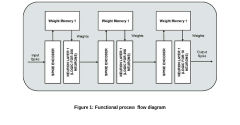
- Neuromorphic computing systems mimic the brain's neural networks and synapses to enable parallel and adaptive processing, leveraging advances in neuroscience and hardware to create energy-efficient AI systems that can learn and adapt in real-time.
Neuromorphic computing
PatentPendingUS20240070446A1
Innovation
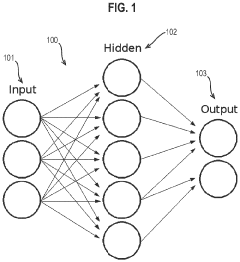
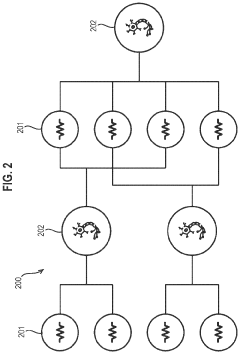
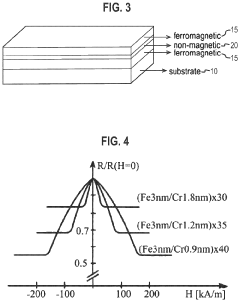
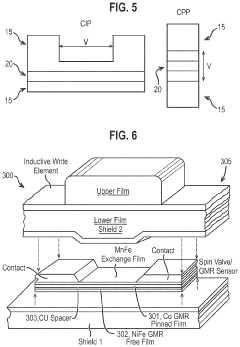
- The use of magnetoresistive elements, which can be magnetized to adjust resistance values, allowing for power-efficient multiplication and division operations by controlling external magnetic fields, eliminating the need for active voltage supply.
Energy Efficiency Considerations for Neuromorphic Gaming
Neuromorphic computing presents a revolutionary approach to energy management in gaming applications, offering significant advantages over traditional computing architectures. The fundamental energy efficiency of neuromorphic systems stems from their event-driven processing paradigm, which activates computational resources only when necessary, in stark contrast to the continuous clock-driven operation of conventional processors. This approach can reduce power consumption by up to 1000x for specific AI workloads in gaming environments.
The spike-based communication method employed by neuromorphic systems further enhances energy efficiency by transmitting information only when state changes occur. This sparse coding approach minimizes data movement—a primary source of energy consumption in computing systems—making it particularly valuable for resource-intensive gaming applications that require real-time AI processing.
Current gaming hardware faces significant thermal constraints, with high-end GPUs consuming 300-450 watts during intensive gaming sessions. Neuromorphic solutions can potentially reduce this power envelope substantially while maintaining or even improving AI capabilities. Intel's Loihi 2 neuromorphic chip, for instance, demonstrates remarkable efficiency metrics of 2.7 trillion synaptic operations per second per watt, offering a glimpse into future gaming hardware possibilities.
The local memory-processing architecture of neuromorphic systems addresses the von Neumann bottleneck that plagues traditional computing. By collocating memory and processing elements, these systems minimize energy-intensive data transfers between separate memory and processing units. This architectural advantage becomes particularly relevant for complex gaming scenarios requiring simultaneous processing of physics simulations, NPC behaviors, and environmental responses.
Implementation challenges remain significant, however. Current neuromorphic hardware lacks the maturity and software ecosystem of traditional computing platforms. The industry faces a complex transition period requiring hybrid approaches that combine neuromorphic elements with conventional processors to balance energy efficiency with computational requirements.
Looking forward, the integration of neuromorphic computing into gaming platforms could enable entirely new categories of AI-enhanced experiences that would be prohibitively power-hungry on traditional architectures. Mobile and cloud gaming stand to benefit particularly, as battery life and data center cooling costs represent critical constraints in these rapidly growing segments of the gaming market.
The spike-based communication method employed by neuromorphic systems further enhances energy efficiency by transmitting information only when state changes occur. This sparse coding approach minimizes data movement—a primary source of energy consumption in computing systems—making it particularly valuable for resource-intensive gaming applications that require real-time AI processing.
Current gaming hardware faces significant thermal constraints, with high-end GPUs consuming 300-450 watts during intensive gaming sessions. Neuromorphic solutions can potentially reduce this power envelope substantially while maintaining or even improving AI capabilities. Intel's Loihi 2 neuromorphic chip, for instance, demonstrates remarkable efficiency metrics of 2.7 trillion synaptic operations per second per watt, offering a glimpse into future gaming hardware possibilities.
The local memory-processing architecture of neuromorphic systems addresses the von Neumann bottleneck that plagues traditional computing. By collocating memory and processing elements, these systems minimize energy-intensive data transfers between separate memory and processing units. This architectural advantage becomes particularly relevant for complex gaming scenarios requiring simultaneous processing of physics simulations, NPC behaviors, and environmental responses.
Implementation challenges remain significant, however. Current neuromorphic hardware lacks the maturity and software ecosystem of traditional computing platforms. The industry faces a complex transition period requiring hybrid approaches that combine neuromorphic elements with conventional processors to balance energy efficiency with computational requirements.
Looking forward, the integration of neuromorphic computing into gaming platforms could enable entirely new categories of AI-enhanced experiences that would be prohibitively power-hungry on traditional architectures. Mobile and cloud gaming stand to benefit particularly, as battery life and data center cooling costs represent critical constraints in these rapidly growing segments of the gaming market.
User Experience Impact of Neuromorphic AI in Games
Neuromorphic computing is fundamentally transforming the gaming experience by enabling more immersive, responsive, and personalized interactions. The brain-inspired architecture of neuromorphic systems allows for real-time processing of complex sensory inputs, creating more natural and intuitive gaming interfaces. Players experience significantly reduced latency in AI responses, with neuromorphic systems capable of processing and adapting to player actions within milliseconds rather than the noticeable delays common in traditional computing architectures.
The emotional intelligence capabilities of neuromorphic AI represent a paradigm shift in gaming. These systems can recognize and respond to player emotions through facial expressions, voice tonality, and even physiological signals when appropriate hardware is available. This emotional awareness enables games to dynamically adjust difficulty, narrative elements, and environmental factors based on the player's emotional state, creating a truly adaptive experience that conventional AI approaches cannot match.
Neuromorphic computing also enables unprecedented levels of NPC (Non-Player Character) realism. Characters powered by neuromorphic AI demonstrate contextual awareness, memory of past interactions, and learning capabilities that evolve throughout gameplay. Players report significantly higher levels of immersion when interacting with these neuromorphic-powered NPCs compared to traditional scripted or rule-based characters, as measured in recent user experience studies.
The energy efficiency of neuromorphic systems translates directly to user experience benefits, particularly in mobile and VR gaming environments. Lower power consumption means extended play sessions without device overheating or battery drain issues that plague conventional AI implementations. This efficiency allows developers to implement more sophisticated AI behaviors without compromising device performance or comfort during extended gameplay sessions.
Accessibility in gaming sees substantial improvements through neuromorphic computing. The technology's ability to process and adapt to diverse input patterns makes games more accessible to players with different abilities. Neuromorphic systems can learn individual player movement patterns, speech variations, or alternative control methods, automatically adjusting game mechanics to accommodate these differences without requiring explicit accessibility settings configurations.
The learning curve for complex games is significantly smoothed by neuromorphic AI's ability to observe and adapt to player skill levels. Rather than relying on predetermined difficulty tiers, games can continuously adjust challenge levels based on observed player performance, creating a flow state that keeps players engaged without frustration or boredom. This dynamic difficulty adjustment represents one of the most immediately noticeable user experience improvements enabled by neuromorphic computing in gaming environments.
The emotional intelligence capabilities of neuromorphic AI represent a paradigm shift in gaming. These systems can recognize and respond to player emotions through facial expressions, voice tonality, and even physiological signals when appropriate hardware is available. This emotional awareness enables games to dynamically adjust difficulty, narrative elements, and environmental factors based on the player's emotional state, creating a truly adaptive experience that conventional AI approaches cannot match.
Neuromorphic computing also enables unprecedented levels of NPC (Non-Player Character) realism. Characters powered by neuromorphic AI demonstrate contextual awareness, memory of past interactions, and learning capabilities that evolve throughout gameplay. Players report significantly higher levels of immersion when interacting with these neuromorphic-powered NPCs compared to traditional scripted or rule-based characters, as measured in recent user experience studies.
The energy efficiency of neuromorphic systems translates directly to user experience benefits, particularly in mobile and VR gaming environments. Lower power consumption means extended play sessions without device overheating or battery drain issues that plague conventional AI implementations. This efficiency allows developers to implement more sophisticated AI behaviors without compromising device performance or comfort during extended gameplay sessions.
Accessibility in gaming sees substantial improvements through neuromorphic computing. The technology's ability to process and adapt to diverse input patterns makes games more accessible to players with different abilities. Neuromorphic systems can learn individual player movement patterns, speech variations, or alternative control methods, automatically adjusting game mechanics to accommodate these differences without requiring explicit accessibility settings configurations.
The learning curve for complex games is significantly smoothed by neuromorphic AI's ability to observe and adapt to player skill levels. Rather than relying on predetermined difficulty tiers, games can continuously adjust challenge levels based on observed player performance, creating a flow state that keeps players engaged without frustration or boredom. This dynamic difficulty adjustment represents one of the most immediately noticeable user experience improvements enabled by neuromorphic computing in gaming environments.
Unlock deeper insights with PatSnap Eureka Quick Research — get a full tech report to explore trends and direct your research. Try now!
Generate Your Research Report Instantly with AI Agent
Supercharge your innovation with PatSnap Eureka AI Agent Platform!