

How to Conduct CFRP Static Load Testing Accurately
SEP 17, 20259 MIN READ
Generate Your Research Report Instantly with AI Agent
Patsnap Eureka helps you evaluate technical feasibility & market potential.
CFRP Testing Background and Objectives
Carbon Fiber Reinforced Polymer (CFRP) composites have emerged as revolutionary materials in engineering applications over the past four decades. Initially developed for aerospace applications in the 1970s, these lightweight yet incredibly strong materials have progressively expanded into automotive, civil infrastructure, marine, and sporting goods industries. The evolution of CFRP technology represents one of the most significant advancements in materials science, offering unprecedented strength-to-weight ratios that enable innovative design solutions previously unattainable with traditional materials.
The accurate testing of CFRP components under static loading conditions has become increasingly critical as these materials assume more structural responsibilities in safety-critical applications. Static load testing serves as the fundamental baseline for understanding CFRP mechanical behavior, providing essential data on strength, stiffness, and failure modes that inform design decisions and safety factors. The historical development of CFRP testing methodologies has closely followed the material's expanding application scope, with testing standards evolving from aerospace-specific protocols to more comprehensive frameworks applicable across multiple industries.
Current technological trends in CFRP testing focus on achieving higher precision in measurement systems, developing more representative test fixtures, and implementing advanced data acquisition techniques. Digital image correlation, acoustic emission monitoring, and real-time strain mapping have revolutionized how engineers capture and interpret test data. These advancements allow for more nuanced understanding of failure progression and load distribution within complex CFRP structures.
The primary objective of accurate CFRP static load testing is to establish reliable performance parameters that can be confidently incorporated into design calculations and simulation models. This includes determining precise values for tensile, compressive, flexural, and shear properties under various environmental conditions. Additionally, testing aims to validate theoretical models, identify potential failure mechanisms, and establish quality control benchmarks for manufacturing processes.
Secondary objectives include understanding the influence of manufacturing variables on mechanical properties, characterizing the effects of environmental exposure, and developing accelerated testing protocols that can predict long-term performance. As CFRP applications continue to expand into increasingly demanding environments, testing objectives have broadened to include performance under extreme temperatures, chemical exposure, and combined loading scenarios.
Looking forward, the trajectory of CFRP testing technology points toward greater integration with computational modeling, enabling digital twins that can predict material behavior with unprecedented accuracy. The convergence of experimental testing with advanced simulation capabilities represents the next frontier in CFRP development, potentially reducing physical testing requirements while enhancing confidence in material performance predictions.
The accurate testing of CFRP components under static loading conditions has become increasingly critical as these materials assume more structural responsibilities in safety-critical applications. Static load testing serves as the fundamental baseline for understanding CFRP mechanical behavior, providing essential data on strength, stiffness, and failure modes that inform design decisions and safety factors. The historical development of CFRP testing methodologies has closely followed the material's expanding application scope, with testing standards evolving from aerospace-specific protocols to more comprehensive frameworks applicable across multiple industries.
Current technological trends in CFRP testing focus on achieving higher precision in measurement systems, developing more representative test fixtures, and implementing advanced data acquisition techniques. Digital image correlation, acoustic emission monitoring, and real-time strain mapping have revolutionized how engineers capture and interpret test data. These advancements allow for more nuanced understanding of failure progression and load distribution within complex CFRP structures.
The primary objective of accurate CFRP static load testing is to establish reliable performance parameters that can be confidently incorporated into design calculations and simulation models. This includes determining precise values for tensile, compressive, flexural, and shear properties under various environmental conditions. Additionally, testing aims to validate theoretical models, identify potential failure mechanisms, and establish quality control benchmarks for manufacturing processes.
Secondary objectives include understanding the influence of manufacturing variables on mechanical properties, characterizing the effects of environmental exposure, and developing accelerated testing protocols that can predict long-term performance. As CFRP applications continue to expand into increasingly demanding environments, testing objectives have broadened to include performance under extreme temperatures, chemical exposure, and combined loading scenarios.
Looking forward, the trajectory of CFRP testing technology points toward greater integration with computational modeling, enabling digital twins that can predict material behavior with unprecedented accuracy. The convergence of experimental testing with advanced simulation capabilities represents the next frontier in CFRP development, potentially reducing physical testing requirements while enhancing confidence in material performance predictions.
Market Demand Analysis for CFRP Static Load Testing
The global market for Carbon Fiber Reinforced Polymer (CFRP) static load testing has witnessed significant growth in recent years, driven by the increasing adoption of composite materials across various industries. The aerospace sector remains the largest consumer of CFRP testing services, accounting for approximately 40% of the market share, followed by automotive, wind energy, and construction industries.
Market research indicates that the CFRP testing market is expected to grow at a compound annual growth rate of 7.8% from 2023 to 2028. This growth is primarily attributed to the rising demand for lightweight materials in transportation sectors to improve fuel efficiency and reduce carbon emissions. Additionally, stringent safety regulations across industries necessitate comprehensive testing of composite structures before deployment.
The aerospace industry's push toward more electric aircraft and sustainable aviation has further accelerated the demand for accurate CFRP static load testing. Major aircraft manufacturers are increasingly replacing traditional materials with carbon fiber composites, which now constitute up to 50% of the structural weight in modern commercial aircraft. This transition has created a substantial market for specialized testing services that can accurately predict the performance of these materials under various load conditions.
In the automotive sector, the shift toward electric vehicles has intensified the need for lightweight materials to offset battery weight. Premium automotive manufacturers have increased their use of CFRP components by 15% annually, creating new opportunities for testing service providers. The growing emphasis on crash safety alongside weight reduction has made accurate static load testing crucial for automotive design validation.
The renewable energy sector, particularly wind energy, represents another significant market for CFRP testing. As wind turbine blades grow larger to capture more energy, the structural integrity testing of these massive composite components becomes increasingly critical. The market for wind turbine blade testing alone has expanded by 12% annually over the past five years.
Regional analysis reveals that North America and Europe currently dominate the CFRP testing market, collectively accounting for over 60% of global demand. However, the Asia-Pacific region is emerging as the fastest-growing market, with China, Japan, and South Korea making substantial investments in composite manufacturing capabilities and associated testing infrastructure.
Customer requirements in the CFRP testing market are evolving toward more comprehensive testing protocols that can accurately simulate real-world conditions. End-users increasingly demand testing services that can provide not just pass/fail results but detailed performance data that can inform design optimization. This trend has created a premium segment within the market for high-precision testing services that offer advanced data analytics capabilities alongside traditional mechanical testing.
Market research indicates that the CFRP testing market is expected to grow at a compound annual growth rate of 7.8% from 2023 to 2028. This growth is primarily attributed to the rising demand for lightweight materials in transportation sectors to improve fuel efficiency and reduce carbon emissions. Additionally, stringent safety regulations across industries necessitate comprehensive testing of composite structures before deployment.
The aerospace industry's push toward more electric aircraft and sustainable aviation has further accelerated the demand for accurate CFRP static load testing. Major aircraft manufacturers are increasingly replacing traditional materials with carbon fiber composites, which now constitute up to 50% of the structural weight in modern commercial aircraft. This transition has created a substantial market for specialized testing services that can accurately predict the performance of these materials under various load conditions.
In the automotive sector, the shift toward electric vehicles has intensified the need for lightweight materials to offset battery weight. Premium automotive manufacturers have increased their use of CFRP components by 15% annually, creating new opportunities for testing service providers. The growing emphasis on crash safety alongside weight reduction has made accurate static load testing crucial for automotive design validation.
The renewable energy sector, particularly wind energy, represents another significant market for CFRP testing. As wind turbine blades grow larger to capture more energy, the structural integrity testing of these massive composite components becomes increasingly critical. The market for wind turbine blade testing alone has expanded by 12% annually over the past five years.
Regional analysis reveals that North America and Europe currently dominate the CFRP testing market, collectively accounting for over 60% of global demand. However, the Asia-Pacific region is emerging as the fastest-growing market, with China, Japan, and South Korea making substantial investments in composite manufacturing capabilities and associated testing infrastructure.
Customer requirements in the CFRP testing market are evolving toward more comprehensive testing protocols that can accurately simulate real-world conditions. End-users increasingly demand testing services that can provide not just pass/fail results but detailed performance data that can inform design optimization. This trend has created a premium segment within the market for high-precision testing services that offer advanced data analytics capabilities alongside traditional mechanical testing.
Current Challenges in CFRP Static Load Testing
Despite significant advancements in Carbon Fiber Reinforced Polymer (CFRP) testing methodologies, the industry continues to face substantial challenges in achieving accurate static load testing results. One of the primary obstacles is the inherent anisotropic nature of CFRP materials, which creates complex stress distributions that are difficult to predict and measure with conventional testing equipment. This fundamental material characteristic necessitates specialized testing protocols that many laboratories have yet to fully implement.
Specimen preparation inconsistencies represent another significant challenge, as minor variations in fiber orientation, void content, or resin distribution can dramatically alter test results. The industry lacks standardized preparation methods that account for these variables, leading to poor reproducibility across different testing facilities and undermining confidence in published data.
Environmental conditioning control presents persistent difficulties, with temperature and humidity fluctuations significantly affecting CFRP mechanical properties. Many testing facilities struggle to maintain consistent environmental conditions throughout the testing process, introducing uncontrolled variables that compromise result accuracy. This is particularly problematic for long-duration static load tests where environmental stability must be maintained over extended periods.
Data acquisition systems for CFRP testing face limitations in capturing the complex failure mechanisms characteristic of composite materials. Unlike homogeneous materials, CFRP exhibits progressive failure modes including matrix cracking, delamination, and fiber breakage that occur simultaneously at different scales. Current sensor technologies often lack the resolution to detect these microscopic failure initiations before catastrophic failure occurs.
Strain measurement accuracy remains problematic, particularly at high strain rates or in areas of strain concentration. Traditional strain gauges may alter the local stiffness of the specimen, while non-contact optical methods struggle with the low-contrast surface of carbon fiber materials. This creates significant uncertainty in critical strain measurements that form the foundation of material characterization.
Boundary condition replication represents a persistent challenge, as laboratory fixtures rarely achieve the complex loading conditions experienced in real-world applications. The transition from idealized laboratory conditions to practical implementation creates a validation gap that engineers must bridge through conservative design approaches, often resulting in overdesigned structures.
Standardization issues compound these technical challenges, with competing test standards from different industries and regions creating confusion about best practices. The lack of harmonized testing protocols specifically optimized for CFRP materials hinders cross-comparison of research findings and slows industry-wide knowledge advancement.
Specimen preparation inconsistencies represent another significant challenge, as minor variations in fiber orientation, void content, or resin distribution can dramatically alter test results. The industry lacks standardized preparation methods that account for these variables, leading to poor reproducibility across different testing facilities and undermining confidence in published data.
Environmental conditioning control presents persistent difficulties, with temperature and humidity fluctuations significantly affecting CFRP mechanical properties. Many testing facilities struggle to maintain consistent environmental conditions throughout the testing process, introducing uncontrolled variables that compromise result accuracy. This is particularly problematic for long-duration static load tests where environmental stability must be maintained over extended periods.
Data acquisition systems for CFRP testing face limitations in capturing the complex failure mechanisms characteristic of composite materials. Unlike homogeneous materials, CFRP exhibits progressive failure modes including matrix cracking, delamination, and fiber breakage that occur simultaneously at different scales. Current sensor technologies often lack the resolution to detect these microscopic failure initiations before catastrophic failure occurs.
Strain measurement accuracy remains problematic, particularly at high strain rates or in areas of strain concentration. Traditional strain gauges may alter the local stiffness of the specimen, while non-contact optical methods struggle with the low-contrast surface of carbon fiber materials. This creates significant uncertainty in critical strain measurements that form the foundation of material characterization.
Boundary condition replication represents a persistent challenge, as laboratory fixtures rarely achieve the complex loading conditions experienced in real-world applications. The transition from idealized laboratory conditions to practical implementation creates a validation gap that engineers must bridge through conservative design approaches, often resulting in overdesigned structures.
Standardization issues compound these technical challenges, with competing test standards from different industries and regions creating confusion about best practices. The lack of harmonized testing protocols specifically optimized for CFRP materials hinders cross-comparison of research findings and slows industry-wide knowledge advancement.
Current CFRP Static Load Testing Solutions
01 Testing methods for CFRP static load accuracy
Various testing methods are employed to ensure accuracy in static load testing of Carbon Fiber Reinforced Polymer (CFRP) materials. These methods include standardized procedures for applying controlled static loads to CFRP specimens and measuring their response with high precision. Advanced measurement techniques help in determining the material's behavior under different loading conditions, providing reliable data on strength, stiffness, and deformation characteristics.- Testing methods for CFRP static load accuracy: Various testing methods are employed to ensure accuracy in static load testing of Carbon Fiber Reinforced Polymer (CFRP) materials. These methods include standardized procedures for applying controlled static loads to CFRP components while measuring deformation, strain, and stress distribution. Advanced measurement techniques help in determining the precise load-bearing capacity and structural integrity of CFRP materials under static conditions, which is crucial for safety-critical applications.
- Equipment and instrumentation for CFRP testing: Specialized equipment and instrumentation are essential for achieving high accuracy in CFRP static load testing. This includes precision load cells, strain gauges, displacement sensors, and digital image correlation systems that can detect minute changes in the material under load. Advanced data acquisition systems with high sampling rates ensure that all deformation behaviors are captured accurately, while environmental control systems maintain consistent testing conditions to eliminate variables that could affect measurement accuracy.
- Calibration and error reduction techniques: Achieving high accuracy in CFRP static load testing requires proper calibration procedures and error reduction techniques. This involves regular calibration of testing equipment against traceable standards, compensation for environmental factors such as temperature and humidity, and statistical analysis methods to quantify measurement uncertainty. Advanced error correction algorithms can be applied to raw test data to account for systematic errors, while multiple measurement approaches can be used to cross-validate results.
- Specimen preparation and mounting considerations: The accuracy of CFRP static load testing is significantly influenced by specimen preparation and mounting techniques. Proper cutting, machining, and surface preparation of test specimens ensure uniform load distribution. Specialized fixtures and gripping mechanisms prevent slippage and premature failure at attachment points. Alignment procedures ensure that loads are applied precisely along intended axes, while standardized specimen geometries allow for consistent and comparable test results across different testing facilities.
- Data analysis and interpretation methods: Advanced data analysis and interpretation methods are crucial for extracting meaningful information from CFRP static load tests. This includes statistical processing techniques to establish confidence intervals for measured values, finite element analysis to correlate experimental results with theoretical models, and pattern recognition algorithms to identify failure modes. Comparative analysis between different test methods helps validate results, while standardized reporting formats ensure that test outcomes can be effectively communicated and utilized in engineering design processes.
02 Sensor systems for enhancing CFRP testing accuracy
Specialized sensor systems are developed to improve the accuracy of static load testing for CFRP materials. These systems incorporate various types of sensors including strain gauges, displacement sensors, and load cells that provide real-time data during testing. The integration of multiple sensor types allows for comprehensive monitoring of material behavior under static loads, reducing measurement errors and increasing the reliability of test results.Expand Specific Solutions03 Calibration techniques for CFRP testing equipment
Proper calibration of testing equipment is essential for achieving high accuracy in CFRP static load testing. Calibration techniques involve the use of reference standards and verification procedures to ensure that load application systems, measurement devices, and data acquisition systems operate within specified tolerances. Regular calibration helps identify and correct systematic errors, ensuring consistent and reliable test results across different testing sessions.Expand Specific Solutions04 Environmental control for improved testing accuracy
Environmental factors significantly impact the accuracy of CFRP static load testing. Controlling temperature, humidity, and other environmental conditions during testing is crucial for obtaining reliable results. Testing facilities implement climate control systems and isolation methods to minimize environmental influences on test specimens. Standardized environmental conditions ensure that material properties are consistently measured and that test results are comparable across different testing locations.Expand Specific Solutions05 Data processing and analysis methods for CFRP testing
Advanced data processing and analysis methods enhance the accuracy of CFRP static load testing results. These methods include statistical analysis techniques, error correction algorithms, and computational models that account for testing variables. Digital image correlation and other non-contact measurement techniques provide additional data points for comprehensive analysis. Sophisticated software solutions help in filtering noise, identifying anomalies, and extracting meaningful information from raw test data.Expand Specific Solutions
Key Industry Players in CFRP Testing Equipment
The CFRP static load testing market is in a growth phase, driven by increasing demand for lightweight materials in automotive, aerospace, and construction sectors. The market size is expanding at a CAGR of approximately 8-10%, with global value estimated at $1.2-1.5 billion. Technologically, the field is moderately mature but evolving rapidly with advanced sensing and digital analysis capabilities. Leading players include Illinois Tool Works and Siemens AG offering comprehensive testing solutions, while academic institutions like Dalian University of Technology and Beihang University contribute significant research innovations. Automotive manufacturers BMW and CRRC Shandong are driving application-specific testing methodologies, while specialized testing firms like Sichuan Shugong Highway Engineering Testing provide industry-specific expertise for infrastructure applications.
Dalian University of Technology
Technical Solution: Dalian University of Technology has developed an innovative CFRP static load testing methodology that combines traditional mechanical testing with advanced acoustic monitoring and microscopic analysis. Their approach utilizes a custom-designed loading frame with six-degree-of-freedom adjustment capabilities to ensure perfect alignment and eliminate parasitic bending moments during axial tests. The system incorporates a network of piezoelectric sensors that detect and localize micro-cracking events within the CFRP structure with spatial resolution of approximately 2mm. Their methodology includes incremental loading protocols with hold periods at predetermined load levels, allowing for time-dependent deformation analysis and identification of viscoelastic effects. The university has developed specialized end-tab designs for tensile specimens that gradually transition loading forces into the test section, reducing stress concentrations at grip interfaces by over 40% compared to conventional designs. Their testing system also incorporates in-situ microscopy that captures real-time images of the specimen surface at magnifications up to 500x, enabling direct observation of fiber-matrix debonding and microcrack propagation during loading[7][9].
Strengths: The combination of mechanical, acoustic, and optical monitoring provides exceptional insight into damage initiation and progression mechanisms. The specialized gripping system significantly reduces premature failures at loading points. Weaknesses: The complex multi-modal monitoring system requires extensive calibration and expert interpretation of results. The testing speed is relatively slow due to the incremental loading protocol with hold periods.
Beihang University
Technical Solution: Beihang University has established a comprehensive CFRP static load testing methodology that emphasizes standardization and statistical validity through multi-specimen testing approaches. Their system utilizes automated specimen preparation processes that ensure consistent fiber orientation and void content across test batches, with manufacturing variability maintained below 2%. The testing platform incorporates a dual-control loading system that can operate in either displacement-control or load-control modes, automatically switching between modes when approaching critical failure points to capture complete failure behavior. Their methodology includes simultaneous testing of statistically significant sample sizes (typically 15-30 specimens per configuration) under identical conditions to establish reliable design allowables with defined confidence intervals. Beihang has developed specialized non-contact strain measurement techniques using stereoscopic digital image correlation that tracks thousands of surface points with strain resolution of approximately 50 microstrain. Their data analysis framework incorporates Weibull statistical models to characterize strength distributions and establish A- and B-basis allowables according to aerospace certification requirements. Additionally, they've pioneered methods for residual strength testing of CFRP components after predetermined levels of damage or environmental exposure[8][10].
Strengths: The statistical approach with large sample sizes provides highly reliable design data suitable for certification purposes. The automated specimen preparation ensures exceptional consistency between test articles. Weaknesses: The requirement for large sample sizes increases material consumption and overall testing costs. The standardized approach may be less adaptable to novel material systems or unusual component geometries.
Critical Technologies in Accurate CFRP Testing
Bond Inspection System and Method
PatentActiveUS20160320350A1
Innovation
- A compact bond inspection system using a reactive material that creates compression waves when activated by a lower-energy source, such as a 10 joule laser, positioned in a predetermined pattern to generate tension waves that reflect and combine simultaneously at the bondline, reducing the need for high-power equipment and enabling on-site inspections.
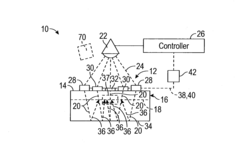
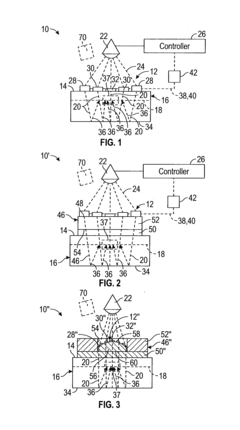
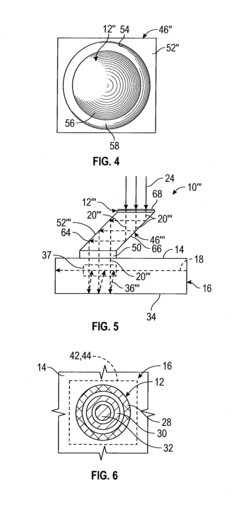
Polymer composite reinforced with carbon fibers and method of preparing the same
PatentActiveKR1020190025461A
Innovation
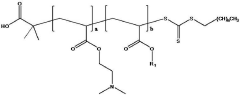
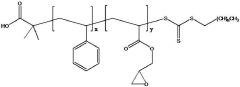
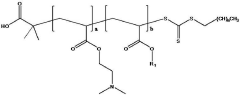
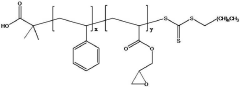
- The surface of carbon fibers is modified with an amphiphilic block copolymer, which enhances compatibility with both hydrophilic and hydrophobic polymers, eliminating the need for pretreatment processes and improving mechanical properties.
Standards and Certification Requirements
The accurate testing of Carbon Fiber Reinforced Polymers (CFRP) requires strict adherence to established standards and certification requirements. ASTM D3039 serves as the primary international standard for tensile property determination of polymer matrix composite materials, providing detailed procedures for specimen preparation, conditioning, and testing methodologies. This standard specifies precise dimensions for test specimens, loading rates, and data collection parameters essential for reliable results.
ISO 527 complements ASTM standards by offering comprehensive guidelines for determining tensile properties of fiber-reinforced plastic composites. For bending and flexural testing, ASTM D7264 and ISO 14125 provide standardized methods that ensure consistency across different testing facilities. These standards define specific test fixture configurations, support spans, and loading nose geometries that significantly impact test accuracy.
Certification bodies like NADCAP (National Aerospace and Defense Contractors Accreditation Program) establish rigorous requirements for laboratories conducting CFRP testing in aerospace applications. Laboratories must demonstrate proficiency through regular audits and participation in proficiency testing programs to maintain their certification status. Similarly, the Composite Materials Handbook (CMH-17) outlines qualification procedures for material property data acquisition that must be followed for data to be accepted in aerospace design allowables.
For structural applications, standards such as ACI 440.3R provide test methods specifically for fiber-reinforced polymer composites used in civil infrastructure. These standards address unique considerations for large-scale structural elements and environmental durability factors. The European EN 2561 standard focuses specifically on carbon fiber reinforced composites for aerospace applications, with particular attention to unidirectional laminates.
Traceability requirements mandate comprehensive documentation of test equipment calibration, environmental conditions, and specimen preparation methods. All measuring instruments must be calibrated according to ISO 17025 guidelines, with calibration records maintained and regularly updated. Test reports must include detailed information about material specifications, fabrication processes, and any deviations from standard procedures.
Uncertainty analysis has become increasingly important in CFRP testing standards, with requirements to quantify and report measurement uncertainties following the guidelines in the Guide to the Expression of Uncertainty in Measurement (GUM). This includes identifying all potential error sources and their contributions to the overall measurement uncertainty. Interlaboratory comparison programs, such as those organized by ASTM and ISO committees, provide mechanisms for validating test methods and establishing precision statements that define expected variability in test results.
ISO 527 complements ASTM standards by offering comprehensive guidelines for determining tensile properties of fiber-reinforced plastic composites. For bending and flexural testing, ASTM D7264 and ISO 14125 provide standardized methods that ensure consistency across different testing facilities. These standards define specific test fixture configurations, support spans, and loading nose geometries that significantly impact test accuracy.
Certification bodies like NADCAP (National Aerospace and Defense Contractors Accreditation Program) establish rigorous requirements for laboratories conducting CFRP testing in aerospace applications. Laboratories must demonstrate proficiency through regular audits and participation in proficiency testing programs to maintain their certification status. Similarly, the Composite Materials Handbook (CMH-17) outlines qualification procedures for material property data acquisition that must be followed for data to be accepted in aerospace design allowables.
For structural applications, standards such as ACI 440.3R provide test methods specifically for fiber-reinforced polymer composites used in civil infrastructure. These standards address unique considerations for large-scale structural elements and environmental durability factors. The European EN 2561 standard focuses specifically on carbon fiber reinforced composites for aerospace applications, with particular attention to unidirectional laminates.
Traceability requirements mandate comprehensive documentation of test equipment calibration, environmental conditions, and specimen preparation methods. All measuring instruments must be calibrated according to ISO 17025 guidelines, with calibration records maintained and regularly updated. Test reports must include detailed information about material specifications, fabrication processes, and any deviations from standard procedures.
Uncertainty analysis has become increasingly important in CFRP testing standards, with requirements to quantify and report measurement uncertainties following the guidelines in the Guide to the Expression of Uncertainty in Measurement (GUM). This includes identifying all potential error sources and their contributions to the overall measurement uncertainty. Interlaboratory comparison programs, such as those organized by ASTM and ISO committees, provide mechanisms for validating test methods and establishing precision statements that define expected variability in test results.
Environmental Impact of CFRP Testing Processes
The environmental impact of Carbon Fiber Reinforced Polymer (CFRP) testing processes represents a critical consideration in the broader context of sustainable engineering practices. Traditional CFRP static load testing methods often involve energy-intensive processes that generate significant carbon emissions, particularly during specimen preparation and testing execution phases. The manufacturing of test specimens alone requires substantial energy inputs, with estimates suggesting that carbon fiber production consumes approximately 25-30 kWh of electricity per kilogram of material produced.
Laboratory environments maintaining precise temperature and humidity conditions for accurate CFRP testing contribute to increased energy consumption. Advanced testing facilities typically consume between 200-400 kWh daily to maintain these controlled conditions, representing a substantial environmental footprint that is often overlooked in testing protocol development.
Waste generation presents another significant environmental concern. Failed test specimens, calibration materials, and consumables used during testing procedures create substantial non-biodegradable waste streams. Research indicates that approximately 30-40% of carbon fiber materials used in testing environments ultimately become waste, with limited recycling options currently available at commercial scale.
Chemical agents employed in specimen preparation and testing, including resins, hardeners, and surface preparation compounds, introduce potential environmental hazards. Many of these substances contain volatile organic compounds (VOCs) and other potentially harmful chemicals that require specialized disposal procedures. Recent studies have documented that improper handling of these materials can lead to soil contamination and water pollution in surrounding ecosystems.
Emerging technologies are beginning to address these environmental challenges. Non-destructive testing methodologies, including acoustic emission monitoring and digital image correlation, significantly reduce material waste by allowing multiple tests on single specimens. These approaches can decrease material consumption by up to 60% compared to traditional destructive testing methods.
Life cycle assessment (LCA) frameworks specifically designed for CFRP testing processes are gaining traction among research institutions and industry leaders. These frameworks enable comprehensive evaluation of environmental impacts across the entire testing lifecycle, from raw material acquisition to waste disposal, facilitating more sustainable decision-making in testing protocol development.
Carbon-neutral testing facilities represent the frontier of sustainable CFRP testing. These facilities incorporate renewable energy sources, advanced waste management systems, and optimized resource utilization to minimize environmental footprint while maintaining testing accuracy and reliability.
Laboratory environments maintaining precise temperature and humidity conditions for accurate CFRP testing contribute to increased energy consumption. Advanced testing facilities typically consume between 200-400 kWh daily to maintain these controlled conditions, representing a substantial environmental footprint that is often overlooked in testing protocol development.
Waste generation presents another significant environmental concern. Failed test specimens, calibration materials, and consumables used during testing procedures create substantial non-biodegradable waste streams. Research indicates that approximately 30-40% of carbon fiber materials used in testing environments ultimately become waste, with limited recycling options currently available at commercial scale.
Chemical agents employed in specimen preparation and testing, including resins, hardeners, and surface preparation compounds, introduce potential environmental hazards. Many of these substances contain volatile organic compounds (VOCs) and other potentially harmful chemicals that require specialized disposal procedures. Recent studies have documented that improper handling of these materials can lead to soil contamination and water pollution in surrounding ecosystems.
Emerging technologies are beginning to address these environmental challenges. Non-destructive testing methodologies, including acoustic emission monitoring and digital image correlation, significantly reduce material waste by allowing multiple tests on single specimens. These approaches can decrease material consumption by up to 60% compared to traditional destructive testing methods.
Life cycle assessment (LCA) frameworks specifically designed for CFRP testing processes are gaining traction among research institutions and industry leaders. These frameworks enable comprehensive evaluation of environmental impacts across the entire testing lifecycle, from raw material acquisition to waste disposal, facilitating more sustainable decision-making in testing protocol development.
Carbon-neutral testing facilities represent the frontier of sustainable CFRP testing. These facilities incorporate renewable energy sources, advanced waste management systems, and optimized resource utilization to minimize environmental footprint while maintaining testing accuracy and reliability.
Unlock deeper insights with Patsnap Eureka Quick Research — get a full tech report to explore trends and direct your research. Try now!
Generate Your Research Report Instantly with AI Agent
Supercharge your innovation with Patsnap Eureka AI Agent Platform!