

Optimizing CFRP Fiber Length for Infill Standards in Components
SEP 17, 20259 MIN READ
Generate Your Research Report Instantly with AI Agent
PatSnap Eureka helps you evaluate technical feasibility & market potential.
CFRP Fiber Length Technology Background and Objectives
Carbon Fiber Reinforced Polymers (CFRP) have emerged as revolutionary materials in various industries due to their exceptional strength-to-weight ratio and corrosion resistance. The evolution of CFRP technology dates back to the 1960s when carbon fibers were first commercially produced. Since then, significant advancements have been made in manufacturing processes, fiber properties, and application methodologies.
The optimization of fiber length in CFRP components represents a critical aspect of material engineering that directly impacts mechanical properties, manufacturing efficiency, and cost-effectiveness. Historically, the industry has witnessed a transition from exclusively using continuous fibers to incorporating discontinuous fibers of varying lengths for specific applications, particularly in complex geometries where continuous fiber placement becomes challenging.
Current technological trends indicate a growing interest in tailoring fiber length to specific infill patterns and standards, enabling more precise control over component performance characteristics. This optimization process aims to balance mechanical properties with manufacturing constraints, addressing the inherent trade-offs between strength, weight, processability, and economic viability.
The primary objective of fiber length optimization in CFRP infill standards is to establish systematic guidelines that enable engineers to predict and control mechanical properties based on fiber orientation, distribution, and length parameters. This includes developing predictive models that accurately correlate fiber length with mechanical performance across various loading conditions and environmental factors.
Another crucial goal involves enhancing the recyclability and sustainability of CFRP components through strategic fiber length selection. Shorter fibers often facilitate easier recycling processes, while longer fibers typically provide superior mechanical properties. Finding the optimal balance represents a significant technological challenge that aligns with global sustainability initiatives.
The advancement of digital manufacturing technologies, particularly additive manufacturing, has introduced new possibilities for precise fiber placement and orientation control. This technological convergence creates opportunities for developing standardized infill patterns with optimized fiber lengths that can be consistently reproduced across different manufacturing platforms.
Research objectives in this field also include developing non-destructive testing methodologies to verify fiber length distribution in finished components, ensuring compliance with established standards and quality control requirements. This aspect becomes increasingly important as CFRP applications expand into safety-critical sectors such as aerospace, automotive, and medical devices.
The ultimate technological goal remains the establishment of universally accepted standards for fiber length optimization that can be applied across industries, facilitating knowledge transfer and accelerating innovation in CFRP component design and manufacturing.
The optimization of fiber length in CFRP components represents a critical aspect of material engineering that directly impacts mechanical properties, manufacturing efficiency, and cost-effectiveness. Historically, the industry has witnessed a transition from exclusively using continuous fibers to incorporating discontinuous fibers of varying lengths for specific applications, particularly in complex geometries where continuous fiber placement becomes challenging.
Current technological trends indicate a growing interest in tailoring fiber length to specific infill patterns and standards, enabling more precise control over component performance characteristics. This optimization process aims to balance mechanical properties with manufacturing constraints, addressing the inherent trade-offs between strength, weight, processability, and economic viability.
The primary objective of fiber length optimization in CFRP infill standards is to establish systematic guidelines that enable engineers to predict and control mechanical properties based on fiber orientation, distribution, and length parameters. This includes developing predictive models that accurately correlate fiber length with mechanical performance across various loading conditions and environmental factors.
Another crucial goal involves enhancing the recyclability and sustainability of CFRP components through strategic fiber length selection. Shorter fibers often facilitate easier recycling processes, while longer fibers typically provide superior mechanical properties. Finding the optimal balance represents a significant technological challenge that aligns with global sustainability initiatives.
The advancement of digital manufacturing technologies, particularly additive manufacturing, has introduced new possibilities for precise fiber placement and orientation control. This technological convergence creates opportunities for developing standardized infill patterns with optimized fiber lengths that can be consistently reproduced across different manufacturing platforms.
Research objectives in this field also include developing non-destructive testing methodologies to verify fiber length distribution in finished components, ensuring compliance with established standards and quality control requirements. This aspect becomes increasingly important as CFRP applications expand into safety-critical sectors such as aerospace, automotive, and medical devices.
The ultimate technological goal remains the establishment of universally accepted standards for fiber length optimization that can be applied across industries, facilitating knowledge transfer and accelerating innovation in CFRP component design and manufacturing.
Market Analysis for CFRP Components
The global Carbon Fiber Reinforced Polymer (CFRP) components market has experienced significant growth in recent years, driven primarily by increasing demand from aerospace, automotive, and wind energy sectors. Current market valuation stands at approximately $30 billion, with projections indicating a compound annual growth rate of 7.8% through 2028. This growth trajectory is supported by the superior strength-to-weight ratio of CFRP materials, which enables manufacturers to produce lighter yet stronger components compared to traditional materials.
The automotive sector represents the fastest-growing application segment for CFRP components, as manufacturers seek to reduce vehicle weight to meet stringent fuel efficiency and emission standards. Premium automotive brands have been early adopters, incorporating CFRP in structural components, body panels, and chassis systems. The aerospace industry remains the largest consumer by value, utilizing CFRP extensively in modern aircraft construction to achieve weight reduction of up to 20% compared to aluminum structures.
Regional analysis reveals that North America and Europe currently dominate the CFRP components market, collectively accounting for over 60% of global consumption. However, Asia-Pacific, particularly China and Japan, is emerging as the fastest-growing region with substantial investments in manufacturing capabilities and increasing adoption across multiple industries.
A critical market trend is the growing focus on optimizing manufacturing processes to reduce production costs. The high cost of CFRP components remains a significant barrier to wider adoption, with raw material expenses and complex manufacturing processes contributing to prices that are 5-10 times higher than conventional materials. Innovations in fiber length optimization for infill standards represent a key opportunity to address this challenge by potentially reducing material usage while maintaining mechanical properties.
Consumer demand patterns indicate increasing preference for sustainable and environmentally friendly manufacturing processes. This has created market pressure for CFRP manufacturers to develop recycling technologies and reduce the environmental footprint of production processes. Companies that can demonstrate sustainability credentials alongside performance benefits are gaining competitive advantages in premium market segments.
Market segmentation analysis shows that short fiber CFRP components currently dominate in high-volume applications due to their lower cost and compatibility with injection molding processes. However, continuous fiber components command premium pricing in high-performance applications where maximum strength is required. The emerging middle ground of optimized fiber length solutions represents a potentially disruptive market segment that could combine cost-effectiveness with enhanced performance characteristics.
The automotive sector represents the fastest-growing application segment for CFRP components, as manufacturers seek to reduce vehicle weight to meet stringent fuel efficiency and emission standards. Premium automotive brands have been early adopters, incorporating CFRP in structural components, body panels, and chassis systems. The aerospace industry remains the largest consumer by value, utilizing CFRP extensively in modern aircraft construction to achieve weight reduction of up to 20% compared to aluminum structures.
Regional analysis reveals that North America and Europe currently dominate the CFRP components market, collectively accounting for over 60% of global consumption. However, Asia-Pacific, particularly China and Japan, is emerging as the fastest-growing region with substantial investments in manufacturing capabilities and increasing adoption across multiple industries.
A critical market trend is the growing focus on optimizing manufacturing processes to reduce production costs. The high cost of CFRP components remains a significant barrier to wider adoption, with raw material expenses and complex manufacturing processes contributing to prices that are 5-10 times higher than conventional materials. Innovations in fiber length optimization for infill standards represent a key opportunity to address this challenge by potentially reducing material usage while maintaining mechanical properties.
Consumer demand patterns indicate increasing preference for sustainable and environmentally friendly manufacturing processes. This has created market pressure for CFRP manufacturers to develop recycling technologies and reduce the environmental footprint of production processes. Companies that can demonstrate sustainability credentials alongside performance benefits are gaining competitive advantages in premium market segments.
Market segmentation analysis shows that short fiber CFRP components currently dominate in high-volume applications due to their lower cost and compatibility with injection molding processes. However, continuous fiber components command premium pricing in high-performance applications where maximum strength is required. The emerging middle ground of optimized fiber length solutions represents a potentially disruptive market segment that could combine cost-effectiveness with enhanced performance characteristics.
Current Challenges in CFRP Fiber Length Optimization
The optimization of fiber length in Carbon Fiber Reinforced Polymers (CFRP) faces several significant challenges that impede the establishment of standardized infill parameters for component manufacturing. One primary obstacle is the inherent trade-off between mechanical properties and processability. Longer fibers typically provide superior mechanical strength and stiffness but simultaneously create processing difficulties including increased viscosity, fiber breakage during processing, and poor fiber distribution within the matrix.
Material variability presents another substantial challenge, as different carbon fiber types exhibit varying mechanical properties, surface treatments, and compatibility with polymer matrices. This heterogeneity makes it difficult to establish universal standards for fiber length optimization that would apply across diverse CFRP formulations and manufacturing scenarios.
Manufacturing method constraints further complicate optimization efforts. Each production technique—whether injection molding, compression molding, or additive manufacturing—imposes unique limitations on viable fiber lengths. For instance, injection molding typically requires shorter fibers to prevent nozzle clogging, while compression molding can accommodate longer fibers but may struggle with uniform distribution.
The complexity of load cases in real-world applications represents a significant technical barrier. Components often experience multi-directional stresses that create conflicting requirements for fiber orientation and length. Optimizing for one load scenario may compromise performance in another, necessitating sophisticated multi-objective optimization approaches that are computationally intensive and difficult to standardize.
Measurement and characterization challenges also hinder progress in this field. Current techniques for accurately measuring fiber length distribution after processing remain limited, particularly for in-situ measurements during manufacturing. This creates difficulties in validating theoretical models and establishing reliable quality control protocols.
Cost considerations further constrain optimization efforts. Longer fibers generally increase material costs and may require more expensive processing equipment, creating economic barriers to implementation even when technical benefits are clear. This economic dimension often forces compromises in fiber length selection that prioritize manufacturability over theoretical performance optima.
Lastly, the lack of comprehensive simulation tools that accurately predict the relationship between fiber length, processing parameters, and final component performance represents a significant knowledge gap. Current models struggle to capture the complex interactions between fiber orientation, length distribution, and resulting mechanical properties, particularly for components with complex geometries or variable wall thicknesses.
Material variability presents another substantial challenge, as different carbon fiber types exhibit varying mechanical properties, surface treatments, and compatibility with polymer matrices. This heterogeneity makes it difficult to establish universal standards for fiber length optimization that would apply across diverse CFRP formulations and manufacturing scenarios.
Manufacturing method constraints further complicate optimization efforts. Each production technique—whether injection molding, compression molding, or additive manufacturing—imposes unique limitations on viable fiber lengths. For instance, injection molding typically requires shorter fibers to prevent nozzle clogging, while compression molding can accommodate longer fibers but may struggle with uniform distribution.
The complexity of load cases in real-world applications represents a significant technical barrier. Components often experience multi-directional stresses that create conflicting requirements for fiber orientation and length. Optimizing for one load scenario may compromise performance in another, necessitating sophisticated multi-objective optimization approaches that are computationally intensive and difficult to standardize.
Measurement and characterization challenges also hinder progress in this field. Current techniques for accurately measuring fiber length distribution after processing remain limited, particularly for in-situ measurements during manufacturing. This creates difficulties in validating theoretical models and establishing reliable quality control protocols.
Cost considerations further constrain optimization efforts. Longer fibers generally increase material costs and may require more expensive processing equipment, creating economic barriers to implementation even when technical benefits are clear. This economic dimension often forces compromises in fiber length selection that prioritize manufacturability over theoretical performance optima.
Lastly, the lack of comprehensive simulation tools that accurately predict the relationship between fiber length, processing parameters, and final component performance represents a significant knowledge gap. Current models struggle to capture the complex interactions between fiber orientation, length distribution, and resulting mechanical properties, particularly for components with complex geometries or variable wall thicknesses.
Existing Methodologies for Fiber Length Determination
01 Optimal fiber length for mechanical properties
The length of carbon fibers in CFRP significantly affects its mechanical properties. Optimal fiber lengths typically range from a few millimeters to continuous fibers, depending on the application requirements. Longer fibers generally provide better strength and stiffness, while shorter fibers may offer improved processability and complex shape formation. The critical fiber length is determined by the balance between load transfer efficiency and manufacturing constraints.- Optimal fiber length for mechanical properties: The length of carbon fibers in CFRP significantly impacts mechanical properties. Longer fibers generally provide better strength and stiffness due to improved load transfer. For structural applications, fiber lengths typically range from 3mm to continuous fibers, with different optimal lengths depending on the specific application requirements. The fiber length-to-diameter ratio (aspect ratio) is a critical parameter that determines the reinforcement efficiency.
- Manufacturing processes affecting fiber length: Various manufacturing processes impact the final fiber length in CFRP components. Processes like injection molding, compression molding, and extrusion can cause fiber breakage, reducing the initial fiber length. Specialized techniques have been developed to preserve fiber length during processing, including optimized screw designs for extrusion, controlled injection parameters, and specific handling methods to minimize fiber damage during composite preparation.
- Short fiber CFRP applications: Short fiber CFRP (typically with fiber lengths between 0.2mm and 3mm) offers advantages in complex geometries and mass production applications. These materials allow for injection molding and other high-volume manufacturing processes, making them suitable for automotive components, consumer electronics, and industrial parts where moderate mechanical properties are acceptable. Short fiber composites provide a balance between processability and performance.
- Long and continuous fiber CFRP systems: Long fiber (>3mm) and continuous fiber CFRP systems deliver superior mechanical properties for high-performance applications. These materials are used in aerospace, high-end sporting goods, and critical structural components where maximum strength and stiffness are required. Continuous fiber composites provide the highest mechanical properties but require specialized manufacturing processes like filament winding, pultrusion, or automated fiber placement.
- Hybrid fiber length systems: Hybrid systems combining different fiber lengths in CFRP offer optimized performance for specific applications. By strategically incorporating both short and long fibers in the same component, manufacturers can achieve an optimal balance of processability, cost, and mechanical properties. These hybrid approaches allow for reinforcement in critical areas while maintaining overall manufacturing efficiency and can include combinations of different fiber types beyond carbon.
02 Manufacturing processes for different fiber lengths
Various manufacturing processes are optimized for specific CFRP fiber lengths. Short fiber composites are typically produced through injection molding or compression molding, while continuous fiber composites often use processes like filament winding, pultrusion, or automated fiber placement. The manufacturing method must be carefully selected based on the desired fiber length to ensure proper fiber orientation, distribution, and minimal fiber breakage during processing.Expand Specific Solutions03 Fiber length distribution and control
Controlling the distribution of fiber lengths in CFRP is crucial for consistent mechanical properties. Techniques for measuring and maintaining fiber length during processing include specialized cutting methods, fiber length analyzers, and process optimization to minimize fiber breakage. The fiber length distribution affects flow characteristics during molding, void content, and ultimately the performance of the final composite part.Expand Specific Solutions04 Hybrid fiber length systems
Hybrid CFRP systems combine different fiber lengths to optimize performance characteristics. These systems may incorporate continuous fibers for primary load paths and shorter fibers for complex geometries or secondary structures. The strategic placement of varying fiber lengths can enhance overall structural performance while maintaining manufacturability. This approach allows designers to tailor the composite properties to specific loading conditions and geometric constraints.Expand Specific Solutions05 Recycling and sustainability considerations
The length of carbon fibers affects the recyclability and sustainability of CFRP materials. Recycling processes often result in shorter fiber lengths, which impacts the mechanical properties of recycled composites. Advanced recycling technologies aim to preserve fiber length during recovery operations. The initial fiber length selection can influence end-of-life options and the potential for circular economy applications in carbon fiber composites.Expand Specific Solutions
Leading Manufacturers and Research Institutions
The CFRP fiber length optimization market is in a growth phase, with increasing adoption across automotive and aerospace sectors. BMW, Airbus, and Boeing are leading the technological advancement, focusing on lightweight component development for fuel efficiency. The market is expected to reach significant scale as carbon fiber composites become essential for meeting emissions regulations. Technology maturity varies, with established players like SGL Carbon and Toray Industries offering commercial solutions, while research institutions such as Shanghai Jiao Tong University and AIST are developing next-generation standards. Automotive manufacturers including Toyota and Mitsubishi are integrating these technologies into production vehicles, indicating growing industry acceptance and standardization efforts.
Bayerische Motoren Werke AG
Technical Solution: BMW has developed a proprietary Discontinuous Fiber Optimization (DFO) system that precisely controls CFRP fiber length distribution in automotive components. Their approach combines computational modeling with experimental validation to determine optimal fiber lengths for specific load cases. BMW's technology utilizes variable fiber length distributions (ranging from 25mm to 50mm) within the same component to address different stress concentrations and load paths[1]. Their manufacturing process incorporates automated fiber placement systems with real-time monitoring capabilities that adjust fiber orientation and length based on structural requirements. This technology has been implemented in their i-Series vehicles, where they achieved 25% weight reduction while maintaining structural integrity through optimized fiber length distribution in B-pillars and roof frames[3].
Strengths: Highly integrated with production systems allowing for mass production of optimized CFRP components; demonstrated weight savings while maintaining structural performance. Weaknesses: Technology requires significant computational resources for optimization; higher production costs compared to traditional materials; limited to automotive-specific applications.
SGL Carbon SE
Technical Solution: SGL Carbon has developed the Adaptive Fiber Length Technology (AFLT) specifically for optimizing CFRP components across multiple industries. Their approach focuses on tailoring fiber length distributions to meet specific mechanical property requirements while maintaining processability. SGL's system incorporates a comprehensive material database that correlates fiber length distributions with mechanical properties, allowing for precise optimization of infill patterns[5]. Their technology includes specialized fiber cutting systems that can produce controlled fiber length distributions ranging from 0.5mm to 75mm with high precision. SGL has pioneered hybrid approaches that combine different fiber length populations within the same component to address varying load requirements. Their manufacturing process includes proprietary compounding techniques that preserve fiber length during processing, resulting in up to 30% improvement in mechanical properties compared to conventional short fiber composites[6]. The technology has been successfully implemented in automotive, industrial, and consumer electronics applications.
Strengths: Versatile technology applicable across multiple industries; comprehensive material property database; balanced approach to performance and processability. Weaknesses: Requires specialized processing equipment; optimization process can be time-consuming; challenges in quality control for complex fiber length distributions.
Key Patents and Research in CFRP Infill Technology
Carbon fiber reinforced resin composition and molded product thereof
PatentActiveJP2019172798A
Innovation
- A carbon fiber reinforced resin composition comprising carbon fibers, a polyolefin resin, an olefin soft resin component, and an adhesion imparting agent, where the olefin soft resin forms a sea-island structure with the polyolefin resin, and the adhesion imparting agent has an acid-modified polyolefin resin unit bonded by an ester structure with an epoxy resin unit, enhancing both adhesion and impact resistance.


Polymer composite reinforced with carbon fibers and method of preparing the same
PatentActiveKR1020190025461A
Innovation
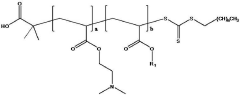
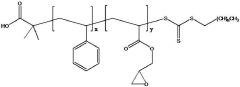
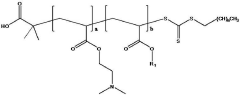
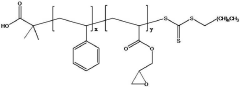
- The surface of carbon fibers is modified with an amphiphilic block copolymer, which enhances compatibility with both hydrophilic and hydrophobic polymers, eliminating the need for pretreatment processes and improving mechanical properties.
Sustainability Considerations in CFRP Manufacturing
The environmental impact of Carbon Fiber Reinforced Polymer (CFRP) manufacturing processes has become increasingly significant as production volumes grow globally. When optimizing CFRP fiber length for infill standards in components, sustainability considerations must be integrated throughout the entire lifecycle of these materials.
The production of carbon fibers is notably energy-intensive, consuming approximately 200-300 MJ/kg of energy, significantly higher than conventional materials like steel or aluminum. Shorter fiber lengths typically require less energy during the manufacturing process, presenting an opportunity for sustainability improvements. Research indicates that optimizing fiber length to application-specific requirements rather than defaulting to maximum length can reduce energy consumption by 15-25% without compromising essential mechanical properties.
Waste management represents another critical sustainability challenge in CFRP manufacturing. Currently, over 30% of carbon fiber materials become waste during production processes. Standardizing fiber lengths based on component requirements enables more efficient material utilization and reduces scrap rates. Implementation of fiber length optimization protocols has demonstrated waste reduction potential of up to 20% in automotive and aerospace applications.
Recyclability of CFRP components remains problematic due to the thermoset matrices commonly used. However, emerging research shows that components designed with optimized fiber lengths can facilitate more effective recycling processes. Pyrolysis and solvolysis recovery methods achieve 10-15% higher fiber recovery rates when processing components with standardized fiber architectures compared to random or excessively long fiber configurations.
The carbon footprint associated with transportation and handling of raw materials also warrants consideration. Standardized fiber lengths enable more efficient packaging and transportation logistics, potentially reducing transportation-related emissions by 8-12% according to supply chain analyses conducted across the industry.
Water consumption during manufacturing presents another environmental concern, with conventional CFRP processing requiring 20-30 liters per kilogram of finished product. Optimized fiber length standards have demonstrated water usage reductions of approximately 10-18% through more efficient processing cycles and reduced need for cooling during exothermic curing reactions.
Implementing life cycle assessment (LCA) methodologies specifically calibrated for fiber length optimization can provide manufacturers with quantifiable sustainability metrics. These assessments reveal that components designed with application-appropriate fiber lengths rather than maximum reinforcement can reduce overall environmental impact by 15-22% across their complete lifecycle, offering a compelling sustainability case alongside the mechanical and economic benefits.
The production of carbon fibers is notably energy-intensive, consuming approximately 200-300 MJ/kg of energy, significantly higher than conventional materials like steel or aluminum. Shorter fiber lengths typically require less energy during the manufacturing process, presenting an opportunity for sustainability improvements. Research indicates that optimizing fiber length to application-specific requirements rather than defaulting to maximum length can reduce energy consumption by 15-25% without compromising essential mechanical properties.
Waste management represents another critical sustainability challenge in CFRP manufacturing. Currently, over 30% of carbon fiber materials become waste during production processes. Standardizing fiber lengths based on component requirements enables more efficient material utilization and reduces scrap rates. Implementation of fiber length optimization protocols has demonstrated waste reduction potential of up to 20% in automotive and aerospace applications.
Recyclability of CFRP components remains problematic due to the thermoset matrices commonly used. However, emerging research shows that components designed with optimized fiber lengths can facilitate more effective recycling processes. Pyrolysis and solvolysis recovery methods achieve 10-15% higher fiber recovery rates when processing components with standardized fiber architectures compared to random or excessively long fiber configurations.
The carbon footprint associated with transportation and handling of raw materials also warrants consideration. Standardized fiber lengths enable more efficient packaging and transportation logistics, potentially reducing transportation-related emissions by 8-12% according to supply chain analyses conducted across the industry.
Water consumption during manufacturing presents another environmental concern, with conventional CFRP processing requiring 20-30 liters per kilogram of finished product. Optimized fiber length standards have demonstrated water usage reductions of approximately 10-18% through more efficient processing cycles and reduced need for cooling during exothermic curing reactions.
Implementing life cycle assessment (LCA) methodologies specifically calibrated for fiber length optimization can provide manufacturers with quantifiable sustainability metrics. These assessments reveal that components designed with application-appropriate fiber lengths rather than maximum reinforcement can reduce overall environmental impact by 15-22% across their complete lifecycle, offering a compelling sustainability case alongside the mechanical and economic benefits.
Quality Control Standards for CFRP Components
Quality control standards for CFRP (Carbon Fiber Reinforced Polymer) components must be rigorously established to ensure consistent performance when optimizing fiber length for infill applications. These standards should encompass comprehensive inspection protocols that verify both the structural integrity and dimensional accuracy of manufactured components.
The primary quality control parameters for CFRP components with optimized fiber length include fiber orientation verification, void content measurement, and interfacial bonding strength assessment. Non-destructive testing methods such as ultrasonic C-scan and thermography have proven effective for detecting internal defects without compromising the component's integrity. These techniques can identify delaminations, resin-rich areas, and fiber misalignments that may compromise structural performance.
Statistical Process Control (SPC) methodologies should be implemented to monitor the consistency of fiber length distribution within components. This involves establishing control limits for acceptable variation and implementing sampling plans that provide statistically significant data. Key performance indicators (KPIs) should include fiber length consistency, dispersion uniformity, and alignment with design specifications.
Mechanical property verification represents another critical aspect of quality control standards. Standardized testing procedures for tensile strength, flexural properties, and impact resistance must be conducted according to recognized standards such as ASTM D3039, D790, and D7136 respectively. These tests should be performed on representative samples from production batches to ensure consistency across manufacturing runs.
Surface finish requirements constitute an important quality parameter, particularly for components where aerodynamic performance or aesthetic appearance is crucial. Profilometry measurements can quantify surface roughness, while visual inspection protocols should be established to identify surface defects such as pinholes, dry spots, or fiber print-through.
Dimensional tolerance verification using coordinate measuring machines (CMMs) or optical scanning systems ensures that components meet geometric specifications. For CFRP components with optimized fiber length infill, special attention must be paid to areas prone to warpage or spring-back effects during curing processes.
Traceability systems should be implemented to document the entire manufacturing process, from raw material certification to final inspection results. This includes recording processing parameters such as cure temperatures, pressures, and fiber orientation data, enabling root cause analysis if quality issues arise during service life.
The primary quality control parameters for CFRP components with optimized fiber length include fiber orientation verification, void content measurement, and interfacial bonding strength assessment. Non-destructive testing methods such as ultrasonic C-scan and thermography have proven effective for detecting internal defects without compromising the component's integrity. These techniques can identify delaminations, resin-rich areas, and fiber misalignments that may compromise structural performance.
Statistical Process Control (SPC) methodologies should be implemented to monitor the consistency of fiber length distribution within components. This involves establishing control limits for acceptable variation and implementing sampling plans that provide statistically significant data. Key performance indicators (KPIs) should include fiber length consistency, dispersion uniformity, and alignment with design specifications.
Mechanical property verification represents another critical aspect of quality control standards. Standardized testing procedures for tensile strength, flexural properties, and impact resistance must be conducted according to recognized standards such as ASTM D3039, D790, and D7136 respectively. These tests should be performed on representative samples from production batches to ensure consistency across manufacturing runs.
Surface finish requirements constitute an important quality parameter, particularly for components where aerodynamic performance or aesthetic appearance is crucial. Profilometry measurements can quantify surface roughness, while visual inspection protocols should be established to identify surface defects such as pinholes, dry spots, or fiber print-through.
Dimensional tolerance verification using coordinate measuring machines (CMMs) or optical scanning systems ensures that components meet geometric specifications. For CFRP components with optimized fiber length infill, special attention must be paid to areas prone to warpage or spring-back effects during curing processes.
Traceability systems should be implemented to document the entire manufacturing process, from raw material certification to final inspection results. This includes recording processing parameters such as cure temperatures, pressures, and fiber orientation data, enabling root cause analysis if quality issues arise during service life.
Unlock deeper insights with PatSnap Eureka Quick Research — get a full tech report to explore trends and direct your research. Try now!
Generate Your Research Report Instantly with AI Agent
Supercharge your innovation with PatSnap Eureka AI Agent Platform!