

Increasing Viability in Microfluidic Cell Culture Processes
SEP 10, 202510 MIN READ
Generate Your Research Report Instantly with AI Agent
PatSnap Eureka helps you evaluate technical feasibility & market potential.
Microfluidic Cell Culture Background and Objectives
Microfluidic cell culture technology has evolved significantly over the past two decades, transforming from simple proof-of-concept devices to sophisticated platforms capable of mimicking complex physiological environments. The field emerged in the early 2000s when researchers began adapting microfluidic principles to cell biology applications, recognizing the potential to precisely control cellular microenvironments at scales relevant to biological systems.
The progression of this technology has been driven by interdisciplinary collaboration between bioengineers, cell biologists, materials scientists, and microfluidics experts. Early systems focused primarily on basic cell maintenance, while contemporary platforms enable complex tissue modeling, organ-on-chip applications, and high-throughput screening capabilities. This evolution reflects broader trends in biomedical research toward more physiologically relevant in vitro models.
Cell viability remains a critical challenge in microfluidic cell culture systems. Despite advances in device design and materials, maintaining optimal cell health within confined microenvironments presents unique difficulties not encountered in traditional culture methods. Factors such as nutrient depletion, waste accumulation, shear stress, and oxygen limitation can significantly impact cell survival and function within microchannels.
The primary technical objective in this field is to develop robust methodologies that enhance cell viability while preserving the advantages of microfluidic platforms. This includes optimizing flow dynamics to reduce cellular stress, improving surface functionalization for better cell attachment, developing advanced biomaterials compatible with long-term culture, and integrating real-time monitoring systems to assess cellular health parameters.
Recent technological trends indicate movement toward automated systems that can maintain optimal culture conditions with minimal human intervention. Machine learning algorithms are increasingly being applied to predict and adjust culture parameters based on cellular responses. Additionally, there is growing interest in developing standardized protocols and platforms to improve reproducibility across different research settings.
The ultimate goal of advancing microfluidic cell culture viability extends beyond basic research applications. Enhanced viability enables more accurate disease modeling, drug screening, personalized medicine approaches, and potentially the development of artificial organs. As regenerative medicine and tissue engineering continue to advance, microfluidic culture systems with high cell viability will likely play an increasingly important role in translating laboratory findings to clinical applications.
Addressing viability challenges requires understanding the complex interplay between physical, chemical, and biological factors within microfluidic environments. This necessitates both technological innovation in device design and fundamental research into cellular responses to confined culture conditions.
The progression of this technology has been driven by interdisciplinary collaboration between bioengineers, cell biologists, materials scientists, and microfluidics experts. Early systems focused primarily on basic cell maintenance, while contemporary platforms enable complex tissue modeling, organ-on-chip applications, and high-throughput screening capabilities. This evolution reflects broader trends in biomedical research toward more physiologically relevant in vitro models.
Cell viability remains a critical challenge in microfluidic cell culture systems. Despite advances in device design and materials, maintaining optimal cell health within confined microenvironments presents unique difficulties not encountered in traditional culture methods. Factors such as nutrient depletion, waste accumulation, shear stress, and oxygen limitation can significantly impact cell survival and function within microchannels.
The primary technical objective in this field is to develop robust methodologies that enhance cell viability while preserving the advantages of microfluidic platforms. This includes optimizing flow dynamics to reduce cellular stress, improving surface functionalization for better cell attachment, developing advanced biomaterials compatible with long-term culture, and integrating real-time monitoring systems to assess cellular health parameters.
Recent technological trends indicate movement toward automated systems that can maintain optimal culture conditions with minimal human intervention. Machine learning algorithms are increasingly being applied to predict and adjust culture parameters based on cellular responses. Additionally, there is growing interest in developing standardized protocols and platforms to improve reproducibility across different research settings.
The ultimate goal of advancing microfluidic cell culture viability extends beyond basic research applications. Enhanced viability enables more accurate disease modeling, drug screening, personalized medicine approaches, and potentially the development of artificial organs. As regenerative medicine and tissue engineering continue to advance, microfluidic culture systems with high cell viability will likely play an increasingly important role in translating laboratory findings to clinical applications.
Addressing viability challenges requires understanding the complex interplay between physical, chemical, and biological factors within microfluidic environments. This necessitates both technological innovation in device design and fundamental research into cellular responses to confined culture conditions.
Market Analysis for Microfluidic Cell Culture Technologies
The microfluidic cell culture technologies market is experiencing robust growth, driven by increasing demand for advanced cell culture systems that better mimic in vivo conditions. Current market valuation stands at approximately 1.5 billion USD, with projections indicating a compound annual growth rate of 18-22% over the next five years. This accelerated growth reflects the expanding applications across pharmaceutical development, regenerative medicine, and personalized healthcare sectors.
Pharmaceutical and biotechnology companies represent the largest market segment, accounting for nearly 45% of the total market share. These organizations are increasingly adopting microfluidic platforms to enhance drug discovery processes and reduce development timelines. Academic and research institutions constitute the second-largest segment at 30%, focusing primarily on fundamental research and novel applications development.
Geographically, North America dominates the market with approximately 40% share, followed by Europe at 30% and Asia-Pacific at 25%. The Asia-Pacific region, particularly China, South Korea, and Singapore, is witnessing the fastest growth due to increasing R&D investments and government initiatives supporting biotechnology advancement.
Customer demand analysis reveals several key trends driving market expansion. Foremost is the growing preference for organ-on-chip technologies that provide more physiologically relevant models for drug testing and disease modeling. The market for these specialized platforms is growing at nearly 25% annually, outpacing the broader microfluidic cell culture segment.
Another significant trend is the increasing demand for integrated systems that combine cell culture capabilities with real-time monitoring and analysis functions. End-users are willing to pay premium prices for platforms that offer comprehensive workflow solutions rather than standalone components.
Cost sensitivity varies significantly across market segments. While pharmaceutical companies prioritize performance and reproducibility over initial investment costs, academic institutions and smaller biotechnology firms remain highly price-sensitive, creating demand for more affordable entry-level systems.
Market barriers include high initial equipment costs, technical complexity requiring specialized expertise, and regulatory uncertainties surrounding the validation of data generated from these novel platforms. Additionally, the fragmented nature of the market with numerous specialized applications presents challenges for broad platform adoption.
Future market growth will likely be driven by technological advancements improving cell viability and culture longevity, increased automation reducing user intervention requirements, and expanded application areas including personalized medicine and tissue engineering. The development of standardized protocols and regulatory frameworks will also accelerate market penetration across more conservative industry segments.
Pharmaceutical and biotechnology companies represent the largest market segment, accounting for nearly 45% of the total market share. These organizations are increasingly adopting microfluidic platforms to enhance drug discovery processes and reduce development timelines. Academic and research institutions constitute the second-largest segment at 30%, focusing primarily on fundamental research and novel applications development.
Geographically, North America dominates the market with approximately 40% share, followed by Europe at 30% and Asia-Pacific at 25%. The Asia-Pacific region, particularly China, South Korea, and Singapore, is witnessing the fastest growth due to increasing R&D investments and government initiatives supporting biotechnology advancement.
Customer demand analysis reveals several key trends driving market expansion. Foremost is the growing preference for organ-on-chip technologies that provide more physiologically relevant models for drug testing and disease modeling. The market for these specialized platforms is growing at nearly 25% annually, outpacing the broader microfluidic cell culture segment.
Another significant trend is the increasing demand for integrated systems that combine cell culture capabilities with real-time monitoring and analysis functions. End-users are willing to pay premium prices for platforms that offer comprehensive workflow solutions rather than standalone components.
Cost sensitivity varies significantly across market segments. While pharmaceutical companies prioritize performance and reproducibility over initial investment costs, academic institutions and smaller biotechnology firms remain highly price-sensitive, creating demand for more affordable entry-level systems.
Market barriers include high initial equipment costs, technical complexity requiring specialized expertise, and regulatory uncertainties surrounding the validation of data generated from these novel platforms. Additionally, the fragmented nature of the market with numerous specialized applications presents challenges for broad platform adoption.
Future market growth will likely be driven by technological advancements improving cell viability and culture longevity, increased automation reducing user intervention requirements, and expanded application areas including personalized medicine and tissue engineering. The development of standardized protocols and regulatory frameworks will also accelerate market penetration across more conservative industry segments.
Current Challenges in Microfluidic Cell Viability
Despite significant advancements in microfluidic cell culture technologies, several critical challenges continue to impede optimal cell viability in these systems. The miniaturized nature of microfluidic platforms, while advantageous for many applications, creates unique microenvironments that can adversely affect cellular health and function. One primary challenge is maintaining consistent nutrient delivery and waste removal throughout the culture chamber, as diffusion limitations can create concentration gradients that lead to heterogeneous cell populations and reduced viability in certain regions.
Shear stress represents another significant obstacle, particularly in flow-based microfluidic systems. Cells exposed to excessive fluid shear forces often experience membrane damage, altered morphology, and activated stress response pathways that compromise viability. Conversely, insufficient flow may result in nutrient depletion and waste accumulation. This delicate balance requires precise control mechanisms that many current systems struggle to implement effectively.
Surface interactions between cells and microfluidic device materials present additional complications. Many polymers used in microfluidic fabrication, such as polydimethylsiloxane (PDMS), exhibit hydrophobicity and may absorb small hydrophobic molecules from culture media, including essential growth factors and hormones. This absorption can significantly alter the biochemical environment and reduce cell viability over extended culture periods.
Oxygen availability represents a critical challenge in enclosed microfluidic systems. Unlike traditional cell culture with direct atmospheric exchange, microfluidic platforms often have limited gas permeability, leading to hypoxic conditions that can trigger stress responses or cell death. While PDMS offers some oxygen permeability, other materials commonly used in microfluidics may create oxygen-limited environments unsuitable for aerobic cellular metabolism.
Temperature control and evaporation management also remain problematic in microfluidic cell culture. The high surface-to-volume ratio in microchannels makes these systems particularly susceptible to temperature fluctuations and evaporation effects, which can rapidly alter osmolarity and pH, severely impacting cell viability. Current heating solutions often create temperature gradients across devices rather than uniform conditions.
Bubble formation constitutes another persistent challenge, as even microscopic air bubbles can disrupt flow patterns, damage cells through surface tension effects, and create air-liquid interfaces that induce protein denaturation. Despite various bubble trap designs, complete elimination of bubbles remains difficult in practical applications.
Finally, long-term stability issues affect extended microfluidic cell cultures. Material degradation, protein fouling of surfaces, and biofilm formation can progressively alter the microenvironment and reduce cell viability over time. These factors collectively limit the application of microfluidic platforms for studies requiring extended culture periods or continuous monitoring of cellular responses.
Shear stress represents another significant obstacle, particularly in flow-based microfluidic systems. Cells exposed to excessive fluid shear forces often experience membrane damage, altered morphology, and activated stress response pathways that compromise viability. Conversely, insufficient flow may result in nutrient depletion and waste accumulation. This delicate balance requires precise control mechanisms that many current systems struggle to implement effectively.
Surface interactions between cells and microfluidic device materials present additional complications. Many polymers used in microfluidic fabrication, such as polydimethylsiloxane (PDMS), exhibit hydrophobicity and may absorb small hydrophobic molecules from culture media, including essential growth factors and hormones. This absorption can significantly alter the biochemical environment and reduce cell viability over extended culture periods.
Oxygen availability represents a critical challenge in enclosed microfluidic systems. Unlike traditional cell culture with direct atmospheric exchange, microfluidic platforms often have limited gas permeability, leading to hypoxic conditions that can trigger stress responses or cell death. While PDMS offers some oxygen permeability, other materials commonly used in microfluidics may create oxygen-limited environments unsuitable for aerobic cellular metabolism.
Temperature control and evaporation management also remain problematic in microfluidic cell culture. The high surface-to-volume ratio in microchannels makes these systems particularly susceptible to temperature fluctuations and evaporation effects, which can rapidly alter osmolarity and pH, severely impacting cell viability. Current heating solutions often create temperature gradients across devices rather than uniform conditions.
Bubble formation constitutes another persistent challenge, as even microscopic air bubbles can disrupt flow patterns, damage cells through surface tension effects, and create air-liquid interfaces that induce protein denaturation. Despite various bubble trap designs, complete elimination of bubbles remains difficult in practical applications.
Finally, long-term stability issues affect extended microfluidic cell cultures. Material degradation, protein fouling of surfaces, and biofilm formation can progressively alter the microenvironment and reduce cell viability over time. These factors collectively limit the application of microfluidic platforms for studies requiring extended culture periods or continuous monitoring of cellular responses.
Current Viability Enhancement Solutions in Microfluidics
01 Microfluidic platforms for cell viability assessment
Microfluidic devices provide controlled environments for assessing cell viability in real-time. These platforms enable precise manipulation of cellular microenvironments, allowing for continuous monitoring of cell health parameters. The technology incorporates sensors and imaging capabilities to evaluate viability markers such as metabolic activity, membrane integrity, and morphological changes under various experimental conditions.- Microfluidic platforms for cell viability assessment: Microfluidic devices provide controlled environments for assessing cell viability in real-time. These platforms enable precise manipulation of cellular microenvironments, allowing for continuous monitoring of cell health parameters. The integration of sensors within microfluidic channels facilitates automated viability measurements without disrupting the culture conditions, offering advantages over traditional cell culture methods in terms of sample volume requirements and analysis throughput.
- Organ-on-chip systems for enhanced cell viability: Organ-on-chip technologies recreate physiological microenvironments that maintain higher cell viability compared to conventional culture methods. These systems incorporate controlled fluid flow, tissue-specific mechanical forces, and cell-cell interactions that better mimic in vivo conditions. The improved physiological relevance results in extended culture periods with maintained cell viability, making these platforms valuable for drug testing and disease modeling applications where long-term cell health is critical.
- Continuous perfusion systems for improved cell viability: Continuous perfusion in microfluidic cell culture systems enhances cell viability by providing constant nutrient supply and waste removal. These systems maintain optimal culture conditions through controlled medium exchange rates, preventing accumulation of metabolic byproducts that can compromise cell health. The dynamic culture environment supports higher cell densities and extended culture periods compared to static systems, with automated perfusion control allowing precise regulation of the cellular microenvironment.
- Integrated sensors for real-time viability monitoring: Microfluidic platforms with integrated sensing capabilities enable real-time monitoring of cell viability parameters. These systems incorporate electrochemical, optical, or impedance-based sensors that detect metabolic activity, membrane integrity, or other viability indicators without requiring sample extraction. The non-invasive monitoring approach allows continuous assessment of cellular responses to environmental changes or therapeutic compounds, providing dynamic viability data rather than endpoint measurements.
- High-throughput microfluidic screening for viability assessment: High-throughput microfluidic platforms enable parallel viability assessment of multiple cell cultures under varying conditions. These systems incorporate multiplexed channel designs, automated fluid handling, and integrated imaging capabilities for efficient screening applications. The parallelization of experiments reduces time and resource requirements while increasing statistical power, making these platforms valuable for drug discovery, toxicity testing, and optimization of cell culture parameters that affect viability.
02 Organ-on-chip systems for viability testing
Organ-on-chip technology utilizes microfluidic principles to create miniaturized versions of human organs for viability testing. These systems replicate the physiological microenvironment of specific organs, enabling more accurate assessment of cell viability in tissue-specific contexts. The technology allows for long-term culture maintenance while providing insights into tissue-level responses to various stimuli, offering advantages over traditional cell culture methods.Expand Specific Solutions03 High-throughput viability screening in microfluidic systems
Microfluidic platforms enable high-throughput screening of cell viability across multiple conditions simultaneously. These systems incorporate parallelized culture chambers, automated fluid handling, and integrated detection methods to rapidly assess viability parameters. The technology allows researchers to evaluate numerous experimental variables efficiently, making it valuable for drug discovery, toxicity testing, and optimization of cell culture conditions.Expand Specific Solutions04 Microfluidic gradient generators for viability optimization
Microfluidic gradient generators create controlled concentration gradients of nutrients, growth factors, or other bioactive molecules to optimize cell viability. These systems enable the systematic evaluation of how varying concentrations of specific factors affect cell survival and function. The technology allows for precise spatial and temporal control of the cellular microenvironment, facilitating the identification of optimal conditions for maintaining cell viability in culture.Expand Specific Solutions05 Integrated sensing for real-time viability monitoring
Microfluidic cell culture systems incorporate integrated sensing technologies for real-time monitoring of cell viability parameters. These sensors can detect metabolic byproducts, pH changes, oxygen consumption, and other indicators of cell health without disrupting the culture. The integration of sensing elements with microfluidic culture platforms enables continuous assessment of viability throughout experimental procedures, providing dynamic information about cellular responses to changing conditions.Expand Specific Solutions
Leading Companies and Research Institutions in Microfluidics
The microfluidic cell culture technology market is currently in a growth phase, with increasing demand for more physiologically relevant in vitro models. The global market size is projected to reach approximately $1.6 billion by 2025, growing at a CAGR of 18-20%. Academic institutions like University of California, Peking University, and Cornell University are driving fundamental research, while commercial players are advancing practical applications. Companies such as Emulate, Microfluidx, and SynVivo are developing specialized organ-on-chip platforms, while established corporations like EMD Millipore (Merck) and Bristol Myers Squibb are integrating these technologies into their R&D pipelines. Pharmaceutical companies including Janssen Biotech and WuXi Biologics are leveraging microfluidic cell culture for drug discovery and development, indicating growing industry adoption and technological maturation.
EMD Millipore Corp.
Technical Solution: EMD Millipore has developed comprehensive microfluidic cell culture solutions focused on enhancing cell viability through their advanced CellASIC® ONIX platform. This technology utilizes precision-engineered microfluidic plates with dedicated inlet/outlet ports and gravity-driven flow to create stable, physiologically relevant microenvironments. Their system features programmable perfusion that enables continuous delivery of fresh media and removal of waste products without disturbing cells, significantly reducing stress factors that compromise viability. The platform incorporates temperature and gas control modules that maintain optimal environmental conditions throughout extended culture periods. Their proprietary cell chamber designs minimize shear stress while maximizing nutrient availability through carefully calculated flow dynamics. The system also features automated imaging compatibility for real-time monitoring of cell health and behavior without disrupting the culture environment.
Strengths: Exceptional environmental stability; user-friendly interface requiring minimal specialized training; compatible with standard laboratory equipment and workflows. Weaknesses: Limited throughput compared to some competing platforms; higher consumable costs; less flexibility for custom applications requiring specialized microenvironments.
Janssen Biotech, Inc.
Technical Solution: Janssen Biotech has developed advanced microfluidic cell culture systems focused on enhancing viability for biopharmaceutical applications. Their platform integrates continuous perfusion technology with precisely controlled microenvironments optimized for specific cell types. The system features programmable gradient generators that create spatially defined concentrations of growth factors, nutrients, and signaling molecules to mimic physiological conditions. Their proprietary surface modification techniques reduce non-specific protein adsorption and cell adhesion in unwanted areas while promoting attachment in designated regions. The technology incorporates integrated oxygen permeable membranes that ensure adequate oxygenation without introducing damaging bubble formation or excessive shear stress. Their system also features automated medium exchange protocols that gradually adjust conditions to prevent osmotic shock during transitions. The platform includes integrated analytical capabilities for real-time monitoring of key metabolic parameters, allowing for dynamic adjustment of culture conditions to maintain optimal cell viability throughout extended culture periods.
Strengths: Robust validation for pharmaceutical applications; excellent scalability from research to production; comprehensive quality control features ensuring reproducibility. Weaknesses: Higher complexity requiring specialized training; significant initial investment; primarily optimized for biopharmaceutical cell lines rather than primary cells.
Key Technologies for Cell Viability Optimization
Cell culture methods for increased cell viability
PatentActiveUS11254964B1
Innovation
- Maintaining cell cultures at a pH of 6.50 to 7.50 and a temperature of 31° C to 35° C for at least 5 consecutive days, with optional supplementation of a feed medium containing Cu, Zn, and Se, to achieve and maintain cell viability of at least 80% for up to 14 days, thereby optimizing TNFα binding protein production.


Mammallian cell culture process for protein production
PatentInactiveUS20120015438A1
Innovation
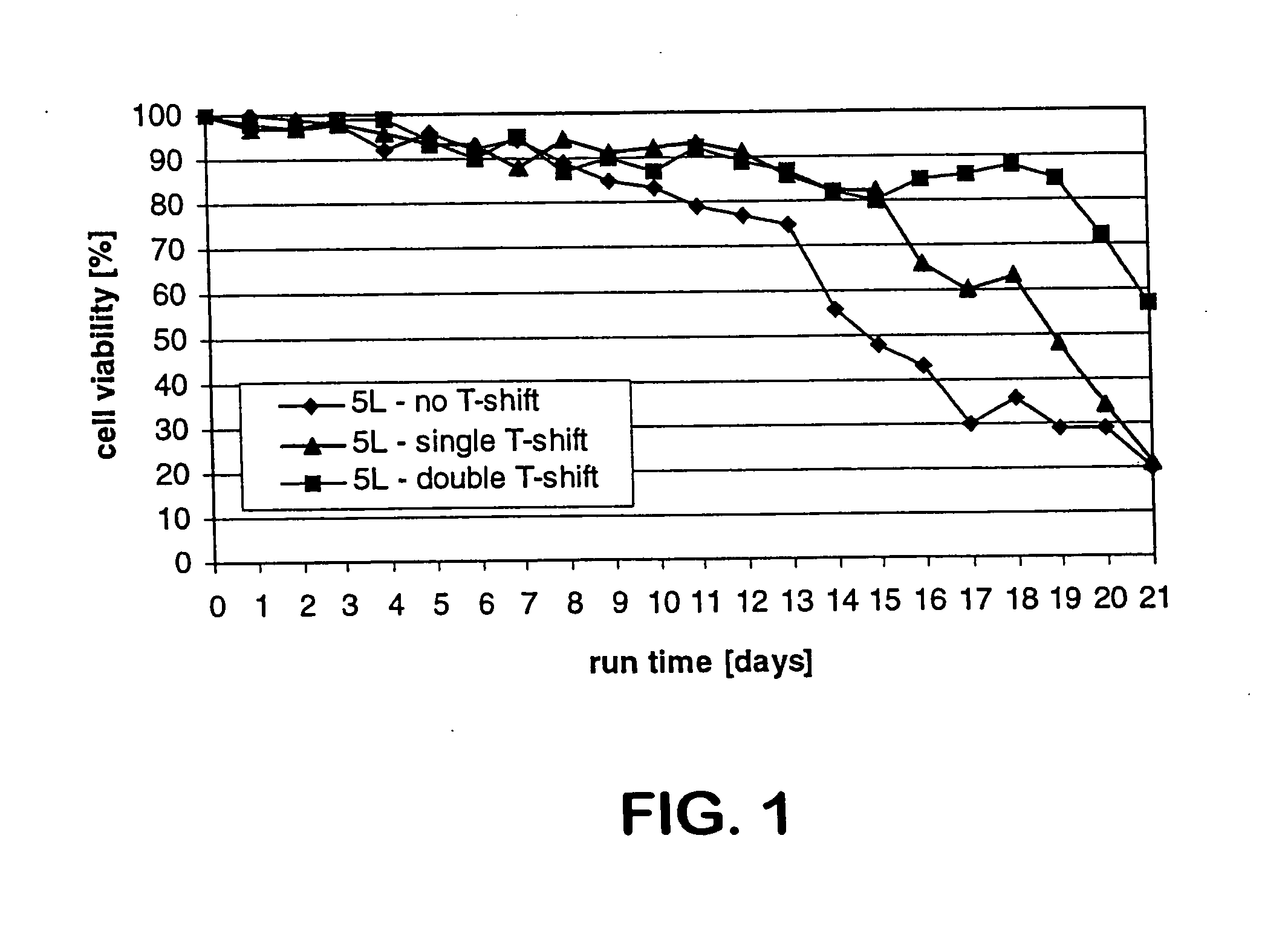
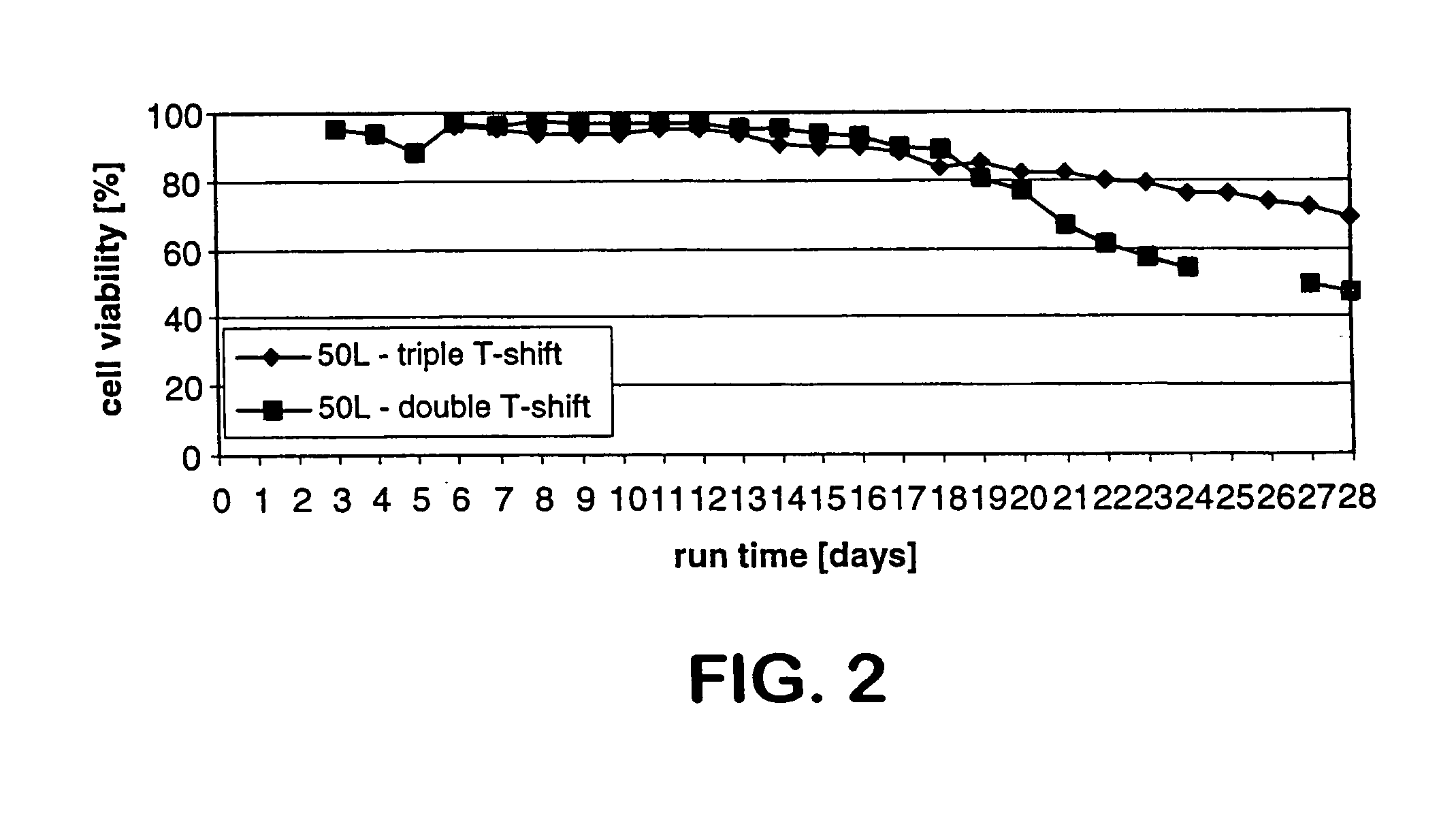
- Implementing two or more temperature shifts during the cell culturing period, along with the delayed addition of polyanionic compounds like dextran sulfate, to sustain high cell viability and extend the production phase, thereby maintaining high product quality and quantity.

Standardization and Quality Control Frameworks
The establishment of robust standardization and quality control frameworks represents a critical advancement for enhancing cell viability in microfluidic culture systems. Current microfluidic cell culture processes suffer from significant variability across laboratories, hindering reproducibility and clinical translation. Industry leaders have begun implementing standardized protocols that address this challenge through comprehensive parameter control.
These frameworks typically encompass standardized metrics for cell viability assessment, including membrane integrity tests, metabolic activity measurements, and apoptosis detection methods specifically adapted for microfluidic environments. The adaptation of traditional viability assays to microfluidic platforms requires careful consideration of flow dynamics, surface interactions, and optical limitations inherent to these systems.
Quality control measures increasingly incorporate real-time monitoring technologies that enable continuous assessment of critical parameters such as pH, dissolved oxygen, temperature, and flow rates. Advanced systems integrate automated feedback mechanisms that maintain optimal conditions throughout extended culture periods, significantly improving cell survival rates. These systems represent a paradigm shift from endpoint measurements to dynamic process control.
Documentation standards have emerged as another crucial component, with organizations like the International Society for Cellular Therapy (ISCT) and the International Organization for Standardization (ISO) developing specialized guidelines for microfluidic cell culture. These guidelines establish minimum reporting requirements for experimental conditions, materials specifications, and validation procedures essential for meaningful cross-laboratory comparisons.
Reference materials and calibration standards specifically designed for microfluidic platforms are being developed by national metrology institutes in collaboration with industry partners. These materials enable accurate instrument calibration and provide benchmarks for assessing system performance across different laboratories and equipment manufacturers.
Regulatory bodies have begun recognizing the importance of standardization in this field, with the FDA and EMA developing framework documents that outline expectations for quality control in microfluidic cell culture applications intended for clinical use. These frameworks emphasize validation of critical process parameters and establishment of acceptable ranges for cell viability indicators.
Inter-laboratory validation studies have demonstrated that implementation of standardized protocols can reduce variability in cell viability outcomes by up to 60%, highlighting the significant impact of quality control frameworks. Industry consortia are actively working to establish open-access repositories of validated protocols and reference datasets to accelerate adoption of best practices across the field.
The economic impact of standardization extends beyond improved scientific outcomes, with estimates suggesting that comprehensive quality control frameworks can reduce development costs by 15-25% through decreased experimental failure rates and enhanced reproducibility of results.
These frameworks typically encompass standardized metrics for cell viability assessment, including membrane integrity tests, metabolic activity measurements, and apoptosis detection methods specifically adapted for microfluidic environments. The adaptation of traditional viability assays to microfluidic platforms requires careful consideration of flow dynamics, surface interactions, and optical limitations inherent to these systems.
Quality control measures increasingly incorporate real-time monitoring technologies that enable continuous assessment of critical parameters such as pH, dissolved oxygen, temperature, and flow rates. Advanced systems integrate automated feedback mechanisms that maintain optimal conditions throughout extended culture periods, significantly improving cell survival rates. These systems represent a paradigm shift from endpoint measurements to dynamic process control.
Documentation standards have emerged as another crucial component, with organizations like the International Society for Cellular Therapy (ISCT) and the International Organization for Standardization (ISO) developing specialized guidelines for microfluidic cell culture. These guidelines establish minimum reporting requirements for experimental conditions, materials specifications, and validation procedures essential for meaningful cross-laboratory comparisons.
Reference materials and calibration standards specifically designed for microfluidic platforms are being developed by national metrology institutes in collaboration with industry partners. These materials enable accurate instrument calibration and provide benchmarks for assessing system performance across different laboratories and equipment manufacturers.
Regulatory bodies have begun recognizing the importance of standardization in this field, with the FDA and EMA developing framework documents that outline expectations for quality control in microfluidic cell culture applications intended for clinical use. These frameworks emphasize validation of critical process parameters and establishment of acceptable ranges for cell viability indicators.
Inter-laboratory validation studies have demonstrated that implementation of standardized protocols can reduce variability in cell viability outcomes by up to 60%, highlighting the significant impact of quality control frameworks. Industry consortia are actively working to establish open-access repositories of validated protocols and reference datasets to accelerate adoption of best practices across the field.
The economic impact of standardization extends beyond improved scientific outcomes, with estimates suggesting that comprehensive quality control frameworks can reduce development costs by 15-25% through decreased experimental failure rates and enhanced reproducibility of results.
Scalability and Industrial Implementation Strategies
The transition from laboratory-scale microfluidic cell culture systems to industrial applications presents significant challenges that must be addressed through comprehensive scaling strategies. Current industrial implementation of microfluidic cell culture technologies remains limited primarily due to throughput constraints, with most systems operating at milliliter scales rather than the liter or kiloliter volumes required for commercial production. To overcome this limitation, parallel processing architectures have emerged as a promising approach, where multiple microfluidic modules operate simultaneously to increase overall throughput while maintaining the benefits of microscale control.
Manufacturing standardization represents another critical factor in successful industrial implementation. The development of cost-effective, high-precision fabrication techniques for microfluidic devices at scale remains challenging. Recent advances in injection molding and 3D printing technologies have begun to address this issue, with several companies now offering standardized microfluidic chip production services that maintain consistent quality across large production runs while reducing per-unit costs by up to 80% compared to traditional fabrication methods.
Integration with existing bioprocessing infrastructure presents both challenges and opportunities. Microfluidic systems must interface effectively with upstream and downstream processes in biomanufacturing workflows. Modular design approaches that allow microfluidic cell culture units to connect seamlessly with conventional bioreactors and purification systems have shown promise in pilot implementations. These hybrid systems leverage the precise control of microfluidics for critical culture phases while utilizing traditional equipment for less sensitive processes.
Automation and digital integration represent essential components of industrial implementation strategies. Advanced sensor technologies embedded within microfluidic platforms enable real-time monitoring of critical parameters including dissolved oxygen, pH, metabolite concentrations, and cell density. When coupled with machine learning algorithms, these systems can automatically adjust culture conditions to optimize cell viability and productivity. Several pharmaceutical companies have reported productivity increases of 15-30% in pilot implementations of such digitally-enhanced microfluidic cell culture systems.
Regulatory considerations must be addressed early in the scaling process. The path to industrial implementation requires demonstration of consistent performance, validation protocols, and quality control measures that satisfy regulatory requirements. Companies pioneering microfluidic cell culture technologies have found success by engaging regulatory agencies during development phases and establishing clear validation frameworks that demonstrate process robustness across multiple production scales and batches.
Economic viability ultimately determines industrial adoption. Cost-benefit analyses comparing microfluidic approaches to traditional cell culture methods must account for initial capital investment, operational expenses, and potential productivity gains. Recent case studies from biotechnology firms indicate that despite higher initial setup costs, microfluidic systems can achieve return on investment within 18-24 months through reduced media consumption, higher cell viability, and increased product yield.
Manufacturing standardization represents another critical factor in successful industrial implementation. The development of cost-effective, high-precision fabrication techniques for microfluidic devices at scale remains challenging. Recent advances in injection molding and 3D printing technologies have begun to address this issue, with several companies now offering standardized microfluidic chip production services that maintain consistent quality across large production runs while reducing per-unit costs by up to 80% compared to traditional fabrication methods.
Integration with existing bioprocessing infrastructure presents both challenges and opportunities. Microfluidic systems must interface effectively with upstream and downstream processes in biomanufacturing workflows. Modular design approaches that allow microfluidic cell culture units to connect seamlessly with conventional bioreactors and purification systems have shown promise in pilot implementations. These hybrid systems leverage the precise control of microfluidics for critical culture phases while utilizing traditional equipment for less sensitive processes.
Automation and digital integration represent essential components of industrial implementation strategies. Advanced sensor technologies embedded within microfluidic platforms enable real-time monitoring of critical parameters including dissolved oxygen, pH, metabolite concentrations, and cell density. When coupled with machine learning algorithms, these systems can automatically adjust culture conditions to optimize cell viability and productivity. Several pharmaceutical companies have reported productivity increases of 15-30% in pilot implementations of such digitally-enhanced microfluidic cell culture systems.
Regulatory considerations must be addressed early in the scaling process. The path to industrial implementation requires demonstration of consistent performance, validation protocols, and quality control measures that satisfy regulatory requirements. Companies pioneering microfluidic cell culture technologies have found success by engaging regulatory agencies during development phases and establishing clear validation frameworks that demonstrate process robustness across multiple production scales and batches.
Economic viability ultimately determines industrial adoption. Cost-benefit analyses comparing microfluidic approaches to traditional cell culture methods must account for initial capital investment, operational expenses, and potential productivity gains. Recent case studies from biotechnology firms indicate that despite higher initial setup costs, microfluidic systems can achieve return on investment within 18-24 months through reduced media consumption, higher cell viability, and increased product yield.
Unlock deeper insights with PatSnap Eureka Quick Research — get a full tech report to explore trends and direct your research. Try now!
Generate Your Research Report Instantly with AI Agent
Supercharge your innovation with PatSnap Eureka AI Agent Platform!