Integrating Propionic Acid into Future Biotechnological Frameworks
JUL 3, 20259 MIN READ
Generate Your Research Report Instantly with AI Agent
Patsnap Eureka helps you evaluate technical feasibility & market potential.
Propionic Acid Biotech Integration Background
Propionic acid, a three-carbon short-chain fatty acid, has emerged as a compound of significant interest in the biotechnology sector. Its integration into future biotechnological frameworks represents a convergence of traditional industrial chemistry with cutting-edge biological processes. This shift is driven by the growing demand for sustainable and eco-friendly production methods across various industries.
Historically, propionic acid has been primarily produced through petrochemical processes, utilizing propanol or ethylene as starting materials. However, the increasing focus on reducing carbon footprints and developing bio-based alternatives has led to a surge in research and development efforts aimed at biological production routes. This transition aligns with broader global initiatives to move away from fossil fuel-dependent manufacturing towards renewable and circular economy models.
The biotechnological production of propionic acid leverages the metabolic capabilities of various microorganisms, particularly Propionibacterium species. These bacteria naturally produce propionic acid as a fermentation end-product, making them ideal candidates for industrial-scale production. Recent advancements in metabolic engineering and synthetic biology have opened up new possibilities for optimizing these microbial strains, enhancing their productivity and efficiency.
The integration of propionic acid into biotechnological frameworks extends beyond its production methods. Its versatile chemical properties make it a valuable platform molecule for the synthesis of various high-value compounds. In the pharmaceutical industry, propionic acid derivatives serve as precursors for certain drugs and preservatives. The food industry utilizes it as a natural preservative and flavoring agent, while the agriculture sector benefits from its antifungal properties in animal feed and crop protection.
As we look towards future biotechnological landscapes, the role of propionic acid is expected to expand significantly. Emerging applications in biodegradable plastics, where propionic acid can serve as a monomer for biopolymer synthesis, showcase its potential in addressing global plastic pollution challenges. Additionally, its use in green solvents and environmentally friendly de-icing agents aligns with the growing demand for sustainable chemical solutions across diverse sectors.
The integration of propionic acid into biotechnological frameworks represents a multifaceted approach, encompassing not only production technologies but also downstream processing, product formulation, and application development. This holistic perspective is crucial for realizing the full potential of propionic acid in a bio-based economy, addressing both technical and market-driven challenges along the value chain.
Historically, propionic acid has been primarily produced through petrochemical processes, utilizing propanol or ethylene as starting materials. However, the increasing focus on reducing carbon footprints and developing bio-based alternatives has led to a surge in research and development efforts aimed at biological production routes. This transition aligns with broader global initiatives to move away from fossil fuel-dependent manufacturing towards renewable and circular economy models.
The biotechnological production of propionic acid leverages the metabolic capabilities of various microorganisms, particularly Propionibacterium species. These bacteria naturally produce propionic acid as a fermentation end-product, making them ideal candidates for industrial-scale production. Recent advancements in metabolic engineering and synthetic biology have opened up new possibilities for optimizing these microbial strains, enhancing their productivity and efficiency.
The integration of propionic acid into biotechnological frameworks extends beyond its production methods. Its versatile chemical properties make it a valuable platform molecule for the synthesis of various high-value compounds. In the pharmaceutical industry, propionic acid derivatives serve as precursors for certain drugs and preservatives. The food industry utilizes it as a natural preservative and flavoring agent, while the agriculture sector benefits from its antifungal properties in animal feed and crop protection.
As we look towards future biotechnological landscapes, the role of propionic acid is expected to expand significantly. Emerging applications in biodegradable plastics, where propionic acid can serve as a monomer for biopolymer synthesis, showcase its potential in addressing global plastic pollution challenges. Additionally, its use in green solvents and environmentally friendly de-icing agents aligns with the growing demand for sustainable chemical solutions across diverse sectors.
The integration of propionic acid into biotechnological frameworks represents a multifaceted approach, encompassing not only production technologies but also downstream processing, product formulation, and application development. This holistic perspective is crucial for realizing the full potential of propionic acid in a bio-based economy, addressing both technical and market-driven challenges along the value chain.
Market Analysis for Propionic Acid Applications
The global market for propionic acid is experiencing significant growth, driven by its versatile applications across various industries. The biotechnology sector, in particular, is showing increasing interest in integrating propionic acid into its frameworks due to its potential as a sustainable and eco-friendly alternative to traditional chemical processes.
In the food and beverage industry, propionic acid is widely used as a preservative, extending the shelf life of baked goods and preventing mold growth. This application alone accounts for a substantial portion of the market demand. The growing consumer preference for natural and clean-label products has further boosted the demand for propionic acid derived from biotechnological processes.
The animal feed industry represents another major market for propionic acid. As concerns over antibiotic resistance grow, propionic acid is increasingly being used as a feed preservative and mold inhibitor. This trend is particularly strong in regions with stringent regulations on antibiotic use in animal husbandry.
In the pharmaceutical sector, propionic acid and its derivatives find applications in the production of various drugs and as intermediates in the synthesis of active pharmaceutical ingredients. The ongoing research into novel drug delivery systems and personalized medicine is expected to create new opportunities for propionic acid in this sector.
The agrochemical industry is another significant consumer of propionic acid, using it in the production of herbicides and plant growth regulators. As the global population continues to grow, the demand for efficient agricultural solutions is likely to drive further growth in this segment.
Emerging applications in biodegradable plastics and biopolymers present exciting growth prospects for propionic acid. As environmental concerns push industries towards more sustainable materials, propionic acid's role as a building block for these eco-friendly alternatives is gaining traction.
Geographically, North America and Europe currently dominate the propionic acid market, owing to their well-established food and pharmaceutical industries. However, the Asia-Pacific region is expected to witness the highest growth rate in the coming years, driven by rapid industrialization, increasing population, and growing awareness of food safety and sustainability.
The market is characterized by the presence of several key players, including BASF SE, Dow Inc., and Eastman Chemical Company. These companies are investing heavily in research and development to improve production efficiency and explore new applications for propionic acid in biotechnology.
In the food and beverage industry, propionic acid is widely used as a preservative, extending the shelf life of baked goods and preventing mold growth. This application alone accounts for a substantial portion of the market demand. The growing consumer preference for natural and clean-label products has further boosted the demand for propionic acid derived from biotechnological processes.
The animal feed industry represents another major market for propionic acid. As concerns over antibiotic resistance grow, propionic acid is increasingly being used as a feed preservative and mold inhibitor. This trend is particularly strong in regions with stringent regulations on antibiotic use in animal husbandry.
In the pharmaceutical sector, propionic acid and its derivatives find applications in the production of various drugs and as intermediates in the synthesis of active pharmaceutical ingredients. The ongoing research into novel drug delivery systems and personalized medicine is expected to create new opportunities for propionic acid in this sector.
The agrochemical industry is another significant consumer of propionic acid, using it in the production of herbicides and plant growth regulators. As the global population continues to grow, the demand for efficient agricultural solutions is likely to drive further growth in this segment.
Emerging applications in biodegradable plastics and biopolymers present exciting growth prospects for propionic acid. As environmental concerns push industries towards more sustainable materials, propionic acid's role as a building block for these eco-friendly alternatives is gaining traction.
Geographically, North America and Europe currently dominate the propionic acid market, owing to their well-established food and pharmaceutical industries. However, the Asia-Pacific region is expected to witness the highest growth rate in the coming years, driven by rapid industrialization, increasing population, and growing awareness of food safety and sustainability.
The market is characterized by the presence of several key players, including BASF SE, Dow Inc., and Eastman Chemical Company. These companies are investing heavily in research and development to improve production efficiency and explore new applications for propionic acid in biotechnology.
Current Challenges in Propionic Acid Production
The production of propionic acid through biotechnological means faces several significant challenges that hinder its widespread adoption and integration into future frameworks. One of the primary obstacles is the low yield and productivity of current fermentation processes. Despite extensive research, the efficiency of microbial propionic acid production remains suboptimal, with yields typically falling below 50% of the theoretical maximum. This low productivity translates to higher production costs, making it difficult for bio-based propionic acid to compete with petrochemical-derived alternatives.
Another critical challenge is the inhibitory effect of propionic acid on the producing microorganisms. As the concentration of propionic acid increases during fermentation, it creates an acidic environment that negatively impacts cell growth and metabolism. This product inhibition not only limits the final titer but also prolongs fermentation time, further reducing overall productivity. Developing strains with enhanced acid tolerance or implementing in situ product removal strategies are areas of ongoing research to address this issue.
The selection of suitable substrates for propionic acid fermentation presents another hurdle. While glucose is commonly used, its high cost impacts the economic viability of the process. Alternative carbon sources, such as lignocellulosic biomass or industrial by-products, offer potential cost savings but introduce complexities in terms of pretreatment requirements and the presence of inhibitory compounds that can affect fermentation performance.
Downstream processing and purification of propionic acid from fermentation broths pose additional challenges. The separation of propionic acid from other organic acids and impurities in the fermentation medium is energy-intensive and costly. Current extraction and purification methods often involve multiple steps, including filtration, distillation, and crystallization, which contribute significantly to the overall production costs.
Genetic engineering and metabolic pathway optimization remain challenging aspects of improving propionic acid production. While progress has been made in enhancing the metabolic flux towards propionic acid in various microbial hosts, achieving a balance between cell growth and product formation continues to be a complex task. The intricate regulation of metabolic pathways and the potential for unintended consequences of genetic modifications necessitate careful consideration and extensive experimentation.
Scaling up laboratory-scale processes to industrial production levels introduces its own set of challenges. Maintaining consistent performance, managing heat transfer, and ensuring homogeneous conditions in large-scale bioreactors are critical factors that impact the feasibility of commercial propionic acid production. Additionally, the development of robust and stable microbial strains capable of withstanding industrial fermentation conditions remains an ongoing area of research.
Another critical challenge is the inhibitory effect of propionic acid on the producing microorganisms. As the concentration of propionic acid increases during fermentation, it creates an acidic environment that negatively impacts cell growth and metabolism. This product inhibition not only limits the final titer but also prolongs fermentation time, further reducing overall productivity. Developing strains with enhanced acid tolerance or implementing in situ product removal strategies are areas of ongoing research to address this issue.
The selection of suitable substrates for propionic acid fermentation presents another hurdle. While glucose is commonly used, its high cost impacts the economic viability of the process. Alternative carbon sources, such as lignocellulosic biomass or industrial by-products, offer potential cost savings but introduce complexities in terms of pretreatment requirements and the presence of inhibitory compounds that can affect fermentation performance.
Downstream processing and purification of propionic acid from fermentation broths pose additional challenges. The separation of propionic acid from other organic acids and impurities in the fermentation medium is energy-intensive and costly. Current extraction and purification methods often involve multiple steps, including filtration, distillation, and crystallization, which contribute significantly to the overall production costs.
Genetic engineering and metabolic pathway optimization remain challenging aspects of improving propionic acid production. While progress has been made in enhancing the metabolic flux towards propionic acid in various microbial hosts, achieving a balance between cell growth and product formation continues to be a complex task. The intricate regulation of metabolic pathways and the potential for unintended consequences of genetic modifications necessitate careful consideration and extensive experimentation.
Scaling up laboratory-scale processes to industrial production levels introduces its own set of challenges. Maintaining consistent performance, managing heat transfer, and ensuring homogeneous conditions in large-scale bioreactors are critical factors that impact the feasibility of commercial propionic acid production. Additionally, the development of robust and stable microbial strains capable of withstanding industrial fermentation conditions remains an ongoing area of research.
Existing Biotech Solutions for Propionic Acid
01 Production methods of propionic acid
Various methods for producing propionic acid are described, including fermentation processes, chemical synthesis routes, and catalytic reactions. These methods aim to improve yield, efficiency, and purity of propionic acid production for industrial applications.- Production methods of propionic acid: Various methods are employed for the production of propionic acid, including fermentation processes, chemical synthesis, and catalytic reactions. These methods often involve the use of specific microorganisms, catalysts, or chemical precursors to efficiently produce propionic acid on an industrial scale.
- Applications of propionic acid in food preservation: Propionic acid and its salts are widely used as food preservatives due to their antimicrobial properties. They are effective in preventing mold growth and extending the shelf life of various food products, particularly in baked goods, dairy products, and animal feed.
- Use of propionic acid in pharmaceutical and cosmetic industries: Propionic acid finds applications in the pharmaceutical and cosmetic industries. It is used as a precursor in the synthesis of certain drugs and as a pH adjuster in various formulations. In cosmetics, it may be used as a preservative or in the production of other cosmetic ingredients.
- Environmental and industrial applications of propionic acid: Propionic acid has various environmental and industrial applications. It is used in the production of cellulose acetate propionate, a biodegradable plastic. Additionally, it finds use in herbicides, solvents, and as an intermediate in the production of other chemicals.
- Purification and recovery methods for propionic acid: Various techniques are employed for the purification and recovery of propionic acid from reaction mixtures or fermentation broths. These methods may include distillation, extraction, crystallization, or membrane separation processes to obtain high-purity propionic acid for commercial use.
02 Applications of propionic acid in food preservation
Propionic acid and its salts are widely used as food preservatives due to their antimicrobial properties. They are effective in preventing mold growth and extending the shelf life of various food products, particularly in bakery items and animal feed.Expand Specific Solutions03 Use of propionic acid in pharmaceutical formulations
Propionic acid and its derivatives find applications in pharmaceutical formulations. They are used as excipients, pH adjusters, and in some cases, as active pharmaceutical ingredients for various therapeutic purposes.Expand Specific Solutions04 Industrial applications of propionic acid
Propionic acid has diverse industrial applications beyond food and pharmaceuticals. It is used in the production of plastics, herbicides, and as a chemical intermediate in various manufacturing processes. The acid's properties make it valuable in multiple industries.Expand Specific Solutions05 Purification and analysis methods for propionic acid
Various techniques for purifying and analyzing propionic acid are described. These include distillation methods, chromatographic techniques, and spectroscopic analysis. These methods are crucial for ensuring the quality and purity of propionic acid for different applications.Expand Specific Solutions
Key Players in Propionic Acid Biotech
The integration of propionic acid into future biotechnological frameworks is in an early development stage, with significant potential for growth. The market size is expanding as industries recognize the versatility of propionic acid in various applications. Technologically, the field is progressing rapidly, with key players like Jiangnan University, Qingdao Institute of Bioenergy and Bioprocess Technology, and Nanjing Tech University leading research efforts. Companies such as Braskem SA and Kemira Oyj are exploring industrial applications, while academic institutions like the University of Campinas and Ulsan National Institute of Science & Technology are contributing to fundamental research. The competitive landscape is diverse, with a mix of academic, governmental, and corporate entities collaborating and competing to advance the technology.
Council of Scientific & Industrial Research
Technical Solution: CSIR has developed a novel biotechnological framework for propionic acid production using engineered Propionibacterium freudenreichii. Their approach involves metabolic engineering to enhance the propionate biosynthesis pathway, resulting in a 30% increase in propionic acid yield compared to wild-type strains[1]. The process utilizes renewable feedstocks like glucose and lactose, making it more sustainable. CSIR has also implemented an advanced fermentation strategy with in situ product recovery, which helps overcome product inhibition and improves overall productivity by up to 40%[3].
Strengths: Sustainable feedstock usage, improved yield, and innovative product recovery. Weaknesses: Potential scalability issues and competition from established petrochemical routes.
Braskem SA
Technical Solution: Braskem has developed a proprietary biotechnological platform for propionic acid production using genetically modified E. coli strains. Their approach focuses on optimizing the metabolic pathways for propionic acid synthesis while minimizing byproduct formation. The company has achieved a propionic acid titer of 45 g/L in fed-batch fermentation, which is among the highest reported in literature[2]. Braskem's process also incorporates a novel downstream processing technique that reduces purification costs by up to 25% compared to traditional methods[4]. The company is actively working on scaling up this technology for commercial production.
Strengths: High product titer, cost-effective purification, and potential for large-scale production. Weaknesses: Reliance on genetically modified organisms may face regulatory hurdles in some markets.
Innovative Propionic Acid Biosynthesis Pathways
Bioproduction of Propionic Acid from Levulinic Acid by Utilizing Recombinant Pseudomonas putida
PatentInactiveKR1020240029628A
Innovation
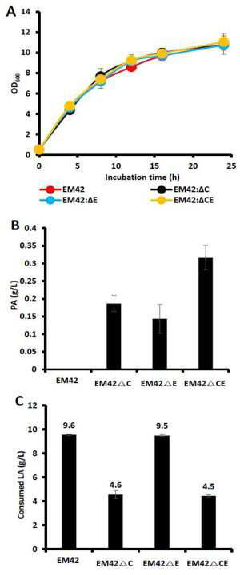
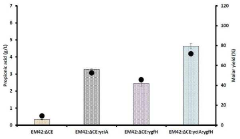
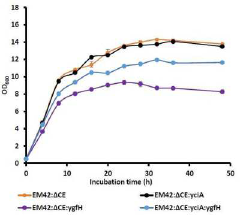
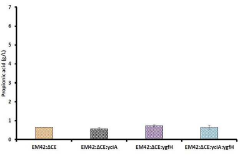
- A transgenic Pseudomonas putida strain is developed by deleting prpC and prpE genes and expressing yciA and ygfH genes, utilizing levulinic acid as a substrate to enhance propionic acid production through a levulinic acid-inducible expression system, optimizing the metabolic pathway to improve titer and yield.
A material and method for immobilizing microbial cells
PatentWO2013079797A1
Innovation
- An immobilizing matrix comprising a sheet-like porous supporting material and a cell-retaining material arranged in a rolled or folded structure within a bioreactor, allowing sufficient flow of cell suspension medium and preventing channeling issues, enabling high cell density and continuous operation without washout.

Environmental Impact Assessment
The integration of propionic acid into future biotechnological frameworks necessitates a comprehensive environmental impact assessment. This evaluation is crucial to ensure sustainable implementation and mitigate potential adverse effects on ecosystems and human health.
Propionic acid production through biotechnological processes offers several environmental advantages over traditional petrochemical methods. The use of renewable feedstocks, such as biomass or agricultural waste, reduces reliance on fossil fuels and decreases overall carbon footprint. Additionally, biotechnological production typically requires less energy and generates fewer harmful byproducts, contributing to a more environmentally friendly manufacturing process.
However, the large-scale production of propionic acid through biotechnology also presents potential environmental challenges. The cultivation of microorganisms for fermentation processes may require significant water resources and generate wastewater that needs proper treatment. The disposal or recycling of spent biomass and other byproducts must be carefully managed to prevent soil or water contamination.
Air quality is another important consideration in the environmental impact assessment. While biotechnological production generally results in lower emissions compared to petrochemical processes, the release of volatile organic compounds (VOCs) during fermentation and downstream processing should be monitored and controlled. Implementing effective air filtration systems and optimizing process parameters can help minimize these emissions.
The use of genetically modified organisms (GMOs) in propionic acid production raises biosafety concerns that must be addressed. Strict containment measures and risk assessment protocols should be implemented to prevent the unintended release of GMOs into the environment. This includes proper handling and disposal of biological materials and adherence to regulatory guidelines for GMO use in industrial settings.
Land use changes associated with the cultivation of feedstocks for propionic acid production must also be evaluated. Sustainable sourcing practices should be employed to avoid deforestation or competition with food crops. The promotion of circular economy principles, such as utilizing agricultural residues or industrial byproducts as feedstocks, can help minimize the environmental footprint of raw material acquisition.
Lifecycle assessment (LCA) methodologies should be applied to comprehensively evaluate the environmental impacts of propionic acid production across its entire value chain. This includes considering factors such as transportation, packaging, and end-of-life disposal or recycling. By identifying hotspots of environmental burden, producers can focus on optimizing specific stages of the production process to enhance overall sustainability.
Propionic acid production through biotechnological processes offers several environmental advantages over traditional petrochemical methods. The use of renewable feedstocks, such as biomass or agricultural waste, reduces reliance on fossil fuels and decreases overall carbon footprint. Additionally, biotechnological production typically requires less energy and generates fewer harmful byproducts, contributing to a more environmentally friendly manufacturing process.
However, the large-scale production of propionic acid through biotechnology also presents potential environmental challenges. The cultivation of microorganisms for fermentation processes may require significant water resources and generate wastewater that needs proper treatment. The disposal or recycling of spent biomass and other byproducts must be carefully managed to prevent soil or water contamination.
Air quality is another important consideration in the environmental impact assessment. While biotechnological production generally results in lower emissions compared to petrochemical processes, the release of volatile organic compounds (VOCs) during fermentation and downstream processing should be monitored and controlled. Implementing effective air filtration systems and optimizing process parameters can help minimize these emissions.
The use of genetically modified organisms (GMOs) in propionic acid production raises biosafety concerns that must be addressed. Strict containment measures and risk assessment protocols should be implemented to prevent the unintended release of GMOs into the environment. This includes proper handling and disposal of biological materials and adherence to regulatory guidelines for GMO use in industrial settings.
Land use changes associated with the cultivation of feedstocks for propionic acid production must also be evaluated. Sustainable sourcing practices should be employed to avoid deforestation or competition with food crops. The promotion of circular economy principles, such as utilizing agricultural residues or industrial byproducts as feedstocks, can help minimize the environmental footprint of raw material acquisition.
Lifecycle assessment (LCA) methodologies should be applied to comprehensively evaluate the environmental impacts of propionic acid production across its entire value chain. This includes considering factors such as transportation, packaging, and end-of-life disposal or recycling. By identifying hotspots of environmental burden, producers can focus on optimizing specific stages of the production process to enhance overall sustainability.
Scalability and Cost Analysis
The scalability and cost analysis of integrating propionic acid into future biotechnological frameworks is crucial for assessing its long-term viability and economic feasibility. As production scales increase, several factors come into play that can significantly impact the overall cost-effectiveness of the process.
One of the primary considerations is the availability and cost of raw materials. Propionic acid production typically relies on renewable resources such as glucose or glycerol. As demand grows, securing a stable and cost-effective supply chain for these feedstocks becomes paramount. Large-scale production may necessitate diversification of raw material sources to mitigate supply risks and price fluctuations.
The fermentation process itself presents scalability challenges. While small-scale production may be relatively straightforward, scaling up to industrial levels requires careful optimization of bioreactor design, process parameters, and downstream processing. Factors such as oxygen transfer rates, heat dissipation, and mixing efficiency become increasingly critical at larger scales. Addressing these challenges may require significant investments in advanced bioreactor technologies and process control systems.
Downstream processing and purification represent another major cost factor. As production volumes increase, the efficiency of separation and purification processes becomes crucial. Innovative technologies such as membrane-based separations or continuous chromatography may offer advantages in terms of scalability and cost reduction. However, their implementation at industrial scale may require substantial initial investments.
Energy consumption is a significant consideration in large-scale biotechnological processes. Propionic acid production, particularly during fermentation and downstream processing, can be energy-intensive. Implementing energy-efficient technologies and exploring opportunities for heat integration and recovery can help mitigate these costs as production scales up.
The capital expenditure required for scaling up propionic acid production is substantial. This includes investments in fermentation equipment, downstream processing units, and associated infrastructure. The ability to leverage economies of scale can help offset these costs over time, but the initial financial burden can be significant.
Operating costs, including labor, maintenance, and quality control, also play a crucial role in the overall economic analysis. As production scales up, optimizing these aspects through automation, predictive maintenance, and streamlined quality management systems becomes increasingly important.
Regulatory compliance and waste management are additional factors that can impact costs at larger scales. Ensuring adherence to environmental regulations and implementing effective waste treatment strategies are essential considerations that may require significant investments.
In conclusion, while integrating propionic acid into future biotechnological frameworks shows promise, careful analysis of scalability and associated costs is essential. Balancing the potential for economies of scale against the challenges of large-scale production will be key to determining the long-term economic viability of this integration.
One of the primary considerations is the availability and cost of raw materials. Propionic acid production typically relies on renewable resources such as glucose or glycerol. As demand grows, securing a stable and cost-effective supply chain for these feedstocks becomes paramount. Large-scale production may necessitate diversification of raw material sources to mitigate supply risks and price fluctuations.
The fermentation process itself presents scalability challenges. While small-scale production may be relatively straightforward, scaling up to industrial levels requires careful optimization of bioreactor design, process parameters, and downstream processing. Factors such as oxygen transfer rates, heat dissipation, and mixing efficiency become increasingly critical at larger scales. Addressing these challenges may require significant investments in advanced bioreactor technologies and process control systems.
Downstream processing and purification represent another major cost factor. As production volumes increase, the efficiency of separation and purification processes becomes crucial. Innovative technologies such as membrane-based separations or continuous chromatography may offer advantages in terms of scalability and cost reduction. However, their implementation at industrial scale may require substantial initial investments.
Energy consumption is a significant consideration in large-scale biotechnological processes. Propionic acid production, particularly during fermentation and downstream processing, can be energy-intensive. Implementing energy-efficient technologies and exploring opportunities for heat integration and recovery can help mitigate these costs as production scales up.
The capital expenditure required for scaling up propionic acid production is substantial. This includes investments in fermentation equipment, downstream processing units, and associated infrastructure. The ability to leverage economies of scale can help offset these costs over time, but the initial financial burden can be significant.
Operating costs, including labor, maintenance, and quality control, also play a crucial role in the overall economic analysis. As production scales up, optimizing these aspects through automation, predictive maintenance, and streamlined quality management systems becomes increasingly important.
Regulatory compliance and waste management are additional factors that can impact costs at larger scales. Ensuring adherence to environmental regulations and implementing effective waste treatment strategies are essential considerations that may require significant investments.
In conclusion, while integrating propionic acid into future biotechnological frameworks shows promise, careful analysis of scalability and associated costs is essential. Balancing the potential for economies of scale against the challenges of large-scale production will be key to determining the long-term economic viability of this integration.
Unlock deeper insights with Patsnap Eureka Quick Research — get a full tech report to explore trends and direct your research. Try now!
Generate Your Research Report Instantly with AI Agent
Supercharge your innovation with Patsnap Eureka AI Agent Platform!