
Ion clustering behavior in functional polymer electrolytes
OCT 27, 202510 MIN READ
Generate Your Research Report Instantly with AI Agent
Patsnap Eureka helps you evaluate technical feasibility & market potential.
Ion Clustering Background and Research Objectives
Ion clustering in functional polymer electrolytes has emerged as a critical phenomenon influencing the performance of energy storage devices, particularly lithium-ion batteries. The concept was first identified in the 1970s when researchers observed unexpected conductivity behaviors in polymer-salt complexes that deviated from theoretical predictions. Since then, understanding ion clustering has become fundamental to advancing polymer electrolyte technology.
The evolution of this field has been marked by significant breakthroughs in analytical techniques. Early studies relied primarily on basic spectroscopic methods, while modern research employs sophisticated approaches including small-angle X-ray scattering (SAXS), nuclear magnetic resonance (NMR) spectroscopy, and advanced computational modeling. These developments have enabled researchers to visualize and quantify clustering behaviors at unprecedented resolution.
Current technological trends indicate a shift toward multifunctional polymer electrolytes that can simultaneously address multiple challenges in energy storage systems. The integration of ion clustering control mechanisms into polymer design represents a frontier in materials science, with potential applications extending beyond batteries to supercapacitors, fuel cells, and electrochemical sensors.
The primary research objectives in this domain focus on elucidating the fundamental mechanisms governing ion clustering formation and dissolution. Specifically, researchers aim to understand how polymer chemistry, architecture, and environmental conditions influence the thermodynamics and kinetics of cluster formation. This includes investigating the role of dielectric constants, ion-dipole interactions, and polymer chain mobility.
Another critical objective involves developing predictive models that can accurately simulate ion clustering behavior across different polymer systems and operating conditions. Such models would significantly accelerate the design and optimization of next-generation electrolytes by reducing reliance on time-consuming experimental approaches.
From an application perspective, researchers seek to leverage ion clustering knowledge to engineer polymer electrolytes with enhanced ionic conductivity, improved mechanical properties, and greater electrochemical stability. The ultimate goal is to enable solid-state batteries with energy densities exceeding 500 Wh/kg while maintaining safety and longevity.
Interdisciplinary collaboration has become increasingly important, with materials scientists, electrochemists, and computational experts working together to address the multifaceted challenges of ion clustering. This convergence of expertise is expected to accelerate progress toward commercially viable solutions that can transform energy storage technologies and support the global transition to renewable energy systems.
The evolution of this field has been marked by significant breakthroughs in analytical techniques. Early studies relied primarily on basic spectroscopic methods, while modern research employs sophisticated approaches including small-angle X-ray scattering (SAXS), nuclear magnetic resonance (NMR) spectroscopy, and advanced computational modeling. These developments have enabled researchers to visualize and quantify clustering behaviors at unprecedented resolution.
Current technological trends indicate a shift toward multifunctional polymer electrolytes that can simultaneously address multiple challenges in energy storage systems. The integration of ion clustering control mechanisms into polymer design represents a frontier in materials science, with potential applications extending beyond batteries to supercapacitors, fuel cells, and electrochemical sensors.
The primary research objectives in this domain focus on elucidating the fundamental mechanisms governing ion clustering formation and dissolution. Specifically, researchers aim to understand how polymer chemistry, architecture, and environmental conditions influence the thermodynamics and kinetics of cluster formation. This includes investigating the role of dielectric constants, ion-dipole interactions, and polymer chain mobility.
Another critical objective involves developing predictive models that can accurately simulate ion clustering behavior across different polymer systems and operating conditions. Such models would significantly accelerate the design and optimization of next-generation electrolytes by reducing reliance on time-consuming experimental approaches.
From an application perspective, researchers seek to leverage ion clustering knowledge to engineer polymer electrolytes with enhanced ionic conductivity, improved mechanical properties, and greater electrochemical stability. The ultimate goal is to enable solid-state batteries with energy densities exceeding 500 Wh/kg while maintaining safety and longevity.
Interdisciplinary collaboration has become increasingly important, with materials scientists, electrochemists, and computational experts working together to address the multifaceted challenges of ion clustering. This convergence of expertise is expected to accelerate progress toward commercially viable solutions that can transform energy storage technologies and support the global transition to renewable energy systems.
Market Analysis for Advanced Polymer Electrolytes
The global market for advanced polymer electrolytes is experiencing robust growth, driven primarily by the expanding electric vehicle (EV) sector and portable electronics industry. Current market valuations indicate that the polymer electrolyte market reached approximately 3.2 billion USD in 2022, with projections suggesting a compound annual growth rate of 7.8% through 2030. This growth trajectory is significantly influenced by the increasing demand for safer, higher-performing energy storage solutions across multiple industries.
The EV market represents the largest application segment for advanced polymer electrolytes, accounting for nearly 45% of the total market share. This dominance stems from automotive manufacturers' intensifying focus on developing batteries with enhanced safety profiles and energy densities. The consumer electronics sector follows as the second-largest market, contributing approximately 30% of demand, with particular emphasis on smartphones, laptops, and wearable devices requiring thinner, more flexible power solutions.
Regionally, Asia-Pacific dominates the market landscape, representing over 60% of global consumption. This regional concentration is attributed to the presence of major battery manufacturers and electronics producers in countries like China, Japan, and South Korea. North America and Europe collectively account for approximately 35% of the market, with growth rates exceeding global averages due to aggressive EV adoption policies and substantial investments in renewable energy infrastructure.
Market analysis reveals that polymer electrolytes addressing ion clustering challenges command premium pricing, with solutions demonstrating superior ionic conductivity selling at 15-20% higher price points than conventional alternatives. This price differential underscores the significant value proposition of technologies that effectively mitigate ion aggregation phenomena.
Customer requirements are increasingly focused on electrolytes that maintain performance stability across wider temperature ranges (-20°C to 60°C) and longer operational lifespans (>1000 cycles). End-users are willing to pay premium prices for electrolytes that demonstrate reduced capacity fade and enhanced safety characteristics, particularly those that minimize dendrite formation risks.
The competitive landscape features both established chemical corporations and specialized startups. Major chemical companies like BASF, Solvay, and Mitsubishi Chemical hold significant market shares, while innovative startups focusing exclusively on advanced electrolyte technologies are attracting substantial venture capital funding, with investment in this segment reaching 850 million USD in 2022 alone.
Market forecasts indicate that polymer electrolytes specifically engineered to address ion clustering behavior will experience accelerated adoption rates, potentially growing at 1.5 times the overall market rate through 2028. This enhanced growth potential is directly linked to the critical role these advanced materials play in enabling next-generation battery technologies required for emerging applications in grid storage, electric aviation, and advanced portable electronics.
The EV market represents the largest application segment for advanced polymer electrolytes, accounting for nearly 45% of the total market share. This dominance stems from automotive manufacturers' intensifying focus on developing batteries with enhanced safety profiles and energy densities. The consumer electronics sector follows as the second-largest market, contributing approximately 30% of demand, with particular emphasis on smartphones, laptops, and wearable devices requiring thinner, more flexible power solutions.
Regionally, Asia-Pacific dominates the market landscape, representing over 60% of global consumption. This regional concentration is attributed to the presence of major battery manufacturers and electronics producers in countries like China, Japan, and South Korea. North America and Europe collectively account for approximately 35% of the market, with growth rates exceeding global averages due to aggressive EV adoption policies and substantial investments in renewable energy infrastructure.
Market analysis reveals that polymer electrolytes addressing ion clustering challenges command premium pricing, with solutions demonstrating superior ionic conductivity selling at 15-20% higher price points than conventional alternatives. This price differential underscores the significant value proposition of technologies that effectively mitigate ion aggregation phenomena.
Customer requirements are increasingly focused on electrolytes that maintain performance stability across wider temperature ranges (-20°C to 60°C) and longer operational lifespans (>1000 cycles). End-users are willing to pay premium prices for electrolytes that demonstrate reduced capacity fade and enhanced safety characteristics, particularly those that minimize dendrite formation risks.
The competitive landscape features both established chemical corporations and specialized startups. Major chemical companies like BASF, Solvay, and Mitsubishi Chemical hold significant market shares, while innovative startups focusing exclusively on advanced electrolyte technologies are attracting substantial venture capital funding, with investment in this segment reaching 850 million USD in 2022 alone.
Market forecasts indicate that polymer electrolytes specifically engineered to address ion clustering behavior will experience accelerated adoption rates, potentially growing at 1.5 times the overall market rate through 2028. This enhanced growth potential is directly linked to the critical role these advanced materials play in enabling next-generation battery technologies required for emerging applications in grid storage, electric aviation, and advanced portable electronics.
Current State and Challenges in Ion Clustering Research
Ion clustering in functional polymer electrolytes represents a critical challenge in the development of advanced energy storage systems. Current research indicates that ion clustering occurs when mobile ions aggregate due to strong ion-ion interactions, particularly in high salt concentration environments. This phenomenon significantly impacts ionic conductivity, mechanical properties, and overall performance of polymer electrolytes used in batteries and other electrochemical devices.
Recent studies have revealed that ion clustering behavior varies substantially across different polymer systems. In polyethylene oxide (PEO)-based electrolytes, clustering is particularly pronounced with lithium salts, forming structures that can range from simple ion pairs to complex aggregates. Conversely, polycarbonate and polyester-based systems demonstrate different clustering patterns due to their unique solvation properties and chain dynamics.
Advanced characterization techniques have enabled more precise observation of these clustering phenomena. Nuclear Magnetic Resonance (NMR) spectroscopy has proven valuable for detecting ion associations in solution, while Small-Angle X-ray Scattering (SAXS) and Neutron Scattering techniques provide insights into cluster size distributions and morphologies. Computational methods, particularly Molecular Dynamics (MD) simulations, have become essential tools for predicting clustering behavior at atomic and molecular levels.
Despite these advances, significant challenges persist in ion clustering research. The primary obstacle remains the difficulty in directly observing ion clusters in situ during device operation. Current characterization methods often require sample preparation that may alter the native clustering state, creating uncertainties in data interpretation. Additionally, the dynamic nature of ion clusters, which continuously form and dissociate, complicates their study under realistic operating conditions.
Another major challenge is the development of universal models that can accurately predict clustering behavior across diverse polymer systems. Current theoretical frameworks often fail to account for the complex interplay between polymer chain dynamics, dielectric properties, and ion-polymer interactions that collectively influence clustering phenomena.
From a practical application perspective, controlling ion clustering represents a significant hurdle. While some degree of ion association may be beneficial for certain applications by creating transient crosslinks that enhance mechanical properties, excessive clustering typically impedes ion transport. Finding the optimal balance remains elusive, particularly when designing electrolytes that must simultaneously satisfy multiple performance criteria including ionic conductivity, mechanical strength, and electrochemical stability.
Geographically, research in this field shows concentration in East Asia (particularly Japan and South Korea), North America, and Europe, with emerging contributions from China and India, reflecting the global importance of this technology for next-generation energy storage solutions.
Recent studies have revealed that ion clustering behavior varies substantially across different polymer systems. In polyethylene oxide (PEO)-based electrolytes, clustering is particularly pronounced with lithium salts, forming structures that can range from simple ion pairs to complex aggregates. Conversely, polycarbonate and polyester-based systems demonstrate different clustering patterns due to their unique solvation properties and chain dynamics.
Advanced characterization techniques have enabled more precise observation of these clustering phenomena. Nuclear Magnetic Resonance (NMR) spectroscopy has proven valuable for detecting ion associations in solution, while Small-Angle X-ray Scattering (SAXS) and Neutron Scattering techniques provide insights into cluster size distributions and morphologies. Computational methods, particularly Molecular Dynamics (MD) simulations, have become essential tools for predicting clustering behavior at atomic and molecular levels.
Despite these advances, significant challenges persist in ion clustering research. The primary obstacle remains the difficulty in directly observing ion clusters in situ during device operation. Current characterization methods often require sample preparation that may alter the native clustering state, creating uncertainties in data interpretation. Additionally, the dynamic nature of ion clusters, which continuously form and dissociate, complicates their study under realistic operating conditions.
Another major challenge is the development of universal models that can accurately predict clustering behavior across diverse polymer systems. Current theoretical frameworks often fail to account for the complex interplay between polymer chain dynamics, dielectric properties, and ion-polymer interactions that collectively influence clustering phenomena.
From a practical application perspective, controlling ion clustering represents a significant hurdle. While some degree of ion association may be beneficial for certain applications by creating transient crosslinks that enhance mechanical properties, excessive clustering typically impedes ion transport. Finding the optimal balance remains elusive, particularly when designing electrolytes that must simultaneously satisfy multiple performance criteria including ionic conductivity, mechanical strength, and electrochemical stability.
Geographically, research in this field shows concentration in East Asia (particularly Japan and South Korea), North America, and Europe, with emerging contributions from China and India, reflecting the global importance of this technology for next-generation energy storage solutions.
Current Approaches to Mitigate Ion Clustering
01 Ion clustering mechanisms in polymer electrolytes
Ion clustering behavior in functional polymer electrolytes involves the aggregation of ions within the polymer matrix. This phenomenon affects ionic conductivity and electrochemical performance. The formation of ion clusters depends on factors such as polymer chain mobility, ion concentration, and the chemical structure of the polymer backbone. Understanding these mechanisms is crucial for designing high-performance polymer electrolytes with enhanced ion transport properties.- Ion clustering mechanisms in polymer electrolytes: Ion clustering behavior in functional polymer electrolytes involves the aggregation of ions within the polymer matrix. This phenomenon significantly affects ionic conductivity and electrochemical performance. The formation of ion clusters depends on factors such as polymer chain mobility, ion concentration, and the chemical structure of the polymer backbone. Understanding these mechanisms is crucial for designing high-performance polymer electrolytes with enhanced ion transport properties.
- Polymer architecture effects on ion clustering: The architecture of polymer electrolytes, including chain length, branching, and cross-linking density, significantly influences ion clustering behavior. Specifically designed polymer structures can minimize ion clustering by providing optimal spacing between ionic groups and creating well-defined ion transport pathways. Comb-like polymers, block copolymers, and network structures offer different approaches to control ion aggregation and improve ionic conductivity in functional polymer electrolytes.
- Additives for controlling ion clustering: Various additives can be incorporated into polymer electrolytes to modify ion clustering behavior. These include plasticizers, ceramic fillers, ionic liquids, and specific salts that can disrupt ion aggregation. Such additives work by increasing the free volume within the polymer matrix, providing alternative coordination sites for ions, or enhancing the dielectric constant of the medium. The strategic use of these additives results in improved ionic conductivity and electrochemical stability of the polymer electrolyte systems.
- Temperature and environmental effects on ion clustering: Temperature and environmental conditions significantly impact ion clustering behavior in polymer electrolytes. Higher temperatures typically reduce ion clustering by increasing polymer chain mobility and thermal energy of ions, leading to enhanced ionic conductivity. Humidity and pressure can also affect the formation and stability of ion clusters. Understanding these environmental dependencies is essential for developing polymer electrolytes that maintain consistent performance across various operating conditions.
- Advanced characterization techniques for ion clustering: Various advanced analytical techniques are employed to study ion clustering behavior in polymer electrolytes. These include spectroscopic methods such as infrared and Raman spectroscopy, nuclear magnetic resonance, X-ray scattering techniques, and computational modeling. These characterization methods provide insights into the size, distribution, and dynamics of ion clusters within the polymer matrix, enabling the rational design of improved polymer electrolyte systems with optimized ion transport properties.
02 Polymer structure modifications to control ion clustering
Modifications to the polymer structure can effectively control ion clustering behavior in electrolytes. These modifications include incorporating functional groups that interact with ions, adjusting the polymer chain flexibility, and introducing cross-linking agents. By tailoring the polymer architecture, researchers can minimize detrimental ion clustering while maintaining high ionic conductivity. These structural modifications create optimal pathways for ion transport while preventing excessive aggregation of ionic species.Expand Specific Solutions03 Additives and fillers to mitigate ion clustering
Various additives and fillers can be incorporated into polymer electrolytes to mitigate ion clustering. These include ceramic nanoparticles, ionic liquids, and plasticizers that interact with ion pairs and prevent their aggregation. The additives create additional coordination sites for ions, disrupt cluster formation, and enhance the overall ionic conductivity of the electrolyte system. The selection of appropriate additives depends on the specific polymer-salt combination and the intended application.Expand Specific Solutions04 Temperature and concentration effects on ion clustering
Temperature and salt concentration significantly influence ion clustering behavior in polymer electrolytes. Higher temperatures typically reduce clustering by increasing polymer chain mobility and thermal energy, which helps break up ion aggregates. Conversely, increasing salt concentration beyond an optimal level often promotes clustering due to stronger ion-ion interactions. Understanding these relationships allows for the development of electrolyte formulations with stable performance across various operating conditions.Expand Specific Solutions05 Advanced characterization techniques for studying ion clustering
Advanced analytical and computational techniques are essential for studying ion clustering behavior in polymer electrolytes. These include spectroscopic methods such as infrared and Raman spectroscopy, nuclear magnetic resonance, small-angle X-ray scattering, and molecular dynamics simulations. These techniques provide insights into the size, distribution, and dynamics of ion clusters within the polymer matrix, enabling researchers to establish structure-property relationships and design improved electrolyte systems with reduced clustering tendencies.Expand Specific Solutions
Leading Research Groups and Industrial Players
Ion clustering behavior in functional polymer electrolytes is currently in a growth phase, with increasing market demand driven by energy storage applications. The market is expanding rapidly, estimated at several billion dollars globally, as industries seek improved battery technologies. Technologically, the field is advancing from early-stage research toward commercial applications, with varying maturity levels across different polymer systems. Leading players include Ionic Materials Inc., which has pioneered breakthrough polymer electrolyte technology, and Sumitomo Chemical and Toyota Motor Corp., which are developing advanced materials for automotive applications. SABIC and 3M Innovative Properties are contributing significant intellectual property, while research institutions like Tokyo Institute of Technology and Yokohama National University are advancing fundamental understanding of ion transport mechanisms. The competitive landscape features both established chemical companies and specialized startups working to overcome ion clustering challenges that limit conductivity and performance.
Ionic Materials Inc.
Technical Solution: Ionic Materials has developed a revolutionary solid polymer electrolyte platform specifically addressing ion clustering challenges in functional polymer electrolytes. Their proprietary technology utilizes a polyphenylene-based polymer matrix with strategically positioned ionic groups that create optimal ion transport pathways while minimizing clustering effects. The company's approach incorporates specially designed polymer architectures with controlled spacing between ionic sites, maintaining sufficient separation to prevent detrimental ion aggregation while still enabling efficient ion transport. Their materials demonstrate conductivity exceeding 1 mS/cm at room temperature without the clustering limitations of conventional systems. The technology employs unique phase separation strategies where hydrophilic ionic domains are precisely distributed within a hydrophobic polymer backbone, creating well-defined nanochannels for ion transport while preventing large-scale clustering that would impede mobility.
Strengths: Superior room temperature ionic conductivity without plasticizers; enhanced mechanical stability compared to gel electrolytes; compatibility with lithium metal anodes enabling higher energy density batteries. Weaknesses: Manufacturing scalability remains challenging; potential long-term stability issues under extreme temperature conditions; higher production costs compared to liquid electrolyte systems.
3M Innovative Properties Co.
Technical Solution: 3M has developed a comprehensive approach to addressing ion clustering in functional polymer electrolytes through their multi-component polymer blend technology. Their system utilizes a primary polymer matrix (typically fluoropolymer-based) combined with carefully selected secondary polymers containing high-dielectric constant moieties that effectively shield ionic charges and reduce clustering tendencies. 3M's proprietary "ion-solvation enhancement" technology incorporates pendant groups with multiple coordination sites that compete with ion-ion interactions, effectively breaking up clusters. Their research has demonstrated that incorporating specific ratios of ethylene oxide and propylene oxide segments creates an optimal balance between ion solvation and polymer flexibility. The company has further refined this approach by developing gradient copolymer architectures where the concentration of ion-coordinating groups varies throughout the polymer chain, creating preferential pathways for ion transport while minimizing clustering effects. This technology has achieved ionic conductivities of 3-5 mS/cm at ambient temperatures with excellent electrochemical stability windows exceeding 4.5V.
Strengths: Highly scalable manufacturing process compatible with 3M's existing production capabilities; excellent thermal and electrochemical stability; tunable properties for different applications. Weaknesses: Complex formulation requiring precise control of multiple components; potential phase separation issues during long-term operation; higher cost compared to conventional single-polymer systems.
Key Mechanisms and Models of Ion Clustering Behavior
Polymer Electrolyte
PatentInactiveGB2420121A
Innovation
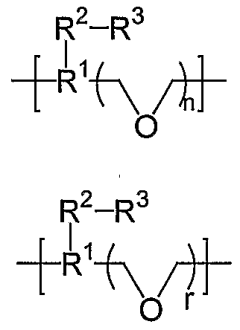
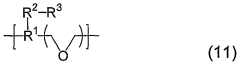
- The development of a solvent-free polymer electrolyte with ionophilic polyether-based coordinating channels, featuring oxygen-rich repeating units that dissociate metal salts, allowing for enhanced ion mobility and conductivity through decoupled ion motion, and the incorporation of ionic bridge polymers to reduce temperature-dependent conductivity.


Polymer electrolyte
PatentWO2006051323A1
Innovation
- The development of solvent-free polymer electrolytes with ionophilic polyether-based coordinating channels, comprising oxygen-rich repeating units that dissociate metal salts, creating de-coupled anion aggregates and facilitating enhanced ion mobility through coordinated pathways, along with the incorporation of ionic bridge polymers to maintain conductivity across temperature changes.


Characterization Techniques for Ion Clustering
The characterization of ion clustering in functional polymer electrolytes requires sophisticated analytical techniques to understand the complex interactions between ions and polymer matrices. Spectroscopic methods, particularly Fourier Transform Infrared Spectroscopy (FTIR) and Raman spectroscopy, have emerged as powerful tools for identifying ion-ion and ion-polymer interactions. These techniques can detect specific vibrational modes associated with ion pairs and larger aggregates, providing valuable insights into clustering phenomena at the molecular level.
X-ray scattering techniques, including Small-Angle X-ray Scattering (SAXS) and Wide-Angle X-ray Scattering (WAXS), offer complementary information about the spatial distribution of ionic clusters. SAXS is particularly effective for detecting nanoscale ionic domains, while WAXS provides information about crystalline structures that may form due to ion aggregation. The combination of these techniques enables researchers to construct comprehensive structural models of ion distribution within polymer matrices.
Nuclear Magnetic Resonance (NMR) spectroscopy represents another critical characterization approach, offering detailed information about ion mobility and local chemical environments. Techniques such as Pulsed-Field Gradient NMR can directly measure ion diffusion coefficients, while solid-state NMR methods can probe ion-polymer interactions that influence clustering behavior. The temperature dependence of NMR parameters often reveals valuable information about the thermodynamics of cluster formation and dissolution.
Advanced microscopy techniques have also contributed significantly to our understanding of ion clustering. Transmission Electron Microscopy (TEM) with energy-dispersive X-ray spectroscopy (EDX) mapping can visualize elemental distributions at nanometer resolution, while Atomic Force Microscopy (AFM) with specialized modes can detect mechanical and electrical property variations associated with ionic domains. These techniques provide direct visual evidence of clustering phenomena that complement spectroscopic data.
Computational methods have become increasingly important for interpreting experimental results and predicting clustering behavior. Molecular Dynamics (MD) simulations can model ion-ion and ion-polymer interactions at atomic resolution, while Density Functional Theory (DFT) calculations help interpret spectroscopic signatures. The integration of experimental data with computational models represents a powerful approach for developing comprehensive understanding of clustering mechanisms.
Electrochemical impedance spectroscopy (EIS) serves as a practical technique for assessing the impact of ion clustering on electrolyte performance. By measuring frequency-dependent impedance responses, researchers can extract information about ion transport processes across multiple length scales. The correlation between impedance parameters and structural characterization data provides crucial insights into structure-property relationships in functional polymer electrolytes.
X-ray scattering techniques, including Small-Angle X-ray Scattering (SAXS) and Wide-Angle X-ray Scattering (WAXS), offer complementary information about the spatial distribution of ionic clusters. SAXS is particularly effective for detecting nanoscale ionic domains, while WAXS provides information about crystalline structures that may form due to ion aggregation. The combination of these techniques enables researchers to construct comprehensive structural models of ion distribution within polymer matrices.
Nuclear Magnetic Resonance (NMR) spectroscopy represents another critical characterization approach, offering detailed information about ion mobility and local chemical environments. Techniques such as Pulsed-Field Gradient NMR can directly measure ion diffusion coefficients, while solid-state NMR methods can probe ion-polymer interactions that influence clustering behavior. The temperature dependence of NMR parameters often reveals valuable information about the thermodynamics of cluster formation and dissolution.
Advanced microscopy techniques have also contributed significantly to our understanding of ion clustering. Transmission Electron Microscopy (TEM) with energy-dispersive X-ray spectroscopy (EDX) mapping can visualize elemental distributions at nanometer resolution, while Atomic Force Microscopy (AFM) with specialized modes can detect mechanical and electrical property variations associated with ionic domains. These techniques provide direct visual evidence of clustering phenomena that complement spectroscopic data.
Computational methods have become increasingly important for interpreting experimental results and predicting clustering behavior. Molecular Dynamics (MD) simulations can model ion-ion and ion-polymer interactions at atomic resolution, while Density Functional Theory (DFT) calculations help interpret spectroscopic signatures. The integration of experimental data with computational models represents a powerful approach for developing comprehensive understanding of clustering mechanisms.
Electrochemical impedance spectroscopy (EIS) serves as a practical technique for assessing the impact of ion clustering on electrolyte performance. By measuring frequency-dependent impedance responses, researchers can extract information about ion transport processes across multiple length scales. The correlation between impedance parameters and structural characterization data provides crucial insights into structure-property relationships in functional polymer electrolytes.
Environmental Impact and Sustainability Considerations
The environmental impact of ion clustering behavior in functional polymer electrolytes extends beyond their technical performance to broader sustainability considerations. Polymer electrolytes offer significant environmental advantages over traditional liquid electrolytes, particularly in reducing the use of volatile organic compounds and toxic materials commonly found in conventional battery systems. The clustering behavior of ions directly influences the lifecycle environmental footprint of devices utilizing these materials, as more efficient ion transport typically translates to longer device lifespans and reduced waste generation.
When examining the production phase, polymer electrolytes with optimized ion clustering properties can be manufactured using less energy-intensive processes compared to traditional electrolyte systems. This reduction in energy consumption during manufacturing contributes to lower carbon emissions across the supply chain. Additionally, many functional polymer electrolytes can be designed using bio-based or recyclable polymers, further enhancing their sustainability profile when ion clustering behavior is properly controlled.
The operational environmental benefits are equally significant. Devices utilizing polymer electrolytes with well-managed ion clustering demonstrate improved energy efficiency, directly reducing electricity consumption and associated carbon emissions during use. This efficiency gain is particularly valuable in renewable energy storage applications, where polymer electrolytes with minimal clustering effects can enhance the performance of grid storage systems and contribute to broader decarbonization efforts.
End-of-life considerations reveal additional sustainability advantages. Many polymer electrolyte systems can be designed for easier disassembly and material recovery compared to liquid electrolyte systems. The stability of ion clusters during recycling processes can determine whether valuable materials like lithium can be effectively recovered. Research into reversible ion clustering mechanisms shows promise for creating self-healing electrolyte systems that could significantly extend product lifespans.
Regulatory frameworks worldwide are increasingly emphasizing the importance of sustainable materials in energy storage and electronic applications. Polymer electrolytes with controlled ion clustering behavior can help manufacturers meet stringent environmental regulations, particularly those targeting the reduction of hazardous substances and promoting circular economy principles. Future research directions should focus on developing ion clustering control mechanisms that simultaneously optimize performance while minimizing environmental impact throughout the entire product lifecycle.
When examining the production phase, polymer electrolytes with optimized ion clustering properties can be manufactured using less energy-intensive processes compared to traditional electrolyte systems. This reduction in energy consumption during manufacturing contributes to lower carbon emissions across the supply chain. Additionally, many functional polymer electrolytes can be designed using bio-based or recyclable polymers, further enhancing their sustainability profile when ion clustering behavior is properly controlled.
The operational environmental benefits are equally significant. Devices utilizing polymer electrolytes with well-managed ion clustering demonstrate improved energy efficiency, directly reducing electricity consumption and associated carbon emissions during use. This efficiency gain is particularly valuable in renewable energy storage applications, where polymer electrolytes with minimal clustering effects can enhance the performance of grid storage systems and contribute to broader decarbonization efforts.
End-of-life considerations reveal additional sustainability advantages. Many polymer electrolyte systems can be designed for easier disassembly and material recovery compared to liquid electrolyte systems. The stability of ion clusters during recycling processes can determine whether valuable materials like lithium can be effectively recovered. Research into reversible ion clustering mechanisms shows promise for creating self-healing electrolyte systems that could significantly extend product lifespans.
Regulatory frameworks worldwide are increasingly emphasizing the importance of sustainable materials in energy storage and electronic applications. Polymer electrolytes with controlled ion clustering behavior can help manufacturers meet stringent environmental regulations, particularly those targeting the reduction of hazardous substances and promoting circular economy principles. Future research directions should focus on developing ion clustering control mechanisms that simultaneously optimize performance while minimizing environmental impact throughout the entire product lifecycle.
Unlock deeper insights with Patsnap Eureka Quick Research — get a full tech report to explore trends and direct your research. Try now!
Generate Your Research Report Instantly with AI Agent
Supercharge your innovation with Patsnap Eureka AI Agent Platform!