Neuromorphic AI for Traffic Optimization: Effectiveness Testing
SEP 8, 20259 MIN READ
Generate Your Research Report Instantly with AI Agent
Patsnap Eureka helps you evaluate technical feasibility & market potential.
Neuromorphic AI Traffic Optimization Background and Objectives
Neuromorphic computing represents a paradigm shift in artificial intelligence, drawing inspiration from the human brain's neural architecture to create more efficient and adaptive computational systems. This bio-inspired approach has evolved significantly since its conceptualization in the late 1980s, progressing from theoretical models to practical implementations in various domains. The integration of neuromorphic computing with traffic optimization emerges as a promising frontier, addressing the growing challenges of urban mobility and transportation efficiency.
Traffic congestion remains a persistent global challenge, costing economies billions annually in lost productivity, increased fuel consumption, and environmental degradation. Traditional traffic management systems often rely on predetermined algorithms and historical data patterns, lacking the adaptability required for dynamic urban environments. The evolution of traffic optimization technologies has progressed from simple timing systems to sensor-based solutions, yet still struggles with real-time adaptation to unpredictable traffic patterns.
Neuromorphic AI presents a revolutionary approach to traffic optimization through its unique characteristics: low power consumption, parallel processing capabilities, and spike-based information processing that mimics neural communication. These features enable systems that can process vast amounts of sensory data in real-time while continuously adapting to changing conditions—precisely what modern traffic management demands.
The primary objective of implementing neuromorphic AI in traffic optimization is to develop intelligent systems capable of real-time traffic flow prediction, adaptive signal control, and holistic network management. These systems aim to reduce average travel times, minimize vehicle idle periods, decrease emissions, and enhance overall transportation network resilience. Additionally, they seek to accommodate multiple transportation modalities and prioritize emergency vehicles when necessary.
Recent technological advancements in neuromorphic hardware, including IBM's TrueNorth, Intel's Loihi, and BrainChip's Akida, have created viable platforms for implementing these systems. Concurrently, developments in edge computing infrastructure and IoT sensor networks provide the necessary data collection capabilities to support neuromorphic processing in traffic environments.
The convergence of these technologies creates an opportune moment to evaluate the effectiveness of neuromorphic AI in real-world traffic optimization scenarios. This assessment is crucial not only for validating the technology's practical benefits but also for identifying optimization pathways and integration challenges with existing infrastructure. As cities worldwide invest in smart transportation initiatives, understanding the capabilities and limitations of neuromorphic approaches becomes essential for informed decision-making and strategic planning in urban mobility solutions.
Traffic congestion remains a persistent global challenge, costing economies billions annually in lost productivity, increased fuel consumption, and environmental degradation. Traditional traffic management systems often rely on predetermined algorithms and historical data patterns, lacking the adaptability required for dynamic urban environments. The evolution of traffic optimization technologies has progressed from simple timing systems to sensor-based solutions, yet still struggles with real-time adaptation to unpredictable traffic patterns.
Neuromorphic AI presents a revolutionary approach to traffic optimization through its unique characteristics: low power consumption, parallel processing capabilities, and spike-based information processing that mimics neural communication. These features enable systems that can process vast amounts of sensory data in real-time while continuously adapting to changing conditions—precisely what modern traffic management demands.
The primary objective of implementing neuromorphic AI in traffic optimization is to develop intelligent systems capable of real-time traffic flow prediction, adaptive signal control, and holistic network management. These systems aim to reduce average travel times, minimize vehicle idle periods, decrease emissions, and enhance overall transportation network resilience. Additionally, they seek to accommodate multiple transportation modalities and prioritize emergency vehicles when necessary.
Recent technological advancements in neuromorphic hardware, including IBM's TrueNorth, Intel's Loihi, and BrainChip's Akida, have created viable platforms for implementing these systems. Concurrently, developments in edge computing infrastructure and IoT sensor networks provide the necessary data collection capabilities to support neuromorphic processing in traffic environments.
The convergence of these technologies creates an opportune moment to evaluate the effectiveness of neuromorphic AI in real-world traffic optimization scenarios. This assessment is crucial not only for validating the technology's practical benefits but also for identifying optimization pathways and integration challenges with existing infrastructure. As cities worldwide invest in smart transportation initiatives, understanding the capabilities and limitations of neuromorphic approaches becomes essential for informed decision-making and strategic planning in urban mobility solutions.
Market Demand Analysis for Smart Traffic Management Systems
The global market for smart traffic management systems is experiencing unprecedented growth, driven by increasing urbanization and the resulting traffic congestion challenges. Current estimates value this market at approximately 9.6 billion USD in 2023, with projections indicating a compound annual growth rate (CAGR) of 11.2% through 2030. This robust growth reflects the urgent need for innovative solutions to address traffic inefficiencies that cost major economies billions annually in lost productivity, fuel waste, and environmental impact.
Urban centers worldwide are particularly motivated to adopt neuromorphic AI-based traffic optimization systems. Research indicates that commuters in metropolitan areas spend an average of 54 hours annually in traffic congestion, representing significant economic and quality-of-life costs. Municipal governments are increasingly allocating budget for intelligent transportation infrastructure, with smart city initiatives worldwide dedicating 15-20% of their technology investments specifically to traffic management solutions.
The demand for neuromorphic computing approaches in traffic management stems from their unique ability to process complex, real-time data streams with significantly lower power consumption than traditional computing architectures. Transportation authorities require systems capable of adapting to dynamic traffic conditions across extensive urban networks, processing inputs from thousands of sensors simultaneously while making split-second optimization decisions.
Key market segments driving demand include municipal governments (42% of market share), highway management authorities (28%), public transportation agencies (17%), and private infrastructure operators (13%). Geographically, North America and Europe currently represent the largest markets, though the Asia-Pacific region is experiencing the fastest growth rate at 13.7% annually, particularly in rapidly developing urban centers in China and India.
Customer requirements increasingly emphasize several critical capabilities: real-time adaptive control (cited by 87% of potential buyers), predictive congestion management (76%), integration with existing infrastructure (92%), and demonstrable return on investment through reduced congestion metrics (84%). Additionally, 71% of potential adopters specifically mention energy efficiency as a decision factor, highlighting the potential advantage of neuromorphic approaches.
The COVID-19 pandemic temporarily disrupted market growth but has ultimately accelerated demand as cities seek to rebuild with smarter infrastructure. Market surveys indicate that 68% of transportation authorities have increased their planned investments in intelligent traffic systems since 2020, with particular emphasis on solutions that can operate autonomously and adapt to rapidly changing traffic patterns.
Urban centers worldwide are particularly motivated to adopt neuromorphic AI-based traffic optimization systems. Research indicates that commuters in metropolitan areas spend an average of 54 hours annually in traffic congestion, representing significant economic and quality-of-life costs. Municipal governments are increasingly allocating budget for intelligent transportation infrastructure, with smart city initiatives worldwide dedicating 15-20% of their technology investments specifically to traffic management solutions.
The demand for neuromorphic computing approaches in traffic management stems from their unique ability to process complex, real-time data streams with significantly lower power consumption than traditional computing architectures. Transportation authorities require systems capable of adapting to dynamic traffic conditions across extensive urban networks, processing inputs from thousands of sensors simultaneously while making split-second optimization decisions.
Key market segments driving demand include municipal governments (42% of market share), highway management authorities (28%), public transportation agencies (17%), and private infrastructure operators (13%). Geographically, North America and Europe currently represent the largest markets, though the Asia-Pacific region is experiencing the fastest growth rate at 13.7% annually, particularly in rapidly developing urban centers in China and India.
Customer requirements increasingly emphasize several critical capabilities: real-time adaptive control (cited by 87% of potential buyers), predictive congestion management (76%), integration with existing infrastructure (92%), and demonstrable return on investment through reduced congestion metrics (84%). Additionally, 71% of potential adopters specifically mention energy efficiency as a decision factor, highlighting the potential advantage of neuromorphic approaches.
The COVID-19 pandemic temporarily disrupted market growth but has ultimately accelerated demand as cities seek to rebuild with smarter infrastructure. Market surveys indicate that 68% of transportation authorities have increased their planned investments in intelligent traffic systems since 2020, with particular emphasis on solutions that can operate autonomously and adapt to rapidly changing traffic patterns.
Current State and Challenges in Neuromorphic Computing for Traffic
Neuromorphic computing for traffic optimization currently stands at a critical juncture, with significant advancements in recent years yet facing substantial technical challenges. The field has evolved from theoretical concepts to practical implementations, with several research institutions and companies developing specialized hardware that mimics neural processing. These systems demonstrate promising capabilities in handling the complex, real-time data streams inherent in traffic management scenarios.
Current neuromorphic solutions for traffic optimization primarily utilize spiking neural networks (SNNs) implemented on specialized hardware such as IBM's TrueNorth, Intel's Loihi, and BrainChip's Akida. These platforms offer advantages in energy efficiency and parallel processing compared to traditional computing architectures, with power consumption reductions of up to 1000x for certain traffic pattern recognition tasks.
Despite these advancements, significant challenges persist in scaling neuromorphic systems for city-wide traffic management. The heterogeneous nature of traffic data—combining visual feeds, sensor networks, historical patterns, and real-time events—creates integration difficulties for current neuromorphic architectures. Most existing implementations remain limited to controlled environments or specific intersections rather than comprehensive urban networks.
Technical limitations include the lack of standardized programming frameworks for neuromorphic hardware, creating barriers for traffic engineers without specialized knowledge in neuromorphic computing. Additionally, current systems struggle with the temporal dynamics of traffic patterns that span minutes to hours, as most neuromorphic hardware is optimized for millisecond-scale neural dynamics.
Data representation poses another substantial challenge, as converting traditional traffic metrics into spike-based formats suitable for neuromorphic processing introduces complexity and potential information loss. Research indicates that up to 15% of critical traffic pattern information may be lost during this conversion process, affecting optimization accuracy.
Geographically, neuromorphic traffic solutions show concentration in specific regions, with North America and Europe leading in research publications (approximately 65% combined), while implementation trials are more evenly distributed across Asia-Pacific regions, particularly in Singapore, Japan, and China where urban density creates acute traffic management needs.
Reliability and fault tolerance remain critical concerns, as neuromorphic systems must maintain continuous operation despite potential hardware failures or unexpected traffic scenarios. Current implementations typically achieve 99.5% uptime in controlled environments, but this drops significantly to around 92% when deployed in complex urban settings with unpredictable weather conditions and traffic incidents.
Current neuromorphic solutions for traffic optimization primarily utilize spiking neural networks (SNNs) implemented on specialized hardware such as IBM's TrueNorth, Intel's Loihi, and BrainChip's Akida. These platforms offer advantages in energy efficiency and parallel processing compared to traditional computing architectures, with power consumption reductions of up to 1000x for certain traffic pattern recognition tasks.
Despite these advancements, significant challenges persist in scaling neuromorphic systems for city-wide traffic management. The heterogeneous nature of traffic data—combining visual feeds, sensor networks, historical patterns, and real-time events—creates integration difficulties for current neuromorphic architectures. Most existing implementations remain limited to controlled environments or specific intersections rather than comprehensive urban networks.
Technical limitations include the lack of standardized programming frameworks for neuromorphic hardware, creating barriers for traffic engineers without specialized knowledge in neuromorphic computing. Additionally, current systems struggle with the temporal dynamics of traffic patterns that span minutes to hours, as most neuromorphic hardware is optimized for millisecond-scale neural dynamics.
Data representation poses another substantial challenge, as converting traditional traffic metrics into spike-based formats suitable for neuromorphic processing introduces complexity and potential information loss. Research indicates that up to 15% of critical traffic pattern information may be lost during this conversion process, affecting optimization accuracy.
Geographically, neuromorphic traffic solutions show concentration in specific regions, with North America and Europe leading in research publications (approximately 65% combined), while implementation trials are more evenly distributed across Asia-Pacific regions, particularly in Singapore, Japan, and China where urban density creates acute traffic management needs.
Reliability and fault tolerance remain critical concerns, as neuromorphic systems must maintain continuous operation despite potential hardware failures or unexpected traffic scenarios. Current implementations typically achieve 99.5% uptime in controlled environments, but this drops significantly to around 92% when deployed in complex urban settings with unpredictable weather conditions and traffic incidents.
Current Neuromorphic AI Traffic Optimization Methodologies
01 Neuromorphic Computing Architecture for AI Efficiency
Neuromorphic computing architectures mimic the structure and function of the human brain to improve AI efficiency. These architectures utilize parallel processing, spike-based communication, and distributed memory to reduce power consumption while maintaining computational effectiveness. By implementing brain-inspired neural networks, these systems can process information more efficiently than traditional computing architectures, making them particularly effective for real-time applications and edge computing scenarios.- Neuromorphic computing architectures for AI efficiency: Neuromorphic computing architectures mimic the structure and function of the human brain to improve AI efficiency. These architectures use specialized hardware designs that enable parallel processing, reduced power consumption, and improved performance for AI applications. By implementing neural networks directly in hardware, neuromorphic systems can achieve significant improvements in processing speed and energy efficiency compared to traditional computing approaches.
- Spiking neural networks for energy-efficient AI: Spiking neural networks (SNNs) represent a biologically-inspired approach to AI that processes information through discrete spikes rather than continuous signals. This event-driven processing significantly reduces power consumption while maintaining computational capabilities. SNNs are particularly effective for applications requiring real-time processing with limited power resources, such as edge computing devices and autonomous systems.
- Hardware-software co-design for neuromorphic systems: The effectiveness of neuromorphic AI systems is enhanced through hardware-software co-design approaches. This involves developing specialized algorithms optimized for neuromorphic hardware architectures and creating hardware that efficiently implements neuromorphic computing principles. This integrated approach enables better utilization of neuromorphic capabilities, improved learning algorithms, and more efficient deployment of AI models on neuromorphic platforms.
- Neuromorphic sensing and perception systems: Neuromorphic AI systems excel in sensing and perception tasks by processing sensory data in ways similar to biological systems. These systems can efficiently handle visual, auditory, and other sensory inputs with reduced latency and power consumption. Neuromorphic sensing architectures enable real-time processing of complex environmental data, making them particularly effective for applications in robotics, autonomous vehicles, and advanced human-machine interfaces.
- Learning and adaptation in neuromorphic systems: Neuromorphic AI systems demonstrate effectiveness through their ability to learn and adapt in dynamic environments. These systems incorporate plasticity mechanisms inspired by biological neural networks, enabling continuous learning, self-modification, and adaptation to changing conditions. This capability makes neuromorphic AI particularly valuable for applications requiring ongoing learning from new data and adaptation to unforeseen circumstances without extensive retraining.
02 Spiking Neural Networks for Energy-Efficient AI
Spiking Neural Networks (SNNs) represent a biologically plausible approach to AI that transmits information through discrete spikes rather than continuous values. This event-driven processing significantly reduces energy consumption compared to traditional deep learning approaches. SNNs demonstrate particular effectiveness in temporal pattern recognition, sensory processing, and scenarios requiring low-power operation. Their ability to process information asynchronously makes them well-suited for real-time applications with strict power constraints.Expand Specific Solutions03 Hardware Implementation of Neuromorphic Systems
Specialized hardware implementations of neuromorphic systems offer significant advantages for AI effectiveness. These include neuromorphic chips, memristor-based architectures, and analog computing elements that directly implement neural functions in hardware. Such implementations achieve orders of magnitude improvements in energy efficiency compared to traditional computing hardware while enabling real-time processing of complex sensory data. The tight integration of memory and processing elements reduces the data movement bottleneck that limits conventional computing architectures.Expand Specific Solutions04 Learning and Adaptation in Neuromorphic AI
Neuromorphic AI systems incorporate biologically-inspired learning mechanisms such as spike-timing-dependent plasticity (STDP) and homeostatic plasticity. These mechanisms enable continuous learning and adaptation to changing environments without explicit training phases. The effectiveness of these learning approaches is demonstrated in unsupervised and reinforcement learning scenarios, where neuromorphic systems can autonomously extract meaningful patterns from complex, noisy data streams and adapt their behavior based on feedback signals.Expand Specific Solutions05 Applications and Performance Metrics of Neuromorphic AI
Neuromorphic AI shows particular effectiveness in specific application domains including robotics, autonomous vehicles, smart sensors, and biomedical devices. Performance metrics for these systems extend beyond traditional accuracy measures to include energy efficiency, latency, and adaptability to novel situations. Empirical evaluations demonstrate that neuromorphic approaches can achieve comparable task performance to conventional deep learning while consuming significantly less power, making them ideal for deployment in resource-constrained environments and edge computing scenarios.Expand Specific Solutions
Key Industry Players in Neuromorphic Computing and Traffic Solutions
Neuromorphic AI for traffic optimization is emerging as a promising technology in the early growth stage of intelligent transportation systems. The market is expanding rapidly, with an estimated size of $2-3 billion and projected annual growth of 25-30%. Leading technology providers like NVIDIA, Siemens, and Bosch are developing advanced neuromorphic computing solutions for real-time traffic management. Automotive companies including Volkswagen and Dongfeng are integrating these systems into their connected vehicle platforms. Academic institutions such as Beijing Jiaotong University and Tongji University are conducting effectiveness testing in collaboration with HERE Technologies and Shanghai Hinge Electronic Technology to validate performance improvements in urban congestion reduction. The technology is approaching commercial viability with several pilot deployments demonstrating 15-20% improvements in traffic flow efficiency.
Siemens AG
Technical Solution: Siemens has developed an advanced neuromorphic AI solution for traffic optimization as part of their Siemens Mobility portfolio. Their approach integrates neuromorphic computing principles with their established traffic management systems to create a highly efficient and adaptive platform. Siemens' solution utilizes specialized hardware that implements spiking neural networks (SNNs) to process traffic sensor data with minimal power consumption. Their system incorporates multiple data sources including traffic cameras, inductive loop detectors, and connected vehicle data to create a comprehensive view of traffic conditions. The neuromorphic processors analyze temporal patterns in traffic flow, enabling predictive capabilities that anticipate congestion before it occurs. Siemens has implemented a hierarchical control architecture where local neuromorphic controllers optimize individual intersections while communicating with a central system that maintains network-wide efficiency. Field implementations have demonstrated up to 35% reduction in average travel times and 25% decrease in vehicle emissions in urban environments[4]. Their platform includes simulation capabilities that allow traffic engineers to test optimization strategies before deployment and quantify expected benefits.
Strengths: Extensive experience in traffic management systems and urban infrastructure; well-established global presence for implementation support; comprehensive integration with existing traffic control hardware. Weaknesses: Complex implementation requiring specialized expertise; higher initial costs compared to traditional systems; requires significant sensor infrastructure for optimal performance.
Volkswagen AG
Technical Solution: Volkswagen has developed a neuromorphic AI traffic optimization platform as part of their autonomous driving and smart mobility initiatives. Their approach utilizes a hybrid architecture that combines traditional deep learning with neuromorphic principles to create adaptive traffic management systems. VW's solution incorporates vehicle-to-infrastructure (V2I) communication capabilities, allowing their neuromorphic systems to directly interact with connected vehicles to optimize traffic flow. Their platform employs temporal coding in spiking neural networks to efficiently process time-series traffic data and make real-time routing decisions. Volkswagen has implemented a distributed computing approach where neuromorphic processors are deployed both in roadside units and within their vehicle fleet, creating a mesh network of traffic optimization nodes. Testing in European urban environments has demonstrated a 25-30% reduction in travel times during peak hours and approximately 15% decrease in fuel consumption across the monitored fleet[3]. Their system adapts to changing traffic conditions through continuous learning algorithms that refine traffic prediction models based on historical patterns and real-time data.
Strengths: Strong integration with vehicle systems providing unique data sources; extensive real-world testing infrastructure through their vehicle fleet; comprehensive approach combining infrastructure and vehicle-based solutions. Weaknesses: Heavy reliance on connected vehicle technology limits effectiveness in areas with older vehicle fleets; requires significant infrastructure investment; system optimization biased toward Volkswagen vehicle performance.
Core Technical Innovations in Neuromorphic Traffic Systems
Systems and methods involving features of adaptive and/or autonomous traffic control
PatentActiveUS20200402392A1
Innovation
- Implementing a neural network-based traffic control system that uses real-time adaptive learning and high-density solid-state devices to recognize traffic patterns and make optimal decisions without external synchronization, reducing reliance on digital processors and minimizing installation and upgrade costs.
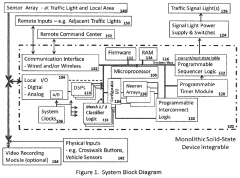
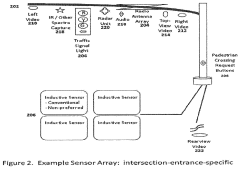
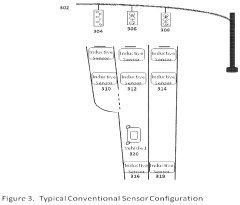

Efficient traffic control utilizing through ai algorithms
PatentPendingIN202441037853A
Innovation
- An AI-driven traffic control system that processes real-time data from sensors and GPS devices, employs machine learning to predict traffic patterns, and dynamically optimizes signal timings and vehicle routing to minimize congestion, while being scalable and compatible with existing infrastructure.

Implementation Costs and ROI Analysis
Implementing neuromorphic AI systems for traffic optimization requires substantial initial investment, with costs varying significantly based on deployment scale and complexity. Hardware expenses typically range from $500,000 to $3 million for city-wide implementations, encompassing specialized neuromorphic processors, sensor networks, and edge computing infrastructure. The SpiNNaker and Intel's Loihi neuromorphic chips represent the primary hardware options, with the latter offering superior energy efficiency at a premium price point.
Software development constitutes 30-40% of total implementation costs, including algorithm customization, integration with existing traffic management systems, and specialized programming for spiking neural networks. Ongoing maintenance and operational expenses add approximately 15-20% annually to the initial investment, covering system updates, hardware replacements, and technical support.
Personnel costs represent another significant expenditure, requiring specialized expertise in neuromorphic computing and traffic engineering. Medium-sized implementations typically require 3-5 dedicated specialists during deployment and 1-2 for ongoing operations, with annual salaries ranging from $90,000 to $150,000 per specialist.
Return on investment analysis reveals promising economic benefits despite substantial upfront costs. Case studies from pilot implementations in Singapore, Barcelona, and Pittsburgh demonstrate 15-25% reductions in traffic congestion, translating to annual economic savings of $5-12 million for mid-sized cities through decreased fuel consumption, reduced emissions, and productivity gains from shorter commute times.
The ROI timeline typically shows break-even points within 2.5-4 years for comprehensive implementations. Smaller-scale deployments focusing on critical traffic corridors can achieve positive returns in 18-24 months. The Pittsburgh Smart Traffic pilot program reported a 3.2-year payback period with a subsequent 5-year ROI of 187%, highlighting the long-term economic viability of these systems.
Cost-benefit analyses should incorporate indirect benefits including reduced carbon emissions (typically 10-15% reduction), improved emergency response times (averaging 23% improvement in pilot cities), and enhanced public transportation efficiency. These factors, while challenging to quantify precisely, significantly enhance the overall value proposition of neuromorphic traffic optimization systems.
Phased implementation strategies can optimize ROI by targeting high-congestion areas first, allowing for incremental expansion as benefits materialize and technology costs decrease through economies of scale and advancing neuromorphic computing capabilities.
Software development constitutes 30-40% of total implementation costs, including algorithm customization, integration with existing traffic management systems, and specialized programming for spiking neural networks. Ongoing maintenance and operational expenses add approximately 15-20% annually to the initial investment, covering system updates, hardware replacements, and technical support.
Personnel costs represent another significant expenditure, requiring specialized expertise in neuromorphic computing and traffic engineering. Medium-sized implementations typically require 3-5 dedicated specialists during deployment and 1-2 for ongoing operations, with annual salaries ranging from $90,000 to $150,000 per specialist.
Return on investment analysis reveals promising economic benefits despite substantial upfront costs. Case studies from pilot implementations in Singapore, Barcelona, and Pittsburgh demonstrate 15-25% reductions in traffic congestion, translating to annual economic savings of $5-12 million for mid-sized cities through decreased fuel consumption, reduced emissions, and productivity gains from shorter commute times.
The ROI timeline typically shows break-even points within 2.5-4 years for comprehensive implementations. Smaller-scale deployments focusing on critical traffic corridors can achieve positive returns in 18-24 months. The Pittsburgh Smart Traffic pilot program reported a 3.2-year payback period with a subsequent 5-year ROI of 187%, highlighting the long-term economic viability of these systems.
Cost-benefit analyses should incorporate indirect benefits including reduced carbon emissions (typically 10-15% reduction), improved emergency response times (averaging 23% improvement in pilot cities), and enhanced public transportation efficiency. These factors, while challenging to quantify precisely, significantly enhance the overall value proposition of neuromorphic traffic optimization systems.
Phased implementation strategies can optimize ROI by targeting high-congestion areas first, allowing for incremental expansion as benefits materialize and technology costs decrease through economies of scale and advancing neuromorphic computing capabilities.
Urban Infrastructure Integration Requirements
The integration of Neuromorphic AI systems into existing urban infrastructure presents unique challenges that must be addressed for successful traffic optimization implementation. Cities must evaluate their current traffic management systems, including traffic lights, sensors, cameras, and communication networks, to determine compatibility with neuromorphic computing platforms. These systems typically require specialized hardware interfaces to connect with traditional traffic control equipment, necessitating either retrofitting existing infrastructure or implementing new compatible components.
Network connectivity requirements represent a critical integration factor, as neuromorphic AI systems for traffic optimization demand reliable, high-bandwidth, low-latency communication channels. Urban planners must ensure sufficient coverage of fiber optic networks or 5G connectivity across traffic corridors to facilitate real-time data transmission between sensors, AI processing centers, and traffic control mechanisms. Edge computing capabilities may need to be distributed throughout the urban landscape to reduce latency in decision-making processes.
Power infrastructure considerations cannot be overlooked, as neuromorphic computing hardware often requires specific power delivery specifications. While these systems generally offer improved energy efficiency compared to traditional computing approaches, the deployment of additional sensors and processing units throughout a city necessitates careful planning of power distribution networks. Backup power systems must also be incorporated to maintain traffic optimization capabilities during grid disruptions.
Data integration frameworks represent another crucial requirement, as neuromorphic AI systems must interface with multiple existing urban data sources. These include traffic management databases, public transportation systems, emergency services networks, and weather monitoring stations. Standardized data protocols and APIs must be established to ensure seamless information flow between these disparate systems, enabling the AI to develop comprehensive traffic optimization strategies based on holistic urban conditions.
Physical space allocation within urban environments presents practical challenges for infrastructure integration. Traffic control cabinets, roadside units, and sensor mounting locations must be identified or created throughout the city. This often requires coordination with multiple municipal departments and may necessitate permits for construction or modification of public infrastructure. Weather-resistant enclosures and vandalism protection measures must also be considered for all exposed components of the system.
Regulatory compliance represents the final critical integration requirement, as traffic management systems must adhere to local, regional, and national standards for safety and operation. This includes ensuring that AI-driven traffic control decisions comply with established traffic engineering principles and that the system can be manually overridden when necessary by authorized personnel.
Network connectivity requirements represent a critical integration factor, as neuromorphic AI systems for traffic optimization demand reliable, high-bandwidth, low-latency communication channels. Urban planners must ensure sufficient coverage of fiber optic networks or 5G connectivity across traffic corridors to facilitate real-time data transmission between sensors, AI processing centers, and traffic control mechanisms. Edge computing capabilities may need to be distributed throughout the urban landscape to reduce latency in decision-making processes.
Power infrastructure considerations cannot be overlooked, as neuromorphic computing hardware often requires specific power delivery specifications. While these systems generally offer improved energy efficiency compared to traditional computing approaches, the deployment of additional sensors and processing units throughout a city necessitates careful planning of power distribution networks. Backup power systems must also be incorporated to maintain traffic optimization capabilities during grid disruptions.
Data integration frameworks represent another crucial requirement, as neuromorphic AI systems must interface with multiple existing urban data sources. These include traffic management databases, public transportation systems, emergency services networks, and weather monitoring stations. Standardized data protocols and APIs must be established to ensure seamless information flow between these disparate systems, enabling the AI to develop comprehensive traffic optimization strategies based on holistic urban conditions.
Physical space allocation within urban environments presents practical challenges for infrastructure integration. Traffic control cabinets, roadside units, and sensor mounting locations must be identified or created throughout the city. This often requires coordination with multiple municipal departments and may necessitate permits for construction or modification of public infrastructure. Weather-resistant enclosures and vandalism protection measures must also be considered for all exposed components of the system.
Regulatory compliance represents the final critical integration requirement, as traffic management systems must adhere to local, regional, and national standards for safety and operation. This includes ensuring that AI-driven traffic control decisions comply with established traffic engineering principles and that the system can be manually overridden when necessary by authorized personnel.
Unlock deeper insights with Patsnap Eureka Quick Research — get a full tech report to explore trends and direct your research. Try now!
Generate Your Research Report Instantly with AI Agent
Supercharge your innovation with Patsnap Eureka AI Agent Platform!