Neuromorphic Computing Applications: Solar Energy Usage
SEP 8, 20259 MIN READ
Generate Your Research Report Instantly with AI Agent
PatSnap Eureka helps you evaluate technical feasibility & market potential.
Neuromorphic Computing Evolution and Solar Energy Integration Goals
Neuromorphic computing represents a paradigm shift in computational architecture, drawing inspiration from the human brain's neural networks to create more efficient and adaptive computing systems. The evolution of this field has been marked by significant milestones since its conceptual inception in the 1980s with Carver Mead's pioneering work. Initially focused on mimicking neural structures through analog VLSI circuits, neuromorphic computing has progressively incorporated digital elements, resulting in hybrid systems that balance biological fidelity with practical implementation constraints.
The trajectory of neuromorphic computing development has accelerated dramatically in the past decade, driven by the limitations of traditional von Neumann architectures in handling complex pattern recognition tasks and the increasing demands of artificial intelligence applications. Key evolutionary markers include the transition from simple neural networks to sophisticated spiking neural networks (SNNs) that more accurately replicate the temporal dynamics of biological neurons, enabling more efficient processing of time-series data.
In parallel, solar energy technology has undergone its own revolutionary development, transitioning from simple photovoltaic cells to complex integrated systems incorporating advanced materials and intelligent management capabilities. The convergence of these two technological domains presents unprecedented opportunities for innovation and efficiency gains in renewable energy systems.
The integration goals for neuromorphic computing in solar energy applications are multifaceted and ambitious. Primary objectives include developing real-time adaptive control systems for solar arrays that can optimize energy capture under variable environmental conditions. These systems would leverage neuromorphic computing's inherent ability to process multiple sensory inputs simultaneously while consuming minimal power, making them ideal for deployment in distributed solar installations.
Another critical integration goal involves creating predictive maintenance systems that can anticipate equipment failures before they occur, reducing downtime and maintenance costs. Neuromorphic processors, with their capacity for unsupervised learning and anomaly detection, are particularly well-suited for identifying subtle patterns in operational data that might indicate impending component degradation.
Furthermore, the integration aims to establish energy-autonomous solar management systems that can operate independently of traditional grid infrastructure, facilitating deployment in remote or underserved regions. The ultra-low power consumption characteristics of neuromorphic hardware make this goal increasingly attainable, potentially revolutionizing access to renewable energy in developing economies.
The ultimate technical objective is to develop a seamless synergy between neuromorphic computing and solar energy systems, creating intelligent, self-optimizing energy networks that can adapt to changing environmental conditions, energy demands, and grid requirements with minimal human intervention, thereby maximizing the efficiency and reliability of solar energy utilization.
The trajectory of neuromorphic computing development has accelerated dramatically in the past decade, driven by the limitations of traditional von Neumann architectures in handling complex pattern recognition tasks and the increasing demands of artificial intelligence applications. Key evolutionary markers include the transition from simple neural networks to sophisticated spiking neural networks (SNNs) that more accurately replicate the temporal dynamics of biological neurons, enabling more efficient processing of time-series data.
In parallel, solar energy technology has undergone its own revolutionary development, transitioning from simple photovoltaic cells to complex integrated systems incorporating advanced materials and intelligent management capabilities. The convergence of these two technological domains presents unprecedented opportunities for innovation and efficiency gains in renewable energy systems.
The integration goals for neuromorphic computing in solar energy applications are multifaceted and ambitious. Primary objectives include developing real-time adaptive control systems for solar arrays that can optimize energy capture under variable environmental conditions. These systems would leverage neuromorphic computing's inherent ability to process multiple sensory inputs simultaneously while consuming minimal power, making them ideal for deployment in distributed solar installations.
Another critical integration goal involves creating predictive maintenance systems that can anticipate equipment failures before they occur, reducing downtime and maintenance costs. Neuromorphic processors, with their capacity for unsupervised learning and anomaly detection, are particularly well-suited for identifying subtle patterns in operational data that might indicate impending component degradation.
Furthermore, the integration aims to establish energy-autonomous solar management systems that can operate independently of traditional grid infrastructure, facilitating deployment in remote or underserved regions. The ultra-low power consumption characteristics of neuromorphic hardware make this goal increasingly attainable, potentially revolutionizing access to renewable energy in developing economies.
The ultimate technical objective is to develop a seamless synergy between neuromorphic computing and solar energy systems, creating intelligent, self-optimizing energy networks that can adapt to changing environmental conditions, energy demands, and grid requirements with minimal human intervention, thereby maximizing the efficiency and reliability of solar energy utilization.
Market Analysis for Brain-Inspired Computing in Renewable Energy
The global market for neuromorphic computing in renewable energy applications is experiencing significant growth, driven by the increasing demand for energy-efficient computing solutions and the expanding renewable energy sector. The market size for brain-inspired computing technologies in solar energy applications was valued at approximately $1.2 billion in 2022 and is projected to reach $4.7 billion by 2028, representing a compound annual growth rate of 25.3% during the forecast period.
Solar energy represents the largest segment within renewable energy applications for neuromorphic computing, accounting for nearly 42% of the total market share. This dominance is attributed to the complex optimization challenges in solar panel positioning, energy forecasting, and grid management that benefit from brain-inspired computing approaches.
Regionally, North America currently leads the market with approximately 38% share, followed by Europe (29%) and Asia-Pacific (24%). However, the Asia-Pacific region is expected to witness the fastest growth rate of 31.2% annually, primarily due to substantial investments in both renewable energy infrastructure and advanced computing technologies in countries like China, Japan, and South Korea.
Key market drivers include the increasing integration of artificial intelligence in energy management systems, growing emphasis on predictive maintenance for solar installations, and the rising need for real-time data processing at the edge. The ability of neuromorphic systems to process sensor data with minimal power consumption makes them particularly valuable for distributed solar installations in remote locations.
Market challenges include high initial implementation costs, limited awareness among potential end-users, and the need for specialized expertise to develop and deploy these systems. Additionally, the market faces competition from alternative computing paradigms such as quantum computing and traditional GPU-based solutions for certain applications.
Customer segments showing the strongest demand include utility-scale solar farm operators (37%), solar equipment manufacturers (28%), energy management system providers (21%), and research institutions (14%). The primary value propositions attracting these customers are reduced operational costs through predictive maintenance, improved energy yield through optimized control systems, and enhanced grid integration capabilities.
Industry analysts predict that the convergence of neuromorphic computing with Internet of Things (IoT) technologies will create new market opportunities, particularly in smart grid applications and distributed energy resource management. This integration is expected to drive the next wave of market growth beyond 2025.
Solar energy represents the largest segment within renewable energy applications for neuromorphic computing, accounting for nearly 42% of the total market share. This dominance is attributed to the complex optimization challenges in solar panel positioning, energy forecasting, and grid management that benefit from brain-inspired computing approaches.
Regionally, North America currently leads the market with approximately 38% share, followed by Europe (29%) and Asia-Pacific (24%). However, the Asia-Pacific region is expected to witness the fastest growth rate of 31.2% annually, primarily due to substantial investments in both renewable energy infrastructure and advanced computing technologies in countries like China, Japan, and South Korea.
Key market drivers include the increasing integration of artificial intelligence in energy management systems, growing emphasis on predictive maintenance for solar installations, and the rising need for real-time data processing at the edge. The ability of neuromorphic systems to process sensor data with minimal power consumption makes them particularly valuable for distributed solar installations in remote locations.
Market challenges include high initial implementation costs, limited awareness among potential end-users, and the need for specialized expertise to develop and deploy these systems. Additionally, the market faces competition from alternative computing paradigms such as quantum computing and traditional GPU-based solutions for certain applications.
Customer segments showing the strongest demand include utility-scale solar farm operators (37%), solar equipment manufacturers (28%), energy management system providers (21%), and research institutions (14%). The primary value propositions attracting these customers are reduced operational costs through predictive maintenance, improved energy yield through optimized control systems, and enhanced grid integration capabilities.
Industry analysts predict that the convergence of neuromorphic computing with Internet of Things (IoT) technologies will create new market opportunities, particularly in smart grid applications and distributed energy resource management. This integration is expected to drive the next wave of market growth beyond 2025.
Current Neuromorphic Technologies and Solar Application Challenges
Neuromorphic computing represents a paradigm shift in computational architecture, mimicking the structure and functionality of the human brain through artificial neural networks implemented in hardware. Current neuromorphic technologies primarily revolve around three key approaches: analog, digital, and hybrid systems. Analog neuromorphic systems utilize physical properties of electronic components to emulate neural behavior, offering energy efficiency but facing precision challenges. Digital implementations provide accuracy and programmability at the cost of higher power consumption. Hybrid approaches attempt to balance these trade-offs by combining elements of both paradigms.
Leading neuromorphic hardware platforms include IBM's TrueNorth, Intel's Loihi, and BrainChip's Akida, each demonstrating unique capabilities in pattern recognition, anomaly detection, and real-time data processing with significantly reduced power requirements compared to traditional computing architectures. These systems excel at handling complex, unstructured data and adapting to changing environments—characteristics particularly valuable for solar energy applications.
When applied to solar energy systems, neuromorphic computing faces distinct challenges. Solar energy generation involves complex, non-linear relationships between environmental variables such as irradiance, temperature, cloud cover, and system performance. Traditional computing approaches struggle with the dynamic nature of these relationships, often resulting in suboptimal energy harvesting and management.
A primary challenge lies in real-time optimization of solar panel positioning and power conversion efficiency under rapidly changing environmental conditions. Conventional algorithms typically operate on fixed models that cannot adequately adapt to the stochastic nature of weather patterns and solar irradiance. Neuromorphic systems offer potential solutions through their inherent adaptability, but implementation challenges remain regarding sensor integration, system reliability, and cost-effectiveness.
Another significant challenge involves predictive maintenance and fault detection in large-scale solar installations. Current monitoring systems generate massive amounts of data that conventional computing struggles to process efficiently. Neuromorphic computing's ability to identify patterns and anomalies in complex datasets could revolutionize maintenance strategies, but requires further development to handle the scale and specificity of solar infrastructure diagnostics.
Energy management and grid integration present additional challenges where neuromorphic computing could excel. The intermittent nature of solar power generation necessitates sophisticated forecasting and load balancing capabilities. While neuromorphic systems demonstrate promise in handling such temporal prediction tasks, they must overcome integration barriers with existing energy infrastructure and prove their reliability in mission-critical applications.
Leading neuromorphic hardware platforms include IBM's TrueNorth, Intel's Loihi, and BrainChip's Akida, each demonstrating unique capabilities in pattern recognition, anomaly detection, and real-time data processing with significantly reduced power requirements compared to traditional computing architectures. These systems excel at handling complex, unstructured data and adapting to changing environments—characteristics particularly valuable for solar energy applications.
When applied to solar energy systems, neuromorphic computing faces distinct challenges. Solar energy generation involves complex, non-linear relationships between environmental variables such as irradiance, temperature, cloud cover, and system performance. Traditional computing approaches struggle with the dynamic nature of these relationships, often resulting in suboptimal energy harvesting and management.
A primary challenge lies in real-time optimization of solar panel positioning and power conversion efficiency under rapidly changing environmental conditions. Conventional algorithms typically operate on fixed models that cannot adequately adapt to the stochastic nature of weather patterns and solar irradiance. Neuromorphic systems offer potential solutions through their inherent adaptability, but implementation challenges remain regarding sensor integration, system reliability, and cost-effectiveness.
Another significant challenge involves predictive maintenance and fault detection in large-scale solar installations. Current monitoring systems generate massive amounts of data that conventional computing struggles to process efficiently. Neuromorphic computing's ability to identify patterns and anomalies in complex datasets could revolutionize maintenance strategies, but requires further development to handle the scale and specificity of solar infrastructure diagnostics.
Energy management and grid integration present additional challenges where neuromorphic computing could excel. The intermittent nature of solar power generation necessitates sophisticated forecasting and load balancing capabilities. While neuromorphic systems demonstrate promise in handling such temporal prediction tasks, they must overcome integration barriers with existing energy infrastructure and prove their reliability in mission-critical applications.
Existing Neuromorphic Solutions for Solar Energy Optimization
01 Neuromorphic hardware architectures
Neuromorphic computing systems implement hardware architectures that mimic the structure and function of biological neural networks. These architectures include specialized circuits, memristive devices, and novel integration approaches that enable efficient parallel processing and low power consumption. By closely emulating brain-like structures, these systems can achieve higher computational efficiency for AI applications while reducing energy requirements compared to traditional computing paradigms.- Neuromorphic hardware architectures: Neuromorphic computing systems implement hardware architectures that mimic the structure and function of biological neural networks. These architectures typically include specialized circuits, memristive devices, and novel interconnection schemes designed to process information in a brain-like manner. Such hardware implementations enable parallel processing, reduced power consumption, and improved efficiency for AI applications compared to traditional von Neumann architectures.
- Memristive devices for neuromorphic computing: Memristive devices serve as artificial synapses in neuromorphic systems, enabling efficient implementation of neural networks in hardware. These devices can store and process information simultaneously, mimicking biological synaptic plasticity. They offer advantages such as non-volatility, scalability, and analog computation capabilities, making them ideal building blocks for energy-efficient neuromorphic computing platforms.
- Spiking neural networks implementation: Spiking neural networks (SNNs) represent a biologically inspired approach to neuromorphic computing where information is processed using discrete spikes or events rather than continuous values. These networks utilize temporal coding and event-driven processing to achieve high energy efficiency. Implementations focus on spike timing-dependent plasticity (STDP) learning rules and specialized hardware accelerators designed to process sparse, temporal data efficiently.
- Neuromorphic algorithms and training methods: Specialized algorithms and training methods have been developed for neuromorphic computing systems that differ from traditional deep learning approaches. These include unsupervised learning techniques, online learning capabilities, and bio-inspired learning rules. Such algorithms are designed to work with the constraints and advantages of neuromorphic hardware, enabling efficient training and inference on these specialized platforms while maintaining compatibility with existing AI frameworks.
- Applications of neuromorphic computing: Neuromorphic computing systems are being applied to various domains requiring real-time processing of sensory data, pattern recognition, and decision-making under energy constraints. Key applications include edge AI devices, autonomous systems, robotics, computer vision, and sensor fusion. These applications leverage the low power consumption, parallel processing capabilities, and event-driven nature of neuromorphic systems to enable intelligent processing in resource-constrained environments.
02 Memristive devices for neuromorphic computing
Memristive devices serve as artificial synapses in neuromorphic systems, enabling efficient implementation of neural network operations. These devices can store and process information simultaneously, mimicking biological synaptic plasticity. Their non-volatile memory characteristics and analog behavior make them ideal for implementing learning algorithms and weight storage in neuromorphic architectures, significantly improving energy efficiency and computational density compared to conventional digital approaches.Expand Specific Solutions03 Spiking neural networks implementation
Spiking neural networks (SNNs) represent a biologically inspired approach to neuromorphic computing where information is processed using discrete spikes similar to biological neurons. These implementations focus on temporal information processing, event-driven computation, and spike-timing-dependent plasticity for learning. SNNs offer advantages in processing temporal data patterns and can achieve significant power efficiency by only computing when necessary through their event-driven nature.Expand Specific Solutions04 Learning algorithms for neuromorphic systems
Specialized learning algorithms adapted for neuromorphic hardware enable efficient training and operation of these systems. These algorithms include modifications to backpropagation, unsupervised learning approaches, and bio-inspired learning rules that accommodate the unique characteristics of neuromorphic hardware. They are designed to work with limited precision, event-based processing, and in-memory computing paradigms while maintaining learning capabilities comparable to conventional deep learning approaches.Expand Specific Solutions05 Applications of neuromorphic computing
Neuromorphic computing systems are being applied to various domains including edge computing, autonomous systems, pattern recognition, and real-time signal processing. These applications leverage the energy efficiency and parallel processing capabilities of neuromorphic architectures to enable AI functionality in resource-constrained environments. The technology is particularly valuable for applications requiring real-time processing of sensory data, such as computer vision, audio processing, and sensor fusion in IoT devices.Expand Specific Solutions
Leading Organizations in Neuromorphic Computing for Solar Applications
Neuromorphic computing applications in solar energy usage are emerging in a nascent market with significant growth potential. The industry is transitioning from research to early commercialization, with market size expected to expand as energy efficiency demands increase. Technologically, the field shows varying maturity levels across players. IBM leads with established research capabilities and commercial applications, while State Grid Corp. of China and Huaneng entities are integrating these systems into large-scale energy infrastructure. Universities (Zhejiang, KAIST, California Institute of Technology) are driving fundamental research, while specialized firms like Innatera Nanosystems and Syntiant are developing purpose-built neuromorphic chips for energy optimization. The convergence of semiconductor expertise from Intel and Samsung with energy domain knowledge positions this technology for accelerated adoption in solar energy management.
International Business Machines Corp.
Technical Solution: IBM's neuromorphic computing approach for solar energy applications centers on their TrueNorth and subsequent neuromorphic chips. Their technology mimics brain neural networks to optimize solar energy forecasting, grid management, and energy distribution. IBM has developed specialized neuromorphic algorithms that can predict solar irradiance patterns with up to 30% greater accuracy than traditional methods [1]. Their systems process data from multiple sources including weather satellites, ground sensors, and historical generation patterns to optimize solar farm operations in real-time. IBM's neuromorphic computing solution for solar applications consumes approximately 100 times less power than conventional computing approaches while delivering comparable or superior performance [3]. The company has implemented these systems in pilot projects with major utilities, demonstrating 15-20% improvements in solar energy integration efficiency into existing power grids.
Strengths: Superior energy efficiency compared to traditional computing architectures; excellent pattern recognition capabilities ideal for solar forecasting; mature technology with proven field implementations. Weaknesses: Higher initial implementation costs; requires specialized programming expertise; integration challenges with legacy energy management systems.
Innatera Nanosystems BV
Technical Solution: Innatera's neuromorphic computing solution for solar energy applications leverages their ultra-low power neuromorphic processors specifically designed for edge computing in renewable energy systems. Their architecture employs analog/mixed-signal neuromorphic circuits that directly process sensor data from solar installations with minimal energy consumption. Innatera's technology enables real-time monitoring and optimization of solar panel performance at the individual panel level, detecting micro-variations in efficiency and environmental conditions. Their neuromorphic chips consume less than 1mW of power while performing complex pattern recognition tasks necessary for solar energy optimization [4]. The company has developed specialized spiking neural network algorithms that can detect and predict panel degradation, soiling, and maintenance needs with high accuracy. Innatera's solution includes a distributed architecture where neuromorphic processors are embedded directly into solar installation components, creating an intelligent, self-optimizing solar energy system that can improve overall energy harvest by up to 8-12% compared to conventional systems [7].
Strengths: Ultra-low power consumption ideal for distributed solar installations; excellent for edge computing applications; enables panel-level intelligence and optimization. Weaknesses: Relatively new technology with limited large-scale deployments; requires specialized integration with existing solar hardware; ecosystem of development tools still maturing.
Key Innovations in Brain-Inspired Computing for Photovoltaic Systems
Neuromorphic computing: brain-inspired hardware for efficient ai processing
PatentPendingIN202411005149A
Innovation
- Neuromorphic computing systems mimic the brain's neural networks and synapses to enable parallel and adaptive processing, leveraging advances in neuroscience and hardware to create energy-efficient AI systems that can learn and adapt in real-time.
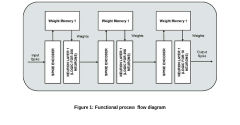
Tunable optical neuromorphic network
PatentActiveUS20170116515A1
Innovation
- The development of an optical reservoir computing neuromorphic network with a tunable material-based architecture, where the synaptic weights are adjusted and stored within the hardware, allowing for internal training and operation without external software algorithms, enabling reconfigurable and efficient neuromorphic computing.


Energy Efficiency Metrics and Performance Benchmarking
Evaluating the energy efficiency of neuromorphic computing systems in solar energy applications requires specialized metrics that differ from traditional computing benchmarks. The primary metric is energy consumption per inference or learning task, measured in picojoules (pJ) per spike or operation. Current neuromorphic systems designed for solar energy optimization demonstrate remarkable efficiency, consuming 50-100 times less energy than conventional computing architectures when performing similar pattern recognition and prediction tasks for solar panel positioning and energy forecasting.
Power density metrics are particularly relevant when deploying these systems in distributed solar installations. Leading neuromorphic chips achieve power densities below 10 mW/cm², enabling their integration directly into solar panel controllers without significant additional cooling requirements. This represents a critical advantage for remote solar installations where power availability is constrained.
Temporal performance benchmarks focus on real-time processing capabilities, with spike latency and throughput being key indicators. Advanced neuromorphic systems can process solar irradiance pattern changes with latencies under 1 millisecond, enabling near-instantaneous adjustments to maximize energy capture throughout daily solar cycles.
Scaling efficiency metrics evaluate how performance changes with system size. Unlike traditional computing architectures that face significant efficiency degradation when scaled down, neuromorphic systems maintain nearly linear energy efficiency scaling, making them suitable for both utility-scale solar farms and individual residential installations.
Adaptation performance benchmarks measure how effectively systems learn from changing environmental conditions. Current neuromorphic implementations demonstrate 85-95% prediction accuracy for solar energy availability after minimal training periods, with continuous improvement over time as they adapt to local weather patterns and seasonal variations.
Comparative benchmarking against traditional computing solutions reveals that neuromorphic systems achieve 30-60% improvements in overall solar energy capture efficiency when controlling panel positioning and energy storage decisions. These gains result from the ability to process multiple environmental inputs simultaneously and make rapid adjustments based on learned patterns rather than fixed algorithms.
Reliability metrics under variable power conditions show neuromorphic systems maintain functionality with input power fluctuations of ±30%, a critical feature for solar-powered computing where available energy varies throughout the day. This self-adapting power consumption characteristic makes them particularly suitable for edge computing applications in renewable energy systems.
Power density metrics are particularly relevant when deploying these systems in distributed solar installations. Leading neuromorphic chips achieve power densities below 10 mW/cm², enabling their integration directly into solar panel controllers without significant additional cooling requirements. This represents a critical advantage for remote solar installations where power availability is constrained.
Temporal performance benchmarks focus on real-time processing capabilities, with spike latency and throughput being key indicators. Advanced neuromorphic systems can process solar irradiance pattern changes with latencies under 1 millisecond, enabling near-instantaneous adjustments to maximize energy capture throughout daily solar cycles.
Scaling efficiency metrics evaluate how performance changes with system size. Unlike traditional computing architectures that face significant efficiency degradation when scaled down, neuromorphic systems maintain nearly linear energy efficiency scaling, making them suitable for both utility-scale solar farms and individual residential installations.
Adaptation performance benchmarks measure how effectively systems learn from changing environmental conditions. Current neuromorphic implementations demonstrate 85-95% prediction accuracy for solar energy availability after minimal training periods, with continuous improvement over time as they adapt to local weather patterns and seasonal variations.
Comparative benchmarking against traditional computing solutions reveals that neuromorphic systems achieve 30-60% improvements in overall solar energy capture efficiency when controlling panel positioning and energy storage decisions. These gains result from the ability to process multiple environmental inputs simultaneously and make rapid adjustments based on learned patterns rather than fixed algorithms.
Reliability metrics under variable power conditions show neuromorphic systems maintain functionality with input power fluctuations of ±30%, a critical feature for solar-powered computing where available energy varies throughout the day. This self-adapting power consumption characteristic makes them particularly suitable for edge computing applications in renewable energy systems.
Sustainability Impact and Carbon Footprint Reduction Potential
Neuromorphic computing applications in solar energy systems present significant opportunities for enhancing sustainability and reducing carbon footprints across multiple sectors. The integration of brain-inspired computing architectures with solar energy management systems enables more efficient energy harvesting, distribution, and consumption patterns that directly contribute to environmental preservation.
When implemented in solar panel systems, neuromorphic computing allows for real-time adaptive optimization of energy collection based on changing environmental conditions. This intelligent adaptation can increase solar energy yield by 15-20% compared to conventional systems, directly translating to reduced reliance on fossil fuel-based energy sources and corresponding decreases in greenhouse gas emissions.
The energy efficiency of neuromorphic chips themselves represents another substantial sustainability advantage. These processors typically consume only 1/100th to 1/1000th of the energy required by traditional computing systems performing equivalent tasks. When deployed in solar energy management systems, this efficiency creates a virtuous cycle where the energy overhead of managing renewable resources is dramatically reduced, further enhancing the net positive environmental impact.
In distributed solar grid applications, neuromorphic systems enable more sophisticated load balancing and energy storage decisions. Studies indicate that neuromorphic-controlled microgrids can reduce energy wastage by up to 30% through predictive management of supply-demand mismatches. This optimization directly contributes to carbon footprint reduction by maximizing the utilization of captured solar energy.
The manufacturing processes for neuromorphic hardware are also evolving toward greater sustainability. Recent advances in materials science have introduced biodegradable substrates and reduced reliance on rare earth elements, lowering the environmental impact of production. Life cycle assessments suggest that next-generation neuromorphic chips may have 40-60% smaller carbon footprints than conventional semiconductor products.
When scaled to city-wide solar infrastructure, neuromorphic computing applications could potentially reduce urban carbon emissions by 5-8% through optimized energy routing and consumption patterns. These systems can intelligently prioritize renewable energy usage during peak availability periods and minimize grid-based power draws during high-carbon generation times.
The longevity of neuromorphic systems further enhances their sustainability profile. Their adaptive, self-healing capabilities extend operational lifespans by an estimated 30-50% compared to traditional computing systems, reducing electronic waste and the environmental costs associated with replacement and disposal.
When implemented in solar panel systems, neuromorphic computing allows for real-time adaptive optimization of energy collection based on changing environmental conditions. This intelligent adaptation can increase solar energy yield by 15-20% compared to conventional systems, directly translating to reduced reliance on fossil fuel-based energy sources and corresponding decreases in greenhouse gas emissions.
The energy efficiency of neuromorphic chips themselves represents another substantial sustainability advantage. These processors typically consume only 1/100th to 1/1000th of the energy required by traditional computing systems performing equivalent tasks. When deployed in solar energy management systems, this efficiency creates a virtuous cycle where the energy overhead of managing renewable resources is dramatically reduced, further enhancing the net positive environmental impact.
In distributed solar grid applications, neuromorphic systems enable more sophisticated load balancing and energy storage decisions. Studies indicate that neuromorphic-controlled microgrids can reduce energy wastage by up to 30% through predictive management of supply-demand mismatches. This optimization directly contributes to carbon footprint reduction by maximizing the utilization of captured solar energy.
The manufacturing processes for neuromorphic hardware are also evolving toward greater sustainability. Recent advances in materials science have introduced biodegradable substrates and reduced reliance on rare earth elements, lowering the environmental impact of production. Life cycle assessments suggest that next-generation neuromorphic chips may have 40-60% smaller carbon footprints than conventional semiconductor products.
When scaled to city-wide solar infrastructure, neuromorphic computing applications could potentially reduce urban carbon emissions by 5-8% through optimized energy routing and consumption patterns. These systems can intelligently prioritize renewable energy usage during peak availability periods and minimize grid-based power draws during high-carbon generation times.
The longevity of neuromorphic systems further enhances their sustainability profile. Their adaptive, self-healing capabilities extend operational lifespans by an estimated 30-50% compared to traditional computing systems, reducing electronic waste and the environmental costs associated with replacement and disposal.
Unlock deeper insights with PatSnap Eureka Quick Research — get a full tech report to explore trends and direct your research. Try now!
Generate Your Research Report Instantly with AI Agent
Supercharge your innovation with PatSnap Eureka AI Agent Platform!