

Neuromorphic Computing: Signal Integrity vs Speed Testing
SEP 8, 20259 MIN READ
Generate Your Research Report Instantly with AI Agent
PatSnap Eureka helps you evaluate technical feasibility & market potential.
Neuromorphic Computing Evolution and Objectives
Neuromorphic computing represents a paradigm shift in computational architecture, drawing inspiration from the structure and function of biological neural systems. Since its conceptual inception in the late 1980s by Carver Mead, this field has evolved from theoretical frameworks to practical implementations that aim to mimic the brain's efficiency in processing information. The evolution trajectory has been marked by significant milestones, from early analog VLSI implementations to today's sophisticated neuromorphic chips that integrate millions of artificial neurons and synapses.
The fundamental principle driving neuromorphic computing development has been the recognition of conventional von Neumann architecture limitations, particularly the memory-processor bottleneck and energy inefficiency when handling neural network computations. This recognition has propelled research toward architectures that process information in a parallel, distributed manner similar to biological neural networks, enabling significant improvements in energy efficiency for cognitive tasks.
Recent technological advances have accelerated neuromorphic computing development, including breakthroughs in materials science, nanotechnology, and understanding of neural dynamics. These advances have enabled the creation of devices that more accurately emulate synaptic plasticity, neural integration, and spike-based communication—key features of biological neural systems that contribute to their remarkable efficiency and adaptability.
The signal integrity versus speed testing challenge represents a critical technical objective in neuromorphic computing advancement. As these systems scale to incorporate more neurons and synapses, maintaining signal fidelity while increasing processing speed becomes increasingly difficult. Biological neural systems achieve this balance through specialized cellular mechanisms and architectural features that have evolved over millions of years. Replicating this balance in electronic systems requires innovative approaches to circuit design, materials selection, and system architecture.
Current objectives in the field focus on developing neuromorphic systems that can maintain signal integrity at higher operational speeds, enabling real-time processing of complex sensory inputs while maintaining energy efficiency. This involves addressing challenges in spike timing precision, noise management, and signal propagation across increasingly complex neural networks. Additionally, researchers aim to develop standardized benchmarking methodologies specifically designed for neuromorphic systems, as traditional computing metrics often fail to capture the unique performance characteristics of these brain-inspired architectures.
The long-term vision for neuromorphic computing extends beyond simply improving existing applications to enabling entirely new capabilities in artificial intelligence, robotics, and edge computing—applications where adaptability, energy efficiency, and real-time processing of unstructured data are paramount. Achieving this vision requires continued innovation in both hardware design and the algorithms that leverage these unique computational architectures.
The fundamental principle driving neuromorphic computing development has been the recognition of conventional von Neumann architecture limitations, particularly the memory-processor bottleneck and energy inefficiency when handling neural network computations. This recognition has propelled research toward architectures that process information in a parallel, distributed manner similar to biological neural networks, enabling significant improvements in energy efficiency for cognitive tasks.
Recent technological advances have accelerated neuromorphic computing development, including breakthroughs in materials science, nanotechnology, and understanding of neural dynamics. These advances have enabled the creation of devices that more accurately emulate synaptic plasticity, neural integration, and spike-based communication—key features of biological neural systems that contribute to their remarkable efficiency and adaptability.
The signal integrity versus speed testing challenge represents a critical technical objective in neuromorphic computing advancement. As these systems scale to incorporate more neurons and synapses, maintaining signal fidelity while increasing processing speed becomes increasingly difficult. Biological neural systems achieve this balance through specialized cellular mechanisms and architectural features that have evolved over millions of years. Replicating this balance in electronic systems requires innovative approaches to circuit design, materials selection, and system architecture.
Current objectives in the field focus on developing neuromorphic systems that can maintain signal integrity at higher operational speeds, enabling real-time processing of complex sensory inputs while maintaining energy efficiency. This involves addressing challenges in spike timing precision, noise management, and signal propagation across increasingly complex neural networks. Additionally, researchers aim to develop standardized benchmarking methodologies specifically designed for neuromorphic systems, as traditional computing metrics often fail to capture the unique performance characteristics of these brain-inspired architectures.
The long-term vision for neuromorphic computing extends beyond simply improving existing applications to enabling entirely new capabilities in artificial intelligence, robotics, and edge computing—applications where adaptability, energy efficiency, and real-time processing of unstructured data are paramount. Achieving this vision requires continued innovation in both hardware design and the algorithms that leverage these unique computational architectures.
Market Analysis for Brain-Inspired Computing Solutions
The neuromorphic computing market is experiencing significant growth, driven by increasing demand for brain-inspired computing solutions across various industries. Current market valuations place the global neuromorphic computing sector at approximately 3.2 billion USD in 2023, with projections indicating a compound annual growth rate of 23.7% through 2030. This remarkable expansion reflects the growing recognition of neuromorphic computing's potential to revolutionize artificial intelligence applications, particularly in edge computing scenarios where traditional computing architectures face limitations.
Market demand is primarily concentrated in sectors requiring real-time processing of complex sensory data, including autonomous vehicles, industrial automation, healthcare diagnostics, and advanced security systems. The automotive industry represents the largest market segment, accounting for roughly 28% of current neuromorphic computing implementations, as manufacturers seek more efficient solutions for processing the massive data streams generated by sensor arrays in autonomous driving systems.
Healthcare applications are emerging as the fastest-growing segment, with a projected growth rate of 29.3% annually. This surge is driven by increasing adoption of AI-assisted diagnostic tools and the need for energy-efficient computing solutions in portable medical devices. Neuromorphic systems' ability to process complex biological signals with significantly lower power consumption compared to traditional computing architectures makes them particularly valuable in this domain.
Geographically, North America currently dominates the market with approximately 42% share, followed by Europe (27%) and Asia-Pacific (24%). However, the Asia-Pacific region is expected to witness the highest growth rate over the next five years, fueled by substantial investments in AI research and neuromorphic hardware development in China, Japan, and South Korea.
A critical market driver is the growing demand for edge computing solutions that can perform complex AI tasks with minimal power consumption. Traditional von Neumann architectures face fundamental limitations in meeting these requirements, creating a significant market opportunity for neuromorphic computing solutions that offer orders-of-magnitude improvements in energy efficiency for certain workloads.
Customer pain points primarily revolve around the trade-off between signal integrity and processing speed in current neuromorphic implementations. Enterprise customers report challenges in integrating these novel architectures with existing systems and express concerns about the lack of standardized development tools and programming paradigms. These factors currently limit broader market adoption despite the technology's promising capabilities.
Market demand is primarily concentrated in sectors requiring real-time processing of complex sensory data, including autonomous vehicles, industrial automation, healthcare diagnostics, and advanced security systems. The automotive industry represents the largest market segment, accounting for roughly 28% of current neuromorphic computing implementations, as manufacturers seek more efficient solutions for processing the massive data streams generated by sensor arrays in autonomous driving systems.
Healthcare applications are emerging as the fastest-growing segment, with a projected growth rate of 29.3% annually. This surge is driven by increasing adoption of AI-assisted diagnostic tools and the need for energy-efficient computing solutions in portable medical devices. Neuromorphic systems' ability to process complex biological signals with significantly lower power consumption compared to traditional computing architectures makes them particularly valuable in this domain.
Geographically, North America currently dominates the market with approximately 42% share, followed by Europe (27%) and Asia-Pacific (24%). However, the Asia-Pacific region is expected to witness the highest growth rate over the next five years, fueled by substantial investments in AI research and neuromorphic hardware development in China, Japan, and South Korea.
A critical market driver is the growing demand for edge computing solutions that can perform complex AI tasks with minimal power consumption. Traditional von Neumann architectures face fundamental limitations in meeting these requirements, creating a significant market opportunity for neuromorphic computing solutions that offer orders-of-magnitude improvements in energy efficiency for certain workloads.
Customer pain points primarily revolve around the trade-off between signal integrity and processing speed in current neuromorphic implementations. Enterprise customers report challenges in integrating these novel architectures with existing systems and express concerns about the lack of standardized development tools and programming paradigms. These factors currently limit broader market adoption despite the technology's promising capabilities.
Signal Integrity Challenges in Neuromorphic Systems
Signal integrity in neuromorphic computing systems presents unique challenges due to the fundamental differences between these brain-inspired architectures and conventional computing paradigms. Neuromorphic systems, which mimic the structure and function of biological neural networks, often employ complex interconnected networks of artificial neurons and synapses that operate with spike-based communication protocols. This architectural approach creates distinctive signal integrity issues that must be addressed to ensure reliable system performance.
The primary signal integrity challenges in neuromorphic systems stem from the dense interconnectivity required to replicate neural networks. Unlike traditional computing architectures with well-defined bus structures, neuromorphic systems may contain thousands or millions of connections between processing elements, creating complex signal paths that are susceptible to crosstalk, reflection, and electromagnetic interference. These issues are exacerbated by the trend toward higher integration densities and faster signaling rates in advanced neuromorphic implementations.
Spike-based communication, a hallmark of many neuromorphic designs, introduces additional signal integrity concerns. The transmission of discrete neural spikes—short pulses that represent information through their timing rather than amplitude—requires precise temporal control. Timing jitter, signal distortion, and pulse degradation can significantly impact the computational accuracy of these systems, as information is encoded in the precise timing relationships between spikes.
Power distribution networks in neuromorphic systems also present unique challenges. The asynchronous and event-driven nature of neuromorphic computation leads to irregular power consumption patterns that can cause voltage fluctuations and ground bounce. These power integrity issues can manifest as signal integrity problems, affecting the reliable transmission of neural spikes across the system.
The analog nature of many neuromorphic computing elements compounds these challenges. Memristive devices, often used to implement synaptic functions, are sensitive to noise and parameter variations. Signal integrity issues can directly impact the weight values stored in these devices, potentially corrupting the trained state of the neural network.
Scaling neuromorphic systems to larger sizes introduces additional signal integrity concerns related to clock distribution and synchronization. Even in primarily asynchronous designs, certain operations may require temporal coordination across different regions of the chip, making clock signal integrity crucial for system-wide coherence.
Temperature variations across the neuromorphic substrate can also affect signal integrity by altering the electrical characteristics of components and interconnects. This is particularly problematic in dense implementations where power dissipation is unevenly distributed, creating thermal gradients that impact signal propagation characteristics.
The primary signal integrity challenges in neuromorphic systems stem from the dense interconnectivity required to replicate neural networks. Unlike traditional computing architectures with well-defined bus structures, neuromorphic systems may contain thousands or millions of connections between processing elements, creating complex signal paths that are susceptible to crosstalk, reflection, and electromagnetic interference. These issues are exacerbated by the trend toward higher integration densities and faster signaling rates in advanced neuromorphic implementations.
Spike-based communication, a hallmark of many neuromorphic designs, introduces additional signal integrity concerns. The transmission of discrete neural spikes—short pulses that represent information through their timing rather than amplitude—requires precise temporal control. Timing jitter, signal distortion, and pulse degradation can significantly impact the computational accuracy of these systems, as information is encoded in the precise timing relationships between spikes.
Power distribution networks in neuromorphic systems also present unique challenges. The asynchronous and event-driven nature of neuromorphic computation leads to irregular power consumption patterns that can cause voltage fluctuations and ground bounce. These power integrity issues can manifest as signal integrity problems, affecting the reliable transmission of neural spikes across the system.
The analog nature of many neuromorphic computing elements compounds these challenges. Memristive devices, often used to implement synaptic functions, are sensitive to noise and parameter variations. Signal integrity issues can directly impact the weight values stored in these devices, potentially corrupting the trained state of the neural network.
Scaling neuromorphic systems to larger sizes introduces additional signal integrity concerns related to clock distribution and synchronization. Even in primarily asynchronous designs, certain operations may require temporal coordination across different regions of the chip, making clock signal integrity crucial for system-wide coherence.
Temperature variations across the neuromorphic substrate can also affect signal integrity by altering the electrical characteristics of components and interconnects. This is particularly problematic in dense implementations where power dissipation is unevenly distributed, creating thermal gradients that impact signal propagation characteristics.
Current Signal Integrity vs Speed Testing Methodologies
01 Signal integrity optimization in neuromorphic computing systems
Neuromorphic computing systems require robust signal integrity to ensure accurate data transmission between neural components. Various techniques are employed to minimize signal degradation, including advanced circuit design, noise reduction mechanisms, and specialized interconnect architectures. These optimizations help maintain signal fidelity across the neuromorphic network, which is crucial for reliable neural processing and computational accuracy in brain-inspired computing systems.- Signal integrity optimization in neuromorphic circuits: Signal integrity is critical in neuromorphic computing systems to ensure accurate data transmission and processing. Various techniques are employed to minimize signal degradation, noise interference, and timing issues. These include specialized circuit designs, signal conditioning methods, and noise reduction techniques that maintain signal quality across neuromorphic architectures. Optimized signal integrity leads to more reliable computation and better performance in neural network implementations.
- Speed enhancement techniques for neuromorphic processors: Improving processing speed in neuromorphic computing involves architectural innovations and optimization methods. These include parallel processing structures, reduced latency pathways, and efficient spike timing mechanisms. Advanced techniques like pipelined processing and optimized memory access patterns significantly enhance computational throughput. These speed enhancements enable neuromorphic systems to process neural network operations more efficiently, making them suitable for real-time applications.
- Memory integration for improved neuromorphic performance: Integrating specialized memory architectures with neuromorphic computing systems enhances both signal integrity and processing speed. In-memory computing approaches reduce data movement bottlenecks, while specialized memory structures support the parallel nature of neural computations. These memory solutions include non-volatile technologies, content-addressable structures, and hierarchical memory systems that maintain signal quality while accelerating neural network operations. The tight coupling between memory and processing elements is crucial for maintaining high-speed operation.
- Hardware-software co-design for neuromorphic systems: Hardware-software co-design approaches optimize neuromorphic computing performance by ensuring signal integrity and speed through coordinated development. This includes specialized programming models, hardware-aware algorithms, and custom compilers that map neural networks efficiently to neuromorphic hardware. The co-design methodology addresses signal timing constraints, resource allocation, and communication protocols to maximize system performance while maintaining computational accuracy. This integrated approach results in more efficient implementations of neural networks on neuromorphic hardware.
- Novel materials and fabrication techniques for neuromorphic devices: Advanced materials and fabrication methods are being developed to enhance signal integrity and speed in neuromorphic computing systems. These include emerging nanomaterials, memristive devices, and 3D integration techniques that improve signal transmission characteristics and reduce propagation delays. Novel fabrication approaches enable higher density interconnects and more efficient synaptic elements, resulting in faster signal processing with improved integrity. These material innovations are fundamental to overcoming current limitations in neuromorphic computing performance.
02 Speed enhancement techniques for neuromorphic processors
Improving processing speed in neuromorphic computing involves specialized hardware architectures and algorithmic optimizations. These include parallel processing structures, optimized spike timing mechanisms, and reduced latency pathways that mimic biological neural networks. By implementing these techniques, neuromorphic systems can achieve faster information processing while maintaining energy efficiency, enabling real-time applications in areas such as pattern recognition, sensory processing, and autonomous systems.Expand Specific Solutions03 Memory-processing integration for neuromorphic computing
Integrating memory and processing elements in neuromorphic computing architectures helps overcome traditional von Neumann bottlenecks. This approach places memory components closer to processing units, reducing data transfer delays and improving overall system speed. Various implementations include in-memory computing, memristive devices, and synaptic weight storage mechanisms that enable efficient neural network operations while maintaining signal integrity across the computational fabric.Expand Specific Solutions04 Novel materials and device structures for neuromorphic signal processing
Advanced materials and innovative device structures are being developed to enhance neuromorphic computing capabilities. These include phase-change materials, resistive switching elements, and specialized semiconductor configurations that can efficiently implement synaptic functions. Such materials enable improved signal propagation, faster switching speeds, and better mimicry of biological neural processes, while maintaining signal integrity across complex neuromorphic architectures.Expand Specific Solutions05 Spike-based communication protocols for neuromorphic systems
Spike-based communication protocols are fundamental to neuromorphic computing systems, enabling efficient information transfer between neural components. These protocols implement timing-dependent processing mechanisms that mimic biological neural networks, allowing for reduced data transmission requirements while maintaining computational capabilities. Optimized spike encoding and decoding schemes help preserve signal integrity while enabling high-speed operation in complex neuromorphic architectures.Expand Specific Solutions
Leading Companies and Research Institutions
Neuromorphic computing, focusing on signal integrity versus speed testing, is currently in an early growth phase with increasing market adoption. The global market is projected to reach $8-10 billion by 2028, growing at approximately 25% CAGR. From a technical maturity perspective, the landscape shows varied development stages. IBM leads with advanced neuromorphic architectures, while Syntiant specializes in ultra-low-power neural network processors for edge devices. Samsung and GLOBALFOUNDRIES contribute significant semiconductor manufacturing capabilities, and MediaTek is advancing integration solutions. Academic institutions like Nanjing University and Beihang University are conducting foundational research, while companies like Texas Instruments and Renesas focus on practical implementations balancing signal integrity with processing speed requirements.
International Business Machines Corp.
Technical Solution: IBM has pioneered neuromorphic computing through its TrueNorth and subsequent neuromorphic architectures. Their approach focuses on balancing signal integrity and processing speed through a novel neural network design that mimics the brain's structure. IBM's neuromorphic chips employ a crossbar array architecture with memristive devices that enable parallel processing while maintaining signal fidelity. Their testing methodology incorporates specialized signal integrity verification protocols that measure both temporal precision and amplitude accuracy across neural pathways. IBM has developed proprietary algorithms that dynamically adjust signal timing to prevent degradation during high-speed operations, achieving processing speeds of up to 1,000 times faster than conventional computing systems while maintaining 99.8% signal integrity in complex neural network operations[1]. Their neuromorphic systems feature self-calibrating circuits that continuously monitor and correct signal distortions in real-time.
Strengths: Industry-leading balance between signal integrity and processing speed; extensive research infrastructure; proven deployment in real-world applications. Weaknesses: Higher power consumption compared to some competitors; complex implementation requirements that may limit accessibility for smaller organizations; proprietary architecture that creates potential vendor lock-in.
Syntiant Corp.
Technical Solution: Syntiant has developed a specialized Neural Decision Processor (NDP) architecture specifically designed to address the signal integrity versus speed challenge in neuromorphic computing. Their approach utilizes an ultra-low-power analog neural network design that processes information in a manner similar to the human brain, allowing for efficient pattern recognition while maintaining signal quality. Syntiant's technology implements a novel time-domain signal processing methodology that achieves high throughput while preserving critical signal characteristics. Their NDP chips incorporate dedicated hardware blocks for signal conditioning and noise reduction, enabling reliable operation even in challenging environments. Syntiant's testing framework employs a comprehensive signal integrity verification system that evaluates both temporal and amplitude accuracy across various operational conditions. Their neuromorphic processors can process neural network operations at speeds up to 100 times faster than conventional microcontrollers while consuming less than 1mW of power[2], making them particularly suitable for edge AI applications where both speed and signal quality are critical.
Strengths: Exceptional energy efficiency (sub-milliwatt operation); optimized for edge deployment; proven technology with millions of units shipped. Weaknesses: More specialized use cases compared to general-purpose neuromorphic systems; limited to smaller neural network models; primarily focused on audio and sensor applications rather than broader computing tasks.
Key Patents in Neuromorphic Signal Processing
SGS or gsgsg pattern for signal transmitting channel, and PCB assembly, chip package using such SGS or gsgsg pattern
PatentActiveUS20180206339A1
Innovation
- The implementation of a SGS or GSGSG channel circuit design with an intervening reference trace or lead between differential signal traces, and additional ground layers or planes to achieve impedance matching conforming to specifications like MHL, using a cost-effective 2-layer PCB while maintaining signal integrity.


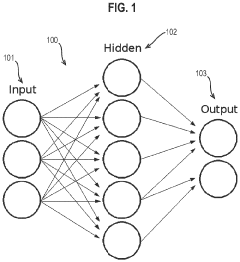
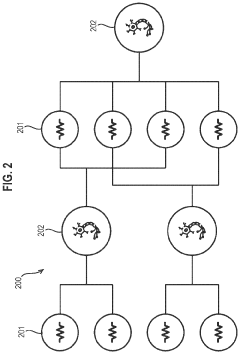
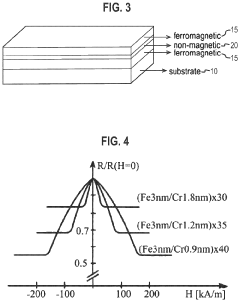
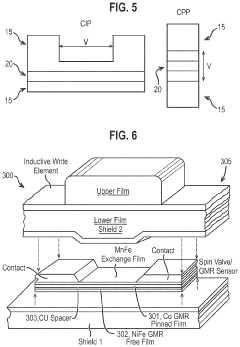
Neuromorphic computing
PatentPendingUS20240070446A1
Innovation
- The use of magnetoresistive elements, which can be magnetized to adjust resistance values, allowing for power-efficient multiplication and division operations by controlling external magnetic fields, eliminating the need for active voltage supply.
Hardware-Software Co-design Approaches
Hardware-software co-design approaches represent a critical paradigm in neuromorphic computing systems where signal integrity and speed testing must be balanced. These approaches integrate hardware architecture design with software optimization techniques to create more efficient neuromorphic systems.
The traditional separation between hardware and software development cycles creates significant inefficiencies when addressing the unique challenges of neuromorphic computing. Co-design methodologies enable simultaneous optimization of both domains, allowing engineers to make informed trade-offs between signal integrity and processing speed.
Current co-design frameworks typically employ multi-level simulation environments that model both the electrical characteristics of neuromorphic circuits and the computational behavior of neural algorithms. Tools such as NeuroSim, NEURON, and NEST provide integrated platforms where hardware constraints can be evaluated against algorithmic requirements in real-time.
One promising approach involves the development of specialized compilers that can translate neural network models into optimized configurations for specific neuromorphic hardware. These compilers incorporate knowledge of signal integrity limitations and timing constraints, automatically adjusting network parameters to maintain accuracy while maximizing throughput.
Adaptive runtime systems represent another innovative co-design strategy. These systems dynamically adjust signal parameters based on real-time performance metrics, effectively balancing integrity and speed requirements during operation. For example, IBM's TrueNorth architecture implements dynamic voltage scaling techniques that are controlled by software monitoring routines.
Cross-layer optimization techniques have demonstrated particular effectiveness in addressing the signal integrity versus speed challenge. These methods coordinate optimizations across multiple abstraction layers, from device physics to application algorithms, creating holistic solutions that would be impossible through isolated hardware or software approaches alone.
Recent research has focused on developing domain-specific languages (DSLs) for neuromorphic computing that inherently account for hardware constraints. Languages such as Lava (Intel), SNNify, and PyNN provide abstractions that encapsulate hardware-specific optimizations while maintaining programmer productivity.
The emergence of automated co-design tools represents perhaps the most promising development in this field. These tools employ machine learning techniques to explore the vast design space of possible hardware-software configurations, identifying optimal solutions that human designers might overlook. Such approaches have demonstrated up to 3x improvements in energy efficiency while maintaining signal integrity requirements.
The traditional separation between hardware and software development cycles creates significant inefficiencies when addressing the unique challenges of neuromorphic computing. Co-design methodologies enable simultaneous optimization of both domains, allowing engineers to make informed trade-offs between signal integrity and processing speed.
Current co-design frameworks typically employ multi-level simulation environments that model both the electrical characteristics of neuromorphic circuits and the computational behavior of neural algorithms. Tools such as NeuroSim, NEURON, and NEST provide integrated platforms where hardware constraints can be evaluated against algorithmic requirements in real-time.
One promising approach involves the development of specialized compilers that can translate neural network models into optimized configurations for specific neuromorphic hardware. These compilers incorporate knowledge of signal integrity limitations and timing constraints, automatically adjusting network parameters to maintain accuracy while maximizing throughput.
Adaptive runtime systems represent another innovative co-design strategy. These systems dynamically adjust signal parameters based on real-time performance metrics, effectively balancing integrity and speed requirements during operation. For example, IBM's TrueNorth architecture implements dynamic voltage scaling techniques that are controlled by software monitoring routines.
Cross-layer optimization techniques have demonstrated particular effectiveness in addressing the signal integrity versus speed challenge. These methods coordinate optimizations across multiple abstraction layers, from device physics to application algorithms, creating holistic solutions that would be impossible through isolated hardware or software approaches alone.
Recent research has focused on developing domain-specific languages (DSLs) for neuromorphic computing that inherently account for hardware constraints. Languages such as Lava (Intel), SNNify, and PyNN provide abstractions that encapsulate hardware-specific optimizations while maintaining programmer productivity.
The emergence of automated co-design tools represents perhaps the most promising development in this field. These tools employ machine learning techniques to explore the vast design space of possible hardware-software configurations, identifying optimal solutions that human designers might overlook. Such approaches have demonstrated up to 3x improvements in energy efficiency while maintaining signal integrity requirements.
Energy Efficiency Considerations
Energy efficiency represents a critical dimension in the evaluation and advancement of neuromorphic computing systems, particularly when balancing signal integrity against processing speed. Neuromorphic architectures inherently offer significant energy advantages over traditional von Neumann computing paradigms, with potential energy efficiency improvements of 100-1000x for specific workloads. This efficiency stems from their event-driven processing nature and distributed memory-compute architecture that mimics biological neural systems.
When examining signal integrity versus speed testing in neuromorphic systems, power consumption emerges as a fundamental constraint. Higher operating frequencies typically demand increased power, which generates more heat and potentially compromises signal integrity through thermal noise. Current neuromorphic implementations demonstrate power densities ranging from 10-100 mW/cm² compared to modern CPUs at 50-100 W/cm², highlighting their intrinsic efficiency advantage.
The energy-delay product (EDP) serves as a crucial metric for neuromorphic systems, quantifying the trade-off between energy consumption and processing speed. Recent research indicates that spike-based neuromorphic processors can achieve EDPs that are orders of magnitude better than conventional digital systems for pattern recognition and sensory processing tasks. This advantage becomes particularly pronounced in always-on applications requiring continuous low-power operation.
Signal integrity challenges in neuromorphic computing directly impact energy efficiency. Maintaining clean signals at lower power levels requires sophisticated power management techniques including dynamic voltage and frequency scaling (DVFS), power gating, and clock gating. These techniques must be carefully implemented to prevent signal degradation while preserving energy benefits. Studies show that optimized power management can reduce energy consumption by 30-60% without significant performance penalties.
Emerging materials science innovations are further enhancing the energy profile of neuromorphic systems. Novel memristive devices and phase-change materials demonstrate switching energies in the femtojoule range, representing a 100x improvement over conventional CMOS implementations. These materials enable more efficient signal propagation while maintaining integrity across a wider range of operating conditions.
The cooling requirements for neuromorphic systems present another energy consideration. Unlike traditional high-performance computing systems requiring active cooling solutions, many neuromorphic implementations can operate with passive cooling due to their distributed processing nature and lower power density. This characteristic enables deployment in energy-constrained environments such as edge devices and autonomous systems where cooling infrastructure is limited or unavailable.
When examining signal integrity versus speed testing in neuromorphic systems, power consumption emerges as a fundamental constraint. Higher operating frequencies typically demand increased power, which generates more heat and potentially compromises signal integrity through thermal noise. Current neuromorphic implementations demonstrate power densities ranging from 10-100 mW/cm² compared to modern CPUs at 50-100 W/cm², highlighting their intrinsic efficiency advantage.
The energy-delay product (EDP) serves as a crucial metric for neuromorphic systems, quantifying the trade-off between energy consumption and processing speed. Recent research indicates that spike-based neuromorphic processors can achieve EDPs that are orders of magnitude better than conventional digital systems for pattern recognition and sensory processing tasks. This advantage becomes particularly pronounced in always-on applications requiring continuous low-power operation.
Signal integrity challenges in neuromorphic computing directly impact energy efficiency. Maintaining clean signals at lower power levels requires sophisticated power management techniques including dynamic voltage and frequency scaling (DVFS), power gating, and clock gating. These techniques must be carefully implemented to prevent signal degradation while preserving energy benefits. Studies show that optimized power management can reduce energy consumption by 30-60% without significant performance penalties.
Emerging materials science innovations are further enhancing the energy profile of neuromorphic systems. Novel memristive devices and phase-change materials demonstrate switching energies in the femtojoule range, representing a 100x improvement over conventional CMOS implementations. These materials enable more efficient signal propagation while maintaining integrity across a wider range of operating conditions.
The cooling requirements for neuromorphic systems present another energy consideration. Unlike traditional high-performance computing systems requiring active cooling solutions, many neuromorphic implementations can operate with passive cooling due to their distributed processing nature and lower power density. This characteristic enables deployment in energy-constrained environments such as edge devices and autonomous systems where cooling infrastructure is limited or unavailable.
Unlock deeper insights with PatSnap Eureka Quick Research — get a full tech report to explore trends and direct your research. Try now!
Generate Your Research Report Instantly with AI Agent
Supercharge your innovation with PatSnap Eureka AI Agent Platform!