Quasicrystal as a Game-Changer in Surface Coatings
Quasicrystal Coatings: Background and Objectives
Quasicrystals, discovered in 1982 by Dan Shechtman, represent a revolutionary class of materials that exhibit long-range order but lack periodicity. This unique structural characteristic has sparked intense interest in the scientific community, particularly in the field of surface coatings. The evolution of quasicrystal research has been marked by significant milestones, from initial skepticism to widespread acceptance and exploration of practical applications.
The development of quasicrystal coatings aims to leverage the exceptional properties inherent to these materials, including high hardness, low friction, and thermal stability. These attributes make quasicrystals particularly promising for enhancing the performance and durability of various surfaces in industrial and consumer applications. The primary objective of research in this area is to create coatings that can withstand extreme conditions while maintaining their structural integrity and functional properties.
Recent advancements in synthesis techniques and characterization methods have accelerated progress in quasicrystal coating technology. The ability to produce stable quasicrystalline phases in thin films and coatings has opened up new possibilities for their practical implementation. Researchers are now focusing on optimizing deposition processes, such as physical vapor deposition and thermal spraying, to create uniform and adherent quasicrystal coatings on diverse substrates.
The potential impact of quasicrystal coatings spans multiple industries, including aerospace, automotive, and manufacturing. In aerospace, these coatings could significantly improve the heat resistance and wear properties of engine components. In the automotive sector, they offer the promise of reducing friction and enhancing fuel efficiency. For manufacturing, quasicrystal coatings could extend the lifespan of cutting tools and improve machining processes.
As research progresses, the scientific community is increasingly focused on understanding the fundamental mechanisms that govern the formation and properties of quasicrystal coatings. This includes investigating the relationship between atomic structure and macroscopic properties, as well as exploring ways to tailor the composition and structure of quasicrystals to meet specific application requirements.
The ultimate goal of quasicrystal coating research is to develop a new generation of surface treatments that can outperform existing solutions in terms of durability, efficiency, and functionality. This ambitious objective requires a multidisciplinary approach, combining expertise in materials science, physics, chemistry, and engineering. As the field advances, it is expected to not only revolutionize surface coating technologies but also contribute to our fundamental understanding of complex material systems.
Market Analysis for Advanced Surface Coatings
The advanced surface coatings market has been experiencing significant growth, driven by increasing demand across various industries such as automotive, aerospace, construction, and electronics. The global market for advanced surface coatings was valued at approximately $30 billion in 2020 and is projected to reach $40 billion by 2025, with a compound annual growth rate (CAGR) of around 6%.
The automotive sector remains a key driver of market growth, as manufacturers seek innovative coating solutions to enhance vehicle aesthetics, durability, and performance. The aerospace industry also contributes substantially to market demand, with a focus on coatings that provide thermal protection, corrosion resistance, and reduced fuel consumption.
In recent years, there has been a notable shift towards environmentally friendly and sustainable coating solutions. This trend is driven by stringent environmental regulations and growing consumer awareness. Water-based coatings and powder coatings have gained traction as alternatives to traditional solvent-based coatings, offering reduced volatile organic compound (VOC) emissions and improved sustainability profiles.
The construction industry has emerged as a significant market for advanced surface coatings, particularly in developing economies. The demand for coatings with enhanced durability, weather resistance, and energy-efficient properties has surged, driven by rapid urbanization and infrastructure development.
Geographically, Asia-Pacific dominates the advanced surface coatings market, accounting for over 40% of the global market share. This is attributed to the region's robust manufacturing sector, rapid industrialization, and increasing automotive production. North America and Europe follow, with mature markets focusing on high-performance and specialty coatings.
The introduction of quasicrystals in surface coatings represents a potential game-changer in the industry. Quasicrystalline materials offer unique properties such as low friction, high hardness, and excellent thermal stability. These characteristics make them particularly attractive for applications in extreme environments and high-performance industries.
Market analysts predict that quasicrystal-based coatings could capture a significant portion of the specialty coatings segment within the next decade. Industries such as aerospace, automotive, and industrial machinery are expected to be early adopters of this technology, driving initial market growth.
However, challenges remain in scaling up production and reducing costs associated with quasicrystal coatings. Overcoming these hurdles will be crucial for widespread market adoption and realizing the full potential of this innovative technology in the advanced surface coatings landscape.
Current Challenges in Quasicrystal Coating Technology
Despite the promising potential of quasicrystal coatings, several significant challenges currently hinder their widespread adoption and commercial viability. One of the primary obstacles is the complexity of synthesizing quasicrystalline materials with consistent quality and reproducibility. The unique aperiodic structure of quasicrystals makes their formation process highly sensitive to environmental conditions and processing parameters, leading to difficulties in large-scale production.
Another major challenge lies in the integration of quasicrystal coatings with existing manufacturing processes. Many industries rely on well-established coating techniques, and the incorporation of quasicrystal coatings often requires significant modifications to production lines and equipment. This adaptation can be costly and time-consuming, deterring many manufacturers from adopting this new technology.
The durability and long-term stability of quasicrystal coatings under various environmental conditions remain concerns. While these coatings exhibit excellent properties in controlled laboratory settings, their performance in real-world applications, especially under extreme temperatures, pressures, or chemical exposures, needs further investigation and improvement.
Cost-effectiveness is another crucial challenge. The current production methods for quasicrystal coatings are often expensive, involving specialized equipment and materials. This high cost limits their application to high-end or niche markets, hindering widespread adoption across various industries.
Furthermore, there is a lack of standardization in the characterization and quality control of quasicrystal coatings. The unique structure of quasicrystals makes it difficult to apply conventional material testing methods, necessitating the development of new analytical techniques and industry standards.
The limited understanding of the fundamental mechanisms underlying the exceptional properties of quasicrystal coatings also poses a challenge. This knowledge gap hampers the optimization of coating compositions and processes, as well as the prediction of long-term performance in various applications.
Lastly, the environmental impact and recyclability of quasicrystal coatings are areas of concern. As sustainability becomes increasingly important in materials science, developing eco-friendly production methods and ensuring the recyclability of quasicrystal-coated products are critical challenges that need to be addressed for the technology to gain wider acceptance and meet future regulatory requirements.
Existing Quasicrystal Coating Solutions
01 Quasicrystalline coating composition
Quasicrystalline materials are used in surface coatings to enhance properties such as hardness, wear resistance, and low friction. These coatings typically consist of quasicrystalline particles dispersed in a matrix, which can be metallic or non-metallic. The composition may include additional elements to improve specific characteristics or ease of application.- Quasicrystalline coating composition: Quasicrystalline materials are used in surface coatings to enhance properties such as hardness, wear resistance, and low friction. These coatings typically consist of quasicrystalline particles dispersed in a matrix, which can be metallic or non-metallic. The composition may include additional elements to improve specific characteristics or ease of application.
- Deposition methods for quasicrystal coatings: Various deposition techniques are employed to create quasicrystal surface coatings, including physical vapor deposition, thermal spraying, and electrodeposition. These methods allow for precise control over coating thickness, composition, and structure, enabling the formation of uniform and adherent quasicrystalline layers on different substrate materials.
- Applications of quasicrystal coatings: Quasicrystal surface coatings find applications in diverse industries due to their unique properties. They are used in automotive components, cutting tools, non-stick cookware, and aerospace parts. These coatings provide improved wear resistance, reduced friction, and enhanced thermal and chemical stability, leading to increased durability and performance of coated products.
- Post-deposition treatment of quasicrystal coatings: After deposition, quasicrystal coatings may undergo various post-treatment processes to enhance their properties. These treatments can include heat treatment, surface polishing, or the application of additional protective layers. Such processes aim to optimize the coating's structure, improve its adhesion to the substrate, and further enhance its functional characteristics.
- Nanostructured quasicrystal coatings: Recent developments in quasicrystal surface coatings focus on nanostructured materials. These coatings incorporate nanoscale quasicrystalline particles or structures, which can lead to enhanced properties compared to conventional quasicrystal coatings. Nanostructured quasicrystal coatings offer improved hardness, wear resistance, and potentially novel functionalities due to their unique nanoscale architecture.
02 Methods for applying quasicrystal coatings
Various techniques are employed to apply quasicrystalline coatings to surfaces, including thermal spraying, physical vapor deposition, and electrodeposition. These methods allow for precise control over coating thickness, uniformity, and adherence to the substrate. Some processes involve post-application heat treatments to optimize the coating structure and properties.Expand Specific Solutions03 Quasicrystal coatings for specific applications
Quasicrystalline coatings are tailored for specific industrial applications, such as automotive components, cutting tools, and aerospace parts. These coatings can provide enhanced corrosion resistance, thermal barrier properties, and improved surface finish. The composition and structure of the coating are optimized based on the intended use and operating conditions.Expand Specific Solutions04 Nanostructured quasicrystalline coatings
Nanostructured quasicrystalline coatings combine the unique properties of quasicrystals with the benefits of nanoscale materials. These coatings exhibit enhanced mechanical properties, improved wear resistance, and potentially novel electronic or optical characteristics. The nanostructure can be achieved through careful control of the deposition process or post-treatment methods.Expand Specific Solutions05 Surface modification of quasicrystal coatings
Post-deposition surface modification techniques are used to further enhance the properties of quasicrystalline coatings. These may include chemical treatments, ion implantation, or laser surface processing. Such modifications can improve the coating's adhesion to the substrate, increase its hydrophobicity, or introduce additional functionalities like self-cleaning or anti-microbial properties.Expand Specific Solutions
Key Players in Quasicrystal Coating Industry
The field of quasicrystal surface coatings is in an emerging stage, with significant potential for growth. The market size is expanding as industries recognize the unique properties of quasicrystals for enhancing surface performance. Technologically, the field is rapidly evolving, with varying levels of maturity among key players. Companies like Sumitomo Electric Industries, Praxair S.T. Technology, and 3M Innovative Properties are at the forefront, leveraging their expertise in materials science. Academic institutions such as the University of Tokyo and Shanghai University of Engineering Science are contributing fundamental research. Collaborations between industry leaders like Nissan Motor Co. and research organizations like the Centre National de la Recherche Scientifique are driving innovation. The competitive landscape is diverse, with both established materials companies and specialized firms like SilcoTek Corp vying for market share in this promising field.
Centre National de la Recherche Scientifique
3M Innovative Properties Co.
Breakthrough Innovations in Quasicrystal Coatings
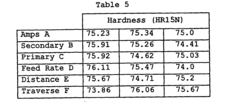
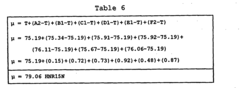
- A thermally sprayed coating with a quasicrystal-containing alloy composition of 10-45 Cu, 7-22 Fe, 0-30 Cr, 0-30 Co, 0-20 Ni, 0-7.5 W, and balance aluminum, with less than 30% ψ phase and at least 65% δ phase, applied subsonically to achieve reduced macrohardness and enhanced bond strength, incorporating chromium or cobalt for corrosion resistance.
- A thermally sprayed coating composed of an Al-Cu-Fe alloy with a specific weight percentage of Cu, Fe, Cr, Co, Ni, Mo, and W, containing at least 50% ψ phase, is developed to achieve high hardness, density, and surface smoothness, utilizing rapid thermal spraying to avoid detrimental δ phase formation and optimize phase equilibria through controlled cooling rates and plasma spraying parameters.
Environmental Impact of Quasicrystal Coatings
The environmental impact of quasicrystal coatings is a crucial aspect to consider as this innovative technology gains traction in surface coating applications. Quasicrystals, with their unique atomic structure and properties, offer potential benefits in terms of sustainability and reduced environmental footprint compared to traditional coating materials.
One of the primary environmental advantages of quasicrystal coatings is their exceptional durability and wear resistance. This characteristic leads to extended product lifespans, reducing the frequency of replacement and, consequently, the overall consumption of resources and energy associated with manufacturing and disposal processes. The longevity of quasicrystal-coated surfaces contributes to a decrease in waste generation and the need for raw materials over time.
Furthermore, quasicrystal coatings exhibit superior corrosion resistance, which is particularly beneficial in harsh environments. This property not only extends the life of coated products but also reduces the need for environmentally harmful corrosion inhibitors and protective chemicals. As a result, the use of quasicrystal coatings can lead to a significant reduction in the release of toxic substances into ecosystems.
The unique surface properties of quasicrystals, such as low friction and non-stick characteristics, can contribute to energy efficiency in various applications. For instance, in mechanical systems, reduced friction can lead to lower energy consumption and decreased wear, resulting in less frequent maintenance and replacement of parts. This energy-saving aspect indirectly contributes to reduced carbon emissions and overall environmental impact.
However, it is essential to consider the potential environmental challenges associated with quasicrystal coatings. The production process of quasicrystals may involve energy-intensive methods and the use of rare or exotic elements. As such, careful consideration must be given to the sourcing of raw materials and the optimization of manufacturing processes to minimize environmental impact.
Additionally, the end-of-life management of quasicrystal-coated products requires attention. While their durability extends product lifespans, proper recycling and disposal methods need to be developed to ensure that these materials do not contribute to long-term environmental pollution. Research into efficient recycling techniques for quasicrystal coatings is crucial for closing the loop in their lifecycle and promoting circular economy principles.
In conclusion, quasicrystal coatings show promising potential for reducing environmental impact through improved durability, energy efficiency, and reduced use of harmful chemicals. However, a comprehensive lifecycle assessment is necessary to fully understand and optimize their environmental performance, from raw material extraction to end-of-life management.
Scalability and Manufacturing Challenges
The scalability and manufacturing challenges of quasicrystal surface coatings present significant hurdles in their widespread adoption and commercialization. One of the primary obstacles is the complexity of producing quasicrystalline structures on a large scale. Unlike traditional crystalline materials, quasicrystals lack periodicity, making their formation process more intricate and less predictable. This inherent complexity translates into difficulties in maintaining consistent quality and properties across large surface areas.
The manufacturing process for quasicrystal coatings often requires precise control over various parameters, including temperature, pressure, and composition. Achieving and maintaining these conditions uniformly over large surfaces or in high-volume production settings is technically challenging. Small variations in these parameters can lead to significant differences in the resulting quasicrystalline structure, potentially compromising the desired properties of the coating.
Another challenge lies in the selection and availability of suitable materials for quasicrystal formation. Many quasicrystalline structures require specific combinations of elements, some of which may be rare or expensive. Ensuring a stable supply chain for these materials at scale can be problematic, potentially limiting the feasibility of mass production.
The deposition techniques used for quasicrystal coatings, such as physical vapor deposition or plasma spraying, often have limitations in terms of deposition rate and area coverage. Scaling up these processes to accommodate large surface areas or high-volume production runs presents significant engineering challenges. Additionally, the equipment required for these specialized deposition techniques can be costly, further impacting the economic viability of large-scale production.
Quality control and characterization of quasicrystal coatings at scale pose another set of challenges. The unique structure of quasicrystals requires specialized analytical techniques to verify their formation and properties. Implementing these techniques in a high-throughput manufacturing environment can be both time-consuming and expensive.
The integration of quasicrystal coating processes into existing manufacturing lines also presents challenges. Many industries have established production processes optimized for conventional coatings. Adapting these processes to accommodate the specific requirements of quasicrystal coatings may require significant modifications to equipment and procedures, potentially disrupting existing production flows.
Addressing these scalability and manufacturing challenges will be crucial for the widespread adoption of quasicrystal surface coatings. Research efforts are needed to develop more robust and scalable production methods, improve material efficiency, and enhance quality control techniques. Overcoming these hurdles could unlock the full potential of quasicrystal coatings across various industries, from aerospace to consumer electronics.