Ozonation: BAC/BAF Post-Treatment, Biodegradability Boost And Filter Stability
SEP 18, 202510 MIN READ
Generate Your Research Report Instantly with AI Agent
Patsnap Eureka helps you evaluate technical feasibility & market potential.
Ozonation Technology Background and Objectives
Ozonation technology has evolved significantly since its initial application in water treatment during the early 20th century. Originally developed for drinking water disinfection, ozonation has expanded into wastewater treatment, industrial processes, and specialized applications due to its powerful oxidation capabilities. The technology utilizes ozone (O₃), an unstable molecule consisting of three oxygen atoms, which readily decomposes to release a free oxygen atom that acts as a potent oxidizing agent. This property makes ozone effective against a wide range of contaminants including pathogens, organic compounds, and micropollutants.
The evolution of ozonation technology has been marked by significant improvements in generation methods, from early corona discharge systems to modern advanced plasma and electrolytic techniques. These advancements have substantially increased energy efficiency and reduced operational costs, making ozonation more economically viable for various applications. Concurrently, monitoring and control systems have become more sophisticated, allowing for precise dosing and real-time adjustment based on water quality parameters.
In recent years, the integration of ozonation with biological treatment processes has gained considerable attention in the water treatment industry. Particularly, the combination of ozonation with Biological Activated Carbon (BAC) or Biological Aerated Filters (BAF) represents a promising approach for enhanced water purification. This integrated system leverages ozone's ability to break down complex organic compounds into more biodegradable forms, which can then be effectively removed by subsequent biological treatment.
The primary objectives of current research in this field are multifaceted. First, to optimize the synergistic effects between ozonation and biological processes, maximizing treatment efficiency while minimizing energy consumption and operational costs. Second, to understand and enhance the biodegradability boost phenomenon, where ozonation transforms recalcitrant compounds into more readily biodegradable substances. Third, to improve filter stability in BAC/BAF systems following ozonation, addressing challenges such as biomass growth control, backwashing frequency, and media longevity.
Additionally, research aims to expand the application scope of these combined technologies beyond conventional water treatment to address emerging contaminants of concern, including pharmaceuticals, personal care products, and industrial chemicals that traditional treatment methods struggle to remove. The development of predictive models and design guidelines for ozonation-BAC/BAF systems represents another critical objective, facilitating broader implementation across different water quality scenarios and treatment scales.
The ultimate goal is to establish ozonation combined with biological post-treatment as a sustainable, reliable, and cost-effective solution for producing high-quality water that meets increasingly stringent regulatory standards while addressing growing public health and environmental concerns about trace contaminants in water resources.
The evolution of ozonation technology has been marked by significant improvements in generation methods, from early corona discharge systems to modern advanced plasma and electrolytic techniques. These advancements have substantially increased energy efficiency and reduced operational costs, making ozonation more economically viable for various applications. Concurrently, monitoring and control systems have become more sophisticated, allowing for precise dosing and real-time adjustment based on water quality parameters.
In recent years, the integration of ozonation with biological treatment processes has gained considerable attention in the water treatment industry. Particularly, the combination of ozonation with Biological Activated Carbon (BAC) or Biological Aerated Filters (BAF) represents a promising approach for enhanced water purification. This integrated system leverages ozone's ability to break down complex organic compounds into more biodegradable forms, which can then be effectively removed by subsequent biological treatment.
The primary objectives of current research in this field are multifaceted. First, to optimize the synergistic effects between ozonation and biological processes, maximizing treatment efficiency while minimizing energy consumption and operational costs. Second, to understand and enhance the biodegradability boost phenomenon, where ozonation transforms recalcitrant compounds into more readily biodegradable substances. Third, to improve filter stability in BAC/BAF systems following ozonation, addressing challenges such as biomass growth control, backwashing frequency, and media longevity.
Additionally, research aims to expand the application scope of these combined technologies beyond conventional water treatment to address emerging contaminants of concern, including pharmaceuticals, personal care products, and industrial chemicals that traditional treatment methods struggle to remove. The development of predictive models and design guidelines for ozonation-BAC/BAF systems represents another critical objective, facilitating broader implementation across different water quality scenarios and treatment scales.
The ultimate goal is to establish ozonation combined with biological post-treatment as a sustainable, reliable, and cost-effective solution for producing high-quality water that meets increasingly stringent regulatory standards while addressing growing public health and environmental concerns about trace contaminants in water resources.
Market Demand Analysis for Advanced Water Treatment
The global water treatment market is experiencing significant growth driven by increasing water scarcity, stricter environmental regulations, and growing awareness of water quality issues. The advanced oxidation segment, particularly ozonation technologies combined with biological treatment processes, is projected to expand at a compound annual growth rate of 7.2% through 2028.
Municipal water treatment facilities represent the largest market segment seeking advanced ozonation and biological filtration solutions. These utilities face mounting pressure to remove emerging contaminants including pharmaceuticals, personal care products, and industrial chemicals that conventional treatment methods cannot effectively address. The demand is particularly acute in regions experiencing water stress, with North America and Europe leading adoption rates.
Industrial sectors including pharmaceuticals, food and beverage, and electronics manufacturing constitute rapidly growing market segments. These industries require high-purity water and face increasingly stringent discharge regulations, driving investment in advanced treatment technologies. The pharmaceutical sector alone has increased spending on advanced water treatment systems by 12% annually since 2020.
Healthcare facilities represent an emerging market with specialized needs for water purification systems that can handle complex biological and pharmaceutical contaminants. Hospitals and medical research facilities are increasingly implementing ozonation with biological activated carbon (BAC) systems to ensure complete removal of antibiotic residues and other healthcare-specific pollutants.
Developing economies, particularly in Asia-Pacific and Latin America, show the highest potential growth rates for advanced water treatment technologies. As these regions industrialize and urbanize, water infrastructure investments are prioritizing technologies that can address multiple contaminants simultaneously while maintaining operational efficiency.
Consumer demand for safer drinking water has created a substantial residential and commercial building market for point-of-entry treatment systems incorporating advanced oxidation and biological filtration components. This segment has grown by approximately 9% annually over the past five years.
The total addressable market for ozonation with BAC/BAF post-treatment systems is estimated at $4.7 billion globally, with significant growth potential as regulations tighten regarding micropollutants and biological stability in distribution systems. Water reuse applications represent the fastest-growing application segment, with municipalities and industries seeking to maximize water resource efficiency through advanced treatment trains that can produce water suitable for non-potable and increasingly, potable reuse applications.
Municipal water treatment facilities represent the largest market segment seeking advanced ozonation and biological filtration solutions. These utilities face mounting pressure to remove emerging contaminants including pharmaceuticals, personal care products, and industrial chemicals that conventional treatment methods cannot effectively address. The demand is particularly acute in regions experiencing water stress, with North America and Europe leading adoption rates.
Industrial sectors including pharmaceuticals, food and beverage, and electronics manufacturing constitute rapidly growing market segments. These industries require high-purity water and face increasingly stringent discharge regulations, driving investment in advanced treatment technologies. The pharmaceutical sector alone has increased spending on advanced water treatment systems by 12% annually since 2020.
Healthcare facilities represent an emerging market with specialized needs for water purification systems that can handle complex biological and pharmaceutical contaminants. Hospitals and medical research facilities are increasingly implementing ozonation with biological activated carbon (BAC) systems to ensure complete removal of antibiotic residues and other healthcare-specific pollutants.
Developing economies, particularly in Asia-Pacific and Latin America, show the highest potential growth rates for advanced water treatment technologies. As these regions industrialize and urbanize, water infrastructure investments are prioritizing technologies that can address multiple contaminants simultaneously while maintaining operational efficiency.
Consumer demand for safer drinking water has created a substantial residential and commercial building market for point-of-entry treatment systems incorporating advanced oxidation and biological filtration components. This segment has grown by approximately 9% annually over the past five years.
The total addressable market for ozonation with BAC/BAF post-treatment systems is estimated at $4.7 billion globally, with significant growth potential as regulations tighten regarding micropollutants and biological stability in distribution systems. Water reuse applications represent the fastest-growing application segment, with municipalities and industries seeking to maximize water resource efficiency through advanced treatment trains that can produce water suitable for non-potable and increasingly, potable reuse applications.
Current Status and Challenges in Ozonation Post-Treatment
Ozonation technology has evolved significantly over the past decades, becoming a critical component in advanced water treatment processes worldwide. Currently, ozonation followed by biological activated carbon (BAC) or biological aerated filtration (BAF) represents the state-of-the-art approach for enhancing water quality in both drinking water and wastewater treatment facilities. This combined process leverages ozone's powerful oxidation capabilities with biological degradation mechanisms to achieve superior contaminant removal.
In the global context, Europe leads in ozonation post-treatment implementation, with Switzerland, Germany, and France having established comprehensive regulatory frameworks and technical standards. North America follows closely, while Asia—particularly China and Singapore—is rapidly expanding its adoption of these technologies to address severe water pollution challenges.
Despite widespread implementation, several significant technical challenges persist in ozonation post-treatment systems. Bromate formation during ozonation represents a major concern, as this disinfection by-product is classified as a potential human carcinogen. Current mitigation strategies include pH depression, ammonia addition, and advanced oxidation process combinations, though each introduces operational complexities.
The optimization of ozone dosage remains problematic, with insufficient doses failing to achieve adequate biodegradability enhancement while excessive doses potentially causing biological filter destabilization and increasing operational costs. Real-time control systems using UV absorbance or fluorescence monitoring show promise but require further development for reliable implementation.
Filter stability in BAC/BAF systems following ozonation presents another critical challenge. Ozonation alters the composition of organic matter, sometimes creating compounds that cause biological filter clogging or breakthrough. Research indicates that sudden changes in ozone dosage can disrupt established microbial communities in filters, leading to performance deterioration and requiring extended recovery periods.
Energy consumption represents a substantial operational constraint, with ozonation systems typically accounting for 20-40% of a treatment plant's energy budget. While energy-efficient ozone generators have emerged, the integration of renewable energy sources with ozonation systems remains in early development stages.
Material compatibility issues continue to challenge implementation, as ozone's corrosive nature necessitates specialized materials for system components. Recent advances in ceramic diffusers and corrosion-resistant alloys have improved durability, but cost-effective solutions for smaller treatment facilities are still needed.
The monitoring and control of biological activity in post-ozonation filters presents technical difficulties, with current methods often being labor-intensive or providing delayed feedback. Emerging molecular biology techniques and online enzymatic activity sensors show promise but require further validation for routine operational use.
In the global context, Europe leads in ozonation post-treatment implementation, with Switzerland, Germany, and France having established comprehensive regulatory frameworks and technical standards. North America follows closely, while Asia—particularly China and Singapore—is rapidly expanding its adoption of these technologies to address severe water pollution challenges.
Despite widespread implementation, several significant technical challenges persist in ozonation post-treatment systems. Bromate formation during ozonation represents a major concern, as this disinfection by-product is classified as a potential human carcinogen. Current mitigation strategies include pH depression, ammonia addition, and advanced oxidation process combinations, though each introduces operational complexities.
The optimization of ozone dosage remains problematic, with insufficient doses failing to achieve adequate biodegradability enhancement while excessive doses potentially causing biological filter destabilization and increasing operational costs. Real-time control systems using UV absorbance or fluorescence monitoring show promise but require further development for reliable implementation.
Filter stability in BAC/BAF systems following ozonation presents another critical challenge. Ozonation alters the composition of organic matter, sometimes creating compounds that cause biological filter clogging or breakthrough. Research indicates that sudden changes in ozone dosage can disrupt established microbial communities in filters, leading to performance deterioration and requiring extended recovery periods.
Energy consumption represents a substantial operational constraint, with ozonation systems typically accounting for 20-40% of a treatment plant's energy budget. While energy-efficient ozone generators have emerged, the integration of renewable energy sources with ozonation systems remains in early development stages.
Material compatibility issues continue to challenge implementation, as ozone's corrosive nature necessitates specialized materials for system components. Recent advances in ceramic diffusers and corrosion-resistant alloys have improved durability, but cost-effective solutions for smaller treatment facilities are still needed.
The monitoring and control of biological activity in post-ozonation filters presents technical difficulties, with current methods often being labor-intensive or providing delayed feedback. Emerging molecular biology techniques and online enzymatic activity sensors show promise but require further validation for routine operational use.
Current Technical Solutions for Biodegradability Enhancement
01 Ozonation combined with biological activated carbon filtration
The combination of ozonation with biological activated carbon (BAC) filtration enhances water treatment efficiency. Ozone oxidizes organic compounds, making them more biodegradable, while the BAC filter provides a habitat for microorganisms that further break down these compounds. This dual-process approach improves the removal of organic contaminants, reduces disinfection byproducts, and increases overall treatment stability.- Ozonation combined with biological activated carbon filtration: The combination of ozonation with biological activated carbon (BAC) filtration enhances water treatment efficiency. Ozone oxidizes organic compounds, making them more biodegradable, while BAC provides a surface for beneficial microorganisms to grow and further break down these compounds. This dual-process approach significantly improves water quality by removing organic contaminants, reducing disinfection byproducts, and improving overall filter stability through controlled biological activity.
- Biological aerated filtration systems with ozone pre-treatment: Biological aerated filtration (BAF) systems when preceded by ozonation show enhanced performance in wastewater treatment. The ozone pre-treatment increases the biodegradability of recalcitrant compounds, making them more accessible for microbial degradation in the BAF system. This process combination optimizes nitrification, reduces organic loading, and extends filter run times by preventing premature clogging, ultimately leading to more stable and efficient filtration operations.
- Enhanced biodegradability through ozone-induced molecular transformation: Ozonation transforms complex organic molecules into simpler, more biodegradable compounds by breaking down aromatic rings and other recalcitrant structures. This molecular transformation significantly improves the efficiency of subsequent biological treatment processes. The increased biodegradability results in higher removal rates of dissolved organic carbon, reduced biological oxygen demand, and improved microbial activity in BAC/BAF systems, leading to more complete pollutant removal and better treated water quality.
- Filter stability optimization in integrated ozone-biological systems: Maintaining filter stability in integrated ozone-biological treatment systems requires careful control of operational parameters. Key factors include ozone dosage optimization, backwashing frequency, hydraulic loading rates, and nutrient balance for microbial communities. Advanced monitoring techniques help prevent biomass overgrowth, control headloss development, and optimize biological activity. These measures ensure long-term filter stability, prevent breakthrough of contaminants, and maintain consistent treatment performance even under varying influent conditions.
- Advanced system configurations for ozonation with biological filtration: Innovative system configurations enhance the performance of ozonation with BAC/BAF post-treatment processes. These include multi-stage treatment trains, hybrid systems combining different biological media types, pulsed ozonation techniques, and integrated monitoring and control systems. Advanced configurations optimize contact time between ozone and contaminants, improve oxygen transfer to biological processes, and enable precise control of treatment parameters. These design improvements result in higher treatment efficiency, reduced energy consumption, and more robust operation under varying water quality conditions.
02 Biological aerated filtration systems with ozone pre-treatment
Biological aerated filtration (BAF) systems when preceded by ozonation show enhanced performance in wastewater treatment. The ozone pre-treatment increases the biodegradability of recalcitrant compounds, allowing the aerobic microorganisms in the BAF to more effectively remove pollutants. This process combination improves nitrification, reduces organic loading, and provides more stable filter operation with extended run times between backwashing.Expand Specific Solutions03 Filter media optimization for BAC/BAF stability
The selection and configuration of filter media significantly impacts the stability and performance of BAC/BAF systems following ozonation. Multi-layer media designs with varying particle sizes optimize both filtration efficiency and biological activity. Advanced media materials such as modified activated carbon, ceramic carriers, and polymer-based substrates provide enhanced surface area for biofilm development while maintaining hydraulic stability, resulting in more consistent treatment performance and reduced clogging issues.Expand Specific Solutions04 Process control strategies for ozone-BAC/BAF systems
Advanced process control strategies are essential for optimizing ozone-BAC/BAF treatment systems. Real-time monitoring of parameters such as dissolved oxygen, ozone dosage, organic loading, and biofilm development allows for dynamic adjustment of operating conditions. Automated control systems that regulate backwashing frequency, ozone generation, and nutrient addition help maintain optimal biodegradation rates and filter stability, particularly during fluctuating influent conditions or seasonal changes.Expand Specific Solutions05 Enhanced removal of micropollutants and emerging contaminants
Ozonation followed by BAC/BAF treatment demonstrates superior removal of micropollutants and emerging contaminants compared to conventional treatment methods. The ozone oxidation transforms complex pharmaceutical compounds, personal care products, and industrial chemicals into more biodegradable intermediates. The subsequent biological treatment in BAC/BAF systems then effectively removes these transformed compounds, resulting in higher quality effluent with reduced ecotoxicological impacts and improved compliance with stringent water quality regulations.Expand Specific Solutions
Key Industry Players in Ozonation and Biological Filtration
The ozonation technology market is currently in a growth phase, characterized by increasing adoption across water treatment sectors. The global market size for ozonation technologies is expanding steadily, driven by stricter water quality regulations and growing environmental concerns. From a technical maturity perspective, the field shows varied development levels, with academic institutions like South China University of Technology, Tianjin University, and Harbin Institute of Technology leading fundamental research, while industrial players such as Air Liquide, Toshiba, and China Petroleum & Chemical Corp. focus on commercial applications. Government research bodies like CNRS and Naval Research Laboratory contribute to advancing the technology. The competitive landscape reveals a balanced ecosystem of academic-industrial collaboration, with specialized water treatment companies like Xylem and HaskoningDHV developing practical implementations for BAC/BAF post-treatment systems.
Air Liquide SA
Technical Solution: Air Liquide has developed advanced ozone generation and dissolution systems specifically optimized for integration with biological treatment processes. Their technology focuses on high-efficiency ozone production using their proprietary AZERON® generators that achieve energy efficiencies up to 15 kWh/kg O₃, significantly reducing operational costs. The company has engineered specialized gas-liquid contacting systems that achieve ozone transfer efficiencies exceeding 95%, maximizing utilization while minimizing off-gas. Air Liquide's approach includes intelligent control systems that adjust ozone production and dosing based on real-time water quality parameters to optimize biodegradability enhancement while preventing over-oxidation that could inhibit subsequent biological processes. Their research has demonstrated that precise ozone dosing can increase the biodegradability index (BOD/COD ratio) by 0.2-0.3 units for various industrial wastewaters. The company provides integrated solutions that include specialized monitoring for key ozonation by-products and their biological removal in downstream BAF/BAC processes, ensuring both treatment efficacy and regulatory compliance[9][10].
Strengths: World-class expertise in gas generation and dissolution technologies; energy-efficient ozone production systems; comprehensive approach to system integration and optimization. Weaknesses: Primary focus on ozone generation rather than complete treatment systems; requires partnerships with filtration specialists for complete solutions; higher capital costs for advanced gas handling equipment.
China Petroleum & Chemical Corp.
Technical Solution: China Petroleum & Chemical Corp. (Sinopec) has developed specialized ozonation-BAC systems tailored for petrochemical wastewater treatment. Their technology employs a multi-stage ozonation approach with varying ozone doses (2-8 mg/L) at different treatment phases to selectively target petroleum hydrocarbons and other recalcitrant compounds. Sinopec's BAC system utilizes proprietary activated carbon media with optimized pore size distribution and surface chemistry to enhance biofilm attachment and activity. Their research has demonstrated that controlled ozonation can increase the BOD/COD ratio of petrochemical wastewater from 0.3 to over 0.5, significantly improving biodegradability. The company has implemented advanced backwashing protocols using air scouring combined with water washing at optimized intervals (typically 24-36 hours) to maintain filter stability while preserving biological activity. Sinopec's integrated control system monitors key parameters including dissolved oxygen, redox potential, and organic loading rates to automatically adjust ozone dosage and backwash frequency, ensuring consistent performance even during influent quality fluctuations[4][7].
Strengths: Specialized expertise in treating complex industrial wastewaters containing petroleum compounds; robust system design for handling variable influent quality; extensive operational experience at large scale. Weaknesses: High energy consumption; requires specialized maintenance for ozone generation equipment; potential formation of bromate in bromide-containing waters.
Core Patents and Research on Ozonation-BAC/BAF Integration
Organic industrial tailwater treatment method based on simultaneous combination of ozonation and biodegradation (SCOB)
PatentInactiveUS20210155515A1
Innovation
- An integrated method combining ozonation and biodegradation in a single reactor using a sponge carrier with a biofilm, where ozone is generated and adjusted within the reactor, allowing microorganisms to degrade pollutants directly, reducing toxicity and operational complexity.
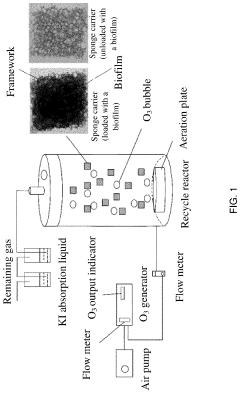
Wastewater treatment system and method for combined ozone and biological filters
PatentWO2019130053A1
Innovation
- A system that introduces an oxygen-based mix gas of ozone and oxygen, generated by electric discharge, into an ozone contact tank, supersaturating the wastewater with dissolved oxygen, which then bypasses the need for aeration in the biological filter, simplifying the structure and reducing costs by using the supersaturated oxygen for microbial oxygenation.

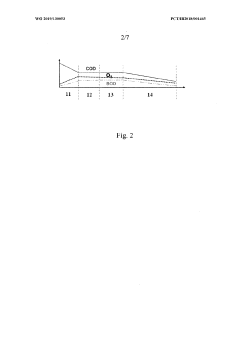
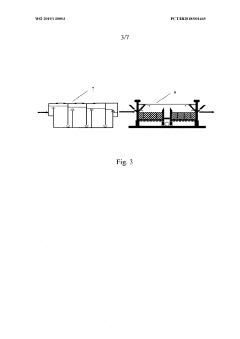
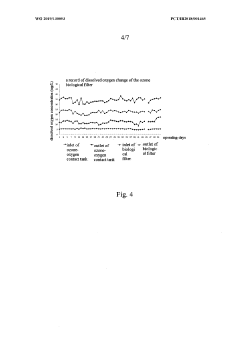
Regulatory Framework for Advanced Oxidation Processes
The regulatory landscape governing Advanced Oxidation Processes (AOPs), particularly ozonation technologies, has evolved significantly over the past decades in response to growing environmental concerns and public health priorities. At the international level, the World Health Organization (WHO) has established guidelines for drinking water quality that indirectly influence ozonation applications, setting maximum contaminant levels for disinfection by-products that may result from oxidation processes.
In the United States, the Environmental Protection Agency (EPA) regulates ozonation through multiple frameworks, including the Safe Drinking Water Act (SDWA) and the Clean Water Act (CWA). The EPA's Disinfectants and Disinfection Byproducts Rules specifically address concerns related to ozone application in water treatment, establishing monitoring requirements and maximum contaminant levels for byproducts such as bromate, which can form during ozonation of bromide-containing waters.
The European Union has implemented more comprehensive regulations through the Drinking Water Directive (98/83/EC, updated in 2020), which establishes specific parameters for water quality and treatment processes. The directive explicitly recognizes ozonation as an approved treatment technology while setting strict limits on disinfection byproducts. Additionally, the EU's Urban Waste Water Treatment Directive provides regulatory guidance for advanced treatment processes in wastewater applications.
In Asia, regulatory approaches vary significantly by country. Japan has pioneered stringent regulations for advanced oxidation processes, incorporating ozonation standards into their water quality management frameworks. China has recently strengthened its regulatory oversight through the revised Water Pollution Prevention and Control Law, which now includes specific provisions for advanced treatment technologies.
For BAC/BAF (Biological Activated Carbon/Biological Aerated Filter) systems following ozonation, regulatory frameworks typically focus on operational parameters rather than the technology itself. These include requirements for filtration rates, backwashing frequencies, and biological activity monitoring to ensure filter stability and performance.
Emerging regulatory trends indicate a shift toward more holistic approaches that consider the entire treatment train rather than individual processes. This includes risk assessment frameworks that evaluate the formation potential of transformation products during ozonation and subsequent biological treatment. The concept of "treatment credits" is gaining traction in several jurisdictions, where combinations of processes like ozonation followed by BAC/BAF receive regulatory recognition for their enhanced removal capabilities.
Compliance challenges for facilities implementing ozonation with BAC/BAF post-treatment include demonstrating consistent performance, managing operational variability, and developing appropriate monitoring protocols that can accurately assess biodegradability enhancement and filter stability under varying influent conditions.
In the United States, the Environmental Protection Agency (EPA) regulates ozonation through multiple frameworks, including the Safe Drinking Water Act (SDWA) and the Clean Water Act (CWA). The EPA's Disinfectants and Disinfection Byproducts Rules specifically address concerns related to ozone application in water treatment, establishing monitoring requirements and maximum contaminant levels for byproducts such as bromate, which can form during ozonation of bromide-containing waters.
The European Union has implemented more comprehensive regulations through the Drinking Water Directive (98/83/EC, updated in 2020), which establishes specific parameters for water quality and treatment processes. The directive explicitly recognizes ozonation as an approved treatment technology while setting strict limits on disinfection byproducts. Additionally, the EU's Urban Waste Water Treatment Directive provides regulatory guidance for advanced treatment processes in wastewater applications.
In Asia, regulatory approaches vary significantly by country. Japan has pioneered stringent regulations for advanced oxidation processes, incorporating ozonation standards into their water quality management frameworks. China has recently strengthened its regulatory oversight through the revised Water Pollution Prevention and Control Law, which now includes specific provisions for advanced treatment technologies.
For BAC/BAF (Biological Activated Carbon/Biological Aerated Filter) systems following ozonation, regulatory frameworks typically focus on operational parameters rather than the technology itself. These include requirements for filtration rates, backwashing frequencies, and biological activity monitoring to ensure filter stability and performance.
Emerging regulatory trends indicate a shift toward more holistic approaches that consider the entire treatment train rather than individual processes. This includes risk assessment frameworks that evaluate the formation potential of transformation products during ozonation and subsequent biological treatment. The concept of "treatment credits" is gaining traction in several jurisdictions, where combinations of processes like ozonation followed by BAC/BAF receive regulatory recognition for their enhanced removal capabilities.
Compliance challenges for facilities implementing ozonation with BAC/BAF post-treatment include demonstrating consistent performance, managing operational variability, and developing appropriate monitoring protocols that can accurately assess biodegradability enhancement and filter stability under varying influent conditions.
Environmental Impact Assessment of Ozonation Technologies
The environmental impact of ozonation technologies extends far beyond their primary water treatment function, encompassing both positive contributions and potential concerns. Ozonation processes significantly reduce the need for chlorine-based disinfectants, thereby minimizing the formation of harmful disinfection by-products (DBPs) such as trihalomethanes and haloacetic acids, which have been linked to various health issues including cancer risks when present in drinking water.
When integrated with biological activated carbon (BAC) or biological activated filter (BAF) systems, ozonation demonstrates enhanced environmental benefits. The process transforms recalcitrant organic compounds into more biodegradable forms, allowing for more efficient removal in subsequent biological treatment stages. This transformation reduces the overall chemical oxygen demand (COD) and dissolved organic carbon (DOC) in treated effluents, resulting in cleaner discharge to receiving water bodies.
However, ozonation technologies are not without environmental concerns. The energy-intensive nature of ozone generation contributes significantly to the carbon footprint of treatment facilities. Studies indicate that ozone production can account for 40-60% of the total energy consumption in advanced water treatment plants implementing ozonation. This energy demand translates to indirect greenhouse gas emissions when power is sourced from non-renewable energy sources.
Another environmental consideration is the formation of bromate, a regulated carcinogen, when ozone reacts with bromide-containing waters. This by-product formation requires careful monitoring and control strategies, particularly in bromide-rich source waters. Additionally, ozonation can lead to the formation of other oxidation by-products, some of which remain poorly characterized in terms of their environmental persistence and toxicity.
The stability of BAC/BAF filters following ozonation presents both environmental advantages and challenges. While stable biofilters reduce waste production from frequent backwashing and media replacement, they require careful management to prevent sudden breakthrough of contaminants or microbial communities into treated water.
Life cycle assessment (LCA) studies comparing ozonation with alternative advanced treatment technologies generally indicate favorable environmental performance when considering the entire treatment train. The reduced chemical usage, improved biodegradability, and enhanced removal of micropollutants often outweigh the energy-related impacts, particularly when renewable energy sources are utilized for ozone generation.
Future environmental improvements in ozonation technologies focus on energy efficiency enhancements, optimization of ozone dosing to minimize by-product formation, and development of catalytic ozonation processes that reduce ozone demand while maintaining treatment efficacy.
When integrated with biological activated carbon (BAC) or biological activated filter (BAF) systems, ozonation demonstrates enhanced environmental benefits. The process transforms recalcitrant organic compounds into more biodegradable forms, allowing for more efficient removal in subsequent biological treatment stages. This transformation reduces the overall chemical oxygen demand (COD) and dissolved organic carbon (DOC) in treated effluents, resulting in cleaner discharge to receiving water bodies.
However, ozonation technologies are not without environmental concerns. The energy-intensive nature of ozone generation contributes significantly to the carbon footprint of treatment facilities. Studies indicate that ozone production can account for 40-60% of the total energy consumption in advanced water treatment plants implementing ozonation. This energy demand translates to indirect greenhouse gas emissions when power is sourced from non-renewable energy sources.
Another environmental consideration is the formation of bromate, a regulated carcinogen, when ozone reacts with bromide-containing waters. This by-product formation requires careful monitoring and control strategies, particularly in bromide-rich source waters. Additionally, ozonation can lead to the formation of other oxidation by-products, some of which remain poorly characterized in terms of their environmental persistence and toxicity.
The stability of BAC/BAF filters following ozonation presents both environmental advantages and challenges. While stable biofilters reduce waste production from frequent backwashing and media replacement, they require careful management to prevent sudden breakthrough of contaminants or microbial communities into treated water.
Life cycle assessment (LCA) studies comparing ozonation with alternative advanced treatment technologies generally indicate favorable environmental performance when considering the entire treatment train. The reduced chemical usage, improved biodegradability, and enhanced removal of micropollutants often outweigh the energy-related impacts, particularly when renewable energy sources are utilized for ozone generation.
Future environmental improvements in ozonation technologies focus on energy efficiency enhancements, optimization of ozone dosing to minimize by-product formation, and development of catalytic ozonation processes that reduce ozone demand while maintaining treatment efficacy.
Unlock deeper insights with Patsnap Eureka Quick Research — get a full tech report to explore trends and direct your research. Try now!
Generate Your Research Report Instantly with AI Agent
Supercharge your innovation with Patsnap Eureka AI Agent Platform!