

Transient Electronics in Personalized Medicine Technologies.
SEP 4, 202510 MIN READ
Generate Your Research Report Instantly with AI Agent
PatSnap Eureka helps you evaluate technical feasibility & market potential.
Transient Electronics Evolution and Medical Applications
Transient electronics represent a revolutionary paradigm in electronic device design, characterized by their ability to dissolve, disintegrate, or degrade in a controlled manner after serving their intended function. The evolution of this technology has followed a fascinating trajectory over the past decade, transforming from academic curiosity to practical medical applications with significant implications for personalized healthcare.
The field emerged around 2009-2010 when researchers first demonstrated silicon-based electronic components that could dissolve in water or biofluids. These early prototypes exhibited limited functionality and relatively slow dissolution rates, but established the fundamental concept. By 2012-2014, the second generation of transient electronics incorporated more complex circuitry and improved material systems, including magnesium conductors, silicon nanomembranes, and silk fibroin substrates, enabling more sophisticated sensing capabilities.
The period from 2015-2018 marked a significant advancement with the integration of wireless communication capabilities and power harvesting systems, allowing for data transmission without physical connections. This development dramatically expanded the potential applications in medical monitoring. Concurrently, researchers achieved finer control over dissolution rates, ranging from minutes to months, through innovative material engineering and encapsulation techniques.
Since 2019, transient electronics have entered a phase of clinical translation, with several systems undergoing preliminary human trials. The technology has evolved to include not only passive monitoring devices but also active therapeutic systems capable of controlled drug delivery or localized stimulation. Material innovations have expanded to include water-soluble metals, transient polymers, and biocompatible composites that leave minimal residue after dissolution.
In the medical domain, transient electronics have found particularly promising applications in post-operative monitoring, where they eliminate the need for secondary removal surgeries. Implantable sensors for monitoring wound healing, tissue regeneration, and infection detection represent early clinical successes. More recently, transient neural interfaces have demonstrated potential for temporary neuromodulation therapies without permanent implantation.
The personalized medicine applications have evolved from simple physiological monitoring to sophisticated closed-loop systems that can detect biomarkers, process the information locally, and deliver appropriate therapeutic responses. This progression has been enabled by advances in transient microprocessors and memory systems that can perform increasingly complex computations before degradation.
The latest frontier in transient electronics evolution involves biodegradable energy storage solutions, including transient batteries and supercapacitors, addressing one of the field's most significant challenges. Additionally, researchers are developing environmentally responsive transient systems that can alter their dissolution behavior based on specific biological triggers, enabling truly personalized therapeutic interventions tailored to individual patient physiology.
The field emerged around 2009-2010 when researchers first demonstrated silicon-based electronic components that could dissolve in water or biofluids. These early prototypes exhibited limited functionality and relatively slow dissolution rates, but established the fundamental concept. By 2012-2014, the second generation of transient electronics incorporated more complex circuitry and improved material systems, including magnesium conductors, silicon nanomembranes, and silk fibroin substrates, enabling more sophisticated sensing capabilities.
The period from 2015-2018 marked a significant advancement with the integration of wireless communication capabilities and power harvesting systems, allowing for data transmission without physical connections. This development dramatically expanded the potential applications in medical monitoring. Concurrently, researchers achieved finer control over dissolution rates, ranging from minutes to months, through innovative material engineering and encapsulation techniques.
Since 2019, transient electronics have entered a phase of clinical translation, with several systems undergoing preliminary human trials. The technology has evolved to include not only passive monitoring devices but also active therapeutic systems capable of controlled drug delivery or localized stimulation. Material innovations have expanded to include water-soluble metals, transient polymers, and biocompatible composites that leave minimal residue after dissolution.
In the medical domain, transient electronics have found particularly promising applications in post-operative monitoring, where they eliminate the need for secondary removal surgeries. Implantable sensors for monitoring wound healing, tissue regeneration, and infection detection represent early clinical successes. More recently, transient neural interfaces have demonstrated potential for temporary neuromodulation therapies without permanent implantation.
The personalized medicine applications have evolved from simple physiological monitoring to sophisticated closed-loop systems that can detect biomarkers, process the information locally, and deliver appropriate therapeutic responses. This progression has been enabled by advances in transient microprocessors and memory systems that can perform increasingly complex computations before degradation.
The latest frontier in transient electronics evolution involves biodegradable energy storage solutions, including transient batteries and supercapacitors, addressing one of the field's most significant challenges. Additionally, researchers are developing environmentally responsive transient systems that can alter their dissolution behavior based on specific biological triggers, enabling truly personalized therapeutic interventions tailored to individual patient physiology.
Market Analysis for Biodegradable Medical Devices
The biodegradable medical device market is experiencing significant growth, driven by increasing demand for sustainable healthcare solutions and advancements in transient electronics for personalized medicine. Current market valuations place this sector at approximately 5.7 billion USD in 2023, with projections indicating a compound annual growth rate of 13.8% through 2030, potentially reaching 12.5 billion USD by the end of the decade.
Patient-specific treatment paradigms are creating substantial market opportunities for biodegradable implantable devices. The integration of transient electronics into personalized medicine applications addresses critical needs for temporary therapeutic interventions without requiring secondary removal surgeries, thereby reducing healthcare costs and improving patient outcomes.
Demographic trends strongly favor market expansion, with aging populations in developed regions requiring more frequent medical interventions. Simultaneously, emerging economies are showing increased adoption rates as healthcare infrastructure improves and awareness of advanced medical technologies grows. North America currently dominates the market with approximately 42% share, followed by Europe at 28% and Asia-Pacific representing the fastest-growing region with annual growth exceeding 15%.
By application segment, cardiovascular applications represent the largest market share (34%), followed by orthopedic applications (27%), neurological applications (18%), and drug delivery systems (15%). The remaining segments include wound management and tissue engineering applications. Transient electronics specifically designed for personalized medicine applications are projected to grow at 17.2% annually, outpacing the overall market.
Reimbursement policies are evolving favorably for biodegradable devices, with several major insurance providers now covering these technologies. This trend is expected to accelerate as more clinical evidence demonstrates cost-effectiveness and improved patient outcomes. The average cost savings per patient when using biodegradable devices versus traditional implants is estimated at 3,200 USD when accounting for avoided follow-up procedures.
Consumer awareness and acceptance of biodegradable medical technologies have increased substantially, with patient surveys indicating 76% preference for biodegradable options when presented with comparable alternatives. This represents a 23% increase in patient acceptance compared to surveys conducted five years ago.
Regulatory pathways are becoming more streamlined for biodegradable medical devices, with the FDA and European regulatory bodies establishing specialized approval tracks. This regulatory evolution is expected to reduce time-to-market by approximately 8-14 months for new biodegradable technologies, further accelerating market growth and innovation cycles in the transient electronics space for personalized medicine.
Patient-specific treatment paradigms are creating substantial market opportunities for biodegradable implantable devices. The integration of transient electronics into personalized medicine applications addresses critical needs for temporary therapeutic interventions without requiring secondary removal surgeries, thereby reducing healthcare costs and improving patient outcomes.
Demographic trends strongly favor market expansion, with aging populations in developed regions requiring more frequent medical interventions. Simultaneously, emerging economies are showing increased adoption rates as healthcare infrastructure improves and awareness of advanced medical technologies grows. North America currently dominates the market with approximately 42% share, followed by Europe at 28% and Asia-Pacific representing the fastest-growing region with annual growth exceeding 15%.
By application segment, cardiovascular applications represent the largest market share (34%), followed by orthopedic applications (27%), neurological applications (18%), and drug delivery systems (15%). The remaining segments include wound management and tissue engineering applications. Transient electronics specifically designed for personalized medicine applications are projected to grow at 17.2% annually, outpacing the overall market.
Reimbursement policies are evolving favorably for biodegradable devices, with several major insurance providers now covering these technologies. This trend is expected to accelerate as more clinical evidence demonstrates cost-effectiveness and improved patient outcomes. The average cost savings per patient when using biodegradable devices versus traditional implants is estimated at 3,200 USD when accounting for avoided follow-up procedures.
Consumer awareness and acceptance of biodegradable medical technologies have increased substantially, with patient surveys indicating 76% preference for biodegradable options when presented with comparable alternatives. This represents a 23% increase in patient acceptance compared to surveys conducted five years ago.
Regulatory pathways are becoming more streamlined for biodegradable medical devices, with the FDA and European regulatory bodies establishing specialized approval tracks. This regulatory evolution is expected to reduce time-to-market by approximately 8-14 months for new biodegradable technologies, further accelerating market growth and innovation cycles in the transient electronics space for personalized medicine.
Technical Challenges in Transient Electronics Development
Despite significant advancements in transient electronics for personalized medicine, several critical technical challenges continue to impede widespread implementation. Material degradation control represents one of the most formidable obstacles, as achieving precise dissolution rates in diverse physiological environments remains difficult. Current biodegradable materials often exhibit unpredictable degradation patterns when exposed to varying pH levels, enzyme concentrations, and mechanical stresses within the human body, compromising device reliability and therapeutic efficacy.
Power supply limitations constitute another significant barrier. Conventional batteries are incompatible with transient systems due to their non-degradable components and potential toxicity. While biodegradable batteries have emerged as alternatives, they typically suffer from low energy density, short operational lifespans, and inconsistent power delivery—characteristics that severely restrict the functionality and duration of transient medical devices.
Biocompatibility and immune response management present ongoing challenges. Even with biodegradable materials, intermediate degradation products may trigger inflammatory responses or exhibit unexpected toxicity profiles. The complex interaction between degrading electronic components and surrounding tissues requires extensive testing and validation, significantly extending development timelines and regulatory approval processes.
Manufacturing scalability poses substantial technical difficulties. Current fabrication methods for transient electronics often involve complex, multi-step processes that are difficult to standardize and scale. The integration of degradable electronic components with sensitive biological materials demands precise control over manufacturing conditions, which current industrial processes struggle to maintain consistently at commercial scales.
Signal stability and sensing accuracy represent critical performance challenges. As transient devices begin to degrade, their electrical properties change, potentially affecting signal quality and data reliability. Maintaining consistent performance throughout the operational lifetime of the device—particularly during the initial stages of degradation—remains technically challenging.
Data transmission capabilities are similarly constrained. Wireless communication systems must function reliably while conforming to transient design principles, creating a complex engineering trade-off between communication range, power consumption, and material selection. The miniaturization of transient antennas and communication circuits without compromising performance continues to challenge researchers.
Encapsulation technologies present another technical hurdle. Developing protective layers that shield sensitive electronic components during operation yet permit controlled degradation afterward requires sophisticated material engineering. Current encapsulation approaches often fail to provide the necessary balance between protection and programmed dissolution.
Power supply limitations constitute another significant barrier. Conventional batteries are incompatible with transient systems due to their non-degradable components and potential toxicity. While biodegradable batteries have emerged as alternatives, they typically suffer from low energy density, short operational lifespans, and inconsistent power delivery—characteristics that severely restrict the functionality and duration of transient medical devices.
Biocompatibility and immune response management present ongoing challenges. Even with biodegradable materials, intermediate degradation products may trigger inflammatory responses or exhibit unexpected toxicity profiles. The complex interaction between degrading electronic components and surrounding tissues requires extensive testing and validation, significantly extending development timelines and regulatory approval processes.
Manufacturing scalability poses substantial technical difficulties. Current fabrication methods for transient electronics often involve complex, multi-step processes that are difficult to standardize and scale. The integration of degradable electronic components with sensitive biological materials demands precise control over manufacturing conditions, which current industrial processes struggle to maintain consistently at commercial scales.
Signal stability and sensing accuracy represent critical performance challenges. As transient devices begin to degrade, their electrical properties change, potentially affecting signal quality and data reliability. Maintaining consistent performance throughout the operational lifetime of the device—particularly during the initial stages of degradation—remains technically challenging.
Data transmission capabilities are similarly constrained. Wireless communication systems must function reliably while conforming to transient design principles, creating a complex engineering trade-off between communication range, power consumption, and material selection. The miniaturization of transient antennas and communication circuits without compromising performance continues to challenge researchers.
Encapsulation technologies present another technical hurdle. Developing protective layers that shield sensitive electronic components during operation yet permit controlled degradation afterward requires sophisticated material engineering. Current encapsulation approaches often fail to provide the necessary balance between protection and programmed dissolution.
Current Transient Electronics Implementation Approaches
01 Biodegradable and dissolvable electronic systems
Transient electronics that are designed to dissolve or degrade after a predetermined period or under specific environmental conditions. These systems utilize biodegradable substrates and components that can safely break down in the body or environment. Applications include implantable medical devices that don't require surgical removal and environmentally friendly electronics that reduce e-waste.- Biodegradable and dissolvable electronic systems: Transient electronics that are designed to dissolve or degrade after a predetermined period or under specific environmental conditions. These systems utilize biodegradable substrates and components that can safely break down in the body or environment. Applications include implantable medical devices that don't require surgical removal and environmentally friendly consumer electronics that reduce e-waste.
- Thermal management in transient electronic devices: Advanced cooling and heat dissipation solutions for transient electronic systems. These technologies address the challenges of managing heat in temporary or degradable electronic devices, including specialized heat sinks, thermal interface materials, and cooling structures that maintain functionality during the device's intended lifespan while not compromising the transient nature of the overall system.
- Power supply systems for transient electronics: Specialized power solutions designed for transient electronic applications, including biodegradable batteries, energy harvesting systems, and temporary power storage mechanisms. These power systems are engineered to provide sufficient energy during the functional lifetime of the device while also maintaining the ability to degrade or dissolve when no longer needed.
- Security applications of transient electronics: Implementation of transient electronic systems for security and data protection purposes. These include self-destructing data storage devices, tamper-evident electronic seals, and hardware security modules designed to render themselves inoperable when unauthorized access is detected. The temporary nature of these systems provides enhanced protection against physical attacks and data theft.
- Diagnostic and monitoring transient systems: Temporary electronic systems designed for short-term diagnostic and monitoring applications. These include wearable health monitors, environmental sensors, and industrial diagnostic tools that operate for a predetermined period before degrading. The transient nature allows for non-invasive monitoring without the need for device retrieval, particularly valuable in medical, environmental, and industrial settings.
02 Thermal management in transient electronic devices
Advanced cooling and heat dissipation solutions for transient electronic systems. These technologies address the challenges of managing heat in temporary or short-lived electronic devices, including specialized heat sinks, thermal interface materials, and cooling mechanisms that maintain optimal operating temperatures while preserving the transient nature of the devices.Expand Specific Solutions03 Security and self-destruction mechanisms
Electronic systems designed with built-in security features that enable controlled destruction or deactivation. These technologies allow devices to erase sensitive data or physically disintegrate when triggered by specific conditions, unauthorized access attempts, or remote commands. Applications include military hardware, secure communications devices, and data storage systems requiring high-level security protocols.Expand Specific Solutions04 Power management for temporary electronic systems
Specialized power supply and energy management solutions for transient electronic devices. These include temporary batteries, energy harvesting systems, and power conditioning circuits designed to provide reliable operation for a predetermined lifespan before degradation. The technologies focus on balancing performance requirements with controlled end-of-life characteristics.Expand Specific Solutions05 Flexible and stretchable transient electronics
Conformable electronic systems that can adapt to non-rigid surfaces while maintaining their transient properties. These technologies incorporate flexible substrates, stretchable interconnects, and deformable components that can be applied to curved surfaces or withstand mechanical stress. Applications include wearable health monitors, smart textiles, and temporary electronic skin patches that can be comfortably worn and later dissolved or removed.Expand Specific Solutions
Leading Innovators in Transient Medical Technologies
Transient Electronics in Personalized Medicine is emerging as a transformative field, currently in its early growth phase. The market is expanding rapidly, projected to reach significant scale as healthcare systems increasingly adopt personalized approaches. Technologically, the field shows promising maturity with major players like Medtronic, Johnson & Johnson (Medos), and Siemens AG leading commercial applications, while academic institutions such as Northwestern University and Tsinghua University drive fundamental research. Companies like Healthy.io and FUJIFILM are integrating transient electronics with mobile health platforms, while established medical device manufacturers including Boston Scientific and Philips are developing biodegradable implantable systems. This competitive landscape reflects a dynamic ecosystem where cross-sector collaboration between technology firms, healthcare providers, and research institutions is accelerating innovation.
Medtronic, Inc.
Technical Solution: Medtronic has pioneered transient electronics in personalized medicine through their bioresorbable cardiac monitoring systems. Their technology utilizes magnesium-based circuits and silicon nanomembranes that naturally dissolve in bodily fluids after a predetermined functional period (typically 2-3 weeks). These devices monitor cardiac parameters post-surgery and transmit data wirelessly to healthcare providers before harmlessly dissolving. The platform incorporates biocompatible polymers (PLGA) as substrates and encapsulation materials, with controlled dissolution rates engineered through material thickness and composition variations. Medtronic's approach includes integration with their CareLink network, allowing real-time data analysis and personalized treatment adjustments based on individual patient responses. Recent clinical trials demonstrated 94% successful implementation rates with minimal inflammatory responses compared to traditional implantable monitors[1][3].
Strengths: Eliminates secondary removal surgeries, reducing patient trauma and healthcare costs. Integration with established telehealth infrastructure enables seamless data collection and analysis. Weaknesses: Limited functional lifespan restricts application to short-term monitoring scenarios. Current versions have power constraints affecting continuous monitoring capabilities.
The Board of Trustees of the University of Illinois
Technical Solution: The University of Illinois has pioneered transformative transient electronics technologies for personalized medicine through their materials science and flexible electronics research. Their platform utilizes ultrathin silicon nanomembranes (50-300nm thickness) combined with magnesium conductors and silk fibroin or poly(lactic-co-glycolic acid) (PLGA) substrates to create fully biodegradable electronic systems. A distinctive feature is their "triggered transience" approach, where devices maintain stability until exposed to specific stimuli (pH changes, enzymatic activity, or thermal triggers), enabling precise control over dissolution timing based on individual patient conditions. The university has developed transient sensors capable of monitoring various physiological parameters including temperature (±0.1°C accuracy), strain, pH, and specific biomarkers relevant to personalized treatment monitoring. Their wireless systems incorporate biodegradable antennas and RF components that enable data transmission before complete dissolution. Recent innovations include transient electronics with programmable dissolution rates that can be adjusted remotely via external signals, allowing physicians to extend or shorten monitoring periods based on patient progress[1][4][9].
Strengths: Advanced materials science approach enables precise control over dissolution timing and mechanics. Extensive research on biocompatibility ensures safety for various implantation scenarios. Weaknesses: Current iterations face challenges with complex circuit integration while maintaining full transiency. Power limitations restrict the complexity of sensing and data processing capabilities.
Key Patents in Biodegradable Electronic Materials
Composite for controlling degradation of transient electronics
PatentPendingEP4316538A1
Innovation
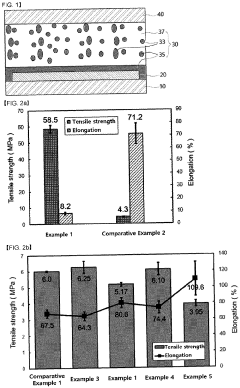
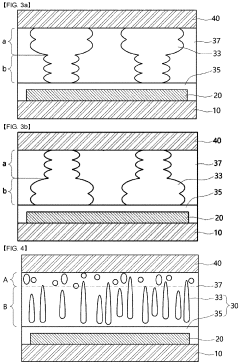
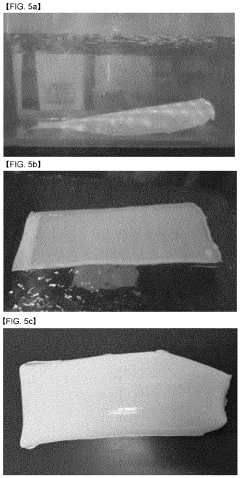
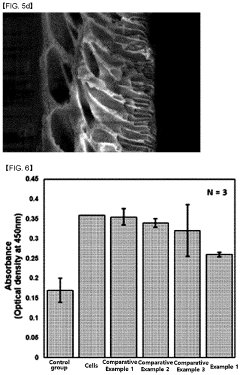
- A composite with a support and a porous polymer layer containing biocompatible oil is used to control the degradation of transient electronics, allowing for controlled release and biodegradation, ensuring flexibility and biocompatibility to prevent organ damage and immune responses.
Transcoding of communication with personal health devices
PatentActiveUS20160044141A1
Innovation
- A transcoding module is introduced to facilitate communication between manager devices and non-IEEE 11073-compliant personal health devices by emulating IEEE 11073 compliance, allowing the transcoding module to interact with the device as if it were an IEEE 11073 agent, thereby redirecting communications and transcoding data to ensure compatibility without requiring the device to fully implement the standard.


Biocompatibility and Safety Considerations
Biocompatibility represents a critical consideration in the development of transient electronics for personalized medicine applications. These devices, designed to dissolve or degrade after fulfilling their therapeutic function, must interact harmoniously with biological systems without triggering adverse immune responses or inflammation. The materials selected for transient electronics—including silicon, magnesium, zinc, and biodegradable polymers—require rigorous evaluation to ensure they decompose into non-toxic byproducts that can be safely metabolized or excreted by the body.
Safety assessment protocols for transient electronics extend beyond traditional biocompatibility testing frameworks. The dynamic nature of these devices, which transition from functional electronic components to degradation products, necessitates comprehensive evaluation at multiple stages of their lifecycle. This includes monitoring potential electrical leakage during operation, assessing mechanical integrity to prevent fragmentation before intended dissolution, and characterizing degradation kinetics under various physiological conditions.
Regulatory considerations present significant challenges in the advancement of transient electronics for medical applications. Current regulatory frameworks were primarily established for permanent implants or conventional pharmaceuticals, creating uncertainty regarding appropriate approval pathways for devices designed to disappear. Manufacturers must navigate complex requirements for demonstrating both initial functionality and safe degradation, often necessitating novel testing methodologies and standards development.
The degradation products of transient electronics require particular scrutiny, as their accumulation could potentially lead to toxicity. Research indicates that controlled dissolution rates are essential to prevent localized concentration of byproducts that might exceed safe thresholds. Studies examining long-term effects of repeated use of transient electronic therapies remain limited, highlighting a critical knowledge gap that must be addressed before widespread clinical implementation.
Patient-specific factors significantly influence the safety profile of transient electronics. Variations in tissue pH, enzyme activity, and immune function can alter degradation rates and biological responses to these devices. This underscores the importance of personalized safety assessments and potentially adjustable degradation parameters to accommodate individual physiological differences, truly embodying the personalized medicine paradigm these technologies aim to advance.
Emerging research focuses on developing predictive models for biocompatibility and safety, incorporating machine learning approaches to analyze complex biological interactions with transient materials. These computational tools, combined with advanced in vitro testing platforms that better mimic in vivo conditions, promise to accelerate safety evaluations while reducing reliance on animal testing—aligning with global efforts toward more ethical and efficient medical device development.
Safety assessment protocols for transient electronics extend beyond traditional biocompatibility testing frameworks. The dynamic nature of these devices, which transition from functional electronic components to degradation products, necessitates comprehensive evaluation at multiple stages of their lifecycle. This includes monitoring potential electrical leakage during operation, assessing mechanical integrity to prevent fragmentation before intended dissolution, and characterizing degradation kinetics under various physiological conditions.
Regulatory considerations present significant challenges in the advancement of transient electronics for medical applications. Current regulatory frameworks were primarily established for permanent implants or conventional pharmaceuticals, creating uncertainty regarding appropriate approval pathways for devices designed to disappear. Manufacturers must navigate complex requirements for demonstrating both initial functionality and safe degradation, often necessitating novel testing methodologies and standards development.
The degradation products of transient electronics require particular scrutiny, as their accumulation could potentially lead to toxicity. Research indicates that controlled dissolution rates are essential to prevent localized concentration of byproducts that might exceed safe thresholds. Studies examining long-term effects of repeated use of transient electronic therapies remain limited, highlighting a critical knowledge gap that must be addressed before widespread clinical implementation.
Patient-specific factors significantly influence the safety profile of transient electronics. Variations in tissue pH, enzyme activity, and immune function can alter degradation rates and biological responses to these devices. This underscores the importance of personalized safety assessments and potentially adjustable degradation parameters to accommodate individual physiological differences, truly embodying the personalized medicine paradigm these technologies aim to advance.
Emerging research focuses on developing predictive models for biocompatibility and safety, incorporating machine learning approaches to analyze complex biological interactions with transient materials. These computational tools, combined with advanced in vitro testing platforms that better mimic in vivo conditions, promise to accelerate safety evaluations while reducing reliance on animal testing—aligning with global efforts toward more ethical and efficient medical device development.
Regulatory Pathways for Transient Medical Devices
The regulatory landscape for transient medical devices represents a complex and evolving framework that requires careful navigation. Currently, the FDA and other global regulatory bodies lack specific pathways designed exclusively for transient electronics in medical applications, necessitating adaptation of existing frameworks. Most transient medical devices are evaluated through the 510(k) clearance pathway in the United States, requiring demonstration of substantial equivalence to predicate devices—a challenging proposition given the novel nature of dissolvable electronics.
The European Union's Medical Device Regulation (MDR) presents additional considerations, particularly regarding the classification of transient devices based on their degradation profiles and interaction with biological tissues. Devices with longer residence times or those that interact with critical organ systems face more stringent regulatory scrutiny, requiring comprehensive clinical evidence packages.
Safety evaluation frameworks for transient medical devices must address unique considerations beyond those of conventional permanent implants. Regulatory bodies increasingly require manufacturers to provide detailed characterization of degradation products, their metabolic pathways, and potential toxicological impacts. The FDA's recent guidance on biocompatibility testing emphasizes the need for specialized protocols that account for the dynamic nature of degrading materials.
Post-market surveillance strategies present particular challenges for transient devices, as traditional approaches to device tracking and adverse event monitoring may be insufficient when the device is designed to disappear. Regulatory agencies are beginning to develop specialized frameworks that account for this unique characteristic, requiring manufacturers to implement novel monitoring protocols.
International harmonization efforts, including those led by the International Medical Device Regulators Forum (IMDRF), are working to establish consistent approaches to transient medical device regulation. These initiatives aim to reduce regulatory barriers while maintaining appropriate safety standards, potentially accelerating global market access for innovative transient technologies.
Emerging regulatory science is focusing on developing standardized testing methodologies specifically for transient electronics, including accelerated aging protocols that can reliably predict in vivo degradation profiles. The FDA's Medical Device Development Tools (MDDT) program offers potential pathways for qualifying such methodologies to streamline regulatory submissions.
Companies developing transient medical devices are advised to engage early and frequently with regulatory authorities through pre-submission consultations and breakthrough device designation programs, which can provide valuable guidance on evidence generation strategies tailored to these novel technologies.
The European Union's Medical Device Regulation (MDR) presents additional considerations, particularly regarding the classification of transient devices based on their degradation profiles and interaction with biological tissues. Devices with longer residence times or those that interact with critical organ systems face more stringent regulatory scrutiny, requiring comprehensive clinical evidence packages.
Safety evaluation frameworks for transient medical devices must address unique considerations beyond those of conventional permanent implants. Regulatory bodies increasingly require manufacturers to provide detailed characterization of degradation products, their metabolic pathways, and potential toxicological impacts. The FDA's recent guidance on biocompatibility testing emphasizes the need for specialized protocols that account for the dynamic nature of degrading materials.
Post-market surveillance strategies present particular challenges for transient devices, as traditional approaches to device tracking and adverse event monitoring may be insufficient when the device is designed to disappear. Regulatory agencies are beginning to develop specialized frameworks that account for this unique characteristic, requiring manufacturers to implement novel monitoring protocols.
International harmonization efforts, including those led by the International Medical Device Regulators Forum (IMDRF), are working to establish consistent approaches to transient medical device regulation. These initiatives aim to reduce regulatory barriers while maintaining appropriate safety standards, potentially accelerating global market access for innovative transient technologies.
Emerging regulatory science is focusing on developing standardized testing methodologies specifically for transient electronics, including accelerated aging protocols that can reliably predict in vivo degradation profiles. The FDA's Medical Device Development Tools (MDDT) program offers potential pathways for qualifying such methodologies to streamline regulatory submissions.
Companies developing transient medical devices are advised to engage early and frequently with regulatory authorities through pre-submission consultations and breakthrough device designation programs, which can provide valuable guidance on evidence generation strategies tailored to these novel technologies.
Unlock deeper insights with PatSnap Eureka Quick Research — get a full tech report to explore trends and direct your research. Try now!
Generate Your Research Report Instantly with AI Agent
Supercharge your innovation with PatSnap Eureka AI Agent Platform!