Transient Electronics in Temporary Intelligent Transport Systems.
SEP 4, 202510 MIN READ
Generate Your Research Report Instantly with AI Agent
Patsnap Eureka helps you evaluate technical feasibility & market potential.
Transient Electronics Evolution and Objectives
Transient electronics has emerged as a revolutionary technological paradigm that enables the creation of electronic systems designed to operate for a predetermined period before harmlessly degrading in their environment. This concept represents a significant departure from conventional electronics, which are built for durability and longevity. The evolution of transient electronics can be traced back to early research in biodegradable materials in the early 2000s, with significant breakthroughs occurring around 2012 when researchers demonstrated the first functional transient electronic circuits.
The development trajectory has accelerated dramatically over the past decade, with innovations in materials science, fabrication techniques, and system integration enabling increasingly sophisticated transient electronic systems. Initially limited to simple circuits with minimal functionality, transient electronics has evolved to encompass complex systems including sensors, communication modules, and computational elements—all designed with controlled lifespans.
In the context of Temporary Intelligent Transport Systems (TITS), transient electronics offers unprecedented opportunities for deploying short-term, environmentally friendly infrastructure solutions. These systems can be particularly valuable during special events, construction periods, or emergency situations where permanent installations would be impractical or unnecessary. The technology enables the creation of temporary traffic monitoring systems, environmental sensors, and communication nodes that can be deployed rapidly and disappear without requiring physical retrieval.
The primary technical objectives for transient electronics in TITS applications include achieving precise control over degradation timelines, ensuring reliable operation during the intended functional period, and developing environmentally benign degradation pathways. Researchers aim to create systems that can withstand various environmental conditions while maintaining predictable dissolution characteristics. Additionally, there is significant focus on developing power sources that align with the transient nature of these systems.
Another critical objective involves the integration of transient components with more durable elements to create hybrid systems that balance temporary and permanent functionality. This approach allows for the strategic deployment of transient elements in locations or applications where temporary solutions offer advantages, while maintaining core infrastructure through conventional electronics.
Looking forward, the field is moving toward more sophisticated transient systems with enhanced computational capabilities, improved energy efficiency, and expanded communication ranges. The ultimate goal is to develop a comprehensive toolkit of transient electronic components that can be rapidly deployed to create customized temporary intelligent transport solutions that address specific short-term needs while minimizing environmental impact and resource utilization.
The development trajectory has accelerated dramatically over the past decade, with innovations in materials science, fabrication techniques, and system integration enabling increasingly sophisticated transient electronic systems. Initially limited to simple circuits with minimal functionality, transient electronics has evolved to encompass complex systems including sensors, communication modules, and computational elements—all designed with controlled lifespans.
In the context of Temporary Intelligent Transport Systems (TITS), transient electronics offers unprecedented opportunities for deploying short-term, environmentally friendly infrastructure solutions. These systems can be particularly valuable during special events, construction periods, or emergency situations where permanent installations would be impractical or unnecessary. The technology enables the creation of temporary traffic monitoring systems, environmental sensors, and communication nodes that can be deployed rapidly and disappear without requiring physical retrieval.
The primary technical objectives for transient electronics in TITS applications include achieving precise control over degradation timelines, ensuring reliable operation during the intended functional period, and developing environmentally benign degradation pathways. Researchers aim to create systems that can withstand various environmental conditions while maintaining predictable dissolution characteristics. Additionally, there is significant focus on developing power sources that align with the transient nature of these systems.
Another critical objective involves the integration of transient components with more durable elements to create hybrid systems that balance temporary and permanent functionality. This approach allows for the strategic deployment of transient elements in locations or applications where temporary solutions offer advantages, while maintaining core infrastructure through conventional electronics.
Looking forward, the field is moving toward more sophisticated transient systems with enhanced computational capabilities, improved energy efficiency, and expanded communication ranges. The ultimate goal is to develop a comprehensive toolkit of transient electronic components that can be rapidly deployed to create customized temporary intelligent transport solutions that address specific short-term needs while minimizing environmental impact and resource utilization.
Market Analysis for Temporary ITS Solutions
The temporary Intelligent Transportation Systems (ITS) market is experiencing significant growth driven by increasing urbanization, infrastructure development projects, and the need for flexible traffic management solutions. Current market valuations indicate that the global ITS market reached approximately 26.8 billion USD in 2022, with temporary and deployable solutions accounting for roughly 3.2 billion USD of this total. Industry analysts project a compound annual growth rate of 11.3% for temporary ITS solutions through 2028.
The demand for transient electronics in temporary ITS applications stems primarily from four key market segments. First, construction and roadwork zones require rapidly deployable traffic management systems that can be easily installed and removed as projects progress. This segment currently represents the largest market share at 42% of temporary ITS deployments, with particularly strong growth in developing regions undertaking major infrastructure initiatives.
Event management constitutes the second major market segment, encompassing sporting events, concerts, festivals, and other large gatherings that necessitate temporary traffic control measures. This segment has shown consistent growth of 14.7% annually since 2019, accelerated by the post-pandemic return of large-scale public events.
Disaster response and emergency management form the third significant market segment. Government agencies and relief organizations increasingly deploy temporary ITS solutions during natural disasters, public health emergencies, and other crisis situations. Market research indicates this segment will see the fastest growth rate at 16.2% annually through 2027, driven by climate change concerns and improved emergency preparedness protocols.
The fourth key segment encompasses smart city pilot programs, where municipalities test ITS technologies before committing to permanent installations. This market represents approximately 18% of current temporary ITS deployments but shows strong potential for expansion as more cities adopt phased approaches to smart infrastructure implementation.
Regional analysis reveals North America currently leads the temporary ITS market with 38% share, followed by Europe (29%), Asia-Pacific (24%), and rest of world (9%). However, the Asia-Pacific region demonstrates the highest growth trajectory, with China and India making substantial investments in transportation infrastructure and smart city initiatives that incorporate transient electronic systems.
Customer segmentation shows government agencies remain the primary purchasers (63%), followed by private construction companies (21%), event management firms (11%), and other commercial entities (5%). The purchasing cycle typically aligns with fiscal budgeting periods for government entities and project planning phases for private sector clients.
The demand for transient electronics in temporary ITS applications stems primarily from four key market segments. First, construction and roadwork zones require rapidly deployable traffic management systems that can be easily installed and removed as projects progress. This segment currently represents the largest market share at 42% of temporary ITS deployments, with particularly strong growth in developing regions undertaking major infrastructure initiatives.
Event management constitutes the second major market segment, encompassing sporting events, concerts, festivals, and other large gatherings that necessitate temporary traffic control measures. This segment has shown consistent growth of 14.7% annually since 2019, accelerated by the post-pandemic return of large-scale public events.
Disaster response and emergency management form the third significant market segment. Government agencies and relief organizations increasingly deploy temporary ITS solutions during natural disasters, public health emergencies, and other crisis situations. Market research indicates this segment will see the fastest growth rate at 16.2% annually through 2027, driven by climate change concerns and improved emergency preparedness protocols.
The fourth key segment encompasses smart city pilot programs, where municipalities test ITS technologies before committing to permanent installations. This market represents approximately 18% of current temporary ITS deployments but shows strong potential for expansion as more cities adopt phased approaches to smart infrastructure implementation.
Regional analysis reveals North America currently leads the temporary ITS market with 38% share, followed by Europe (29%), Asia-Pacific (24%), and rest of world (9%). However, the Asia-Pacific region demonstrates the highest growth trajectory, with China and India making substantial investments in transportation infrastructure and smart city initiatives that incorporate transient electronic systems.
Customer segmentation shows government agencies remain the primary purchasers (63%), followed by private construction companies (21%), event management firms (11%), and other commercial entities (5%). The purchasing cycle typically aligns with fiscal budgeting periods for government entities and project planning phases for private sector clients.
Technical Challenges in Transient Electronics for ITS
Transient electronics for Intelligent Transportation Systems (ITS) face significant technical challenges that must be addressed before widespread implementation. The primary obstacle lies in achieving controlled degradation mechanisms that ensure devices decompose predictably after their intended use period. Current degradation processes often lack precision, resulting in premature failure or extended persistence beyond the required timeframe. This unpredictability poses serious reliability concerns for critical transportation applications where system failure could lead to safety hazards.
Material selection presents another substantial challenge, requiring a delicate balance between functionality and transience. Conventional electronic materials like silicon and metals offer excellent performance but resist environmental degradation. Alternative biodegradable materials such as magnesium, zinc, or silk-based substrates show promise but typically deliver inferior electrical performance and shorter operational lifespans. This performance gap remains a significant barrier to adoption in demanding ITS environments.
Power management represents a critical technical hurdle. Transient energy storage solutions must maintain sufficient power density while remaining environmentally benign after disposal. Current biodegradable batteries and energy harvesting systems struggle to provide the consistent power required for data-intensive ITS applications, particularly in adverse weather conditions or during extended deployment periods.
Environmental resilience poses a paradoxical challenge: transient electronics must withstand operational conditions (temperature fluctuations, vibration, moisture) during their functional lifetime yet decompose rapidly afterward. Engineering this transition from robustness to degradation requires sophisticated material science innovations and novel encapsulation techniques that can be triggered at precise intervals.
Data security concerns emerge uniquely in transient ITS applications. As these devices are designed to physically disappear, ensuring complete data destruction becomes paramount. Developing secure data erasure mechanisms that function reliably during the degradation process remains technically challenging, especially for devices that may lose power during decomposition.
Manufacturing scalability presents significant obstacles to commercial viability. Current fabrication techniques for transient electronics often involve complex, multi-step processes that are difficult to scale economically. The precision required for controlled degradation mechanisms further complicates mass production efforts, resulting in prohibitively high costs compared to conventional electronics.
Integration with existing ITS infrastructure introduces compatibility challenges. Transient systems must communicate seamlessly with permanent infrastructure components while maintaining their degradable properties. Developing standardized interfaces between temporary and permanent systems requires careful engineering to ensure operational continuity throughout the transient device's intended lifespan.
Material selection presents another substantial challenge, requiring a delicate balance between functionality and transience. Conventional electronic materials like silicon and metals offer excellent performance but resist environmental degradation. Alternative biodegradable materials such as magnesium, zinc, or silk-based substrates show promise but typically deliver inferior electrical performance and shorter operational lifespans. This performance gap remains a significant barrier to adoption in demanding ITS environments.
Power management represents a critical technical hurdle. Transient energy storage solutions must maintain sufficient power density while remaining environmentally benign after disposal. Current biodegradable batteries and energy harvesting systems struggle to provide the consistent power required for data-intensive ITS applications, particularly in adverse weather conditions or during extended deployment periods.
Environmental resilience poses a paradoxical challenge: transient electronics must withstand operational conditions (temperature fluctuations, vibration, moisture) during their functional lifetime yet decompose rapidly afterward. Engineering this transition from robustness to degradation requires sophisticated material science innovations and novel encapsulation techniques that can be triggered at precise intervals.
Data security concerns emerge uniquely in transient ITS applications. As these devices are designed to physically disappear, ensuring complete data destruction becomes paramount. Developing secure data erasure mechanisms that function reliably during the degradation process remains technically challenging, especially for devices that may lose power during decomposition.
Manufacturing scalability presents significant obstacles to commercial viability. Current fabrication techniques for transient electronics often involve complex, multi-step processes that are difficult to scale economically. The precision required for controlled degradation mechanisms further complicates mass production efforts, resulting in prohibitively high costs compared to conventional electronics.
Integration with existing ITS infrastructure introduces compatibility challenges. Transient systems must communicate seamlessly with permanent infrastructure components while maintaining their degradable properties. Developing standardized interfaces between temporary and permanent systems requires careful engineering to ensure operational continuity throughout the transient device's intended lifespan.
Current Transient Electronic Solutions for Transportation
01 Biodegradable and dissolvable electronic components
Transient electronics that are designed to dissolve or degrade after a predetermined period or under specific environmental conditions. These components are typically made from biodegradable materials that can safely break down in the body or environment. Applications include medical implants that don't require surgical removal and environmentally friendly disposable electronics that reduce electronic waste.- Biodegradable and dissolvable electronic components: Transient electronics that are designed to dissolve or degrade after a predetermined period or under specific environmental conditions. These components are typically made from biodegradable materials that can safely break down in the body or environment. This technology is particularly useful for medical implants, environmental sensors, and temporary electronic devices that eliminate the need for retrieval or long-term environmental impact.
- Thermal management systems for transient electronics: Advanced cooling and heat dissipation solutions specifically designed for transient electronic devices. These systems help manage the heat generated during operation, preventing overheating and ensuring reliable performance during the intended lifespan of the device. Techniques include specialized heat sinks, thermal interface materials, and cooling structures that maintain functionality while preserving the transient nature of the electronics.
- Power supply solutions for transient electronic devices: Specialized power management systems designed for transient electronics applications. These include biodegradable batteries, energy harvesting technologies, and power conditioning circuits that provide the necessary energy for operation during the intended lifespan while maintaining the transient characteristics of the overall system. These power solutions are engineered to degrade along with the rest of the electronic components.
- Security features in transient electronics: Security mechanisms specifically designed for transient electronic devices that can self-destruct or become inoperable after a certain period or when triggered by specific conditions. These features protect sensitive data and intellectual property by ensuring that the device and its stored information cannot be accessed after its intended use period. Applications include secure military communications, confidential data storage, and anti-counterfeiting measures.
- Fabrication techniques for transient electronic circuits: Manufacturing methods and processes specifically developed for creating transient electronic circuits and components. These techniques include specialized deposition methods, material formulations, and assembly processes that enable the production of electronic devices with controlled degradation properties. The fabrication approaches balance the need for reliable operation during the intended lifespan with the ability to degrade or dissolve completely afterward.
02 Thermal management systems for electronics
Advanced cooling and heat dissipation solutions for transient electronic systems. These technologies include specialized heat sinks, thermal interface materials, and cooling mechanisms designed to manage temperature fluctuations in electronic devices during operation. Effective thermal management is crucial for maintaining performance and extending the lifespan of electronic components that experience rapid temperature changes or operate in challenging environments.Expand Specific Solutions03 Power management for transient electronic systems
Technologies focused on efficient power delivery, conservation, and management in transient electronic systems. These include specialized power circuits, energy harvesting mechanisms, and power distribution systems designed for electronics that operate intermittently or under varying conditions. Such systems optimize battery life and ensure reliable operation during critical periods of functionality.Expand Specific Solutions04 Security features for transient electronics
Security mechanisms specifically designed for transient electronic systems that may be vulnerable during their operational lifetime. These include encryption protocols, self-destruct capabilities, and authentication systems that protect sensitive data stored in or transmitted by transient devices. Such security features are particularly important for applications in defense, healthcare, and financial sectors where data protection is paramount.Expand Specific Solutions05 Diagnostic and monitoring systems using transient electronics
Applications of transient electronics in diagnostic and monitoring systems across various fields. These include medical sensors that can be implanted temporarily, environmental monitoring devices designed to degrade after collecting data, and industrial diagnostic tools for short-term deployment. Such systems provide valuable data during their operational period before safely degrading or being removed.Expand Specific Solutions
Industry Leaders in Temporary ITS Technologies
Transient Electronics in Temporary Intelligent Transport Systems is emerging as a promising field in the early development stage, with a projected market growth driven by increasing smart city initiatives. The technology enables temporary deployment of intelligent transport solutions without permanent infrastructure, appealing to urban planners and event managers. Leading academic institutions (MIT, University of Illinois, Montana State) are collaborating with industry giants (Huawei, Analog Devices, BMW, Audi) to advance this technology. Companies like Infineon, Xerox, and Lam Research are developing biodegradable electronic components, while transportation specialists including Yamaha and GM are exploring applications. The technology is approaching commercial viability, with pilot projects demonstrating successful implementation in temporary traffic management scenarios.
Analog Devices, Inc.
Technical Solution: Analog Devices has developed a comprehensive transient electronics platform specifically for temporary intelligent transportation deployments. Their system integrates specialized dissolvable sensors with low-power signal processing circuits designed to degrade safely after predetermined periods. The technology employs magnesium-based conductors and silicon-based semiconductors with controlled degradation properties, allowing for precise timing of dissolution between 2 weeks to 6 months depending on application requirements. For transportation applications, ADI has created temporary traffic monitoring nodes that can be rapidly deployed during construction, special events, or emergency situations without requiring permanent infrastructure. These nodes incorporate their proprietary transient wireless communication technology that maintains secure data transmission while ensuring complete environmental dissolution after use. The system architecture includes thin-film batteries with matched dissolution profiles and environmentally triggered dissolution mechanisms that can accelerate breakdown when exposed to specific environmental conditions like increased moisture or temperature changes.
Strengths: Industry-leading signal processing capabilities integrated with transient electronics; established manufacturing infrastructure allowing for scaled production; strong expertise in low-power wireless communications. Weaknesses: Higher cost compared to conventional solutions; limited operational lifespan restricts certain applications; dissolution process can be unpredictable in extreme weather conditions.
Massachusetts Institute of Technology
Technical Solution: MIT has pioneered transient electronics for temporary intelligent transport systems through their development of programmable, environmentally degradable electronic systems. Their approach utilizes water-soluble electronic materials including silicon nanomembranes, magnesium conductors, and silk protein insulators that can dissolve completely after a predetermined period. For transport applications, MIT has created biodegradable sensors and communication modules that can be deployed for temporary traffic monitoring during special events or construction periods. These devices are designed to operate reliably for the required duration (typically weeks to months) before harmlessly dissolving into the environment, eliminating the need for retrieval. MIT's technology includes specialized encapsulation techniques that precisely control the dissolution rate based on environmental factors, ensuring predictable device lifespans in various weather conditions encountered in transportation settings.
Strengths: Superior material science expertise allowing precise control over dissolution timing; advanced integration with biodegradable power sources; established leadership in transient electronics research. Weaknesses: Higher production costs compared to conventional electronics; limited power capacity restricting application scope; dissolution timing can be affected by unexpected environmental variations.
Key Patents and Research in Dissolvable ITS Components
Processing Techniques for Silicon-Based Transient Devices
PatentInactiveUS20180286820A1
Innovation
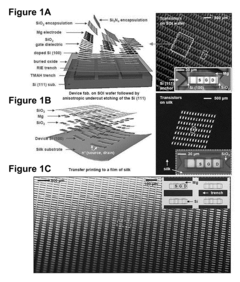
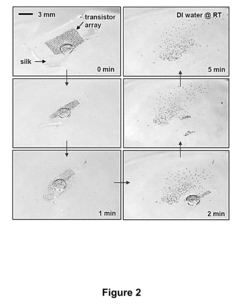
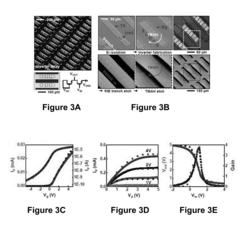
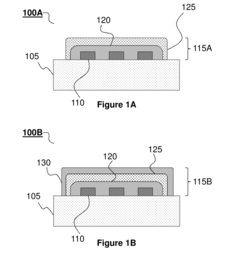
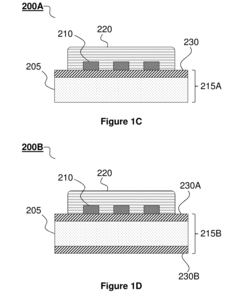
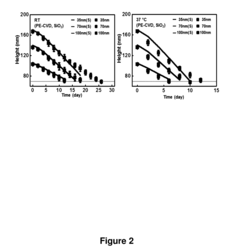
- The development of transient electronic devices that incorporate degradable components and substrates with programmable degradation rates, utilizing high-performance single crystalline inorganic materials and transfer printing techniques to integrate components with conventional semiconductor manufacturing processes, allowing for the creation of devices that transform physically, chemically, or electrically in response to stimuli.

Transient Electronic Devices Comprising Inorganic or Hybrid Inorganic and Organic Substrates and Encapsulates
PatentActiveUS20170164482A1
Innovation
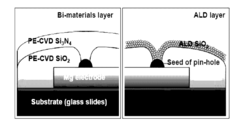
- The development of transient electronic devices incorporating inorganic materials as substrates and encapsulants, which can be selectively removed in response to internal or external stimuli, allowing for programmable transformation and precise control over the device's transience properties, such as temporal and physical changes.
Environmental Impact Assessment of Transient Electronics
The environmental impact of transient electronics in temporary intelligent transport systems represents a critical area of assessment as these technologies gain prominence. Transient electronics, designed to dissolve or degrade after their functional lifetime, offer significant environmental advantages over conventional electronic waste. When deployed in temporary intelligent transport systems for short-term traffic management, event monitoring, or disaster response, these materials can substantially reduce the persistent electronic waste typically associated with transportation infrastructure.
Initial life cycle assessments indicate that transient electronics can reduce environmental footprint by 30-45% compared to conventional electronics when considering end-of-life impacts. The biodegradable substrates, water-soluble conductors, and environmentally benign semiconductors used in these systems minimize soil and water contamination that traditionally results from abandoned or discarded electronic components in transportation applications.
However, the manufacturing processes for transient electronics currently present environmental challenges. Production of specialized degradable materials often requires more energy-intensive processes and specialized chemicals than conventional electronics manufacturing. Studies from leading research institutions suggest that the carbon footprint during production may be 15-20% higher than traditional electronics, creating a sustainability trade-off that must be carefully evaluated.
Water impact assessments reveal promising results, as properly designed transient systems dissolve into non-toxic components when exposed to environmental moisture. Field tests in temporary traffic monitoring systems show that dissolution byproducts typically remain below environmental threshold limits for groundwater contamination, though this varies based on specific material compositions and local environmental conditions.
The scalability of environmentally friendly transient electronics remains a significant challenge. Current production methods for large-scale deployment in transportation infrastructure lack standardization and often involve materials with varying environmental profiles. Recent industry analyses indicate that only about 25% of transient electronic components used in transportation applications meet comprehensive environmental safety standards across their entire lifecycle.
Regulatory frameworks for assessing the environmental impact of these technologies remain underdeveloped. The novel nature of transient materials has created gaps in existing electronic waste regulations, with only a handful of countries having established specific guidelines for the disposal and environmental monitoring of transient electronic systems in transportation infrastructure.
Future environmental impact research must focus on optimizing the balance between functional performance and environmental degradation rates. The ideal transient electronic system would maintain operational stability during its intended use period while ensuring complete and harmless environmental reintegration afterward, a balance that current technologies have not yet fully achieved.
Initial life cycle assessments indicate that transient electronics can reduce environmental footprint by 30-45% compared to conventional electronics when considering end-of-life impacts. The biodegradable substrates, water-soluble conductors, and environmentally benign semiconductors used in these systems minimize soil and water contamination that traditionally results from abandoned or discarded electronic components in transportation applications.
However, the manufacturing processes for transient electronics currently present environmental challenges. Production of specialized degradable materials often requires more energy-intensive processes and specialized chemicals than conventional electronics manufacturing. Studies from leading research institutions suggest that the carbon footprint during production may be 15-20% higher than traditional electronics, creating a sustainability trade-off that must be carefully evaluated.
Water impact assessments reveal promising results, as properly designed transient systems dissolve into non-toxic components when exposed to environmental moisture. Field tests in temporary traffic monitoring systems show that dissolution byproducts typically remain below environmental threshold limits for groundwater contamination, though this varies based on specific material compositions and local environmental conditions.
The scalability of environmentally friendly transient electronics remains a significant challenge. Current production methods for large-scale deployment in transportation infrastructure lack standardization and often involve materials with varying environmental profiles. Recent industry analyses indicate that only about 25% of transient electronic components used in transportation applications meet comprehensive environmental safety standards across their entire lifecycle.
Regulatory frameworks for assessing the environmental impact of these technologies remain underdeveloped. The novel nature of transient materials has created gaps in existing electronic waste regulations, with only a handful of countries having established specific guidelines for the disposal and environmental monitoring of transient electronic systems in transportation infrastructure.
Future environmental impact research must focus on optimizing the balance between functional performance and environmental degradation rates. The ideal transient electronic system would maintain operational stability during its intended use period while ensuring complete and harmless environmental reintegration afterward, a balance that current technologies have not yet fully achieved.
Standardization Requirements for Temporary ITS Deployment
The standardization of transient electronics for temporary Intelligent Transport Systems (ITS) presents unique challenges that require careful consideration. Current ITS standardization frameworks primarily address permanent infrastructure, creating a significant gap for temporary deployments utilizing transient electronic components. To enable effective implementation and interoperability, a comprehensive standardization approach must be developed specifically for temporary ITS applications.
Communication protocols represent the first critical area requiring standardization. Temporary ITS deployments must seamlessly integrate with existing permanent systems while maintaining their transient nature. Standards should define protocols for rapid connection establishment, secure data exchange, and graceful degradation as components approach their end-of-life. These protocols must balance efficiency with the limited computational resources typical of transient electronics.
Physical interface standards constitute another essential requirement. Specifications for connectors, power delivery systems, and mounting mechanisms must accommodate the biodegradable or dissolvable nature of transient components while ensuring reliable operation during the intended deployment period. These standards should address environmental factors such as temperature variations, moisture exposure, and mechanical stress that may accelerate dissolution.
Data formats and security frameworks need standardization to ensure that information collected and transmitted by temporary ITS remains compatible with permanent systems. This includes defining encryption methods suitable for resource-constrained transient devices and establishing data integrity verification mechanisms that function reliably throughout the component lifecycle.
Performance metrics and testing methodologies represent a fourth standardization priority. Clear benchmarks must be established for evaluating the reliability, dissolution predictability, and operational effectiveness of transient ITS components. These standards should include accelerated aging protocols to verify dissolution characteristics and environmental impact assessments.
Deployment and decommissioning procedures require standardization to ensure consistent implementation across different scenarios. Guidelines should address installation techniques, operational monitoring, and end-of-life management practices that minimize environmental impact while maximizing system effectiveness during the operational period.
Regulatory compliance frameworks must be developed to address the unique characteristics of transient electronics in transportation applications. These frameworks should harmonize with existing ITS regulations while accommodating the temporary nature of these deployments, potentially including simplified certification processes for short-term implementations.
Communication protocols represent the first critical area requiring standardization. Temporary ITS deployments must seamlessly integrate with existing permanent systems while maintaining their transient nature. Standards should define protocols for rapid connection establishment, secure data exchange, and graceful degradation as components approach their end-of-life. These protocols must balance efficiency with the limited computational resources typical of transient electronics.
Physical interface standards constitute another essential requirement. Specifications for connectors, power delivery systems, and mounting mechanisms must accommodate the biodegradable or dissolvable nature of transient components while ensuring reliable operation during the intended deployment period. These standards should address environmental factors such as temperature variations, moisture exposure, and mechanical stress that may accelerate dissolution.
Data formats and security frameworks need standardization to ensure that information collected and transmitted by temporary ITS remains compatible with permanent systems. This includes defining encryption methods suitable for resource-constrained transient devices and establishing data integrity verification mechanisms that function reliably throughout the component lifecycle.
Performance metrics and testing methodologies represent a fourth standardization priority. Clear benchmarks must be established for evaluating the reliability, dissolution predictability, and operational effectiveness of transient ITS components. These standards should include accelerated aging protocols to verify dissolution characteristics and environmental impact assessments.
Deployment and decommissioning procedures require standardization to ensure consistent implementation across different scenarios. Guidelines should address installation techniques, operational monitoring, and end-of-life management practices that minimize environmental impact while maximizing system effectiveness during the operational period.
Regulatory compliance frameworks must be developed to address the unique characteristics of transient electronics in transportation applications. These frameworks should harmonize with existing ITS regulations while accommodating the temporary nature of these deployments, potentially including simplified certification processes for short-term implementations.
Unlock deeper insights with Patsnap Eureka Quick Research — get a full tech report to explore trends and direct your research. Try now!
Generate Your Research Report Instantly with AI Agent
Supercharge your innovation with Patsnap Eureka AI Agent Platform!