
Device and method for testing mechanical property in ultrahigh temperature oxidation environment
A testing device and an oxidizing environment technology, applied in the direction of testing material strength by applying stable bending force, testing material strength by applying stable shear force, testing material strength by applying stable tension/pressure, etc., can solve the test temperature Inaccurate testing, poor repeatability of experiments, lack of non-contact deformation testing technology, etc.
Patent Information
- Authority / Receiving Office
- CN · China
- Patent Type
- Applications(China)
- Current Assignee / Owner
- Publication Date
- 2013-02-27
Smart Images
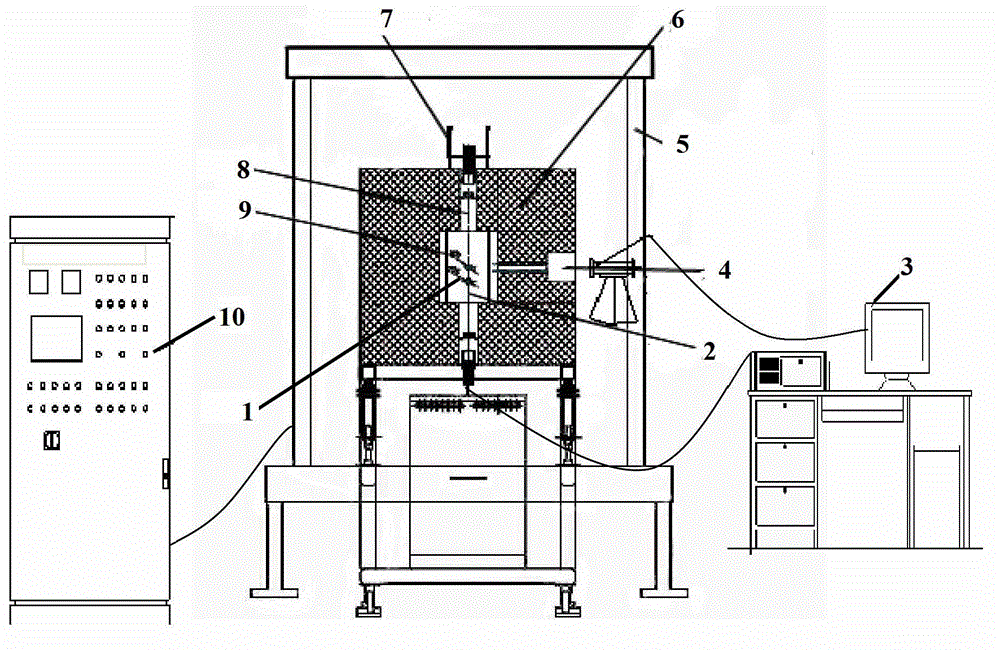
Figure 1 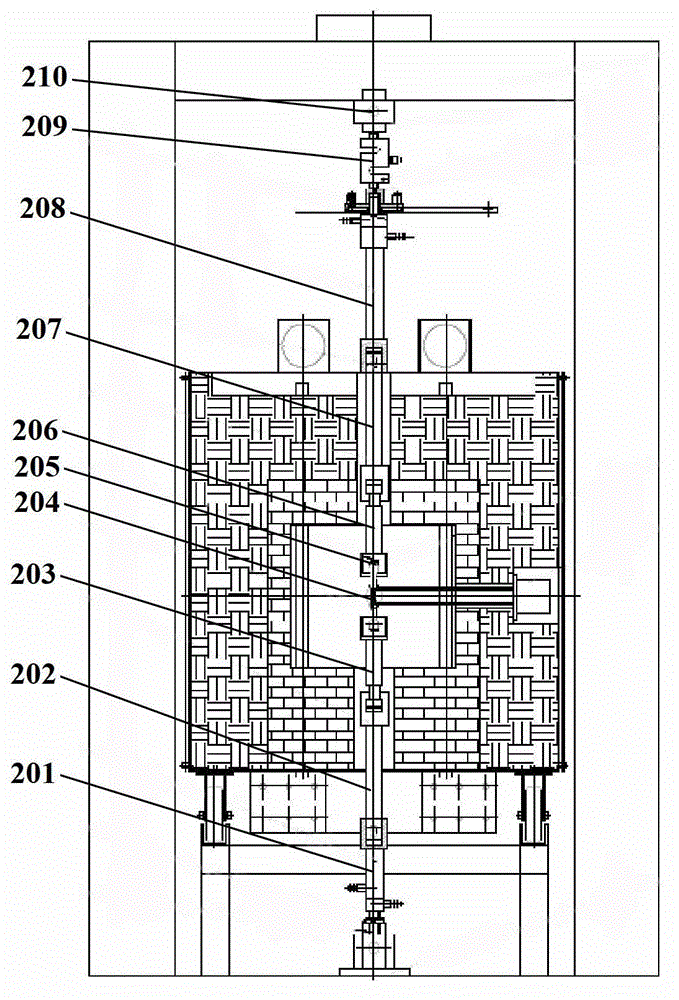
Figure 2 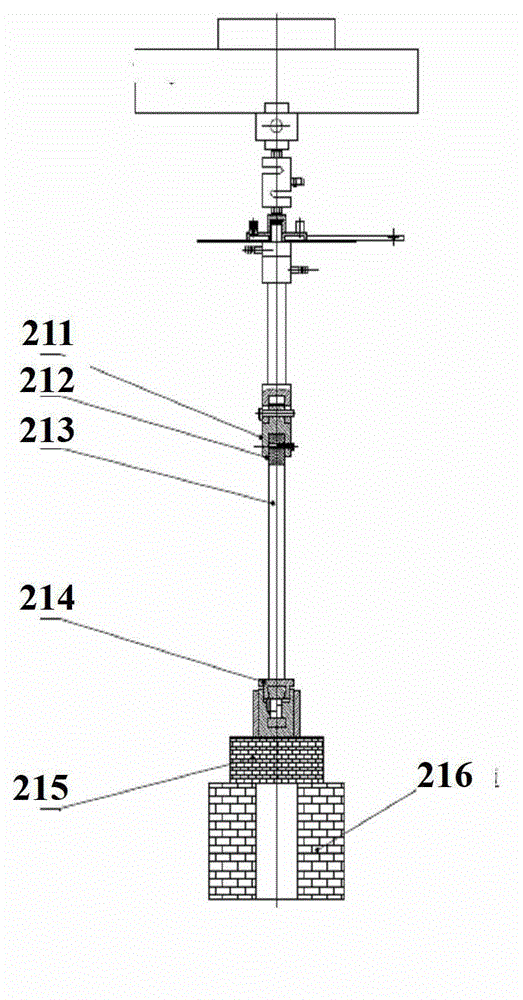
Figure 3
Abstract
Description
technical field
[0001] The invention relates to a device for testing the mechanical properties of materials in an oxidizing environment from room temperature to 1800 degrees. Specifically, it is a new type of ultra-high temperature ceramic heating body that is heated and loaded to test the mechanical properties of materials such as tension, compression, bending, shearing, indentation, fatigue, and creep. Background technique
[0002] In view of the fact that the medium and high temperature materials and structures in the high-tech field and national defense equipment construction need to withstand complex heat / force / oxidation coupling or complex combustion environment, and key ultra-high temperature materials (such as micro-ablative C / C composite materials, non-ablative ultra-high temperature Ceramics, superalloys, C / SiC composites) performance complexity. When evaluating the service safety of the design of ultra-high temperature components used in extreme environments, it ...
Examples
Embodiment 1
[0079] Embodiment 1: Measuring the tensile strength of a certain ultra-high temperature ceramic material
[0080] The specific experimental operation steps are:
[0081] (1) Take a test sample. The shape and size of the sample refer to the American ASTM C1295 standard. The gauge length of the sample is 30mm, and the cross-section within the gauge length is 5.97mm×2.98mm. On the upper and lower chucks connected by rods (such as figure 2 As shown), give the sample a small pre-tightening force (﹤20N) to keep it in the vertical direction; insert the ultra-high temperature extension into the furnace body, and the gauge length section of the ejector rod is in contact with the pre-sample; adjust the power supply, The heating process in the furnace is controlled by an ultra-high temperature ceramic heating element, and the temperature of the sample in the furnace is measured by an infrared thermometer to 1650 degrees, and then kept for 5 minutes;
[0082] (2) The loading bar loads ...
Embodiment 2
[0083] Example 2: Measuring the flexural strength of an ultra-high temperature ceramic material supporting a certain military product
[0084] The specific experimental operation steps are:
[0085] (1) Take a test sample, measure its size as 2.98mm×3.97mm×40.2mm, place the sample on the roller rod fixed on the fixture support (such as image 3 As shown), the span between the lower rollers is 20mm; adjust the power supply, heat the furnace through the ultra-high temperature ceramic heating element, use the infrared temperature measuring device to measure the temperature of the sample in the furnace to 1800 degrees, and keep it for 5 minutes;
[0086] (2) The upper roller loads the sample at the center of the sample at a speed of 0.5 mm / min until the sample breaks, and records the load-displacement curve (such as Figure 5 Shown), the corresponding critical load when the sample breaks is 154N; the calculated cantilever beam bending strength is 131MPa.