
Silicon powder surface deoxidizing method
A silicon powder, anhydrous ethanol technology, applied in chemical instruments and methods, silicon compounds, inorganic chemistry, etc., can solve the problems of hindering the removal of residual oxides, eroding and damaging the silicon substrate, and reducing the efficiency of oxygen removal, and achieving a rapid removal reaction. , lower contact angle, easy operation effect
Patent Information
- Authority / Receiving Office
- CN · China
- Patent Type
- Patents(China)
- Current Assignee / Owner
- Publication Date
- 2014-11-19
- Estimated Expiration
- Not applicable · inactive patent
Smart Images
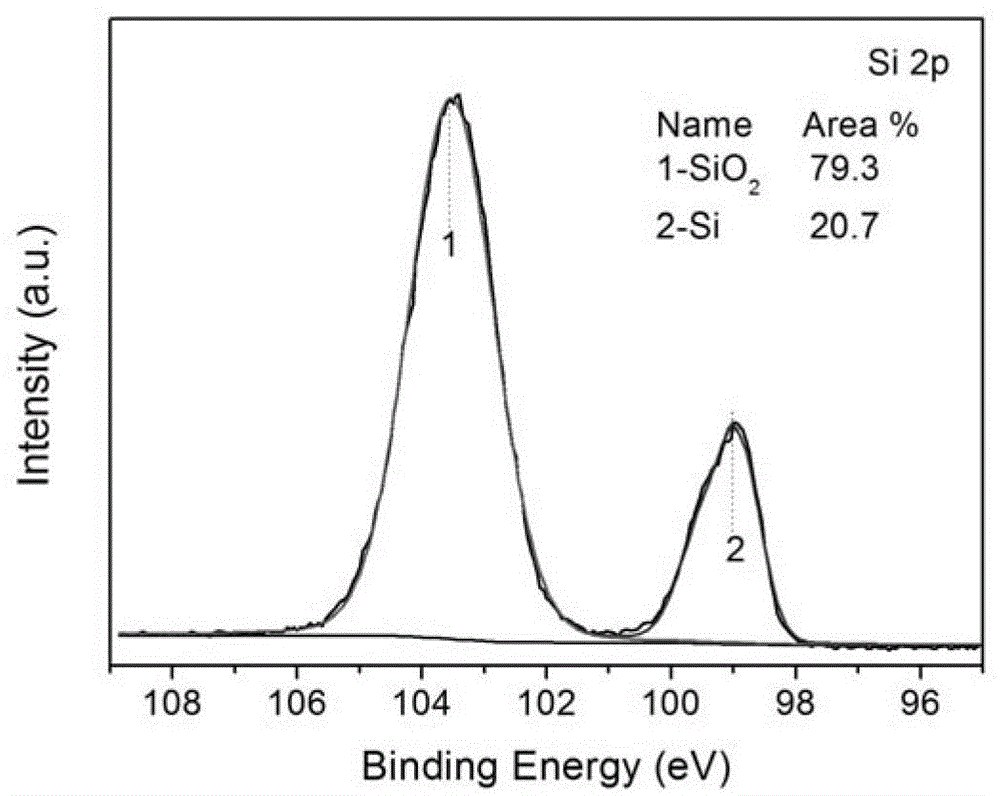
Figure 1 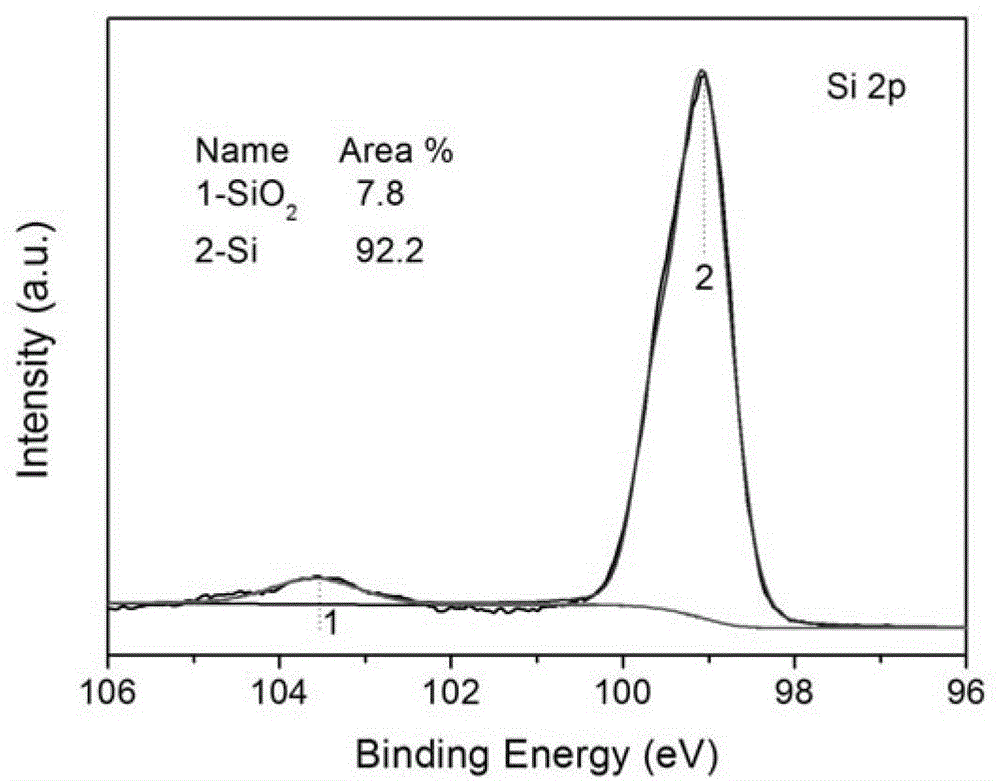
Figure 2 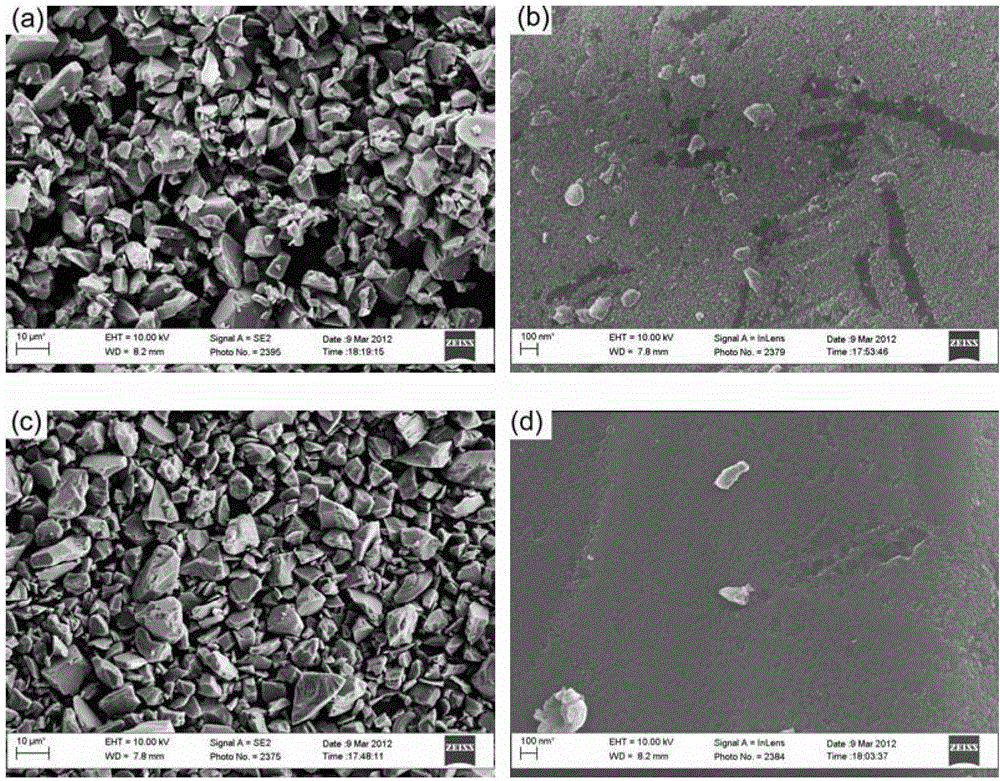
Figure 3
Abstract
Description
technical field
[0001] The invention belongs to the technical field of powder surface treatment and relates to the removal of oxygen on the surface of silicon powder. Background technique
[0002] As an indispensable basic raw material, silicon powder is widely used in powder metallurgy manufacturing, such as for sintering to prepare refractory alloys, ceramics, composite materials, etc. However, due to the high surface activity, silicon powder is easily oxidized, forming SiO on the surface of silicon particles 2 , SiO and other oxide films. Silicon oxide is relatively stable, and it is difficult to be reduced even in the high-temperature sintering process, which affects the quality of sintered materials. In addition, the oxide film on the surface will reduce the fluidity of silicon powder, which will easily lead to a decrease in the density of the material and have an adverse effect on the comprehensive mechanical properties of the material.
[0003] At present, silicon ...
Examples
Embodiment approach 1
[0012] The commercial silica fume has a purity of 99.999 wt%, an average particle size of 6.23 μm, and an oxygen content of 2900 ppm. figure 1 is the XPS spectrum of original commercial silicon powder Si2p, SiO 2 The peak area ratio is 79.3%, it can be seen that the surface oxidation of silicon powder is serious. The nominal composition of deaeration liquid is by volume percentage, HF: 4%, C 2 h 5 OH: 2%, the rest is deionized water. Prepare the required oxygen removal solution in proportion and place it in a constant temperature water bath at 50°C, take out an appropriate amount of original commercial silicon powder to be treated and put it into the oxygen removal solution, stir continuously for 30 minutes, and then wash and filter with deionized water through a vacuum filter for 5 Once, vacuum-dried at 50°C, and then immediately vacuum-packed and stored. After testing, the oxygen content in the silicon powder dropped to (242±30) ppm after oxygen removal. figure 2 It is...
Embodiment approach 2
[0014] The commercial silica fume has a purity of 99.9 wt%, an average particle size of 26.67 μm, and an oxygen content of 3500 ppm. The nominal composition of deaeration liquid is by volume percentage, HF: 15%, C 2 h 5 OH: 3%, the rest is deionized water. Prepare the required oxygen removal solution in proportion and place it in a constant temperature water bath at 50°C, take out an appropriate amount of original commercial silicon powder to be treated and put it into the oxygen removal solution, stir continuously for 30 minutes, and then wash and filter with deionized water through a vacuum filter for 5 Once, vacuum-dried at 50°C, and then immediately vacuum-packed and stored. After testing, the oxygen content in the silicon powder dropped to (440±50) ppm after oxygen removal.
Embodiment approach 3
[0016] The commercial silica fume has a purity of 99.9 wt%, an average particle size of 26.67 μm, and an oxygen content of 3500 ppm. The nominal composition of deaeration liquid is by volume percentage, HF: 1%, C 2 h 5 OH: 0.5%, the rest is deionized water. Prepare the required oxygen removal solution in proportion and place it in a constant temperature water bath at 50°C, take out an appropriate amount of original commercial silicon powder to be treated and put it into the oxygen removal solution, stir continuously for 30 minutes, and then wash and filter with deionized water through a vacuum filter for 5 Once, vacuum-dried at 50°C, and then immediately vacuum-packed and stored. After testing, the oxygen content in the silicon powder dropped to (700±40) ppm after oxygen removal.