Building method of oxidation stress model of porcine circovirus 2 type in-vitro infection mouse mononuclear macrophages

A mononuclear macrophage and porcine circovirus technology, applied in biochemical equipment and methods, animal cells, vertebrate cells, etc., can solve problems such as lack of understanding and changes in the redox state of immune cells

CN105802913AInactive Publication Date: 2016-07-27GUANGXI UNIV
0 Cites 2 Cited by

Patent Information

Authority / Receiving Office
CN · China
Patent Type
Applications(China)
Current Assignee / Owner
Publication Date
2016-07-27
Estimated Expiration
Not applicable · inactive patent

Smart Images

  • Figure 1
    Figure 1
  • Figure 2
    Figure 2
  • Figure 3
    Figure 3
Patent Text Reader

Abstract

The invention discloses a building method of an oxidation stress model of porcine circovirus 2 type in-vitro infection mouse mononuclear macrophages. The method comprises the following steps: setting a cell control group and a PVC2 virus infection group, adding a DMEM culture solution and a virus solution with a corresponding concentration, discarding the solutions after carrying out cell adsorption for 2 hours, adding 1mL of the DMEM culture solution containing 5% of FBS, then continuing to culture, collecting samples respectively for detecting cell activity and indexes related to cellular redox state. The model has the characteristics of convenience in building, low cost and high practicability, provides an ideal in-vitro model for studying whether PCV2 infection causes a change of the immune cellular redox state or not and the action mechanism of the PCV2 infection, and possibly provides some novel methods for treating animal diseases caused by PCV2 infection.
Need to check novelty before this filing date? Find Prior Art

Description

technical field

[0001] The invention belongs to the technical field of monocyte-macrophage oxidative stress model, and in particular relates to a method for constructing a mouse monocyte-macrophage oxidative stress model infected with porcine circovirus type 2 in vitro. Background technique

[0002] Porcine circovirus disease caused by porcine circovirus type 2 (PCV2) infection has become a major disease affecting the swine industry worldwide, causing huge economic losses. The main sites of PCV2 virus replication are monocytes-macrophages and antigen-presenting cells of the body. PCV2 virus nucleic acid could be detected, and the main manifestations of PCV2 infection were lymphocyte loss and monocyte infiltration. Therefore, it causes the destruction of the pig's immune system, and the immunity is suppressed. The main site of PCV2 proliferation is B lymphocytes, and B lymphocytes also induce apoptosis of lymphocytes after PCV2 infection, causing immunosuppression. However...

Examples

Embodiment Construction

[0026] 1. Research ideas

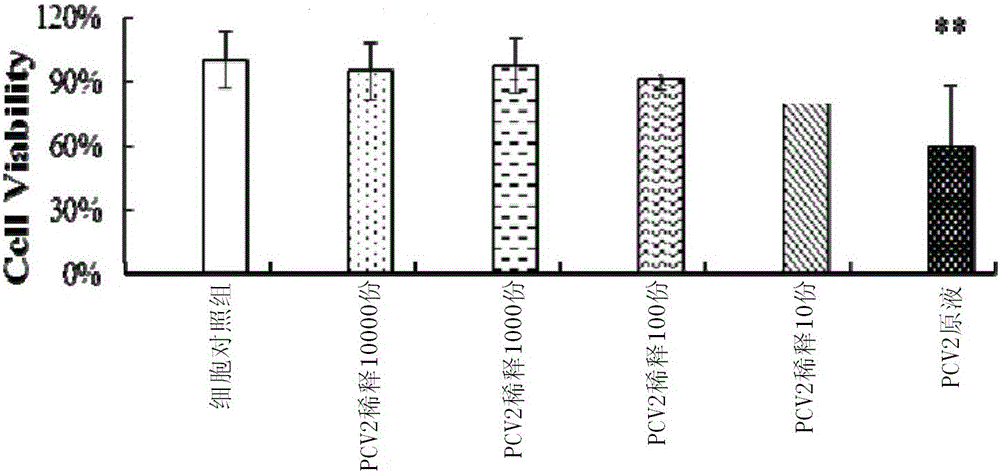
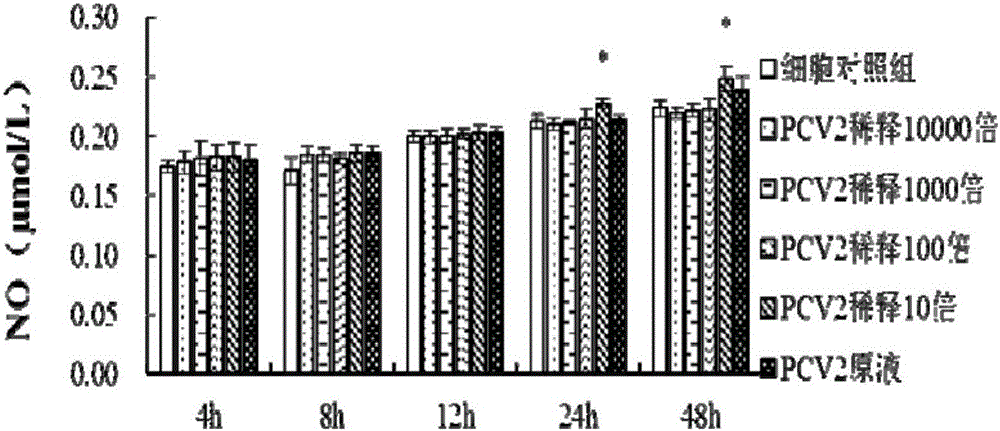
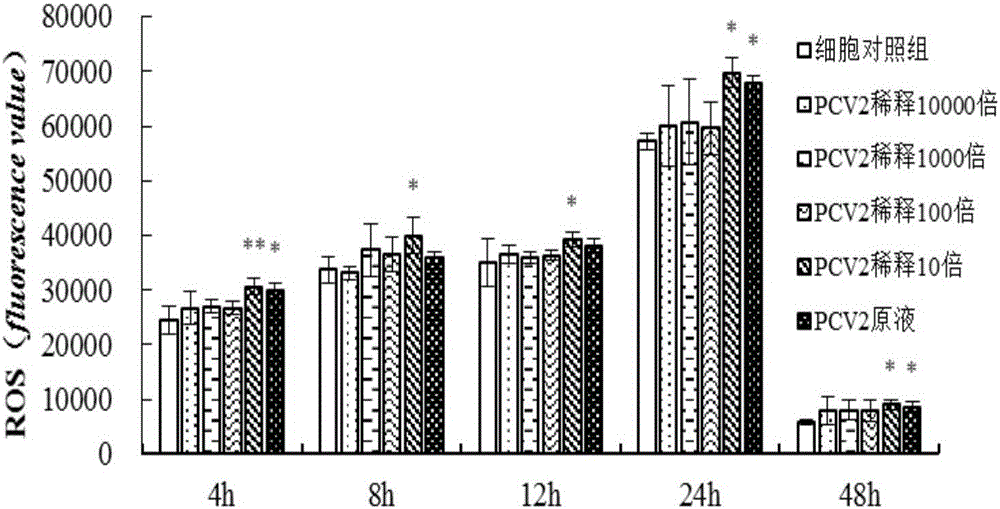
[0027] Mouse mononuclear macrophage cell line (RAW264.7 cells) was infected by PCV2, and the levels of nitric oxide (NO) secreted by infected cells, total intracellular reactive oxygen species (ROS) levels, and reduced glutathione (GSH) were measured Content, xanthine oxidase (XOD) activity, myeloperoxidase (MPO) activity, inducible nitric oxide synthase (iNOS) activity, to explore the relationship between PCV2 virus infection amount, infection time and dynamic changes of reactive oxygen species level and establish an in vitro model of oxidative stress in mouse monocyte-macrophages.

[0028] 2. Experimental method

[0029] (1) Cultivation of RAW264.7 cells: RAW264.7 cells were resuscitated and transferred to bottles with DMEM culture solution containing 10% fetal bovine serum, and incubated at 37°C and 5% CO 2 cultured in an incubator. Subculture when the cells grow to 70%-80%, digest with 0.05% trypsin and then subculture at a ratio of 1:3. After...